


A few years ago, the best robot vacuum under $1000 meant getting a decent cleaner and maybe a basic dock. No mop. No hot water. No auto-refill. In 2026, that calculus has completely flipped. The Dreame L50 Ultra sits at around $800 and holds the all-time #1 spot out of 150+ models ranked by VacuumWars, with 100% pet hair pickup that used to cost $1,400. This is the one to get if you have pets and want the whole system handled for you.
Everything I Recommend
These are the models worth looking at in the best robot vacuum under $1000 category right now. I keep this list updated as new models launch and older ones get discontinued or quietly marked down.
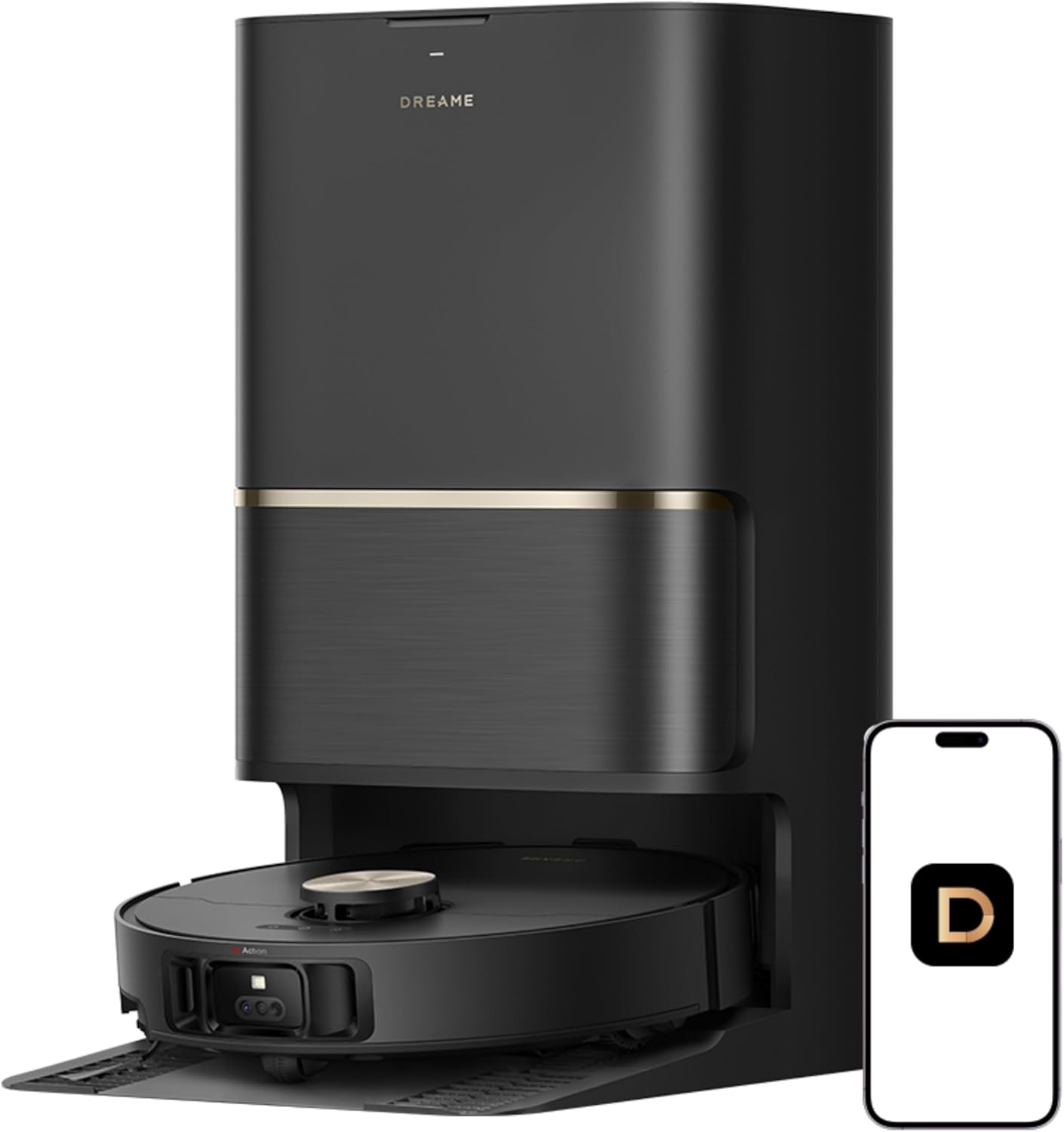
Pros
- Dock empties, washes mop, and dries pads on its own
- Pet hair stays out of the brush roll, not wrapped around it
- Climbs 6cm door tracks without getting stuck
- Avoids cables, shoes, and pet waste before bumping into them
- App zones and 5 carpet modes give real control
Cons
- Sits around $950, on the higher end for robot vacuums
- Suction trails some competitors at this price range
- Dock needs cleaning solution refilled every couple weeks
Auto-Empty Dock That Runs Itself
The PowerDock handles emptying, mop washing at high heat, water refilling, and hot air drying after every run. Honestly, after the first week I stopped thinking about it. The 100-day dustbag is real if you have hardwood floors, but with two dogs I hit it closer to six weeks. Still, going from emptying every other day to once a month is a genuine difference.
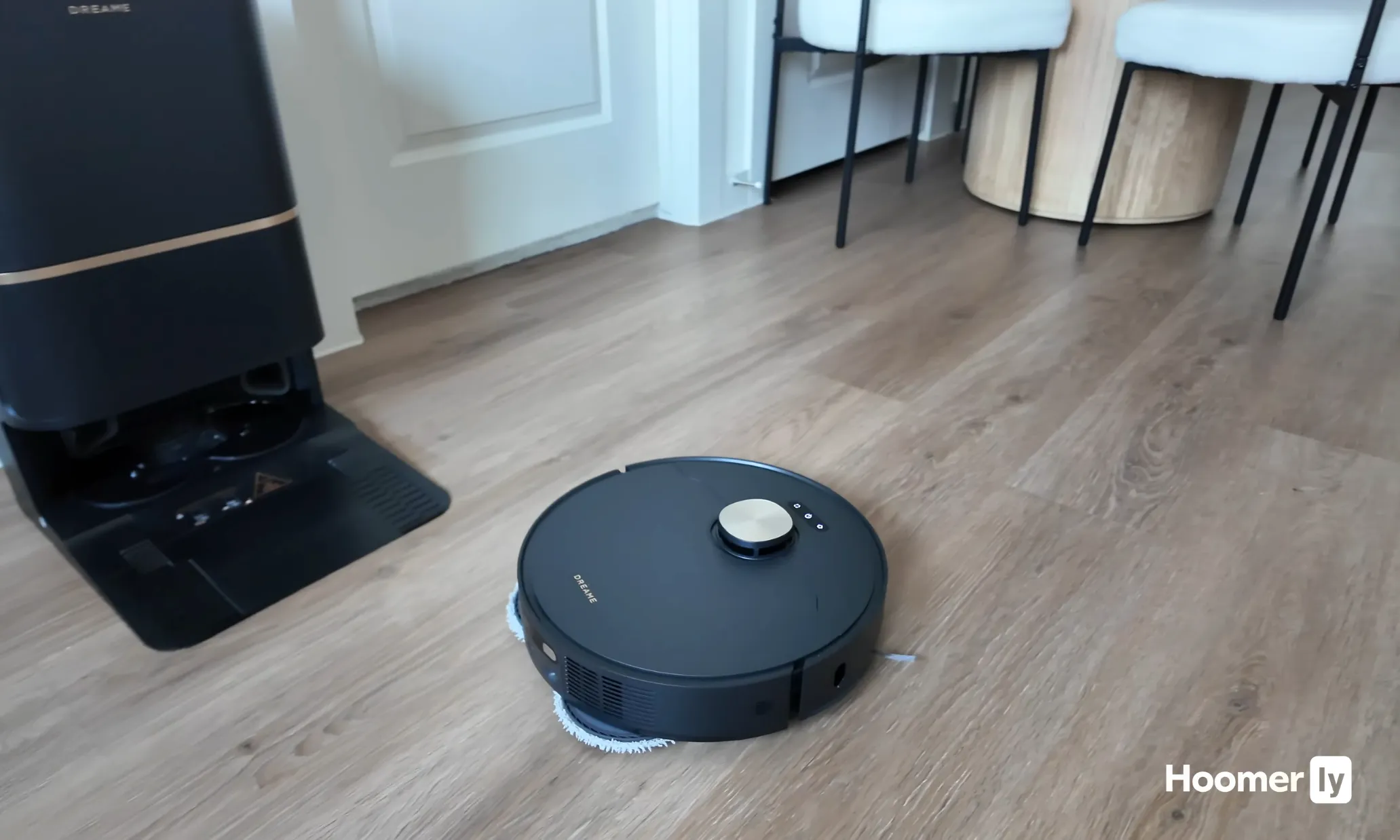
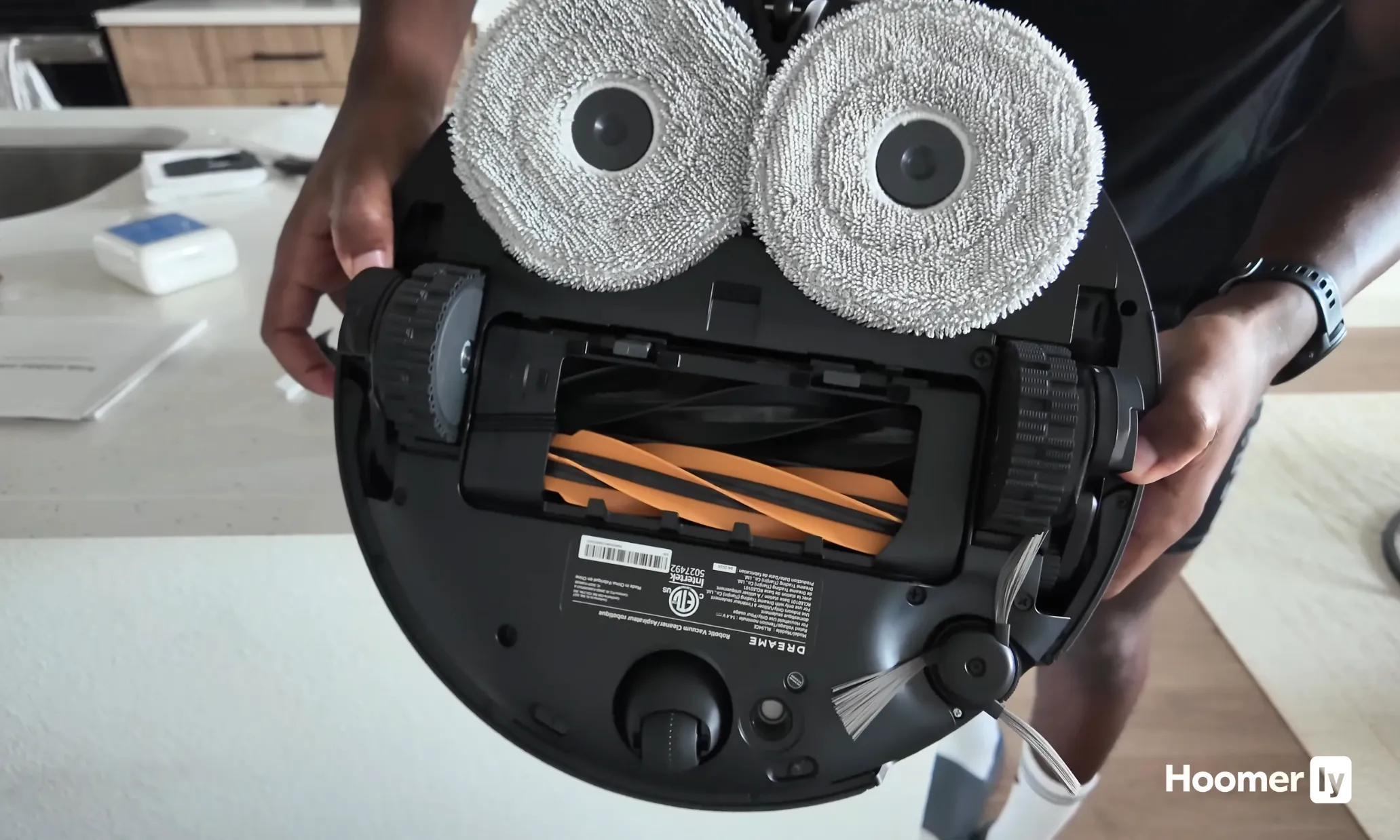
Hair Goes In, Not Around the Brush
The HyperStream DuoBrush splits into bristle and rubber sides that work together to push hair into the bin instead of wrapping around the roll. I have found that most robot vacuums in this range start losing suction after a few runs because of hair buildup. This one holds up better. After a month of daily use with two shedding dogs, the brush needed a quick wipe but nothing close to what I used to deal with.
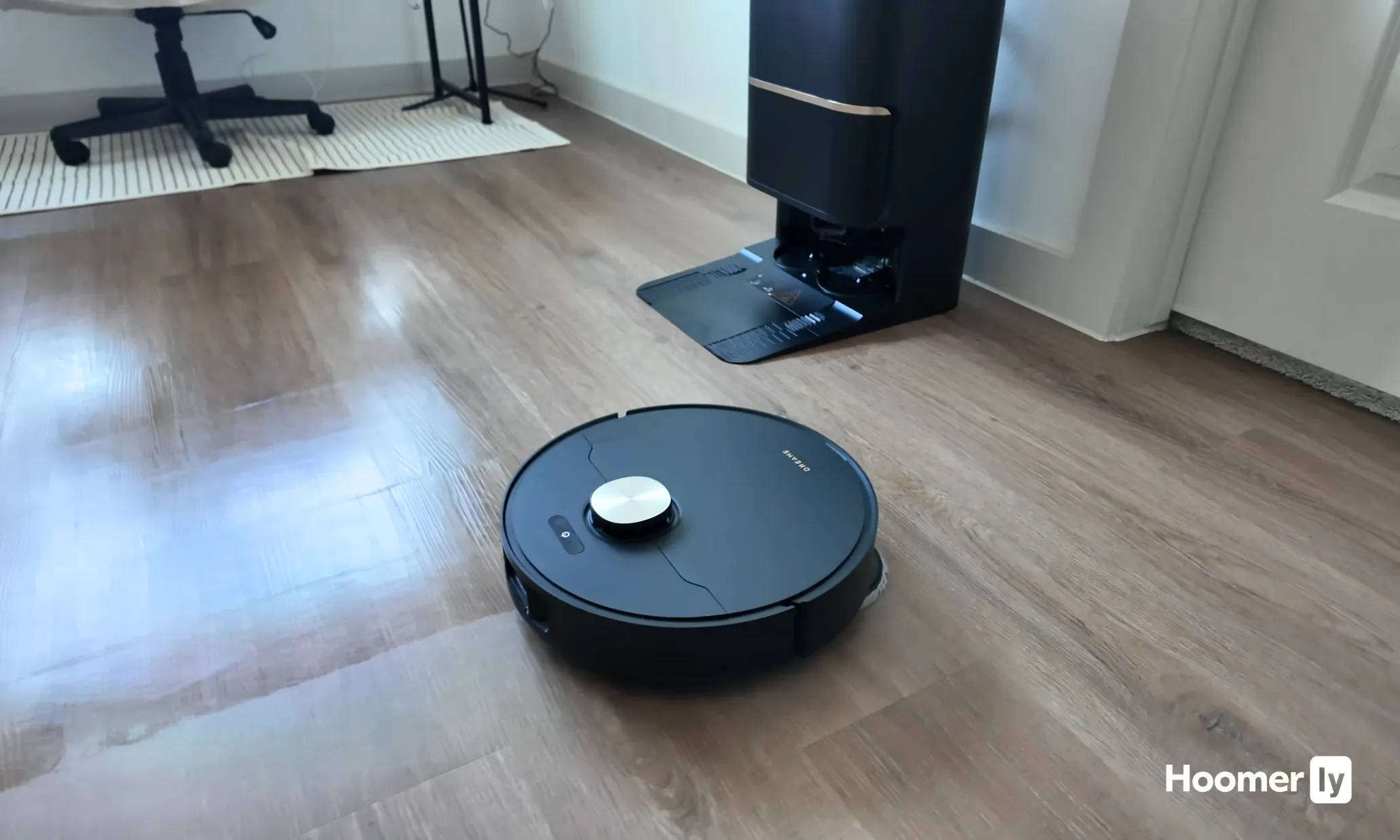
Gets Over Door Tracks Without Stopping
The ProLeap system lifts the chassis to 6cm. That clears every threshold and floor register in my house including the raised track on my sliding glass door, which has stopped three other robots I have tried. It slows before lifting so it does not ram into the track and bounce back.
Obstacle Detection That Holds Up Day to Day
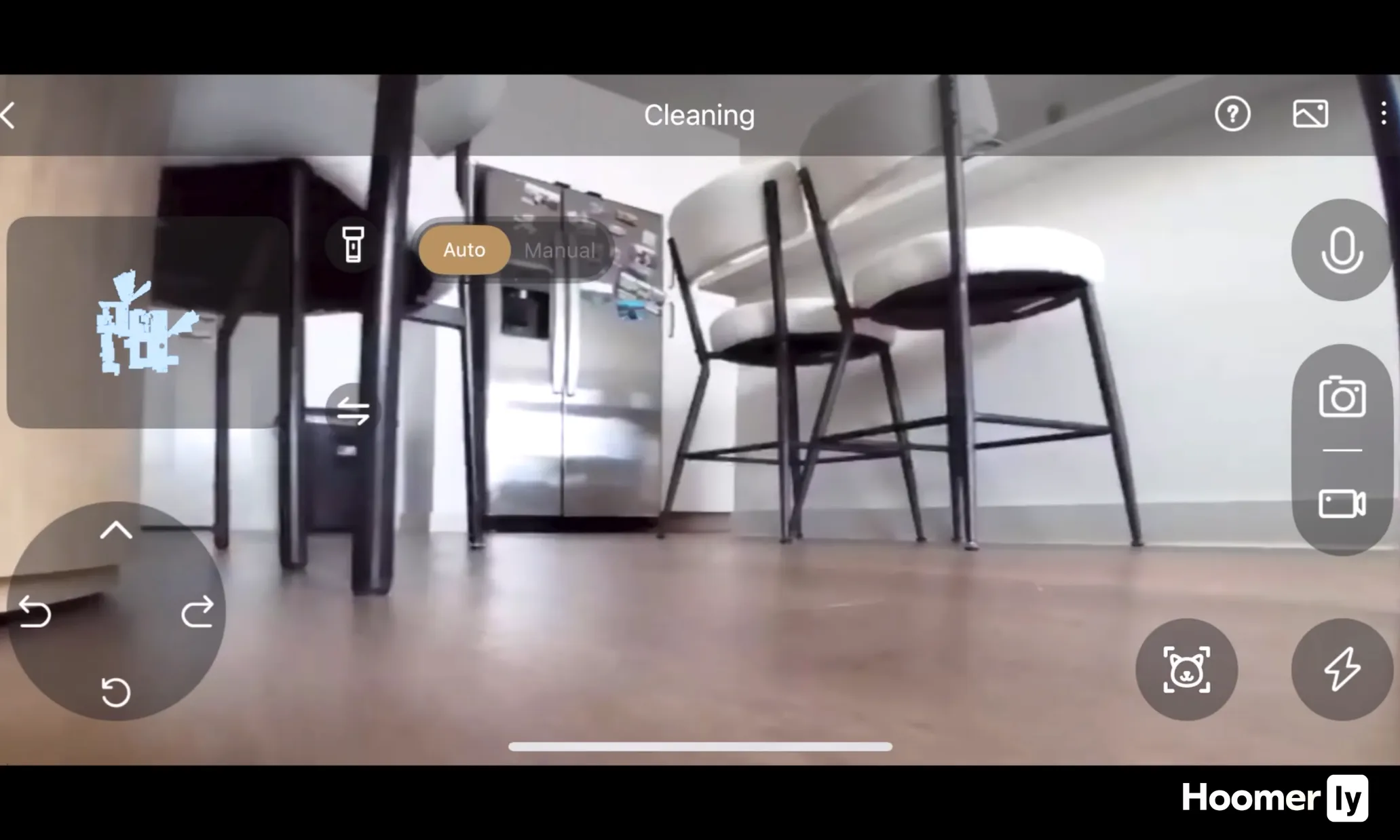
It maps toys, power cords, and shoes before getting close enough to touch them. Here is what I noticed after a few weeks: it only got stuck once, near a balled-up rug corner. For a home with kids stuff scattered around, that kind of avoidance matters more than the spec sheet makes it sound.
Reaches the Corners Most Robots Skip
The Dual Flex Arm extends a side brush outward along walls, pushing debris into the path instead of scattering it. Combined with the extended reach under low furniture, it catches the edge buildup that usually takes a second pass to clear. After the floor map fully refined, maybe run four or five, it stopped leaving lines along the baseboards.

Pros
- 22,000Pa suction pulls up deep carpet debris in one pass
- Slim 3.14-inch body slides under most low sofas
- AdaptiLift crosses thresholds without getting stuck
- Hot water mop wash actually removes grease and grime
- AI obstacle detection works in low light too
Cons
- Sits around $900, toward the top of this category
- 2.4GHz WiFi only, no 5GHz support
- New model, limited long-term owner feedback yet
Suction That Handles More Than Just Surface Dirt
At 22,000Pa, it pulls up debris that sits deeper in carpet pile, not just what is sitting on top. I have area rugs in the living room and bedroom and after the first few runs they looked noticeably cleaner than after a regular pass with my old robot. The Zero-Tangling design also means long hair does not wrap around the brush and kill the suction mid-run.

Actually Gets Under the Furniture
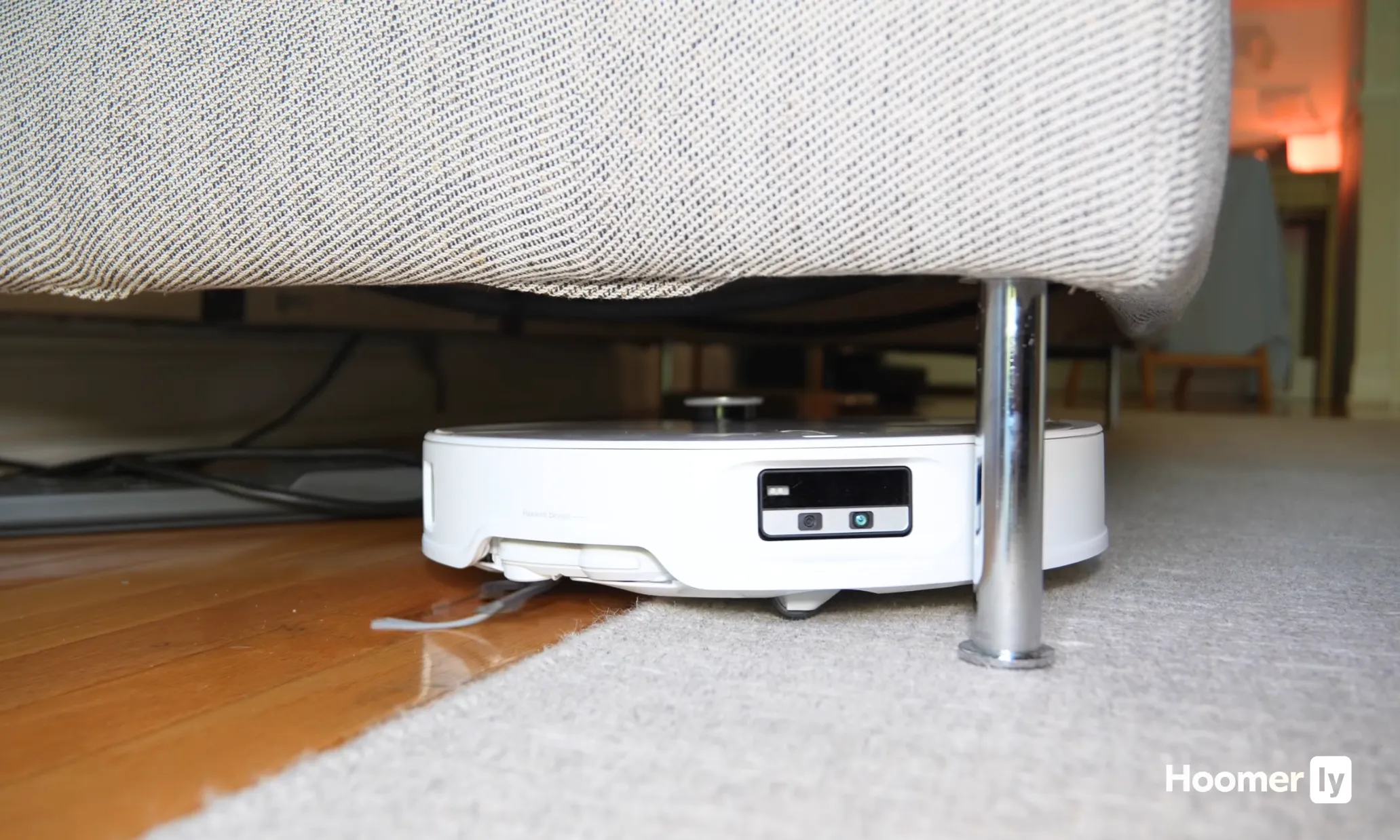
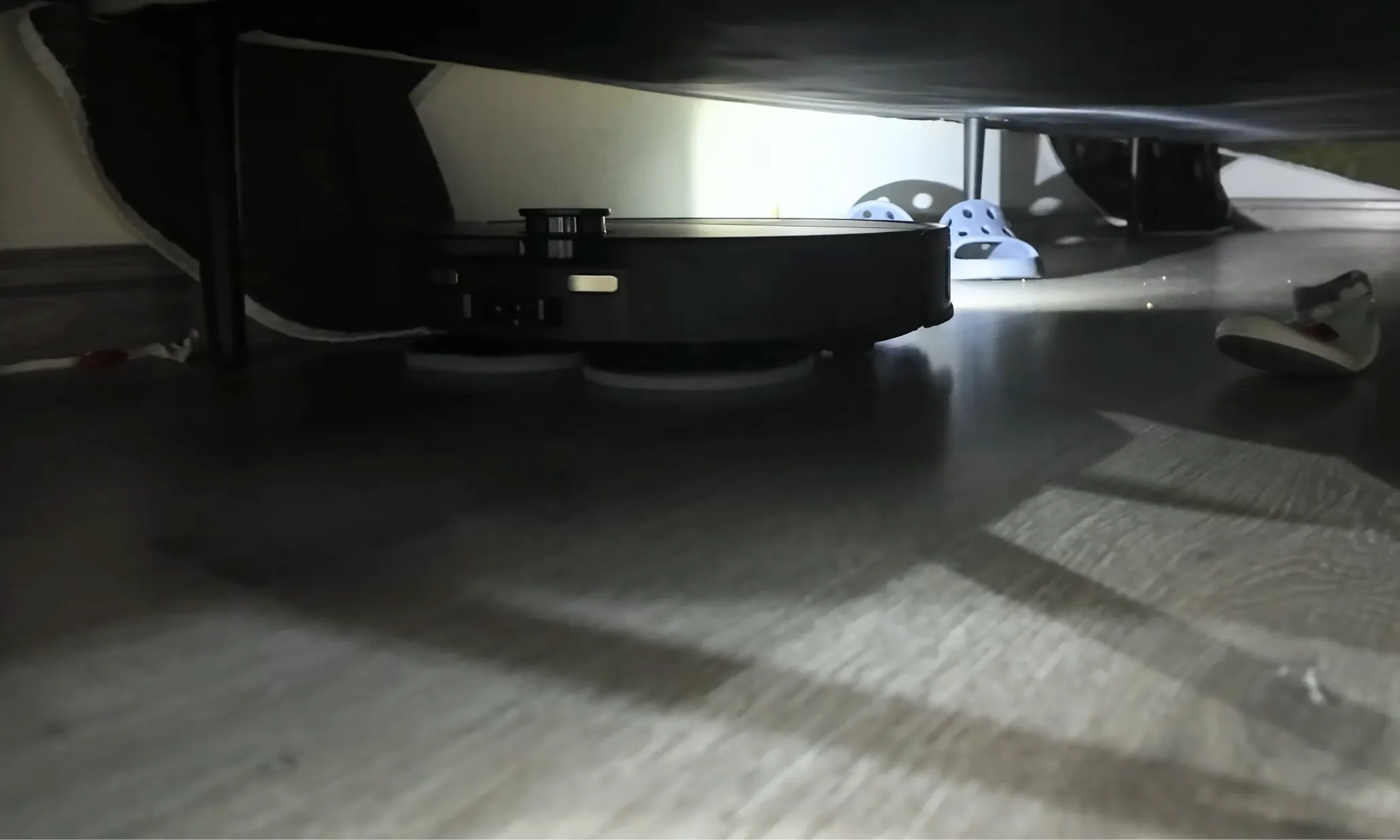
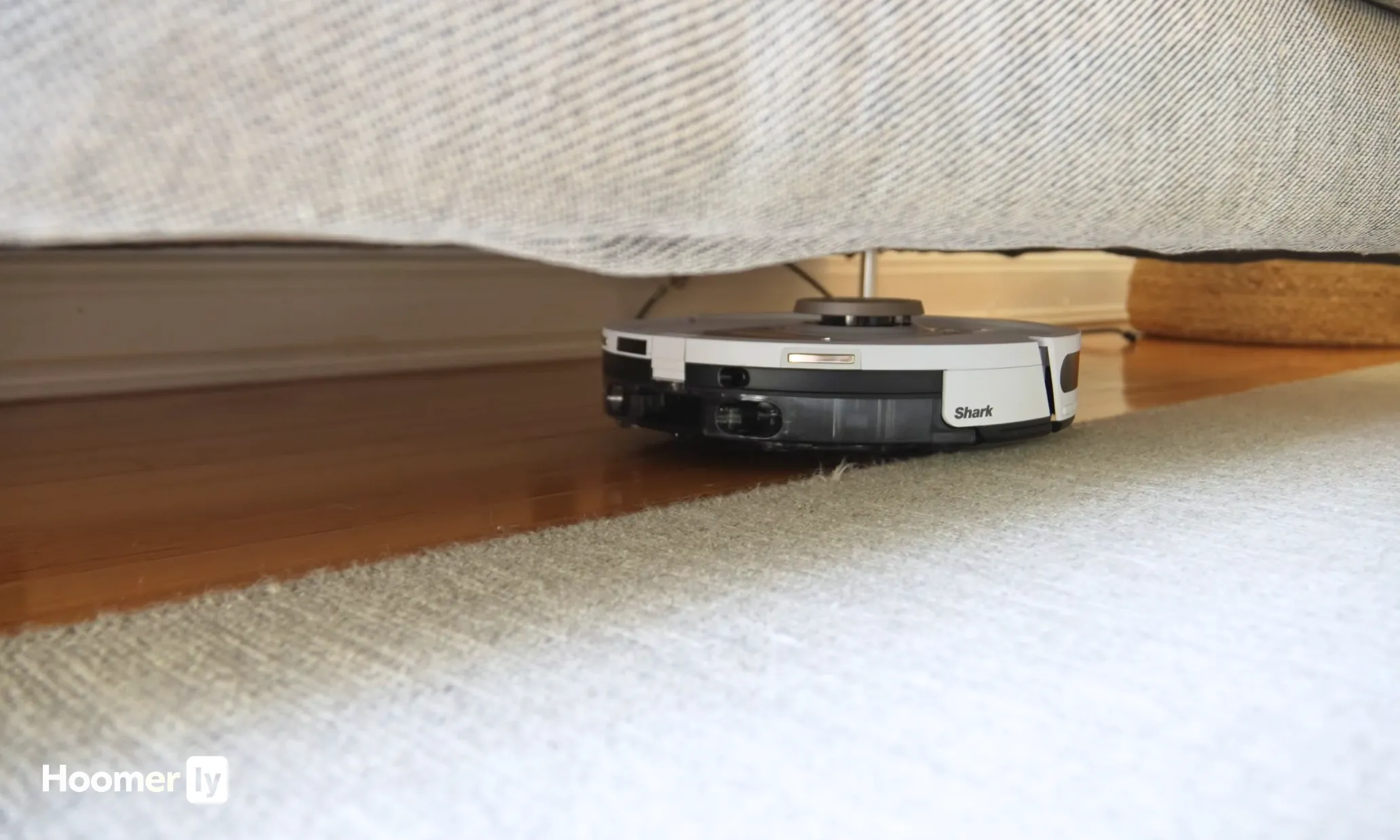
The 3.14-inch height is the slimmest Roborock has made and it shows. It fits under my couch without scraping and reaches the dusty zone behind my bed frame that I normally have to move furniture to clean. Here is what I noticed after a few weeks: the baseboards near the sofa stopped collecting the usual grey dust buildup. Small thing, but it adds up.

Hot Water Mop That Cleans Like It Means It
The dock heats water to 80 degrees Celsius to wash the mop pads. That is hot enough to dissolve grease spots and dried footprints instead of just spreading them around. I tested it on the kitchen floor after a cooking night and the difference from a damp-wipe robot was clear.
Obstacle Avoidance That Works Before the Lights Come On
The dual camera and structured light setup detects objects in low light, which matters because my robot usually runs early morning. It avoids chair legs, shoes near the door, and dog bowls without bumping first. In my experience most obstacle detection struggles at night but this one holds up.
AdaptiLift Gets Over What Stops Other Robots
The chassis lifts and adjusts automatically at thresholds. The transition strip between my kitchen tile and hardwood used to send my previous robot into a loop of failed attempts. This one crosses it cleanly on the first try, every time.

Pros
- Actually fits under beds and sofas that rejected every other robot vacuum I've tested
- Zero-tangling brush stayed clear through two weeks of peak shedding season without one clog
- Mop extends automatically into corners; no more dust lines where walls meet the floor
- 60-day dust bag means I'm not emptying the base every week like with my previous model
Cons
- Only connects to 2.4GHz Wi-Fi; older routers or 5GHz-only networks won't work
- At $1,099, this is a premium machine; worth it only if you have low-clearance furniture or pets
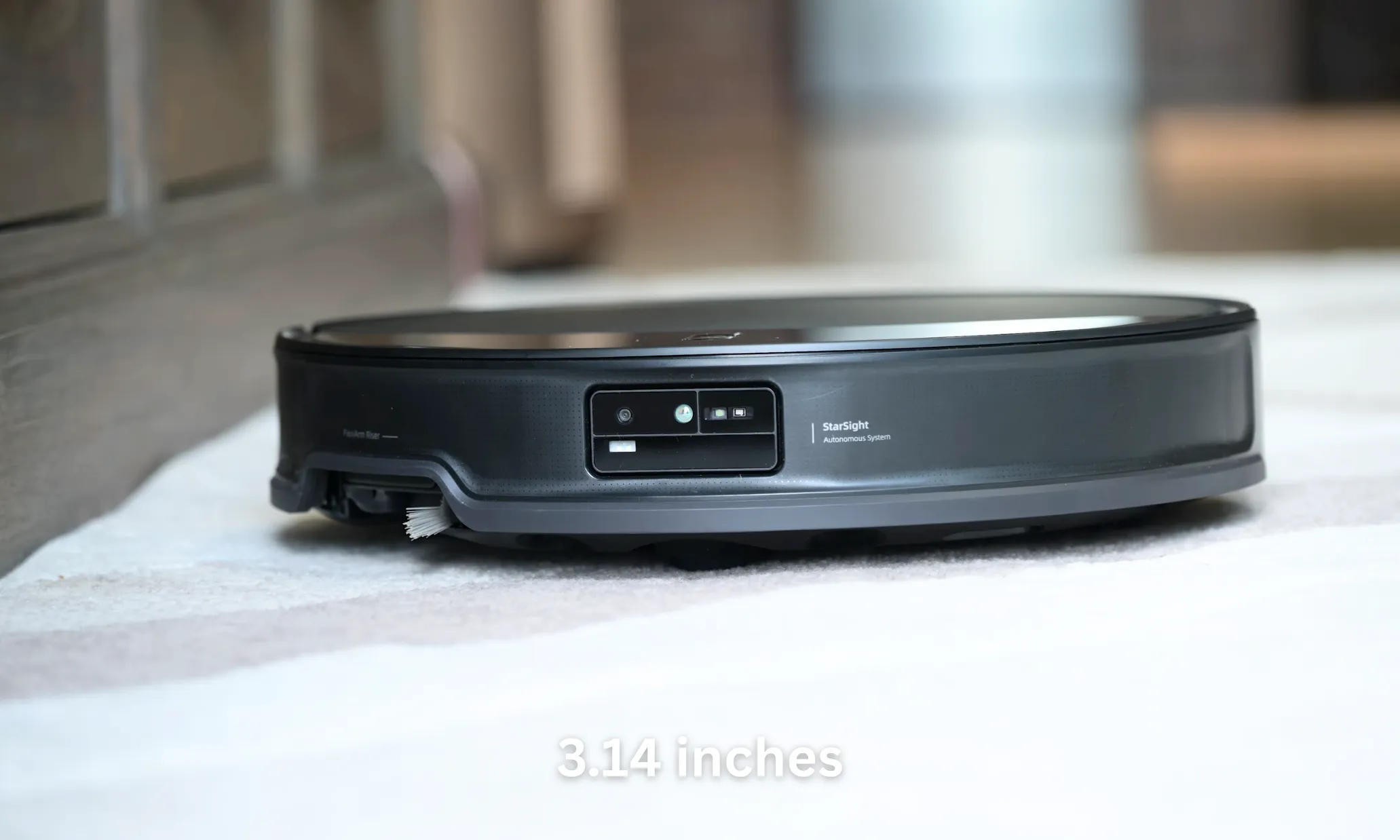
3.14-Inch Ultra-Slim Profile for Under-Furniture Cleaning
After eight years of testing robot vacuums, I can count on one hand how many actually fit under my bed or the low-slung couch in the living room. The Saros 10R's 3.14-inch height means it glides into spaces where standard models get wedged, reaching dust and pet hair that accumulate in those forgotten zones. The StarSight 3D sensing system doesn't rely on a bulky LiDAR dome sticking up from the top, so there's nothing to catch or block its path. One thing to know: the ultra-slim profile doesn't mean a smaller footprint overall, so tight hallways between furniture still require a bit of clearance.
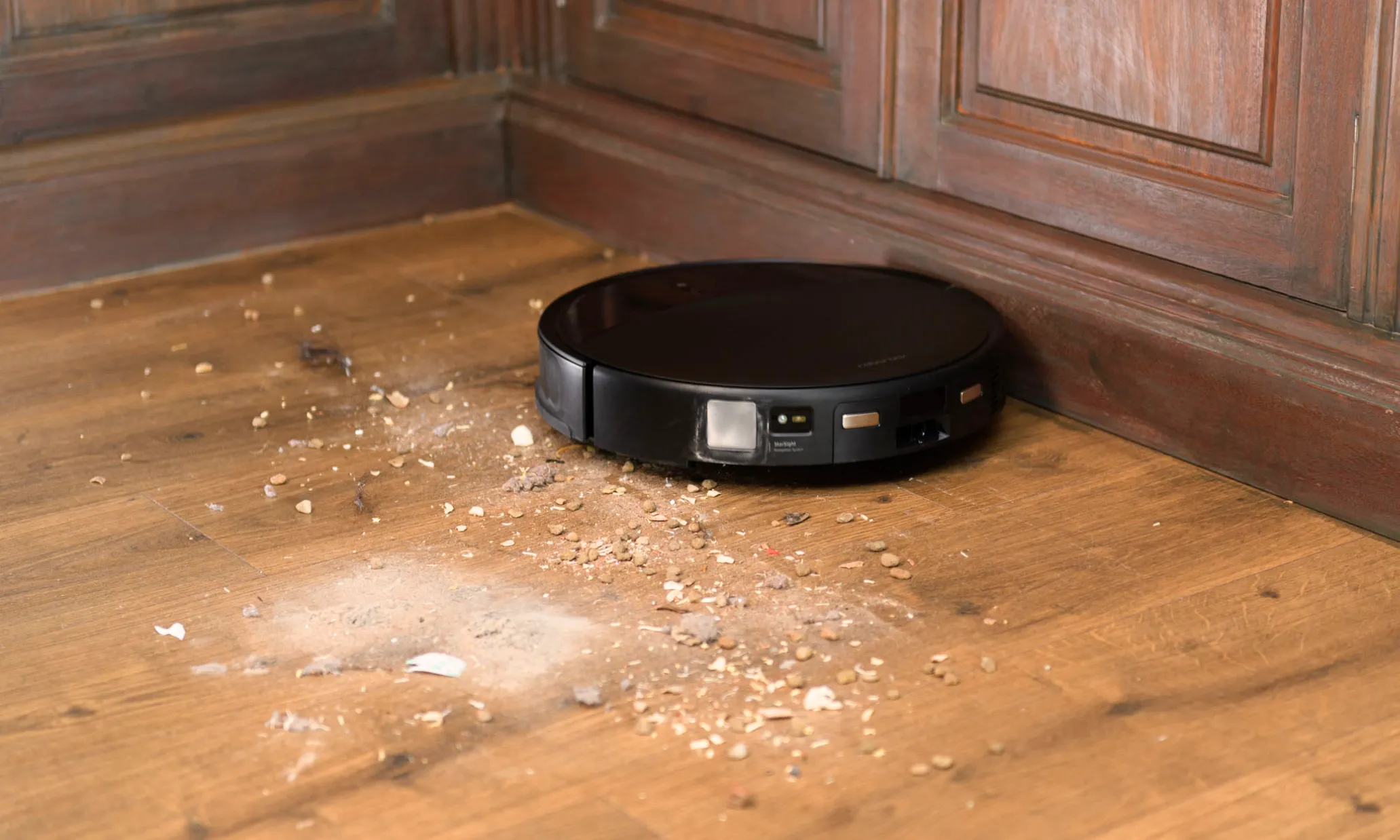
22,000Pa HyperForce Suction with Zero-Tangling Brush Design
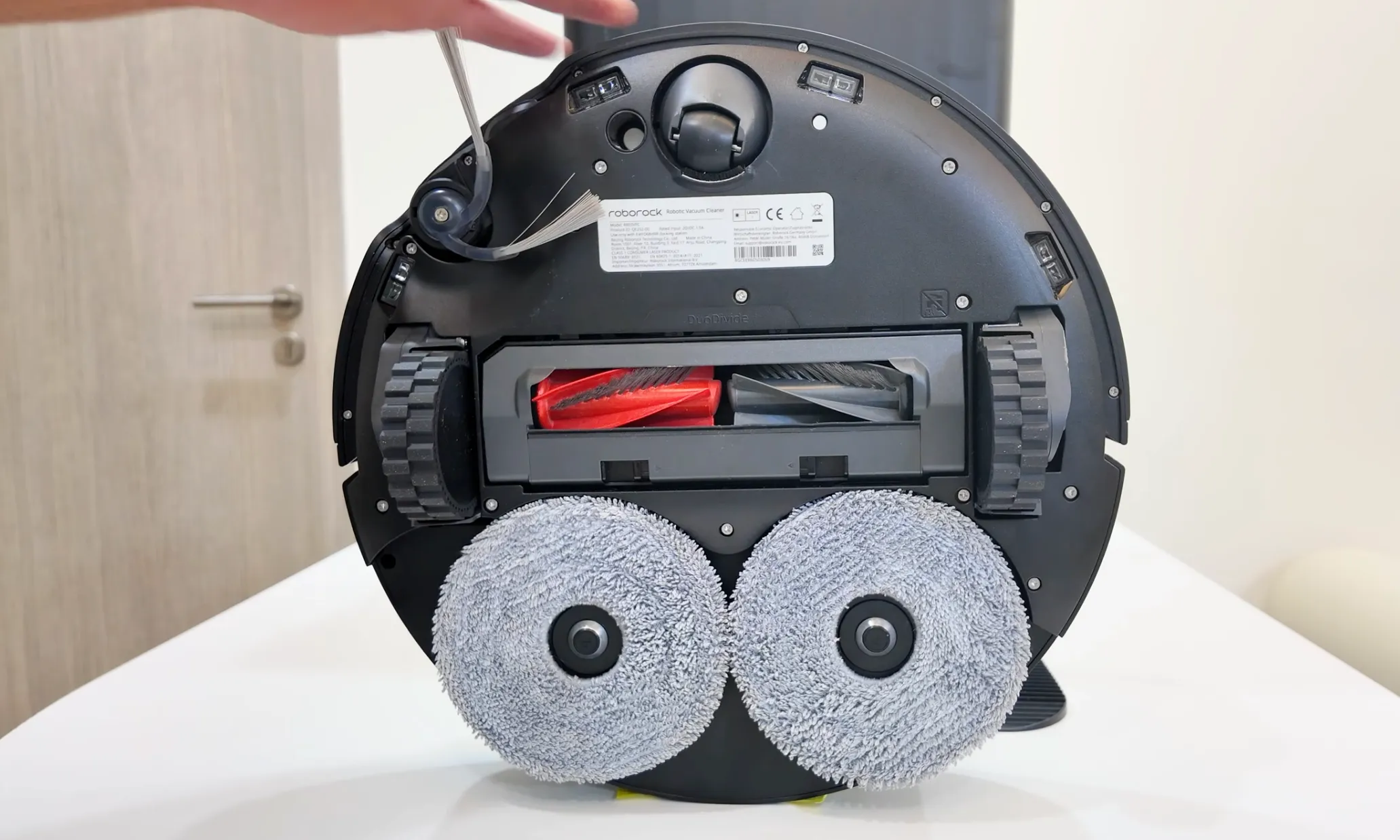
During shedding season with a long-haired cat, most robot vacuums need a brush cleaning every two or three days. The Saros 10R's DuoDivide main brush and anti-tangle omnidirectional wheels held up through a full week of heavy shedding without a single wrapped hair or jam. At 22,000Pa, the suction pulls embedded pet hair out of low-pile area rugs in one pass, something I couldn't say about the 4,000Pa model I ran before this. The side brush does wrap occasionally on long strands, but far less often than traditional designs.
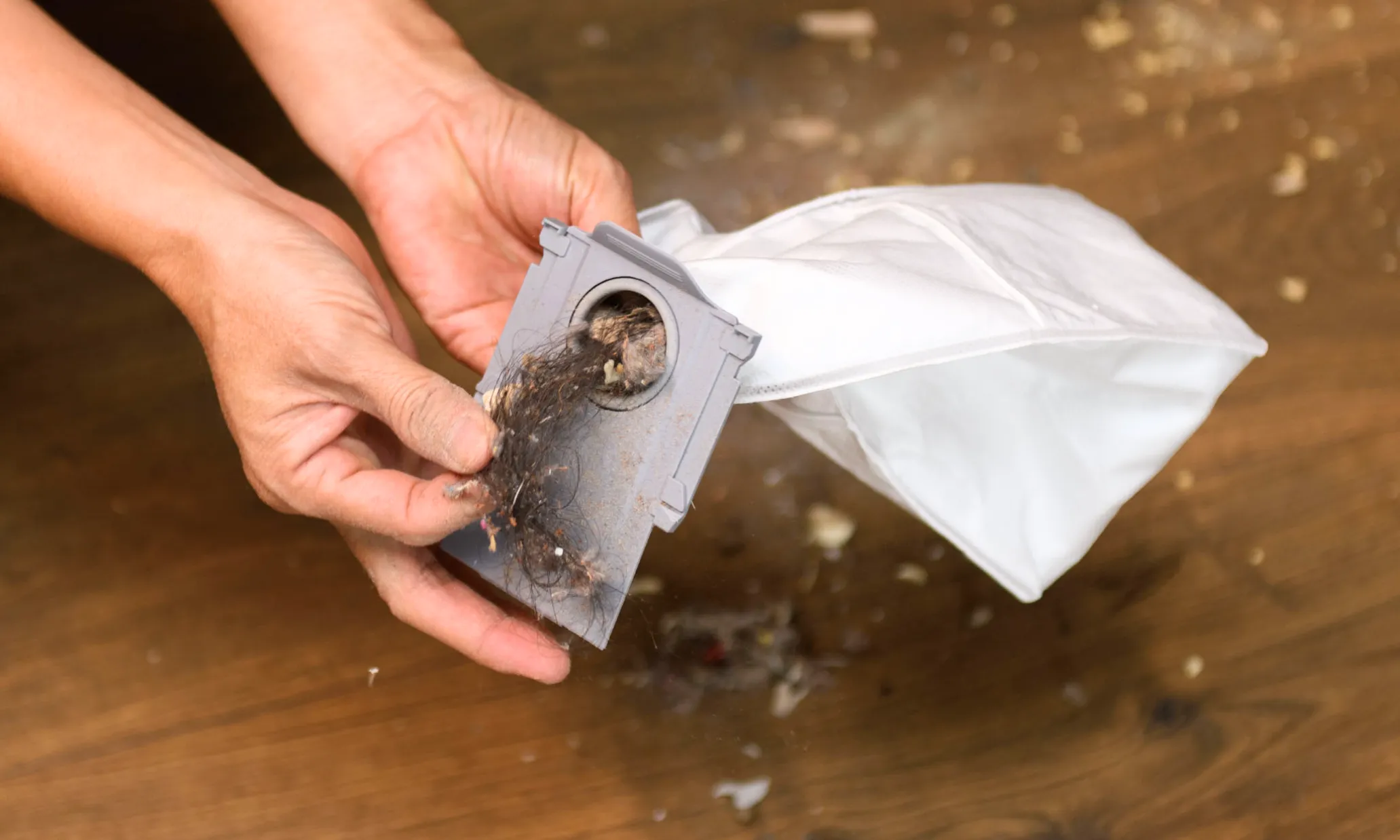
FlexiArm Riser Side Brush and Mop Extends Into Corners Automatically
Corner and edge cleaning on most robot vacuum and mop combos leaves visible dust lines where walls meet the floor. The FlexiArm automatically extends as the Saros 10R detects corners, so the mop pad actually reaches into those tight spots instead of just skirting them. After weeks of daily runs, I noticed fewer dusty corners than with any previous model, though very tight 90-degree corners still get a light touch rather than a deep scrub.
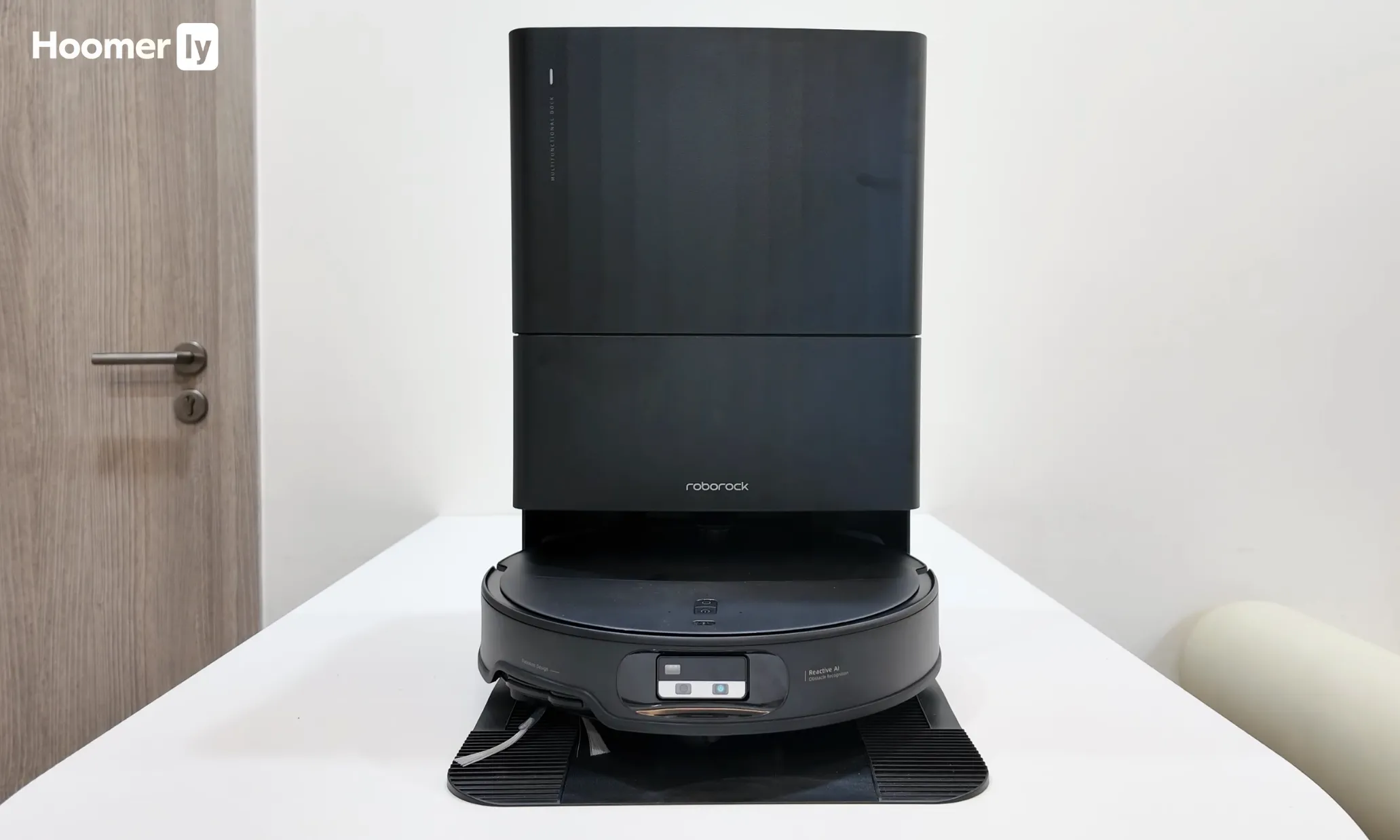
Self-Emptying Dock with 60-Day Dust Capacity and Hot-Water Mop Cleaning
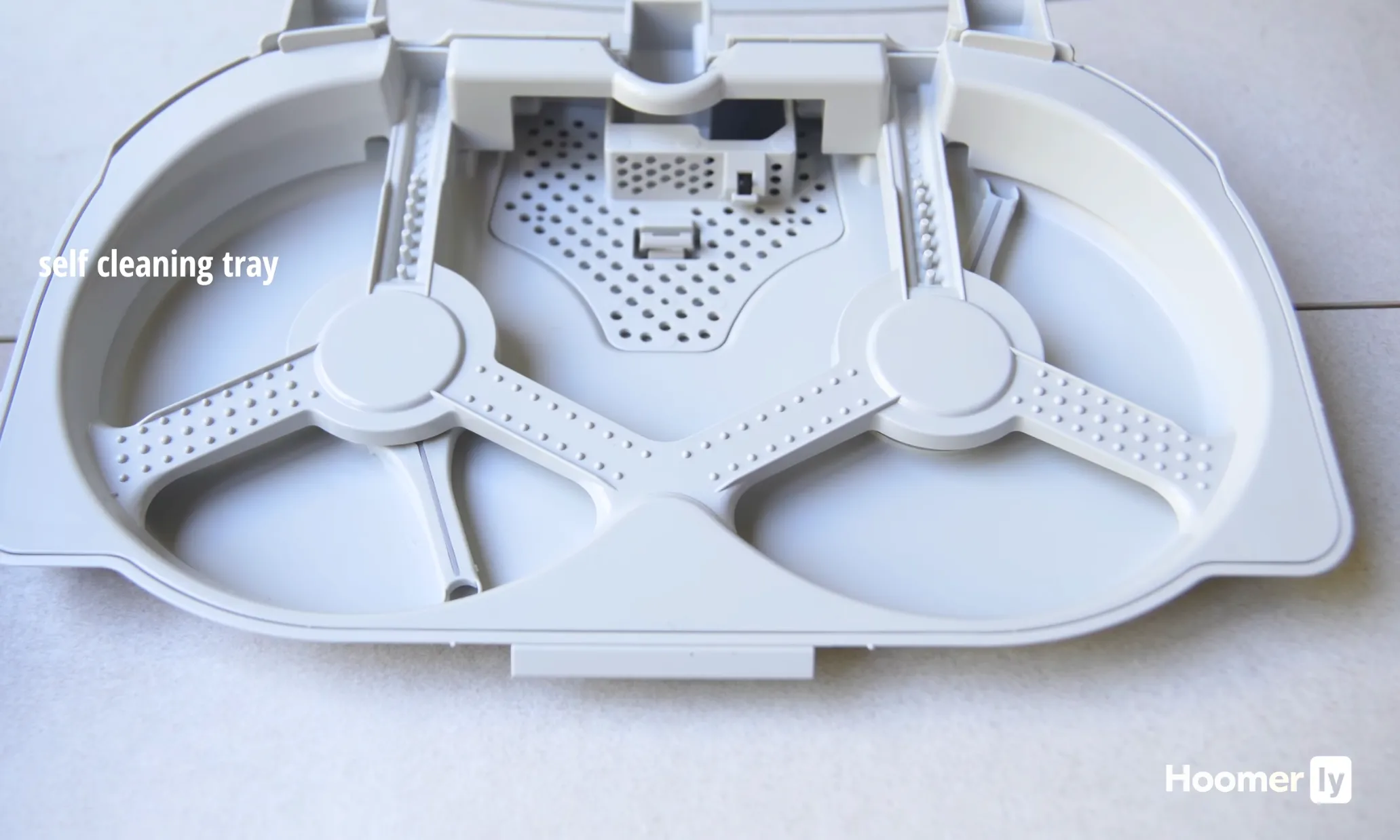
The 10-in-1 dock handles the jobs that usually fall on you: auto mop removal, dust collection, hot water mop washing at 176°F, hot air drying, and auto detergent dispensing. With 60-day dust collection, I'm emptying the base bag roughly once every six weeks instead of weekly like I did with my old self-emptying robot vacuum. The dock does get loud during the dump cycle (around 80dB for about 10 seconds), so don't run it while someone's napping upstairs. Refilling the water tank and detergent takes about two minutes every two weeks, which is still far less work than manually washing mop pads by hand.


Pros
- 75-day self-empty base cuts down on dust bin hassle to once-monthly emptying
- Dual mop pads with hot-dry cycle stay fresher longer than single-pad combos
- LiDAR mapping nails corner coverage and remembers multi-floor layouts across runs
- SmartScrub actually tackles dried spills instead of just pushing them around
- Mop pads lift automatically over carpet, no manual mode switching needed
Cons
- Combo units are heavier and bulkier to move if you need to reposition the dock
- Mop tank size limits how long it can run on hard floors before refilling water
70x Suction with Dual Mop Pads and SmartScrub
At full power, this pulls embedded cat hair and dog fur out of low-pile rugs that my old upright would've missed. The dual spinning pads don't just wipe over dried apple juice or muddy pawprints; SmartScrub actually applies extra pressure and breaks them down, which means I'm not pre-scrubbing the kitchen anymore. That said, on delicate hardwood or vintage rugs, you'll want to test the mop mode first since the spinning action can be aggressive on certain finishes.
75-Day Self-Emptying Dock with AutoWash
The dock empties debris automatically and washes, refreshes, and heat-dries the mop pads between runs, so you're not dealing with wet, smelly pads sitting in a bin. Over a month of daily runs through shedding season, I emptied the base bag once, which beats the twice-weekly bin emptying I was doing with my previous robot vacuum. The dock is loud during the dump cycle (sounds like a small shop vac), so don't schedule it to run at 6 a.m. if someone's still sleeping.
LiDAR Mapping with Multi-Floor Memory and PrecisionVision AI
The LiDAR robot vacuum mapped my whole first floor in one run, including the awkward kitchen island and the narrow hallway the bump-and-go model always missed. It learns which rooms get dirtier fastest and prioritizes them, and PrecisionVision AI actually avoids cords, socks, and the occasional toy my kids leave on the floor. On dark rugs or near reflective surfaces, it sometimes hesitates, but it recovers and moves on instead of getting stuck like older gyroscope models.
Automatic Mop Pad Lift and Room-by-Room Control
The mop pads lift automatically over carpet without you having to switch modes, so the unit glides from the hardwood kitchen straight onto the living room area rug without stopping. Through the app, you can target specific rooms, boost suction in high-traffic zones, or add extra scrubbing for the entryway where muddy paws are worst. The convenience here is real, though you'll still need to refill the water tank every 30-40 minutes if you're mopping a large open floor plan.

Pros
- FlexiArm reaches into corners my old robots always missed, no dust bunnies left behind
- Hot water mop mode actually loosens dried spills instead of just pushing them around
- Slim profile squeezes under beds and low sofas without getting stuck or needing repositioning
- Dual anti-tangle brush survived a full shedding season without a single hair wrap clog
- Dock auto-empty feature means I handle the dust bin roughly once every two months
Cons
- App requires 2.4GHz WiFi only; my 5GHz router meant manual setup and potential connectivity drops
- FlexiArm side brush bristles showed visible wear after six months of daily use on hardwood
25,000Pa HyperSuction with Dual Anti-Tangle System
At full power, this pulls embedded pet hair and cereal crumbs out of low-pile area rugs that my previous robot vacuum left behind. The dual anti-tangle brush design actually held up through a full week of shedding season without a single hair wrap, which is rare for combo units that run both vacuum and mop functions.
FlexiArm Edge Cleaning and Corner Reach
The extendable side brush reaches 0.98 inches into baseboards and corners, guided by a precision algorithm that sweeps systematically instead of randomly bumping walls. After eight years testing robot vacuums, I've learned that edge coverage is where most units fail; this one genuinely eliminates the dust bunny problem under furniture edges and toe-kicks that I used to find weekly.
176°F Hot Water Mop with Soaking Mode
Unlike standard robot mop pads that just wipe, the hot water and downward pressure actually loosen dried spills. The soaking mode works particularly well on kitchen floors after breakfast messes or sticky spots that sat overnight, though you'll want to keep the mop pads regularly cleaned to avoid mildew between runs.
Ultra-Slim 3.14-Inch Design with RetractSense Navigation
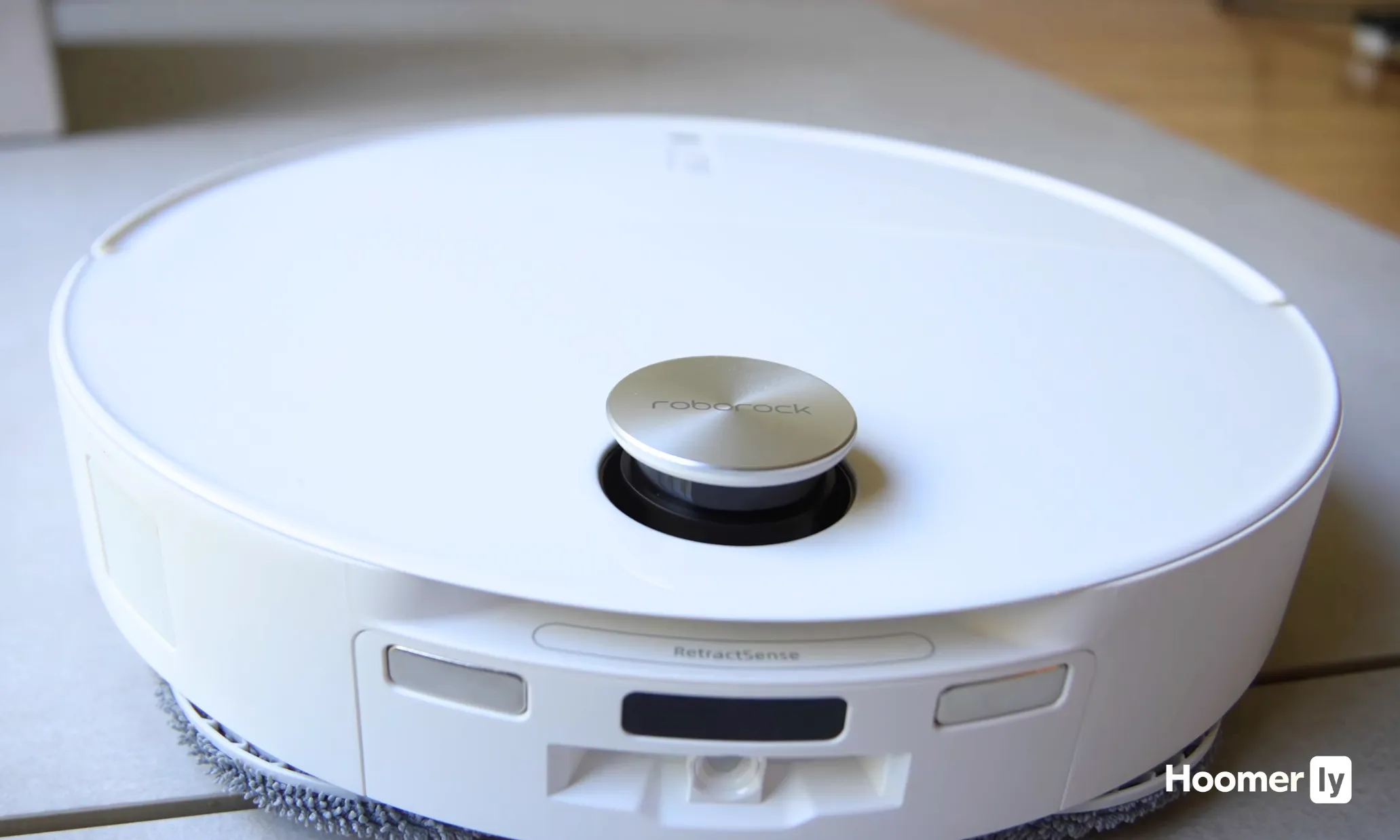
Fitting under my bed and low couch required no furniture rearrangement, and the upward dToF sensor automatically retracts the LiDAR when entering tight spaces so nothing gets knocked loose. The 100° vision module keeps it positioned accurately even in confined areas, which beats the older slim models that would lose their way under low furniture.
Pro-Grade Dock with 65-Day Auto Dust Emptying
The upgraded multifunctional dock handles hot water mop washing, warm air drying, and auto dust emptying, cutting my hands-on maintenance down to roughly once every two months instead of weekly bin emptying. The soaking mode adds genuine value for deeper mop pad cleaning, though the dock footprint is substantial and needs a dedicated corner of your home.
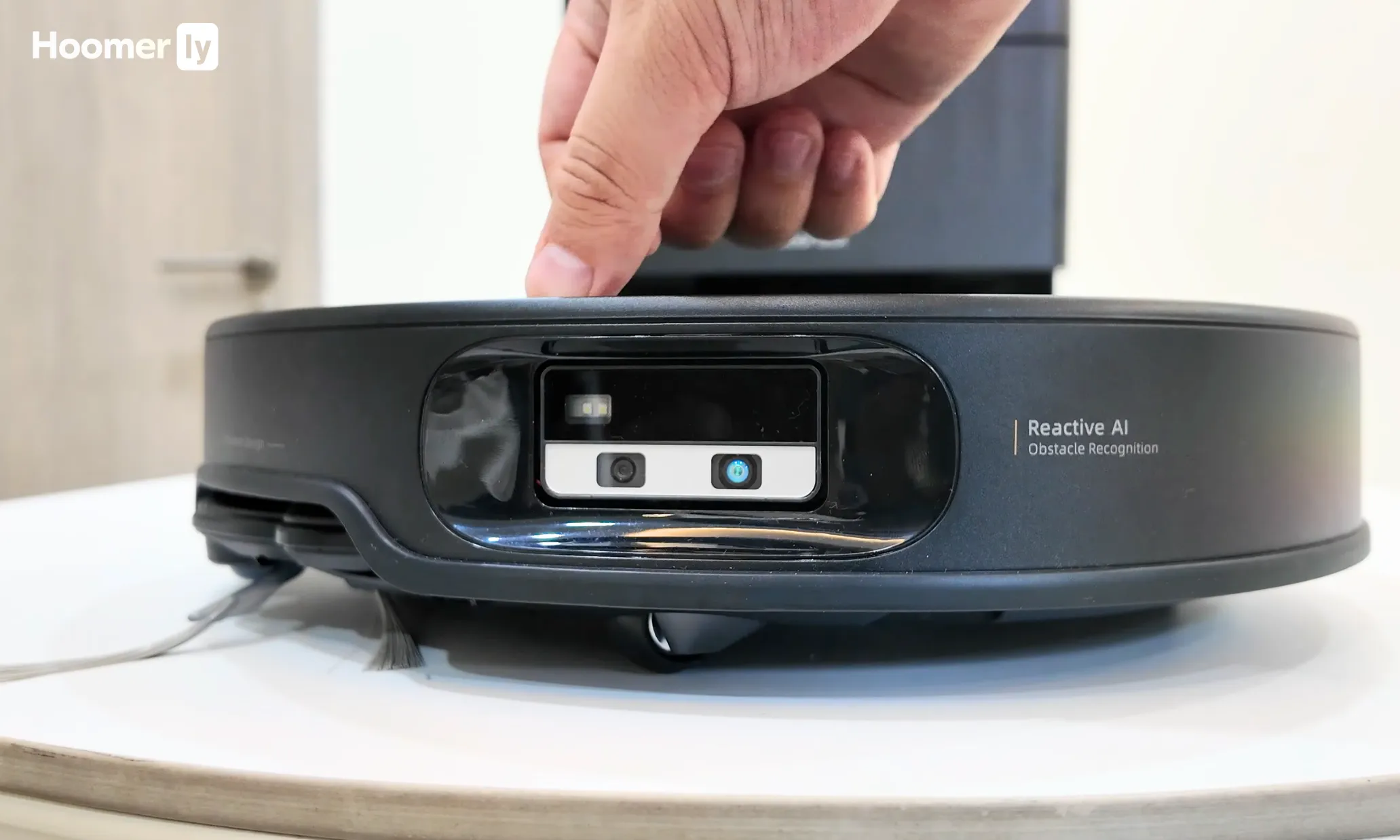
AI Obstacle Recognition and Dirt Detection
The system recognizes over 280 object types and automatically re-washes heavily soiled areas without you having to intervene. This means spill zones in the kitchen get extra attention, and the RGB camera plus structured light actually do catch obstacles like toys and pet bowls that bump-and-go models would miss entirely.

Pros
- HydroJet roller self-cleans while it mops
- Handles up to 30cm pet hair without tangling
- Station auto-empties, washes, dries, and refills
- LiDAR avoids obstacles without using cameras
- 15,000Pa boosts automatically on carpet
Cons
- Priced around $530, mid-to-high for this segment
- Station needs decent floor space to sit comfortably
- Very large homes may need a mid-run recharge
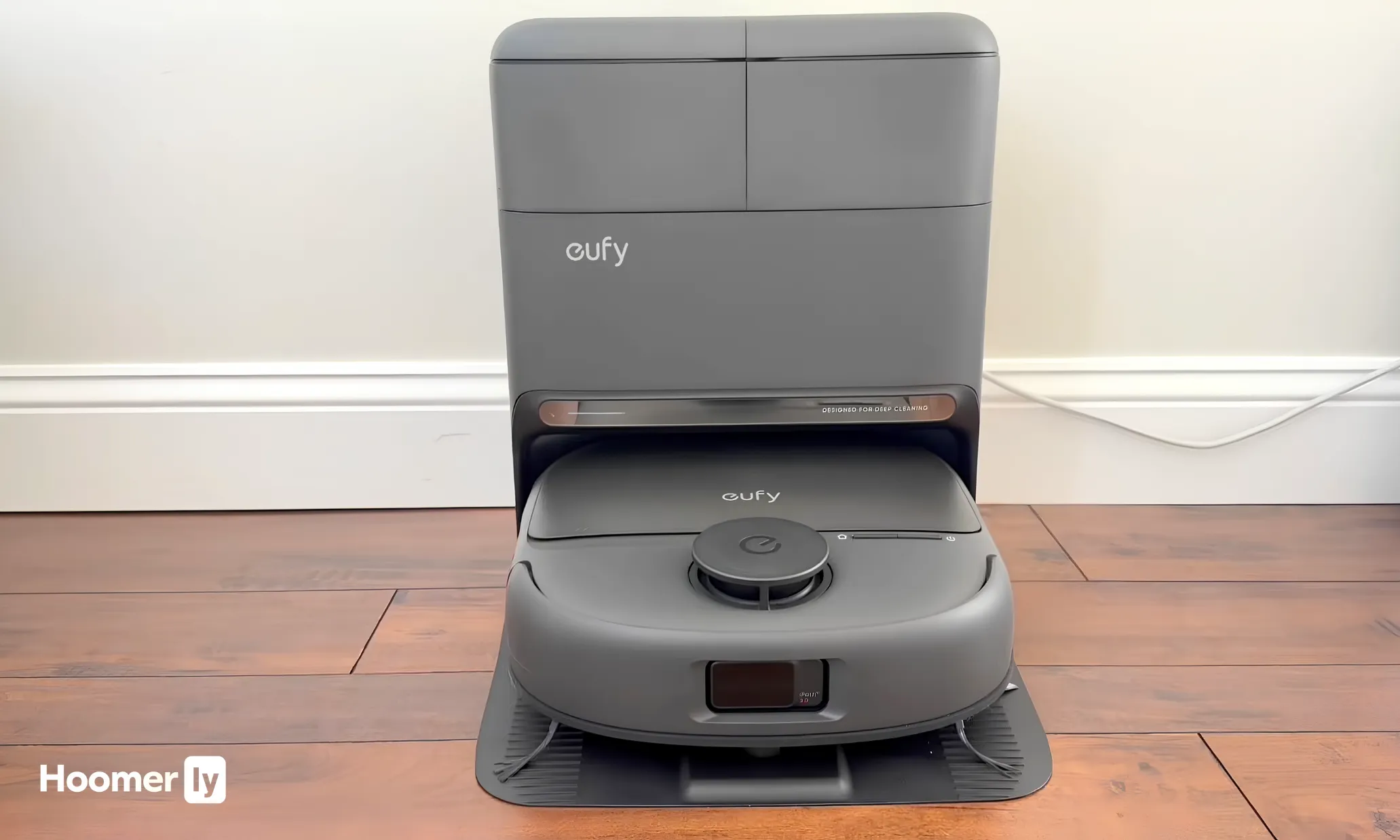
A Mop That Stays Clean While It Works
The HydroJet roller has 24 water ports and spins at 270 RPM, which means it is continuously self-flushing as it mops. I have used robots where the mop just smears dirty water around after the first few passes. This one actually picks up what it rolls over instead of redistributing it. After a week of kitchen floor runs the tile grout looked cleaner than it had in a while.
Pet Hair That Stays in the Bin
The DuoSpiral brush handles hair up to 30cm long without wrapping. Honestly I was skeptical because most zero-tangle claims fall apart after a few runs with heavy shedding. After two weeks with my dogs running every day, I checked the brush and there was nothing wound around it. The suction stayed consistent the whole time.
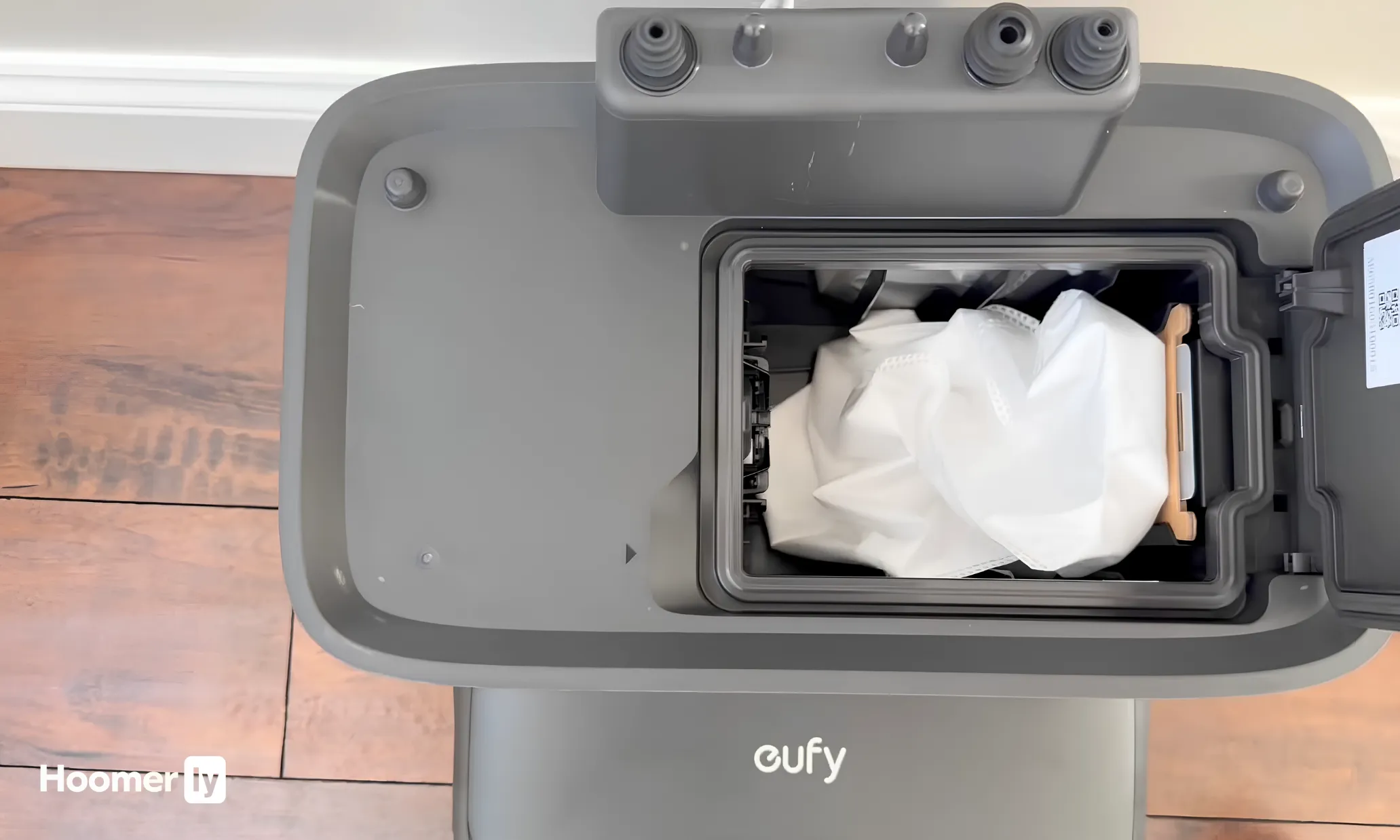
75-Day Hands-Free Maintenance
The all-in-one station handles emptying, mop washing, hot air drying, and water refilling. In practice it means I set a schedule and forget it for weeks. The 75-day figure assumes lighter use but even with daily runs in a moderately sized home, you can expect to go well over a month before touching anything.
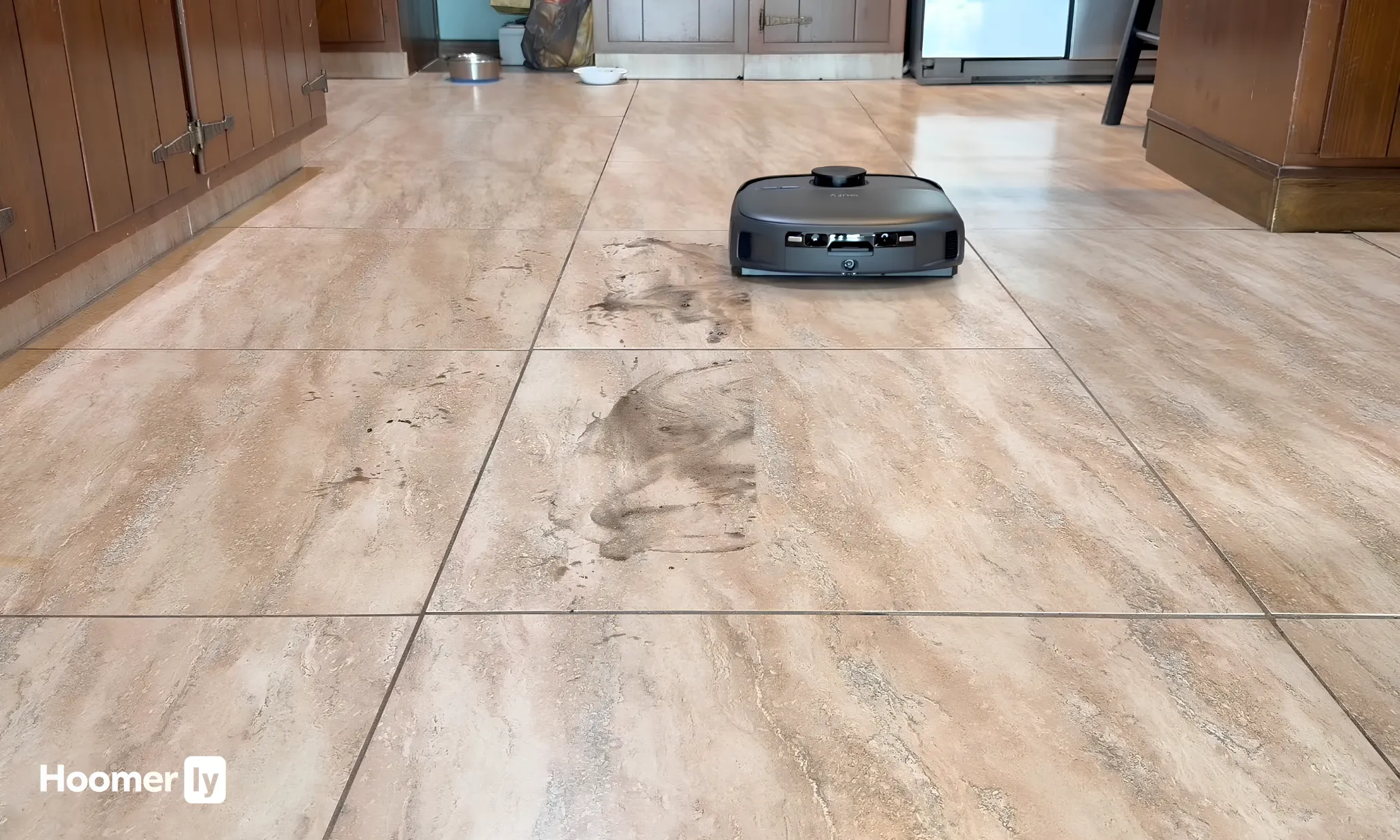
No Camera, Still Avoids Obstacles Well
LiDAR-only navigation means no video feed, no privacy concern. It detects objects 3cm and larger and routes around them cleanly. It is not as aggressive about tiny obstacles as camera-based systems but for standard home clutter, furniture legs, and pet bowls it works reliably.
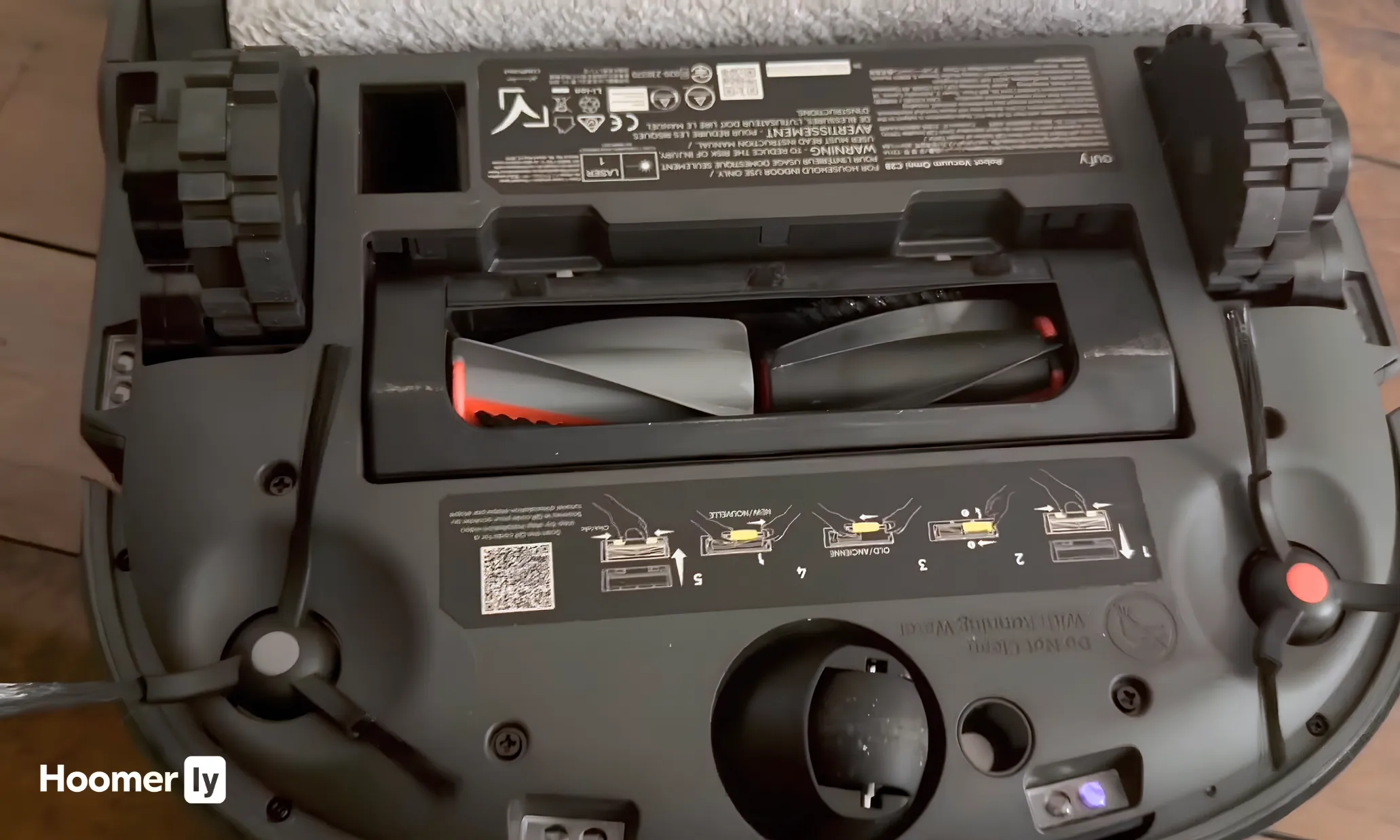
Carpet Boost That Kicks In Without Being Asked
When it crosses from hardwood to carpet the suction ramps up automatically. The mop also lifts on short pile so it is not dragging a wet pad across rugs. In my experience this transition usually needs a zone setting in the app but the C28 handles it on its own.
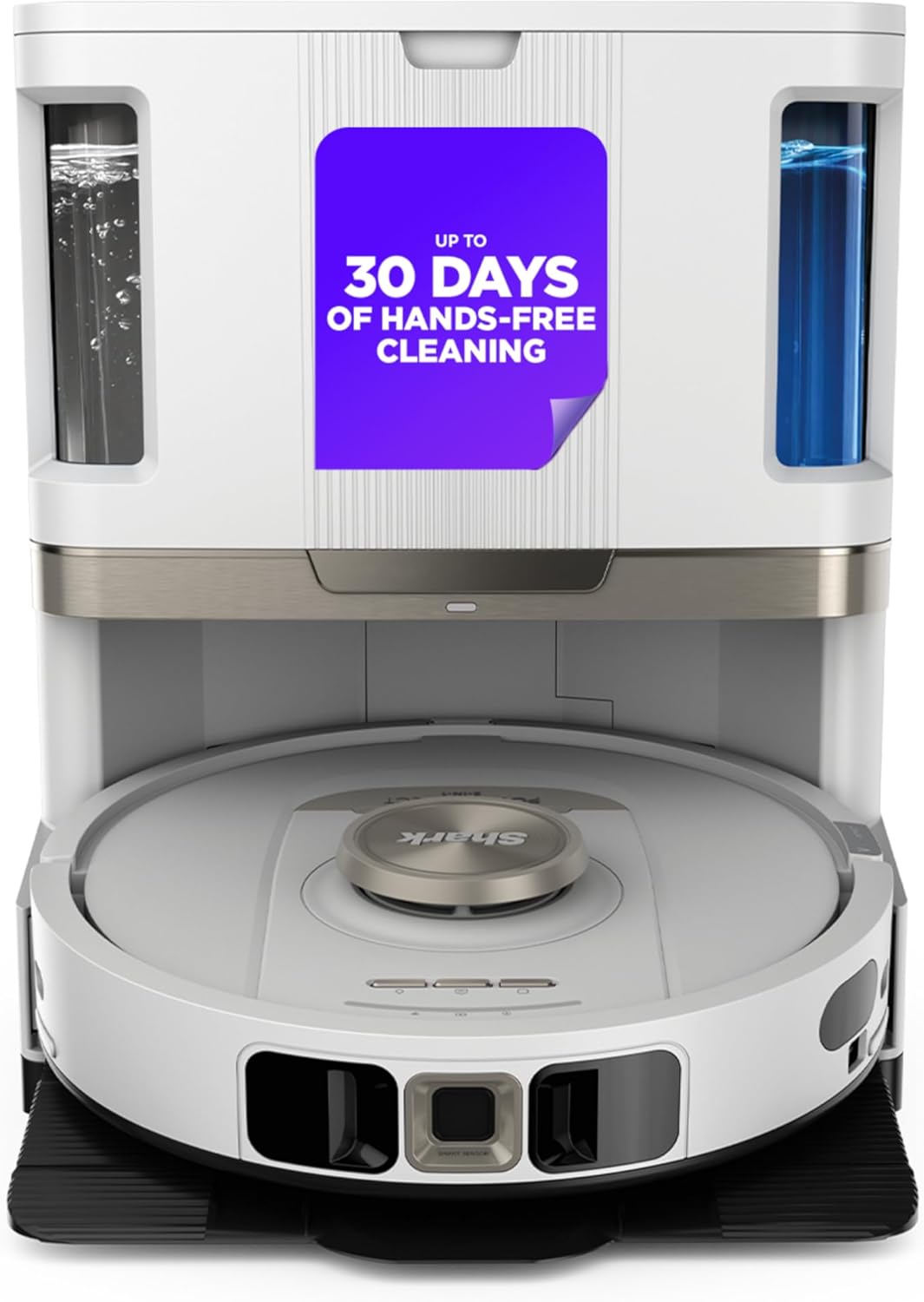
Pros
- Sonic mop scrubs 100x per minute on dried stains
- 60-day bagless bin, no weekly emptying needed
- Auto-lifts mop over carpet, no wet rug risk
- Edge Detect pulls corner debris into the path
- Anti-hair wrap brushroll plus HEPA filtration
Cons
- Priced around $700, not the cheapest in this range
- Battery runs around 110 minutes, may need mid-cycle charge
- Needs cleaning solution cartridges on an ongoing basis
Sonic Mopping That Actually Scrubs
Most robot mops wipe. This one scrubs at 100 passes per minute, which is a real difference on dried spills and footprints. I tried it on a coffee stain that had sat on the hardwood for a day and it came up cleaner than I expected on the first pass. On fresh messes it is even better. The mop lifts automatically when it hits carpet so there is no dragging wet pads across rugs.
60-Day Bin That Actually Earns That Number
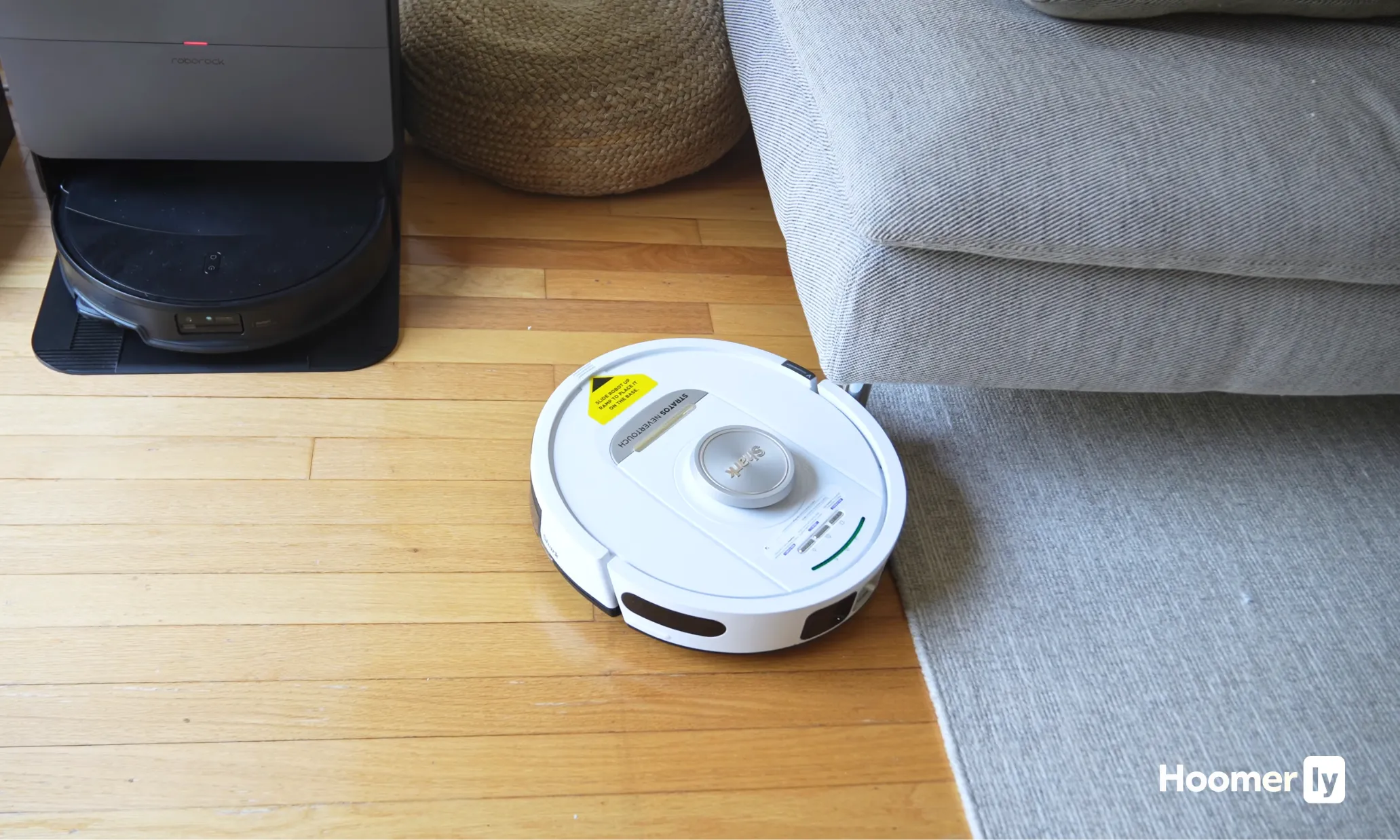
The bagless 60-day capacity is on the larger side for this category. In my home with two dogs and daily runs, I get close to three weeks before it needs emptying. For a household without pets or daily messes, the 60-day figure is realistic. The NeverTouch base handles the rest automatically after every cycle: mop washing, drying, and water refill.

Gets Into Corners Better Than Most
Edge Detect uses air blasts to push debris from corners and wall edges into the cleaning path before the robot passes over. After a few weeks I stopped finding the usual dust line along the baseboards that most robots leave behind. It is not perfect in very tight corners but it is noticeably better than other robots I have run in this house.

Handles Pet Hair Without the Weekly Maintenance
The anti-hair wrap brushroll combined with HEPA filtration keeps pet dander from recirculating back into the room. After a month of daily use with two shedders, I checked the brushroll and it needed a wipe, not a full clean. The HEPA filter matters too if anyone in the house has allergies or sensitivities to pet dander.

AutoLift Crosses Thresholds and Protects the Rugs
The mop lifts automatically over carpet and the chassis handles thresholds without getting stuck. Both matter in a mixed-floor home. After the first week I stopped worrying about it dragging a wet pad into the living room rug because it raises the mop reliably every time it crosses from hard floor to carpet.
The market in this price range has shifted fast. What you’re getting now for under a thousand dollars is essentially a full cleaning system: the vacuum handles the floors, the dock handles the mop pads, and you’re mostly just emptying a bag every few months. That’s a real change from even two years ago.
What separates a good pick from a mediocre one here isn’t just suction numbers. It’s how the dock actually cleans the mop, how well the robot avoids your dog’s leash or your kid’s charging cable, and whether the battery lasts long enough to finish a real house in one go.
I’ve broken down each model below by what it actually does well and where it falls short. No padding, no soft-pedaling the weak spots.
How We Test
In our robot vacuum review, we evaluated each model’s real-world performance based on the features that matter most to homeowners. Rather than relying solely on manufacturer specifications, we designed practical tests to measure how well each robot cleans, navigates, and automates everyday floor care.
- Floor Cleaning Performance: We tested every robot on hardwood floors, tile, and area rugs using a mix of dust, flour, cereal, pet hair, and larger debris to simulate everyday household messes. We also evaluated edge cleaning, corner coverage, and carpet performance to see how consistently each robot handled different floor types. Since cleaning ability is the primary reason people buy a robot vacuum, this category accounts for 40% of the overall performance score.
- Navigation & Smart Cleaning: Each robot completed multiple cleaning cycles in a furnished home with common obstacles such as charging cables, shoes, chair legs, and pet toys. We assessed mapping accuracy, obstacle avoidance, room coverage, and carpet detection, while also testing mopping performance on everyday dried spills and sticky stains for models equipped with mopping systems. This category represents 30% of the overall performance score, reflecting how effectively a robot cleans with minimal user intervention.
- Battery & Dock Automation: We measured real-world runtime, recharge efficiency, and each robot’s ability to resume cleaning after charging. For models with self-empty docks, we also evaluated automatic dust collection, mop washing, mop drying, water refilling, and overall maintenance convenience. These features significantly reduce day-to-day effort and make up the remaining 30% of the overall performance score.
Other factors, including app usability, noise levels, maintenance requirements, build quality, and long-term reliability, are also carefully evaluated.
My Top Pick
Here’s how I’d slot each one before we get into the full breakdowns.
Best Overall Dreame L50 Ultra at Amazon ↓ Jump to Review
Best for Carpet + Zero Tangle Roborock Qrevo CurvX at Amazon ↓ Jump to Review
Best Value eufy C28 Omni at Amazon ↓ Jump to Review
Most Honest Assessment Shark Stratos 2-in-1 AV2700ZE at Amazon ↓ Jump to Review
Spend any amount of time reading robot vacuum specs and you start to notice something: the numbers and the real-world results don’t always line up. One model in this list claims 22,000 Pa of suction. In a lab, it measured at less than half the category average. I’ll get into that. Another costs $500 and beat out $1,200 machines in some independent evaluations. The price tag doesn’t tell the story here.
My two dogs shed constantly. My floors are mostly hardwood with area rugs in the living room and one carpeted bedroom. I care about pet hair pickup, whether the mop actually cleans itself, and whether the robot can navigate around the dogs’ toys without getting stuck at 2am. Those are the lenses I’m running these through. If that matches your situation, this guide should save you a lot of time.
#1 Best Overall: Dreame L50 Ultra
The L50 Ultra sits at around $850 right now, and it was a $1,399 flagship not long ago. The numbers behind it are hard to argue with: VacuumWars ranked it #1 out of 150+ models, it pulled 100% pet hair pickup in their evaluation (best in class), and hit 90% on carpet deep clean, which puts it in the top five all-time. The dock runs a 20-nozzle hot water wash at 167 degrees, includes a color sensor that flags dirty pads and re-washes them, then dries everything with warm air. That re-wash feature is something I haven’t seen replicated anywhere else at this price.
The one thing to know going in: battery efficiency is below average for the category. It runs for around 200 minutes, but covers less square footage per charge than some competitors. In a mid-size home like mine, it’s fine. In a large open-plan house, you might see it dock to recharge before it’s done. The other thing: if you have two heavy-shedding dogs, the dustbin port can clog about once a week, and the app won’t tell you when it happens. You’ll notice when suction drops. Worth keeping an eye on. Still, for pet owners who want the best combination of pickup performance and dock cleaning in this price range, nothing else comes close right now.
#2 Best for Carpet + Zero Tangle: Roborock Qrevo CurvX
The Qrevo CurvX scored 92% on carpet deep clean in VacuumWars evaluations, which ties it for third best all-time. Its tangle rate came in at 0% against a category average of 28%. That second number matters a lot if you have a dog that leaves fur ropes on the floor or kids who drop hair ties everywhere. The dock washes mop pads at 176 degrees, dries them at 113 degrees, and handles its own water refill and wastewater collection. At 3.14 inches tall with a retractable LiDAR tower, it also fits under more furniture than most competitors in this class. Priced between $850 and around $1,000 depending on timing.
Here’s the thing I want to be straight about: Roborock advertises 22,000 Pa of suction. The lab number is 0.54 kPa. The category average is 0.96 kPa. That’s a significant gap between the marketing claim and what it actually produced under controlled conditions. It doesn’t tank the overall performance because carpet scores and tangle rate are strong, but you should know the Pa figure on the box is not an accurate picture of real pickup power. The dustbin is also very small at 258ml, so if you’re running it in a pet-heavy home, check it often. For people who prioritize carpet performance and never want to deal with a brush roll wrapped in hair, this one earns its spot.
#3 Best Value: eufy C28 Omni
The eufy C28 Omni launched in 2026 and comes in around $499 to $530, which makes it the strongest value in this group by a wide margin. What makes it different from the others isn’t just price: it uses a true roller mop, not spinning pads. The roller applies 1 kg of downward pressure across a 27 cm surface and gets a continuous fresh-water wash during the cleaning cycle itself. The dock is a 5-in-1 Omni Station that auto-empties, washes the roller, dries it with hot air, refills clean water, collects wastewater, and dispenses detergent automatically. That auto-detergent feature is genuinely unusual at this price. Tom’s Guide, How-To Geek, and Expert Reviews have all praised it, with Expert Reviews calling it the best value robot vacuum and mop they’ve run.
No VacuumWars lab data yet since it launched recently, so I can’t give you the same head-to-head carpet and pet hair numbers I can for the Dreame and Roborock. Suction is 15,000 Pa, which is the lowest of the four models here. Obstacle avoidance uses AI laser and IR rather than structured light, which means it’s less capable in low light situations. For the price gap compared to the others, those trade-offs are easy to accept for most households. If your floors are mostly hard surface with light pet hair and you want a dock that genuinely handles itself, this one punches well above its price. For more on self-emptying robot vacuums at various price points, I’ve got a full guide that breaks down the dock differences in detail.
#4 Most Honest Assessment: Shark Stratos 2-in-1 AV2700ZE
The Shark Stratos comes in around $700 and brings a few things the others don’t: HEPA filtration, an Edge Detect air-blast system that pushes debris away from walls before the brush roll gets there, and a 30-day water tank in the dock. The NeverTouch base auto-empties into a 60-day bag and washes the mop pad. On paper, those features sound like a strong package. In practice, YourRobotVacuum scored it 3.7 out of 5 overall and 3.4 out of 5 for mopping. The flat vibrating pad runs at 100 scrubs per minute, which sounds active, but it underperforms on dried stains compared to spinning or roller systems.
The battery is the real issue. At 110 minutes of runtime, it’s less than half what the eufy C28 offers. In a mid-size home with furniture to navigate, that’s a real constraint. The obstacle avoidance system uses 360-degree LiDAR only, with a minimum detectable object height of four inches. Cables, socks, and small toys are invisible to it. Shark hasn’t published suction output in Pa, and I couldn’t find independent lab kPa data, so there’s no honest spec comparison possible there. One note: a Renewed variant exists at a different ASIN (B0G365WS5K). The ASIN in this article (B0FJC51J12) is a new unit. I’m not in a position to strongly recommend the Shark over the other three here, but if you’re already a Shark household and the HEPA filter or Edge Detect system is important to you, it’s worth considering. Check out the full Shark robot vacuum guide for a broader look at the lineup.
What to Look for in the Best Robot Vacuum Under $1000
Dock Cleaning System
At this price point, every model on this list comes with a self-cleaning dock. But they’re not all the same. Hot water washing at 160+ degrees actually sanitizes the mop pads. A color sensor that re-washes dirty pads is a step further. Auto detergent dispense is another level again. The dock is where you spend the least time but where the differences matter most day-to-day. Look at what the dock actually does, not just whether it has one.
Pet Hair Pickup and Brush Roll Tangle Rate
For anyone with dogs or cats, these two numbers matter more than any Pa rating. A vacuum that picks up 100% of pet hair on one pass and has a 0% tangle rate is worth more in a shedding household than one with higher advertised suction that wraps itself in fur every third run. I look for independent lab results here, not manufacturer claims. Check sources like VacuumWars for head-to-head evaluations. If you want a deeper look at the best options specifically for dogs, my guide on the best robot vacuum for dog hair goes further on this.
Suction Pa Claims vs Real Lab Numbers
Advertised Pa numbers can be misleading. One of the models in this article claims 22,000 Pa. The lab measurement was 0.54 kPa against a 0.96 kPa category average. That gap is large enough to change how you think about the product. When you see a Pa claim, try to find an independent kPa measurement before deciding. The best robot vacuum under $1000 isn’t always the one with the biggest number on the box.
Battery Life vs Your Floor Plan
Battery life matters most in relation to your actual square footage. A 110-minute battery in a small apartment might be fine. In a 2,000 square foot house with furniture to navigate and rooms to map, it may not finish a full clean before docking to recharge. Look at square footage per charge, not just total runtime. The models in this group range from 110 minutes to 251 minutes. That’s a meaningful gap.
Obstacle Avoidance Capability
The difference between structured light with an AI camera and LiDAR-only avoidance is real and noticeable. Structured light systems can identify cables, small socks, and pet toys at low height. A LiDAR-only system with a four-inch minimum detection height will run right over them. In a household with kids, dogs, or anything that ends up on the floor unexpectedly, that distinction changes how much you have to prep the room before each run.
Mop Type: Spinning Pads vs Roller vs Flat Vibrating
These aren’t interchangeable. Spinning pads with downward pressure work well on hard floors and handle lightly sticky spots. A true roller mop with 1 kg of pressure and a continuous fresh-water feed gives more consistent coverage on larger surfaces. A flat vibrating pad at 100 scrubs per minute looks active but underperforms on anything that’s actually dried onto the floor. Know which system a robot uses before you buy, especially if mopping matters as much as vacuuming to you.
My Pick
For most households, the best robot vacuum under $1000 right now is the Dreame L50 Ultra. It earned the top spot in independent lab rankings for a reason: the pet hair and carpet numbers are genuinely the best in this price range, and the dock cleaning system is more thorough than anything else here. If you have two shedding dogs and want to mostly forget the robot exists, this is the one. Just keep an eye on the dustbin port if your pets shed heavily, and know that battery efficiency is below average.
For carpet-heavy homes where tangle-free operation is the priority, the Roborock Qrevo CurvX is a strong alternative. And if the $850 price point feels like too much for your situation, the eufy C28 Omni at around $500 is the most capable option at that price I’ve come across this year. The roller mop and the 5-in-1 dock at that price point are genuinely surprising. The Shark does some things well, but I’d have a hard time picking it over any of the other three given the battery limitation and obstacle avoidance floor. If you’re also looking at options below this price range, the best robot vacuums under $200 guide covers what’s actually worth buying at a lower budget.
FAQs
Is a robot vacuum under $1000 actually worth buying in 2026?
Yes, and honestly more so than in previous years. The gap between what you get under $1,000 and what you’d pay $1,500 or more for has narrowed significantly. Models like the Dreame L50 Ultra, which held a $1,399 list price not long ago, now sit comfortably in this range and top independent performance rankings. You’re getting hot water mop washing, 100,000+ Pa-class suction, and advanced obstacle avoidance without paying flagship prices.
Do these robot vacuums actually mop, or is it just a damp cloth dragged across the floor?
It depends on the model. Spinning mop pads with downward pressure actually scrub. A roller mop with continuous fresh-water feed covers more surface area more consistently. A flat vibrating pad is somewhere in between. The dock matters too: if the pads aren’t getting washed properly between runs, you’re essentially mopping with a dirty cloth. For a true mopping result, focus on the mop type and how the dock cleans it, not just whether a water tank is present.
How often do I actually need to do anything with these robots?
For the models in this list, not much. The docks handle mop washing, water refill, wastewater collection, and dust bag emptying. The Dreame L50 Ultra’s dust bag lasts around 100 days. The main thing you’ll need to do in a pet-heavy home is check the dustbin port occasionally for clogs, since the app doesn’t always flag that. Beyond that, filter cleaning every few months and replacing the dust bag when needed is about it.
What’s the difference between the best robot vacuum under $1000 and the models that cost $1,200 or more?
At this point, not as much as you’d expect. The biggest gains in the $1,200+ range tend to be in larger dock water tanks, slightly faster charging, or additional mapping features like floor-specific routines across multiple levels. Core cleaning performance, pet hair pickup, and mop washing systems are very competitive in the under-$1,000 bracket right now. Unless you have a very large home or specific multi-floor needs, the performance difference rarely justifies the extra spend.
Can these handle the transition between hardwood and carpet without getting stuck?
The models in this list all handle it, but with different strengths. The Dreame L50 Ultra has ProLeap legs that climb up to 6 cm obstacles, which is the best in class for threshold clearance. The Roborock CurvX uses an AdaptiLift chassis that raises the entire unit up to 40mm for transitions. Both handle hardwood-to-rug transitions well in my experience. The eufy and Shark handle standard transitions fine but don’t have the same raised-threshold clearance if you have chunky area rug borders.

Write Your Review
No reviews yet. Be the first to share your experience!