


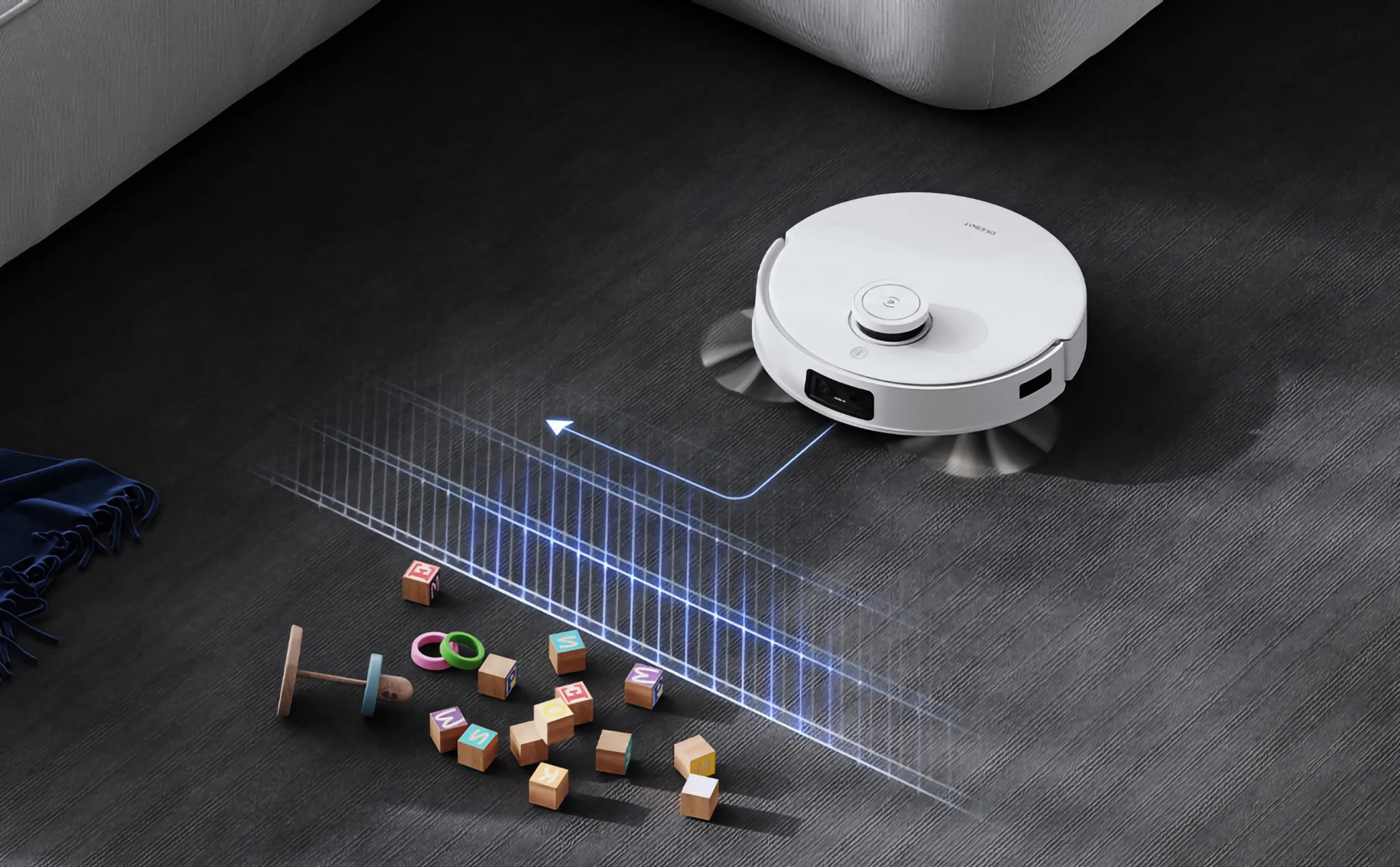
If you’ve bought a robot vacuum in the last couple of years, you’ve probably noticed something: it doesn’t bumble around like the old models did. No more bouncing off the couch leg five times before figuring out where to go next. Newer robot vacuums just seem to know. They glide around the coffee table, skip the shoes by the door, and remember your entire floor plan the next day too.
So what changed? Mostly one thing: LiDAR navigation.
What Is LiDAR and Why Does It Matter for Robot Vacuums?
LiDAR stands for Light Detection and Ranging. It works a lot like radar, except instead of radio waves, it uses invisible laser light, usually infrared, to “see” a room.
Picture the small round tower sitting on top of a robot vacuum. That’s the LiDAR sensor, and it spins constantly, firing thousands of laser pulses per second in a full 360 degree sweep. Every time one of those pulses hits something, a wall, a chair leg, a pet’s food bowl, it bounces back and gets picked up by a receiver. The robot measures how long that round trip takes and uses it to calculate the exact distance to that object.

Multiply that by thousands of pulses from thousands of angles, and the robot ends up with what’s called a point cloud, essentially a dot by dot sketch of the room. Enough of these points combined, and the robot has built a real 2D or even 3D map of your home.
Compare that to older navigation methods like bump sensors and gyroscopes, and the difference is huge. Those older systems couldn’t detect anything in advance. They only reacted after a collision, and they tended to drift off course over time. Even compared to vSLAM, the camera based navigation system used by some competitors, LiDAR usually wins on accuracy and consistency. It performs the same whether the room is fully lit or completely dark.
Sensor Fusion: Why LiDAR Alone Isn’t the Whole Story
The most advanced robot vacuums on the market don’t rely on LiDAR by itself. They combine several sensor types at once, a method known as sensor fusion, to build a more complete picture of their surroundings.
1. Structured Light for Close Range Obstacle Detection
Many premium robot vacuums include an additional system, sometimes marketed as binocular vision or a 3D matrix eye. Instead of scanning the whole room from above, this system projects a grid of invisible infrared dots directly onto the floor and objects just ahead.

An infrared camera then tracks how that dot pattern stretches and warps as it hits surfaces at different shapes and distances. From that distortion, the robot generates a detailed 3D depth map, but only for the area immediately in front of it.
This is exactly the kind of thing LiDAR tends to miss: charging cables, small toys, or pet waste sitting low on the floor. A rotating laser tower up top can easily overlook these, but a forward facing sensor usually catches them.
2. RGB Cameras for Object Recognition
Many robot vacuums also include a standard RGB camera, similar to the one in a smartphone. This is where AI based object recognition comes in. The robot can identify specific items, such as a shoe or a chair leg, and distinguish between surface types like hardwood and carpet. That distinction matters because it determines whether the robot should switch between vacuuming and mopping modes, or adjust suction strength.

When a robot combines LiDAR for whole room mapping, structured light for near range obstacle avoidance, and a camera for object recognition, it can make smarter, more accurate decisions about where to clean and how to get there.
The Bottom Line on Robot Vacuum Navigation
LiDAR technology in robot vacuums isn’t the mysterious, high end feature it once seemed to be. It has become a standard part of how modern devices understand their environment. Combined with structured light and camera based sensors, today’s robot vacuums come close to navigating a room the way a person would.
As sensor technology keeps improving, expect even better obstacle detection in future models, meaning fewer tangled cords, fewer surprises on the floor, and fewer interrupted cleaning cycles.

Write Your Review
No reviews yet. Be the first to share your experience!