

For robot vacuum obstacle avoidance, the Roborock Saros 10R is the one I’d buy without hesitating. It scored a perfect 24/24 on VacuumWars’ obstacle avoidance evaluation, works in complete darkness, and fits under furniture most robots can’t reach at 3.14 inches tall. If you have pets and the price is a stretch, the Narwal Freo Z Ultra is a very close second, with the best pet waste avoidance rating I’ve seen at this price point.
Everything I Recommend
These are the robot vacuums worth looking at if obstacle avoidance is your main concern. I keep this list focused on models that have been independently scored, not just brands with good marketing.

Pros
- Actually fits under beds and sofas that rejected every other robot vacuum I've tested
- Zero-tangling brush stayed clear through two weeks of peak shedding season without one clog
- Mop extends automatically into corners; no more dust lines where walls meet the floor
- 60-day dust bag means I'm not emptying the base every week like with my previous model
Cons
- Only connects to 2.4GHz Wi-Fi; older routers or 5GHz-only networks won't work
- At $1,099, this is a premium machine; worth it only if you have low-clearance furniture or pets
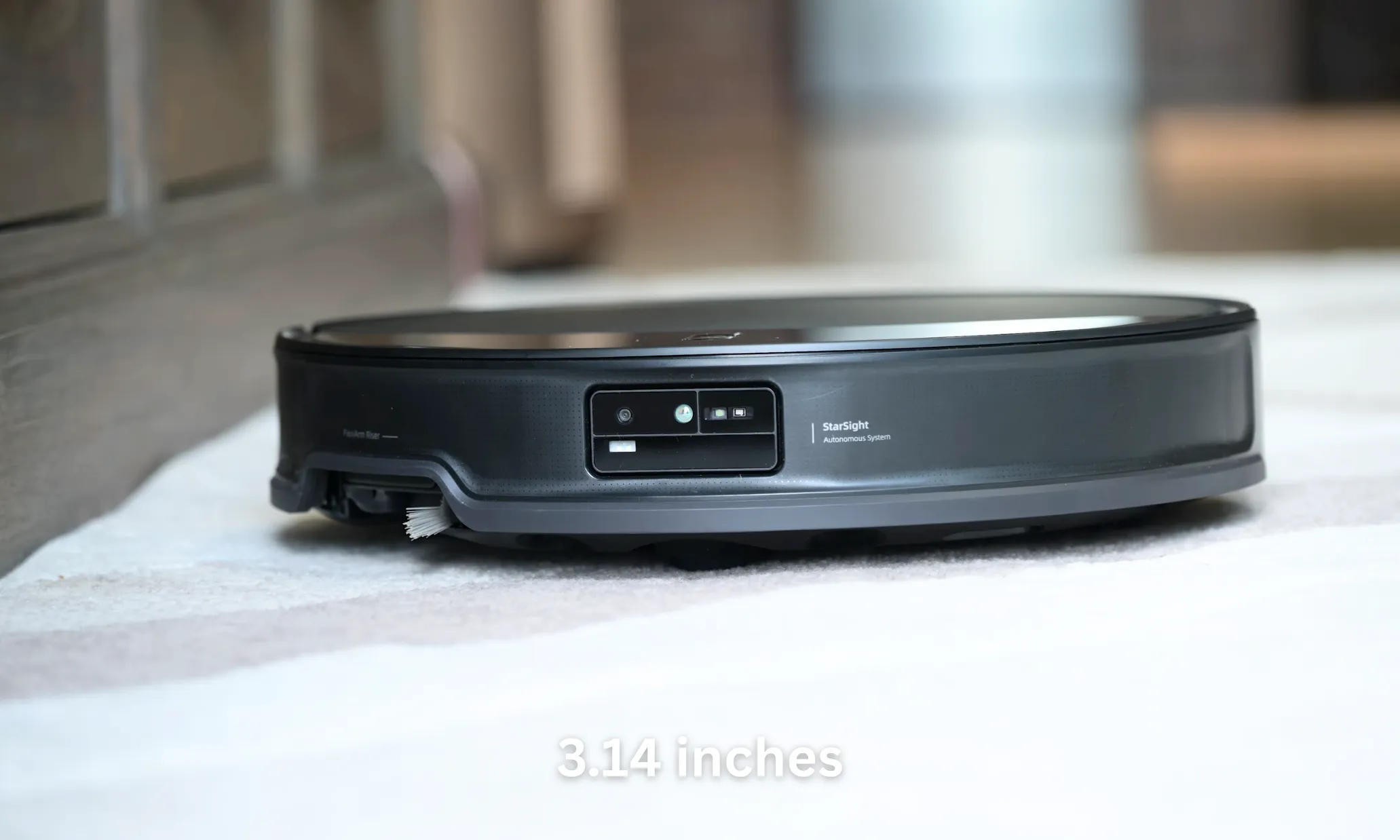
3.14-Inch Ultra-Slim Profile for Under-Furniture Cleaning
After eight years of testing robot vacuums, I can count on one hand how many actually fit under my bed or the low-slung couch in the living room. The Saros 10R's 3.14-inch height means it glides into spaces where standard models get wedged, reaching dust and pet hair that accumulate in those forgotten zones. The StarSight 3D sensing system doesn't rely on a bulky LiDAR dome sticking up from the top, so there's nothing to catch or block its path. One thing to know: the ultra-slim profile doesn't mean a smaller footprint overall, so tight hallways between furniture still require a bit of clearance.
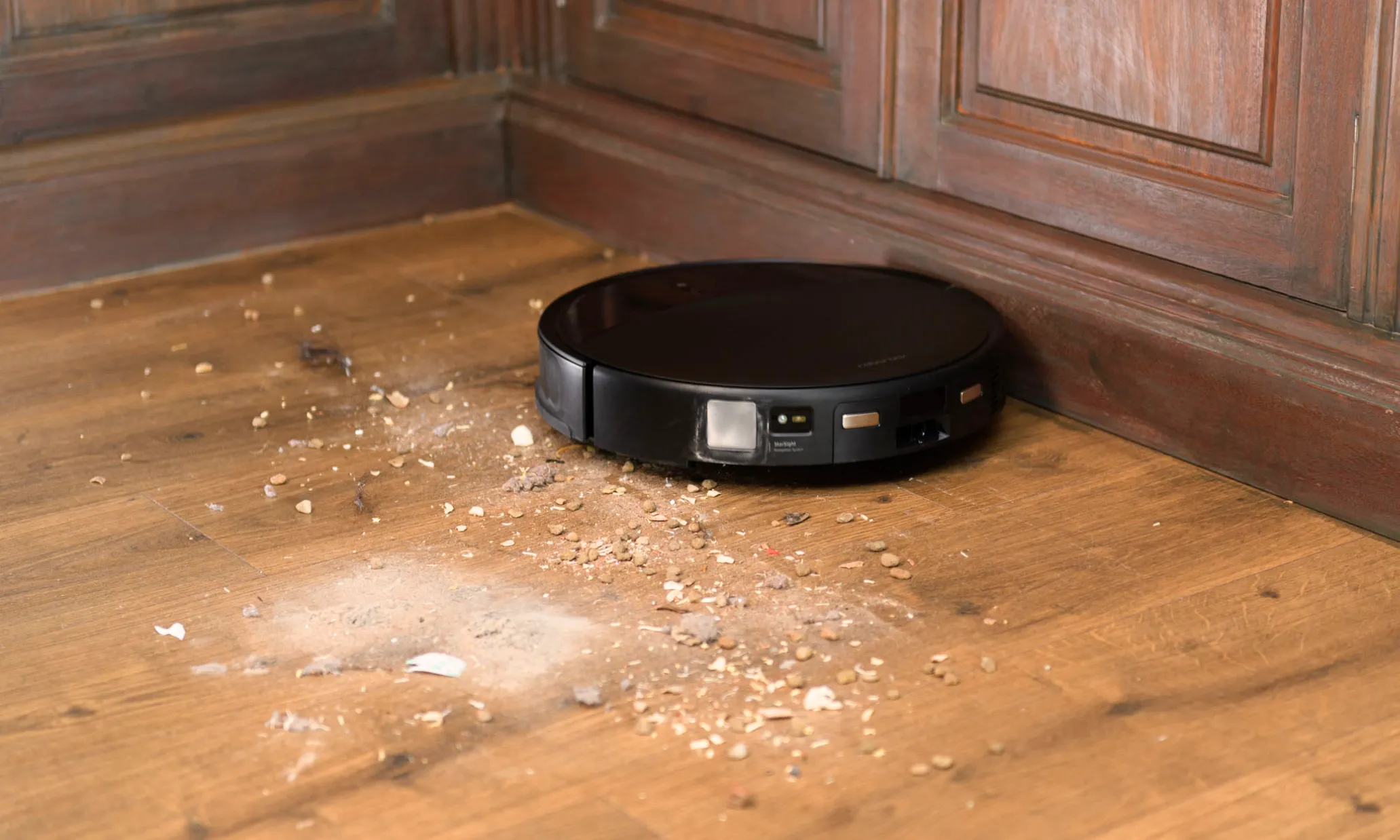
22,000Pa HyperForce Suction with Zero-Tangling Brush Design
During shedding season with a long-haired cat, most robot vacuums need a brush cleaning every two or three days. The Saros 10R's DuoDivide main brush and anti-tangle omnidirectional wheels held up through a full week of heavy shedding without a single wrapped hair or jam. At 22,000Pa, the suction pulls embedded pet hair out of low-pile area rugs in one pass, something I couldn't say about the 4,000Pa model I ran before this. The side brush does wrap occasionally on long strands, but far less often than traditional designs.
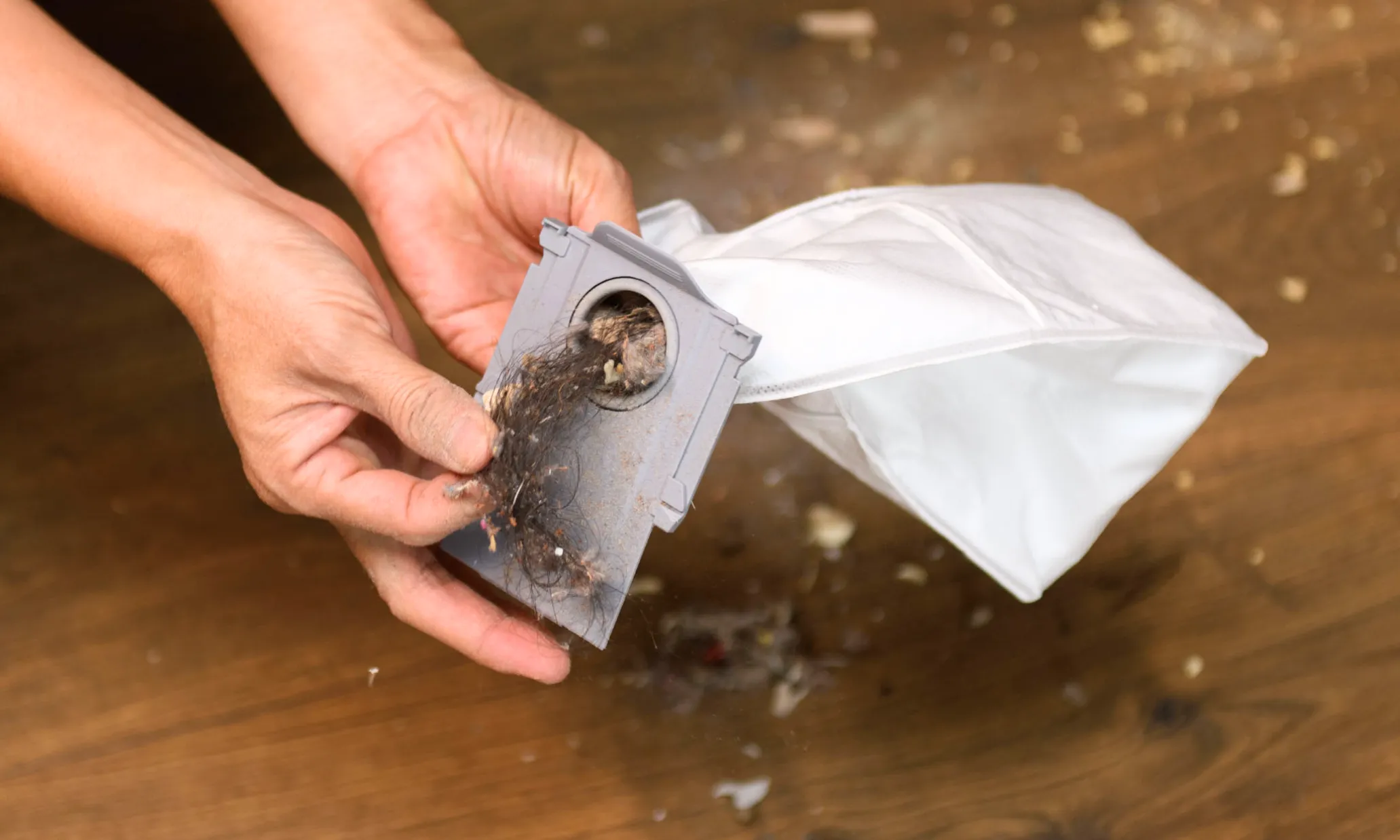
FlexiArm Riser Side Brush and Mop Extends Into Corners Automatically
Corner and edge cleaning on most robot vacuum and mop combos leaves visible dust lines where walls meet the floor. The FlexiArm automatically extends as the Saros 10R detects corners, so the mop pad actually reaches into those tight spots instead of just skirting them. After weeks of daily runs, I noticed fewer dusty corners than with any previous model, though very tight 90-degree corners still get a light touch rather than a deep scrub.
Self-Emptying Dock with 60-Day Dust Capacity and Hot-Water Mop Cleaning
The 10-in-1 dock handles the jobs that usually fall on you: auto mop removal, dust collection, hot water mop washing at 176°F, hot air drying, and auto detergent dispensing. With 60-day dust collection, I'm emptying the base bag roughly once every six weeks instead of weekly like I did with my old self-emptying robot vacuum. The dock does get loud during the dump cycle (around 80dB for about 10 seconds), so don't run it while someone's napping upstairs. Refilling the water tank and detergent takes about two minutes every two weeks, which is still far less work than manually washing mop pads by hand.


Pros
- Exceptional AI vision system with dual cameras provides superior object recognition and real-world adaptability compared to single-camera competitors
- Intelligent mode switching prevents wet/dry mixing, reducing floor damage and improving cleaning effectiveness
- Powerful 12000Pa suction combined with tangle-free brush design handles pet hair without performance degradation
- Comprehensive self-maintenance system including hot-water washing, dust compression, and auto-drying minimizes manual upkeep
- Ultra-quiet operation at 53dB makes it suitable for homes with sleeping family members or noise-sensitive pets
Cons
- Requires 2.4GHz WiFi connectivity only, limiting compatibility with modern dual-band networks and potentially causing connectivity issues in congested WiFi environments
- 12000Pa suction power is lower than some competing models like the Freo Z10 Ultra at 22000Pa, which may impact performance on thick carpets
- Premium pricing reflects advanced features but may be cost-prohibitive for budget-conscious buyers seeking basic robot vacuum functionality
The NARWAL Freo Z Ultra represents a significant leap forward in autonomous floor cleaning technology. This hybrid robot vacuum and mop combo is engineered for homeowners who demand intelligent automation without constant supervision, particularly those managing pet hair or multi-surface households. The device combines dual 1600x1200 HD RGB cameras with dual AI processing chips to see and understand its environment in real-time, making cleaning decisions on the fly rather than following predetermined patterns.
What sets the Freo Z Ultra apart is its adaptive cleaning intelligence. The dual-chip AI system detects dirt types as it encounters them, automatically deploying either suction or mopping accordingly. When dust is detected, the mop lifts and suction activates. When liquid is identified, the mop lowers and suction disengages. This prevents the common frustration of robot vacuums spreading wet spills or leaving dry dust damp. For heavy messes, the system engages a matrix cleaning pattern that crosses the area both horizontally and vertically until the floor is flawless. The obstacle avoidance system recognizes over 120 different objects, maintaining safe distances of 150mm from hazards like pet accidents while getting within 8mm of safe furniture legs.
The self-maintenance system is genuinely impressive. The docking station autonomously washes the mop tracks using adaptive hot water between 104 and 140 degrees Fahrenheit, preventing scorching while removing grease, then escalates to 167 degrees for hygienic sanitization. The 2.5L dustbag compresses debris over 120 days, and the self-drying system eliminates odors by keeping wet and dry waste separated. At 53dB noise level, the Freo Z Ultra operates quietly enough for use during daytime hours without disrupting household activities. The 12000Pa suction power, while powerful, pairs with a certified tangle-free brush that maintains performance even with heavy pet hair.
One limitation worth noting is the WiFi connectivity requirement of 2.4GHz only, which may present challenges in homes with modern dual-band networks or congested WiFi environments. Additionally, while 12000Pa suction is substantial, some competing NARWAL models reach 22000Pa, which could matter for thick carpet cleaning. The premium price point reflects the advanced dual-camera and dual-chip architecture but represents a significant investment compared to single-sensor alternatives.
For pet owners, allergy sufferers, and busy professionals seeking a truly intelligent cleaning solution that adapts to real-world conditions, the NARWAL Freo Z Ultra delivers exceptional value. The combination of vision-based decision-making, comprehensive self-maintenance, and quiet operation makes it one of the most capable hybrid robot cleaners available today.
Vision and Processing: Dual 1600x1200 HD RGB cameras, dual AI chips, tri-laser navigation system
Cleaning Performance: 12000Pa suction power, 7-12N mopping pressure, quiet zero-tangling brush 2.0, EdgeSwing technology for wall cleaning
Maintenance: AI adaptive hot-water self-washing (104-167 degrees Fahrenheit), 120-day dust storage with compression, self-drying system
Smart Features: App control, voice assistant compatibility (Alexa, Google, Siri), scheduled cleaning, no-go zones, real-time object avoidance for 120+ items
Specifications: 12000Pa maximum suction, 53dB minimum noise level, 5-hour battery life, 19.1L x 17.5W x 25.3H inches, white color, disc-shaped design, ultra-slim 3.7-inch profile, 1.6-inch threshold crossing capability
Connectivity: 2.4GHz WiFi network required, battery powered with included batteries
Who Should Buy This: Pet owners dealing with shedding, allergy sufferers requiring frequent floor cleaning, busy professionals who value automation, and households with mixed floor types (hardwood, tile, carpet) that benefit from intelligent mode switching between vacuuming and mopping.
Who Might Want to Consider Alternatives: Budget-conscious buyers seeking basic robot vacuum functionality, homes with only thick carpeting (where higher suction models may perform better), and users with exclusively 5GHz WiFi networks since this model requires 2.4GHz connectivity.
Key Considerations: Verify your home WiFi supports 2.4GHz bands before purchase. Ensure adequate space for the docking station, which handles water, dust compression, and hot-water washing cycles. The 120-day dust storage means less frequent manual emptying, but the initial investment is premium-tier. For maximum benefit, homes with multiple floor types and pet hair challenges will see the best return on investment.
Maintenance Tips: Regularly check the mop track cleaning system in the dock, ensure the dustbag has adequate space before travel or extended use, and periodically verify no-go zones are properly configured to prevent unnecessary docking station access.

Pros
- Exceptional suction power for pet hair removal from both carpets and hard floors
- Advanced app interface with custom routines, room-specific cleaning, and real-time obstacle photos
- Intelligent room prioritization learns your home's traffic patterns and dirt accumulation
- Reliable customer service with responsive support and hardware replacement options
- Seamless smart home integration with major voice assistants
Cons
- Software reliability issues reported by some users including mapping failures and operational errors
- Slower cleaning times compared to competing brands like Roborock and Eufy
- Self-emptying base produces very loud noise during disposal cycle
The iRobot Roomba j9+ is a premium self-emptying robot vacuum designed specifically for pet owners who want powerful, hands-off cleaning. With its flagship status in the Roomba lineup, it combines advanced AI technology with 100% stronger suction than previous models to tackle the unique challenges of pet hair, debris, and household clutter. This vacuum is ideal for multi-pet households with mixed flooring types who prioritize convenience and intelligent automation.
The standout feature is the Dirt Detective intelligence system, which learns your home's cleaning patterns and automatically prioritizes the dirtiest rooms while adjusting suction levels and cleaning passes accordingly. The 7x faster mapping technology creates an accurate floor plan in a single run, and the PrecisionVision Navigation camera identifies obstacles in real-time, capturing photos of detected items for your review. The P.O.O.P. guarantee demonstrates iRobot's confidence in pet waste avoidance. The self-emptying Clean Base holds 60 days of debris, genuinely reducing the frequency of manual maintenance.
Build quality is solid with dual rubber brushes designed to prevent hair tangles, and the device integrates seamlessly with Alexa, Siri, and Google Assistant. The iRobot Home App provides granular control with room-specific scheduling, keep-out zones, and custom cleaning routines. Battery life reaches 180 minutes on a single charge, supporting larger home coverage.
However, user experiences vary significantly. While enthusiastic owners praise its effectiveness and smart features, others report persistent software issues including mapping failures, navigation errors, and inconsistent performance even after multiple mapping attempts. The self-emptying base also operates at high noise levels. Some users found competing brands like Roborock and Eufy more reliable, and the device takes longer to complete cleaning cycles than alternatives.
The Roomba j9+ is an excellent choice if you have pets, value app-based automation, and want a trusted brand with responsive customer service. However, potential buyers should research current reliability reports and consider the trade-off between convenience features and proven performance consistency.
The Roomba j9+ stands apart as the most pet-focused robot vacuum on the market. Its dual multi-surface rubber brushes are engineered to sweep up pet hair without tangling, while the 100% stronger power-lifting suction extracts embedded fur from carpet fibers that standard vacuums miss. The 3-stage cleaning system ensures thorough debris pickup after muddy paw prints, food spills, and outdoor adventures.
The P.O.O.P. guarantee represents a unique pet owner promise: if your robot fails to avoid pet waste, iRobot replaces it free of charge (terms apply). The PrecisionVision camera actively identifies pet toys, food bowls, and charging cords, steering clear of these obstacles automatically. Real-time photo capture lets you see exactly what the robot detected, helping you optimize your home layout for better cleaning performance.
Pet owners can create custom keep-out zones around litter boxes, pet beds, or feeding areas through the app. The Dirt Detective feature learns where your pets spend time and automatically increases cleaning frequency in high-traffic pet areas. Multiple reviewers with multiple pets reported running 2-3 units simultaneously throughout their homes for comprehensive coverage.
Performance Specs: Suction power is 100% stronger than Roomba Combo i Series models. Battery type is Lithium Ion with 180-minute runtime. The device features 2 power levels and 2 cleaning speeds for customized performance.
Cleaning System: 3-stage cleaning with dual multi-surface rubber brushes, edge-sweeping brush, and power-lifting suction. Works on both hardwood floors and carpet with automatic surface detection.
Navigation & Mapping: PrecisionVision Navigation with integrated camera. 7x faster mapping technology. Advanced row-based cleaning pattern for wall-to-wall coverage.
Smart Features: Dirt Detective powered by iRobot OS. Auto-docking with self-emptying Clean Base. 60-day debris capacity. Obstacle avoidance with real-time photo capture. Voice control compatible with Alexa, Siri, and Google Assistant.
Physical Dimensions: 13.3 inches length and width, 3.4 inches height. Weight is 7.5 pounds. Included components: 1 Roomba j9+ unit, 1 Clean Base automatic dirt disposal, 1 extra corner brush, dirt disposal bag, and filter.
Warranty: 1-year limited manufacturer warranty. 30 years of iRobot brand expertise and customer support.
Pros
- Dock empties, washes mop, and dries pads on its own
- Pet hair stays out of the brush roll, not wrapped around it
- Climbs 6cm door tracks without getting stuck
- Avoids cables, shoes, and pet waste before bumping into them
- App zones and 5 carpet modes give real control
Cons
- Sits around $950, on the higher end for robot vacuums
- Suction trails some competitors at this price range
- Dock needs cleaning solution refilled every couple weeks
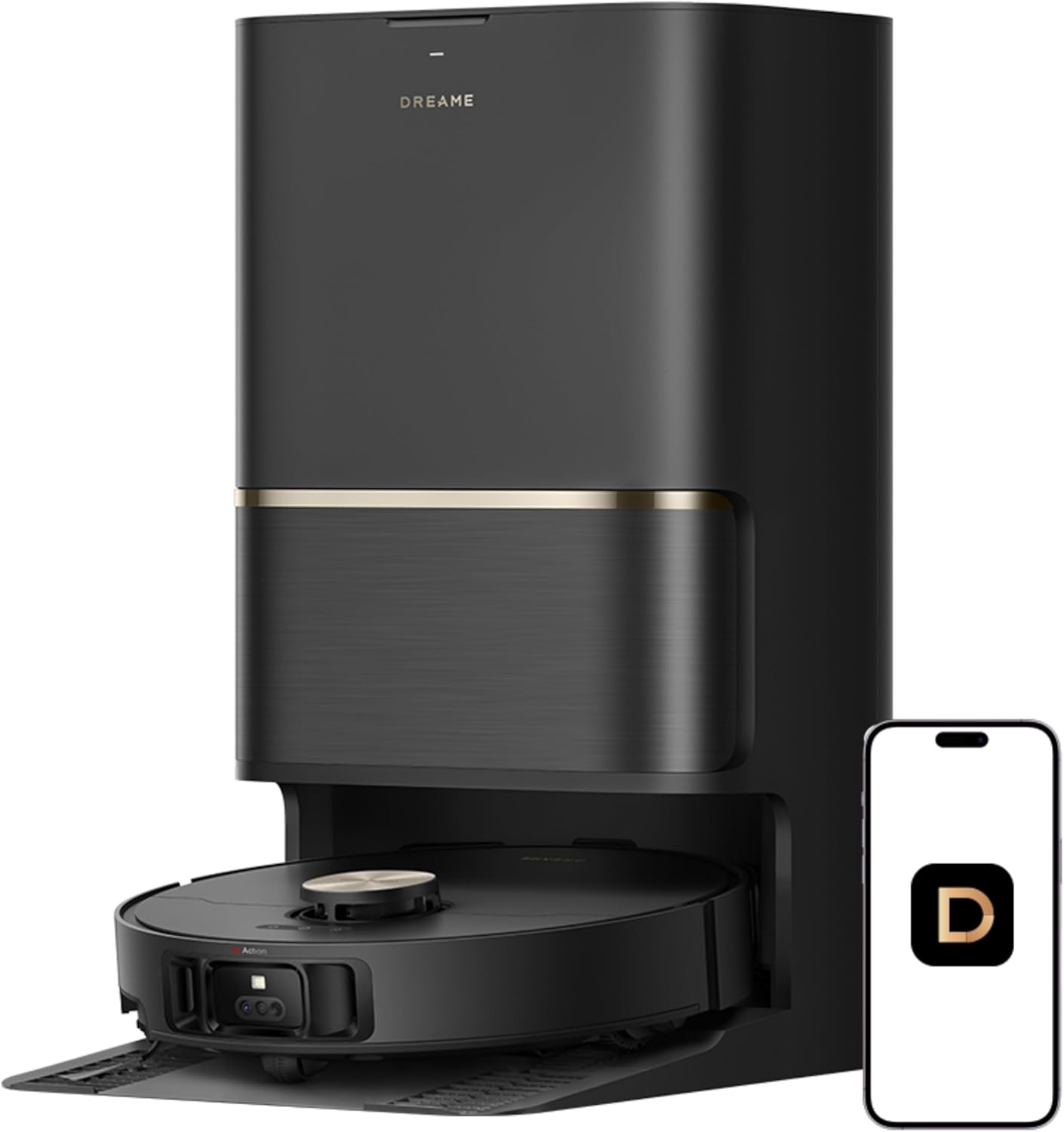
Auto-Empty Dock That Runs Itself
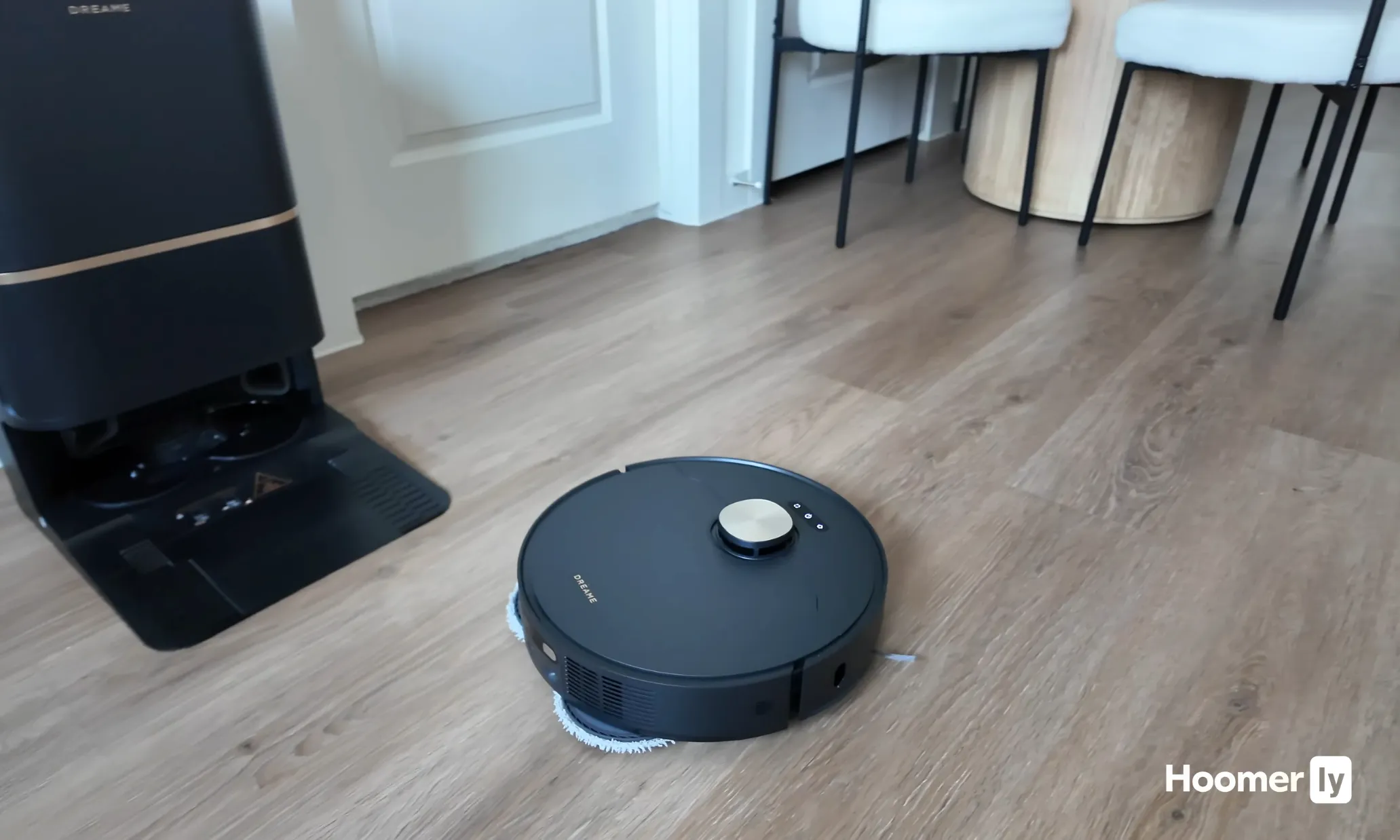
The PowerDock handles emptying, mop washing at high heat, water refilling, and hot air drying after every run. Honestly, after the first week I stopped thinking about it. The 100-day dustbag is real if you have hardwood floors, but with two dogs I hit it closer to six weeks. Still, going from emptying every other day to once a month is a genuine difference.
Hair Goes In, Not Around the Brush
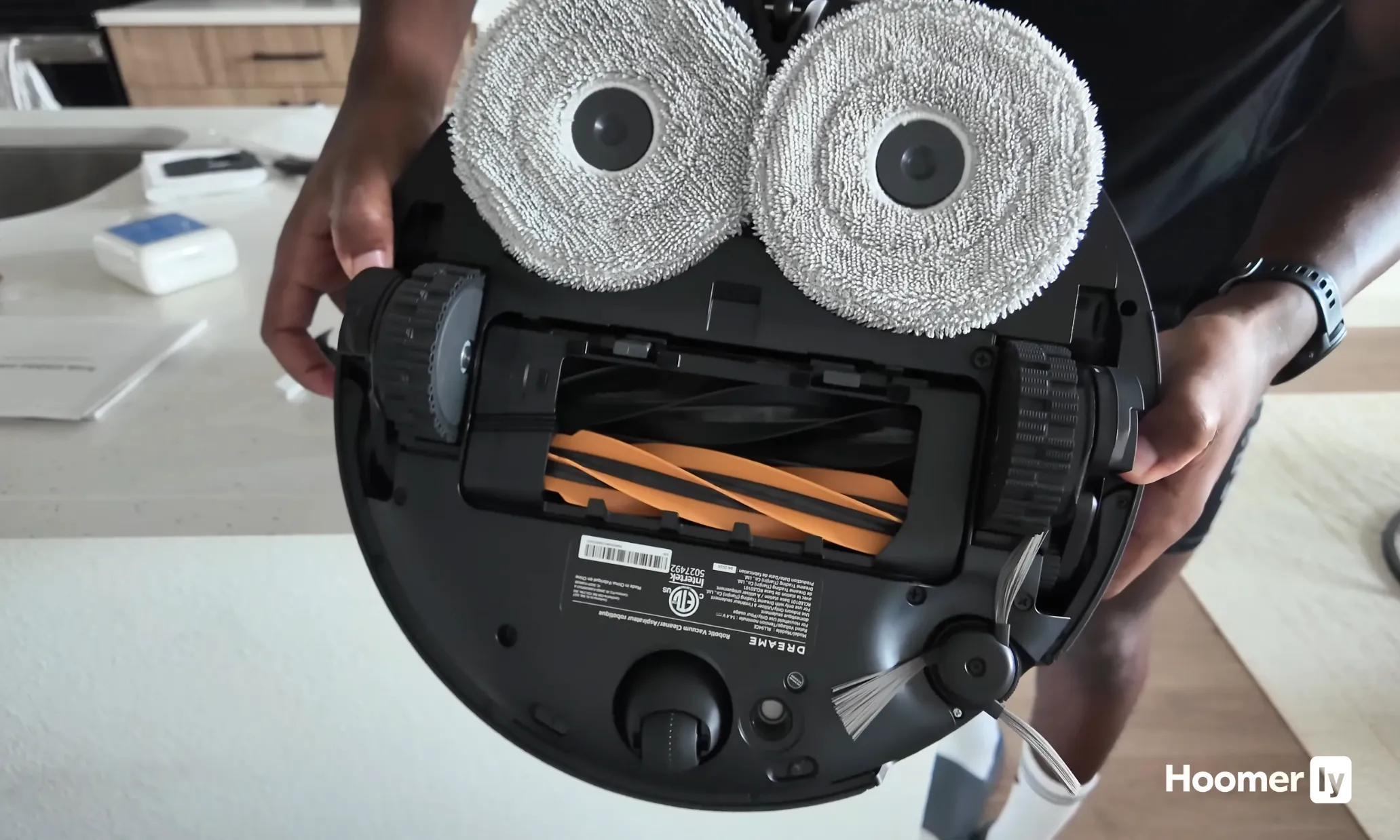
The HyperStream DuoBrush splits into bristle and rubber sides that work together to push hair into the bin instead of wrapping around the roll. I have found that most robot vacuums in this range start losing suction after a few runs because of hair buildup. This one holds up better. After a month of daily use with two shedding dogs, the brush needed a quick wipe but nothing close to what I used to deal with.
Gets Over Door Tracks Without Stopping
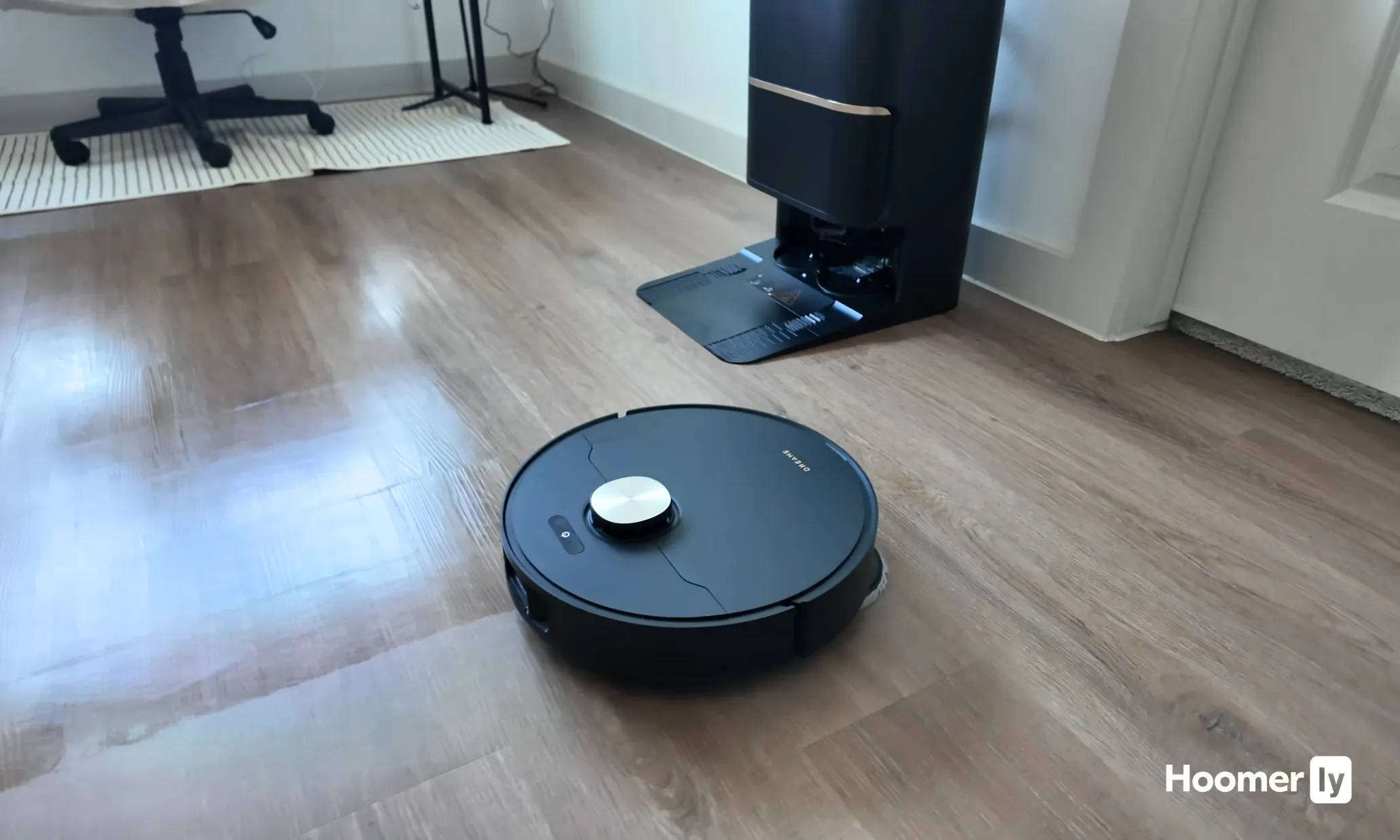
The ProLeap system lifts the chassis to 6cm. That clears every threshold and floor register in my house including the raised track on my sliding glass door, which has stopped three other robots I have tried. It slows before lifting so it does not ram into the track and bounce back.
Obstacle Detection That Holds Up Day to Day
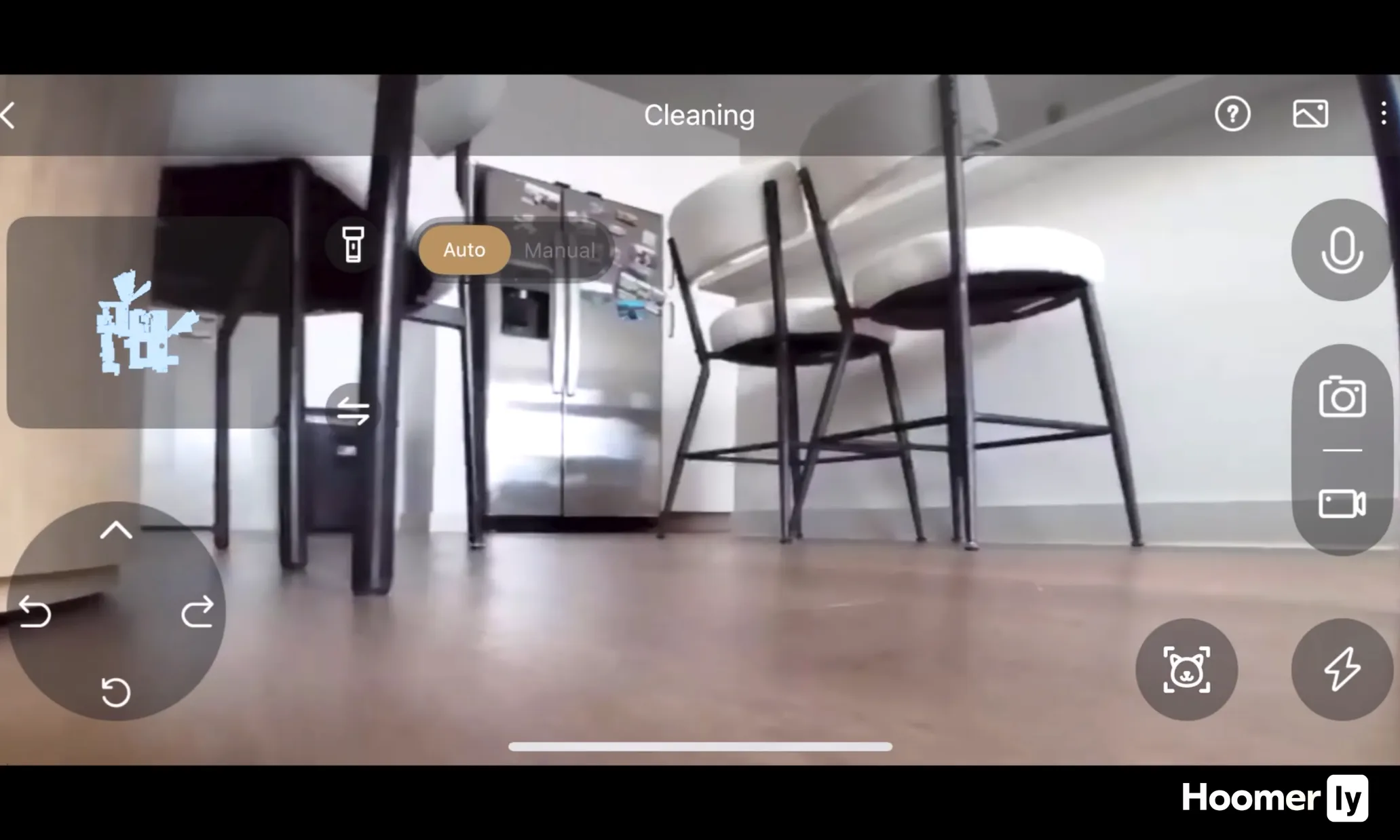
It maps toys, power cords, and shoes before getting close enough to touch them. Here is what I noticed after a few weeks: it only got stuck once, near a balled-up rug corner. For a home with kids stuff scattered around, that kind of avoidance matters more than the spec sheet makes it sound.
Reaches the Corners Most Robots Skip
The Dual Flex Arm extends a side brush outward along walls, pushing debris into the path instead of scattering it. Combined with the extended reach under low furniture, it catches the edge buildup that usually takes a second pass to clear. After the floor map fully refined, maybe run four or five, it stopped leaving lines along the baseboards.

Pros
- Extended 90-day dust collection dramatically reduces maintenance compared to weekly-emptying competitors
- Exceptional 6000Pa suction power handles pet hair, crumbs, and fine dust on all floor types
- Dual vacuum and mop functions eliminate need for separate cleaning devices
- LiDAR-based smart mapping ensures thorough, efficient coverage with editable room boundaries
- Affordable price point for a self-emptying robot with mopping capability
Cons
- Requires 2.4GHz WiFi connection, which may be problematic for users with only 5GHz networks
- 150ml water tank is relatively modest and may require refills for larger homes or frequent mopping
- 4.1 rating suggests some users experience connectivity or navigation inconsistencies
The Dreame D10 Plus Gen 2 is a hybrid robot vacuum and mop designed for homeowners seeking genuine hands-off cleaning with minimal maintenance. This mid-range model targets busy professionals, pet owners, and anyone tired of frequently emptying robot vacuum dustbins. The standout feature is its 90-day autonomous dust collection system with a 4L capacity bag, which means you'll only need to empty it roughly four times annually instead of weekly.
Performance-wise, the D10 Plus Gen 2 delivers impressive cleaning power through its 6000Pa Vormax suction motor with four adjustable levels. The floating rubber brush design is specifically engineered to minimize tangling with pet hair while maintaining strong carpet cleaning performance. The 2-in-1 vacuum and mop function works through a 150ml clean water tank with three moisture settings, allowing you to customize cleaning intensity for different floor types. LiDAR navigation combined with smart mapping technology creates detailed, editable floor plans that you can customize through the Dreamehome app, including virtual boundaries and no-mop zones for delicate areas.
Build quality appears solid with the device handling hard floors, carpet, wood, and tile surfaces effectively. The anti-collision sensors and precision obstacle avoidance provide reliable navigation around furniture and pets. However, the 150ml water tank is somewhat limiting for larger homes, requiring occasional refills during extended mopping sessions. Additionally, the system requires a 2.4GHz WiFi connection, which may present challenges for households with only 5GHz networks.
The Dreamehome app integration provides robust control with multi-floor mapping, scheduling capabilities, and customizable cleaning zones. This level of automation justifies the set-and-forget appeal, though some users report occasional connectivity hiccups based on the 4.1 rating.
Final verdict: The Dreame D10 Plus Gen 2 represents excellent value for pet owners and busy households prioritizing convenience and low maintenance. The 90-day dust collection combined with 6000Pa suction and mopping capability creates a compelling package at this price point. It's ideal for those willing to sacrifice slightly smaller water tank capacity for dramatically reduced maintenance frequency.
Brand: Dreame
Model: D10 Plus Gen 2
Suction Power: 6000Pa Vormax with 4 customizable levels
Dust Collection: 4L automatic self-emptying capacity (90-day interval)
Water Tank: 150ml clean water tank with 3 flow settings
Navigation: LiDAR with precision laser mapping and obstacle avoidance
Surface Compatibility: Hard floors, carpet, wood, tile
Special Features: Anti-collision, automatic dust collection, washable filter, 2-in-1 vacuum and mop
App Control: Dreamehome app with multi-floor mapping, virtual boundaries, and no-mop zones
WiFi Requirement: 2.4GHz network connection
Color: White
Who Should Buy This? The D10 Plus Gen 2 is ideal for pet owners, busy professionals, and households with mixed flooring who want true hands-off cleaning without weekly maintenance. It suits homes up to 2-3 stories thanks to multi-floor mapping capabilities.
Who Should Look Elsewhere? If you have a 5GHz-only WiFi network or need a large water tank for frequent wet mopping, consider alternatives. Similarly, homes with very high pet hair volume might benefit from models with larger dust capacity.
Key Considerations: Verify your WiFi supports 2.4GHz before purchasing. Measure your home layout to ensure the 150ml water tank suits your mopping needs. Consider the self-emptying station placement when planning installation, as it requires nearby power access and floor space.
Maintenance Tips: Replace dust bags every 90 days as needed, clean the washable filter regularly, and keep the water tank clean between uses. The floating brush design minimizes hair tangling, but occasional manual cleaning is recommended for optimal performance.
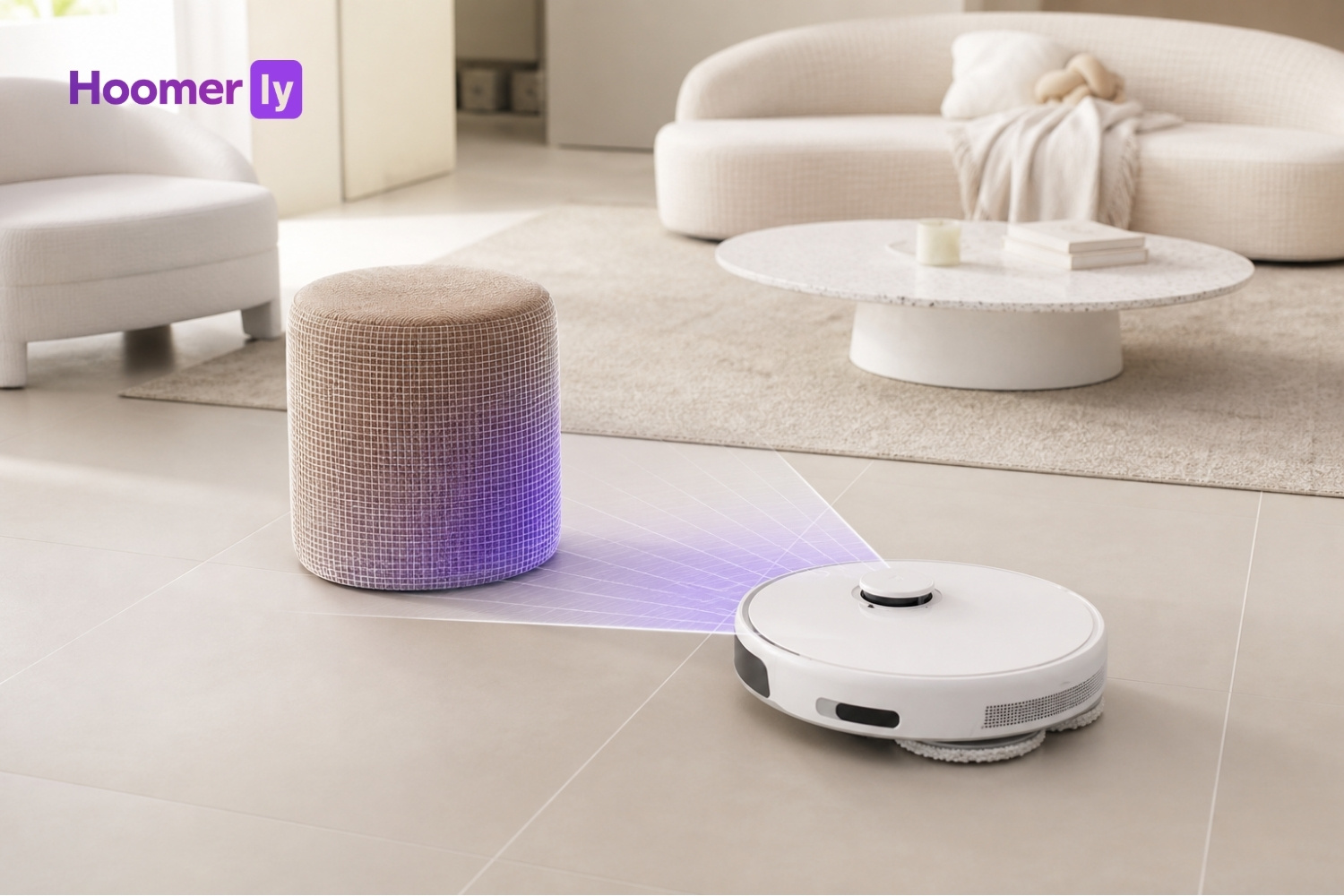
Robot vacuum with obstacle avoidance has improved dramatically in the past two years. The gap between a robot that recognizes 108 object types versus one that only uses a physical bumper is not a small one. It’s the difference between running a cleaning cycle without thinking about it and pre-cleaning your floor every single time.
What actually separates a solid obstacle avoidance robot from a frustrating one comes down to sensor type, how those sensors work in low light, and whether pet waste avoidance is a real guarantee or just marketing language. Those are the things I looked at hardest here.
The detailed reviews below cover each model’s avoidance score, sensor tech in plain terms, and the real-world trade-offs. One of these models doesn’t actually have AI avoidance at all, and I’ll say so clearly.
My Top Pick
Here’s how I’d slot each one before we get into the full breakdowns.
Best Overall Obstacle Avoidance Roborock Saros 10R at Amazon ↓ Jump to Review
Best for Pet Waste Avoidance Narwal Freo Z Ultra at Amazon ↓ Jump to Review
Best for Small Object Detection Dreame X60 Max Ultra at Amazon ↓ Jump to Review
Best Value with Strong Avoidance Dreame L50 Ultra at Amazon ↓ Jump to Review
Budget Pick – No Real Avoidance Dreame D10 Plus Gen 2 at Amazon ↓ Jump to Review
The problem I kept running into with older robot vacuums wasn’t dirt. It was everything else on the floor. A phone charger near the couch. A dog toy under the coffee table. The occasional situation involving one of my dogs and an upset stomach at 2am. My previous robot handled none of that well.
I’ve been through enough of these machines to know that navigation and obstacle avoidance are two different things. A robot can map your home perfectly and still drag a sock halfway across the house. For this article I looked specifically at avoidance scores, sensor combinations, and whether pet waste avoidance was confirmed or just implied. I also looked at how each robot handles low-light conditions, because my house is not a photography studio at 6am.
#1 Best Overall Obstacle Avoidance: Roborock Saros 10R
No other robot vacuum in this category comes close on a raw obstacle avoidance score. The Saros 10R earned a perfect 24/24 from VacuumWars, well above the 16/24 category average, and it recognizes 108 different object types. The sensor setup is what makes the difference: dual solid-state 3D Time-of-Flight LiDAR with 21,600 ToF sensor points, plus a lateral detection beam for low-profile objects near the sides. It also has an RGB AI camera up front. But here’s the part that matters most to me as a dog owner: the 3D ToF sensors don’t need any light at all to function. So if this thing is running at night or in a dim hallway, it doesn’t lose its ability to see what’s on the floor.
At 3.14 inches tall it fits under furniture that stops almost every other robot in its tracks, which means it can actually avoid things hiding under there instead of bumping into furniture legs from the outside. You get three sensitivity settings, so you can dial it up if your floor is usually cluttered or down if it’s mostly clear.
The one honest trade-off: carpet pet hair pickup sits at around 56%, which is below average for a machine at this price. It’s also newer, so the Amazon review count is still thin. For pure robot vacuum obstacle avoidance, nothing I’ve looked at matches it. TechGearLab ranked it #2 of 23 overall at 84/100, with an app score of 9.3/10. Premium price, but it earns it.
I have a full guide covering the best robot vacuums overall if you want to see how the Saros 10R stacks up on cleaning performance, not just avoidance.
#2 Best for Pet Waste Avoidance: Narwal Freo Z Ultra
VacuumWars gave the Narwal Freo Z Ultra both their “Best Obstacle Avoidance” and “Best for Pets” awards in 2024, which is exactly the combination I was looking for. It scored 23/24 on obstacle avoidance and recognizes 120 object types. The tech behind it is a spinning LiDAR paired with dual RGB cameras running on two separate AI chips, so navigation and obstacle detection happen in parallel rather than the robot having to switch between tasks. It also has built-in illumination for dim rooms, which means camera-based detection doesn’t fall apart when you turn the lights off.
The real-world picture is a little more nuanced. Android Authority noted it bumped angled chair legs in actual home use, something the 23/24 lab score didn’t fully predict. At 4.3 inches tall it’s the biggest robot in this group, and that height becomes a real problem under low furniture. Anything with less than about 5.5 inches of clearance is off limits. The app is feature-rich but has reliability issues that TechRadar flagged, and it can struggle in enclosed spaces.
Its overall VacuumWars score of 3.18/5.0 is lower than its avoidance ranking suggests, mostly because the cleaning system has some limitations. But for pet waste avoidance specifically, it’s genuinely one of the best options you can buy under $900.
#3 Best for Small Object Detection: Dreame X60 Max Ultra
If small objects on the floor are what you’re worried about, the Dreame X60 Max Ultra has a feature no other robot in this group can match: it recognizes 280+ object types, far more than any competitor here. It uses binocular stereo AI cameras for depth estimation and can detect objects as small as 1cm. That’s not a rounding error. That’s a Lego, a bottle cap, a hair tie. The VersaLift system retracts the spinning LiDAR so the robot can access low-clearance spaces at its 3.13 inches of height, and projector illumination activates in dark areas so the cameras keep working. VacuumWars ranked it #1 on their 2026 Top 20 list and it scored 22/24 for obstacle avoidance.
The tradeoffs are real and you should know them before buying. Coverage per charge runs around 950 sq ft, which is about 19% below average and the weakest in this group. The app is the most granular of any robot here, but granular means complex: plan for a solid 30-minute setup, and know that default settings underperform. Gizmodo called it “$1,700 worth of problems” specifically because of software issues.
Some users have reported occasional navigation confusion in certain home layouts. The hardware is genuinely impressive. The software needs patience. If your floor is full of small items and you’re willing to put in the setup time, this one does things others can’t. Otherwise, the Saros 10R or Narwal is probably a smoother experience.
#4 Best Value with Strong Avoidance: Dreame L50 Ultra
The Dreame L50 Ultra is VacuumWars’ #1 overall robot vacuum right now, with a 3.96/5.0 overall score against a 2.58 average. For obstacle avoidance it scored 20/24, which is the lowest in this top four but still well above the category norm. What it does differently from the others: a ProLeap system that lets it actively climb over obstacles up to 60mm instead of just stopping or going around. That’s a different strategy from avoidance, but it works alongside it.
It recognizes 180 object types via a 3D structured light sensor that provides real depth profiling of floor-level hazards, including pet waste. LED illumination keeps the system working in low light. Pet hair pickup is 100% and carpet score is 90%, which is where it leaves the Saros 10R in the dust. With under $900, it’s the strongest all-rounder in this group. The honest weaknesses: coverage per charge is around 823 sq ft, below average, and the ProLeap legs draw more power than a standard robot. You’ll also be getting an obstacle avoidance score that’s meaningfully lower than the top three picks. For a house where cleaning performance matters as much as avoidance, this is probably the pick.
For a house where obstacle avoidance is the whole point, especially with pet waste on the floor, I’d spend up to the Narwal or the Saros 10R. But at this price, very few robots come close to what this one does across the board. For more on pet hair performance specifically, my guide to the best robot vacuums for pet hair goes deeper on pickup rates and clogging.
#5 Budget Pick (No AI Avoidance): Dreame D10 Plus Gen 2
I’m including this one because it comes up in searches and the price looks appealing. But I want to be direct about what it actually is: the Dreame D10 Plus Gen 2 has no AI obstacle avoidance. None. It has 2D LiDAR for mapping, which works fine, but the only thing detecting obstacles is a physical bumper. It bumps into something, it backs up. That’s it. TechGearLab gave it a 5.3/10 for obstacle avoidance and described it as having “no real obstacle avoidance, only object intervention.” In their evaluation it hit all six simulated pet accidents. All of them. Cords are a real problem too, TechGearLab noted it tends to roll right over them rather than avoid them.
Where it genuinely earns its place: 285 minutes of battery runtime, which is the longest in this group by a significant margin. TechGearLab scored it 65/100 overall, ranking it #11 of 23. At around $280-300 it’s a solid mapping robot for a tidy home where the floors are clear before every run. But if you have pets, kids, or any regular floor clutter, you’ll be doing the avoidance work yourself every single time. That’s a hidden time cost that adds up fast. The five other robots on this list are all about reducing that burden. This one puts it back on you. Know that going in.
What to Look for in Robot Vacuum Obstacle Avoidance
The Obstacle Avoidance Score (Out of 24)
VacuumWars scores obstacle avoidance out of 24 points using a standardized object set. The category average sits around 16/24, which means most robots you see advertised are mediocre at this. The Saros 10R hit 24/24. The D10 Plus Gen 2 hit roughly 5/10 by their criteria. That spread tells you everything. When a manufacturer claims their robot “avoids obstacles,” always look for an independent score if one exists.
Sensor Fusion: Why One Sensor Is Never Enough
The best robot vacuum obstacle avoidance systems combine at least two sensor types: LiDAR for mapping and spatial awareness, plus a camera or 3D sensor for identifying what objects actually are. LiDAR alone can’t tell a shoe from a pile of laundry. A camera alone fails in low light. When both work together, you get a robot that can make real decisions rather than just react to contact.
Low-Light Performance
Camera-based avoidance systems can fail in darkness. If your robot runs at night or in a dim room, this matters. The Saros 10R uses 3D ToF sensors that need zero light to function. The Narwal Freo Z Ultra has built-in illumination. The Dreame X60 has projector illumination. If low-light performance isn’t addressed in a model’s specs, assume cameras are its only avoidance system and assume dark rooms will be a problem.
Pet Waste Avoidance: Specific Guarantee vs. General Claim
There’s a meaningful difference between “avoids obstacles” and “confirmed pet waste avoidance.” Every robot in my top four has confirmed pet waste avoidance. The D10 Plus Gen 2 does not. If you have pets, this is not a minor footnote. A robot that drags a pet accident across your hardwood floor creates a much bigger problem than the one it was supposed to solve.
Robot Height and What It Can Actually Reach
A robot that can’t fit under your couch or bed frame can’t see or avoid what’s under there. The Saros 10R and Dreame X60 are both under 3.2 inches and can access most standard furniture. The Narwal Freo Z Ultra at 4.3 inches is blocked by anything with less than about 5.5 inches of clearance. If you have a lot of low furniture, height matters as much as sensor quality.
Adjustable Sensitivity Settings
The Saros 10R lets you choose between three sensitivity levels. That’s useful. A cluttered playroom needs a robot running at maximum caution. A mostly clear kitchen floor doesn’t. Not all robots offer this, and it’s worth checking. A fixed avoidance setting that works for one room may be overly aggressive or too permissive in another.
The Hidden Cost of Poor Avoidance
Robots with weak or no obstacle avoidance require you to pre-clean the floor before every run. Cords picked up, toys moved, any floor-level hazards removed. Over weeks and months, that adds up to a real time commitment. The entire point of a robot vacuum is to reduce that burden. A budget robot that creates prep work may not actually save you anything.
My Pick
For robot vacuum obstacle avoidance, the Roborock Saros 10R is the one I’d spend on if my main concern is what the robot runs into, drags across the floor, or drives through. A perfect avoidance score, complete darkness operation, and a height that gets it under furniture others can’t reach. If you have a dog and you’ve had a bad morning because of what your last robot did with a pet accident, this is the answer. The premium price is real, but so is what you’re getting for it.
If you want strong pet waste avoidance and cleaning performance on a slightly lower budget, the Narwal Freo Z Ultra is the pick, just check your furniture clearance before buying because the 4.3-inch height will matter in some homes. The Dreame L50 Ultra earns its spot as the best value pick, especially if cleaning performance is equally important to you and your floors aren’t constantly covered in obstacles. The D10 Plus Gen 2 is only worth considering if your floors are consistently clear and you don’t have pets. It’s a good robot. It’s just not an obstacle avoidance robot.
Shopping for a robot that handles pet hair on hardwood specifically? I put together a full breakdown of the best robot vacuums for pet hair on hardwood floors that goes into pickup performance in more detail.
FAQs
Can a robot vacuum with good obstacle avoidance replace pre-cleaning the floor entirely?
For the top performers here, mostly yes. The Saros 10R, Narwal Freo Z Ultra, and Dreame X60 all handle cords, toys, pet waste, and small objects without needing you to clear the floor first. That said, no robot is perfect at 100% of objects 100% of the time. Unusually shaped items or things right in a corner can still catch robots off guard occasionally. The difference is that with strong avoidance, those are the exception rather than the rule.
Does robot vacuum obstacle avoidance work the same on carpet as on hardwood?
The avoidance sensors work the same regardless of floor type since they’re detecting objects in the air or at floor level, not the floor surface itself. What changes on carpet is that some low-profile objects sit lower in pile, making them harder to detect. The 3D structured light sensor in the Dreame L50 Ultra and the 3D ToF in the Saros 10R handle this better than camera-only systems because they create depth profiles rather than just identifying what something looks like.
How important is the number of object types recognized?
It matters, but the raw number can be misleading. The Dreame X60 recognizes 280+ object types, and that does translate to better small-item detection. But a robot that recognizes 108 types well (like the Saros 10R, which scored 24/24) outperforms a robot that claims more types but misidentifies them in practice. The avoidance score is a better real-world indicator than the object type count alone.
Will a robot vacuum avoid my pet’s water bowl or food dish?
The top three robots here should handle food and water bowls in most cases since they’re recognized as common household objects. That said, a bowl close to a wall or in a tight corner is harder for any robot to navigate cleanly. I’d suggest setting a no-go zone around feeding areas in the app for the first few weeks, just to see how the robot handles that specific spot in your layout. Most apps make this easy.
Is the Dreame D10 Plus Gen 2 worth buying at all for a home with kids?
It depends on the kids. School-age kids who pick up after themselves and a floor that’s mostly clear? The D10 Plus Gen 2 is a solid option. Younger kids, Legos everywhere, art supplies on the floor? The bumper-only avoidance will struggle. It’ll run over small items, knock things around, and potentially get stuck on larger ones. I’d put the $280 toward the Dreame L50 Ultra and spend a bit more for real obstacle avoidance. The difference in daily frustration is worth it.

Write Your Review
No reviews yet. Be the first to share your experience!