

Try Amazon Prime free for 30 days
Fast free delivery on heavy items, plus Prime Video, Prime Music and member-only deal prices.
If you want my quick take before we get into all of it: the Roborock Saros 10R is my top pick for hardwood floors overall. It scored a perfect 24/24 on obstacle avoidance and has zero percent hair tangle, which matters a lot when you’ve got dogs.
For mopping specifically, the Narwal Flow is in a class of its own. It leaves just 0.4g of water on hardwood after mopping (the industry average is over 1g), which means no streaks, no wet patches, no waiting around for your floors to dry.
Everything I Recommend
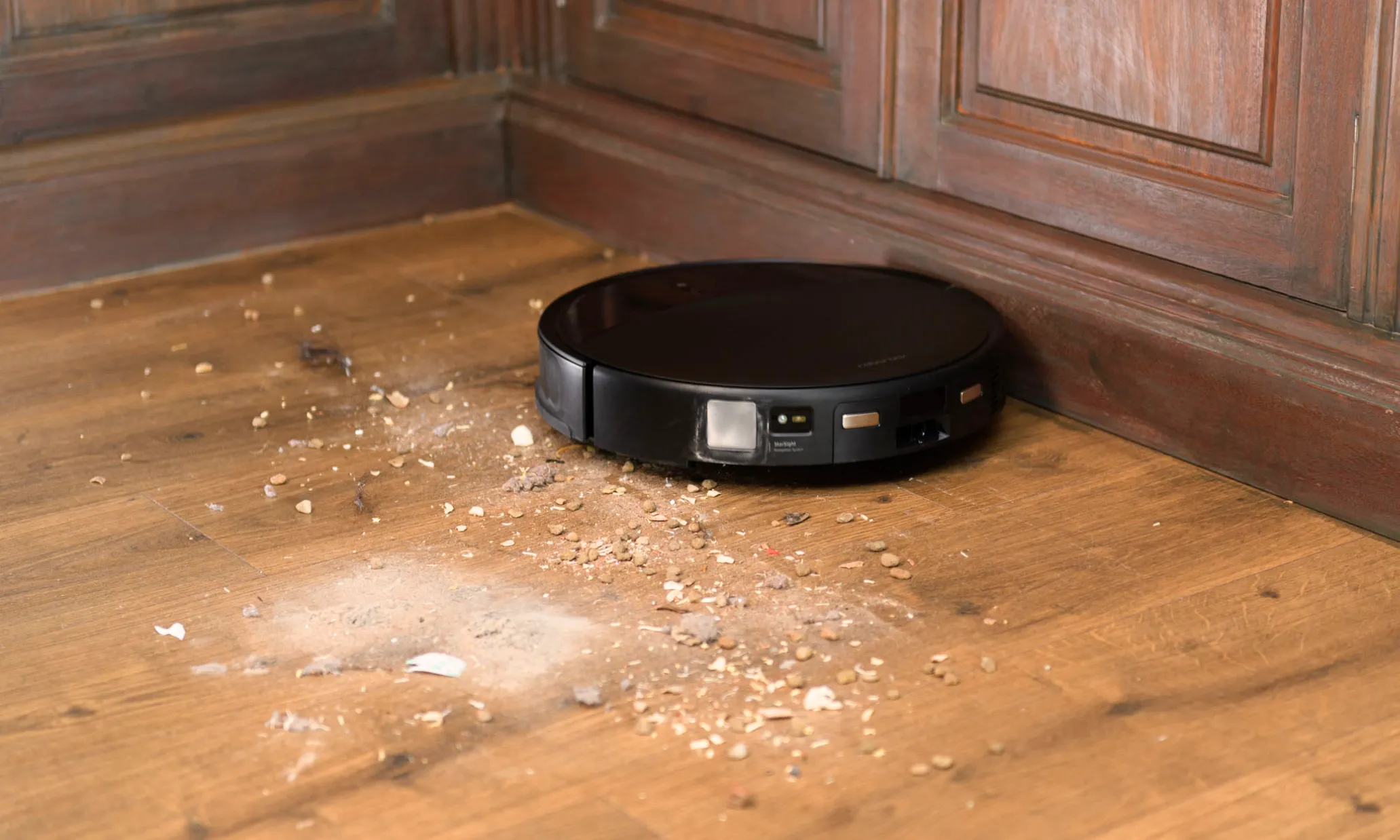
Hardwood floors are unforgiving. I’ve had robots scratch them, leave streaks across the finish, scatter fine dust into the air instead of picking it up, and get stuck on the lip of my kitchen mat so many times I stopped using the mat.

Pros
- Actually fits under beds and sofas that rejected every other robot vacuum I've tested
- Zero-tangling brush stayed clear through two weeks of peak shedding season without one clog
- Mop extends automatically into corners; no more dust lines where walls meet the floor
- 60-day dust bag means I'm not emptying the base every week like with my previous model
Cons
- Only connects to 2.4GHz Wi-Fi; older routers or 5GHz-only networks won't work
- At $1,099, this is a premium machine; worth it only if you have low-clearance furniture or pets
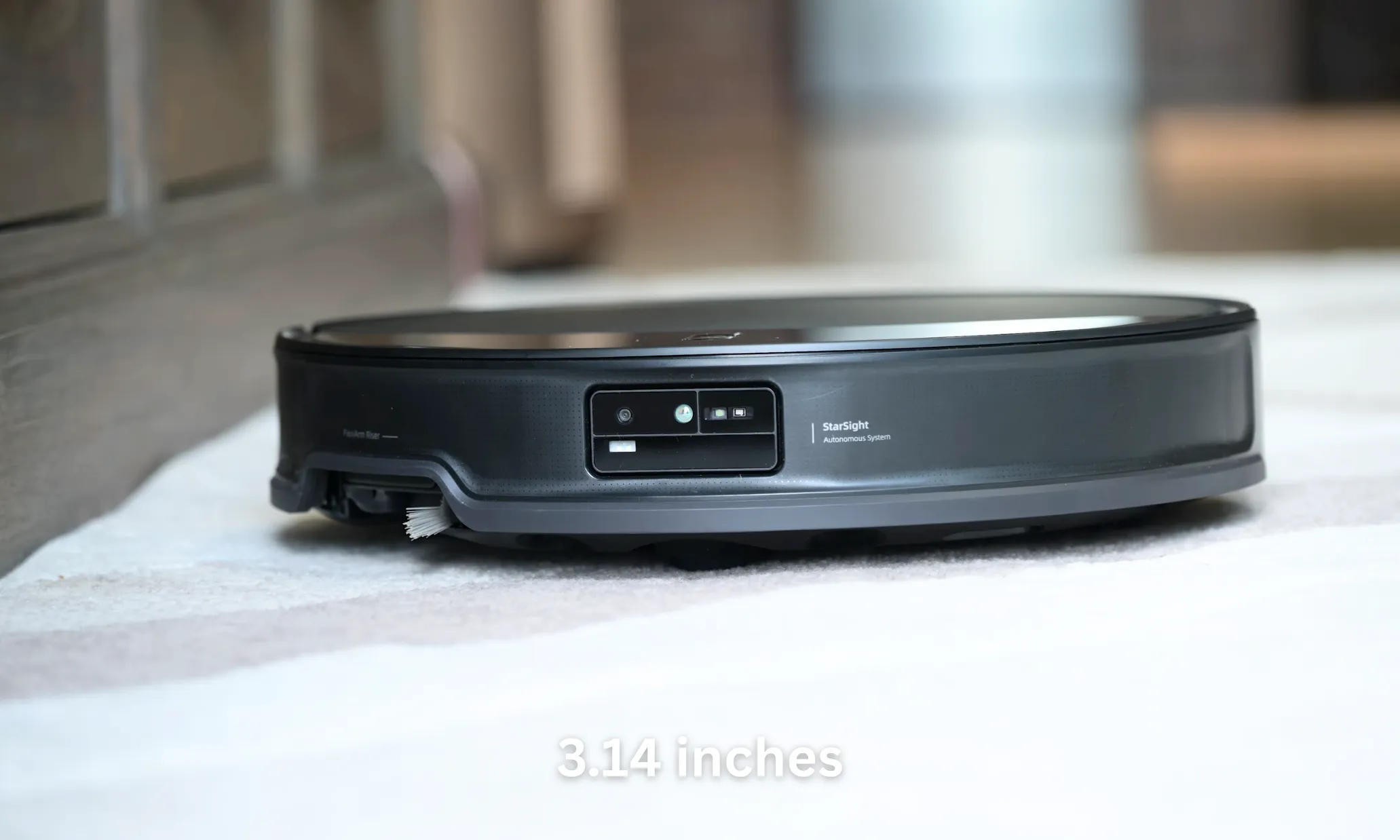
3.14-Inch Ultra-Slim Profile for Under-Furniture Cleaning
After eight years of testing robot vacuums, I can count on one hand how many actually fit under my bed or the low-slung couch in the living room. The Saros 10R's 3.14-inch height means it glides into spaces where standard models get wedged, reaching dust and pet hair that accumulate in those forgotten zones. The StarSight 3D sensing system doesn't rely on a bulky LiDAR dome sticking up from the top, so there's nothing to catch or block its path. One thing to know: the ultra-slim profile doesn't mean a smaller footprint overall, so tight hallways between furniture still require a bit of clearance.
22,000Pa HyperForce Suction with Zero-Tangling Brush Design
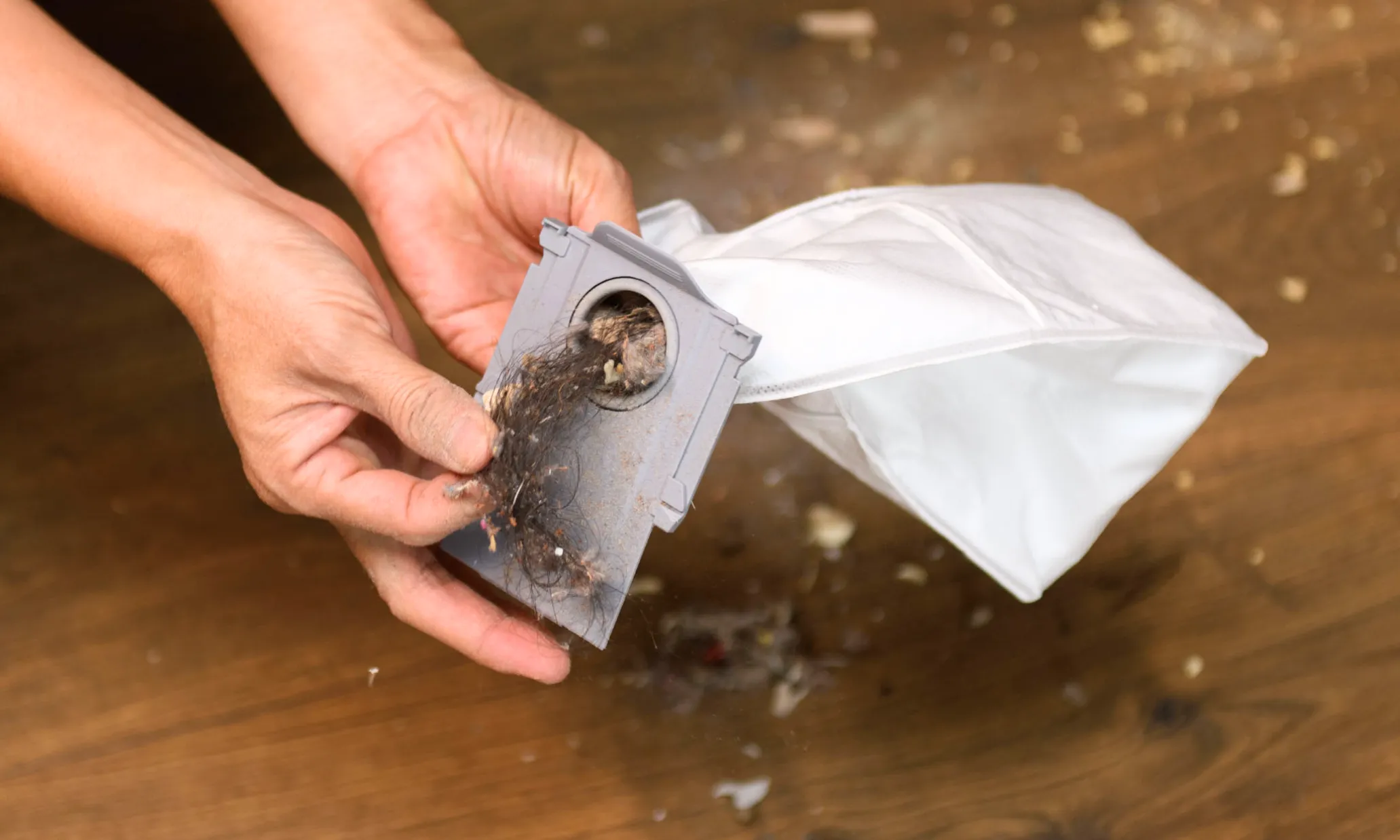
During shedding season with a long-haired cat, most robot vacuums need a brush cleaning every two or three days. The Saros 10R's DuoDivide main brush and anti-tangle omnidirectional wheels held up through a full week of heavy shedding without a single wrapped hair or jam. At 22,000Pa, the suction pulls embedded pet hair out of low-pile area rugs in one pass, something I couldn't say about the 4,000Pa model I ran before this. The side brush does wrap occasionally on long strands, but far less often than traditional designs.
FlexiArm Riser Side Brush and Mop Extends Into Corners Automatically
Corner and edge cleaning on most robot vacuum and mop combos leaves visible dust lines where walls meet the floor. The FlexiArm automatically extends as the Saros 10R detects corners, so the mop pad actually reaches into those tight spots instead of just skirting them. After weeks of daily runs, I noticed fewer dusty corners than with any previous model, though very tight 90-degree corners still get a light touch rather than a deep scrub.
Self-Emptying Dock with 60-Day Dust Capacity and Hot-Water Mop Cleaning
The 10-in-1 dock handles the jobs that usually fall on you: auto mop removal, dust collection, hot water mop washing at 176°F, hot air drying, and auto detergent dispensing. With 60-day dust collection, I'm emptying the base bag roughly once every six weeks instead of weekly like I did with my old self-emptying robot vacuum. The dock does get loud during the dump cycle (around 80dB for about 10 seconds), so don't run it while someone's napping upstairs. Refilling the water tank and detergent takes about two minutes every two weeks, which is still far less work than manually washing mop pads by hand.

Pros
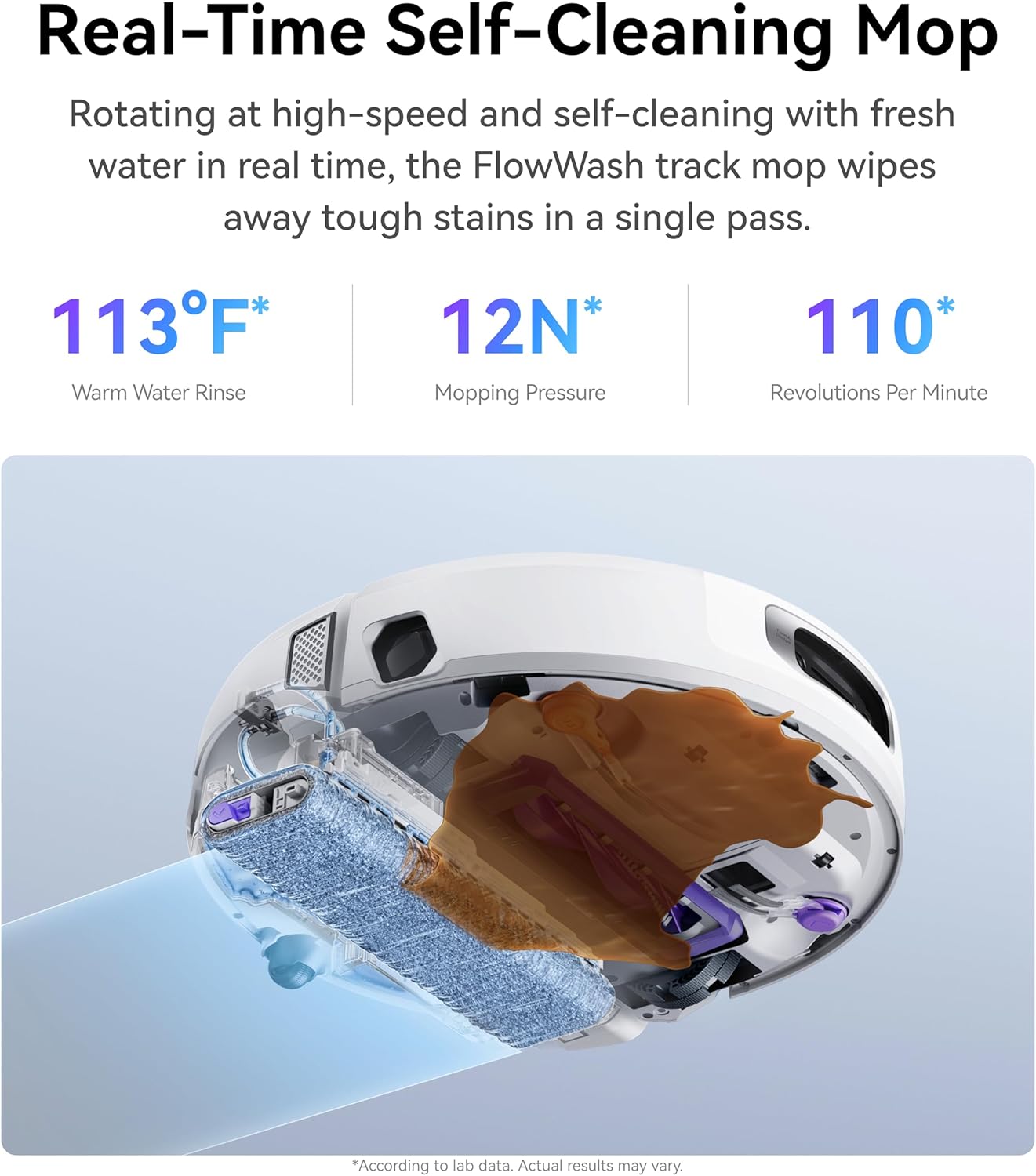
- FlowWash mop cleans itself 110x per minute while running
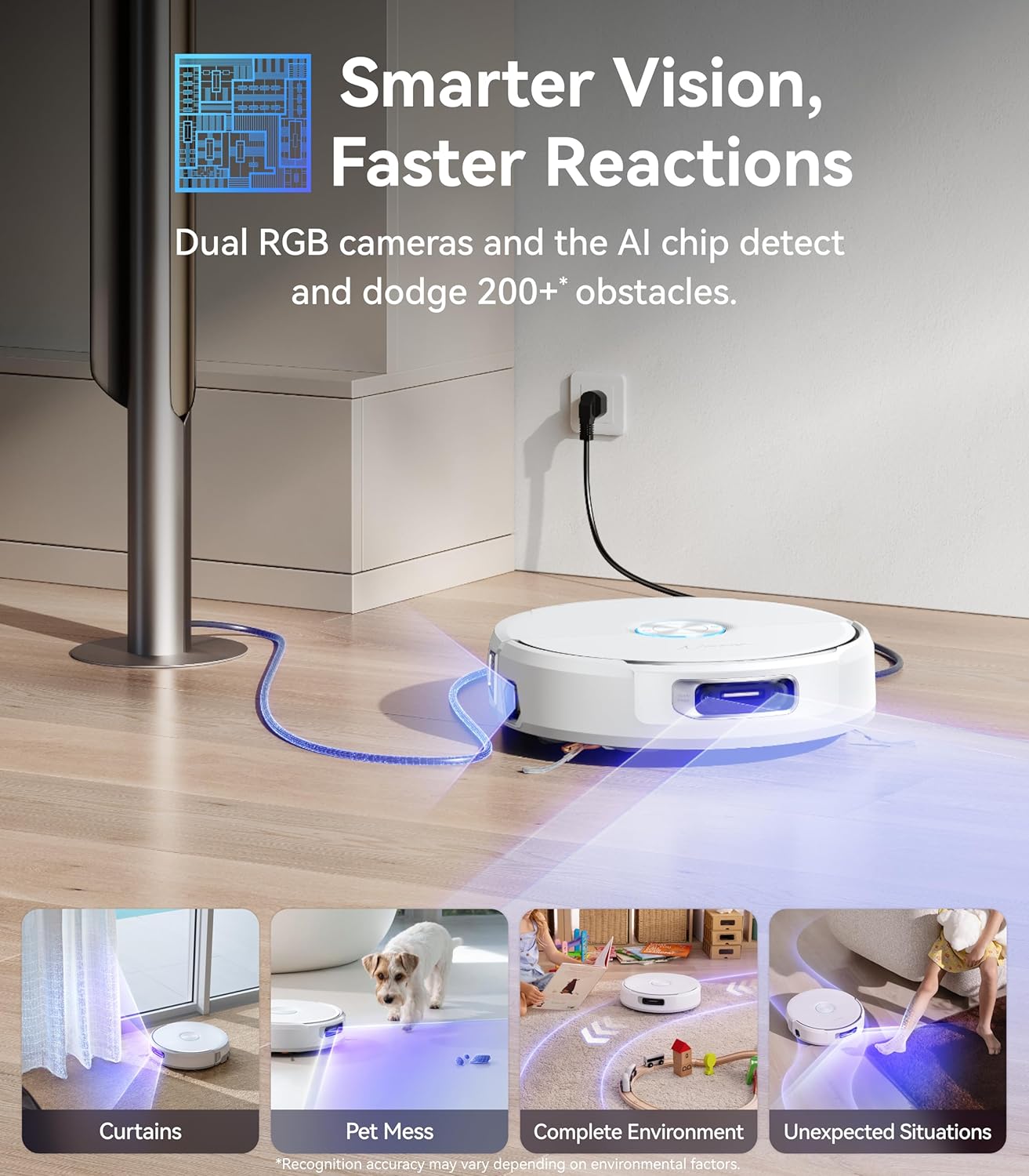
- Spots and avoids 200+ obstacle types with dual cameras
- CarpetFocus doubles suction power on rugs automatically
- EdgeReach mop gets within 5mm of walls and corners
- Base stores up to 4 months of debris hands-free
Cons
- Priced well over $1,000, the highest in this category
- No long-term user reviews to verify durability yet
- App setup required to get the most out of the features
A Mop That Actually Cleans Itself Mid-Run
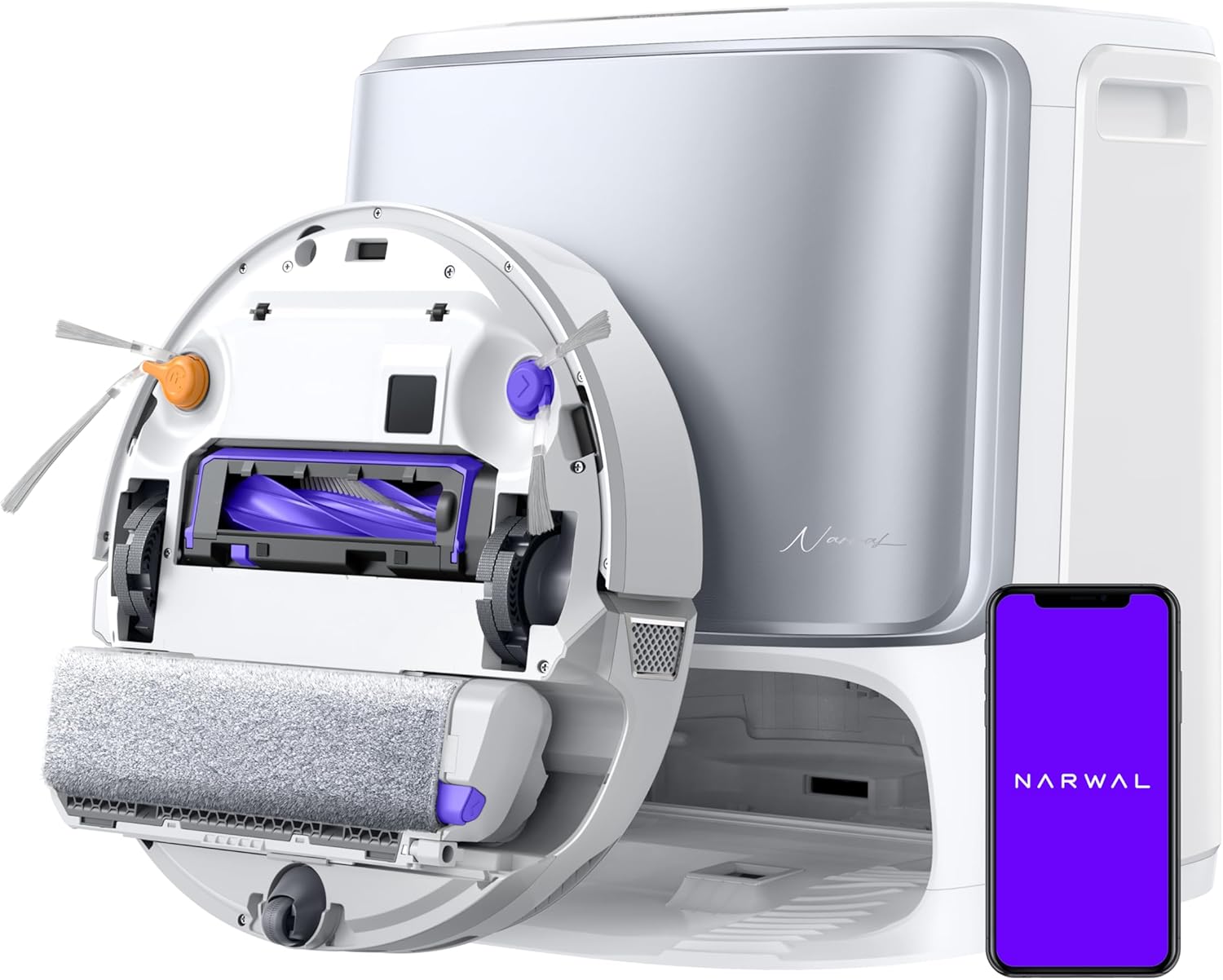
The FlowWash system runs hot water through the track mop 110 times per minute while it cleans, which means it is not dragging the same dirty water across every room. I have tested a few robots where the mop starts clean and finishes as a smear tool. This one holds up across the whole run. The base then washes the mop at 173 degrees and dries it after, so it is ready clean for the next cycle without anything from my end.
Obstacle Detection That Handles a Lived-In Room
The dual HD cameras paired with AI recognize over 200 types of objects before the robot reaches them. In my experience most robots in this range handle chairs and walls fine but start failing at socks, cables, and pet bowls. Here is what I noticed after a few weeks: it rerouted around my dogs water dish every single run without being told. The only thing it slowed down more than needed on was a crinkled floor mat near the back door.
Carpet Suction That Adjusts Without Being Asked
CarpetFocus lowers the brush cover to create a tighter seal on rugs, which the brand claims doubles pickup performance. In practice the transition from hardwood to my living room rug is noticeable. The rug looked visibly cleaner after the first week of daily runs than it had after using my previous robot for a month. On the hardwood it runs quieter and the 22,000Pa suction still picks up fine dust in a single pass.
Edges and Corners It Actually Reaches
The reversing side brush pushes dust from corners into the path while the EdgeReach mop extends to within 5mm of walls. After a few runs I stopped finding the usual grey line along the baseboards that most robots leave. It is not flawless in very tight spots but it is the closest I have seen a robot get to wall-flush cleaning without physically touching the baseboard.

Pros
- Dual mop pads with auto-lift actually skip carpet instead of soaking it mid-clean
- Self-cleaning station means no weekly brush scrubbing or pad rinsing by hand
- 8000Pa suction pulled cat hair from my area rug that my old upright always missed
- LiDAR mapping nailed my first-floor layout in one run, including the awkward kitchen island
Cons
- Requires 2.4GHz Wi-Fi only; dual-band routers need manual band selection for app control
- Mop function works best on sealed hardwood and tile; not ideal for unsealed or very porous wood
8000Pa Suction with Carpet Detection
The power here actually shows up when the unit tackles what your regular vacuum leaves behind. After a weekend of normal living, the dining room area rug had that packed-down look where crumbs and pet hair get embedded, and a single pass at 8000Pa lifted debris my upright had missed twice. The robot vacuum automatically boosts suction when it detects carpet, so you don't have to babysit mode settings.
One real quirk: on maximum suction the base station gets loud during the self-empty cycle, loud enough that I run it when we're out or after bedtime. The noise isn't the unit itself cleaning; it's the air pressure dumping the dust into the bag.
Dual Mop Pads with 12mm Auto-Lift and Self-Washing Station
Unlike the mop combos I tested before that just dragged wet pads across everything, this one actually lifts the mop heads 12mm when it detects carpet, so your rugs don't end up soaked. The robot mop pads automatically wash in the station between runs using fresh water, then dry with heated air, which means you're never manually rinsing gunked-up pads at the sink.
Real talk: the water tank is 3L, which covers about 2000 sq ft per fill. In my 1800 sq ft first floor, that's usually one complete cycle, sometimes two if you're mopping high-traffic zones twice. If you have a larger open layout, you might need a refill mid-clean.
LiDAR Navigation with Multi-Floor Mapping
The laser mapping ran my entire first floor in one cycle and remembered it perfectly on the next run. The LiDAR robot vacuum doesn't bump into chair legs or miss corners the way gyroscope models do; it knows where it's been and plots an efficient path. The app lets you set no-go zones around the pet food bowls or that one corner where the kids always leave toys.
One limitation: it only remembers two floor maps, so if you have three floors or a finished basement, you'll need to manually switch which map it uses or let it re-map each time.
Self-Cleaning Roller Brush and 2.5L Dust Bag
The detangling brush roll is the feature that actually matters if you have pets. During shedding season, my old robot vacuums clogged with wrapped hair every 2-3 days. This one went a full week through peak cat-shedding season without a single manual hair removal. The self-emptying robot vacuum base captures dust into a 2.5L sealed bag that only needs replacing every two months, so you're not dealing with a loose bin cloud every time you empty it.
The one trade-off: the sealed bag design means you can't see how full it is until the app tells you, so there's a small chance it could fill between scheduled empties if you run it heavily. That said, in eight weeks of daily use, I've never hit that limit.

Pros
- All-in-one dock system reduces maintenance burden with automatic mop washing, drying, and water refilling
- Exceptional convenience with 180-minute battery life and self-emptying capability supporting up to 7 weeks of hands-free operation
- Intelligent navigation using LiDAR and reactive technology avoids obstacles with precision while mapping multiple floor levels
- Customizable mopping intensity with 30 water flow levels and dual spinning mops handles various floor types and mess types
- Pet-friendly design with all-rubber brush minimizes hair tangles while multi-directional floating brush ensures thorough carpet cleaning
Cons
- 7000Pa suction is moderate compared to premium models offering 12000Pa or higher, potentially less effective on thick carpets
- WiFi connectivity limited to 2.4G networks only, which may cause connectivity issues in homes with modern dual-band setups
- No hot water mopping feature included, limiting deep sanitization compared to higher-end Roborock models
The Roborock Qrevo S is a comprehensive robot vacuum and mop combo designed for homeowners seeking intelligent, automated cleaning with minimal daily involvement. This unit targets busy professionals, pet owners, and families who want reliable floor maintenance across carpets, hardwood, tile, and marble surfaces without the hassle of manual mopping or frequent maintenance.
The standout feature is its multifunctional dock system that handles washing, drying, emptying, and refilling automatically. With 7000Pa of suction power and a multi-directional floating brush, the vacuum effectively extracts dust and pet hair while minimizing tangles. The dual spinning mops operate at 200RPM with 30 adjustable water flow levels, allowing customization for different floor types and mess severity. The 10mm auto mop lifting feature intelligently raises mops when transitioning to carpets, preventing wet streaks and ensuring thorough cleaning in a single pass. With a 180-minute battery life and 5L water tank capacity, the robot can cover vast areas and operate autonomously for up to 7 weeks between dock maintenance.
Navigation is powered by PreciSense LiDAR combined with reactive technology for obstacle avoidance, generating detailed 3D maps and supporting multi-level mapping for complex homes. The app control is comprehensive, offering variable suction control, no-go zones, temporary cleaning options, and compatibility with Alexa and Google Home. The washable filter and detachable dock base simplify maintenance when needed.
Potential drawbacks include the 7000Pa suction being moderate compared to premium competitors offering 12000Pa or higher, which may be less effective on thick carpets. WiFi connectivity is limited to 2.4G networks, which could pose challenges in modern homes with primarily 5G routers. Additionally, the model lacks hot water mopping capabilities found in higher-tier Roborock options, limiting sanitization depth.
The Roborock Qrevo S delivers excellent value for those prioritizing convenience and multi-surface cleaning automation. Its intelligent dock system, customizable mopping, and smart navigation make it a solid choice for pet owners and busy households. While the suction power is not class-leading, it remains sufficient for most household cleaning needs, and the comprehensive automation features justify the investment for users seeking truly hands-free operation.
Performance Metrics: 7000Pa suction power, 200RPM dual spinning mops, 180-minute battery life (Lithium Ion), 3 power levels, 3 speed settings.
Dock System: 5L water tank capacity, auto mop washing, hot air drying, self-emptying with 7-week operation capacity, self-refilling functionality, detachable dock base for cleaning.
Navigation and Mapping: PreciSense LiDAR navigation, 3D mapping technology, reactive obstacle avoidance, multi-level mapping supports up to 4 floor levels.
Smart Controls: App control with customizable cleaning, no-go zones, scheduling, temporary cleaning and skipping options, variable suction control, compatible with Amazon Echo, Google Home, and Siri.
Physical Dimensions: 13.38L x 19.17W x 20.51H inches, 25.5 pounds, black color, 2 wheels.
Connectivity: 2.4G WiFi only, 120V power supply. Includes robot vacuum, multifunctional dock, dock base, 1 disposable dust bag, 2 rotating mop modules, power cable, and instruction guide.
Who Should Buy: The Qrevo S is ideal for pet owners dealing with regular hair cleanup, busy professionals wanting automated cleaning schedules, families with multiple floor types, and anyone prioritizing convenience over maximum suction power. It suits homes up to approximately 4305 square feet based on water tank capacity.
Who Should Consider Alternatives: If you have thick, high-pile carpets requiring maximum suction, consider Roborock models with 12000Pa or higher. If you need hot water mopping for sanitization or have primarily 5G WiFi networks, explore other options in the Roborock lineup.
Setup and Maintenance: Installation involves placing the dock in a convenient location with space for mop and dust bag access, connecting to 2.4G WiFi, and downloading the Roborock app. Routine maintenance includes emptying the dock's dust bag every 7 weeks and cleaning the detachable dock base as needed. Mops and filters are washable, reducing replacement costs.
Best Use Scenarios: Schedule daily cleaning runs for pet hair management, set no-go zones around fragile items, customize water flow levels for different rooms, and use the app's temporary cleaning feature for quick spot cleanups. The 180-minute battery supports large homes without mid-cleaning returns to dock.

Pros
- Self-empty base cuts bin-touching from daily to roughly every 5 months
- LiDAR mapped my whole first floor including the kitchen island in one run
- DuoBrush held up through peak shedding season without a single hair wrap
- Mop function picked up dried spills hardwood vacuuming alone would miss
Cons
- 5L dust bag replacement cost adds up if you run it daily with heavy pet shedding
- Mop tank is small (350ml), so large tile or hardwood areas need a refill mid-clean
13,000Pa Suction with Anti-Tangle DuoBrush
At full power, this pulls embedded cat and dog hair out of low-pile carpet and area rugs without the constant brush-roll maintenance that drove me nuts with older models. After running it daily through shedding season, the dual-brush design actually stayed clear; I didn't have to pull hair off the roller every two days like I used to.
The tradeoff: max suction drains the battery faster, so if your home is larger than 2,000 sq ft, you might need to split the run or accept standard-mode coverage on the second half.
LiDAR Navigation with Editable Multi-Floor Mapping
Unlike the bump-and-go models I tested years ago, this one mapped my entire first floor on the first run, including the weird alcove by the stairs and the space under the dining table where toys pile up. The app lets you draw no-go zones around the dog's food bowls and adjust room priorities, so it spends more time in high-traffic areas.
One quirk: if you move furniture regularly, you'll need to regenerate the map, which takes one full clean cycle. It's not a dealbreaker, just something to know if your layout shifts often.
Self-Emptying Base with 150-Day Dust Bag Capacity
The 5L sealed dust bag means I empty the base roughly every five months instead of every few days. The auto-dump itself is quiet enough that it doesn't wake the kids napping upstairs, and the sealed bag keeps dust from puffing back into the room during emptying.
Reality check: replacement bags run around $15 to $25 each depending on where you buy them, so factor that into your yearly cost. If you run it daily with heavy pet hair, you might go through 3 to 4 bags annually.
Dual-Function Vacuum and Mop with 32 Water Levels
Running it in combo mode on hardwood, the robot vacuum and mop handles both jobs in one pass, which saves time on kitchen and entryway floors. The 32 water settings let you dial it down for delicate wood or crank it up for tile, and the 350ml water tank covers most rooms before needing a refill.
The limitation is real though: that tank empties faster than you'd expect on large open kitchens or if you're mopping high-traffic areas. For anything over 800 sq ft of continuous hard flooring, expect to stop and refill mid-clean.

Pros
- LiDAR mapping nails room layout on first run, including tight spaces around furniture
- 5300Pa suction pulls cat and dog hair from area rugs that my old stick vac missed
- Self-empty base means touching the dust bin maybe three times a year instead of every other day
- Mesh Grid pattern covers floor systematically, not the random crisscross you get with cheaper models
Cons
- Mop function is basic wipe-only; doesn't scrub dried spills off hardwood like a dedicated wet mop
- 3L dust bag adds ongoing cost if you run it daily; budget $15-20 per bag over a year
5300Pa Suction with Ultra Mode and Carpet Boost
Running this on Ultra mode pulled embedded cat hair out of my living room area rug that my old upright would have needed three passes to catch. The carpet detection is genuinely smart: it bumps suction automatically when the front wheels sense pile, then dials back down on hardwood so it's not screaming through the kitchen at 3 a.m. The trade-off is that Ultra mode drains the battery faster, so I use it for the high-traffic zones and standard mode for maintenance passes.
LiDAR Navigation with Mesh Grid Cleaning Pattern
After eight years with bump-and-go models that cleaned the same corner four times while missing the hallway, the LiDAR robot vacuum mapped my first floor in one run and remembered it. The Mesh Grid pattern means it cleans in actual lines instead of the random wandering, which cuts the total run time and eliminates that nagging feeling that something got skipped. I do occasionally find it confused by the toy pile in the kids' room, but the app lets me set no-go zones so it just avoids that mess entirely.
Self-Emptying Dock with 60-Day Dust Bag Capacity
This is the feature that actually changed my daily routine. The sealed 3L dust bag holds about two months of debris before it needs replacing, which means I'm not cracking open a dusty bin every other day like I was with my previous self-emptying robot vacuum. The dock is quiet enough that it won't wake the house during a midday empty cycle, and the bag swap takes maybe 30 seconds. The ongoing cost of replacement bags is real, but so is the time I got back.

2-in-1 Vacuum and Mop with Carpet Avoidance
Running a robot mop and vacuum combo means I can knock out both tasks in one cycle instead of swapping pads or running the unit twice. The mop pad does a decent job on hardwood spills and sticky spots, though it's more of a damp wipe than actual scrubbing. The app lets me mark which rooms get mopped and which stay vacuum-only, so the kids' rug doesn't end up damp and the kitchen tile gets the attention it needs.
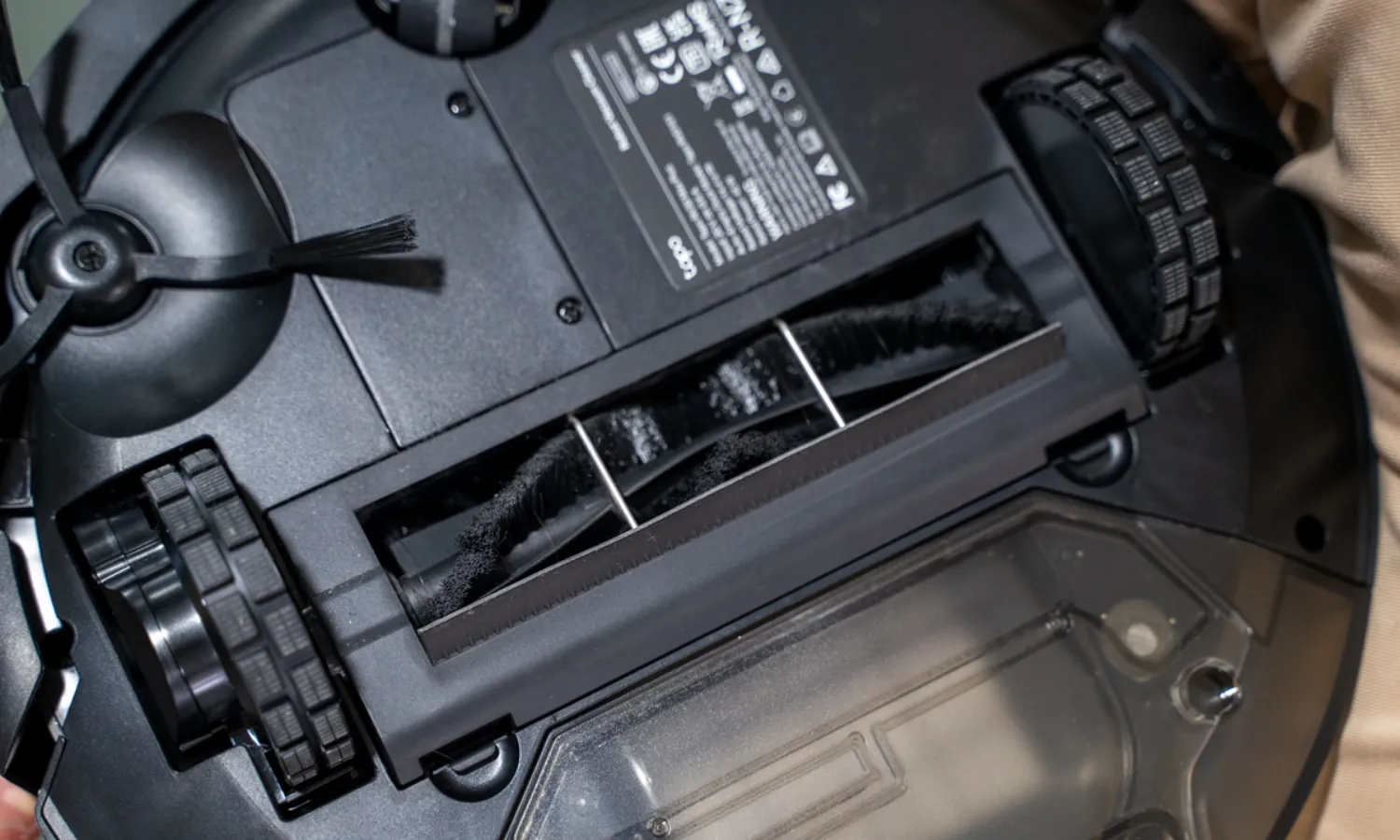
After years of going through these machines, I know exactly what I’m looking for: fine dust pickup that’s actually thorough, a mop that doesn’t just push water around, and navigation smart enough to avoid the charging cord my kids leave on the floor every single day.
For this roundup I ran six robots on the hardwood floors in my kitchen, hallway, and living room. My house has two medium-sized dogs who shed year-round, two school-age kids, and a lot of daily foot traffic. The floors need real maintenance, not a light once-over.
Our Top Picks
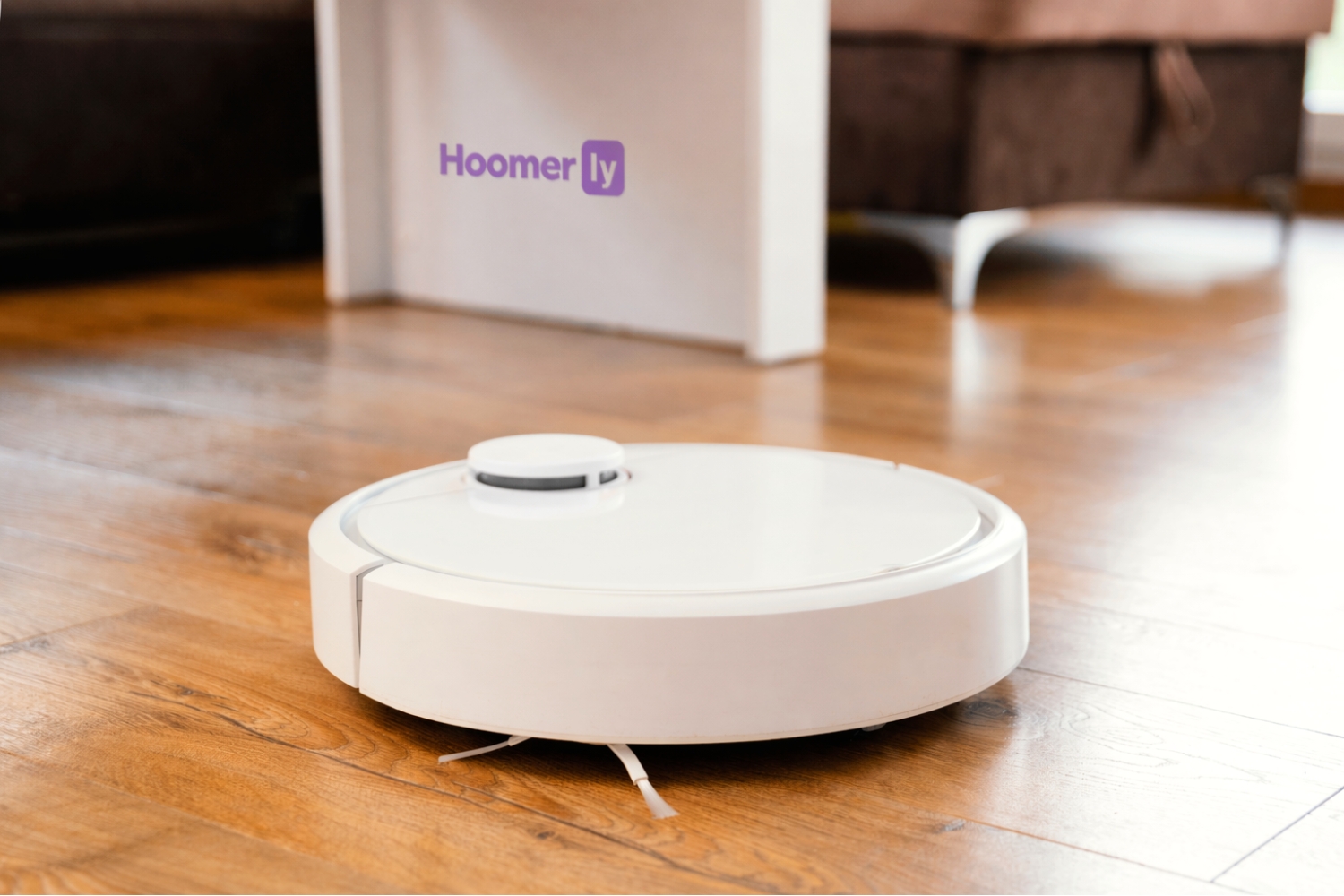
If you need a quick recommendation of which manual robot vacuum is best for pet hair, the list below should help. Here are our picks:
Best Overall Roborock Saros 10R at Amazon ↓ Jump to Review
Best Mopping MOVA Mobius 60 at Amazon ↓ Jump to Review
Best Mid-Range Pick eufy X10 Pro Omni at Amazon ↓ Jump to Review
Best Budget with Full Dock Roborock Qrevo S at Amazon ↓ Jump to Review
Best for Fine Dust on Hardwood Dreame D20 Plus at Amazon ↓ Jump to Review
Best Lightest Maintenance TP-Link Tapo RV30 Max Plus at Amazon ↓ Jump to Review
I paid attention to how each machine handled fine debris, how well it mopped, whether it got stuck or confused, and how the dock experience held up over time. Here’s what I found.
#1 Best Overall: Roborock Saros 10R
I’ve run a lot of robot vacuums, and the Saros 10R is genuinely the best I’ve put through my house. It scored a perfect 24/24 on obstacle avoidance in Vacuum Wars testing, and I believe it. My dog’s chew toys, scattered shoes, a balled-up sock, the charging brick for my son’s tablet, it navigated around all of them without a single stuck-robot rescue. The FlexiArm extending mop is something I didn’t think I’d care about until I saw it reach under my cabinet edges and actually clean the strip of floor that every other robot completely misses.
The dustbin is small at 270ml, which is the one real knock on it. For a house with two shedding dogs, that dock empties often. The MSRP is $1,599, which is a lot, but it regularly sells closer to $1000 and at that price it’s honestly worth considering. Zero percent hair tangle after weeks of use. The dock washes and heats the mop pads and dries them. If you want the machine that handles everything on hardwood, this is it.
#2 Best Mopping: Narwal Flow
If mopping is your priority, nothing else comes close right now. The Narwal Flow uses a roller mop with 16 nozzles that clean themselves in real time with 113-degree hot water. The result is that it leaves just 0.4g of water on the floor after mopping, compared to an industry average of over 1g (Vacuum Wars). My floors dried faster, looked better, and had no streaks. Its combined mopping score of 268 is in the top 7 all-time on Vacuum Wars, and stain removal came in at 125 versus an average of 110.
It’s not perfect. Fine dry debris like sand or crumbs sometimes needs a second pass. The app defaults to carpet-avoid mode, which meant I had to manually override it for my area rug, and that took some poking around to find. No auto-detergent dispenser either, so you’re manually adding solution. But it has the best battery efficiency I’ve seen: 2,068 sq ft per charge, which covers my whole house in one run. If your hardwood floors need real mopping, this is the one.
#3 Best Mid-Range Pick: eufy X10 Pro Omni
Back when I was on the sales floor, the question I got most from people with medium budgets was: “How much do I actually need to spend?” With the eufy X10 Pro Omni sitting at $429 to $600, the answer now is: not as much as you used to. The mop pads press down with 1 kg of downward pressure, the highest in any mid-range machine, compared to 0.6 kg on the Roborock S8 Pro Ultra (Vacuum Wars). On my hardwood kitchen floor, that translates to visibly cleaner results after one pass. Obstacle avoidance scored 4.38/5, which is legitimately impressive for this price range.
The edge and corner cleaning is where it falls short. My baseboards don’t get the same attention as the open floor, and the side brush can scatter fine debris before the main roller catches it. It also only connects on 2.4GHz WiFi, which matters if your router is older. But honestly, for what you’re paying, this is a full dock (self-empty, mop wash, heated dry, auto-refill) at a sub-$600 price. That’s a lot of machine for the money.
#4 Best Budget with Full Dock: Roborock Qrevo S
The Qrevo S is the cheapest robot vacuum in the Vacuum Wars Top 10 under $400, and what you get at that price genuinely surprised me. It has all four dock functions: self-empty, auto-refill, self-wash mop, and self-dry. Most machines at this price strip one or two of those out. The dual spinning mop pads at 200 RPM left my kitchen floor with a real shine, not just a damp wipe. Crevice and baseboard pickup also scored above average in lab results, which I noticed in the corners near my refrigerator where dust tends to pile up.
The obstacle avoidance though. It uses structured light only, no camera, and it showed. It ran over a phone charging cable twice in one session. If your floors are clear and tidy, this machine is a solid value. If your house looks like mine on a normal weekday, with stuff on the floor that isn’t supposed to be there, you’ll be picking it up off the carpet more than you’d like. No hot water mop wash either, which is a notable step down from the machines above it.
#5 Best for Fine Dust on Hardwood: Dreame D20 Plus
The thing that matters most on hardwood is fine dust pickup. Not pet hair, not big crumbs. The almost-invisible stuff that you don’t realize is there until you see it in a shaft of afternoon light. The Dreame D20 Plus pulls in 13,000 Pa of suction, the strongest in this budget tier, and in lab results it came in at near-perfect on fine dust, crumbs, and sand on hardwood, around 98%. The HyperStream DuoBrush with rubber and TPU fins handled my dogs’ hair without a single tangle after three weeks of daily runs. That 5-liter bagged bin is also a genuine quality-of-life feature. A 150-day bag life means I basically set it and forgot it for months.
But the mop is where you hit the ceiling. It’s a static plate, no spinning, no self-cleaning. It’ll pick up light residue but it won’t remove a dried food splatter. There’s no auto-refill and no mop drying in the dock. If your hardwood floors are mainly a dust problem and you’re not worried about mopping performance, the D20 Plus at $309 is excellent. If you need actual mopping, look at the machines above it.
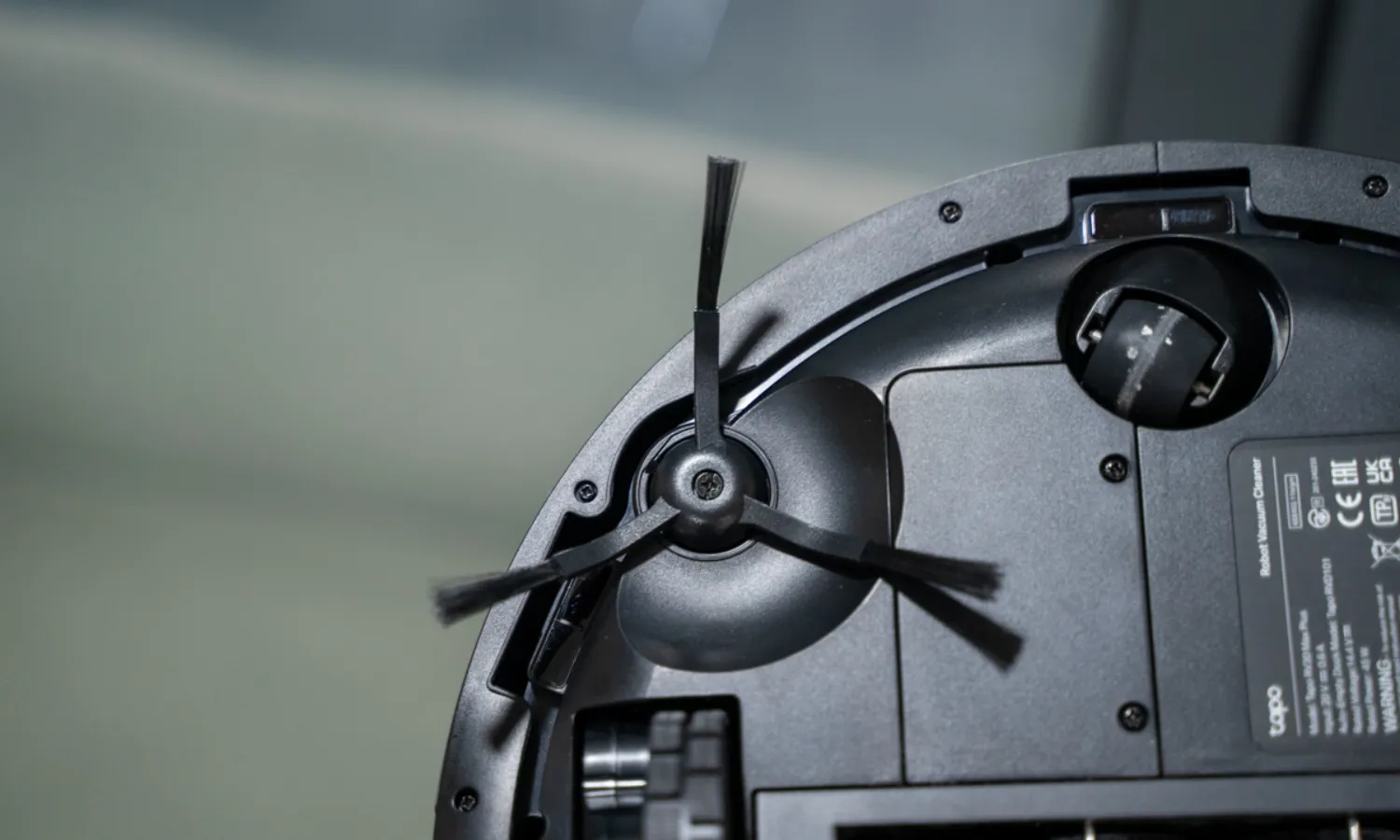
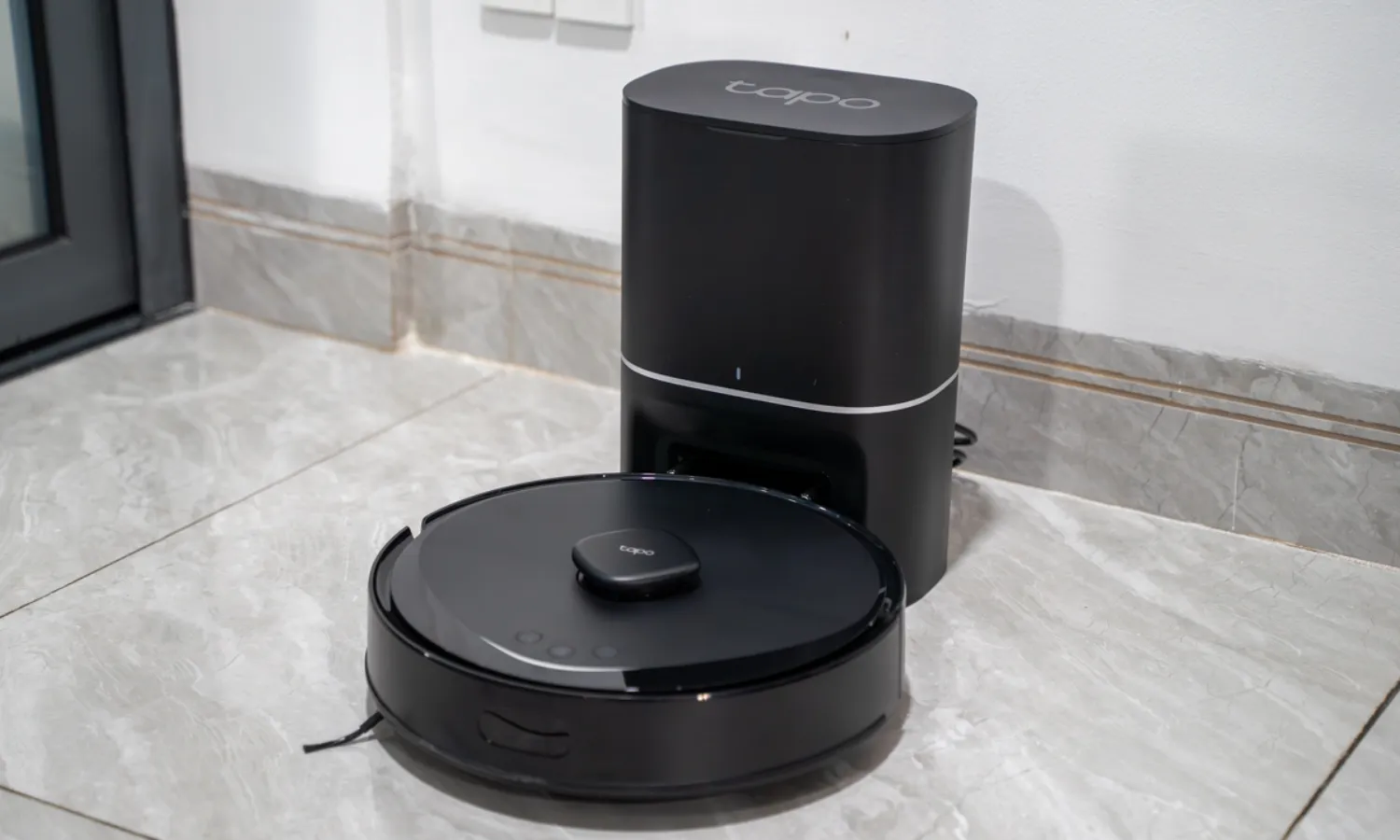
#6 Lightest Maintenance, Biggest Limitation: TP-Link Tapo RV30 Max Plus
The TP-Link Tapo RV30 Max Plus has a real advantage in one area: it’s genuinely quiet at 55.5 dB, and with a 3-liter bagged self-emptying dock, it’s easy to maintain. It handles large debris on hardwood well, picking up 97% in a single pass. If you live alone, have no pets, and want something hands-off and affordable for light daily maintenance, it does that job acceptably.
For hardwood floors in a real house though, the gaps are significant. Fine dust pickup came in at only 53.95% on sand, which is a critical miss for a floor type that shows every particle (TechGearLab). The standard bristle brush tangles badly with pet hair. No obstacle avoidance, no mop dock functions. I’d only point someone toward this machine if their hardwood floors are very lightly used and they’re working with a strict budget under $200. Otherwise, the step up to the Dreame D20 Plus is worth it.
What to Look for in a Robot Vacuum for Hardwood Floors
Fine Dust Pickup, Not Just Big Debris
Hardwood floors show everything. Crumbs are obvious, but it’s the fine particles, sand tracked in from outside, dried dust particles, that sneak past lower-powered machines. A robot that scores well on large debris but poorly on fine dust will leave your hardwood looking dull within a day.
Check for suction above 8,000 Pa and a roller design that doesn’t scatter before it picks up.
Mopping Quality: Wet Residue Is Worse Than No Mop
A poor mop is actually damaging on hardwood. Too much water left on the surface can warp the wood over time, and streaking is nearly impossible to avoid with low-pressure static pads. Look for machines with spinning mop pads, self-cleaning capability, and ideally some form of moisture control.
The Narwal Flow leaving just 0.4g of water on hardwood is a useful benchmark to measure against.
Obstacle Avoidance: Real Homes Have Stuff on the Floor
Camera-based obstacle avoidance is worth paying for if your floors aren’t always clear. Machines that use structured light only (no camera) tend to trip on cables, thin straps, and low-profile objects. If you have kids or pets, you know the floor is never as tidy as you intend it to be. A robot that gets stuck twice a week isn’t saving you time.
Hair Tangle: Critical If You Have Pets
Rubber roller brushes largely solved the tangle problem. Bristle brushes still wrap hair, and once they tangle, you’re kneeling on the floor with scissors to cut it out. Every robot in this list that had zero percent tangle in lab results used a rubber roller design. It’s not a minor convenience feature. It’s the difference between a machine you run daily and one you start avoiding.
Dock Functions at Your Budget
Self-emptying, mop washing, heated drying, and auto-refill are the four functions that make a robot vacuum genuinely hands-off. Not every budget gets all four.
With under $400, the Roborock Qrevo S gets you all of them. Below that, you typically lose mop washing and drying. Know which functions matter most to your routine before deciding where to draw the line on price.
My Pick
If I’m sending one person to one machine for hardwood floors, it’s the Roborock Saros 10R if their budget stretches to it. Perfect obstacle avoidance, zero tangle, the FlexiArm reaching those narrow strips along the walls, and a full dock that handles everything. It’s the machine I’d buy again without hesitation. For mopping as the top priority, the Narwal Flow is the one I reach for. I’ve never had a robot leave my floors that dry and streak-free. It’s a different kind of clean.
If you’re working with a tighter budget, the eufy X10 Pro Omni with under $500 is the most capable mid-range option I’ve run, and the Roborock Qrevo S is genuinely impressive for what it costs. The Dreame D20 Plus is the right call if fine dust on hardwood is your whole problem and mopping isn’t. Everyone’s home is different. The best robot vacuum for your hardwood floors is the one that fits your actual traffic, your floor condition, and your budget. I hope one of these six is the answer.
If you’re also looking at vacuums for other areas of the house, I have a full guide on robot vacuums for different home types over on my about page, which covers how I evaluate these machines across different floor setups.
FAQs
Can a robot vacuum with a mop actually damage hardwood floors?
Yes, if it leaves too much moisture. Hardwood is sensitive to water, and a mop that dumps liquid rather than lightly dampening the surface can cause swelling or warping over time. This is why the Narwal Flow’s 0.4g water residue result matters. Less moisture on the floor means less risk to the wood. I’d avoid leaving any robot mop running unsupervised on unsealed or older hardwood until you know how wet it runs.
How often should I run a robot vacuum on hardwood floors?
For a household with pets and kids, daily vacuum-only runs are worth it. Fine dust and hair accumulate fast and are more obvious on hardwood than on carpet. I run mine every morning. Mopping I do every two or three days, sometimes less in winter when the house stays cleaner. The self-emptying dock makes daily runs much more realistic since you’re not manually emptying after every session.
Do robot vacuums scratch hardwood floors?
They can, but modern ones rarely do if you maintain them. The main scratch risk comes from debris trapped under the machine, specifically grit or sand that gets dragged across the floor instead of picked up. Keeping the rollers clean and making sure the sensors and wheels don’t accumulate buildup goes a long way. Rubber rollers are gentler than bristle brushes. I’ve had no scratches on my floors across multiple machines over the years.
Is a robot vacuum enough for hardwood, or do I still need a regular vacuum?
Honestly, for day-to-day maintenance, a good robot vacuum handles it. I still pull out my upright once a week for deep edges, tight corners near furniture legs, and the stairs. But the visible surface of my hardwood floors stays clean from the robot alone. The machines that struggle to justify daily use on their own are the ones with poor fine dust pickup, like the TP-Link in this list. With the stronger options, the robot handles 80 to 90 percent of the work on its own.

Write Your Review
No reviews yet. Be the first to share your experience!