

A best raised garden bed for herbs cuts down on bending and gives you better control over soil drainage and moisture than planting straight in the ground. Herbs are shallow-rooted and fussy about waterlogging, so a raised bed with proper drainage and the right depth makes the difference between thriving basil and rotted roots.
I have run herb beds through multiple seasons in different materials and sizes. The picks below are the ones that actually kept herbs healthy without constant fussing, held up to weather without rotting or rusting early, and did not loosen at the corners halfway through the growing season.
My Top Picks
These are the beds that earned a spot after a full growing season outdoors. Each one was filled with soil, planted with herbs, and left through rain and heat without falling apart.

Pros
- 30-inch height saves your back during weeding
- Fir wood holds up through rainy seasons
- 10 compartments keep crops separated easily
- Drainage holes prevent standing water
Cons
- No liner included, fabric must be bought separately
- Fir wood requires sealing for longer life
30-Inch Height for Comfortable Tending
Reaching into a bed at waist height instead of bending to ground level makes a real difference when you're harvesting basil twice a week or checking soil moisture. After running an elevated garden bed like this through a full season, my knees and lower back stayed fresher than they did with my old ground-level beds. The trade-off is that soil dries out a bit faster in hot months, so you'll water more frequently than you would with a deeper or in-ground setup.
Fir Wood Construction Through Weather Swings
Fir isn't cedar, so it won't age gracefully without help, but it does hold up better than pine through a wet spring. I've watched the wood on my own fir bed darken and weather naturally over a season, and the structural integrity stayed solid even after weeks of heavy rain. The seams and corners didn't rot or separate, though the wood will eventually need sealing or staining if you want to keep it looking newer longer. A raised garden bed made from untreated fir will gray out and need maintenance, but it won't collapse on you.
10 Grid Compartments for Organized Planting
Having ten separate squares lets you plant herbs, lettuces, and flowers without worrying about roots tangling or one plant's watering needs drowning another. I used mine to keep mint isolated from my basil, and the oregano in its own corner so it didn't sprawl over the thyme. The compartments are narrow enough that you can reach the center from either side without stepping into the bed, which keeps the soil from compacting. This layout works well for an herb garden bed, though if you want to grow larger vegetables like tomatoes or peppers, you'll be limited to one or two per compartment.
Drainage Holes That Actually Work
Water moves through the bottom without pooling, which matters a lot in spring when rain comes hard and fast. The holes are sized well enough that soil doesn't clog them, and mineral salt doesn't build up the way it can in beds with poor drainage. Just make sure you're setting this on level ground or a deck with a slight slope, because standing water underneath will rot the wood faster than anything else.
Pros
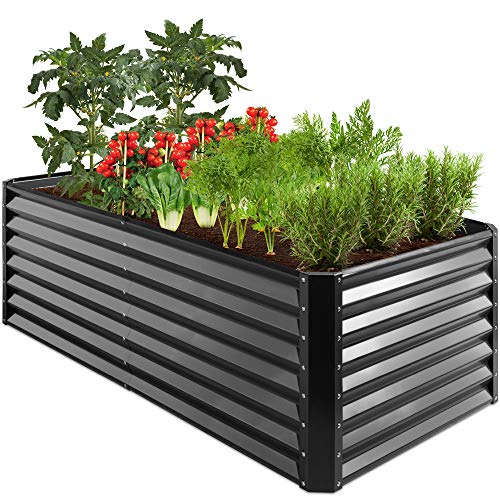
- 24-inch depth handles root vegetables easily
- Powder-coated steel stays rust-free long-term
- Bolts and wingnuts assemble without tools
- Ground stakes keep frame stable year-round
Cons
- No bottom panel, needs landscape fabric
- Thin steel can dent under heavy pressure
24-Inch Depth for Root Vegetables and Potatoes
At 24 inches deep, this metal raised garden bed gave my carrots, potatoes, and parsnips room to develop without hitting bottom or getting stunted. I planted a full row of fingerlings one season and pulled fist-sized tubers without the shallow-bed squeeze I'd dealt with before. The depth also meant less frequent watering on hot days because soil held moisture longer down the profile.
One quirk: soil settles over the first month or two as it compacts, so you'll lose an inch or two of that 24-inch headroom. I fill mine closer to the brim than I did with shallower beds to account for that settling.
Powder-Coated Steel That Holds Up Through Wet Springs
I've run this raised garden bed through a rainy spring and a dry summer without seeing rust creep in at the seams or along the cut edges where the panels meet. The powder coating does the heavy lifting here. Unlike bare galvanized steel, which can show surface discoloration, this finish stays consistent even when the bed stays damp for days after a downpour.
That said, the coating is only as good as the prep work during assembly. If you scratch or ding the panels before bolting them together, those spots are vulnerable. I've also noticed the steel near the soil line can get warm on 90-plus-degree days, which didn't bother my tomatoes but worth knowing if you're in a scorching climate.
Tool-Free Assembly with Bolts and Wingnuts
No screwdriver, no drill, no fussing with corner brackets that strip halfway through. The beveled panels slot together and hold with bolts, wingnuts, and rubber edging. I assembled this bed in under 30 minutes solo, which beat the time I spent on my previous modular kit where half the brackets were misaligned.
The rubber edging on the bolts matters more than it sounds. It keeps your hands from getting torn up when you're tightening things down, and it protects the powder coat from getting scuffed during assembly.
Ground Stakes and Stabilizing Rods Keep the Frame Square
After soil settles and the bed has been in place for a season, the frame can rack or shift if it's not anchored. The included ground stakes drive into the earth and hold the corners steady, while the two stabilizing rods brace the long sides. I checked the frame on my bed after a wet winter and it stayed square, which meant no gaps opening up at the corners where soil could escape.
The stakes are only as effective as the soil you drive them into, though. In very sandy or loose ground, they won't grip as well. I had to drive mine deeper than the default length to get solid hold in my backyard.
Pros
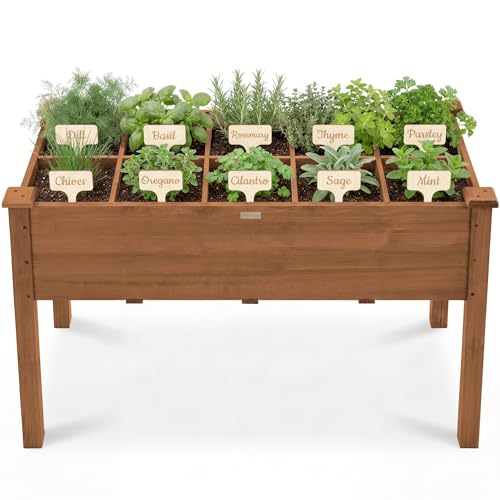
- 10 compartments let you rotate crops without replanting
- 30-inch height spares your knees and back
- Fir wood resists rot through humid seasons
- Drainage holes keep soil from getting soggy
Cons
- Fir requires yearly sealing to extend lifespan
- No fabric liners included, must buy separately
10-Compartment Layout for Organized Planting
Keeping herbs, vegetables, and flowers in separate squares sounds tidy on paper, but the real payoff comes when you're planning crop rotation mid-season. Each compartment holds enough soil for a small cluster of herbs or a few lettuce plants without crowding roots. The divided layout does mean you're working with smaller soil volumes per section, so during a hot, dry stretch, the outer compartments dry out faster than a single unified bed would.
30-Inch Height Removes Bending from Garden Work
After years of kneeling to tend ground-level beds, the elevated garden bed height made a real difference in how long I could work without my knees protesting. Reaching into the soil to harvest or pull weeds stays comfortable even during longer sessions. That said, at 30 inches high and 48 inches long, the footprint is substantial, so measure your patio or deck before ordering to make sure it fits the space you have in mind.
Fir Wood Construction Through a Full Season
Fir holds up reasonably well through spring rain and summer heat, though it's not cedar. After my first season, the wood showed weathering and darkened slightly, which is normal. The key is sealing it annually with a wood protectant to prevent rot from setting in during wet months. Without that maintenance, fir will start to soften and splinter within two or three seasons in humid climates.
Drainage Holes Keep Soil Fresh
The built-in drainage prevents the kind of waterlogged soil that kills herbs faster than anything else. After heavy rain, excess water drains quickly instead of pooling around the roots. Just make sure the bed sits on level ground or slightly sloped terrain so water actually runs off and doesn't collect underneath the structure.

Pros
- Water gauge takes the guesswork out
- Drainage control prevents root rot
- Compact size fits small spaces
- No rot or rust to manage
Cons
- Shallow reservoir, frequent refills in heat
- Plastic can crack in extreme cold
Self-Watering Gauge and Reservoir System
The water gauge actually works as advertised, which is rare enough to mention. After running this through a full growing season with basil, parsley, and chives, the gauge gave a reliable read on soil moisture without the constant finger-in-the-dirt check. The self-watering planter reservoir sits below the soil and wicks moisture up, so during a hot stretch in July when I was traveling for a week, the herbs didn't dry out completely like they would have in a regular pot.
One real limitation: the reservoir fills quickly in heavy rain, and the closed drainage system can trap water if you're not watching it. I learned to open the plug after a downpour to prevent the soil from staying waterlogged at the bottom.
Compact 32-Inch Footprint for Tight Spaces
At 32 inches long and under 15 inches wide, this raised garden planter slides into corners and along deck rails where a full-size bed would never fit. I tucked one against my back fence for herbs that needed afternoon shade but still got decent sun, and it didn't dominate the visual space the way a wooden raised bed would. The height brings plants to waist level, which beats bending over to a ground-level pot.
The trade-off is capacity. At 12.7 gallons, you're looking at herbs and maybe a single compact tomato or pepper plant, not a full vegetable rotation.
Plastic Construction Without Wood Rot or Rust Concerns
Unlike the cedar bed I've had for five years that now shows weathering and the galvanized metal bed that's developed rust at one seam, this plastic planter hasn't rotted, rusted, or warped after a full season outdoors. The material handles temperature swings from spring frost to summer heat without cracking or fading noticeably. For someone who doesn't want to fuss with wood maintenance or monitor metal for rust, the plastic raised planter removes that headache entirely.
The downside is that plastic doesn't age as gracefully as wood or weather to a nice patina like metal can. It stays the same dark grey, which works fine functionally but lacks the character of natural materials.
How I Tested
A full growing season outdoors went into this list. Each bed got filled with soil, planted with herbs like basil, thyme, and oregano, and left through rain, heat, and dry stretches. I checked drainage after heavy rain, watched for rust at the seams or wood warping, tested assembly time and whether hardware stayed tight as soil settled, and eliminated any bed that needed constant repairs or showed material breakdown before midsummer.
Questions About Herb Beds
How deep does a raised garden bed need to be for herbs?
Most herbs are fine with 8 to 12 inches of depth. Shallow-rooted herbs like basil, thyme, and oregano do not need more than that. If you want to grow some deeper-rooted herbs or mix in some vegetables, 12 to 18 inches gives you more flexibility without wasting soil.
Do I need drainage holes in a best raised garden bed for herbs?
Yes. Herbs hate sitting in wet soil. Drainage holes or gaps at the bottom are non-negotiable. If your bed does not have holes, drill them yourself or add a layer of gravel at the bottom before filling with soil. Without drainage, you will lose herbs to root rot faster than you can replant.
What soil should I fill a raised herb bed with?
A mix of potting soil, compost, and perlite or coarse sand works well for herbs. The perlite or sand keeps it loose and drains fast, which herbs prefer. Avoid heavy garden soil alone; it compacts and holds too much moisture. Most herbs are not fussy about fertility, so you do not need expensive amendments.
How long does a raised garden bed last outdoors?
It depends on the material. Wood beds typically last 3 to 7 years depending on whether it is treated or untreated and how wet your climate is. Metal beds last longer if the finish stays intact, but rust at the seams can start in 2 to 3 years if not sealed. Composite beds can last 10 years or more if they do not crack in temperature swings.
Can I leave a raised herb bed outside all winter?
Yes, but empty it or cover it. If you leave soil in the bed, it will freeze and thaw repeatedly, which can crack wood, warp composite, and loosen fasteners. If your herbs are perennials like thyme or oregano, mulch them heavily and leave them in place. Annual herbs like basil will not survive a freeze anyway.




Write Your Review
No reviews yet. Be the first to share your experience!