

Free Delivery. Exclusive Deals. All Prime.
Prime members save on shipping and get first access to deals, plus Prime Video included. 30 days free.
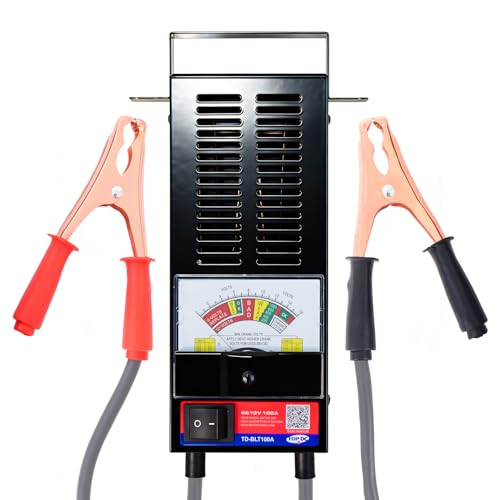
Your car battery quits on the first cold morning of the season, and jumper cables only confirm it’s dead, not why. Carbon pile battery load testers put a real load on a battery so you see how it performs under the draw a starter motor demands. After comparing 6 models, the Topdc Battery Tester stands out with its 500-amp variable load, 1000 CCA rating and 15-second timed test cycle. For drivers running 24-volt equipment, the Clore Automotive Battery Tester adds solar-assisted charging and a 56-inch cable reach.

Pros
- 500 amp variable load for diagnostics
- Tests 6V and 12V lead-acid batteries
- Supports batteries up to 1000 CCA and 160Ah
- Color-coded voltage and amperage meters
- Checks battery, alternator, and regulator
Cons
- Lead-acid batteries only
- 15-second test needs a 1-minute cool-down
- Recommended limit is 3 tests every 5 minutes
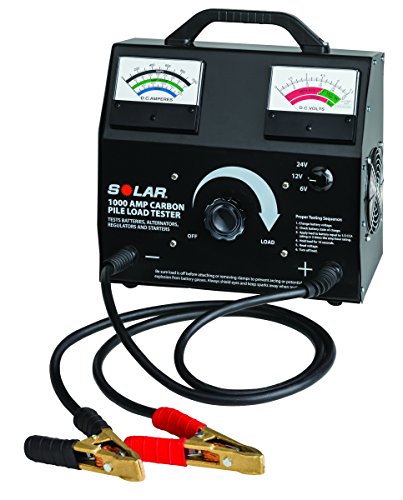
Clore Automotive Solar 1876 1000 Amp Carbon Pile Battery Load Tester, One Size, Factory
Pros
- Tests batteries up to 2000 CCA
- Variable load capability up to 1000 Amps
- Assesses starter and alternator condition
- Tests 6, 12, and 24 volt systems
- Heavy-duty clamps cut through battery corrosion
Cons
- Weighs 8.8 pounds, not portable
- 56-inch cable reach limits placement flexibility

Pros
- Tests 3 functions with one device: battery health, charging system, and starter motor draw
- Handles both 6V and 12V batteries up to 1,000 CA with heavy load capacity
- Compatible with motorcycles, ATVs, cars, trucks, boats, RVs, and lawn tractors
- Analog meter provides quick results with simple rocker switch operation
- Built by Schumacher Electric, a manufacturer since 1947
Cons
- Weighs 2 pounds and measures 37.6 x 17.3 x 9.4 inches, requiring bench or storage space
- Analog meter may be less precise than digital displays for detailed diagnostics
- Does not test batteries larger than 1,000 CA

Pros
- Tests 6V and 12V lead-acid batteries up to 1000CCA
- 500A load tester requires no external power source
- Heavy gauge copper leads with insulated clamps
- Color-coded temperature compensation chart for pass/fail results
- Quick 15-second load test time
Cons
- Relatively heavy at 8.1 pounds for portable use
- Large 12 x 12 x 7 inch dimensions limit storage space
- Separate voltmeter and ampere meter dials require interpretation

Pros
- Load tests 6V, 12V, and 24V batteries
- Tests batteries up to 2000 cold cranking amps
- Tests alternators, regulators, and starters
- 56 inch solid copper cables with heavy duty clamps
- Separate volt and amp meters for detailed readings
Cons
- Weighs 20 pounds, making it less portable than smaller testers
- Requires bench or vehicle access due to size and cable length
- Large footprint at 17.25 x 16.825 x 12.5 inches

Pros
- Tests batteries up to 1000 CCA or 160 amp hour capacity
- 500 amp adjustable load carbon pile for flexible testing
- Tests alternators, regulators and starters beyond battery
- Color coded meters show pass or fail at a glance
- Includes temperature compensation chart for accurate results
Cons
- Weighs 8 pounds, less portable than smaller testers
- Requires learning to interpret meter readings correctly
- No information provided on durability or long-term reliability
What to Look for in a Battery Tester Before Winter Sets In
Checking a battery before temperatures drop is different from a quick jump start, because you want real numbers on how it performs under load rather than a resting voltage reading. Here is what mattered most as we compared carbon pile battery load testers for this list.
- What it measures: Across our list, carbon pile testers read state of charge in volts, apply a real load in amps and return a pass or fail result tied to cold cranking amps. Ratings on our picks run from 1000 CCA up to 2000 CCA, and amp hour ratings reach as high as 160Ah on some units. A tester that only checks voltage will not catch a battery that reads fine at rest but collapses once a starter motor pulls real current.
- Display and readability: Some units split voltage and amperage onto two color-coded gauges so you can watch both readings at once, while others rely on a single analog dial and a rocker switch. A pass or fail chart with temperature compensation lets you adjust readings for cold weather, which matters for winter checks. Load cycles on our picks run as short as 15 seconds, so a clear display matters since you often get one look before a required cooldown.
- Compatible battery types: If your garage holds more than one kind of vehicle, battery compatibility matters more than any single spec. The Schumacher Electric Battery Tester covers both 6-volt and 12-volt lead-acid batteries, running a 50-amp load test on 6-volt packs and a 100-amp test on 12-volt packs rated up to 1000 CA, which covers motorcycles, lawn tractors and light trucks with one tool.
- Build quality and leads: Heavy clamps and long cables matter when a battery sits deep in an engine bay. The FJC Battery Tester pairs 56-inch solid copper cables with heavy-duty clamps and tests 6-volt, 12-volt and 24-volt batteries rated as high as 2000 cold cranking amps. Among our other picks, cable reach runs from 3-inch clamps up to that same 56-inch standard, and most clamps are copper-plated to bite through corrosion on terminals.
- Safety features: A load tester pushes real current through a battery for a short burst, so built-in limits matter. The Topdc Battery Tester times each 12-volt test to 15 seconds, beeps when the cycle ends, and recommends a 1-minute cooldown with no more than 3 tests every 5 minutes. Not every unit on our list includes a built-in timer, so check the instructions before running back-to-back tests.
We left jump starters and battery chargers off this list, since they solve a different problem and we cover them in other guides. We also skipped shop-grade workshop compressors built for running air tools, because that is a different job than testing a battery’s load capacity.
Other Battery Testers Worth Considering
These are other battery testers we looked at but did not put on our main list.
If a rubberized shell appeals to you more than bare metal, the Battery Tender Battery Tester runs a 12-volt hand-crank load test wrapped in a rubber housing that resists drops better than the exposed frame on our top pick. It covers the same 12-volt range as our top pick, just with a tougher outer shell instead of an open copper frame.
The Auto Meter Product sticks to 6-volt testing only, which narrows its use to older vehicles and small engines rather than the mixed-fleet garages our main list aims to cover. It is a capable unit, but at 6 volts alone it does not match the broader voltage coverage of the carbon pile testers on our main list.
FAQs
What does a carbon pile load tester actually measure?
A carbon pile tester applies a real electrical load, measured in amps, to a battery while tracking voltage, which shows whether the battery can deliver its rated cold cranking amps under real demand. Across typical testers, load capacity ranges from 500 to 1000 amps, and the CCA ratings they check run from 1000 up to 2000.
How accurate are these testers compared to a simple multimeter?
A multimeter only shows resting voltage, which can look normal on a battery that still fails under load. A tester that draws 500 amps or more for a timed cycle, often 15 seconds, exposes weak cells that a voltage-only reading misses.
Can one tester cover 6-volt, 12-volt and 24-volt batteries?
Not always. Some units top out at 12 volts, while others extend to 24 volts for larger trucks and equipment, so check the voltage range printed on the dial before buying.
Is it safe to run a load test in cold weather?
Before running any test with the engine on, make sure the vehicle’s tailpipe is clear of snow, since a blocked tailpipe can let carbon monoxide, an odorless and deadly gas, build up inside the vehicle, according to the Centers for Disease Control and Prevention. Testing in a garage also calls for the same caution: let exhaust clear before you stand near the tailpipe to connect leads.
Sources
- Clear Snow from Tailpipes, Centers for Disease Control and Prevention. CDC warning about snow-blocked vehicle tailpipes.
- Safety Guidelines: During & After a Winter Storm, Centers for Disease Control and Prevention. Winter heating safety for space heaters, kerosene heaters and carbon monoxide.




Write Your Review
No reviews yet. Be the first to share your experience!