

Free Delivery. Exclusive Deals. All Prime.
Prime members save on shipping and get first access to deals, plus Prime Video included. 30 days free.
The TV remote dies right when you are trying to check the weather, and the junk drawer suddenly becomes a battery lottery. Aa battery testers solve that by giving a quick read before you toss, recharge, or keep a cell. After comparing 6 models, the La Crosse Technology Battery Tester stands out with 3 voltage ranges, 3-step operation, and 9V contacts. The Tenergy Battery Tester is the alternative pick because it covers 11 listed battery formats.

Pros
- Tests rechargeable and alkaline batteries
- Supports AAA, AA, C, D, N, 9V, and lithium button cells
- 3 voltage ranges: 1.5V, 1.2V, and 3.0V
- Compact size: 3.53 x 1 x 0.98 inches
- LED displays voltage and strength levels
Cons
- Voltage range must be selected manually
- Tests one battery at a time
- 9V batteries use side touch contacts
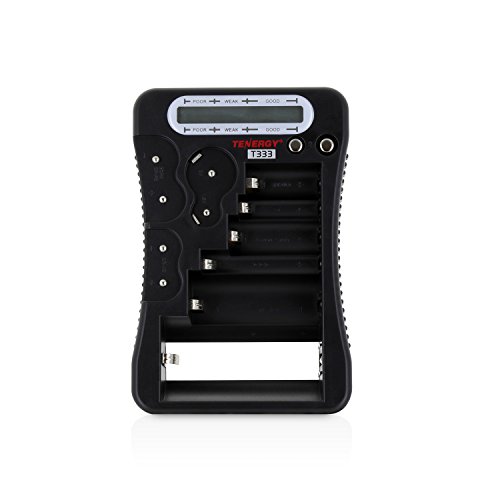
Pros
- Tests AA, AAA, C, D, 9V, CR123A, CR2, and button cells
- LCD screen shows poor, weak, or good battery status
- Small 5.25 x 3.5 x 1 inch size
- Includes a battery for tester power
- Includes 1 year warranty support
Cons
- Does not list support for vehicle batteries
- Needs its included battery as a power source
- Made for household batteries, not tire or jump-start tasks

Pros
- Checks AA, AAA, C, D, 9V, N, and button cell batteries
- LCD shows poor, weak, or good voltage condition
- Compact 0.02 lb design with anti-slip finish
- Includes 1 AAA battery and an 18-month warranty
Cons
- Does not test rechargeable batteries
- Should not be powered by a rechargeable battery
- Not listed for vehicle battery testing

Pros
- Includes 2 battery testers
- Checks AA, AAA, C, D, 18650, 9V and button cells
- No battery required for operation
- Color-coded scale shows good, low or replace status
- Compact ABS body is lightweight and portable
Cons
- Product data mentions both LCD and analog needle display
- No warranty information provided
- No storage case listed

Pros
- Tests AA, AAA, C, D, 9V, 1.5V, and 1.5V button batteries
- 4-piece set for checking household batteries
- No separate battery needed for operation
- Analog needle shows good, low, or replace/recharge
- Compact 4.13 x 1.57 x 0.78 inch size
Cons
- Does not directly measure precise battery capacity
- Test times should be kept short to reduce battery drain
- For household batteries listed, not vehicle batteries
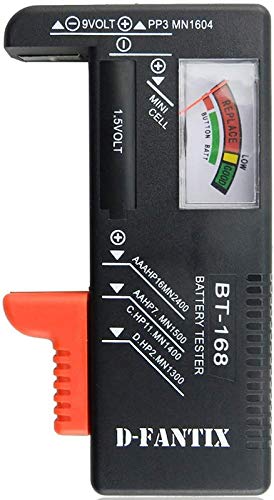
Pros
- Tests 7 battery types: AA, AAA, C, D, 1.5V, 9V, and button batteries
- Requires no batteries to operate - powered by the battery being tested
- Color-coded analog display clearly shows good, low, or replace status
- Compact and lightweight design at 0.11 pounds for easy portability
- Helps avoid waste by identifying good batteries before disposal
Cons
- Analog display provides approximate readings, not precise capacity measurements
- Small size may be difficult for those with limited dexterity to use
- Only tests battery voltage, not actual remaining capacity accurately
How We Chose These Battery Testers for Winter Battery Checks
Winter prep is not only about the vehicle’s main battery. Flashlights, remotes, tire gauges, smoke detectors, and battery-operated carbon monoxide detectors all depend on small cells that are easy to confuse once they land in a drawer.
- What it measures: For household battery testers, the useful baseline is voltage, not a full automotive CCA or load test. The La Crosse Technology Battery Tester lets you select 1.5V, 1.2V, or 3.0V before reading the cell, which matters because alkaline, rechargeable, and lithium button cells should not be judged on the same setting. It also has separate 9V touch contacts, so the common rectangular battery is not an afterthought.
- Display and readability: We favored displays that translate a reading into a clear condition instead of making you guess. The Dlyfull Battery Tester uses an LCD screen and shows batteries as poor, weak, or good, with bar-style results that are easier to scan than a bare number. Among our picks, 3 use analog color zones labeled good, low, and replace or recharge, while 3 use digital readouts or LCD-style indicators.
- Compatible battery types: The best fit for a winter drawer should cover more than AA cells, since radios, sensors, keypads, and small lights often mix formats. Across the main list, compatible types include 1.5V household batteries, 9V batteries, and button cells. Several picks also list less common formats such as N, CR123A, CR2, CRV3, 2CR5, or CR-P2, which helps if your emergency gear uses specialty cells.
- Build quality and leads: None of the main picks specifies external test leads, so we treated self-contained design as the standard rather than expecting probe-style cables. The Umlife Battery Tester lists ABS material and comes as a 2-pack, which is practical if you want one tester near household batteries and another with winter gear. Its analog needle uses 3 color bands, so the housing and display are both aimed at quick household checks.
- Safety features: A battery tester is not a substitute for winter safety habits, but it can support them by identifying weak cells before they go into safety devices. According to the Centers for Disease Control and Prevention, battery-operated carbon monoxide detectors are part of winter safety planning, and space heaters should be kept at least 3 feet from drapes, furniture, or bedding. For analog testers that draw power from the battery being checked, contact also matters because 2 listings warn that long test times can drain the battery unnecessarily.
We excluded jump starters and battery chargers because those belong in separate guides, and they do a different job from checking small household cells. We also left out shop-grade workshop compressors for tools, which are not meant for the same quick battery-health decisions.
Other Battery Testers Worth Considering
These are other battery testers we looked at but did not put on our main list.
If a warranty is your main filter, Kkeanic Battery Tester advertises a 1-year warranty and may be worth a look. It remains outside the main list because our top pick gives you 3 selectable voltage ranges, which is more directly tied to sorting alkaline, rechargeable, and lithium button cells.
For shoppers who want a tester associated with 12V checks, Gardner Bender Battery Tester takes a different route from the household-first models above. That can be useful for a different size and feature mix, but the main picks focus on small-cell formats such as 1.5V, 3.0V, and 9V batteries.
Need another simple checker to compare against the main list? Dlypow Battery Tester is listed as an alternative, but the available summary points readers back to the listing instead of giving a specific voltage range or format count. By contrast, our alternative pick lists 11 supported battery formats, which makes its compatibility easier to judge before buying.
FAQs
Do aa battery testers measure the same thing as a car battery tester?
No. The models here focus on small-cell voltage or condition readings, while automotive testers often discuss load testing or CCA. For household winter prep, that means these are better suited to AA, AAA, 9V, and button cells than to diagnosing a vehicle starting battery.
Is a digital display better than an analog needle for winter prep?
A digital display can be easier if you want a voltage-based reading or a clear poor, weak, or good result. An analog needle can still be useful because 3 color zones make quick sorting simple when you are checking a handful of cells.
What battery types should I check before cold weather?
Start with batteries used in flashlights, radios, remote sensors, smoke detectors, and battery-operated carbon monoxide detectors. Among our picks, supported categories include 1.5V household cells, 9V batteries, and button cells, with some models also covering specialty lithium formats.
How does battery checking connect to winter safety?
The CDC says a blocked vehicle tailpipe can let carbon monoxide build up quickly inside the vehicle, so winter preparation should include more than batteries. It also recommends installing a battery-operated carbon monoxide detector, which makes checking spare cells a practical part of storm readiness.
Sources
- Clear Snow from Tailpipes, Centers for Disease Control and Prevention. CDC warning about snow-blocked vehicle tailpipes.
- Safety Guidelines: During & After a Winter Storm, Centers for Disease Control and Prevention. Winter heating safety for space heaters, kerosene heaters and carbon monoxide.




Write Your Review
No reviews yet. Be the first to share your experience!