

Free Delivery. Exclusive Deals. All Prime.
Prime members save on shipping and get first access to deals, plus Prime Video included. 30 days free.
The flashlight dies just as you are checking the glove box, which is how a simple battery check becomes a driveway comedy. Alkaline battery testers solve that by showing whether common cells still have usable voltage before winter errands get awkward. After comparing 6 models, the Dlyfull Battery Tester is our top pick because it reads 1.5V and 3V button cells, includes 1 AAA battery, and has an 18-month warranty. The Dlypow Battery Tester is our alternative pick for its magnetic tip and 9V coverage.

Pros
- Checks AA, AAA, C, D, 9V, N, and button cell batteries
- LCD shows poor, weak, or good voltage condition
- Compact 0.02 lb design with anti-slip finish
- Includes 1 AAA battery and an 18-month warranty
Cons
- Does not test rechargeable batteries
- Should not be powered by a rechargeable battery
- Not listed for vehicle battery testing

Pros
- Magnetic tip holds batteries for stable contact
- Checks AAA, AA, C, D, 9V and button cells
- Large analog display for easy reading
- Compact 4.33 x 2.32 x 0.98 inch size
Cons
- Analog display only, no digital readout listed
- No warranty information provided
- Designed for household batteries, not vehicle batteries

Pros
- Tests 12V and 24V systems
- Supports 100 to 2000 CCA batteries
- Shows 5 clear battery result types
- Covers 6 battery types, including AGM and Lithium-Ion
- Review Data stores prior test reports
Cons
- Requires selecting battery type and rating from the label
- 128x64 LCD is small compared with larger displays
- Clamp cable is 31.5 inches, which may limit reach
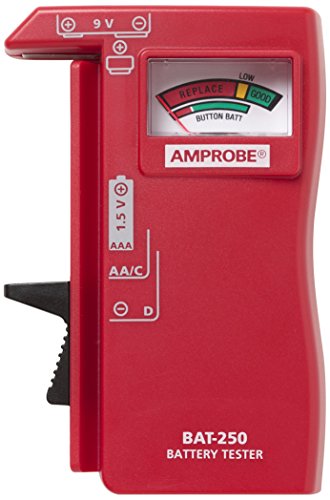
Pros
- Color coded Good, Low, and Replace/Recharge indicators
- Tests 9V, AA, AAA, C, D, and 1.5V button batteries
- Works with standard and rechargeable batteries
- No batteries required to operate
- Compact 3.5 x 3.2 x 6.42 inch size
Cons
- No digital readout mentioned
- No warranty information provided
- Limited to listed battery types

Pros
- Tests 7 battery types: AA, AAA, C, D, 9V, 1.5V, and button batteries
- Requires no separate battery to operate
- Compact and lightweight at 4.13 x 1.57 x 0.78 inches
- Color-coded analog display shows good, low, or replace status
Cons
- Estimates voltage only; does not measure battery capacity precisely
- Continuous testing drains the battery being checked
- Limited to testing household batteries, not vehicle-specific power
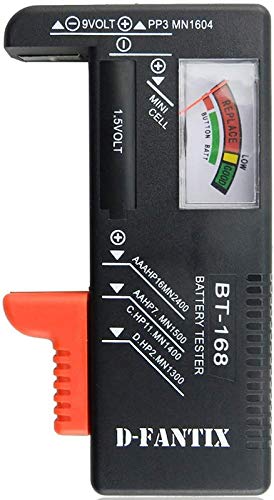
Pros
- Tests 7 battery types: AA, AAA, C, D, 1.5V, 9V, and button batteries
- Requires no batteries to operate - powered by the battery being tested
- Color-coded analog display clearly shows good, low, or replace status
- Compact and lightweight design at 0.11 pounds for easy portability
- Helps avoid waste by identifying good batteries before disposal
Cons
- Analog display provides approximate readings, not precise capacity measurements
- Small size may be difficult for those with limited dexterity to use
- Only tests battery voltage, not actual remaining capacity accurately
How We Chose Battery Testers for Winter Battery Checks
Drivers tend to think first about the car battery, but winter readiness also depends on smaller cells in flashlights, tire gauges, remotes and carbon monoxide alarms. A useful tester should make the answer clear quickly, especially when you are sorting several AA or 9V batteries before cold weather.
- What it measures: We favored testers that state exactly what they read, because voltage and condition labels answer different questions. The Dlyfull Battery Tester is strongest for household sorting because it covers 1.5V and 3V button cells and shows battery health by voltage condition. One vehicle-focused pick goes further with CCA and internal resistance, which matters when diagnosing a starting problem rather than a drawer full of AA cells.
- Display and readability: The main list includes both analog needles and an LCD, so the right display depends on how much detail you want. Analog models use 3 color zones, usually good, low and replace or recharge. The LCD option shows poor, weak or good with bars, which is easier when you want a simple voltage status rather than a needle position.
- Compatible battery types: The Amprobe Battery Tester covers 9V, AA, AAA, C, D and 1.5V button type batteries, which fits the most common household winter items. Across the main list, compatibility ranges from common cylindrical cells to specialty formats such as CR123A, CR2 and CRV3. That broader coverage matters if your emergency gear uses more than the usual AA and AAA cells.
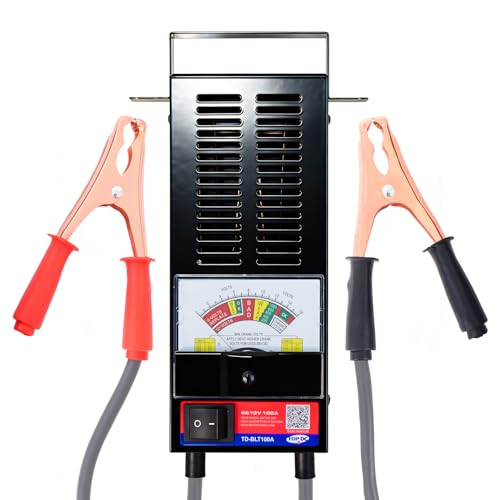
- Build quality and leads: For vehicle checks, cable reach and housing matter more than pocket size. The Ancel Battery Tester uses an 800mm cable, copper clamps and a reinforced silicone case, and it is backed by a 1-year warranty. Household picks are lighter and more compact, but they generally trade clamp reach for direct contact testing.
- Safety features: Vehicle battery testing benefits from protections that household testers usually do not need. One pick includes 4-way protection against reverse polarity, short circuits, overvoltage and over-temperature. For winter safety beyond testing, the CDC says a blocked tailpipe can let carbon monoxide build up quickly inside a vehicle, so battery checks should be part of a wider cold-weather routine.
We excluded jump starters and battery chargers because they solve a different problem than checking battery condition. We also excluded shop-grade workshop compressors for tools, since that is a different job than tire inflation and battery testing.
Other Battery Testers Worth Considering
These are other battery testers we looked at but did not put on our main list.
If a warranty is the deciding point, Kkeanic Battery Tester is worth a look because it lists a 1-year warranty. Compared with our top pick, the reason to consider it is not broader stated coverage, since our main list includes 1.5V and 3V button-cell checking.
For shoppers comparing a different size and feature mix, Tenergy Battery Tester stays in the conversation as another battery tester. The available notes do not give a clearer measured advantage over our main picks, which include models covering 9V batteries and common AA cells.
Prefer a more familiar electronics-accessory style? La Crosse Technology Battery Tester is another alternative, but the notes available here do not show a stronger numeric compatibility claim than the main list. Our picks include household testers that cover at least 5 common formats, so it would need to fit your preferred layout to make more sense.
And if 12V checking is the whole reason you are shopping, Gardner Bender Battery Tester may be relevant. It is a narrower comparison point next to our vehicle-oriented pick, which covers both 12V and 24V systems and adds more diagnostic categories for starting and charging checks.
FAQs
Do household battery testers measure the same thing as car battery testers?
No. Household models usually check voltage condition for cells such as AA, AAA, C, D and 9V. Vehicle-focused models may also report CCA, state of health, state of charge and charging-system results.
Are analog battery testers accurate enough for winter prep?
Analog testers are useful for sorting batteries into 3 simple groups, good, low and replace or recharge. They are best for quick household checks, not for diagnosing a weak vehicle battery under load.
Which battery types should a winter-ready tester cover?
For household gear, look for coverage of AA, AAA, C, D and 9V batteries. Button-cell support is also useful because some small lights, thermometers and remotes use 1.5V or 3V cells.
What else should drivers check before winter trips?
The CDC warns that a snow-blocked tailpipe can allow carbon monoxide to build up quickly inside a vehicle. It also recommends battery-operated carbon monoxide detection for home winter safety, especially when heating equipment is in use.
Sources
- Clear Snow from Tailpipes, Centers for Disease Control and Prevention. CDC warning about snow-blocked vehicle tailpipes.
- Safety Guidelines: During & After a Winter Storm, Centers for Disease Control and Prevention. Winter heating safety for space heaters, kerosene heaters and carbon monoxide.




Write Your Review
No reviews yet. Be the first to share your experience!