

Free Delivery. Exclusive Deals. All Prime.
Prime members save on shipping and get first access to deals, plus Prime Video included. 30 days free.
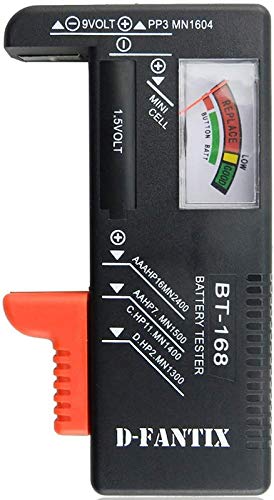
The flashlight works, then it does not, and somehow the junk drawer is now a battery courtroom. Battery testers for small batteries solve that by separating usable cells from ones headed for recycling. After comparing 6 models, the D-FantiX Battery Tester is the best fit because it checks AA through D cells, handles 9V batteries, and needs 0 batteries to run. The Gardner Bender Battery Tester is the alternative pick if 12V coverage matters.
Pros
- Tests 7 battery types: AA, AAA, C, D, 1.5V, 9V, and button batteries
- Requires no batteries to operate - powered by the battery being tested
- Color-coded analog display clearly shows good, low, or replace status
- Compact and lightweight design at 0.11 pounds for easy portability
- Helps avoid waste by identifying good batteries before disposal
Cons
- Analog display provides approximate readings, not precise capacity measurements
- Small size may be difficult for those with limited dexterity to use
- Only tests battery voltage, not actual remaining capacity accurately
Pros
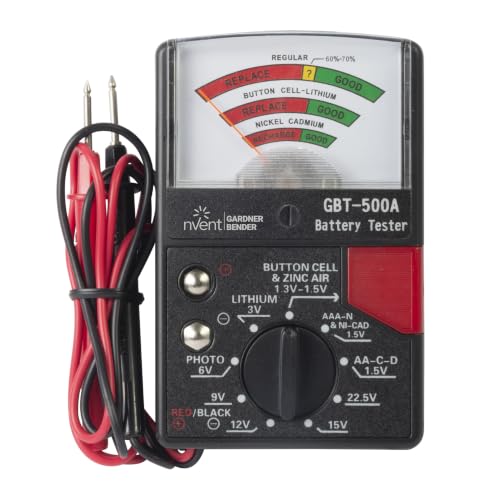
- Analog battery tester with 14 battery ranges
- Includes test leads for easy testing
- Tests common batteries for charge or replacement
- Compact 1.5 x 2.5 x 3.8 inch size
- Light 0.22 pound weight
Cons
- Analog display, not a digital readout
- No warranty terms listed in the data
- Product group is Home Improvement, not automotive

Pros
- Magnetic tip holds batteries for stable contact
- Checks AAA, AA, C, D, 9V and button cells
- Large analog display for easy reading
- Compact 4.33 x 2.32 x 0.98 inch size
Cons
- Analog display only, no digital readout listed
- No warranty information provided
- Designed for household batteries, not vehicle batteries

Pros
- Tests rechargeable and alkaline batteries
- Supports AAA, AA, C, D, N, 9V, and lithium button cells
- 3 voltage ranges: 1.5V, 1.2V, and 3.0V
- Compact size: 3.53 x 1 x 0.98 inches
- LED displays voltage and strength levels
Cons
- Voltage range must be selected manually
- Tests one battery at a time
- 9V batteries use side touch contacts
Pros
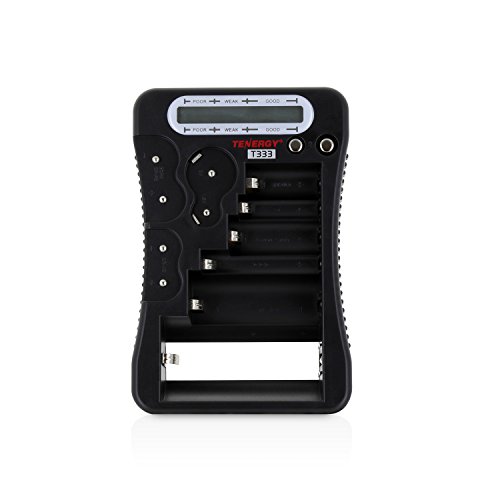
- Tests AA, AAA, C, D, 9V, CR123A, CR2, and button cells
- LCD screen shows poor, weak, or good battery status
- Small 5.25 x 3.5 x 1 inch size
- Includes a battery for tester power
- Includes 1 year warranty support
Cons
- Does not list support for vehicle batteries
- Needs its included battery as a power source
- Made for household batteries, not tire or jump-start tasks

Pros
- Tests 20+ battery types including AA, AAA, C, D, 9V, and button cells
- LCD display shows exact voltage readings plus Good/Weak/Poor status indicator
- Real-load testing provides accurate power level assessment in 0.1 seconds
- Compact size (4.7 x 2.8 inches) fits easily in toolboxes or drawers
- Auto power-on at 0.7V and 3-second auto-shutoff conserves battery life
Cons
- Requires one AAA battery for operation (not included with tester)
- LCD screen lacks backlighting for low-light visibility
- Cannot test lithium batteries or provide battery storage case
How We Chose Battery Testers for Small Batteries Before Winter
Small batteries are easy to ignore until a cold night, a dead flashlight or a chirping alarm makes them urgent. For drivers preparing for winter, the useful tester is the one that gives a clear reading quickly and covers the cells used in glove-box lights, remotes, emergency radios and home safety gear.
- What it measures: A small-battery tester should at least show voltage or a clear power status, because that is what helps you decide whether to keep, recharge or replace a cell. The D-FantiX Battery Tester uses an analog needle with 3 zones: green, yellow and red. It is meant for quick household sorting rather than precise capacity measurement, and it runs from the battery being checked, so it requires 0 internal batteries.
- Display and readability: Displays matter because winter prep often happens in a garage, basement or utility closet, not at a workbench. Among our picks, readouts include analog needles, LCD voltage screens and LED-style strength indicators. The digital models can show exact voltage, while the analog models use 3 basic status bands, which is simpler when you only need keep, charge or replace.
- Compatible battery types: The better group here covers more than the common AA and AAA cells. Across the main list, compatibility includes 1.5V household batteries, 1.2V rechargeable cells, 3V button cells and 9V batteries. Some picks also support less common sizes such as N, CR2 and CR123A, which helps if your winter kit includes compact flashlights or sensors.
- Build quality and leads: Contacts and battery positioning affect whether a reading is easy to get on the first try. The Dlypow Battery Tester uses a magnetic tip intended to hold the battery in position, and it covers AAA, AA, C, D, 9V and button cells. Another pick uses test leads, which can be useful when the battery shape is less convenient for a fixed slot.
- Safety features: A tester should make the reading easier without encouraging risky workarounds. The Kkeanic Battery Tester lists real-load testing, a 3-second auto-shutoff and accuracy of ±(1% of reading + 0.02V). It also includes a 1-year warranty, which is relevant for a tool that may sit in a drawer until the first cold snap.
We excluded jump starters and battery chargers because they solve different problems than checking small cells. We also left out shop-grade workshop compressors for tools, which do not belong in a small-battery tester comparison.
Other Battery Testers Worth Considering
These are other battery testers we looked at but did not put on our main list.
If you want a different size and feature mix, Dlyfull Battery Tester is worth a look, but it did not replace any of the 6 main picks. The main list already includes analog and digital styles, plus coverage for 9V batteries, so this one needs to stand out for a specific drawer or tool-bag preference.
For shoppers who care most about a compact layout, Umlife Battery Tester offers another route. Compared with our top pick, the tradeoff is less clear from the available information because our top pick states 0 internal batteries and 3 color zones, both of which make its role easy to understand.
Prefer a different feature mix from the common household testers? Aneng Battery Tester may fit that preference, but it stayed outside the main 6 because the leading picks state more decision-useful details. Exact voltage display, 1.2V rechargeable support or 3 status levels are the kinds of numbers that make comparison easier.
And if you are simply trying to compare one more small tester before winter, Vtechology Battery Tester belongs on the broader shopping list. It was not placed ahead of the main list because several picks already name coverage for 9V batteries, button cells or 3V lithium button cells, which are practical categories for emergency gear.
FAQs
What should a battery tester for small batteries measure?
For household cells, voltage and a clear status reading are the most useful basics. Some picks add load testing, with listed loads such as 20Ω for common cylindrical cells or 1KΩ for certain button cells and 9V batteries.
Are analog or digital battery testers easier to read in cold-weather prep?
Analog models usually sort batteries into 3 zones, which is fast when you only need good, low or replace. Digital models can show exact voltage, and some include a colored bar with 3 status levels for a more detailed check.
Which small batteries should a winter-ready tester cover?
A practical tester should cover AA, AAA and 9V batteries because those appear often in flashlights, remotes and safety devices. The broader picks also cover sizes such as C, D, N, 1.2V rechargeable cells and 3V button cells.
Why does battery checking matter for winter safety?
Winter preparation is not only about the car battery. The CDC recommends a battery-operated carbon monoxide detector, and that detector depends on batteries that still have usable power. The CDC also warns that a snow-blocked vehicle tailpipe can allow carbon monoxide to build up quickly inside a vehicle, so working lights and emergency gear matter when conditions get bad.
Sources
- Clear Snow from Tailpipes, Centers for Disease Control and Prevention. CDC warning about snow-blocked vehicle tailpipes.
- Safety Guidelines: During & After a Winter Storm, Centers for Disease Control and Prevention. Winter heating safety for space heaters, kerosene heaters and carbon monoxide.




Write Your Review
No reviews yet. Be the first to share your experience!