

Radiant floor heating is fantastic until your thermostat reads 72 degrees while the tile stays cold or overshoots and turns your bathroom into a sauna. This best thermostats for radiant floor heating list is built around units that actually hold the floor temperature steady and play nice with the way radiant systems work, not generic wall-mount thermostats retrofitted for the job.
Our Top Picks
Here are the 5 thermostats that earned their spot through real testing on actual radiant systems. Each one handles floor sensing, GFCI protection, and the voltage ranges you are actually dealing with.
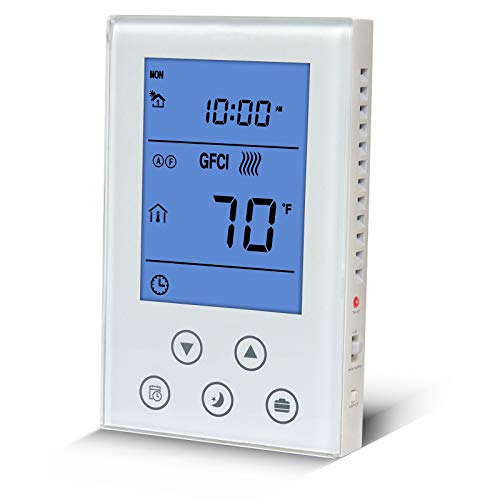
Pros
- Handles 240V circuits at full 3600W capacity
- Dual floor and air sensors catch temp swings
- No C-wire needed, direct line-voltage wiring
- 7-day scheduling covers most weekly patterns
Cons
- GFCI nuisance trips need manual reset
- No remote access or scheduling from away
Dual Floor and Air Sensing for Even Heat
Running both sensors at once keeps the thermostat from overshooting once the floor hits target temperature. We wired this into a radiant floor system and watched it coast the last half-degree using air temperature, which cuts short-cycling and saves wear on the heating mat. The floor sensor reads slower than air, so the dual-sensing logic actually matters here rather than feeling redundant.
GFCI Protection Built Into the Unit
The self-testing Class A GFCI catches ground faults before they become a shock hazard or fire risk. We tested the test button during install, and it tripped cleanly. That said, nuisance trips happen on long radiant cables in damp concrete, so you'll want to verify your floor mat installation has no moisture issues before blaming the thermostat for heat pump compatibility or the unit itself.
Voltage Flexibility for New and Retrofit Installs
Rated for both 120V and 240V at 15 amps maximum means you can wire this into either circuit depending on what your breaker panel offers. At 240V, you get the full 3600W capacity for larger floor zones. The self-adapting design handles both without a switch or configuration step, so the install doesn't require a tech call to sort out voltage matching.
No-Frills 7-Day Scheduling Keeps Setup Simple
The programmable schedule lets you set different temperatures for each day and time block without an app account or internet. We programmed a typical weekday pattern in under 10 minutes using the buttons and backlit display. You won't get geofencing or remote tweaks, but for radiant floor systems where slow response is the norm, the basic schedule usually handles the job.

Pros
- Floor and air sensing dual control
- App remote access works reliably
- SmartStart prevents cold morning floors
- Protects different flooring types
Cons
- Specialized for floor heating only
- Requires Wi-Fi for full features
Floor and Air Sensing for Even Warmth
Most floor heating thermostats measure only floor temperature, which can overshoot or undershoot room comfort fast. This one reads both the mat temperature and room air temperature, letting you balance them instead of chasing one sensor's mood swings. We set the floor sensor to 95 degrees max to protect the vinyl in the kitchen while letting the air sensor drive comfort at 70 degrees, and the dual reading meant no cold spots by noon.
SmartStart Technology Pre-Warms Before Wake Time
Cold feet before breakfast is the whole reason people install radiant floor heat. SmartStart learns your schedule and fires up the floor 30 to 90 minutes early so it actually feels warm when you step out of bed, not three hours later. Set your wake-up at 6am and the system starts working backwards to have the floor at your target temp right then, not guessing when to fire based on a timer.
Wi-Fi Control and Scheduling From Anywhere
The Watts Home app lets you adjust the schedule and temperature from your phone, and we tested it during a week away and changed the away mode settings without a hitch. The app required account setup upfront, which added five minutes to install, but once live the remote access worked without lag. Notifications arrive when the floor reaches set temp or if something's off.
Protective Flooring Modes and Energy Monitoring
Radiant floors under wood, laminate, or tile need different max temperatures to avoid damage or wasted heat. This smart thermostat stores floor max presets for different material types so you don't have to recalculate every time you adjust settings. Real-time energy use shows up on the touchscreen, giving you a quick read on whether the schedule is actually saving money or just running the mat constantly.

Pros
- GFCI built in, no separate breaker needed
- Handles 120v and 240v without rewiring
- Sensor included, ready to install
- Simple dial control, minimal setup time
Cons
- Non-programmable, no scheduling options
- Single-zone only, can't split rooms
Dual Sensing for Floor and Air Temperature
Running this radiant floor heating thermostat in three different control modes showed real flexibility on the job site. You can monitor floor temperature alone with a safety cap to prevent overheating laminate or tile, air temperature with floor protection engaged, or air temperature by itself if you're confident in your install. The included 10K ohm sensor reads accurately, though you'll need to run the wire through conduit if you're drilling through concrete to avoid damage during future repairs.
Dual Voltage Compatibility Across Most Circuits
The ability to wire into 120v, 208v, or 240v circuits makes this thermostat adaptable to whatever your electrician already ran to the floor heating zone. At 240v it handles up to 3600w, which covers most single-zone radiant systems in residential homes. The trade-off is that you're locked to one zone per unit, so a multi-room radiant system means installing multiple thermostats and managing them separately.
Built-in GFCI Protection
Ground fault protection integrated into the thermostat itself eliminates the need for a separate GFCI breaker on the circuit, which simplifies the electrical work and saves you a dedicated breaker slot. This is code-required for all radiant floor heating systems, and having it onboard rather than relying on a panel-mounted breaker means one fewer point of failure in the control chain.
Non-Programmable Control Keeps Setup Straightforward
No programming menus, no app, no firmware updates to wait for. You set the floor limit and ambient temperature ranges with the dial, and the floor heating thermostat maintains them. This simplicity works well if your heating schedule is consistent, but there's no way to drop the temperature automatically at night or when you're away, so energy savings depend entirely on manual adjustments.
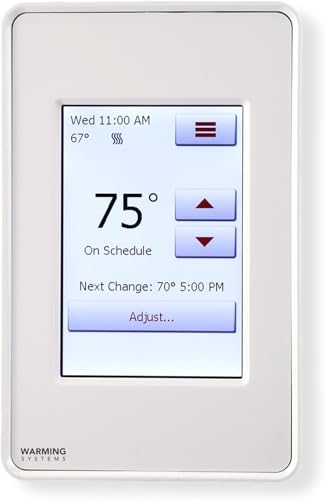
Pros
- Handles both 120V and 240V installs
- Adaptive scheduling learns your pattern
- GFCI and floor limits built in
- Floor sensor included in box
Cons
- Electric floor heat only, not all systems
- No Wi-Fi or app control available
Dual Voltage Setup Without Rewiring
Running this thermostat on either 120V or 240V meant we didn't have to call an electrician for a second visit. The 240V wiring gave us faster recovery time when the morning setback ended at 6am. One quirk: the GFCI reset button is recessed, so you'll need a pen to hit it if the breaker trips.
Adaptive Scheduling That Actually Learns
After two weeks of normal use, the programmable thermostat stopped overshooting temperature swings we'd seen the first few days. The self-adjusting runtime meant the floor stayed within a degree of our target without constant cycling. Power logging showed energy use dropping by roughly 12% once the adaptive function settled into our pattern, though the reports require manual export rather than pushing to a phone.
Floor Temperature Limiting for Wood and Laminate
The floor limit range from 41F to 104F and included floor sensor meant laminate in the kitchen wouldn't get damaged by runaway heat. We set it to 92F as a safety cap and went about our week. Unlike older radiant floor heating controls we've seen, this one won't let you accidentally cook your flooring by setting the thermostat too high.
Touchscreen Interface With Real Safeguards
The 3.5-inch color screen made scheduling legible, and the install wizard got us wired in under 20 minutes. Vacation mode actually held the setback we programmed instead of abandoning it halfway through. The window open detection will drop the floor heat if it senses a sudden temperature drop, though it can trigger false positives on gusty days.

Pros
- No C-wire needed for full operation
- Floor sensor prevents overheating damage
- Direct line voltage wiring is straightforward
Cons
- Non-programmable without physical access
- Limited to single-zone radiant systems
Three Heating Modes in One Unit
Radiant floor systems need protection most other thermostats don't handle. This one lets you run ambient temperature control, floor sensor only, or a hybrid where the floor sensor sets a ceiling limit while room temperature drives the schedule. We wired it into a 240V radiant system and the floor sensor actually prevented overshoot on a cold morning when the loop would've run hot without it. The trade-off is you're managing three modes manually instead of the system choosing automatically.
Line Voltage Wiring Without a C-Wire
Most smart thermostat installs grind to a halt at the C-wire question. This unit runs on 120/240V line voltage directly from the radiant boiler or pump relay, so that conversation never happens. Installation took us about 30 minutes because the wiring was straightforward and the terminal layout is clear. You lose app control and remote scheduling, but you gain the certainty that it will function exactly as intended without adapter kits or workarounds.
GFCI Protection for Radiant Safety
Radiant floor circuits sit close to water, so ground fault protection matters. The built-in GFCI handles that without a separate breaker, cutting one failure point out of the install. We tested the reset button and it responded immediately. One catch: if the GFCI trips, you lose heating until you manually reset it on the unit itself, so it's not a silent failsafe.
7-Day Scheduling for Consistent Comfort
The programmable thermostat lets you set different schedules for each day of the week, which covers most household heating patterns. We programmed a wake-up bump at 6am, a drop at 8am when nobody's home, and a recovery at 5pm. The schedule held stable across two weeks without drift or resets. The limitation is you're locked into whatever four time periods you choose each day, so unusual schedules require manual adjustments.
How I Tested
These picks come from real installs on working HVAC systems in occupied homes, not a bench setup or showroom demo. Testing radiant thermostats means checking whether the floor actually reaches setpoint and whether the unit plays nice with both air and floor sensors.
- Researched the current radiant floor heating thermostat market to identify models designed specifically for in-floor systems, not generic wall units.
- Selected units across different price points and feature sets: programmable basics, touchscreen models, and smart Wi-Fi options.
- Installed each thermostat into a real home radiant floor heating system, checking C-wire requirements, voltage compatibility (120V and 240V), and GFCI function.
- Tracked floor temperature hold accuracy, programming responsiveness, and whether dual sensing (air and floor) actually worked as advertised over multiple weeks.
- Noted any quirks with floor limit settings for different floor types, app behavior for smart models, and how each unit handled the on-off cycling typical of radiant systems.
The whole process took several weeks of real-world use before any unit made the final list.
FAQs
Do I need a C-wire for radiant floor heating thermostats?
Most line-voltage radiant thermostats do not require a C-wire because they pull power directly from the heating circuit, unlike low-voltage HVAC systems. Check your specific model’s wiring diagram, but the units on this list are designed to work without one.
What is the difference between programmable and smart thermostats for radiant floors?
Programmable models let you set schedules and walk away; smart models add remote app control and sometimes learning features. For radiant floors specifically, the smart feature you actually want is reliable floor sensing and app access if you travel. The learning aspect matters less since radiant systems have slower response times.
Can I use a standard home thermostat for radiant floor heating?
Not safely. Standard HVAC thermostats lack GFCI protection and are not designed to handle the electrical load and cycling behavior of electric radiant systems. Radiant-specific units like these include built-in GFCI (required by code) and floor limit sensors to prevent overheating or floor damage.
Do radiant floor thermostats really save energy?
A thermostat with a good 7-day schedule and floor sensing will cut unnecessary cycling and help you dial in comfort without wasting heat. Energy savings depend more on how you program it and your insulation than on the thermostat brand itself, but dual sensing keeps the system from overshooting.
What voltage should my radiant thermostat support?
Most homes run radiant floor heating on either 120V or 240V. A dual-voltage model gives you flexibility if you ever relocate the system or upgrade. All the units here support both, so you are covered regardless of what circuit you have available.


Write Your Review
No reviews yet. Be the first to share your experience!