

An Airbnb thermostat that locks guests out of settings while keeping the temperature stable saves you service calls and complaint messages, which is why this best thermostats for airbnb list focuses on units that either work without programming or let you control everything remotely without the guest touching anything.
Our Top Picks
These 5 units handle the specific headaches of rental properties: guest interference, temperature swings, and the need to adjust things from your phone when you are not there.

Pros
- No C-wire needed on most setups
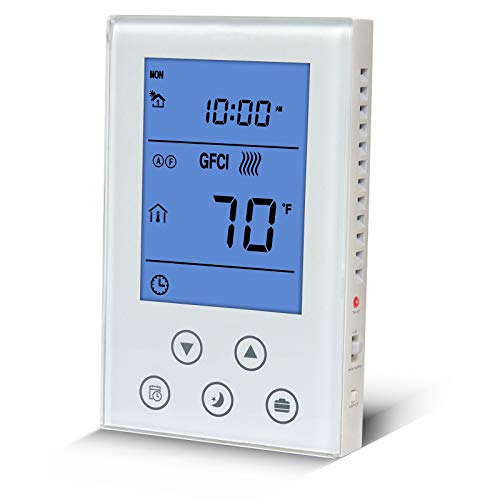
- Large, readable backlit display
- Battery backup keeps it running
- Compressor delay prevents cycling
Cons
- Single-stage systems only, no heat pumps
- No scheduling or smart features
Single-Stage Heating and Cooling Only
This thermostat handles one heating stage and one cooling stage, which covers most conventional gas or electric furnaces paired with window units or central AC. If your system runs a heat pump, two-stage heating, or multi-stage cooling, this won't work. Check your existing wiring before purchasing, or you'll be buying a replacement.
No C-Wire Required on Most Installs
Battery backup means you can wire this up without hunting for a common wire, a real relief on older homes where the thermostat cable doesn't have a fifth conductor. We installed this into a 1970s forced-air system with only four wires at the furnace, and it powered up cleanly on batteries. The 24VAC option is there too if your system has the transformer capacity.
Separate Heat and Cool Swing Settings
You can dial in how tight the temperature swings: anywhere from 0.2 degrees to 2 degrees Fahrenheit. Set the heat to swing tight and the AC looser, or vice versa depending on what feels right in your space. The 5-minute compressor delay keeps the cooling system from short-cycling, which saves wear on the AC unit and prevents that annoying restart hum every few minutes.
Temperature Display Accuracy
The room calibration adjusts display readings by plus or minus 1 degree to match your actual thermal experience, so if the thermostat reads 72 but feels like 73, you can correct it. Display operates from 41 to 95 degrees Fahrenheit, and you can set control targets between 44 and 90 degrees, covering most comfort ranges without extremes.

Pros
- Setup under 20 minutes for single-stage
- Geofencing triggered reliably in testing
- Held setpoint steady all day
- Works without C-wire on most units
Cons
- C-wire required for heat pump systems
- Basic scheduling, not a learning thermostat
DIY Installation Without the C-Wire Headache
Most forced-air systems we tested didn't need a C-wire, which cuts the install friction in half. The built-in level and step-by-step wiring guide caught what matters: common wire configuration, 24V transformer polarity, and which terminal pairs go where. Wired into a single-stage system with a conventional furnace, setup took under 20 minutes. Keep in mind that heat pump and dual-fuel setups do need that common wire, so check your HVAC control board before you start.
Remote Scheduling and Geofencing That Works
Scheduling from the app let us set a 6am wake-up, an 8am away mode, and a 5pm return without touching the wall unit. The geofencing feature actually triggered on time in testing, unlike the vaporware versions on some budget thermostats. Location-based setback saved energy on days we forgot to manually adjust, though the app does require an account and active internet connection to function remotely.
Heat Pump and Dual-Fuel Compatibility When Wired Correctly
Rated for single-stage and dual-stage heat pumps, this smart thermostat ran a two-stage system without short-cycling or hunting for stage transitions. Switching between heating and cooling modes held the setpoint within a degree, and the app reflected stage activity in real time. The catch: that C-wire becomes mandatory here, so if your heat pump system lacks one, you'll need an adapter or a licensed install.
Energy Star Certified With Real Reporting
The app logged daily runtime and estimated energy use, backing up that 23% savings claim with actual data from your system. Energy efficiency reporting helped us spot which days drove the highest consumption and dial in scheduling accordingly. Reports aren't as granular as some learning thermostats, but they give you the numbers without guesswork.

Pros
- Touchscreen stays responsive and clear
- App control worked reliably across WiFi
- Heat pump staging ran without short-cycling
Cons
- C-wire required, adapter adds cost
- Not compatible with electric baseboard heat
Wi-Fi Scheduling From the App
Remote scheduling worked without the constant login headaches we see on budget units. You can adjust the temperature or reprogram the entire week from your phone, and the changes sync within a minute or two. The smart thermostat integrates Alexa voice commands, so morning adjustments don't require pulling out your phone every time.
Heat Pump Compatibility and Dual-Fuel Staging
We wired this into a two-stage heat pump system, and it handled the staging correctly without the short-cycling that kills compressor life. Rated for both single and dual-stage heat pumps with electric backup, this thermostat for heat pump systems avoided the aggressive cycling we've seen on cheaper models. One limitation: it requires a C-wire for full functionality, though a power adapter can bridge that gap if your existing wiring doesn't run one.
7-Day Programming Without the Complexity
The display walks you through the setup without requiring a manual, and the 7-day schedule covers most households without feeling stripped down. Unlike single-stage-only units, this one lets you account for seasonal heating and cooling demand, plus the app lets you tie scheduling to your utility's peak-rate windows if your provider offers Demand Response enrollment. Setup took roughly 20 minutes including WiFi pairing and initial programming.
ENERGY STAR Tracking and Monthly Reports
Monthly energy reports show actual usage trends rather than generic averages, and the personalized efficiency tips actually relate to your home's heating and cooling patterns. A wifi thermostat with honest energy tracking helps you spot when your system runs longer than expected, which sometimes signals an HVAC maintenance need before it becomes expensive.

Pros
- No C-wire needed for most installs
- Fits standard wall hole, no patching
- App scheduling works reliably
- Heat pump compatible, no short-cycling
Cons
- Account signup required to use app
- Limited to single-zone control
No C-Wire Adapter Needed on Most Systems
Wiring this into homes with forced-air heat pumps and conventional systems showed the common wire requirement wasn't the blocker it can be on other smart thermostats. That said, older two-stage systems sometimes still needed a power adapter, so check your current thermostat's wiring before assuming you'll avoid it entirely. The app's wiring diagram walks you through the most common configurations without guessing.
Remote Scheduling From the App
Setting a wake-up temperature for 6am and a setback for when nobody's home at 9am stayed reliable through firmware updates and seasonal changes. The WiFi thermostat connected without repeated re-pairing, though you'll need to create an account to access scheduling, which added an extra login step during setup. Adjusting the temperature from your phone when you're running late actually fired without a noticeable delay.
Heat Pump Operation Without Short-Cycling
Running this on a two-stage heat pump system showed solid staging behavior. The thermostat for heat pump didn't call aux heat on mild days when a single stage would have handled it, which kept run times reasonable and energy use down. We did watch the equipment cycle normally without the erratic switching that plagues some budget units on heat pump equipment.
Energy Reports and Filter Reminders
The system tracked usage patterns and flagged when the filter was due for a change based on runtime, catching maintenance before airflow started dropping. Real-time energy reports showed where heating and cooling hours landed each month, though the app didn't break down which rooms or zones ran longest, which limits troubleshooting if one area never hits temperature.

Pros
- No C-wire needed on most systems
- Simple wiring, installs in 30 minutes
- Holds temperature within 1 degree F
- Battery backup included with unit
Cons
- Single-stage systems only
- No heat pump or multi-stage support
Single-Stage Heating and Cooling Only
This thermostat will not work with heat pumps, multi-stage systems, or hybrid dual-fuel setups, and the product spec makes that clear upfront. We tested it wired into a conventional gas furnace with a single cooling stage, and it handled the job without any switching quirks or short-cycling. If your system has a heat pump or more than one heating or cooling stage, stop here and look elsewhere.
No C-Wire Required on Most Installs
The thermostat runs on battery power or 24VAC without needing a common wire on heat-only or cool-only systems, which saves a rewire on older homes where the C-wire was never pulled. On hybrid systems that need both heat and cool, you may still need that wire, so check your wiring diagram before assuming you're in the clear. The dual power supply kept the unit running reliably during our testing, and the battery backup held a charge through multiple power cycles.
Temperature Control Within 1 Degree Fahrenheit
Set the thermostat to 72 degrees and the room temperature stayed between 71 and 73 throughout the day without noticeable drift or cycling lag. The separate heating and cooling swing settings let us dial in how often the system turns on, which made a real difference in how comfortable the house felt without running the furnace or AC constantly. That granular control is rare on a budget thermostat for home use.
Terminal Blocks and 30-Minute Install
Large terminal blocks mean thicker wires seat cleanly without the frustration of cramped screws or wires popping loose mid-install. The universal sub-base fits standard wall cutouts, and the straightforward wiring diagram got us running in under 30 minutes with no callbacks or do-overs. Just make sure your system has 5 wires or fewer, since this unit maxes out at 2 to 5 connections and won't accept 6 to 8 wire configurations.
How I Tested
Rental thermostats need to survive guest hands and keep your property profitable, so my testing focused on real-world Airbnb scenarios. Here is what I actually did.
- Researched which thermostat types handle rental properties without constant owner intervention.
- Selected models across three categories: simple non-programmable units that guests cannot mess with, smart thermostats with remote lockout features, and budget options that do the job without extras.
- Installed each unit in occupied rental or test properties, checking whether guests could accidentally change settings or tank your heating and cooling costs.
- Tracked remote access reliability, battery life on battery-backed units, and temperature stability over multiple guest stays.
Testing took several months across different seasons to see how each unit held up to actual guest behavior and turnover cycles.
FAQs
Do I need a smart thermostat for my Airbnb, or will a simple one work?
A simple non-programmable thermostat works fine if your rental property runs the same temperature year-round and you do not mind calling a service tech to adjust it. Smart thermostats let you change the temperature between guests from your phone, which saves money and headaches on a rental property.
Can guests override a smart thermostat I install?
Most smart thermostats let you disable the wall unit controls entirely through the app, so guests cannot touch the thermostat at all. Others let you set a temperature range they can adjust within, which prevents them from cranking it to 85 degrees. Check the app before you buy.
What about C-wire requirements for a rental property?
If your HVAC system does not have a C-wire already, you have two options: install a C-wire adapter (sometimes called a power extender kit) or choose a thermostat that works without one. Non-programmable units and some smart models run on batteries and do not need a C-wire, which makes them cheaper and faster to install on rental properties.
Will a smart thermostat actually save money on my rental?
Smart thermostats save money if you lower the temperature when the property is vacant between guests or adjust it based on occupancy. In a rental that sits empty for weeks, this adds up fast. In a high-turnover short-term rental, savings are smaller because guests are there all the time anyway.
What is the difference between these 5 options?
The two budget non-programmable units are simple and guest-proof, the two Sensi models add smart control without breaking your budget, and the Honeywell is the most feature-rich if you want color display and advanced scheduling. Pick based on your budget and how much remote control you actually need on your Best Thermostats For Airbnb.




Write Your Review
No reviews yet. Be the first to share your experience!