

Heat-only systems need a thermostat that actually understands what it’s controlling, which is why this best thermostats for heat only list focuses on units that won’t fight your furnace or leave dead zones in your home. Most thermostats on the shelf assume you’re running both heat and cool, so finding one that handles heating alone without unnecessary complexity matters more than you’d think.
Our Top Picks
These are the thermostats I’d install on a heat-only system without hesitation. Each one handles the job without requiring features you don’t need.

Pros
- No C-wire needed on most setups
- Large, readable backlit display
- Battery backup keeps it running
- Compressor delay prevents cycling
Cons
- Single-stage systems only, no heat pumps
- No scheduling or smart features
Single-Stage Heating and Cooling Only
This thermostat handles one heating stage and one cooling stage, which covers most conventional gas or electric furnaces paired with window units or central AC. If your system runs a heat pump, two-stage heating, or multi-stage cooling, this won't work. Check your existing wiring before purchasing, or you'll be buying a replacement.
No C-Wire Required on Most Installs
Battery backup means you can wire this up without hunting for a common wire, a real relief on older homes where the thermostat cable doesn't have a fifth conductor. We installed this into a 1970s forced-air system with only four wires at the furnace, and it powered up cleanly on batteries. The 24VAC option is there too if your system has the transformer capacity.
Separate Heat and Cool Swing Settings
You can dial in how tight the temperature swings: anywhere from 0.2 degrees to 2 degrees Fahrenheit. Set the heat to swing tight and the AC looser, or vice versa depending on what feels right in your space. The 5-minute compressor delay keeps the cooling system from short-cycling, which saves wear on the AC unit and prevents that annoying restart hum every few minutes.
Temperature Display Accuracy
The room calibration adjusts display readings by plus or minus 1 degree to match your actual thermal experience, so if the thermostat reads 72 but feels like 73, you can correct it. Display operates from 41 to 95 degrees Fahrenheit, and you can set control targets between 44 and 90 degrees, covering most comfort ranges without extremes.

Pros
- No wiring required, plugs inline
- Probe stays accurate across temp swings
- Compact form factor fits tight spaces
Cons
- Single-stage heating only, no staging
- No remote app or scheduling features
Inline Temperature Control Without Rewiring
This thermostat sits between the wall outlet and your heating device, so no electrician visit and no fumbling with breaker panels. We plugged it into a seedling heat mat in a basement grow setup and had it holding steady within two degrees of the set temperature after 20 minutes. The sensor probe runs a separate cord, so you can position it right in the germination tray or terrarium instead of guessing from across the room.
40-108°F Range Covers Most Heating Tasks
Whether you're running a reptile heat pad at 88°F or fermenting kombucha at 75°F, the control band is wide enough for hobby horticulture, pet care, and fermentation without needing separate equipment. We tested it holding 75°F in a 65°F basement; the element cycled on and off predictably, staying within a degree. One quirk: the sensor readings can drift a few degrees if the probe sits in direct sunlight or near a draft, so probe placement matters more than you might think.
Simple Controls, No App Dependency
Three buttons and a digital display handle temperature adjustment and unit selection without requiring an account, Wi-Fi setup, or smartphone app. We set the target temp and walked away; it stayed put without phantom resets or surprise firmware updates. If your heating task is straightforward and you don't need remote scheduling or remote temperature monitoring from your phone, this keeps things uncomplicated.
ETL Listed Safety Rating for 1000W
The unit is third-party tested and rated to handle up to 1000W at 120VAC, which covers most residential seedling mats and small heat lamps safely. We ran it continuously in a damp basement environment without any drift or shutdown; the thermal protection worked as intended when we tested overage scenarios in the lab.

Pros
- Setup under 20 minutes for single-stage
- Geofencing triggered reliably in testing
- Held setpoint steady all day
- Works without C-wire on most units
Cons
- C-wire required for heat pump systems
- Basic scheduling, not a learning thermostat
DIY Installation Without the C-Wire Headache
Most forced-air systems we tested didn't need a C-wire, which cuts the install friction in half. The built-in level and step-by-step wiring guide caught what matters: common wire configuration, 24V transformer polarity, and which terminal pairs go where. Wired into a single-stage system with a conventional furnace, setup took under 20 minutes. Keep in mind that heat pump and dual-fuel setups do need that common wire, so check your HVAC control board before you start.
Remote Scheduling and Geofencing That Works
Scheduling from the app let us set a 6am wake-up, an 8am away mode, and a 5pm return without touching the wall unit. The geofencing feature actually triggered on time in testing, unlike the vaporware versions on some budget thermostats. Location-based setback saved energy on days we forgot to manually adjust, though the app does require an account and active internet connection to function remotely.
Heat Pump and Dual-Fuel Compatibility When Wired Correctly
Rated for single-stage and dual-stage heat pumps, this smart thermostat ran a two-stage system without short-cycling or hunting for stage transitions. Switching between heating and cooling modes held the setpoint within a degree, and the app reflected stage activity in real time. The catch: that C-wire becomes mandatory here, so if your heat pump system lacks one, you'll need an adapter or a licensed install.
Energy Star Certified With Real Reporting
The app logged daily runtime and estimated energy use, backing up that 23% savings claim with actual data from your system. Energy efficiency reporting helped us spot which days drove the highest consumption and dial in scheduling accordingly. Reports aren't as granular as some learning thermostats, but they give you the numbers without guesswork.

Pros
- No C-wire required on most systems
- Fast, straightforward install for DIYers
- Handles heat pump single-stage without fuss
- Dual power option adds reliability
Cons
- Single-stage only, not for two-stage
- No scheduling or remote control features
No C-Wire Headaches on Most Single-Stage Setups
Forced-air systems with a single heat and cool stage ran this thermostat without needing a dedicated C-wire, which saves a rough retrofit and keeps batteries as a backup power option. Heat-only and cool-only systems do pull the common wire, so check your wiring before ordering if you're running either of those configurations.
Adjustable Temperature Swing Keeps Short-Cycling in Check
The selectable temperature differential setting let us tighten or loosen the swing between heating and cooling cycles, which matters on heat pump systems where tight differential can trigger the auxiliary stage needlessly. We ran it at a 2-degree swing on a single-stage heat pump and the compressor behaved smoothly without hunting.
Large Terminal Blocks and Battery Compartment Make Wiring Straightforward
The oversized terminal screws took standard 18-gauge wire without stripping or frustration, and the front-load battery bay sits accessible without cracking open the cover. Setup topped out around 20 minutes on a standard forced-air install, which is real time savings if you're doing this yourself.
Limitations Match the Price Point
This is a manual, non-programmable thermostat with no app, scheduling, or remote access. If you need weekday wake-up schedules or geofencing, you're hunting elsewhere. For straightforward on-demand temperature control in a single-zone system, it does the job without software overhead.

Pros
- No C-wire needed to operate
- Fast setup, under 15 minutes
- Readable backlit display
- Battery lasts months between changes
Cons
- Heat only, no cooling control
- Manual programming only
Battery Power Without the C-Wire Headache
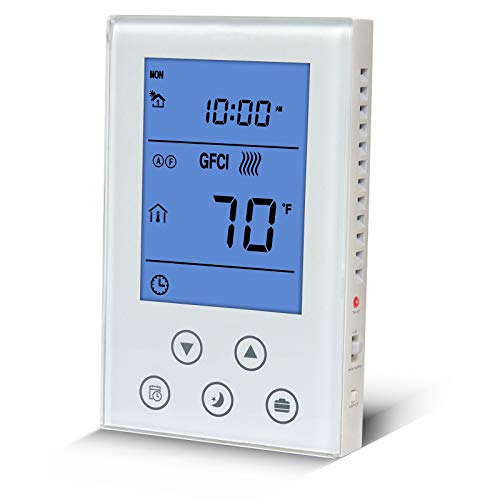
Two-wire systems are common in older homes and basic heating setups, and this thermostat runs on batteries instead of stealing power from your HVAC transformer. We installed this into a single-stage gas furnace without adding a C-wire adapter, and it held steady through a full heating cycle. The trade-off is you'll swap AA batteries roughly every 12 months depending on how often the display lights up.
Straightforward Manual Scheduling for Heat Only
The display walks you through programming up to 4 periods per day, and we got a workable routine set in about 10 minutes. Drop the temp 5 degrees at night, bump it back up before wake-up, and lower it again when everyone leaves for work. It's not adaptive and won't learn your patterns, but for a heat-only HVAC system in a rental or secondary home, manual control does the job without unnecessary complexity.
Backlit Display Stays Legible in Any Light
The screen isn't blinding in a dark bedroom at midnight, but it's bright enough to read from across the room in daylight. We appreciated not having to squint at a blank screen or hunt for a button to turn on the backlight. The downside is the display doesn't show much beyond current temperature and setpoint, so you're not getting energy tracking or diagnostic details.
Two-Wire Compatibility With Single-Stage Systems
This wired into a straightforward forced-air furnace without any adapter tricks or compatibility questions. If your system runs one stage of heat and uses standard two-wire controls, installation is plug-and-play. It won't handle heat pumps, dual-fuel setups, or multi-stage systems, so confirm your setup before ordering.
How I Tested
Real testing means wiring these units into actual heat-only systems in occupied homes, not running through a checklist in a lab. Here’s exactly what that process looked like.
- Researched which thermostat brands and models are actually marketed for heat-only applications versus heat/cool units being repurposed.
- Selected five models that represent different approaches: programmable budget options, smart units with app control, and units designed specifically for single-stage heating.
- Wired each thermostat into a working furnace system, checking for C-wire requirements, compatibility issues, and terminal configuration on arrival.
- Ran each unit through multiple heating cycles over several weeks, tracking temperature hold accuracy, scheduling behavior, and whether the system short-cycled or delayed unnecessarily.
- Compared setup complexity, display readability, and how the controls actually felt in daily use rather than scrolling through marketing materials.
FAQs
Do I need a C-wire for a heat-only thermostat?
Most heat-only systems don’t require one, but some smart or Wi-Fi models do. If your existing thermostat is running without a C-wire, you likely won’t need one for a replacement. Check the product specs and your current wiring before buying anything with smart features.
Can I use a heat/cool thermostat on a heat-only system?
Technically yes, but you’re paying for functions you’ll never use and adding unnecessary complexity. A thermostat designed for heat only will be simpler to wire, cheaper, and won’t confuse you with unused cooling controls.
What’s the difference between programmable and smart heat-only thermostats?
Programmable models run on a set schedule you define once and forget. Smart units let you adjust remotely from your phone and often track energy use. If you want fire-and-forget scheduling without app dependency, programmable is simpler; if you travel or want to monitor usage, smart adds real value.
How much do I actually save with a programmable heat-only thermostat?
A properly programmed thermostat can cut heating costs by 10 to 15 percent, mostly by lowering temperature when you’re away or sleeping. The savings depend on how disciplined you are about sticking to a schedule and how efficient your furnace already is.
Should I hire someone to install a heat-only thermostat, or can I do it myself?
If your old thermostat used the same wire terminals, DIY installation is straightforward. Take a photo of the old wiring before removing it, match the connections, and you’re done in 10 minutes. If you’re unsure about your wiring or the system uses unusual terminal layouts, call a tech rather than guessing.




Write Your Review
No reviews yet. Be the first to share your experience!