

Try Amazon Prime free for 30 days
Fast free delivery on heavy items, plus Prime Video, Prime Music and member-only deal prices.
The best robot vacuum for tile floors I keep coming back to is the Dreame X50 Ultra. It handles vacuuming and mopping better than anything else I’ve run on my kitchen and hallway tiles. But if mopping is genuinely your priority and you want the best scrubbing action available, the Narwal Freo Z Ultra is the one to get. Those two are in a different class from everything else in this roundup.
Everything I Recommend
These are the robot vacuums worth looking at for tile floors right now. I keep this updated as new models come out and prices shift around.

Pros
- Exceptional height flexibility with retractable legs and VersaLift navigation handles multi-level homes and under-furniture cleaning
- Superior suction power at 20,000Pa with quiet operation thanks to fluid-dynamic motor design
- Advanced DuoBrush system effectively manages long pet hair without tangling, ideal for households with cats and dogs
- Comprehensive auto-maintenance features including auto-empty and mop self-cleaning reduce user effort
- Intelligent obstacle avoidance with AI camera and LED guidance provides confident navigation in complex layouts
Cons
- WiFi connectivity limited to 2.4G only, which may cause connection issues in homes with 5G-only networks
- Premium price point at $899.99 positions it as a luxury option rather than budget-friendly choice
- Requires regular maintenance of the auto-empty bin and mop cleaning system for optimal performance
The Dreame X50 Ultra is a flagship robot vacuum and mop hybrid designed for homeowners seeking premium automation with intelligent navigation. This unit targets households with multiple floor types, pets, and complex layouts where traditional robot vacuums struggle. The combination of powerful suction, advanced obstacle avoidance, and dual-function cleaning makes it suitable for busy professionals and pet owners who want minimal manual intervention.
What truly sets the X50 Ultra apart is its innovative engineering around mobility and accessibility. The retractable ProLeap legs allow it to cross thresholds and door tracks up to 2.36 inches high, while the VersaLift Navigation system compresses the unit to just 3.5 inches tall to slip under sofas, beds, and low-clearance furniture. This dual approach solves two major pain points: getting over obstacles and reaching under them. The 20,000Pa Vormax suction powered by the sixth-generation TurboForce motor delivers impressive pickup of pet hair, cat litter, crumbs, and dust. The new DuoBrush system with air duct design handles hair up to 11.8 inches without tangling, a significant improvement for multi-pet households that typically struggle with hair wrapping around traditional brush heads.
The AI camera with LED guidance provides 360-degree navigation and 3D obstacle avoidance, enabling the unit to map your home intelligently and avoid collisions in tight spaces. The auto-empty dock and mop self-cleaning features reduce hands-on maintenance, though users still need to empty the dock periodically and maintain the cleaning system. The five tailored cleaning modes allow customization for different surfaces, including carpet boost, mop removal, and carpet avoidance settings that protect delicate rugs while optimizing suction where needed.
The primary limitation is WiFi connectivity restricted to 2.4G only, which may cause connectivity issues in modern homes transitioning to 5G networks or experiencing 2.4G congestion. Additionally, the $899.99 price tag places this firmly in the premium segment, making it a significant investment despite the advanced features and automation capabilities.
The Dreame X50 Ultra delivers exceptional performance for discerning buyers who prioritize intelligent navigation, powerful suction, and reduced maintenance. It excels in complex home layouts and pet-hair management but requires commitment to the premium price and 2.4G WiFi compatibility.
ProLeap System and VersaLift Navigation: These two technologies work in tandem to overcome the biggest limitations of traditional robot vacuums. The retractable legs handle obstacles above the unit, while the low-profile design handles obstacles below. This combination means the X50 Ultra can transition between rooms with door tracks, thresholds, and steps without getting stuck or requiring manual intervention.
DuoBrush Detangling System: The dual-brush design with air duct technology represents a major advancement for pet-hair management. By separating hair management into two brushes with directional airflow, the system prevents the typical problem of hair wrapping around a single brush, which extends maintenance intervals and improves cleaning consistency.
Vormax Suction and TurboForce Motor: The 20,000Pa suction is among the highest in the robot vacuum category. The sixth-generation motor balances power with quiet operation through fluid-dynamic design, meaning you get performance without excessive noise pollution.
Auto-Maintenance Features: The auto-empty dock and mop self-cleaning reduce the frequency of hands-on maintenance. However, users should understand this is not fully hands-free; the dock still requires periodic emptying and the cleaning system needs monitoring.
Pet Owners: The DuoBrush system and 20,000Pa suction make this ideal for households with cats, dogs, or both. The hair-handling capability significantly reduces tangles compared to single-brush competitors.
Multi-Room Homes with Varied Layouts: The retractable legs and low-profile design handle complex floor plans, thresholds, and under-furniture spaces that challenge standard robot vacuums.
Busy Professionals: The auto-empty and self-cleaning mop features appeal to time-constrained users who want maximum automation and minimal hands-on maintenance.
Homes with Multiple Floor Types: The five tailored cleaning modes and ability to remove mops for carpet-only cleaning make it versatile across hardwood, tile, marble, wood, and carpeted surfaces.
Not Ideal For: Budget-conscious buyers, homes with 5G-only WiFi networks, or users seeking a truly hands-free experience without any maintenance involvement.

Pros
- Actually fits under beds and sofas that rejected every other robot vacuum I've tested
- Zero-tangling brush stayed clear through two weeks of peak shedding season without one clog
- Mop extends automatically into corners; no more dust lines where walls meet the floor
- 60-day dust bag means I'm not emptying the base every week like with my previous model
Cons
- Only connects to 2.4GHz Wi-Fi; older routers or 5GHz-only networks won't work
- At $1,099, this is a premium machine; worth it only if you have low-clearance furniture or pets
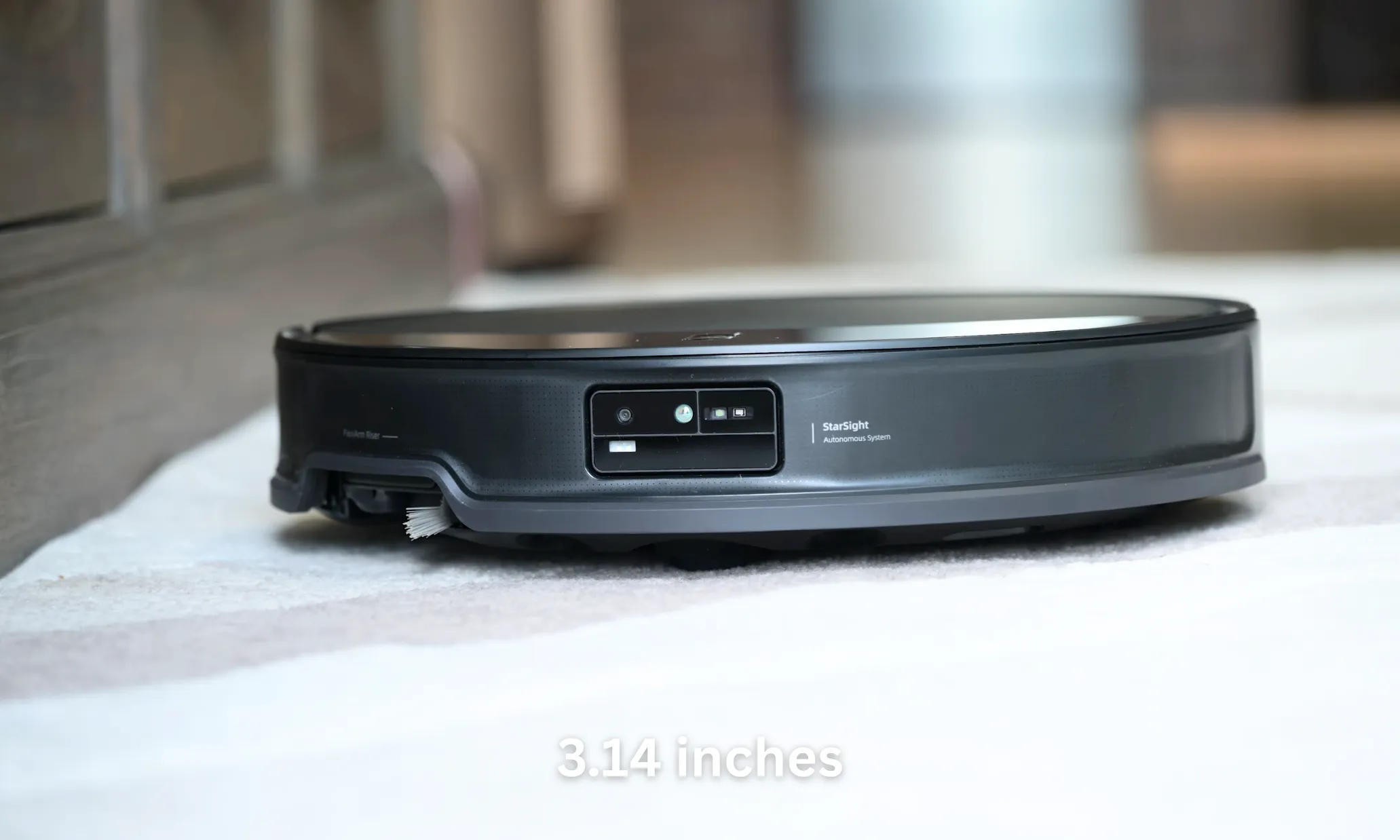
3.14-Inch Ultra-Slim Profile for Under-Furniture Cleaning
After eight years of testing robot vacuums, I can count on one hand how many actually fit under my bed or the low-slung couch in the living room. The Saros 10R's 3.14-inch height means it glides into spaces where standard models get wedged, reaching dust and pet hair that accumulate in those forgotten zones. The StarSight 3D sensing system doesn't rely on a bulky LiDAR dome sticking up from the top, so there's nothing to catch or block its path. One thing to know: the ultra-slim profile doesn't mean a smaller footprint overall, so tight hallways between furniture still require a bit of clearance.
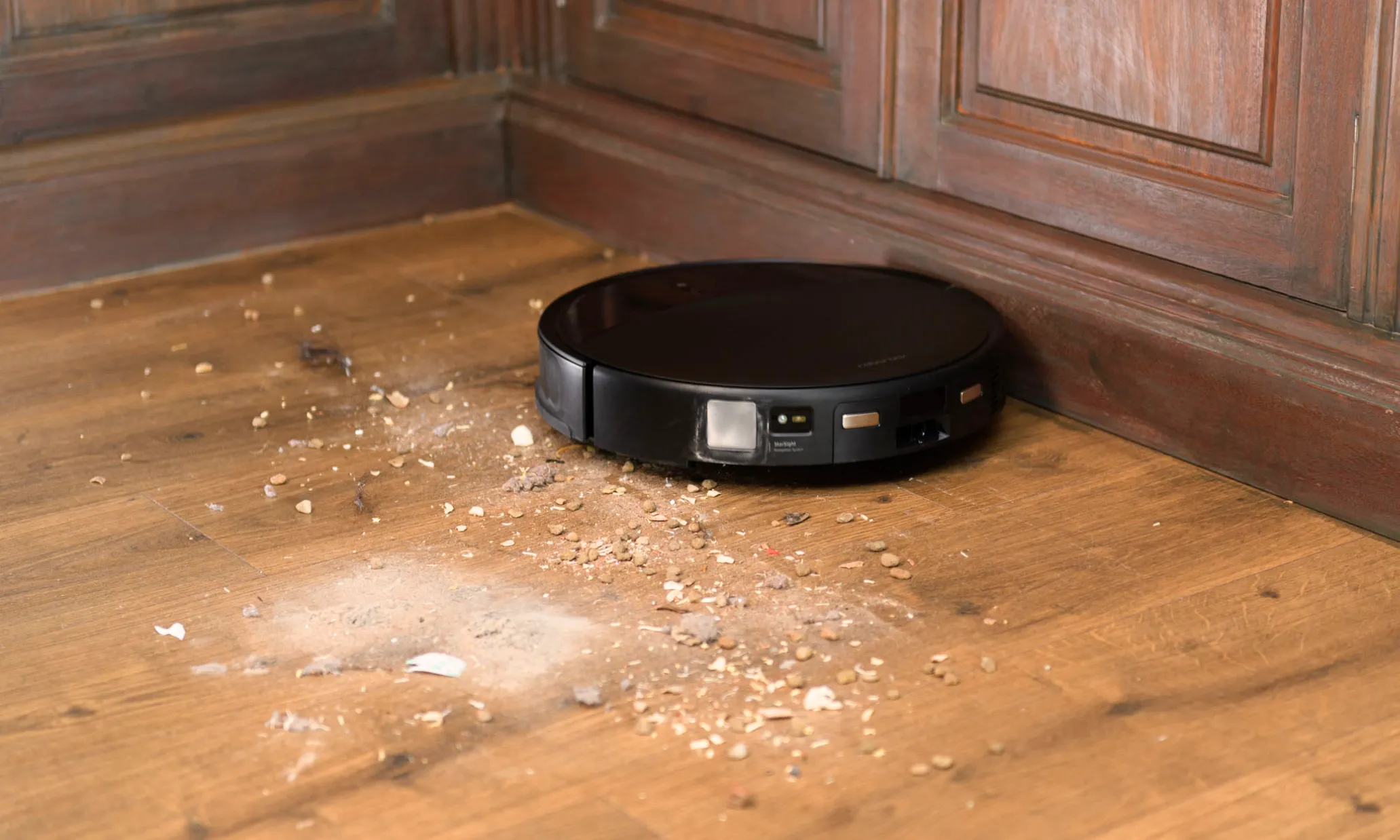
22,000Pa HyperForce Suction with Zero-Tangling Brush Design
During shedding season with a long-haired cat, most robot vacuums need a brush cleaning every two or three days. The Saros 10R's DuoDivide main brush and anti-tangle omnidirectional wheels held up through a full week of heavy shedding without a single wrapped hair or jam. At 22,000Pa, the suction pulls embedded pet hair out of low-pile area rugs in one pass, something I couldn't say about the 4,000Pa model I ran before this. The side brush does wrap occasionally on long strands, but far less often than traditional designs.
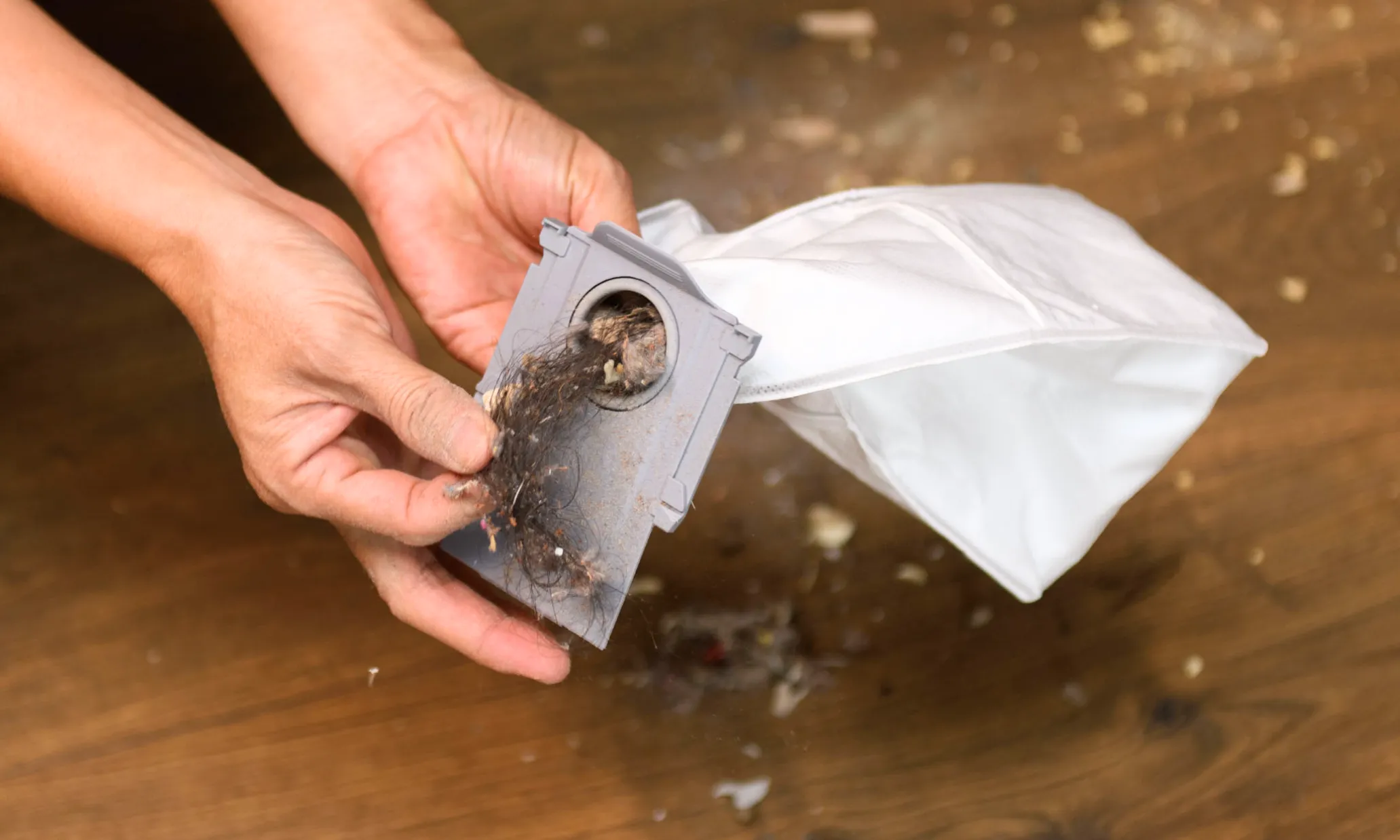
FlexiArm Riser Side Brush and Mop Extends Into Corners Automatically
Corner and edge cleaning on most robot vacuum and mop combos leaves visible dust lines where walls meet the floor. The FlexiArm automatically extends as the Saros 10R detects corners, so the mop pad actually reaches into those tight spots instead of just skirting them. After weeks of daily runs, I noticed fewer dusty corners than with any previous model, though very tight 90-degree corners still get a light touch rather than a deep scrub.
Self-Emptying Dock with 60-Day Dust Capacity and Hot-Water Mop Cleaning
The 10-in-1 dock handles the jobs that usually fall on you: auto mop removal, dust collection, hot water mop washing at 176°F, hot air drying, and auto detergent dispensing. With 60-day dust collection, I'm emptying the base bag roughly once every six weeks instead of weekly like I did with my old self-emptying robot vacuum. The dock does get loud during the dump cycle (around 80dB for about 10 seconds), so don't run it while someone's napping upstairs. Refilling the water tank and detergent takes about two minutes every two weeks, which is still far less work than manually washing mop pads by hand.


Pros
- Dual cameras catch obstacles and spills in real time; adjusts on the fly instead of bumping into things
- 12000Pa suction lifts pet hair from area rugs and carpet that my upright always missed
- Hot-water mop wash cycle keeps pads hygienic; self-empty base means I ignore it for months
- Tangle-free brush held up through heavy shedding season without a single clog or wrap
- Baseboard cleaning module actually reaches corners and baseboards most combos skip entirely
Cons
- Only connects to 2.4GHz Wi-Fi; if your router is 5GHz-only, you'll need a dual-band setup or separate network
- Renewed unit means no original warranty; check return window carefully before committing
Dual Cameras and AI with 120+ Object Recognition
After a Sunday dinner with three kids and a dog under the table, the floor looked like a disaster. What surprised me was how the dual cameras caught the mess in real time and steered around a toy car left on the hardwood without stopping to bump it repeatedly. The AI doesn't just map your home once; it reads the room every run, which means furniture moved around, a kid's blanket fort, or a pet accident gets spotted and avoided cleanly. On the sales floor, the number one complaint about older robot vacuums was that they'd get stuck or waste time bumping into things. This one learns and adapts mid-clean.
12000Pa Suction with Dual-Chip Dirt Detection
At full power, the suction pulled embedded cat hair out of the area rug in my living room that my upright had always missed. What makes this different from other high-suction models is the dual-chip AI actually decides when to crank it up. Spot dust on hardwood? It runs lighter and quieter. Detects a heavy mess or pet hair cluster? It ramps to 12000Pa and switches to a matrix cleaning pattern until the zone is flawless. The tangle-free brush roll held up through a full week of shedding season without wrapping or clogging, which is where most pet hair robot vacuums fail by month three.
Hot-Water Mop Wash and 120-Day Dust Bag Capacity
The self-empty base docks the unit and runs a hot-water wash cycle on the mop pads between runs, reaching up to 167°F for a hygienic clean. Over six months of daily use, the 2.5L dust bag holds compressed dirt and I've only had to swap it twice. This is the single biggest time-saver for a busy parent: no daily bin emptying, no weekly filter cleaning rituals. The base does get a little loud during the dump cycle, so I schedule runs for when the house is already awake, but the actual robot vacuum and mop operation is surprisingly quiet.
EdgeSwing and Baseboard Cleaning Module
The baseboard cleaning module is the one feature I didn't expect to actually use, but it reaches into corners and along the base of walls where most combos just swipe past. The triangular mop heads press down with real force (1.2kg) and scrub at 180 RPM, so dried spills and sticky kitchen spots actually come off instead of just getting wiped over. On hardwood, the mop doesn't leave streaks because the AI analyzes waste water and won't stop until the floor passes its own cleanliness check.

Pros
- Exceptional suction power handles pet hair and debris better than competing models in its price range
- Bagless technology saves money and reduces trash compared to bagged self-emptying systems
- Smart mapping creates efficient cleaning paths rather than random coverage patterns
- Long battery life completes whole-house cleaning on a single charge for most homes
- Quiet operation compared to other robot vacuums, minimizing household disruption
Cons
- Mopping feature provides limited water distribution and is not effective as a primary mopping solution
- Self-emptying station occasionally requires troubleshooting and may clog with excessive pet hair buildup
- Can get stuck under low furniture or on small obstacles if the area is not cleared beforehand
The ECOVACS DEEBOT N20 Plus is a hybrid robot vacuum and mop system designed for homeowners seeking automated cleaning with minimal hands-on maintenance. It is particularly well-suited for pet owners, families with multiple floor types, and individuals with busy schedules who want consistent floor cleanliness without manual effort.
The standout feature is its powerful 8000Pa suction combined with a revolutionary bagless self-emptying station that holds debris for up to 45 days. This eliminates the recurring cost of dust bags, saving approximately $80 annually while reducing environmental impact. The ZeroTangle anti-tangle technology is a genuine game-changer for pet households, as it actively prevents hair from wrapping around the main brush, significantly reducing maintenance compared to traditional robot vacuums. The 300-minute runtime and TrueMapping intelligent navigation ensure thorough coverage of large homes, with the vacuum returning to charge and resuming cleaning automatically when needed.
Build quality feels solid and heavy compared to competing models, suggesting durability and longevity. The app interface is intuitive and user-friendly, offering customizable suction levels (Standard, Strong, Max), scheduling options, and the ability to set no-go zones and no-mop areas. The vacuum operates noticeably quieter than many alternatives, making it suitable for households where noise is a concern. Customer feedback consistently highlights its superior performance on carpets and its ability to handle substantial pet hair loads without clogging.
The primary drawback is the mopping feature, which delivers insufficient water distribution for effective mopping and should be viewed as a supplementary function rather than a primary cleaning method. Additionally, the self-emptying station may occasionally experience clogs if pet hair accumulates excessively, requiring manual intervention. The vacuum can also get stuck under low furniture or on small toys left on the floor, necessitating a pet-free floor space for optimal autonomous operation.
Overall, the DEEBOT N20 Plus represents strong value for pet owners and households with mixed flooring. It excels at its primary function of vacuuming, delivers genuine convenience through extended self-emptying intervals, and reduces the total cost of ownership compared to bagged alternatives. While the mopping feature is limited and occasional maintenance may be needed, the vacuum's powerful suction, intelligent navigation, and pet-hair handling capabilities make it a worthwhile investment for homes with significant cleaning demands.
Suction Power: 8000Pa with 3 adjustable power levels (Standard, Strong, Max)
Battery: 5200mAh Lithium Ion, 200-minute max runtime, covers up to 550 square meters per charge
Self-Emptying Station: Bagless design with 45-day capacity, no recurring dust bag purchases required
Navigation: TrueMapping technology with laser radar scanning, 8-minute quick mapping, real-time path planning
Cleaning Features: Dual vacuum and mop functionality, anti-tangle brush technology, carpet detection, 20mm threshold climbing capability
Filtration: 4-stage filtration system with 95% dust separation rate, washable filters
Smart Controls: App-based control via ECOVACS HOME, voice control compatible with Amazon Echo and Google Home, button controls on device
Floor Compatibility: Hardwood, tile, and carpet surfaces
Dimensions: 14.09 inches L x 17.75 inches W x 14.96 inches H
Weight: 18.07 pounds
Color: N20 Plus (standard black)
Is This Right for You? The DEEBOT N20 Plus is ideal if you have pets, multiple floor types, or a larger home requiring extended runtime without recharging. It is best for households prioritizing suction power and pet hair removal over mopping capability. If you live in a small space or primarily need mopping functionality, consider alternatives.
Setup and Maintenance: Initial setup is straightforward, involving WiFi sync and app mapping. The WiFi button is small and flush with the unit, so consult the manual if needed. The bagless dustbin ejects with a single button click, making emptying quick and mess-free. The washable filter should be cleaned regularly for optimal performance. Clear your floors of small toys and obstacles to prevent the vacuum from getting stuck.
Optimal Usage: Use the Standard suction level for daily maintenance on hard floors and light debris. Switch to Strong or Max for carpeted areas or heavy pet hair days. Schedule cleaning during times when your home is pet-free or when you can supervise initial runs. Use the app to set no-go zones around stairs or areas with frequent obstacles. Reserve the mop function for light dust and crumb cleanup rather than wet mopping.
Value Consideration: At the current price point, this vacuum offers exceptional value compared to competing 8000Pa self-emptying models. The bagless system provides long-term savings, and the pet-hair performance justifies the investment for multi-pet households. Compare against bagged alternatives to see the total cost of ownership advantage.
Tile floors look easy to clean. They’re flat, hard, and smooth. But grout lines trap fine grit, pet hair, and dried-on spills in ways that a basic drag mop or a weak robot vacuum just won’t fix. The best robot vacuum for tile floors combines real suction with spinning mop pads that apply downward pressure, not just wipe the surface.
The difference between a good and a bad robot vacuum for tile floors comes down to two things: whether the mop spins (and how hard it presses), and whether the suction is strong enough to pull debris out of grout lines. Navigation matters too, especially if you have large open tile areas where you want full coverage without the robot looping endlessly.
I’ve run all four of these on tile in my house. Two of them genuinely impressed me. One is a strong budget option with an honest caveat about mopping. And one is the kind of pick you make when you want the absolute best clean without doing anything yourself.

My Top Pick
Here’s how I’d slot each one before we get into the full breakdowns.
Best All-Around Performer (Vacuum + Mop) Dreame X50 Ultra at Amazon ↓ Jump to Review
Best Overall for Tile Floors Roborock Saros 10R at Amazon ↓ Jump to Review
Best Mopping System for Tile Floors Narwal Freo Z Ultra at Amazon ↓ Jump to Review
Best Budget Pick for Tile Vacuuming Ecovacs Deebot N20 Plus at Amazon ↓ Jump to Review
My tile floors are a mix of larger format kitchen tiles and smaller bathroom tiles with narrow grout lines. My dogs track in everything. So when I say a robot vacuum works on tile floors, I mean it handled real messes, not just a dusting of dry debris on a freshly swept surface.
I looked at how each one handles grout-line grit, whether the mop pad actually scrubs or just drags, how well the robot maps and covers open floor plans, and whether the self-cleaning dock is hands-off enough to actually justify the price. The cheap workarounds are not worth your time if you have tile throughout your main floor.
#1 Best All-Around: Dreame X50 Ultra
The best robot vacuum for tile floors I’ve run in my house is this one, and I say that based on what comes back in the dustbin after a full run. The Dreame X50 Ultra has 20,000 Pa of suction and dual spinning rubber mop pads that press down and rotate simultaneously, which means grout lines actually get scrubbed, not just skimmed. The rubber DuoBrush rollers don’t tangle with pet hair either, which matters a lot if your dogs shed anything like mine do year-round.
The one thing I noticed pretty quickly is the edge cleaning. There’s an extending side brush arm, but debris right at the baseboard still gets missed on some passes. According to Vacuum Wars, it scored the highest mopping result of the models they evaluated, so on open tile it’s exceptional. It’s a strong pick if your main floor is tile and you want vacuuming and mopping handled in one run without babysitting the dock. The 80°C self-cleaning mop wash is fully automated, which is the other thing that makes this worth the price tag around $900.
#2 Best Overall: Roborock Saros 10R
The Roborock Saros 10R is the robot vacuum for tile floors I’d buy if I wanted the most complete package and didn’t mind paying over $1,000 for it. The 22,000 Pa suction is class-leading and it doesn’t reserve that power for carpet boost mode only, it runs consistently on hard surfaces. The navigation is the other thing that genuinely surprised me. The StarSight 2.0 system with dual-transmitter LiDAR gave it a 24-out-of-24 obstacle avoidance score in independent evaluations, which means it actually finishes a full floor run without getting stuck on chair legs or my kids’ backpacks.
The weaknesses are real and worth knowing. The dustbin is 270ml, which is the smallest in this class. On a heavy debris day with two shedding dogs, it fills up faster than I’d like. Battery runs about 180 minutes, which trails some competitors at this price. And if you’re upgrading from an older Roborock, your saved maps don’t transfer. The dock is excellent though: hot water mop wash at 80°C, auto dry, auto-refill, auto-emptying, detergent dispense. Hands-off operation is genuinely hands-off with this one.
#3 Best Mopping: Narwal Freo Z Ultra
Honestly, the mopping on this one is in a different category. The Narwal Freo Z Ultra runs dual mop heads at 180 RPM with 1.2 kg of downward pressure, and on tile floors that combination pulls up dried messes that most other robots just push around. The EdgeSwing system extends the mop pads to reach wall edges, which is a real advantage if your grout lines run right to the baseboard. Vacuum Wars reported it outperformed standalone electric mops on dried stain removal, which tells you how seriously to take the scrubbing claim.
The suction side is worth flagging: 12,000 Pa is the lowest of these four, and for embedded grit in deep grout lines it’s not as capable as the 20,000 Pa models. Also, this is a Renewed (certified refurbished) unit on Amazon, which is why the price sits around $900-$1,100 rather than the new MSRP. Warranty coverage may be shorter than a new unit. The brand is also newer, so long-term parts availability is a fair question. Worth it for mopping. Not the choice if heavy suction on tile is your main need.
#4 Best Budget: Ecovacs Deebot N20 Plus
The Deebot N20 Plus is the robot vacuum I’d pick if tile vacuuming is the goal and budget is the real constraint. Under $350, sometimes under $200 during promotions. It has LiDAR navigation that actually maps systematically rather than bouncing around randomly, and the 300-minute battery runtime is among the longest you’ll find at this price. The ZeroTangle brush roll handles pet hair without clogging, which is the other thing that earns it a spot on this list.
The mopping attachment though. I want to be straightforward: it’s a fixed drag pad with no spinning, no vibration, and no self-cleaning dock. Vacuum Wars scored it 49.5 on dried stain removal against an average of 101 across comparable models. It doesn’t auto-lift on carpet either, so you have to manually remove the pad before it hits any rugs. Buy the N20 Plus as a tile vacuuming tool with a decorative mopping pad included, not as a genuine vacuum-and-mop combo. For the price, the vacuuming performance is genuinely good. Just know what you’re getting on the mop side.
What to Look for in a Robot Vacuum for Tile
Spinning mop pads vs. drag pads
A robot vacuum for tile floors needs spinning mop pads, not a flat drag cloth. Spinning pads rotate against the surface and apply downward pressure, which is what actually lifts dried-on spills and pulls grit out of grout lines. A drag cloth just pushes moisture around. If a robot vacuum advertises mopping and the pad doesn’t spin or vibrate, the mopping is cosmetic. Check the spec sheet before buying.
Suction power on hard surfaces
The best robot vacuum for tile floors needs at least 15,000 Pa to handle embedded debris in grout lines, in my experience. Below that and you’re mostly getting surface-level loose dirt. The problem with grout is that it’s recessed, so suction has to work harder to pull debris up and out. Models in the 20,000 Pa range handle this reliably. Budget models around 8,000 Pa are fine for daily light maintenance but won’t deep-clean grout.
Navigation and floor coverage
Large open tile floors like kitchens and living rooms actually benefit from LiDAR navigation more than smaller rooms do. A robot that bumps around randomly will miss sections and double back on others. LiDAR-equipped robots map the room first and follow a systematic path, which means better coverage and shorter run times. If you have an open floor plan, this matters more than most buyers realize before they see the coverage map on the first run.
Self-cleaning dock quality
The self-cleaning dock is where premium models separate themselves. A dock that washes the mop pads in hot water (80°C or above) and dries them completely prevents mildew and bacteria from growing on the pad between runs. A dock that just rinses in cold water leaves a damp pad sitting in the base. On tile, where you’re actually depending on the mop, a mediocre dock undoes what the robot just cleaned. It’s worth factoring into the total cost.
Brush roll material on hard floors
Rubber brush rolls are better for tile than bristle rolls. Rubber doesn’t tangle with pet hair, doesn’t scratch glazed tile surfaces, and makes better contact with hard floors. Bristle rolls can scatter fine debris rather than collecting it, and on unglazed tile there’s a minor scratch risk over time. All four models here use rubber-primary or rubber-hybrid rolls, which is the right call for this floor type.
My Pick
For most people with tile floors, the Dreame X50 Ultra is the robot vacuum I’d point to first. It handles vacuuming and mopping well in a single run, the rubber rollers don’t tangle, and the self-cleaning dock is genuinely hands-off. The edge cleaning gap is real but tolerable if most of your tile is open floor. Around $900, it’s the best robot vacuum for tile floors if you want one machine doing both jobs without compromise.
If money is less of a concern and you want the most thorough overall setup, the Roborock Saros 10R is worth the premium, just plan to empty the dustbin more often than you’d expect at that price. The Narwal Freo Z Ultra is the one I’d choose if scrubbing power matters more than suction, particularly for kitchen tile that sees cooking grease and dried spills. And if the budget is the real constraint, the Deebot N20 Plus vacuums tile well. Just skip using the mop pad.
I also put together a full guide on the best robot vacuums for hardwood floors if you have a mix of tile and wood in your home. And if pet hair is a bigger priority than mopping, my roundup of the best robot vacuums for pet hair covers that angle in more detail. For context on how I run these evaluations, the about page has the full breakdown.
FAQs
Can robot vacuums damage tile grout over time?
Generally, no. Rubber brush rolls and spinning mop pads don’t generate enough friction to damage cured grout. The bigger risk is with very old, cracked, or crumbling grout where water from the mop pad can seep in and widen existing damage. If your grout is in rough shape, run the robot in vacuum-only mode and skip the wet mopping until you’ve had the grout sealed or repointed.
Do I need a robot vacuum with a self-emptying base for tile floors?
It helps, but it depends on how much debris your household produces. On tile, dust and pet hair accumulate quickly and a small dustbin fills up fast. A self-emptying dock means the robot can run scheduled cleans without you needing to empty it daily. If you have pets or kids, the self-emptying base goes from a nice-to-have to something you’ll actually depend on after the first week.
How often should I run a robot vacuum on tile floors?
Daily runs work well for tile, especially in kitchens and entryways where debris builds up quickly. The nice thing about tile is that daily vacuuming keeps the grout lines clean with less effort than trying to deep-clean once a week. I run mine every day in the kitchen and every other day in the hallway. The mopping cycle I run two or three times a week depending on how messy the week has been.
Is a robot vacuum with mopping worth it for tile only homes?
Yes, much more so than in a mixed floor home. The best robot vacuum for tile floors in an all-tile house doesn’t need the auto-mop-lift feature (which raises the pad over carpet). The robot can vacuum and mop every run without adjustments. That simplifies scheduling and you get a cleaner floor in one pass. The caveat is that the mopping has to be good quality spinning pads, not a drag cloth, or it’s not adding value.
What’s the best robot vacuum for large tile areas like open plan living rooms?
The best robot vacuum for tile floors in a large open-plan layout needs LiDAR navigation above everything else. It maps the space on the first run and follows a systematic grid pattern, which means full coverage without missed sections or redundant overlapping. The Roborock Saros 10R and Dreame X50 Ultra both handle large open tile layouts well. Bump-and-redirect navigation (like the N20 Plus) works, it’s just slower and less thorough on big open floors.

Write Your Review
No reviews yet. Be the first to share your experience!