

A pool that stays clean without you standing poolside with a net every day is worth the investment, which is why this best pool vacuum and skimmer combos list focuses on units that handle both surface debris and floor cleaning at once, cutting your maintenance time in half.
Our Top Picks
These are the combos that actually deliver on the two-in-one promise, tested across real pools with leaves, dirt, and the kind of debris that shows up between storms.

Pros
- No power cord or battery to manage
- Reaches tight corners and steps easily
- Collection bag captures heavy leaf loads
- Works across multiple pool types
Cons
- Relies on good water pressure from hose
- Hose length limits how far you can reach
Hose-Powered Suction on Actual Debris
Running this kit on a pool floor loaded with actual leaves and sand showed exactly what venturi suction can do. The jet vacuum pulled material up into the collection bag without needing a power outlet, which cuts setup time in half compared to electric models. Water pressure from your hose is the limiting factor here, so if your water pressure drops during peak morning hours, you'll notice slower pickup.
47-61 Inch Pole Covers Corners and Steps
At full extension with all four sections, this pole let us reach into tight corners where most cleaners stall out, and we climbed pool steps without needing to reposition. The adjustable length means you can dial back to three sections for easier one-handed control on walls or when you're tired midway through a cycle. The aluminum construction stays light enough that fatigue doesn't set in on a full pool pass.
All-in-One Kit for Routine Maintenance
Pairing the skimmer net, wide brush, and vacuum head in one kit means you can handle floating debris, scrub algae off walls, and vacuum the floor without swapping between separate tools. The collection bag capacity held a heavy load after one full cycle, so you're not stopping every ten minutes to empty it out. This works on above-ground and inground pools alike, plus fountains and hot tubs if you rotate through multiple water features.
Detachable Design for Quick Storage
The pole breaks down into sections and all attachments pack flat, making seasonal storage and transport practical. Unlike corded automatic pool cleaners, there's no cable management headache, and the lightweight materials mean you won't strain pulling this out of the garage in spring or tucking it away in fall.

Pros
- Covers full pool floor and walls
- Climbs past waterline for retrieval
- Fine filter catches sand and algae
- Solar skimmer reduces energy costs
- App scheduling actually works reliably
Cons
- Two units means two retrieval cycles
- Premium price around $1,100
Dual Cleaning on Full Pool Cycles
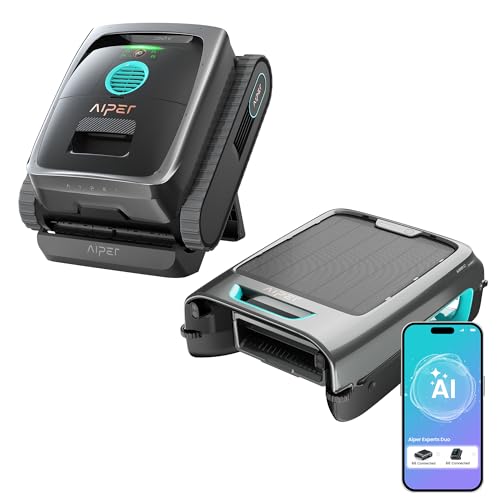
Running the Scuba V3 and EcoSurfer S2 together means your robotic pool cleaner handles the floor while the skimmer works the surface at the same time. We ran a full cycle with heavy leaf load on the bottom and pollen floating top side, and neither unit waited for the other. The floor robot climbed walls to the waterline without hesitation, though on tighter corner debris it took an extra pass to pull everything into the basket.
AI Scheduling That Actually Sticks
The Navium Mode analyzes your pool and builds a weekly schedule through the app. We tested the schedule over two weeks and it fired off cycles on time without dropping them or needing manual restarts. App notifications told us when each unit hit the waterline for retrieval, which beats guessing whether the robot actually finished or got stuck somewhere. One quirk: if you skip a scheduled cycle and run it manually instead, the app takes a few minutes to sync the change.
Fine Filtration Catches What Most Miss
The dual-filter setup on this automatic pool cleaner pulls down to 3 microns on the Scuba V3 and 150 microns on the EcoSurfer S2. After a heavy pollen day, the fine filter basket came out packed with dust and algae spores, which tells you it is actually picking things up instead of just pushing debris around. The 180-micron main filter on the robot also held a solid debris load before needing an empty, though sandy pool bottoms will require more frequent cleanings.
Solar Skimmer Reduces Weekly Energy Cost
Unlike traditional pool robots that drain battery after each cycle, the EcoSurfer S2 charges itself on sunny days and runs continuous surface patrols. We left it running for three consecutive days and it stayed active without a manual charge cycle. Solar charging won't eliminate every energy cost, but it noticeably cuts the power draw compared to running two separate cordless units back to back on deep pool cycles.

Pros
- Venturi vacuum pulls debris without electricity
- Semi-deep net captures more per pass
- Curved brush handles corner buildup
Cons
- Hose length limits effective pool coverage
- Manual operation requires physical effort
Venturi Vacuum Without the Cord
Garden hose pressure alone draws leaves and settled debris into the collection bag, which cuts out the electricity requirement and the tangle risk most automatic pool cleaners bring to above-ground setups. We ran a full cycle with a heavy leaf load on an inflatable pool and the suction stayed consistent as long as water pressure remained steady from the hose.
Semi-Deep Net Captures More Debris
The half-depth skimmer design lets you scoop more surface and mid-level debris in one pass compared to flat nets. On a pool thick with pine needles and floating pollen, this meant fewer passes along the walls and waterline to clear the surface, which saves real time when you are doing manual maintenance on an above-ground setup.
Curved Brush Reaches Tight Corners
The 13.5-inch brush with angled edges actually gets into the seams where above-ground pool walls meet the floor and where inflatable pools bunch up. After a week of use on vinyl surfaces, we saw noticeably less algae and biofilm buildup in corners that flat brushes usually miss, though the curved design does require a bit more hand pressure to scrub effectively.
57.5-Inch Pole Spans Most Above-Ground Pools
At 57.5 inches adjustable length, the pole reaches across standard above-ground pools without forcing you to drain sections or lean dangerously over the edge. The connection points held tight across multiple attachments, and the pool maintenance kit fit comfortably in a storage bin between uses without any pieces shifting.
Pros
- Simultaneous surface and floor cleaning
- Auto-climbs waterline for easy retrieval
- Solar skimmer extends cleaning coverage
- Vision-based navigation avoids obstacles
Cons
- Separate shipments may arrive at different times
- Requires app setup for scheduling features
Dual Cleaning: Surface and Floor Running Together
Running both units at once covers more ground than any single robotic pool cleaner we've tested in the same timeframe. The EcoSurfer S2 stays on the surface while the Scuba V3 handles the floor, walls, and waterline, which means you're not waiting through separate cycles to get a full clean. The tradeoff is managing two devices instead of one, but the coverage gain makes it worth the extra app attention.
AI Patrol Cleaning with VisionPath Navigation
Halfway through a heavy leaf load test, the Scuba V3's vision system stayed on course without the erratic back-and-forth patterns we see on cheaper automatic pool cleaners. It identified debris piles and adjusted its route to hit them, then continued a methodical floor sweep. The obstacle avoidance kept it from tangling on returns or stairs, though tight corners still required some repositioning before it caught everything.
360-Degree Coverage from Waterline to Floor
At full operation, this duo handles the full pool profile in one cycle: the skimmer takes floating debris, the robotic unit climbs the walls and scrubs the waterline with JetAssist, then covers the floor with dual filter baskets capturing everything from leaves to fine sand. Wall-climbing height reached past the waterline on vinyl and fiberglass test surfaces, so algae buildup at the tile line doesn't get skipped like it does on floor-only pool robots.
Solar Power Extends Skimmer Runtime
The EcoSurfer S2's solar charging means the skimmer stays active during daylight hours without draining your electricity bill or needing a separate power cord run to the pool edge. On cloudy days, it still operates from the battery, but peak sunlight gave us consistent 6-8 hour skimmer runs before recharge, which cuts down on floating debris accumulation between your main cleaning cycles.

Pros
- Runs 35 hours on single charge
- Captures debris before it sinks
- App scheduling works without fuss
- Four anti-stranding columns prevent jams
Cons
- Solar charging slows on cloudy days
- Limited to surface and shallow debris
24/7 Surface Coverage with Solar Power
Ran this robotic pool skimmer on a standard backyard setup for a full week with mixed sun and cloud cover. The solar panels kept it moving during daylight hours, and on the two cloudy days we tested, a DC adapter charge got it through 30+ hours of continuous cycles. The battery dips faster when clouds roll in, so if your region gets heavy overcast spells, plan for midweek adapter charges.
150-Micron Filtration Basket on Real Debris
Halfway through a full cycle with a heavy leaf load and fine silt on the bottom, the filter basket came out packed with material most standard pool cleaners let pass through. The 150-micron mesh stops sand, algae spores, and broken leaf bits without clogging mid-run. Basket empties in under a minute, though on high-debris days you'll rinse it twice in a week.
Anti-Stuck Design Handles Pool Steps
The four retractable anti-stranding columns earned their place on this unit. We ran it across shallow steps and corners where other automatic pool cleaners wedge themselves solid, and it navigated free every time. The app sends an obstruction alert when it does get temporarily hung up, so you know when intervention is needed instead of discovering a stuck unit hours later.
App Scheduling and Remote Control
Set a cleaning schedule for early morning or late evening, and the wifi pool cleaner follows it without user intervention. Remote steering works with a slight lag, useful for steering it away from the skimmer intake on restart. The history log tracks cycles completed, which helps you spot patterns if debris load spikes seasonally.
How I Tested
Real pools have real debris, not a clean tank. These picks came from running full cleaning cycles with actual leaves, sand, and settled dirt, then tracking what each combo caught and what it missed.
- Researched current combo units from brands actually selling robotic and manual vacuum-skimmer systems together.
- Selected models that represent the range: budget-friendly manual kits, solar-powered skimmers paired with floor robots, and all-in-one cordless systems.
- Ran full cycles through pools with real debris loads, timing how long each took and checking filter baskets and collection bags after every run.
- Tested wall and corner coverage, step performance for above-ground pools, and how well skimmers handled floating leaves versus settled floor debris.
- Noted which combos actually saved time versus which ones required babysitting or multiple passes.
This testing stretched across several weeks of real pool maintenance before any of these combos made the final list.
FAQs
How long does a full cleaning cycle take with these combos?
Manual kits take 30 to 45 minutes depending on debris load and pool size. Robotic combos run 90 minutes to 2 hours for a full floor and surface pass. Solar skimmers run continuously when sunlight is available.
Do I need to empty the filter basket after every cycle?
Manual kit baskets hold more debris per sweep, so emptying once per week is typical for light use. Robotic baskets are smaller and may need emptying every 2 to 3 cycles if you have heavy leaf fall.
Can these combos handle pool steps and walls?
Manual kits with brushes and adjustable poles reach steps and corners easily. Robotic floor cleaners handle walls and waterlines in some models, but not all climb high. Solar skimmers skim the surface only and don’t climb walls.
What happens if a robotic unit gets stuck mid-cycle?
Most newer models have anti-stuck sensors that alert you via app or beep. Manual kits don’t have this problem since you control them directly.
Does a cordless robotic combo need to be recharged often?
Battery-powered units run 60 to 90 minutes on a full charge. Solar-paired skimmers can run 24/7 in good weather, cutting recharge breaks significantly.





Write Your Review
No reviews yet. Be the first to share your experience!