

Free Delivery. Exclusive Deals. All Prime.
Prime members save on shipping and get first access to deals, plus Prime Video included. 30 days free.
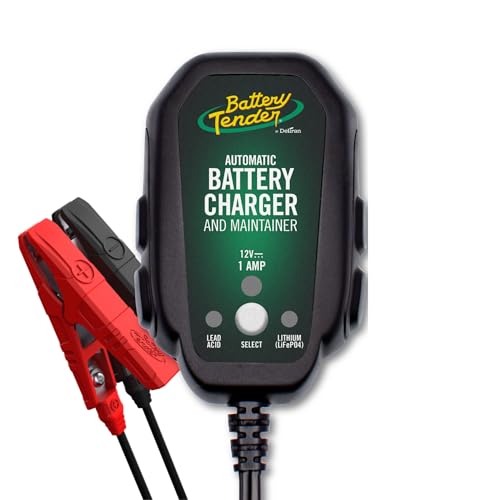
The first warm Saturday after a long cold spell is a bad time to hear one sad click from the garage. Battery maintainers for car storage solve that by holding a charge instead of letting a parked battery fade. After comparing 6 models, the Battery Tender Battery Maintainer stands out for its 3 amp output, 12V support and UL listing. The Schumacher Electric Battery Maintainer is the alternative pick for drivers who want 15 amp charging and 6V support.

Pros
- 3 amp charger switches between 6V and 12V
- Float mode helps maintain voltage without overcharging
- Includes ring terminal and alligator clip combo cable
- Spark-proof connection with reverse polarity detection
- 5-year manufacturer's warranty included
Cons
- Only 11 ft of combined cord reach
- Status display is a two-color LED only
- 6V or 12V mode is selected with a button

Pros
- 4-in-1 functionality: charges, maintains, tests, and restores batteries
- 15A rapid charging power for standard, AGM, gel, and deep-cycle batteries
- Handles both 6V and 12V batteries with automatic voltage detection
- Advanced desulfation mode extends battery life and performance
- Established brand with manufacturing history since 1947
Cons
- Requires AC power outlet - not portable for roadside use
- Limited to garage or home use only, not for emergency situations

Pros
- Works with both 6V and 12V batteries, plus lithium-ion types
- Charges dead batteries from 1 volt with Force Mode option
- Thermal sensor adjusts charging based on temperature
- Safe for indefinite connection without overcharging risk
- Includes 80-inch DC cable with battery clamps and eyelet terminals
Cons
- 2A output is relatively low for faster charging needs
- Small 1.7 x 2.4 x 3.7 inch size may be harder to handle

Pros
- 2 in 1 battery charger and maintainer
- Digital display shows status, percent, voltage and current
- Pulse repair mode targets mild sulfation in lead-acid batteries
- Safety protection for reverse connection and short circuits
- Supports 100-240V input for global voltage use
Cons
- Plug-in only; requires AC wall power
- Not a jump starter or emergency power supply
- No floating charge for AGM batteries

Pros
- 4-pack of 12V 1000mA battery maintainers
- 4-step charging program with float mode
- Includes ring and alligator connector cables
- 102-inch combined AC and DC cable length
- Compact 3.9 x 2.4 x 1.25 inch size
Cons
- For 12V lead acid batteries only
- 1000mA output is limited for charging speed
- 4-pack may be more than some buyers need

Pros
- 10A charging for 12V batteries
- Works with AGM, GEL, SLA, VRLA, WET, and LiFePO4 batteries
- LCD shows voltage, current, battery level, and temperature
- 5 modes include CAR, MOTO, and PULSE REPAIR
- 8 safety protections include reverse polarity and overcurrent
Cons
- Requires connection to a power source before use
- Do not leave operating unattended for more than 12 hours
- Battery type should be checked before selecting a mode
What Matters in Battery Maintainers for Storage
A maintainer for a stored car has a different job than a charger used in a hurry. It needs enough output to recover a low battery, but it also needs safe automatic behavior when the vehicle sits for weeks.
- Charging amperage and voltage: Output among our picks runs from 1 amp to 15 amp, which changes how quickly a low battery can be brought back. The Battery Tender Battery Maintainer fits the storage role well with 3 amp charging, 12V support and a UL listing. A lower amp unit is usually better suited to long maintenance, while a 10 amp or 15 amp unit is more useful when the battery needs a faster recovery before storage.
- Supported battery types: Stored vehicles are not all using the same battery chemistry, so we looked for support beyond basic flooded lead acid. Across the main list, supported types include lead acid, AGM and lithium, with several picks also listing gel or LiFePO4 support. The best match depends on the label on your battery, not the badge on the hood.
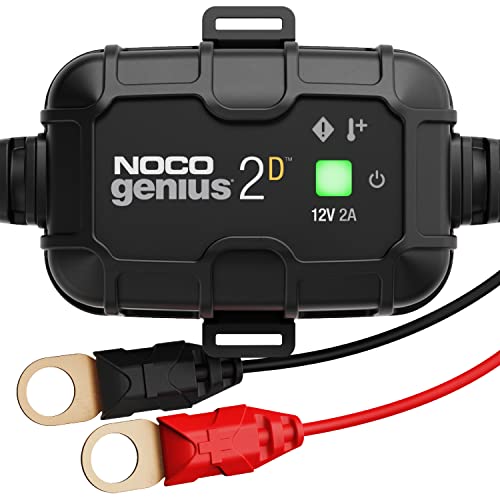
- Automatic float or maintenance mode: A car that sits needs a maintainer that can stop acting like a bulk charger once the battery is full. Among our picks, several describe automatic float or maintenance behavior after charging is complete. The NOCO Battery Maintainer is a 2 amp, 12V option with a 3-year warranty, and its automatic monitoring approach is useful when the charger may stay connected for long storage periods.
- Reverse polarity and spark protection: Safety matters because storage charging often happens in a crowded garage, with clamps attached near metal tools, shelves and bodywork. Several picks include reverse polarity protection, and one main pick specifically notes spark-proof behavior during lead connection. Automatic shutoffs and polarity detection are especially important when the charger will be connected more than once a season.
- Cable length and connectors: Short leads can turn a simple maintenance job into an awkward reach under a hood or around a fender. Among our picks, one charger lists 11 total feet of reach, while another lists a 72-inch AC cable and an 80-inch DC cable. Ring terminals are useful for a vehicle that stays stored, while alligator clips make more sense when one unit rotates among several batteries.
- Weather resistance: Storage is often a garage job, but cold conditions still matter because charging voltage can change with temperature. The Ydbao Battery Maintainer has 10 amp output, 12V operation and automatic temperature compensation for seasonal conditions. If you plan to charge outdoors, use the product only within the maker’s stated limits and keep the connection protected from standing water.
We excluded jump starters because they solve a dead-battery emergency rather than long storage maintenance. Studded tires are a different winter purchase, and remote starters are usually installed by a shop rather than chosen as a plug-in battery care tool.
Other Battery Maintainers Worth Considering
These are other battery maintainers we looked at but did not put on our main list.
If you want a simple maintenance unit with a safety certification, Motopower Battery Maintainer is a 12V alternative with a plastic build and UL listing. Its plastic build is the main tradeoff compared with our top pick, which pairs a 3 amp output with storage-focused automatic charging behavior.
For shoppers who want more charging output without jumping to the highest amp option, Corebox Battery Maintainer brings 6 amp charging, 12V support and thermostat control. It also includes a 2-year warranty, which makes it a different size and feature mix than our top pick rather than a direct duplicate.
A middle-ground charger can make sense if a 2 amp unit feels slow but a 10 amp or 15 amp unit feels more than you need. CTEK Battery Maintainer is a 4.3 amp, 12V alternative, so it sits between the lower-output maintenance models and the faster chargers in the main list.
And if faster charging is the whole reason you are shopping, TowerTop Battery Maintainer is the outlier with 25 amp output and 12V support. It is ETL listed, but that higher output makes it a different tool than our top pick for quiet long-term storage maintenance.
FAQs
What amp rating is best for storing a car battery?
For storage, the goal is not always the highest amp number. Our main picks range from 1 amp to 15 amp, with lower-output models better suited to steady maintenance and higher-output models better suited to recovering a low battery first.
Should I choose a 6V or 12V battery maintainer?
Most modern cars and trucks use 12V batteries, but some older vehicles and specialty batteries use 6V. Among our main picks, some support both 6V and 12V, which is useful if you maintain more than one type of vehicle.
Can a maintainer stay connected during cold weather storage?
A maintainer with automatic float or maintenance mode is designed to reduce output after the battery is charged. For cold storage, temperature compensation is helpful because charging needs can change between warm and cold conditions.
What safety steps matter when charging a stored vehicle?
Look for reverse polarity protection, spark protection and automatic shutoff behavior before leaving a charger connected. If you start or move a stored vehicle after a snowstorm, the CDC says to check that the tailpipe is clear of snow because a blocked tailpipe can cause carbon monoxide to build up quickly inside the vehicle.
Sources
- Clear Snow from Tailpipes, Centers for Disease Control and Prevention. CDC warning about snow-blocked vehicle tailpipes.
- Safety Guidelines: During & After a Winter Storm, Centers for Disease Control and Prevention. Winter heating safety for space heaters, kerosene heaters and carbon monoxide.





Write Your Review
No reviews yet. Be the first to share your experience!