

Free Delivery. Exclusive Deals. All Prime.
Prime members save on shipping and get first access to deals, plus Prime Video included. 30 days free.
The first cold morning is a bad time to learn that your weekend car has been quietly napping harder than you have. 6V battery maintainers keep a stored vehicle battery charged by switching from charge to maintenance instead of cooking it. After comparing 6 models, the Battery Tender Battery Maintainer is the pick for its 25 amp output, 6V charging and ETL listing. The VibeXtr Battery Maintainer is the alternative pick with 1.5 amp output and 6V support.

Pros
- Works with 6V lead-acid, flooded, AGM, and gel cell batteries
- 4-step charging program optimizes battery power better than trickle chargers
- Automatic reversed hook-up detection prevents incorrect connections
- Compact size at 4.4 x 2.9 x 2.2 inches weighs only 0.8 pounds
- 5-year warranty with lifetime customer support included
Cons
- Only suitable for 6V batteries, not 12V vehicle systems
- Limited 1.25 AMP output requires longer charging times
- Two-color LED indicator provides basic monitoring without digital display

Pros
- 1.5A output, 50% faster than standard 1A chargers
- Works with 6V and 12V batteries
- Supports Lead Acid, AGM, Gel and LiFePO4 batteries
- Recovery Mode can charge dead batteries from 1V
- 10 ft heavy duty cables with LED status indicators
Cons
- Limited to 6V and 12V batteries
- Recovery Mode is manual for dead batteries
- No warranty details listed

Pros
- Works with 6V and 12V lead-acid batteries
- 4-in-1 charger, maintainer, trickle charger, desulfator
- LCD shows status, percentage, voltage and current
- 7-stage charging program with pulse repair mode
- Includes 6.6 ft SAE cord, alligator clips and ring connectors
Cons
- Only lead-acid battery types are listed
- 1.75A output is suited to maintenance, not high-speed charging
- Requires holding MODE 5 seconds to force 12V mode

Pros
- Charges 6V and 12V batteries including lead-acid and lithium LiFePO4 types
- 2-amp charging with automatic float maintenance mode for seasonal storage
- 10-foot cable reach with alligator clips and ring terminal connectors
- Pulse repair mode designed for sulfated lead-acid batteries
- Multiple safety protections including reverse polarity and short circuit
Cons
- Typical 12V 20Ah battery takes approximately 10 hours to charge
- Pulse repair mode cannot restore frozen, leaking or physically damaged batteries
- Requires dry, well-ventilated location for safe operation

Pros
- 3-amp charger fully charges car, SUV, or truck batteries before switching to float mode
- Automatically identifies and charges 6V and 12V batteries including lithium and lead-acid types
- Works with multiple vehicle types: cars, boats, motorcycles, ATVs, lawn mowers, and golf carts
- Repair mode can attempt to activate old or idle batteries for up to 24 hours
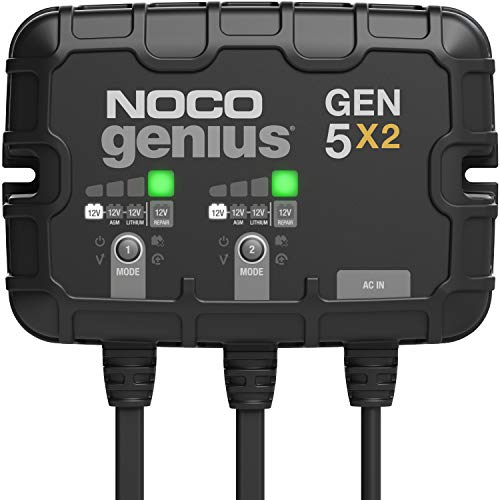
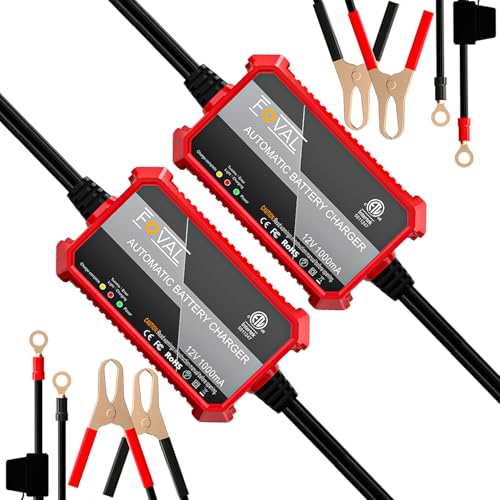
- Two-pack gives you backup chargers or coverage for multiple vehicles
Cons
- Repair mode only works on lead-acid batteries, not lithium or LiFePo4 types
- Cannot repair seriously damaged batteries or bring dead batteries back to full capacity
- Repair mode requires manual selection and monitoring for up to 24 hours
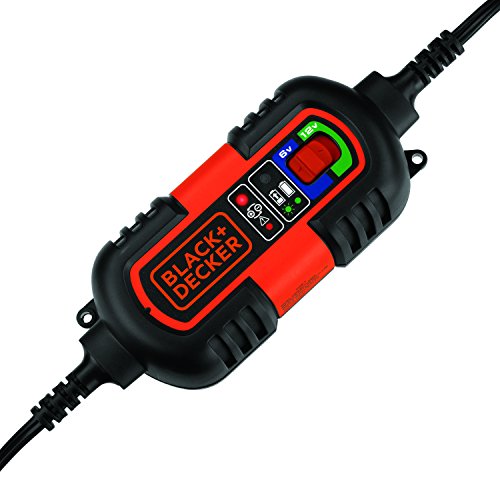
Pros
- Charges both 6V and 12V batteries for versatile vehicle use
- Automatic charging stops when battery is fully charged
- Built-in circuit protection against overcharging and reverse polarity
- ETL certified for safety and performance
- Includes mounting bracket for convenient placement
Cons
- 1.5 amp charging rate is slower than higher-amperage chargers
- Works with AGM, GEL, and WET batteries only
How We Chose Battery Maintainers for Cold Weather Storage
A 6V maintainer has a narrow job: bring the battery up safely, then hold it there while the vehicle sits. For winter storage, the important details are not flashy extras, but voltage support, charging current, automatic maintenance and basic connection protection.
- Charging amperage and voltage: We prioritized maintainers that clearly support 6V batteries, since that is the point of this list. The Battery Tender Battery Maintainer stands out on the page with 25 amp output, 6V operation and an ETL listing. Among our picks, stated charging current runs from 1.5 amp to 3 amp, which matters because smaller batteries generally do not need the same current as large truck batteries.
- Supported battery types: Most shoppers are maintaining lead acid batteries, but garages often include AGM, gel or lithium equipment too. Across the main list, supported types include lead acid, AGM, gel and LiFePO4 on selected models. One pick supports 6V and 12V operation, while another adds multiple lead acid formats such as SLA and VRLA.
- Automatic float or maintenance mode: A maintainer should not act like a basic charger that keeps pushing current after the battery is full. Several picks switch to float or maintenance mode after charging, and that 1 automatic step is the key feature for seasonal storage. This is especially useful when a vehicle may sit for weeks at a time between starts.
- Reverse polarity and spark protection: Battery connections are easy to rush when the garage is cold, so connection safeguards count. Some picks list reverse polarity protection, short circuit protection or spark proof circuitry. The Black+Decker Battery Maintainer combines 1.5 amp charging, 6V support and an ETL listing, which makes its safety focused feature set easier to compare with the rest of the group.
- Cable length and connectors: Reach matters when the outlet is on the wrong wall or the battery is tucked under a seat. The Leicestercn Battery Maintainer lists 10 feet of total reach, 2 amp output, 6V support and a 1-year warranty. Across the picks, connector options include alligator clips and ring terminals, so shoppers can choose between temporary hookup and a more permanent battery lead.
- Weather resistance: None of the main picks lists an IP weather resistance rating, so the safe assumption is indoor or sheltered use. That is important for storage because a maintainer may sit connected for more than 1 night. Use it in a dry, ventilated spot and keep cords away from standing water.
We excluded jump starters because those belong in separate jump starter guides, and they solve a different problem than long term maintenance. We also left out studded tires and remote starters, since 1 is a tire purchase and the other is typically installed by a shop.
Other Battery Maintainers Worth Considering
These are other battery maintainers we looked at but did not put on our main list.
If you want another compact maintainer, Huiaipaic Battery Maintainer brings 2 amp output and 6V support. Its appeal is a different size and feature mix, but our main list gives more direct comparison across automatic float behavior, connector choices and protection features.
For shoppers who want more current, Schumacher Electric Battery Maintainer is rated at 6 amp and supports 6V batteries. It also includes a hand crank, which makes it a different kind of setup than our main picks and less directly comparable for simple storage charging.
Prefer a lower current option for smaller batteries? Motopower Battery Maintainer uses 1 amp output with 6V support, so it sits below the 1.5 amp to 3 amp range covered by our main picks. That lower number may appeal for small batteries, but the main list gives broader voltage and feature variety.
And if warranty length is high on your checklist, Lokithor Battery Maintainer lists 2 amp output, 6V support and a 1-year warranty. That puts it close to one of our main picks on output, but the main list offers a wider spread of charging current and connector arrangements.
FAQs
What amperage is right for a 6V battery maintainer?
For the models compared here, stated current runs from 1.5 amp to 3 amp on the main list. A maintainer is meant for topping up and holding charge, not for jump starting a dead vehicle.
Can a 6V maintainer stay connected during storage?
That is the reason to look for automatic float or maintenance mode. Several picks switch to a lower maintenance state after the battery is charged, which is different from a basic charger with 1 continuous output behavior.
Do I need spark protection and reverse polarity protection?
Those protections are worth prioritizing because battery clamps can be connected incorrectly. Multiple picks list spark proof circuitry, reverse polarity protection or short circuit protection, and those features matter more when the charger may be used many times in 1 winter.
Where should I place a maintainer in cold weather?
Use a dry, ventilated area because 0 of the main picks lists an IP weather resistance rating. If a vehicle is run before storage or during winter, the CDC says to check that the tailpipe is clear of snow because a blocked tailpipe can cause carbon monoxide to build up quickly inside the vehicle.
Sources
- Clear Snow from Tailpipes, Centers for Disease Control and Prevention. CDC warning about snow-blocked vehicle tailpipes.
- Safety Guidelines: During & After a Winter Storm, Centers for Disease Control and Prevention. Winter heating safety for space heaters, kerosene heaters and carbon monoxide.




Write Your Review
No reviews yet. Be the first to share your experience!