

Free Delivery. Exclusive Deals. All Prime.
Prime members save on shipping and get first access to deals, plus Prime Video included. 30 days free.
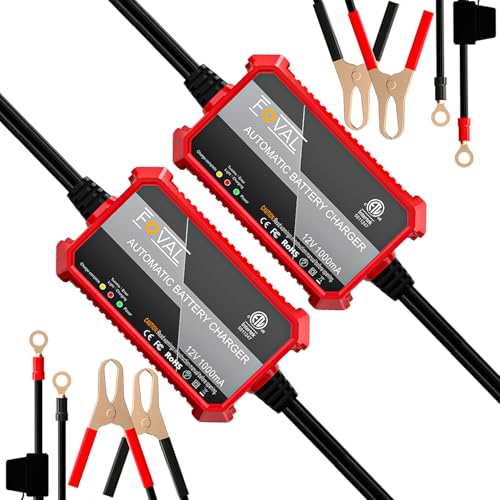
You turn the key after a quiet spell in the shed, hear one tired click, and suddenly the ride starts with jumper cables. Battery maintainers for ATV storage solve that by feeding a low, controlled charge and then holding the battery in maintenance mode. After comparing 6 models, the Foval Battery Maintainer leads for 12V charging, 1A output and a 4-step program. The Motopower Battery Maintainer is the alternative pick because its 1.5 amp output also supports 12V batteries.
Pros
- 2-pack of 1000mA 12V battery maintainers
- 4-step charging program with float mode
- Includes ring and alligator connector cables
- 102-inch combined AC and DC cable length
- 18-month warranty listed
Cons
- Only for 12V lead acid battery types listed
- 1A output is modest for charging needs
- Product group is listed as Toy

Pros
- Charges 12V lead-acid batteries, including AGM and gel cell
- 1.5A automatic charging and maintaining
- Microprocessor control helps prevent overcharge
- Includes SAE ring terminals and alligator clips
- Compact 5.12 x 2.56 x 1.57 inch size
Cons
- Only for 12V lead-acid batteries
- 1.5A output is limited for larger charging needs
- Product group is listed as Toy in the data

Pros
- 12ft cable reaches tight spaces and distant battery locations
- Multi-stage smart charging protects against overcharging
- Works with multiple battery types including AGM, GEL, and deep-cycle
- Reverse polarity and short-circuit protection included
- Compatible with cars, motorcycles, ATVs, boats, and more
Cons
- 1A charging rate is slow for larger or deeply discharged batteries
- Two-color LED indicator is basic compared to digital displays
- Small size may make it difficult to handle or position

Pros
- 8-foot total reach with 6ft AC cord and 2ft DC cable
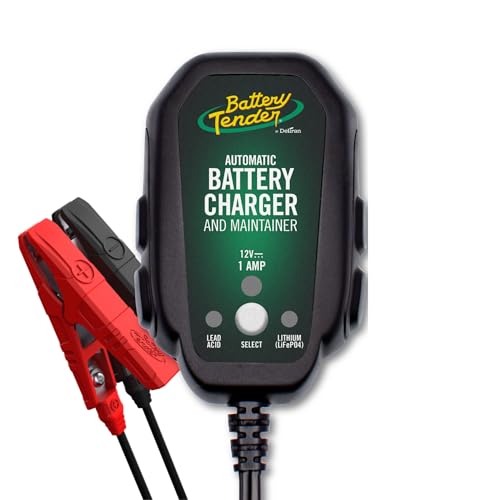
- Works with lead-acid and lithium 12V batteries via MODE button
- Force-start recovery mode revives deeply discharged batteries below 8V
- Automatic float maintenance mode prevents overcharging year-round
- 1.1-amp output designed safely for motorcycle batteries 5Ah-32Ah
Cons
- Not designed for car batteries; motorcycles and small power equipment only
- Cannot recover physically damaged batteries or fully dead 0V cells
- Requires permanent SAE connector installation for convenient plug-in use

Pros
- 4-step charging program optimizes battery power without overcharging
- Compatible with all 12V lead-acid, flooded, AGM, and gel cell batteries
- Automatic float mode maintains proper voltage for long-term storage
- Spark-proof circuitry with reversed hook-up detection for safe operation
- Includes 12-foot cord, fused terminals, alligator clips, and 5-year warranty
Cons
- Low 750mA output means slower charging compared to higher-amperage models
- Small charger unit (3.3 x 1.3 x 2.4 inches) may be difficult to handle for some users
- Requires manual connection to battery before charging cycle begins

Pros
- Works with multiple 12V battery types including AGM, gel, and flooded batteries
- Built-in safety features: reverse polarity, overcurrent, overload, and overvoltage protection
- LED indicators show battery loading status so you know when charging is complete
- Flame-retardant ABS shell provides fireproof and electric shock protection
- Suitable for cars, motorcycles, ATVs, boats, lawn mowers and backup power systems
Cons
- Does not include a battery or function as a jump starter
- Compact size means limited display information for monitoring charging progress
- Limited to 12V lead-acid batteries only, not compatible with lithium or other types
What We Looked For in Battery Maintainers for ATV Storage
An ATV battery is often smaller than a car battery, and it may sit for long stretches between rides. That makes low amperage, automatic maintenance and basic connection safety more important than raw charging speed.
- Charging amperage and voltage: For this use, 12V compatibility mattered most because every main pick is built around 12V charging. The Foval Battery Maintainer fits that need with 12V operation, 1A output and a 4-step charging program. That combination is better suited to storage than a high-output automotive charger that is aimed at larger batteries.
- Supported battery types: The main list favors maintainers that support common powersports battery chemistry, especially lead acid and AGM. Among the 6 picks, supported types include flooded, AGM, gel, SLA, VRLA and maintenance-free lead-acid batteries. One of the picks also supports 12V LiFePO4 lithium batteries with a built-in BMS, which matters if an ATV or powersports battery has been upgraded from traditional lead acid.
- Automatic float or maintenance mode: A maintainer should not require you to unplug it the moment the battery is full. The Mroinge Battery Maintainer uses 1 amp output, 12V charging and a multi-stage program that switches to float mode after charging. Its 2-year warranty also gives a clear support window for a device that may stay connected during storage.
- Reverse polarity and spark protection: Small batteries are often tucked under seats, racks or panels, so connection mistakes are a real concern. Across the main picks, safety features include reverse polarity protection, short-circuit protection and overcharge protection. Several also list spark-proof circuitry, which is especially useful when attaching clips in cramped battery compartments.
- Cable length and connectors: Cable reach can decide whether a maintainer is convenient or annoying. The Leicestercn Battery Maintainer gives a total reach of 8 feet, with a 6-foot AC cord and 2-foot DC cable. It also includes alligator clips and fused SAE ring terminals, and its 1.1 amp, 12V output fits smaller powersports batteries.
- Weather resistance: None of the 6 main picks lists a numeric IP weather rating, so these are best treated as garage, shed or covered-storage maintainers. That does not make them unusable for seasonal storage, but it does mean the connection point and charger body should be kept out of rain and standing water. For cold-weather vehicle safety, the CDC also warns that a snow-blocked tailpipe can let carbon monoxide build up quickly inside a vehicle, so charging and starting routines should include a quick tailpipe check before driving.
We excluded jump starters because they are a different tool and are covered in jump starter guides. We also left out studded tires, which are a separate traction purchase, and remote starters, which are typically installed by a shop rather than clipped to a battery for storage.
Other Battery Maintainers Worth Considering
These are other battery maintainers we looked at but did not put on our main list.
If you need a different size and feature mix, Unocho Battery Maintainer pairs 1.5 amp output with 6V charging. That voltage makes it less directly aligned with the 12V focus of our main picks, but it may suit equipment that specifically uses a 6V battery.
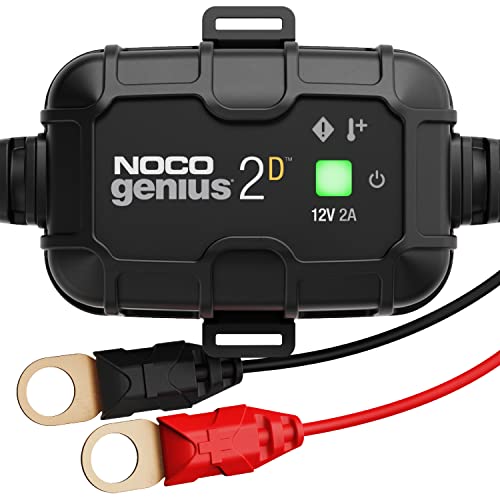
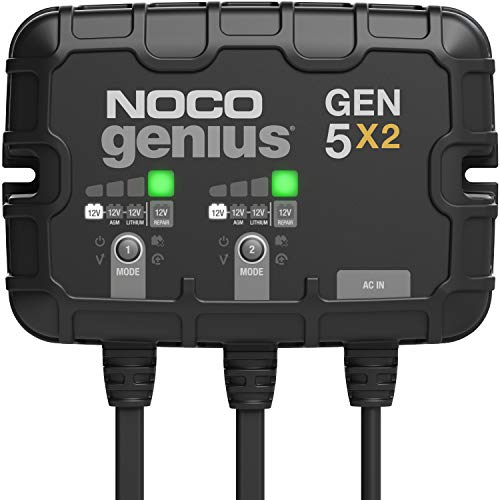
For shoppers who want a longer stated support window, NOCO Battery Maintainer lists 1 amp charging, 12V compatibility and a 3-year warranty. It is a capable unit on paper, but it did not match this ATV storage need as closely as our top pick because the main list focuses on the exact mix of 12V maintainers and powersports-friendly connections.
Another 6V route is Schumacher Electric Battery Maintainer, which uses 1.5 amp output. That can be useful for a battery that calls for 6V service, but it is not as close a fit as our alternative pick for readers comparing 12V ATV, motorcycle and small vehicle batteries.
FAQs
What amperage is right for an ATV battery maintainer?
For storage, the main picks range from 750mA to 2A, which keeps the focus on controlled charging rather than fast recovery. Lower outputs are generally better matched to small powersports batteries than high-output automotive chargers.
Do I need 6V or 12V for an ATV battery?
Check the battery label first, because the maintainer has to match the battery voltage. The main picks are all 12V units, while some other options use 6V charging for equipment that requires that voltage.
Can a maintainer stay connected during cold-weather storage?
That is the point of automatic float or maintenance mode, which switches from charging to holding voltage after the battery is full. Among the main picks, several use 4-step charging programs that include float mode for longer storage periods.
What safety features matter most for ATV storage?
Reverse polarity protection matters because battery compartments can be tight and easy to misread. Spark protection, overcharge protection and short-circuit protection are also important, and at least several of the main picks list those features.
Sources
- Clear Snow from Tailpipes, Centers for Disease Control and Prevention. CDC warning about snow-blocked vehicle tailpipes.
- Safety Guidelines: During & After a Winter Storm, Centers for Disease Control and Prevention. Winter heating safety for space heaters, kerosene heaters and carbon monoxide.




Write Your Review
No reviews yet. Be the first to share your experience!