

Free Delivery. Exclusive Deals. All Prime.
Prime members save on shipping and get first access to deals, plus Prime Video included. 30 days free.
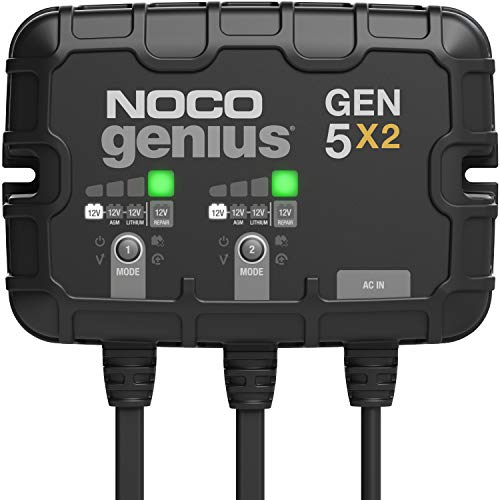
The dock is quiet, the key turns, and the battery answers with one lonely click, which is rude after you brought coffee. Battery maintainers for boats solve that storage problem by keeping a battery topped off without constant attention. After comparing 6 models, the NOCO Battery Maintainer is the best fit for its 10 amp output, 12V support and IP68 rating. The FirstPower Pro Battery Maintainer is the alternative pick with 10 amp output for 12V batteries.
Pros
- Two-bank charger independently maintains up to 2 batteries at 5 amps each
- Supports multiple battery types: lead-acid, AGM, and lithium-ion
- Thermal sensor adjusts charging based on temperature for optimal performance
- IP68 waterproof rating survives harsh marine conditions
- Charges severely depleted batteries from 1 volt or zero volts with Force Mode
Cons
- Marine-focused design may include features unnecessary for typical car use
- Requires permanent onboard installation with 72-inch cables
- 10-amp total output shared between two banks limits charging speed per battery

Pros
- Charges 2 batteries simultaneously with independent mode selection
- 3 charging modes for different battery types (SLA/AGM, lithium, calcium)
- Auto repair mode with advanced diagnostics for voltage, temperature, connection
- Temperature-compensating sensor adjusts charging for hot and cold climates
- IP68 waterproof rating allows 24/7 onboard charging
Cons
- Requires well-ventilated area during operation per safety warning
- 5A per bank output may charge larger marine batteries slowly
- Marine-focused design may be overkill for basic car battery maintenance

MOTOPOWER MP00205A 12V 800mA Automatic Battery Charger, Maintainer, Trickle and Desulfator
Pros
- Works with all 12-volt lead-acid batteries including AGM and gel cell types
- Automatic desulfation feature detects and repairs sulfation problems
- Multi-level safety protection including overcharge and reverse polarity guards
- 24-hour timer automatically switches to maintenance mode at 14V
- Spark-free operation during lead connection for safe use
Cons
- 800mA output is relatively low for quickly charging deeply discharged batteries
- Requires manual connection to battery each time charging is needed
- No built-in display or indicators to show charging status or progress

Pros
- 4-step charging program optimizes battery power without overcharging
- Compatible with all 12V lead-acid, flooded, AGM, and gel cell batteries
- Automatic float mode maintains proper voltage for long-term storage
- Spark-proof circuitry with reversed hook-up detection for safe operation
- Includes 12-foot cord, fused terminals, alligator clips, and 5-year warranty
Cons
- Low 750mA output means slower charging compared to higher-amperage models
- Small charger unit (3.3 x 1.3 x 2.4 inches) may be difficult to handle for some users
- Requires manual connection to battery before charging cycle begins

Pros
- 2-bank design charges two 12V batteries simultaneously at 10A (5A each)
- 9-stage charging with automatic temperature compensation for all weather
- Three charging modes for SLA/AGM, lithium, and calcium batteries
- IP68 waterproof rating designed for marine and boat use
- Advanced diagnostics detect over-voltage, faulty battery, over-temperature, reverse polarity
Cons
- Designed primarily for marine/boat use, may not suit standard vehicle applications
- Requires manual intervention to charge batteries below 1V voltage
- Limited to 12V systems only

Pros
- Charges 4 batteries simultaneously at 2A per set, up to 8A total
- Works with multiple battery types: 6/12V lead-acid, LiFePO4, AGM, Gel, SLA
- Automatic float mode after full charge and battery repair capabilities
- Multiple safety protections: reverse polarity, short-circuit, overheat, overvoltage
- Compact size (7.1 x 6.3 x 2.6 inches) with wall-mount swivel hook
Cons
- Limited to batteries up to 40Ah capacity
- Requires 8 separate copper terminals and clamps for multi-battery setup
- Only includes 4-foot power cord, may need extension for some garage layouts
What Matters in a Battery Maintainer for Boat Storage
A boat battery maintainer has to do more than sit on a shelf. Marine storage brings long idle periods, changing temperatures and damp spaces, so amperage, battery compatibility and automatic maintenance matter more than extra claims.
- Charging amperage and voltage: For a two battery boat setup, 10 amp total output gives more useful charging headroom than a small 750mA maintainer. The NOCO Battery Maintainer is rated at 10 amp total output, with 5 amp available per bank for 12V batteries. That matters if you are maintaining a starter battery and a deep cycle battery at the same time.
- Supported battery types: The strongest group supports 12V lead acid and lithium chemistries, including AGM. Among our picks, several cover lead acid and lithium ion, while smaller maintainers focus on 12V lead acid types. The broader the supported list, the less likely you are to buy a second charger when a boat battery changes from flooded lead acid to AGM or lithium.
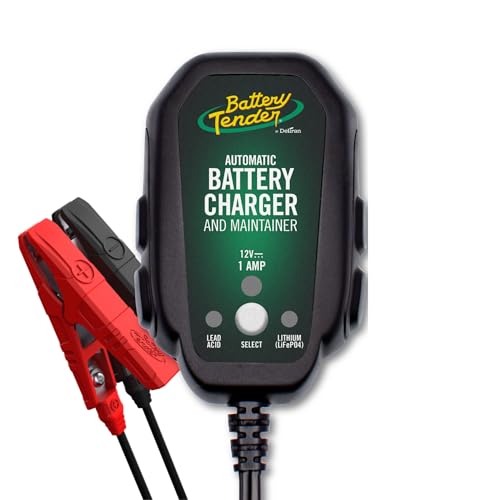
- Automatic float or maintenance mode: Automatic float mode is the feature that separates a maintainer from a basic charger. One of our picks switches from full charging to float charging at 12V, and another uses a 4 step charging program that ends in float mode. The Battery Tender Battery Maintainer is a 12V unit with a 5 year warranty, and its automatic cycle is meant for long storage without overcharging.
- Reverse polarity and spark protection: A maintainer that detects a reversed connection can save a battery and reduce the chance of a bad hookup becoming a bigger problem. Across our picks, reverse polarity protection appears on multiple models, and spark proof circuitry appears on the smaller 12V maintainers. These protections are especially useful when the battery is tucked into a compartment and the clamps are hard to see.
- Cable length and connectors: Cable length affects where you can mount or place the maintainer, especially on a boat with batteries under a hatch. One onboard pick includes 72 inch DC cables and a 72 inch AC cable, while another includes 79 inch output cables. Ring terminals, alligator clips and battery connectors also matter because permanent eyelets are cleaner for storage, while clips are easier for occasional charging.
- Weather resistance: A maintainer used around a boat should be sealed well enough for damp storage and splash prone spaces. The Zrfmib Battery Maintainer is a 10 amp, 12V onboard model with an IP68 waterproof rating and a 3 year warranty. Weather resistance does not replace careful installation, but an IP68 rating is a better fit for marine storage than an indoor only maintainer.
We excluded jump starters because they belong in jump starter guides, studded tires because they are a different purchase, and remote starters because they are usually installed by a shop. The remaining choices focus on maintaining stored batteries rather than rescuing a dead vehicle at the ramp.
Other Battery Maintainers Worth Considering
These are other battery maintainers we looked at but did not put on our main list.
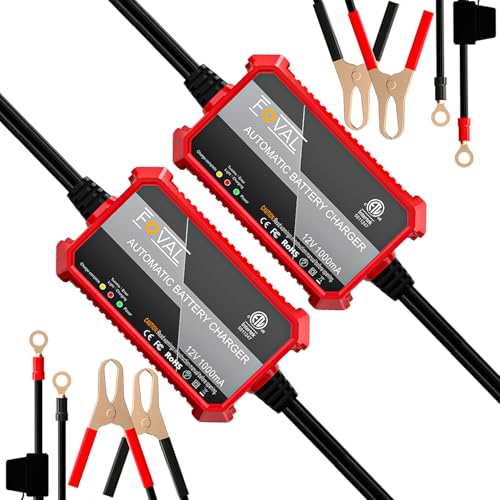
If you want a simpler 12V maintainer, the Foval Battery Maintainer stays in the same general category as our smaller storage oriented picks. It has a different size and feature mix, but it does not match our top pick’s 10 amp output for a two battery onboard setup.
For a setup where shore power is inconvenient, the Suner Power Battery Maintainer adds 12V solar charging and water resistance. That solar approach can make sense for exposed storage, but it is a different size and feature mix than our main picks, which include 10 amp AC powered onboard options.
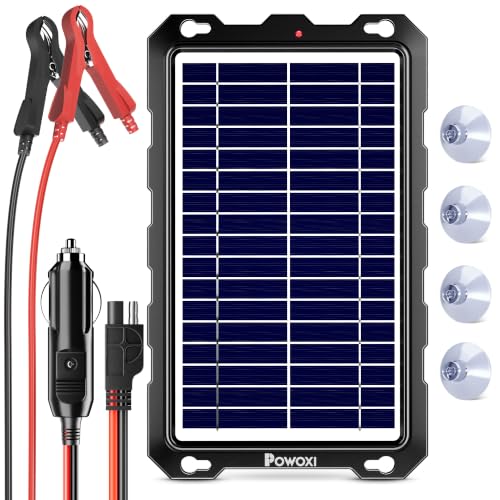
Prefer a solar maintainer with a tougher housing style? The Powoxi Battery Maintainer combines 12V solar charging, an aluminum build and water resistance. The aluminum build is its clearest distinction, while our top pick is built around a 10 amp, 2 bank onboard charger layout.
And if water resistant solar charging is the whole reason you are shopping, the Voltset Battery Maintainer is another 12V alternative. It follows a different size and feature mix, so it is better viewed as a storage accessory than a direct substitute for a 10 amp onboard maintainer.
FAQs
How many amps should a boat battery maintainer have for storage?
For a single stored battery, a low output maintainer such as 750mA or 800mA can be enough to hold charge over time. For two onboard batteries, our main picks include 10 amp models with 5 amp per bank, which are better suited to maintaining a starter and deep cycle battery together.
Should I choose a 6V or 12V maintainer for a boat?
Most marine starter and deep cycle setups use 12V batteries, and all main picks support 12V charging or maintenance. A 6V mode is useful only if you also maintain smaller legacy batteries or equipment outside the boat.
Is lithium support necessary for a boat battery maintainer?
Lithium support matters if your boat uses a 12V lithium battery or you expect to upgrade later. Several picks support 12V lithium modes, while lead acid focused models are better matched to flooded, AGM or gel batteries.
What safety features matter during cold weather storage?
Reverse polarity protection, spark proof connection circuitry and automatic float mode are the features to look for first. If the boat battery is connected near a vehicle or enclosed workspace, the CDC also warns that a blocked tailpipe can allow carbon monoxide to build up quickly, so ventilation and clear exhaust paths matter around winter storage areas.
Sources
- Clear Snow from Tailpipes, Centers for Disease Control and Prevention. CDC warning about snow-blocked vehicle tailpipes.
- Safety Guidelines: During & After a Winter Storm, Centers for Disease Control and Prevention. Winter heating safety for space heaters, kerosene heaters and carbon monoxide.




Write Your Review
No reviews yet. Be the first to share your experience!