

Free Delivery. Exclusive Deals. All Prime.
Prime members save on shipping and get first access to deals, plus Prime Video included. 30 days free.
The flashlight goes dim just when the first cold snap turns the garage into a walk-in freezer. Universal battery testers solve that small but irritating mystery before you raid every remote in the house. After comparing 6 models, the Tekcoplus Battery Tester stands out for its LCD bar graph, 3-color simulation and 0°C to 40°C operating range. The Dlyfull Battery Tester is the alternative pick because it includes 1 AAA battery and an 18-month warranty.

Pros
- LCD bar graph shows remaining battery power
- Adjustable slider fits multiple listed battery types
- Tests C, AA, AAA, D, N, 9V, and 1.5V button cells
- No external power source needed
- Compact 0.11 lb design for a toolbox or drawer
Cons
- Operating range is 0°C to 40°C
- No warranty details provided
- Only supports the battery types listed in the data

Pros
- Tests AA, AAA, C, D, 9V, N, CR123A, CR2 and more
- Checks 1.5V, 3V and button cell batteries
- LCD shows poor, weak or good voltage condition
- Compact 0.02 lb design with anti-slip finish
- Includes 1 AAA battery and 18-month warranty
Cons
- Not for testing rechargeable batteries
- Should not be powered by a rechargeable battery
- Limited to battery health bars and voltage condition

Pros
- Tests rechargeable and alkaline batteries
- Supports AAA, AA, C, D, N, 9V, and lithium button cells
- 3 voltage ranges: 1.5V, 1.2V, and 3.0V
- Compact size: 3.53 x 1 x 0.98 inches
- LED displays voltage and strength levels
Cons
- Voltage range must be selected manually
- Tests one battery at a time
- 9V batteries use side touch contacts

Pros
- Tests AAA, AA, C, D, 18650, 9V, 3.7V and 1.5V cells
- Digital LCD shows battery status and power level
- No extra battery required for operation
- Small, light design is easy to carry
- 4-piece set of BT-168 PRO testers
Cons
- No warranty terms listed in the product data
- Does not list support for vehicle battery testing
- Top reviews are not provided
Pros
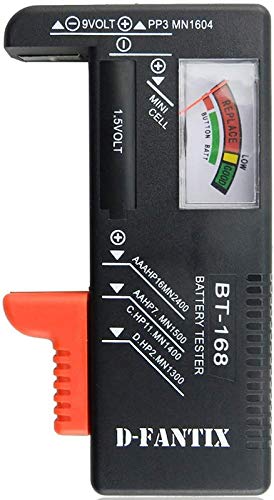
- Tests 7 battery types: AA, AAA, C, D, 1.5V, 9V, and button batteries
- Requires no batteries to operate - powered by the battery being tested
- Color-coded analog display clearly shows good, low, or replace status
- Compact and lightweight design at 0.11 pounds for easy portability
- Helps avoid waste by identifying good batteries before disposal
Cons
- Analog display provides approximate readings, not precise capacity measurements
- Small size may be difficult for those with limited dexterity to use
- Only tests battery voltage, not actual remaining capacity accurately
Pros
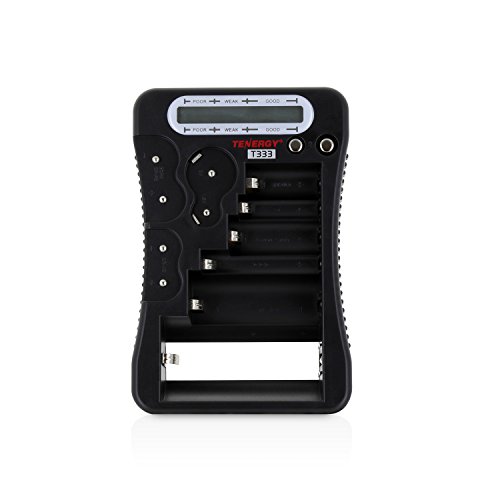
- Tests AA, AAA, C, D, 9V, CR123A, CR2, and button cells
- LCD screen shows poor, weak, or good battery status
- Small 5.25 x 3.5 x 1 inch size
- Includes a battery for tester power
- Includes 1 year warranty support
Cons
- Does not list support for vehicle batteries
- Needs its included battery as a power source
- Made for household batteries, not tire or jump-start tasks
What Matters in a Universal Battery Tester Before Winter
Cold-weather prep puts extra pressure on small batteries, from flashlights to carbon monoxide alarms. A useful battery tester should tell you enough about voltage and remaining charge without turning a kitchen drawer tool into a mechanic’s bench instrument.
- What it measures: Household battery testers in this group focus on battery condition through voltage or remaining power indicators, not full automotive diagnostics. None of the 6 main picks lists CCA measurement, and none lists a load-test function for a 12V car battery. That matters for drivers: these tools help with emergency gear batteries, but they do not replace a dedicated automotive battery analyzer.
- Display and readability: The La Crosse Technology Battery Tester uses an LED display and asks you to select from 1.5V, 1.2V or 3.0V before testing. That voltage selection is useful when you keep both alkaline and rechargeable cells in the same drawer. Among the main picks, displays include analog color zones, LCD bars and digital readouts, so readability ranges from simple red, yellow and green status to more specific voltage-style feedback.
- Compatible battery types: The main picks cover common household formats, including AA, AAA, C, D and 9V batteries. Several also include button cells, while some add less common cylindrical formats such as CR123A, CR2 and CRV3. The widest compatibility is most useful if winter supplies include flashlights, garage remotes, sensors and small backup electronics that do not all use the same cell size.
- Build quality and leads: The Tekcoplus Battery Tester lists ABS and stainless steel construction, plus an operating temperature range of 0°C to 40°C. That is enough for indoor storage, a toolbox or a glove box that is brought back inside before deep cold. The adjustable slider also matters because one tester has to make contact with more than 1 battery size without a set of loose leads.
- Safety features: The D-Flife Battery Tester draws power from the battery being checked and does not require an additional battery to operate. That 0-extra-battery setup reduces the chance of finding the tester itself dead when you need it. For winter readiness, battery checks should pair with broader safety habits, including a battery-operated carbon monoxide detector, according to the Centers for Disease Control and Prevention.
We excluded jump starters and battery chargers because they do a different job from checking small battery condition. We also excluded shop-grade workshop compressors for tools because that category is not about battery testing.
Other Battery Testers Worth Considering
These are other battery testers we looked at but did not put on our main list.
If you specifically want a tester centered on a 12V format, Gardner Bender Battery Tester has a different size and feature mix than our main picks. That may make sense for a narrower use case, but our top pick is better suited to household cells because the main list covers AA, AAA, C, D and 9V formats.
For shoppers who care about stated warranty coverage, Kkeanic Battery Tester lists a 1-year warranty. That is shorter than the 18-month warranty attached to our alternative pick, and the main picks give more detail about supported battery sizes.
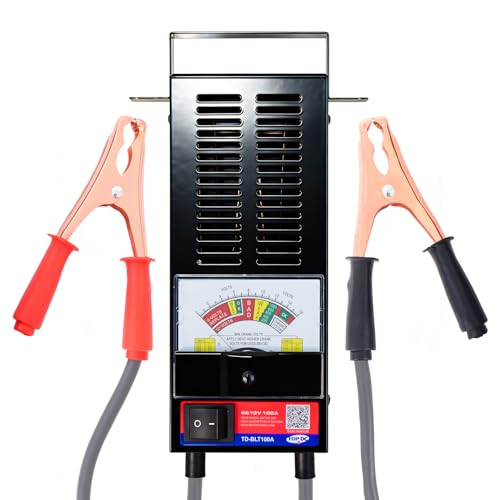
Topdon Battery Tester takes a more automotive-leaning route with 12V support and a hand crank. That is a different direction from the main list, which focuses on drawer-size tools for small batteries rather than a car-battery check tool.
And if you are comparing simple household testers, Dlypow Battery Tester is another alternative with details that depend on the listing. Because the main picks spell out compatibility with formats such as AA, AAA and 9V, they are easier to match to winter supplies before buying.
FAQs
Can a universal battery tester check a car battery before winter?
Not usually, at least not in the same way a dedicated 12V automotive tester can. The main picks focus on small batteries, and none of the 6 lists CCA measurement or a load-test function for a car starting battery.
What battery sizes should a winter-prep tester cover?
At minimum, look for AA, AAA and 9V support because those sizes often appear in flashlights, remotes and alarms. The main picks also commonly cover C and D cells, and some add 1.5V or 3.0V button-cell testing.
Is an analog display enough for checking household batteries?
An analog scale can be enough if you only need good, low or replace-style guidance. Digital and LCD displays can give more readable bars or voltage-style information, especially when a tester distinguishes between 1.2V rechargeable cells and 1.5V alkaline cells.
How does this fit into winter safety planning?
Battery checks help keep flashlights and carbon monoxide detectors ready, but they are only 1 part of winter preparation. The Centers for Disease Control and Prevention says a blocked tailpipe can let carbon monoxide build up quickly inside a vehicle, so drivers should also check that the tailpipe is clear of snow before driving.
Sources
- Clear Snow from Tailpipes, Centers for Disease Control and Prevention. CDC warning about snow-blocked vehicle tailpipes.
- Safety Guidelines: During & After a Winter Storm, Centers for Disease Control and Prevention. Winter heating safety for space heaters, kerosene heaters and carbon monoxide.




Write Your Review
No reviews yet. Be the first to share your experience!