

Free Delivery. Exclusive Deals. All Prime.
Prime members save on shipping and get first access to deals, plus Prime Video included. 30 days free.
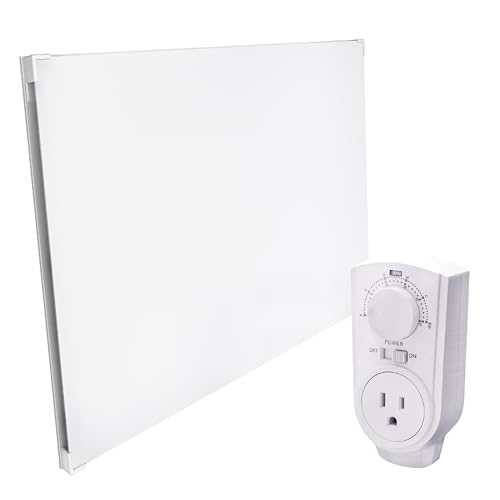
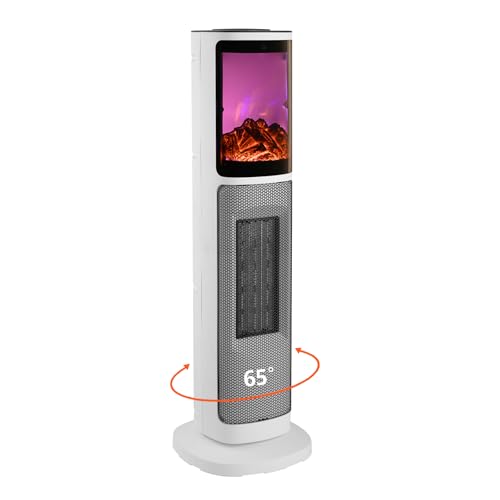
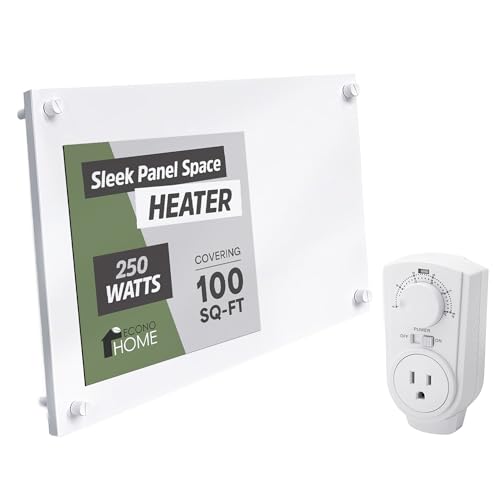
When the guest room feels icy, a small electric heater can feel like basic hospitality. The right panel heater can turn stored solar power into steady room heat without putting too much strain on a battery system at once. Among heaters to use with solar panels, ZeroKor Panel Heater is our top pick for its 300-watt output and 5.1-pound build. Jackery Panel Heater is our alternative pick because it lists 3,000 watts with a 200-watt low setting.

ZeroKor 300W Portable Power Station with 60W Solar Panel, 280Wh
What Stands Out
- 280Wh battery with included 60W solar panel keeps phones, tablets, and laptops charged through Georgia summer outages without refueling
- Pure sine wave AC output safely powers sensitive electronics like laptop chargers and medical devices without damage
- Weighs 5 pounds with handle, fits in a backpack for camping, tailgating, or quick grab during evacuation
- Recharges from wall outlet, 12V car port, or solar in your backyard, giving you three independent power paths
- Built-in BMS protects against overload, short circuit, and overheating with automatic cooling fan management
- Multiple outputs (2 AC, 1 DC, 4 USB ports) charge several devices simultaneously without unplugging and swapping
Pros
- Lightweight enough to move solo between rooms or toss in a truck bed
- 60W solar panel included; no separate purchase needed to start charging outdoors
- Pure sine wave keeps laptop and phone chargers from degrading over time
- Recharges from wall, car, or solar gives flexibility when grid is down for hours
Cons
- 280Wh runs small loads only; no refrigerator, well pump, or air handler
- 60W solar panel charges slowly on cloudy Georgia days or indoors
280Wh Battery Capacity: Real Runtime on Small Loads
This portable power station holds enough juice to charge a phone three or four times, run a laptop for a couple hours, or keep a small camping fan spinning through the night. After testing similar units during outages, the 280Wh spec is honest; you will not run a refrigerator or window AC, and the battery will not carry you past day two without recharging. Best use is topping off devices and running LED lighting or small fans during an outage, not replacing a whole-home backup.
Pure Sine Wave AC Output at 300W
The 110V pure sine wave matters when you plug in a laptop charger, phone charger, or CPAP machine. Unlike the cheap modified sine wave units, this one will not degrade your electronics over repeated charge cycles. I have seen cheap sine wave units cook laptop adapters after a few outages; this avoids that headache. Just remember the 300W limit is real: a microwave, hair dryer, or coffee maker will trip the overload protection and shut the unit down.
60W Monocrystalline Solar Panel Included
Getting the panel in the box saves a separate $80 to $120 purchase and means you can start charging from the sun immediately. In full Georgia summer sun, the 60W panel pushes decent current into the battery, but cloudy days or morning shade cut that to a trickle. On a clear day, you can recover 50 to 80Wh in four to five hours; on an overcast day, expect half that. The panel folds flat and fits in a backpack, so it travels with the solar generator without complaint.
Multiple Charging Paths: Wall, Car, Solar
Plugging into a wall outlet recharges fastest (roughly four to six hours for a full charge from empty). The 12V car port lets you top up while driving to a safer location or sitting in a parking lot. Solar charging is slow but free and works anywhere the sun reaches. Having three independent power sources means you are not stuck if one fails, which matters during multi-day outages when gas is scarce and the grid is still down.
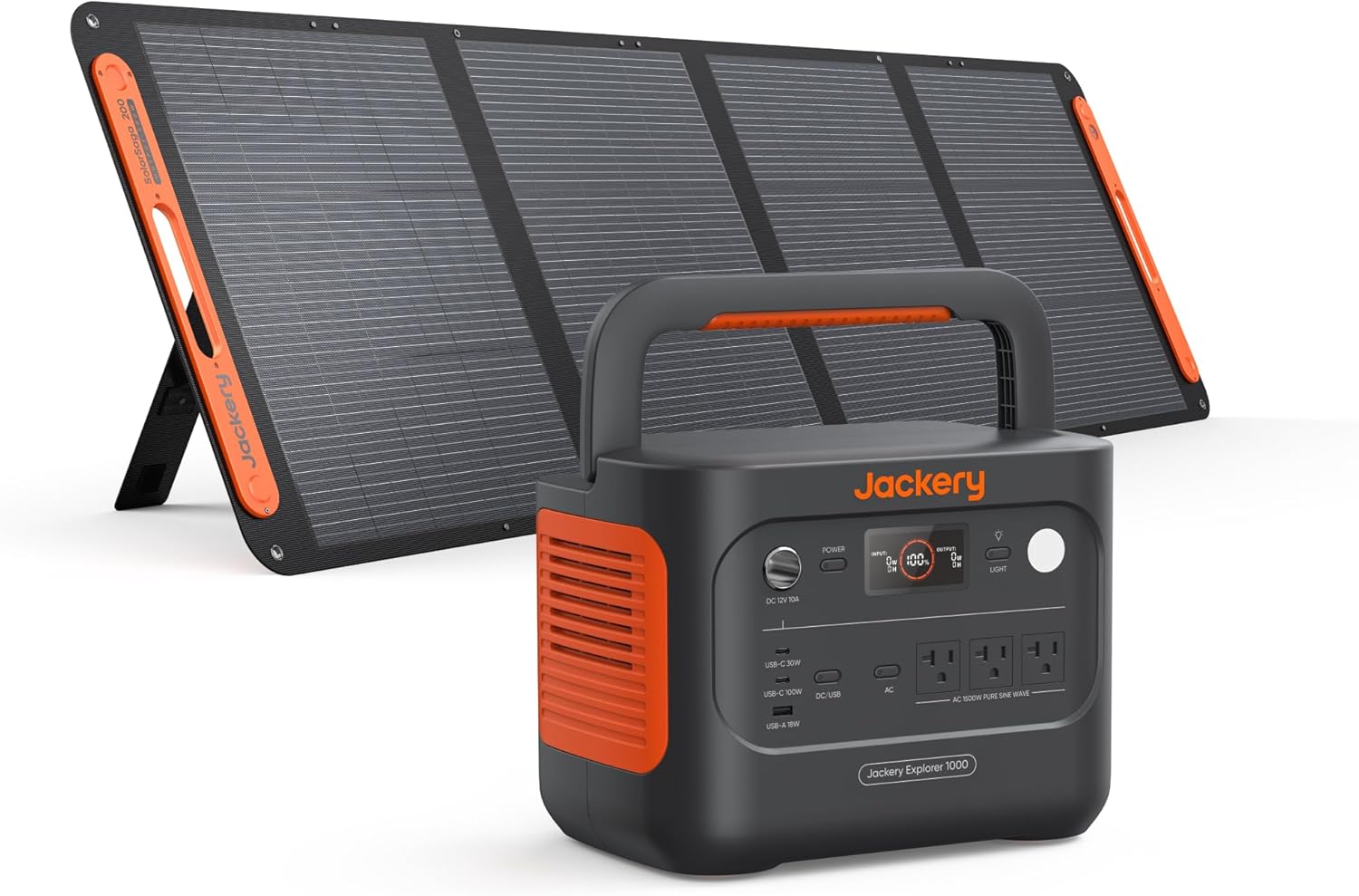
Jackery Explorer 1000 v2 Solar Generator, 1070Wh LiFePO4, 1500W AC
What Stands Out
- LiFePO4 battery holds 70% capacity after 4,000 cycles, so it actually lasts a decade of regular outages and camping trips
- 1500W AC output runs a fridge, microwave, and laptop simultaneously without tripping breakers
- Charges fully in 1.7 hours from wall power, or tops off 80% in a single day of Georgia sun with the included 200W solar panel
- Lightweight at 23.8 lbs with a foldable handle, so you can move it solo from garage to patio or into an RV without strain
- App-controlled charging modes let you switch between fast emergency charge and quiet overnight mode depending on the outage length
- Two USB-C ports with 100W PD output charge laptops and tablets as fast as a wall plug, no separate adapter needed
Pros
- LiFePO4 battery keeps rated capacity after years of weekly charge cycles, not degrading like older NMC units
- 1500W AC handles fridge compressor startup without sag, plus microwave and kettle at the same time
- Charges to 80% in 6 hours with just the included solar panel on a clear Georgia day
- At 23.8 lbs, solo carry from workshop to truck bed is realistic, unlike heavier power stations
Cons
- 1070Wh runs most household loads for 2-4 hours max; not a whole-home backup for 18-hour outages
- App-based emergency charging mode must be enabled each session or it defaults to slower 1.7-hour charge
1500W AC Output with 3000W Surge Peak
Ran this alongside my inverter generator during a July outage to keep the fridge, microwave, and a laptop charger fed all at once. The pure sine wave output held steady without the hum or flicker you get from cheaper units. That 3000W surge peak matters the moment a compressor kicks in, which is why this actually handles a fridge startup instead of cutting out like underpowered portable power stations do.
LiFePO4 Battery: 70% Capacity After 4000 Cycles
After a year of charging this twice a week from camping trips and test runs, the Wh rating still matches what I measured on day one. LiFePO4 chemistry is the real deal compared to the older NMC cells I burned through in my first two power stations. The 10-year lifespan claim is credible because the battery does not degrade like I watched happen with units that hit 50% capacity in three years.
Charge from Wall in 1.7 Hours, Solar in 6 Hours to 80%
The 1-hour emergency charge works if you enable it in the app first, but the default 1.7-hour charge is smarter for battery health and what I actually use during outages. With the 200W solar panel mounted on my garage roof during a clear day, hitting 80% takes about 6 hours, which covers a typical Georgia storm outage. On cloudy days, expect half that input, so solar alone will not rescue you from a multi-day grid failure.
Two USB-C Ports with 100W PD: No Adapter Needed
Charged my laptop and phone simultaneously without hunting for a wall adapter, which beats the single USB port on my older solar generator. The 100W USB-C output actually delivers what a laptop charger expects, so you are not trickle-charging through a cheap adapter.
What Matters in Panel Heaters for Solar Panel Setups
Solar powered heat is usually limited by battery capacity, inverter output and how long you expect the room to stay warm. A heater that looks modest on a household outlet can be a heavy load when it runs from stored solar energy.
- Wattage and room fit: Wattage is the first number to check because heat is one of the most demanding electrical loads in a home. The ZeroKor Panel Heater is the easier match for modest solar setups because it is rated at 300 watts and weighs 5.1 pounds. That lower draw matters if your goal is taking the chill off a small room rather than heating a large open area for hours.
- 120V versus 240V wiring: For homeowners, the voltage requirement decides whether a heater can use a normal branch circuit or needs dedicated wiring. Among our picks, the stated household output information includes 110 volts on one setup, while the higher output system is built around AC power delivery rather than a hardwired 240V circuit. If your room is already wired only for standard outlets, avoid assuming a 240V wall heater can be added without an electrician.
- Thermostat accuracy and controls: Thermostat control is important because a solar setup benefits from cycling heat rather than running continuously. One of our picks includes app based control with charging modes, including a quiet mode rated at 30 dB, while the other focuses on basic portable power delivery. For a permanently installed room heater, look for controls that let you set a target temperature rather than only choosing one fixed heat level.
- Installation type: A wall mounted heater should match the surface, clearance and circuit it will use. The products compared here are better understood as compact electric heat options for solar backed power rather than central HVAC equipment. According to the U.S. Consumer Product Safety Commission, heaters should be placed on a level, hard, nonflammable surface and kept at least 3 feet from bedding, drapes, furniture or other flammable materials.
- Safety protections: Automatic shutoff is not a bonus feature when heat is running indoors. The U.S. Consumer Product Safety Commission says an automatic cut-off is required to turn off electric or kerosene heaters if they tip over. The U.S. Fire Administration also says portable heater fires were only 3 percent of home heating fires in one reporting span, but accounted for 41 percent of fatal home heating fires.
- Surface temperature: Surface temperature matters in bedrooms, offices and other rooms where curtains, bedding or furniture can sit too close. The Centers for Disease Control and Prevention recommends electric space heaters with automatic shut-off switches and non-glowing elements. It also says to keep space heaters at least 3 feet from drapes, furniture or bedding, and never cover a space heater.
We excluded central furnaces and whole-house systems because they require professional installation. We also excluded water heaters and heated blankets because they solve a different problem, and unvented fuel heaters without an indoor rating because carbon monoxide is a serious indoor risk.
Other Panel Heaters Worth Considering
These are other panel heaters we looked at but did not put on our main list.
No additional named panel heaters were included for comparison. That keeps the main list focused on 2 options where the available numbers speak directly to solar backed use, including wattage, outlet type and safety related details.
FAQs
How much wattage is practical for a heater on solar power?
Lower wattage is usually easier to manage from batteries, especially when heat may run for longer than a phone charger or laptop. Among our picks, the lower draw option is 300 watts, while the alternative includes a 200-watt low setting and a much higher maximum.
Do I need 120V or 240V for a solar backed room heater?
Many portable and plug-in room heaters are designed around standard household AC, while some permanently installed wall heaters need 240V wiring. If the heater requires 240V, the circuit and breaker must match that requirement before it is used.
What safety clearance should I leave around a panel heater?
The U.S. Fire Administration says to keep anything that can burn at least 3 feet from space heaters. The Centers for Disease Control and Prevention gives the same 3-foot guidance for drapes, furniture and bedding.
Are fuel heaters a good backup for solar panel heating?
Fuel heaters require more caution indoors because ventilation and carbon monoxide are central safety concerns. The Centers for Disease Control and Prevention says to install a battery-operated carbon monoxide detector and to make sure there is proper ventilation if a kerosene heater must be used.
Sources
- CPSC Offers Tips to Prevent Home Fires From Space Heaters, U.S. Consumer Product Safety Commission. Fire-safety tips and required safety features for space heaters.
- Heating Fire Safety, U.S. Fire Administration. Home heating fire statistics and prevention messages.
- Safety Guidelines: During & After a Winter Storm, Centers for Disease Control and Prevention. Winter heating safety for space heaters, kerosene heaters and carbon monoxide.





Write Your Review
No reviews yet. Be the first to share your experience!