

Try Amazon Prime free for 30 days
Fast free delivery on heavy items, plus Prime Video, Prime Music and member-only deal prices.
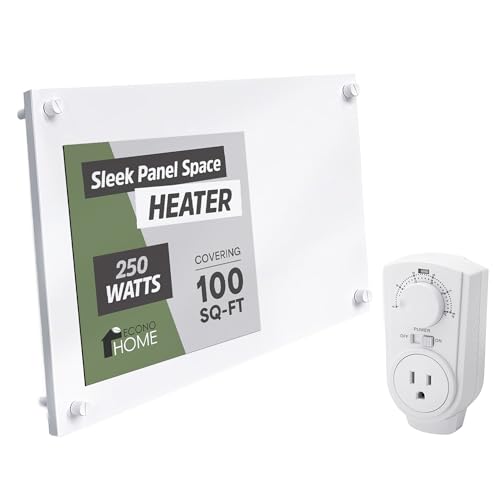
When one chilly bathroom makes the morning feel like a dare, wall panel heaters can add room-by-room warmth without parking a bulky tower heater in the walkway. After comparing 6 models, the EconoHome Wall Heater is the top pick because it uses 250 watts, is rated for up to 120 square feet, and has a thermostat from 41 to 86°F. The FrauSonne Infrared Heater is the alternative pick for shoppers who want 350 watts of infrared heat.
Pros
- 250W, 120V electric wall heater for rooms up to 120 sq ft
- Thermostat adjustable between 41-86°F for steady warmth
- cETL approved, UL-2021 and RoHS compliant for safety standards
- No fan design runs quiet and does not circulate dust
- IP44 splash proof rating suits bathroom or humid spaces
Cons
- Low 250W output may not be enough for larger or drafty rooms
- May require hardwiring, so professional installation could be needed
- No mention of tip-over or overheat protection in the listed specs

Pros
- 350W infrared panel for 3 to 8㎡ areas
- Heats up to 248°F in 3 minutes
- Wall mounting kit and 1.8m power cable included
- One-switch control with no complicated settings
- Overheat protection and TÜV certification
Cons
- Ceiling installation needs additional hardware
- No thermostat, timer, remote, or heat settings listed
- 350W output is suited only to small areas

Pros
- 1500W convection heat with under 45 dB operation
- 41 to 95 °F thermostat range
- 24H timer plus weekly app scheduling
- Tip-over shutoff and overheat protection
- IP24 splash-proof rating for humid areas
Cons
- 2.4 GHz WiFi required for app control
- 6.2 ft power cord may limit placement
- Convection heat may feel slower than fan-forced heat

Pros
- 600W output (2046 BTU/hr) at 120V, 5.0A for rooms up to 200 sq ft
- UL 2021 certified with triple insulated, non-conducting surface
- Fan-free silent convection heat that does not recirculate dust
- Paintable surface to match wall color, includes full wall mount kit
- Compatible with Amaze Plug-in Thermostat for adjustable temperature control
Cons
- Thermostat sold separately, requires a compatible plug-in thermostat for temperature control
- At 17.6 pounds and 36x24 inches, needs secure wall mounting and installation time
- As a wall mounted convection heater, it cannot be moved room to room like a portable unit

Pros
- 1500W heat output for medium to large rooms
- 24-hour delayed on/off timer
- Adjustable thermostat and multiple heat settings
- Tip-over switch and thermal shutoff
- Freestanding or wall mounted with included kit
Cons
- 15.8 pounds may be less convenient to move often
- Electric heater is for room heat, not whole-home heating
- 32.3-inch width needs suitable floor or wall space
Pros
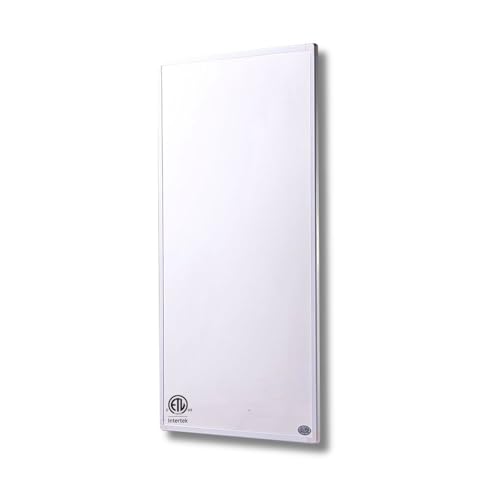
- 600W infrared panel heater
- On/off switch included
- Wall installation materials included
- IP54, ETL, TÜV and GS certified
- 5-year manufacturer's warranty
Cons
- Stand feet not included for floor standing use
- No thermostat or heat settings listed
- Heating area is not specified
How We Chose Wall Heaters for Room-by-Room Heat
A wall heater has to match the room before it can be useful. Wattage, voltage, controls, mounting, and safety details matter more here than they do with a portable heater that can simply be moved to another outlet.
- Wattage and the room size it suits: The main picks range from 250 watts to 1,500 watts, so they are not aimed at the same rooms. The EconoHome Wall Heater fits the small-room role best on paper, with 250 watts and a rating for up to 120 square feet. That pairing makes more sense for a bathroom, office, or compact bedroom than a higher-output heater that may be more than the room needs.
- 120V versus 240V wiring: Every listed main pick gives 120V power information where voltage is specified, which is useful for homeowners who want a simpler plug-in or standard household-circuit plan. One pick can be hard wired, but its listed electrical load is still 120 volts. Because 240V heaters can involve different circuit planning, models without that requirement were a better fit for this room-by-room search.
- Thermostat accuracy and controls: Controls range from one-switch operation to app and voice control, and the thermostat ranges listed run as wide as 41 to 95°F. The pasapair Panel Heater stands out for control flexibility, with 1,500 watts, a 24-hour timer, and a listed operating sound level under 45 dB. It also lists tip-over and overheat protection, which matters for a floor-capable heater as much as for a wall-mounted one.
- Installation type: The picks include wall-only panels, wall or ceiling infrared panels, and units that can be used on the floor or mounted. The Amaze-Heater 2,046 BTU Wall Heater is the clearest larger-room wall-panel option, with 600 watts, 2,046 BTU output, and a rating for up to 200 square feet. Its adjustable thermostat compatibility also helps if you want steadier control than a simple on and off switch.
- Safety protections: We looked for listed safety certifications, overheat protection, tip-over shutoff, splash ratings, or other clear safety details. Among the main picks, certifications include UL, cETL, ETL, TÜV, and GS, depending on the model. According to the U.S. Consumer Product Safety Commission, portable or fixed local heaters were associated with about 10,900 residential fires and about 190 deaths in a recent year, so certification and automatic shutoff details are not minor extras.
- Surface temperature: Wall panels sit where people pass, so exterior temperature and touch risk matter. One main pick lists a heat-up temperature of 248°F, while another describes the exterior casing as warm and safe for adults only. We favored products that give some safety context, such as triple insulation, non-conducting materials, or overheat protection, instead of asking shoppers to guess from wattage alone.
We excluded central furnaces and whole-house systems because they call for professional installation and a different buying decision. We also left out water heaters and heated blankets because they do a different job, and unvented fuel heaters without an indoor rating because carbon monoxide risk changes the safety picture.
Other Wall Heaters Worth Considering
These are other wall heaters we looked at but did not put on our main list.
If you want more output for a larger room, Fierscial Panel Heater lists 800 watts and a rating for up to 250 square feet. That is over 3 times the wattage of our top pick, which can be useful in a bigger space but less targeted for the smaller-room use case that led the main list.
For a mid-output alternative, ENVI Wall Heater lists 500 watts and a 10-pound body. Its wattage is double our top pick, but it does not provide the same stated thermostat span that helped our top pick stand out for controlled room heat.
A connected heater may appeal if you want more active control, and Dreo Wall Heater lists 1,500 watts, a thermostat from 41 to 95°F, and 120-degree oscillation. It weighs 9.2 pounds, which is light for moving or mounting, but the oscillating format does not match this permanently installed wall-panel need as closely as the main list.
And if low wattage is the whole reason you are shopping, Amaze-Heater Wall Heater is another 250-watt option rated for up to 80 square feet. It includes an adjustable thermostat and ETL certification, but its stated room coverage is 40 square feet lower than our top pick.
FAQs
How many watts should a wall heater have for a small room?
Our main picks start at 250 watts and go up to 1,500 watts, so the right answer depends on room size and insulation. For a compact room, a 250-watt heater rated for up to 120 square feet is a more specific match than choosing the highest wattage available.
Do wall heaters need a dedicated circuit?
Many room wall heaters are listed for 120 volts, but circuit planning still depends on the heater load and what else is on that circuit. One 1,500-watt heater draws far more power than a 250-watt panel, so the installation instructions and local electrical rules should guide the final setup.
Are wall heaters safe in bathrooms?
Bathroom use depends on the heater rating and installation distance from water. Among the main picks, splash-related ratings include IP24 and IP44, and one listing says the unit should be 12 inches away from water for safety purposes.
What safety features matter most for wall-mounted electric heat?
Look for certification by a nationally recognized testing laboratory, overheat protection, and automatic shutoff where the design can tip. The U.S. Fire Administration says to keep anything that can burn at least 3 feet from space heaters and to turn them off when leaving the room or going to bed.
Sources
- CPSC Offers Tips to Prevent Home Fires From Space Heaters, U.S. Consumer Product Safety Commission. Fire-safety tips and required safety features for space heaters.
- Heating Fire Safety, U.S. Fire Administration. Home heating fire statistics and prevention messages.
- Safety Guidelines: During & After a Winter Storm, Centers for Disease Control and Prevention. Winter heating safety for space heaters, kerosene heaters and carbon monoxide.



Write Your Review
No reviews yet. Be the first to share your experience!