

Try Amazon Prime free for 30 days
Fast free delivery on heavy items, plus Prime Video, Prime Music and member-only deal prices.
Changing the oil in a pressure washer is one of the easiest ways to protect the engine, reduce wear, and keep the machine running smoothly. If your pressure washer has a gas engine, it needs clean engine oil just like a lawn mower or generator.
Some pressure washers also have serviceable pump oil, especially higher-end models with triplex pumps. However, not every pump is designed for oil changes. Many residential axial cam pumps are sealed and lubricated for life, so you should always check your owner’s manual before touching the pump oil.
This guide explains how to change oil in a pressure washer, how to tell the difference between engine oil and pump oil, what tools you need, and what mistakes to avoid.
Engine Oil vs Pump Oil: Know the Difference First
Before you start, it is important to understand that a gas pressure washer may have two different oil areas: the engine and the pump.
Engine Oil
Engine oil lubricates the gas engine. This is the oil most homeowners need to check and change regularly. If the engine oil gets dirty, low, or old, the engine can overheat, wear faster, or fail.
Pump Oil
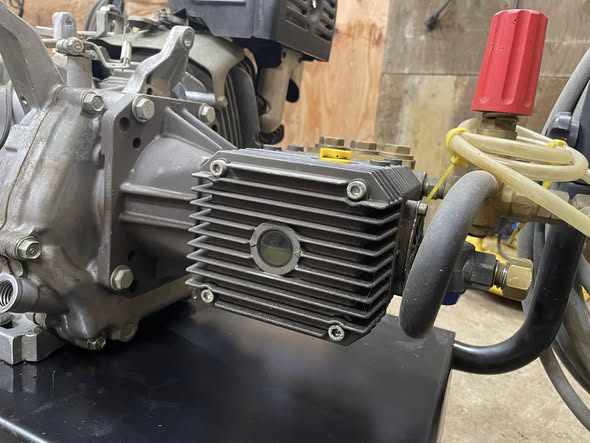
Pump oil lubricates the pressure washer pump. Some pumps have a sight glass, oil cap, or drain plug. Others are sealed and should not be opened.
If your pressure washer has a sealed axial cam pump, do not attempt to change the pump oil unless the manual specifically says it is serviceable.
When Should You Change Pressure Washer Oil?
The right oil change schedule depends on your model, engine, pump type, and how often you use the machine. Always follow your owner’s manual first.
As a general rule, many gas pressure washers need the first engine oil change after the break-in period. After that, oil is usually changed at regular hour intervals or at least once per season for normal home use.
| Oil Type | General Timing | Notes |
|---|---|---|
| Engine oil | After break-in, then regularly | Check the manual for exact hour intervals. |
| Pump oil | Only if the pump is serviceable | Do not change oil in sealed pumps. |
| Seasonal maintenance | Before storage or before heavy use | Good for homeowners who use the washer occasionally. |
Signs Your Pressure Washer Needs an Oil Change
You should check the oil before each major cleaning job. Change it if you notice any of these signs:
- The oil looks dark, dirty, or gritty.
- The oil level is low.
- The oil smells burnt.
- The engine runs rough or hotter than usual.
- The machine has been stored for a long time.
- The pump oil looks milky, if your pump has a sight glass.
- You have reached the oil change interval in the manual.
Milky pump oil can mean water has entered the pump crankcase. If it turns milky again after changing the oil, the pump may need new seals or professional service.

What Oil Does a Pressure Washer Use?
The correct oil depends on your specific pressure washer. Do not guess if you still have access to the manual.
Common Engine Oil Types
Many gas pressure washer engines use small-engine oil such as SAE 30 or 10W-30, but the correct oil can vary by temperature range and engine brand.
Use the oil viscosity recommended in your owner’s manual. Using the wrong oil can reduce protection and may affect warranty coverage.
Common Pump Oil Types
Serviceable pressure washer pumps may require pump-specific oil, non-detergent oil, or another oil type recommended by the pump manufacturer.
Do not use regular engine oil in the pump unless the manual says it is acceptable.
Tools and Supplies You Need
For a basic pressure washer oil change, you may need:
- Correct engine oil
- Correct pump oil, only if needed
- Oil drain pan
- Funnel
- Socket wrench or wrench set
- Clean rags
- Gloves
- Cardboard or newspaper to protect the floor
- Oil extractor, optional
- Replacement drain plug washer, if required
Place the machine on a flat surface before checking or changing oil. A level surface helps you get a more accurate oil reading.
Safety Steps Before Changing the Oil
Before working on your pressure washer, take a few safety precautions.
- Turn the engine off.
- Let the engine cool until it is safe to touch.
- Disconnect the spark plug wire on gas models.
- Turn off the water supply.
- Squeeze the spray gun trigger to release pressure.
- Work in a well-ventilated area.
- Keep oil away from flames, sparks, and hot surfaces.
Used oil should be collected in a proper container and recycled according to your local rules. Do not pour used oil on the ground, into drains, or into the trash.
How to Change Engine Oil in a Pressure Washer
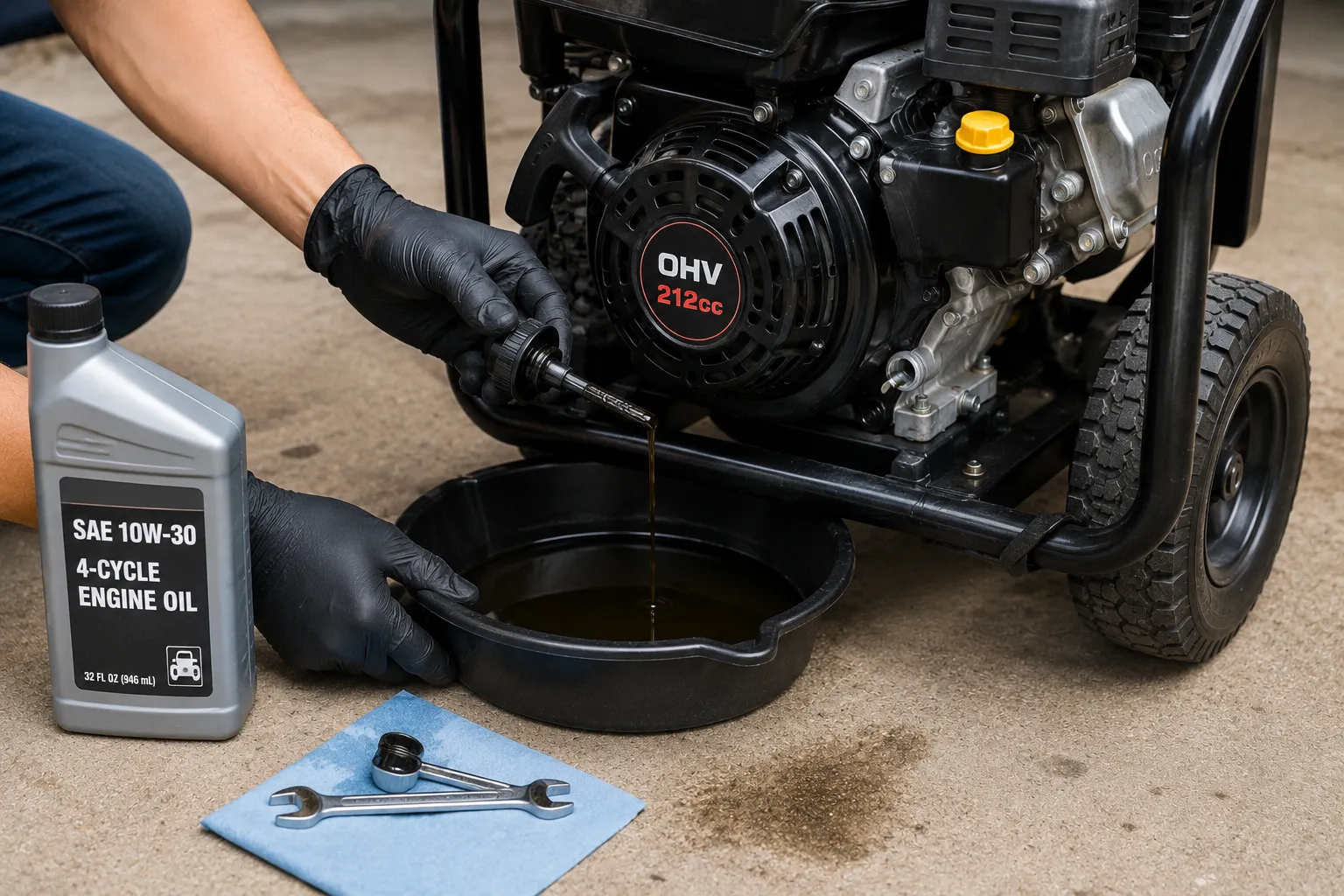
These steps apply to many gas pressure washers. Your model may be slightly different, so always check your manual first.
Step 1: Warm the Engine Briefly
Run the engine for a short time to warm the oil. Warm oil drains more easily than cold oil.
Do not run the pressure washer without water connected. If you need to warm the engine, connect the water supply first and keep water flowing through the pump.
Step 2: Turn Off the Machine
Turn off the engine and let it cool enough to work safely. Disconnect the spark plug wire so the engine cannot start accidentally.
Step 3: Find the Oil Fill Cap and Drain Plug
Locate the oil fill cap or dipstick. Then find the oil drain plug, if your engine has one.
Some small engines do not have a convenient drain plug. In that case, the oil may need to be removed through the fill tube by tilting the machine or using an oil extractor.
Step 4: Drain the Old Oil
Place an oil drain pan under the drain plug. Remove the plug and let the old oil drain completely.
If your machine drains through the fill tube, carefully tilt the pressure washer so the oil flows into the pan. Keep the air filter and carburetor side facing up if your manual recommends that position.
Step 5: Reinstall the Drain Plug
Once the oil has drained, reinstall the drain plug. Make sure it is snug, but do not overtighten it.
If your drain plug uses a washer, inspect it and replace it if it is damaged.
Step 6: Add Fresh Engine Oil
Place a funnel in the oil fill opening and add the recommended oil slowly. Do not overfill.
Add a small amount at a time, then check the level with the dipstick. Most small engines need the oil level near the full mark, but not above it.
Step 7: Check the Oil Level
Wipe the dipstick clean, insert it as directed by your manual, and check the oil level again.
If the level is too low, add more oil. If the level is too high, remove some oil before running the engine.
Step 8: Start and Inspect
Reconnect the spark plug wire. Connect the water supply, squeeze the trigger to purge air, and start the pressure washer.
Let it run briefly, then turn it off and check for leaks around the drain plug and oil fill area. Recheck the oil level after the engine sits for a few minutes.
How to Change Pressure Washer Pump Oil
Only change pump oil if your pressure washer pump is designed for oil service. Many residential pumps are sealed and should not be opened.
If your pump has an oil fill cap, drain plug, and sight glass, it may be serviceable. Confirm this in your manual before continuing.
Step 1: Confirm the Pump Is Serviceable
Look for a pump oil fill plug, drain plug, dipstick, or sight glass. If you cannot find any of these, your pump may be sealed.
Do not drill, pry, or force open a sealed pump.
Step 2: Place a Drain Pan Under the Pump
Put a drain pan under the pump oil drain plug. Keep rags nearby because pump oil can drain quickly once the plug is removed.
Step 3: Remove the Fill Plug
Loosen or remove the pump oil fill plug first. This helps air enter the crankcase so the old oil can drain more smoothly.
Step 4: Drain the Old Pump Oil
Remove the pump oil drain plug and let the oil drain into the pan. If your pump does not have a drain plug but is still serviceable, follow the manufacturer’s instructions for draining.
Step 5: Reinstall the Drain Plug
After the oil has drained, reinstall the drain plug securely. Do not overtighten it.
Step 6: Add the Correct Pump Oil
Add the recommended pump oil through the fill opening. Fill slowly and watch the sight glass if your pump has one.
Many pumps should be filled to the center of the sight glass, but you should follow your manual for the exact level.
Step 7: Reinstall the Fill Plug
Reinstall the pump oil fill plug and wipe away any spilled oil.
Step 8: Test the Pressure Washer
Connect the water supply and purge air from the system before starting the engine. Start the machine and check for leaks around the pump drain plug and fill plug.
Common Mistakes to Avoid
An oil change is simple, but a few mistakes can cause expensive damage.
Changing Oil in a Sealed Pump
Not all pumps need oil changes. If your pump is sealed, do not attempt to service it unless the manual says it can be done.
Using the Wrong Oil
Engine oil and pump oil are not always the same. Use the oil type recommended for each part.
Overfilling the Engine
Too much oil can cause smoking, poor running, leaks, or engine damage. Check the dipstick carefully.
Running the Pressure Washer Without Water
Never run the pressure washer without water flowing through the pump. Water helps cool and protect the pump.
Forgetting to Recheck the Level
After adding oil, let it settle and check again. This helps you avoid both underfilling and overfilling.
Ignoring Milky Pump Oil
Milky pump oil may mean water is entering the pump crankcase. If the problem returns after an oil change, the pump likely needs service.
How Much Oil Does a Pressure Washer Take?
The amount of oil depends on the engine and pump model. Many small pressure washer engines use less than one quart of oil, but you should not rely on a general number.
The safest method is to add oil slowly and check the dipstick often. Stop when the oil reaches the correct mark.
For pump oil, use the sight glass or manual instructions. Overfilling the pump can create pressure inside the crankcase and may cause leaks.
Can You Use Car Oil in a Pressure Washer?
Sometimes, but only if the oil matches the engine manufacturer’s recommended type and viscosity.
Pressure washer engines are small engines, and they may have different oil needs than a car engine. Always follow the manual first.
For pump oil, do not use car oil unless the pump manufacturer specifically allows it.
Can You Change Oil in an Electric Pressure Washer?
Electric pressure washers do not have gas engines, so there is no engine oil to change.
Most consumer electric pressure washer pumps are sealed and not designed for regular oil changes. If your electric model has a serviceable pump, the manual will explain the correct process.
Pressure Washer Oil Change Checklist
Use this simple checklist before and after changing oil:
- Read the owner’s manual.
- Confirm whether you are changing engine oil, pump oil, or both.
- Use the correct oil type.
- Place the washer on a level surface.
- Disconnect the spark plug wire.
- Drain old oil into a safe container.
- Add fresh oil slowly.
- Check the level carefully.
- Reconnect water before starting the washer.
- Check for leaks after running.
- Recycle used oil properly.
Final Thoughts
Changing oil in a pressure washer is a simple maintenance task that can help protect your machine and extend its working life. The most important thing is knowing which oil you are changing.
For most gas pressure washers, engine oil is the main oil change homeowners need to handle. Pump oil should only be changed if the pump is designed for service.
Use the correct oil, avoid overfilling, purge air before starting, and never run the pump without water. With basic care, your pressure washer will be more reliable every time you need it.
FAQs About Changing Oil in a Pressure Washer
Do pressure washers need oil changes?
Gas pressure washers need engine oil changes. Some pressure washer pumps also need pump oil changes, but many residential pumps are sealed and do not require pump oil service.
How often should I change oil in my pressure washer?
Follow your owner’s manual. Many gas engines need an oil change after the break-in period and then at regular hour intervals or seasonally, depending on use.
What kind of oil goes in a pressure washer?
The correct oil depends on the engine and pump. Many small engines use SAE 30 or 10W-30, but you should always use the viscosity recommended in your manual.
Is pressure washer pump oil the same as engine oil?
Not always. Pump oil and engine oil can be different. Use the oil recommended by the pump manufacturer.
How do I know if my pressure washer pump needs oil?
Look for a pump sight glass, oil fill plug, dipstick, or drain plug. If the pump is sealed, it usually does not need oil changes.
Can I run a pressure washer after changing oil?
Yes, but connect the water supply first, purge air from the system, and check the oil level before starting the engine.
What happens if I overfill pressure washer oil?
Overfilling can cause smoke, leaks, poor engine performance, or internal pressure problems. Remove excess oil before running the machine.
Why is my pump oil milky?
Milky pump oil often means water has mixed with the oil. If it returns after changing the oil, the pump may have worn seals or internal damage.
Do electric pressure washers need oil?
Electric pressure washers do not have engine oil. Most consumer electric pumps are sealed, but you should check your manual to confirm.
Should I change oil before storing my pressure washer?
Changing old oil before long-term storage is a good idea for many gas pressure washers. You should also protect the pump from freezing if the washer will be stored in cold weather.

Write Your Review
No reviews yet. Be the first to share your experience!