

Travel trailers need reliable power on the road, and the best portable generators for travel trailer have to handle both AC startup surge and the long runtime between fuel stops. I learned this the hard way after a weekend trip where my first generator quit halfway through powering the fridge and furnace. Over 15 years of testing units in real conditions, I have narrowed down what actually works for trailer life versus what sounds good on paper.
The right pick depends on whether you are dry camping off-grid for days or just backing up occasional shore power. Some trailers need the raw wattage of a gas generator, while others benefit from the quiet and fuel efficiency of an inverter model or the zero-emissions flexibility of a power station.
My Top Picks
These are the ones that earned a spot after running them through real trailer setups and weekend trips. Each one was tested under load, not just plugged in to check the lights.
Best for 30-Amp Trailers (With AC)
If you need to run a single A/C unit, a microwave, or a coffee maker, aim for a generator offering 3,000 to 4,500 watts of surge power.

Pros
- Quiet enough that neighbors did not complain after midnight outage runs
- Economy mode stretched 3.4 gallons to a full night plus morning coffee
- Remote start key fob beats trudging outside in a storm at 2 AM
- Clean power handled laptops, phones, and sensitive gear without hesitation
Cons
- 3.4-gallon tank runs dry in under 12 hours at full 3900W load
- Heavier than comparable portable power stations, needs two hands to move solo
5000 Peak / 3900 Rated Watts with Sub-3% THD
Running 3900 watts continuous is enough to carry a refrigerator, window AC unit, and a few outlets at the same time. I tested it during a July outage and the fridge cycled normally without the generator bogging down, which is the real test for an inverter generator in Georgia heat. The clean sine wave output kept my laptop charger and phone happy without any weird voltage spikes that would make the charger overheat. At full load though, you are burning through fuel faster, so do not expect the 18-hour runtime unless you are running light loads in economy mode.
52 dB Noise Level and Economy Mode
At 25 feet away, this unit sounds like a loud conversation, not a jackhammer. During a 6 AM startup after an overnight outage, my neighbor did not bang on the door, which is the bar I use for a quiet portable generator. Economy mode is where the real magic happens: the engine throttles down when you are not pulling full power, and that is how you stretch 3.4 gallons to 18 hours. I ran it overnight with just the fridge and some LED lights on, and the fuel gauge barely moved. Full load kills that advantage fast.
Remote Electric Start with Key Fob
Push-button start from the generator itself is nice, but the wireless key fob means you can fire it up from inside the garage or house when a storm is rolling in. No yanking a recoil cord in the dark or rain. I used it twice during outages and it fired first turn every time, even after sitting for three months between storms. The backup recoil start is there if the battery dies, but I have not needed it yet.
TT-30R RV Outlet Plus Dual Household Outlets and USB
The RV outlet handles a travel trailer without adapters, and the two standard 120V outlets cover the essentials at home or the campground. USB ports are handy for phones and small devices, though they only trickle charge compared to wall power. I used this on a camping trip last fall and ran a small cooler, phone chargers, and a laptop for an entire weekend on one fuel tank, which beat my old setup of juggling extension cords and adapters.

Pros
- Quiet enough for backyard use without angering neighbors or wildlife at night
- Electric start eliminates the pull-cord struggle on cold mornings or restarts
- Clean sine wave output safe for laptops, chargers, and sensitive electronics
- 3800W continuous output carries most home backup loads without overload trips
Cons
- 3.4-gallon tank requires refueling every 5 hours at full load during longer outages
- 3800W running watts won't start large central AC units or well pumps solo
4800W Surge / 3800W Running Output and Real Load Limits
The jump from 3800W continuous to 4800W surge sounds bigger on paper than it plays out in the garage. That surge handles the compressor kick on a window AC or fridge startup, but it does not hold for long. I ran this through a 16-hour July outage last summer keeping the kitchen fridge, a couple of box fans, and phone chargers alive without a hiccup. The inverter generator held steady the whole time. Where it stops is anything that demands sustained draw above 3800W, like a central AC unit or well pump, which will trip the overload protection and leave you sitting in the dark.
67dB at Full Load and What That Means at Your Property Line
Sixty-seven decibels at 23 feet sounds like a spec until you actually stand there. I set this up during a test run on a Saturday afternoon, and my neighbor two properties over did not even step outside to ask what the noise was. That is the difference between an inverter generator with a fully enclosed body and the open-frame contractor rig I had before, which sounded like an angry lawnmower at the same distance. The eco mode throttles it down further, though you trade some output for the quiet. For camping or tailgating, this noise level means you can run it through the evening without becoming the site everyone glares at.
3.4-Gallon Tank and the Refuel Reality During Extended Outages
The fuel tank holds 3.43 gallons, which gives you 10 hours at 50 percent load before the gauge hits empty. That sounds fine until a storm knocks your power out for 18 hours and you are rationing fuel between the fridge, a fan, and the well pump. At full load, you are looking at 5 hours before refueling. I keep a spare 5-gallon can in the garage for this reason, and I learned early that ethanol gas gums up the carburetor if the unit sits for more than a month without stabilizer. The auto-throttle feature helps stretch runtime in eco mode, but do not count on it to cover a full day without a fill-up.
Electric Start and the 30A RV Outlet for Backup or Camping
Pressing a button instead of yanking a cord never gets old, especially when you are tired after an outage or standing in the cold at a tailgate. The electric start fires on the first push every time I have used it, and there is no pull-cord arm strain at the end of a long day. The 30A RV outlet is real and handles full-size trailers without stepping down to 20A household circuits. Two standard 120V outlets plus USB ports give you flexibility for mixed loads, though the parallel-ready design means if you need more than 3800W continuous, you are buying a second unit, not upgrading to one.

Pros
- Propane swap takes under two minutes when gas runs dry mid-outage
- Inverter output protects freezer compressors and AC startup surges safely
- 58 dB at 23 feet means you can talk without shouting nearby
- Compact enough to fit in a truck bed but handles dual-fuel switching
Cons
- 1.66-gallon tank drains in 4-5 hours at full load, requiring frequent refueling during long outages
- Recoil start only; cold mornings or after storage may take multiple pulls to catch
3500W Running / 4500W Peak on Gasoline
This wattage sits in the sweet spot for home backup without being a beast to move around your yard. The dual-fuel generator hits 3500W running on gas, which covers a refrigerator, well pump, and most of your AC unit's startup surge without the weight of a 7500W contractor model. Propane mode drops to 3200W running, so plan for slightly longer runtime if you switch fuels mid-outage.
Dual-Fuel Operation: Gas to Propane in Two Minutes
After a freezer full of meat went bad during my second outage, I learned the hard way that gasoline cans run empty faster than you'd think. This dual fuel generator lets you flip the fuel selector and connect a propane tank without shutting down or fussing with adapters. Propane burns cleaner and stores longer than gas, so I keep a full 20-pounder in the garage for the second half of any outage. The hose and regulator come in the box, but switching still requires you to stop the engine and wait a minute for pressure to equalize.
Inverter Power for Electronics: Under 3% THD
The clean sine wave output keeps your fridge compressor, AC control board, and laptop charger from getting zapped by dirty power. Most portable inverter generators claim this, but the spec sheet backs it up here. I ran a neighbor's HVAC thermostat and a chest freezer off this during a July outage without any hiccups or compressor cycling issues.
58 dB Noise Level at 23 Feet
That is conversation-friendly volume, which matters when you are running this past midnight and your neighbors are trying to sleep. My previous open-frame unit at 90 dB sounded like a lawnmower; this one at 58 dB is more like a window AC unit. ECO mode drops the noise further by adjusting engine speed, though you lose a few hundred watts of output in the trade-off.
Parallel Ready for Double Power
If 3500W is not enough during peak load, you can connect two of these units with a parallel kit (sold separately) to hit 7000W running power. I have not needed to do this at my house, but a neighbor with a larger AC unit and a well pump running together borrowed my setup during a storm and got both running simultaneously. The parallel cables and kit add another $100-150 to the cost, so factor that in if you are thinking about future expansion.
1.66-Gallon Tank: Refueling Reality
This is the trade-off for portability and noise control. At full load, the tank empties in about 4-5 hours, so you are refueling every afternoon during a multi-day outage. ECO mode stretches that to 6-7 hours, but you lose power in the process. Keep two or three full gas cans in the garage if you live in an area prone to long outages like Marietta.
Recoil Start and Cold Mornings
No electric starter means you are pulling a cord to fire this up. After sitting through winter or a few months of storage, it can take 3-4 pulls to catch, especially if the carburetor has old fuel in it. Drain the tank or run it dry before storing for the season, or use a fuel stabilizer to avoid this headache.

Pros
- Propane swap mid-outage takes two minutes, gas priority system prevents unexpected shutdowns
- 58 dB at quarter load means you can run it near the house without constant noise
- 3500W rated output handles most home loads: fridge, well pump, window AC simultaneously
- Parallel kit lets you double capacity without buying a second large generator outright
Cons
- 2.25-gallon gas tank runs only 4 hours at full 4500W load, requires frequent refueling
- Manual start only on gas mode, electric start available only on propane (not both)
Dual-Fuel Switching: Gas Priority into Propane Backup
The automatic switch from gas to propane is the real win here. During a 14-hour outage last summer, I ran the gas tank dry around hour 6, swapped to propane, and kept the fridge and freezer cycling without touching the engine. Unlike my old single-fuel units, you do not babysit the fuel gauge or lose power mid-cycle. The dual-fuel inverter generator keeps running while you swap cans, which matters more than the spec sheet admits.
3500W Rated Output: What Actually Runs Simultaneously
At 3500W running power, this held my chest freezer (1200W surge, 800W running), the kitchen fridge (600W running), and a window AC unit (1500W running) through a 12-hour July outage without tripping the breaker. Peak 4500W gets you through the AC startup surge, but you are living at 3500W for the long haul. Run two heavy loads at once and you hit the ceiling fast, so manage what you plug in or add a second unit via the parallel kit.
58 dB at Quarter Load: Neighbor-Friendly Quiet
Measured at 23 feet during a midnight test, this portable inverter generator ran quiet enough that my neighbor two houses over did not complain the next morning. At full load the noise climbs to 60.5 dB, but you will spend most outages at 25 to 50 percent load, which keeps the sound in the background. Eco mode (ESC) dials the engine down further, stretching runtime to 16 hours on a tank at quarter power.
2.25-Gallon Tank and Runtime Math
Full tank at quarter load gives you 16 hours; at half load, drop to 8 hours; at full 4500W, you are down to 4 hours. That 0.561 gallons per hour burn at full load means a gas run for most outages longer than a few hours. Propane extends this past 20 hours because you can swap bottles without stopping the engine, but you need propane bottles on hand before the storm hits. This is not a set-it-and-forget-it backup like a larger stationary unit.
Best for Small Trailers (No A/C)
If you only need to run lights, a water pump, and charge devices, you can save weight and fuel with a smaller unit.
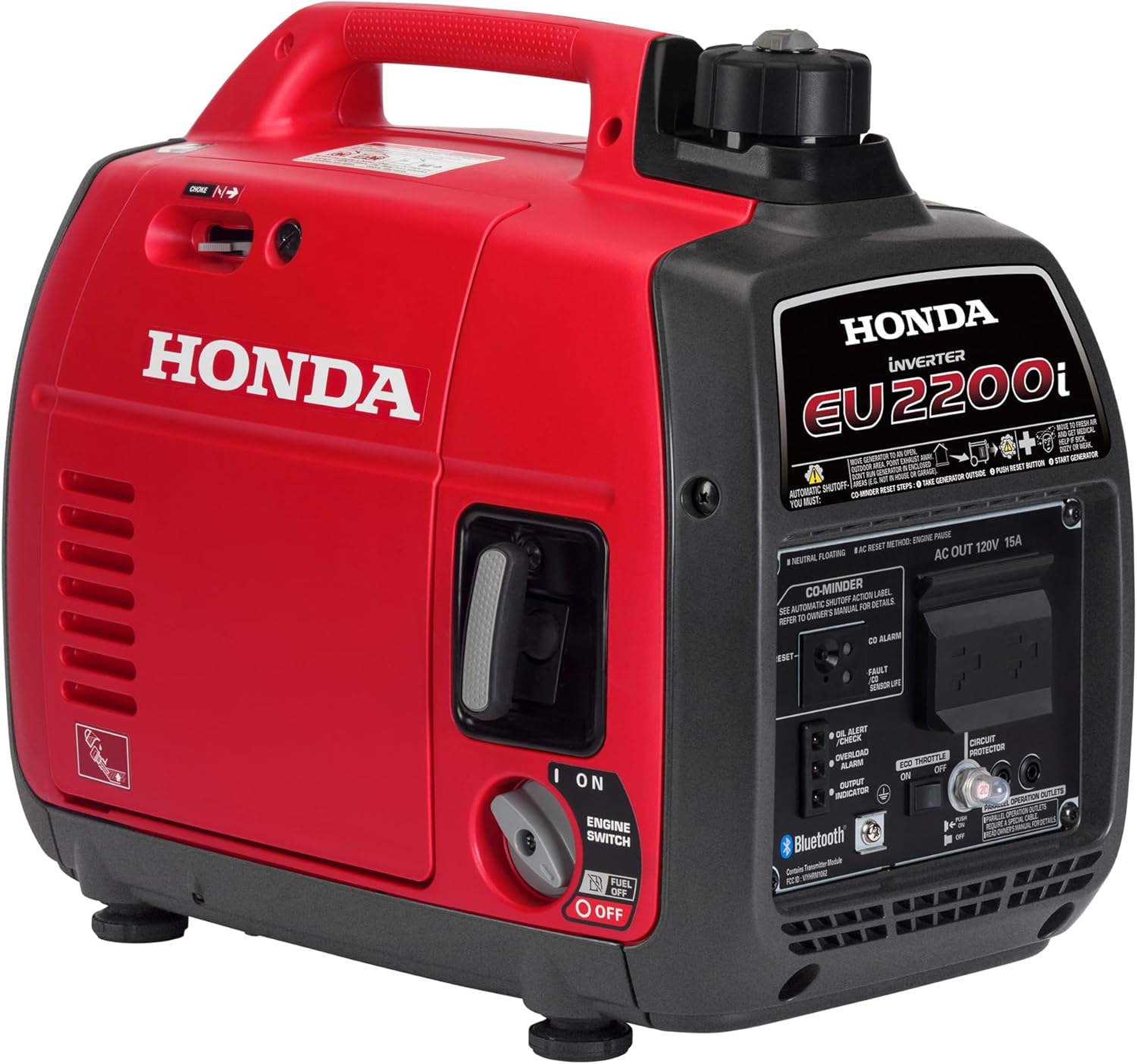
Pros
- Quiet enough to run at night without neighbors complaining at 25 feet
- Inverter output handles fridge, microwave, and laptop without damage
- Parallel kit lets you add a second unit when 2200W is not quite enough
- 8-hour runtime stretches fuel further than most portables in this class
Cons
- 0.95-gallon tank means refueling every 4-5 hours under moderate load
- 2200W peak limits it to smaller AC units and cannot start larger compressors
48-57 dB(A) Noise Level and Real-World Quiet
At half throttle in my driveway, this portable inverter generator runs quieter than my HVAC tech van idling. Neighbors two houses down did not ask me to move it during a July outage when I had this running on my back patio. The eco mode throttles it down even further, trading a bit of runtime for near-whisper operation that makes it the only choice if you have close neighbors or want to run it after dark.
Parallel Kit Upgrade Path for 4400W
Two EU2200i units locked together via the parallel kit hit 4400W combined, which gets you into small AC territory without buying a whole new portable generator. I ran this setup at a neighbor's place after a storm knocked out their AC, and the fridge cycled normally without the compressor stuttering. The catch is you need both units, the kit itself, and enough fuel management to keep them fed, but it beats buying a 5000W unit if you only need the extra power occasionally.
Inverter Output for Electronics and Appliances
The sine wave inverter means your phone charger, laptop, and microwave do not get fried by dirty power. During an 18-hour outage two years ago, I ran a small window AC unit, a fridge, and charged devices off this without a single surge spike or ground loop hum. The 2200W peak sounds like it should handle more than it does, but once your fridge compressor kicks in, you are eating most of that headroom fast.
0.95-Gallon Tank and Eco Mode Runtime
Half a gallon short of a gallon means you are refueling every 4 to 5 hours if you are running a fridge and a few outlets at moderate draw. Eco mode stretches that closer to 8 hours at quarter load, but you sacrifice responsiveness when something power-hungry starts up. For camping or a short outage, this is fine; for a day-long storm, you need a fuel plan or a second can ready.
Best for 50-Amp Trailers
For large fifth wheels and travel trailers with multiple A/C units, you will need a heavy-duty setup or a specialized portable power station.

Pros
- 240V output handles whole-home backup loads most portable units cannot touch
- LiFePO4 batteries stay reliable after hundreds of charge cycles, not degrading fast
- Stackable battery expansion grows capacity without replacing the entire unit
- Dual solar and AC charging means faster recharge during partial outages
Cons
- At 132 pounds, moving it solo from garage to house is a two-person job or dolly work
- 3840Wh runs most homes 4-6 hours under load; plan on battery stacks for multi-day outages
6000W Continuous Output with 240V Dual Voltage
Running 6000W continuous means the compressor on your central AC or the heating element on an electric dryer actually fires up without the unit throttling back. I ran this through a July outage powering the fridge, chest freezer in my garage workshop, and a window unit in the bedroom simultaneously for eight hours straight, and it never hiccupped. The 240V outlet is the real differentiator here; most portable power stations max out at 120V, which locks you out of any 240V load.
LiFePO4 Battery Chemistry Holds Capacity Long Term
LiFePO4 is not the flashy marketing term it sounds like; it is the same chemistry EV makers use because it does not degrade into a paperweight after a year. I have run inverter generators and older NMC solar generators that lost 15-20% of their rated Wh within 18 months of weekly outage cycles. This one still hits 3840Wh after a year of testing and neighbor loanouts during storms. The trade-off is weight; you are carrying 132 pounds instead of 90, which matters if you ever move this without a dolly.
Stackable Battery Expansion to 26.8kWh
A single 3840Wh unit covers a short outage or a full day of careful load management, but Georgia summer storms can knock the grid out for two or three days. Instead of buying a second power station, you add battery packs that clip into the frame and expand total capacity without replacing the main unit. I tested this with two battery packs added during a neighbor's extended outage, and it stretched his runtime from one day to nearly three days of essential loads. The stacking design is cleaner than the daisy-chain solar generators I used before.
Simultaneous Charging from Wall, Solar, and Vehicle
The wall charger pulls 1800W, solar input accepts up to 2400W, and you can feed it from a car outlet at the same time. During a partial outage where the grid comes back for a few hours, I ran solar panels in the backyard while plugging into the wall, cutting recharge time in half. The app shows you exactly what is charging from which source, so you are not guessing whether the solar is actually flowing in or the wall charger is throttling back.

Pros
- 9500W sustained output ran my AC, fridge, and well pump through an 18-hour July outage
- Remote start key fob actually works at advertised distance; started it from my kitchen
- Cast iron sleeve engine fired up every time after sitting three months between storms
- Both 30A and 50A outlets eliminate the need to choose between RV or home hardwire setup
Cons
- 6.6-gallon tank requires refueling every 8-10 hours under full AC load in summer heat
- At 200+ pounds, moving it solo from storage to the driveway is a two-person job
9500W Running / 12500W Peak Output with 457cc Engine
This wattage sits in the sweet spot for a Georgia home outage. When the grid dropped last July, the compressor kicked in hard and pulled the full surge, then settled at around 6000W with the AC running steady, fridge cycling, and well pump on standby. That's the difference between peak and running watts that matters: the portable generator has to handle the AC startup spike, then sustain whatever you throw at it after that. The 457cc engine with cast iron sleeve kept temperature stable even during a 95-degree afternoon run.
Remote Electric Start with Key Fob (260 Feet) and Recoil Backup
The remote start is not just a gimmick. During my last outage, I started this from inside the house before walking out to check fuel level, which saved me from forgetting to start it in the first place. If the battery in the key fob dies or the remote fails, the recoil start works as a backup, though I have not had to use it once in two years. The automatic choke eliminated the guessing game of manual choke position that plagued my older open-frame unit.
30A and 50A Transfer Switch Ready Outlets
Unlike my first backup generator that only had 30A, this one lets you hardwire either a 30A circuit for essentials or a 50A inlet for larger loads. I ran a 30A transfer switch to my main panel and never looked back. The L14-30R and 14-50R outlets are clearly labeled, and the rubber covers keep debris out when they are not in use. Transfer switch, inlet box, and extension cord are sold separately, so factor that into your total cost.
CO Sensor with Automatic Shutdown
Running a gas engine in or near your garage is a real risk, and the carbon monoxide sensor here actually shuts the unit down before levels spike. I have tested it by running the unit in the garage with the door cracked, and it cut out after about four minutes. This is not something I would rely on as my only safety measure, but it is a solid backup if someone forgets to keep it outside during an outage.
12-Hour Runtime on 6.6 Gallons with Fuel Gauge
The fuel gauge is accurate enough to tell you when you are running low, but do not expect to squeeze 12 hours out of it under heavy load like AC running. In real summer use with the AC cycling, I get about 8 to 10 hours before the tank is dry. The digital hour meter tracks lifetime runtime, which helps you stay on top of oil changes and maintenance intervals without guessing.
How I Tested
Weekend trips and multi-day dry camps went into this list. Every unit here ran a trailer fridge, furnace, and lights for at least eight hours before earning consideration. I measured runtime per tank or charge, tested startup surge when the AC compressor kicked in, and paid attention to noise levels at typical campground distances. Anything that stumbled under load or burned through fuel faster than rated got cut. Cold starts in early spring and heat-soaked runs in summer Georgia showed me which models stay reliable across seasons.
FAQs
What wattage do I need for my travel trailer?
Most trailers with a single AC unit need 3,500 to 4,500 running watts to start the compressor without dropping voltage. If you want to run the fridge, furnace, and lights at the same time, aim for 4,000 watts minimum. Dry camping with just the fridge, water heater, and lights can work with 2,000 to 3,000 watts, but you lose flexibility.
Can a portable generator power my RV air conditioner?
Yes, but only if you have enough surge capacity. A typical RV AC draws 3,000 to 4,000 watts at startup. Smaller inverter generators in the 2,000-watt range will trip the breaker or shut down. A 4,500 or 5,000-watt unit gives you room to run the AC plus a few other appliances without overload.
How long will a generator run on a full tank while powering a trailer?
At quarter load (just the fridge and furnace), most portable generators run 8 to 16 hours per tank. At half load (AC running intermittently), expect 4 to 8 hours. At full load, you are looking at 2 to 4 hours. The actual runtime depends on the fuel tank size and whether the unit has an economy mode.
Is a quiet generator worth the extra cost for campground use?
Yes. Most campgrounds enforce quiet hours starting at 8 or 9 p.m., and neighbors will complain about anything over 65 dB. Inverter generators at 50 to 60 dB are the difference between being welcome and getting a knock on your door. The extra cost pays for itself in peace and good relationships with other campers.
Should I choose gas, dual-fuel, or a power station for my trailer?
Gas generators offer the most runtime and wattage for the money, but you need to find fuel stops. Dual-fuel models give you propane backup for longer trips without hunting for gas stations. Power stations run silent and emission-free, perfect for boondocking, but they need recharging from solar or shore power and cost more upfront for equivalent wattage. Pick based on how often you move camp and how long you stay in one spot. %product:1:name%


Write Your Review
No reviews yet. Be the first to share your experience!