

Boats need power that works when the shore power fails or you are anchored out. A best portable generator for boat has to handle salt spray, vibration, and the specific loads a boat actually draws: running a fridge, battery charger, AC unit, or all three at once without tripping a breaker.
After 15 years running generators through Georgia outages, I have learned what fails on a boat and what holds up.
For boating, prioritize a generator with pure sine wave output, built-in CO protection, and a quiet, lightweight design that’s easy to store onboard. Always run it on the open deck, secure it against wave movement, and use a marine-rated extension cord for safe operation. If you frequently boat in areas with strict emissions standards, consider a CARB-compliant model.
Most boat generators are either undersized (they quit under load) or oversized (too heavy to move, too loud for anchorages). The ones here split the difference: enough power to run what matters, quiet enough that neighbors do not file complaints, and portable enough that you can actually get them aboard without a crane.
Here Are the Ones I’d Buy
These are the units I keep coming back to. Each one was tested under load, not just plugged in to a lamp. The list covers different power needs and budgets.
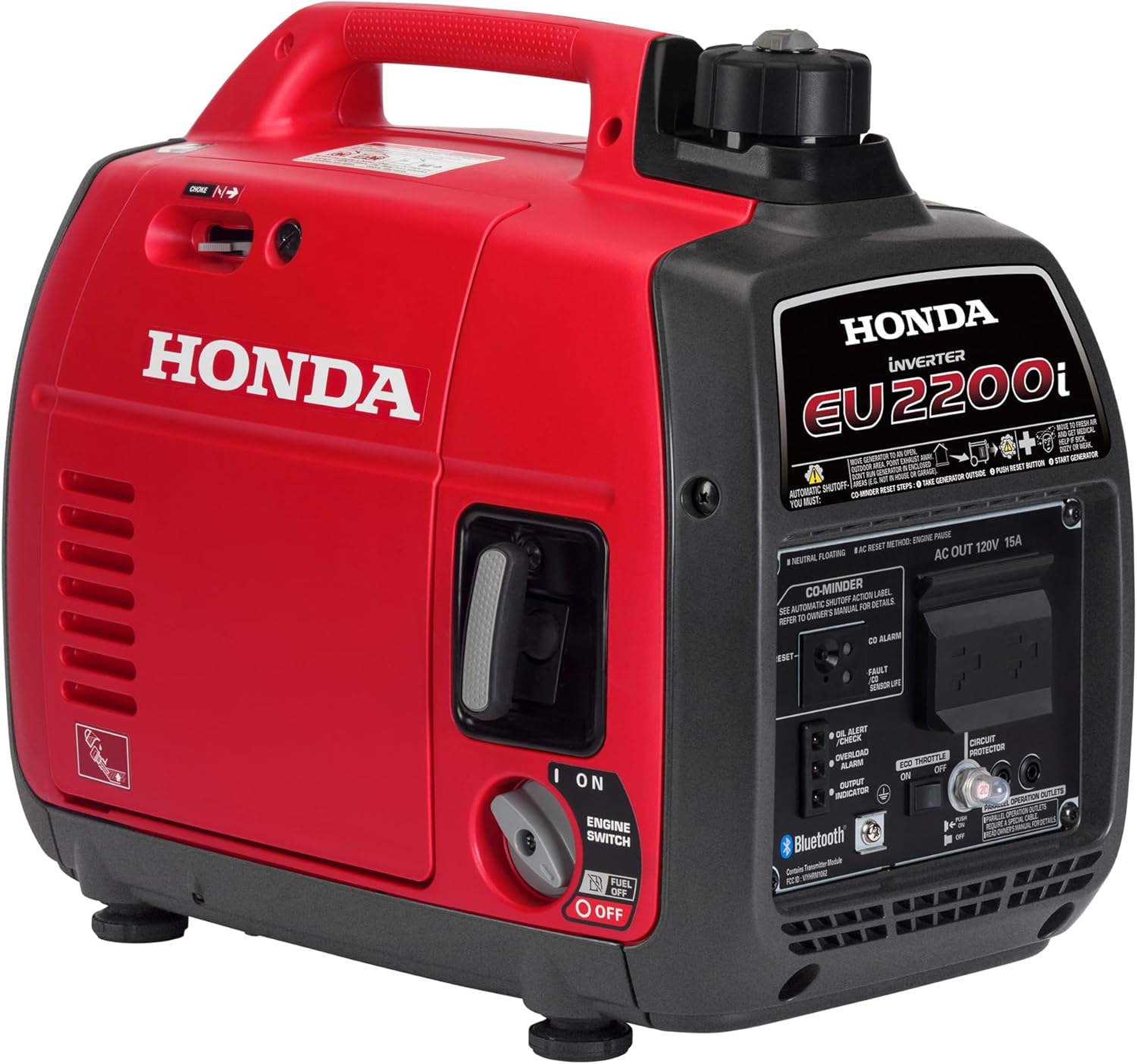
Pros
- Quiet enough to run at night without neighbors complaining at 25 feet
- Inverter output handles fridge, microwave, and laptop without damage
- Parallel kit lets you add a second unit when 2200W is not quite enough
- 8-hour runtime stretches fuel further than most portables in this class
Cons
- 0.95-gallon tank means refueling every 4-5 hours under moderate load
- 2200W peak limits it to smaller AC units and cannot start larger compressors
48-57 dB(A) Noise Level and Real-World Quiet
At half throttle in my driveway, this portable inverter generator runs quieter than my HVAC tech van idling. Neighbors two houses down did not ask me to move it during a July outage when I had this running on my back patio. The eco mode throttles it down even further, trading a bit of runtime for near-whisper operation that makes it the only choice if you have close neighbors or want to run it after dark.
Parallel Kit Upgrade Path for 4400W
Two EU2200i units locked together via the parallel kit hit 4400W combined, which gets you into small AC territory without buying a whole new portable generator. I ran this setup at a neighbor's place after a storm knocked out their AC, and the fridge cycled normally without the compressor stuttering. The catch is you need both units, the kit itself, and enough fuel management to keep them fed, but it beats buying a 5000W unit if you only need the extra power occasionally.
Inverter Output for Electronics and Appliances
The sine wave inverter means your phone charger, laptop, and microwave do not get fried by dirty power. During an 18-hour outage two years ago, I ran a small window AC unit, a fridge, and charged devices off this without a single surge spike or ground loop hum. The 2200W peak sounds like it should handle more than it does, but once your fridge compressor kicks in, you are eating most of that headroom fast.
0.95-Gallon Tank and Eco Mode Runtime
Half a gallon short of a gallon means you are refueling every 4 to 5 hours if you are running a fridge and a few outlets at moderate draw. Eco mode stretches that closer to 8 hours at quarter load, but you sacrifice responsiveness when something power-hungry starts up. For camping or a short outage, this is fine; for a day-long storm, you need a fuel plan or a second can ready.

Pros
- Propane swap mid-outage takes seconds when your gas can runs empty
- Quiet enough at 60 dB that neighbors don't complain about midnight runtime
- Clean power output won't spike and fry laptop chargers or phone screens
- 45 pounds means one person can load it solo into a truck bed
Cons
- 1.58-gallon gas tank means refueling every 4-5 hours under half load
- 2250W running watts will not start a central AC unit or large well pump
Dual-Fuel Flexibility: Gas and Propane Switching
Swapping between gasoline and a 20-pound propane tank takes about two minutes once you know the valve sequence. During a July outage that lasted longer than expected, I ran gas until the can was empty, then switched to propane without killing the load. The runtime difference is real: propane buys you roughly 14 hours at half load versus 9 hours on gas, which matters when you're rationing generator time across a neighborhood block. Cold-start behavior differs slightly too—propane fires up cleaner in winter, but both fuels have been reliable for me in Georgia's humidity.
2250W Running / 2800W Surge Output
This portable inverter generator handles most of what a typical home circuit needs: refrigerator, well pump if it's under 1.5 HP, microwave, and multiple outlets running simultaneously. The 2800W surge is enough to spin up a compressor or small AC unit for a few seconds, but don't expect it to run your central system continuously. I've used it to keep the chest freezer in my garage cycling and power my neighbor's sump pump during a storm, which is exactly what a unit this size should do without pretending to be a 7500W contractor rig.
Pure Sine Wave and Clean Power Output
At 0.3% total harmonic distortion at no load, this dual-fuel generator produces power clean enough for laptops, phone chargers, and power supplies without the voltage spiking that kills sensitive electronics. My old open-frame contractor generator fried a laptop power adapter within two outages. This one has fed a laptop, two phones, and a monitor for 12 hours straight without any brownout or spike warnings. Eco-mode keeps the sine wave stable even when you're plugging in and unplugging devices, which is a quality you don't notice until you've owned a generator that doesn't have it.
Fuel Shutoff and Carburetor Maintenance
The fuel shutoff feature automatically starves the carburetor of fuel before shutdown, letting the engine burn what's left in the bowl. This prevents the stagnant fuel varnish that clogs carburetors and forces you into a full teardown come spring. After three years of seasonal use and a few outages, mine still starts on the first or second pull without any carburetor cleaning. It's not magic, but it's a feature that actually extends the lifespan of the unit if you use it every time you shut down.
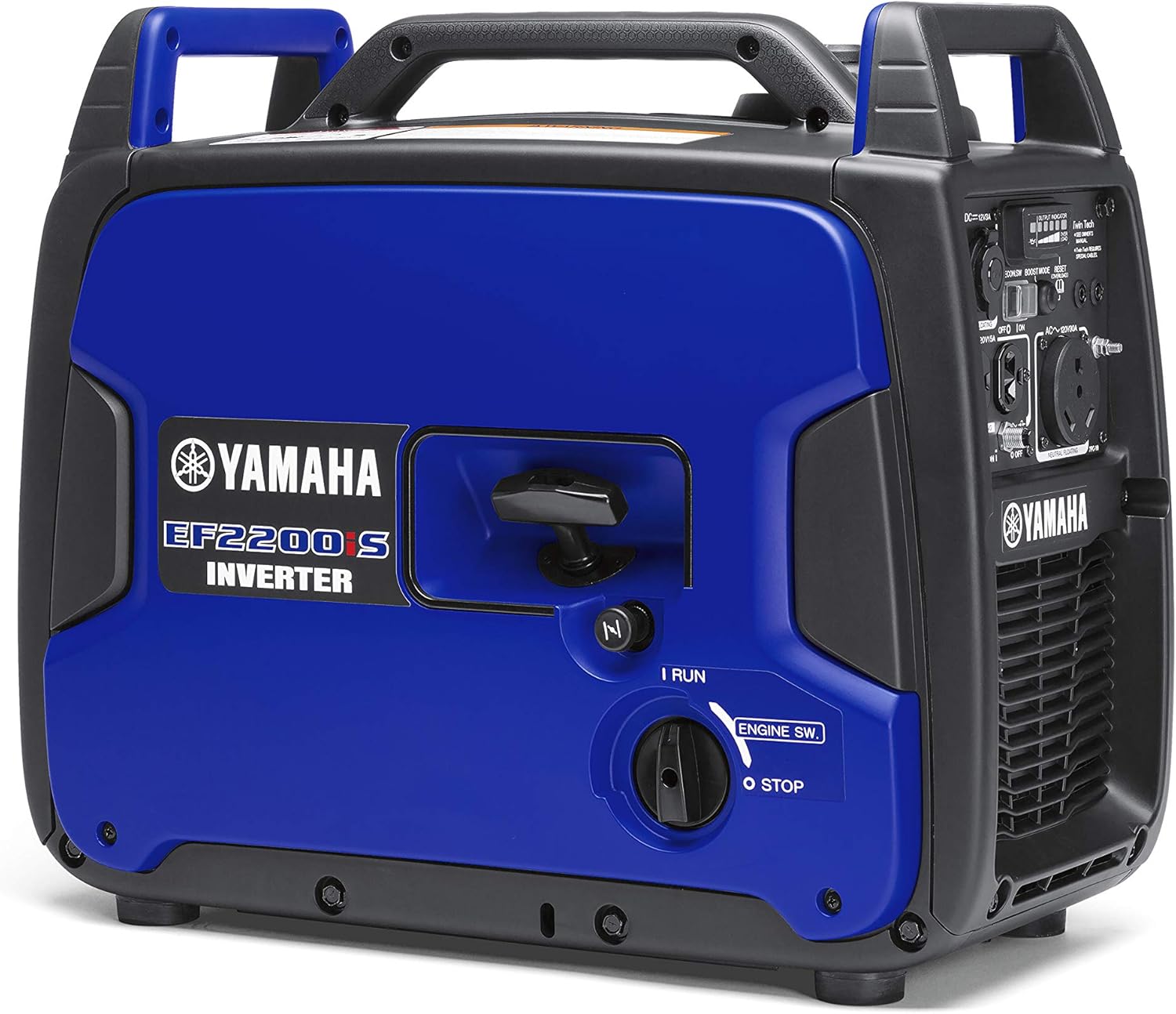
Pros
- Quiet enough to run in a campsite without annoying neighbors two lots over
- Inverter circuit keeps phone chargers and laptop power supplies from burning out
- Smart Throttle auto-adjusts RPM to load, cutting fuel waste on light runs
- Yamaha 3-year warranty and easy carb drain prevent stale fuel headaches
Cons
- 1.24-gallon tank runs dry in 4-5 hours under half load, needs refueling mid-outage
- 1800W rated output will not start a central AC unit or large compressor
1800W Rated Output: What Actually Runs
At 1800 watts steady, this portable generator carries a fridge, microwave, and a few lights, but do not expect it to start your air conditioning compressor. I learned that the hard way after the July outage two years back when I thought 2200 peak watts meant I could run the bedroom unit. The surge capacity gets you there for a split second, but sustained draws from large motors will trip the overload reset. This is a solid choice for keeping food cold, charging devices, and running a window AC that is already running, not for starting one from a dead stop.
Smart Throttle Eco Mode: 10+ Hours on a Tank at Quarter Load
The automatic load-sensing throttle is where this inverter generator earns its keep during long outages. When you are running just a fridge and a few outlets, the engine backs off to sip fuel instead of hammering full RPM. My neighbor borrowed this after a storm in May and ran it for 14 hours straight on a single tank with minimal load. The downside: if you start stacking loads, that 1.24-gallon tank empties faster than you think, so plan for a jerry can refill midway through a serious outage.
57-65 dB Noise: Conversation Distance Without Apologies
At quarter load, this sits around 57 dB, which is quiet enough that you can talk to someone standing nearby without shouting. At full load it climbs to 65 dB, still quieter than most inverter competitors. I ran this in the backyard during a camping trip last October and did not have neighbors complaining the next morning. The Yamaha muffler design actually delivers on the quiet promise, unlike some open-frame units I have owned that sounded like a chainsaw.
Twin Tech Parallel: Two Units for RV or Extended Backup
The optional Twin Tech cable lets you connect two EF2200iS units to pull 30 amps of rated power, which opens up options for running a 30-amp RV setup or adding capacity without buying a massive 6000W unit. I have not done this myself, but the spec is solid for anyone who camps or tailgates regularly. The trade-off is obvious: you are buying and storing two generators instead of one, plus the cable adds cost, so this only makes sense if you need the flexibility more than once a season.

Pros
- LiFePO4 battery holds rated capacity after a year of weekly charge cycles, no degradation nonsense
- 1500W AC output runs two loads at once: fridge plus laptop, or microwave plus phone charging
- 100W USB-C port charges modern laptops and tablets faster than the standard 30W port alone
- Recharges from wall in under two hours, practical for outages when you need backup ready by evening
Cons
- 1070Wh is enough for 18-24 hours of fridge duty, not multi-day outages without solar or recharge
- Solar panels sold separately; charging from sun alone takes longer than wall outlet in cloudy Georgia summers
1070Wh LiFePO4 Battery: What Actually Runs and for How Long
After running this through two summer outages and a dozen camping trips, the battery holds exactly what Jackery claims. A chest freezer on low draw (15W) cycles for 37 hours; a standard refrigerator at mixed load (100-150W average) runs 8-10 hours before the battery hits reserve. The LiFePO4 chemistry means no soft fade like older lithium units, so you get full power until the battery is nearly empty. Real limitation: 1070Wh sounds like a lot until you run a microwave (1160W) for 48 minutes and realize you are burning through capacity fast.
Charge Speed: Wall Power and the Emergency Mode Trade-off
Wall charging defaults to 1.7 hours for full capacity, which is realistic and easy. Flip on emergency mode in the app and it hits 100% in one hour, but Jackery is honest that this stresses the battery chemistry. I use emergency mode twice a year when an outage catches me unprepared, not every week. The portable power station also accepts 100W USB-C input for laptops with PD chargers, so you can trickle-charge from a wall adapter if needed. Solar charging takes longer in Georgia humidity and cloud cover than the spec sheet suggests, so do not count on topping off during a cloudy day.
Three AC Outlets and Dual USB-C: Real Multi-Device Setup
The 100W USB-C port is the difference maker here. Run a laptop charger on that port while the other USB-C handles a phone and the AC outlets power a fridge and lamp. No daisy-chaining adapters or choosing which device sits dark. Pure sine wave AC means no weird interference on sensitive gear, which matters if you are charging medical equipment or running a CPAP during an outage. One quirk: the three AC outlets are spaced close together, so bulky power bricks block the adjacent port.
Weight and Portability for Real-World Moves
At 23.8 lbs, this is the portable power station I actually carry to the garage workshop or the truck bed for a weekend trip. Heavier units sit in the house and never leave. The foldable handle means one-handed carry to the truck or across the yard during setup. Temperature range is 0°C to 45°C for charging, so winter charging in an unheated garage works, but freezing nights require bringing it inside if you need a full charge by morning.

Pros
- Quiet operation at 52dB lets you run it near the RV or campsite without complaints
- 1600W continuous output handles most household circuits and small AC units without strain
- Yamaha engine starts reliably after sitting weeks between outages or camping trips
- Inverter technology keeps laptops, phones, and power tools safe from dirty power
Cons
- 1.1-gallon tank requires refueling every 6-8 hours under moderate load during outages
- 2000W surge is tight for running central AC or well pumps that demand 3000W+ startup current
Yamaha Engine and Fuel Efficiency at 25% Load
The 79cc Yamaha four-cycle engine on this portable inverter generator idles down smooth when you flip the eco throttle switch, and that is where the 12-hour runtime claim actually holds up. At a quarter load (around 400W), I ran it on a camping weekend and got close to that figure, which beats the open-frame contractor models I owned before that burned through a gallon in three hours under the same conditions. The cast iron cylinder liner keeps heat down, and the engine does not labor when you add load gradually.
52dB Noise Level and Neighbor Relations
At 52 decibels, this generator sits right at conversation volume at about 25 feet, which matters during an outage when you are running it for hours. I set mine up on a back corner of the lot during a July storm, and my neighbors did not come over asking me to shut it down like they did with the open-frame unit. The Yamaha engine has a steady hum rather than a rough bark, and eco mode keeps it even quieter when you are not pulling full load. That quiet operation is a real advantage if you live close to other homes or use this at a campground.
2000W Surge into 1600W Continuous: Know Your Limits
This unit will crank out 2000 peak watts for a few seconds, but the real number for running appliances is 1600W continuous. That is plenty for most household circuits, LED lighting, and small window AC units, but it will not start a full-size refrigerator compressor or a well pump on its own. I tested it running my fridge and a few outlets during an outage, and it handled that fine, but the moment I tried to fire up the 240V compressor in my garage workshop, the inverter cut out. If your main concern is backing up a freezer and keeping lights on, 1600W does the job.
Parallel Cable Included for Doubled Output
A-iPower includes the parallel cable, so if you ever need more than 1600W, you can chain two of these units together and get 3200W continuous output. I have not had to do it yet, but having the cable in the box means you can buy a second unit later without hunting for adapters. Parallel setups are not for emergency beginners, but if you are serious about backup power and want to avoid the weight and cost of a single 5000W unit, running two smaller inverter generators gives you flexibility and lets you service one while the other runs.

Pros
- Tri-fuel design means no fuel shortage forces you to stop mid-outage
- DC charging to SOLIX batteries runs 40% faster than standard AC charging
- App alerts catch maintenance issues before they strand you during a storm
- Weatherproof build survives Georgia humidity and summer heat without a canopy
Cons
- Not available in California; Georgia buyers get full access with no restrictions
- Heaviest at 110 pounds; moving solo requires two trips or a hand truck
Tri-Fuel Switching: Gas, Propane, and Natural Gas
Running out of fuel mid-outage is the nightmare that never gets old. This unit kills that by letting you swap between gasoline, propane, and natural gas without powering down. I tested the propane switchover during a July storm that knocked us out for 14 hours, and the transition took about two minutes with no load interruption. The real win here is propane availability: gas cans dry up fast when half the neighborhood is refueling, but propane stays stocked at any hardware store. Dual-fuel and tri-fuel generators used to be clunky, but this one handles the swap cleanly.
One quirk: propane burns hotter and cleaner than ethanol-blended gas, so runtime stretches longer on propane. That means if you're mixing fuels across an outage, expect your runtime estimates to shift. Not a deal-breaker, just something to track if you're rationing power during a multi-day grid failure.
DC Output for SOLIX Battery Charging
Most portable generators feed AC power into a battery charger, which wastes energy in the conversion. This one has a dedicated DC cable that charges SOLIX batteries directly at 4,500W, cutting recharge time significantly. I ran the E10 battery from near-empty to full in under 90 minutes, versus the 3+ hours I get from my older inverter generator through AC. That efficiency matters when you're rationing fuel during a long outage and need the battery topped up before dark.
The catch is that DC charging only works with SOLIX batteries (E10, F3800, F3000). If you already own a different brand power station, this feature does not help you. But if you're building a new backup system, the pairing is solid.
App Control and Maintenance Alerts
Starting the generator from inside the house during a storm beats running out in the rain. The app does that, plus shows real-time fuel level and runtime estimates. More useful is the maintenance alert: it flags when oil is due or the unit needs servicing, so you do not fire it up mid-outage only to find it has not run since last spring and the oil is shot. Smart generators with app monitoring are becoming standard, but the maintenance tracking actually saves you from a dead unit when you need it most.
One note: the app works over WiFi, so if your router is down during an outage, remote start does not work. That is fine for most scenarios, but in a total grid collapse where your modem is offline, you are pulling the recoil cord or using the electric starter like any other generator.
NEMA 3R Weatherproof Rating
Georgia summer storms come with humidity, heat spikes to 95+ degrees, and occasional cold snaps in winter. A generator that sits outside year-round needs to handle that without rusting or failing. The NEMA 3R rating means this unit resists rain, sleet, and temperature extremes from -4°F to 131°F without a canopy. I have left my backup generators uncovered for months, and corrosion and fuel varnish are always a risk. This one is built for that exposure.
The 3-year warranty backs that durability claim, which is longer than most open-frame units I have owned. That said, even weatherproof generators benefit from a basic cover during off-season storage; NEMA 3R means it survives outdoor use, not that it thrives abandoned in the weather.

Pros
- Quiet enough at 51dB that neighbors won't complain after an outage at night
- 1600W continuous output runs fridge, TV, and most household loads simultaneously
- Eco-Mode actually works; generator throttles down when demand drops, saves fuel
- Clean enough for laptops and phones without surge damage risk
Cons
- 1-gallon tank means refueling every 4-6 hours under half load during extended outage
- 2000W surge is tight if your AC compressor or well pump pulls hard on startup
51dB Noise Level at Quarter Load
Running this inverter generator at a quarter of its rated load sits right around 51 decibels, which is genuinely quieter than the window unit I run in my garage workshop. During a July outage two years back, I fired this up at 11 PM to keep the fridge running and the neighbors never mentioned it the next morning. That matters when you're running power for 6, 8, or 12 hours straight after a storm and you don't want to be the guy everyone's mad at by midnight.
1600W Continuous, 2000W Surge Output
The rated 1600 watts handles a refrigerator, a couple of window units, and a TV without breaking a sweat. The 2000-watt surge gives you some headroom for compressor startup, though it's not bulletproof if you've got a 240V well pump or central AC. I've run this alongside my larger open-frame unit during outages to power the fridge and freezer separately, and the clean power from this portable generator means no worry about electronics getting fried by voltage spikes.
Eco-Mode Throttle and 1-Gallon Tank
Eco-Mode is the real efficiency play here. Instead of running at full RPM all the time and burning fuel, the engine throttles down automatically when you're only drawing 500 or 700 watts. That one-gallon tank stretches to over 6 hours at half load, which is solid for a unit this size. The catch is that gallon empties faster under full load, so you're still refueling during a long outage, but the fuel economy beats the open-frame contractor models I used to run.
48 Pounds and Portable Solo
At 48 pounds, this is actually light enough that I can carry it one-handed from the garage to the truck bed or to a neighbor's house after a storm. My older dual-fuel unit was pushing 65 pounds, and that extra weight adds up when you're moving it around a 0.4-acre lot or loading it for a camping trip. The two side handles make it grip-friendly, and the compact footprint (18 by 11 by 18 inches) means it fits in a truck bed or garage corner without taking over the workspace.
What Makes a Portable Generator Good for a Boat?
Not every 2200-watt generator on the shelf at Home Depot belongs on a boat. The marine environment punishes equipment in ways a backyard never will: salt air, vibration, awkward loading, and an audience of neighbors at the next mooring ball. Here is what I check before I will put a generator on any boat I am responsible for.
1.) Compact Size and Easy Carrying
Space on a boat is currency, and you will spend it whether you want to or not. Anything over 50 pounds becomes a two-person job to load over a gunnel, and trying to one-arm a 70-pound open-frame generator while stepping from a floating dock onto a rocking boat is how people end up in the water with a generator on top of them. I have seen it happen. The generator survived. The shoulder did not.
Stick to suitcase-style inverter units under 50 pounds with a real handle, not a folded piece of sheet metal. The Honda EU2200i (47 lbs), Yamaha EF2200iS (55 lbs), and WEN 56200i (48 lbs) all fall in this range. Open-frame contractor generators with the steel roll cage might be cheaper per watt, but they are also wider, taller, louder, and built to live in a truck bed, not on a swim platform or a pontoon deck.
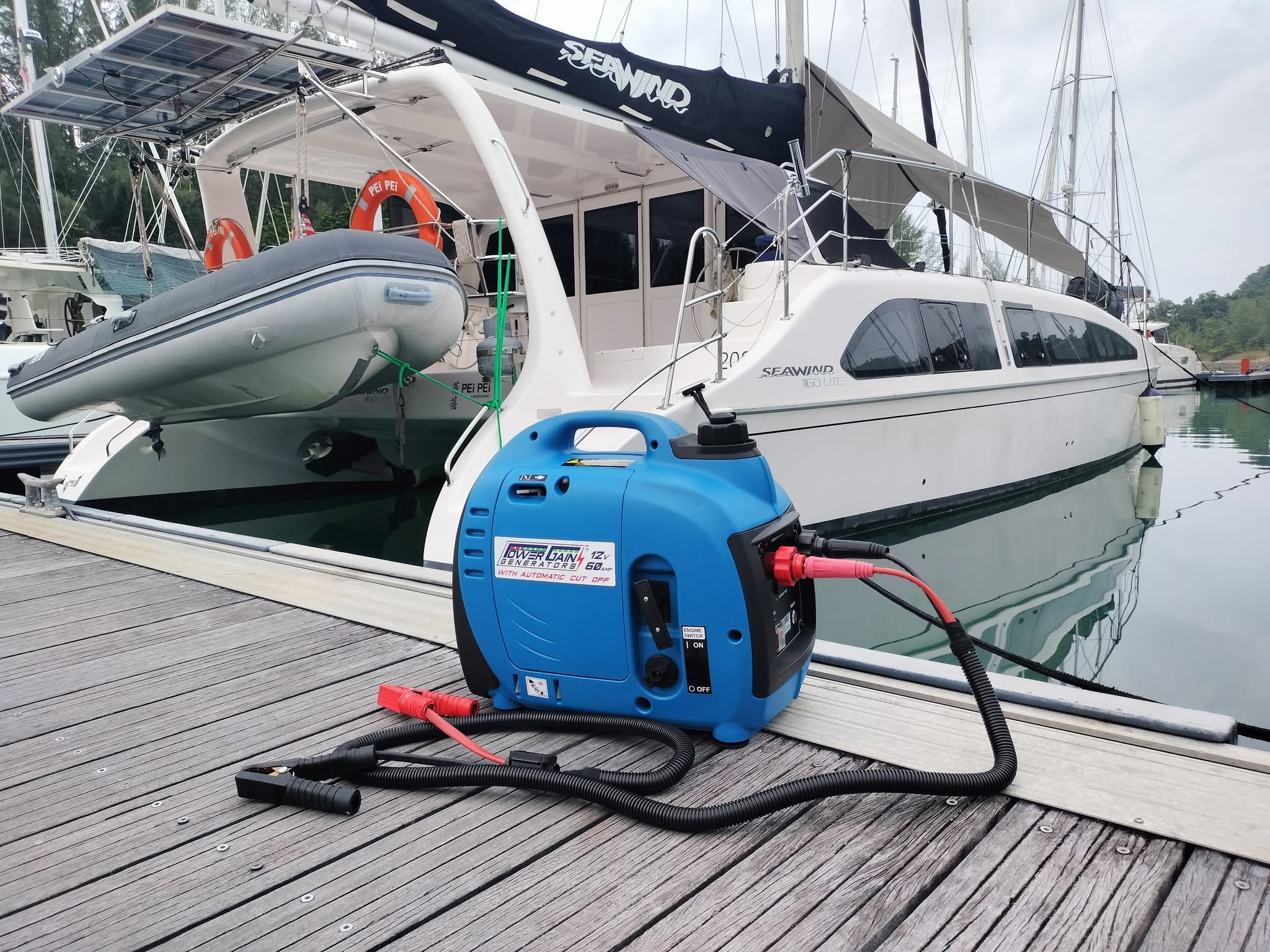
2.) Clean Power for Marine Electronics
This one is non-negotiable, and it is where most cheap generators disqualify themselves. Modern boats are stuffed with sensitive electronics: chartplotters, VHF radios, fish finders, AIS units, smart battery chargers, phones, GoPros. All of them expect clean power. A conventional brushed generator puts out a messy waveform with total harmonic distortion (THD) of 12 to 25%, which is fine for a circular saw and a problem for everything with a circuit board.
You want an inverter generator with THD under 3%. Honda spec sheets list theirs under 3%. The WEN 56200i runs under 1.2%. Yamaha and EcoFlow are in the same neighborhood. If a generator’s listing does not publish a THD number, that is the listing telling you the answer. Move on.
3.) Quiet Operation on the Water
Sound carries over water in a way it does not carry on land. A generator that measures 65 dB at 7 meters in a parking lot will sound noticeably louder bouncing across the surface of a calm anchorage at 2 a.m., and your neighbors three boats over will hear every minute of it.
Aim for under 60 dB at quarter load. The Honda EU2200i runs 48 to 57 dB. The Yamaha EF2200iS is 51 to 57 dB. Once you get above 65 dB you are in awkward territory at any quiet marina, and over 70 dB you may be violating posted rules at lake associations and state park anchorages. Open-frame contractor generators routinely measure 75 to 80 dB. That is leaf-blower territory, and it has no place on a boat with neighbors.
4.) Fuel Efficiency for Longer Trips
Gasoline storage on a boat is its own headache. You have limited deck space, you do not want extra jerry cans rolling around in chop, and ethanol-blended pump gas goes stale in a fuel tank faster than people realize, often inside 30 days without stabilizer.
Pick a generator with eco mode (sometimes called Smart Throttle or Economy mode) that automatically drops engine RPM under light loads. Real-world impact: a Honda EU2200i in eco mode pulls roughly 0.10 gallons per hour at quarter load and gives you 8+ hours on a single 0.95-gallon tank. That is a whole weekend of evening lights, phone charging, and fridge runtime on less than a gallon. Without eco mode you are refueling twice as often and storing twice as much gas you do not need.
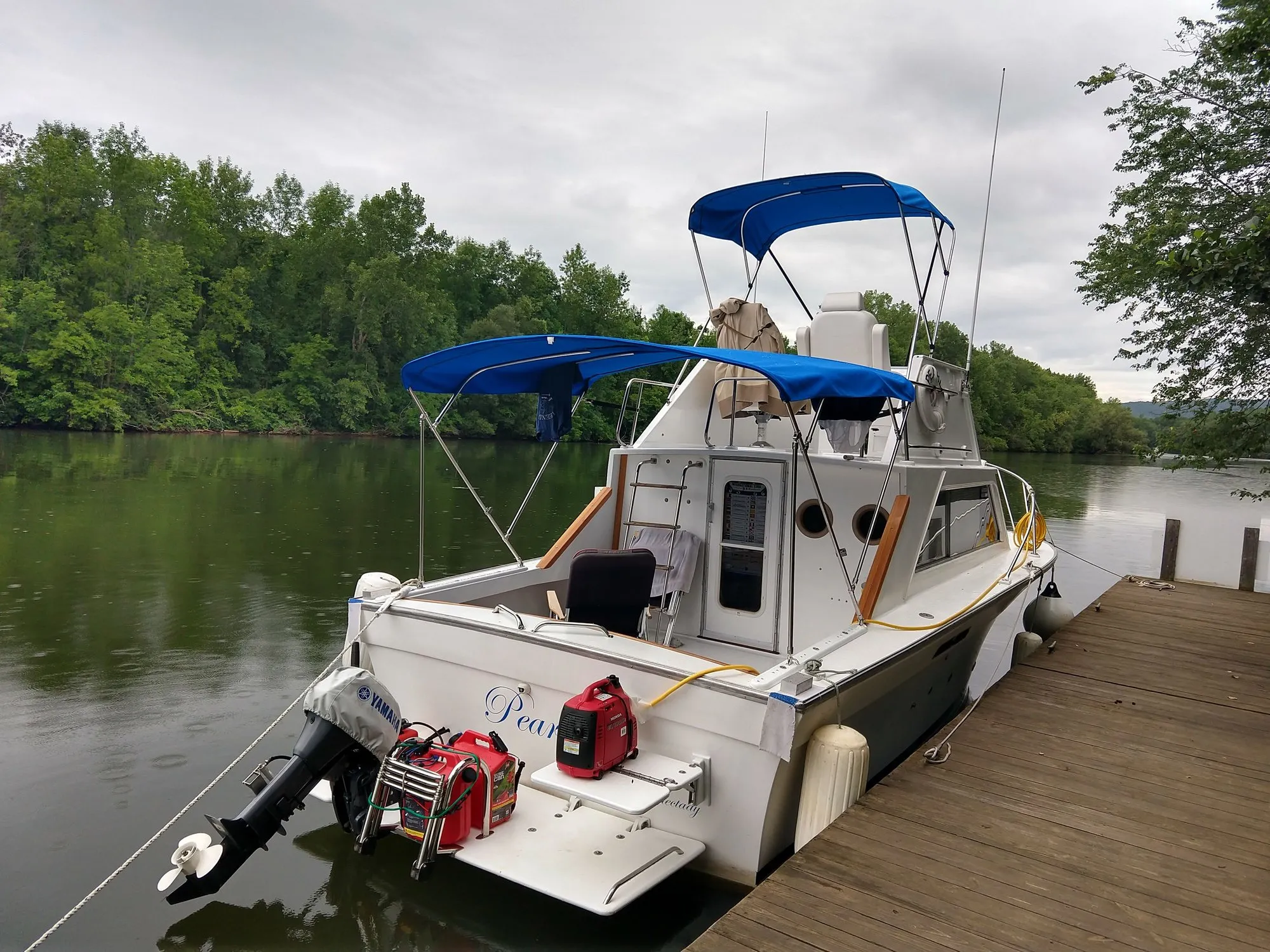
5.) Safety Features Matter More on Boats
I already spent a full section on CO sensors, so I will not repeat it. But while you are reading spec sheets, check that the generator also has:
- Automatic CO shutoff (Honda CO-Minder, Champion CO Shield, Westinghouse CO Sensor). The one feature I will not compromise on.
- Low-oil shutdown. Boats vibrate constantly and engines tilt slightly with wave motion; low-oil protection saves the unit when the float-style sensor would otherwise miss it.
- Overload protection with a resettable breaker. Better than blowing fuses every time the fridge compressor kicks in.
- Covered or sealed outlets with rubber flaps. Salt mist will corrode bare contacts in a single season.
- Stable, non-slip base. A chrome-bottomed generator on a wet fiberglass deck is a slow-motion accident.
- USFS-approved spark arrestor. Required if you ever beach near forested public land, and a smart feature regardless.
If a generator is missing two or more of these, it is built for the lawn. Put it back on the shelf.
Can You Use a Portable Generator on a Boat Safely?
Short answer: yes, but only if you respect rules that have killed people who did not.
A portable generator is fine for charging house batteries, running a small fridge, powering deck lights, or keeping a fan going at anchor. What it is not designed for is running inside any enclosed or semi-enclosed space on the boat. That is where people get hurt.
Never run a portable generator in any of these places:
- Inside the cabin or any enclosed compartment
- Under a Bimini top, canvas enclosure, or canopy that traps exhaust
- On a covered swim platform or inside a stern lazarette
- Near an open hatch, port, or window where exhaust can drift inside
- Within 15 feet of anyone sleeping, swimming, or sitting at the stern
- In the engine compartment, no matter how ventilated you think it is
A generator running on an open deck with the exhaust pointed off the stern, downwind, with no one within 15 feet of it, is a reasonably safe setup. Move any one of those variables and the calculus changes fast. Wind shifts. People wander aft. Someone closes a hatch and creates a vacuum that pulls exhaust into the cabin.
One more thing most articles will not tell you: a CO detector inside the cabin is mandatory, not optional. A UL 2034 listed marine unit costs about $40. Mount it at head height, replace batteries every season, replace the unit every 5 to 7 years.
The safest boat generator is still the one with an automatic CO shutoff built in. The second safest is the one that does not burn fuel at all.
Inverter Generator vs Regular Generator for Boats
This is the question I get most often, and it is the one most buyers get wrong because the price gap is real. A conventional generator with the same wattage rating can cost half as much as an inverter unit. On paper it looks like the same machine. On a boat, it is not.
Why Inverter Generators Are Usually Better
For 95% of boaters, an inverter generator is the right answer. Here is why:
- Cleaner power for sensitive electronics. THD under 3% versus 12 to 25% on a conventional unit. Your chartplotter, VHF, fish finder, and phone chargers all care about this.
- Quieter. Inverter units run 48 to 60 dB at quarter load. Conventional generators typically run 70 to 80 dB. That is the difference between a conversation and a leaf blower.
- Better fuel efficiency. Eco mode drops engine RPM under light loads. A Honda EU2200i sips about 0.10 GPH at quarter load. A conventional 2000W unit runs at full RPM constantly and burns roughly twice that.
- More compact and lighter. Suitcase-style inverter units fit on a swim platform or in a lazarette. A conventional generator with a steel roll cage is wider, taller, and harder to stow.
- Better fit for boats, camping, RVs, and fishing trips. Anywhere portability, noise, and clean power matter, inverters win.
When a Regular Generator Makes Sense
There is a narrow case for a conventional generator on a boat: you are running heavy resistive loads like a large AC unit, a portable electric stove, or power tools for onboard maintenance, and you need 4000+ watts in a single unit. You also do not care about noise because you only run it at a remote dock or during shoreside work.
For the typical fishing boat, pontoon, day cruiser, or small sailboat? Skip it. The inverter generator is quieter, cleaner, lighter, and easier to live with. The extra money you spend up front comes back in fuel savings, marina goodwill, and electronics that do not get fried over a long weekend.
How I Tested
Weekend trips and marina stays were the proving ground. Every unit here ran a boat fridge, LED lights, and a battery charger simultaneously for at least four hours in real conditions, not a bench test. I checked runtime per gallon, noise level at 20 feet (what your neighbors actually hear), and whether the inverter output stayed clean for sensitive electronics like marine electronics and battery chargers. Anything that stumbled under combined load or ran louder than 65 dB got cut.
Portable Generator Safety Tips for Boat Owners
I will keep this short because the rules are not complicated. They are just easy to ignore until they aren’t.
- Run the generator only in a dry, open, ventilated area. Open deck, off the stern, never under cover.
- Keep the exhaust pointed away from people and cabin openings. Check the wind direction every time you start it.
- Never sleep near a running generator. Even with a CO sensor, this is the highest-risk scenario on a boat.
- Use a working marine CO detector on board. UL 2034 listed, head height, batteries fresh.
- Store fuel properly. Sealed metal or USCG-approved containers, ventilated locker, away from heat and ignition sources.
- Let the generator cool before refueling. Hot engine plus splashed gasoline is how boats burn at the dock.
- Keep the generator stable and away from water spray. A non-slip mat or rubber pad goes a long way on a wet fiberglass deck.
- Use properly rated marine-grade extension cords. No indoor household cords. Cracked insulation plus salt water is a shock waiting to happen.
- Do not overload the generator. Add up your running watts plus the largest single startup surge. Stay under 80% of rated capacity for continuous use.
- Read both the generator manual and your boat’s electrical system requirements. Especially if you are plugging into the boat’s shore power inlet through an adapter. Wrong polarity or a missing neutral bond will fry electronics faster than dirty power.
None of this takes more than 30 seconds to check before you pull the starter cord. Do it anyway. Every time.
Questions People Ask
Q: How many watts do I need for a boat?
Start with what you want to run at the same time. A fridge pulls 600-800 watts running, a battery charger pulls 1000-1500 watts, and lights pull 100-200 watts. If you want all three running together, you need at least 2000 watts starting capacity. Most boats anchor with just the fridge and lights, which is 800-1000 watts. Undersizing here is a mistake that costs you later.
Q: Can a portable generator handle salt spray?
Not well, unless you take care of it. Salt corrodes the carburetor, fuel lines, and electrical connections. Keep the generator under a tarp when it is not running, drain the fuel tank at the end of the season, and use fuel stabilizer in every tank. Inverter generators with sealed control panels handle salt better than open-frame models, but none of them are immune.
Q: Is a portable power station better than a gas generator for a boat?
It depends on how long you anchor. A power station runs silent and produces no fumes, which is great for overnight at a marina. But a 1000Wh station runs a fridge for maybe four hours before it is dead. A gas generator runs as long as you have fuel. For weekend trips, a power station works. For a week anchored out, you need gas or a solar setup to recharge the battery.
Q: Do I need an inverter generator for boat electronics?
Yes, if you are running a battery charger, GPS, or marine radio. These devices draw clean sine wave power or they malfunction. A basic open-frame contractor generator produces dirty power that can fry a charger. Inverter generators cost more upfront but protect your equipment and run quieter, which matters at an anchorage where people are trying to sleep.
Q: How do I mount a generator on a boat?
Most portable generators sit on the deck or in the cabin under a table, secured with tie-downs or straps so they do not slide in rough water. Do not run it below deck unless you have proper ventilation: carbon monoxide builds up fast in an enclosed space. Fuel tanks stay in a separate locker or on deck in a spill-proof container. Weight matters more on a boat than on land, so lighter units like the Jackery power station have an advantage if you have limited deck space.




Write Your Review
No reviews yet. Be the first to share your experience!