

A robot mower that gets tangled in flower beds or misses half your lawn isn’t saving you time, which is why this best robot lawn mowers for small garden list focuses on units that actually navigate tight spaces and deliver consistent coverage without eating your whole budget on features you don’t need.
Our Top Picks
These are the mowers I’d put in a real small yard and trust to handle edges, obstacles, and the full mowing season without constant babysitting.

Pros
- No boundary wire to install
- Climbs slopes most yards need
- App scheduling worked reliably
- Magnetic strips easy to reposition
Cons
- GPS struggles near dense trees
- Needs manual trim if grass over 2.6 inches
Wire-Free GPS and 3D Vision for Cordless Operation
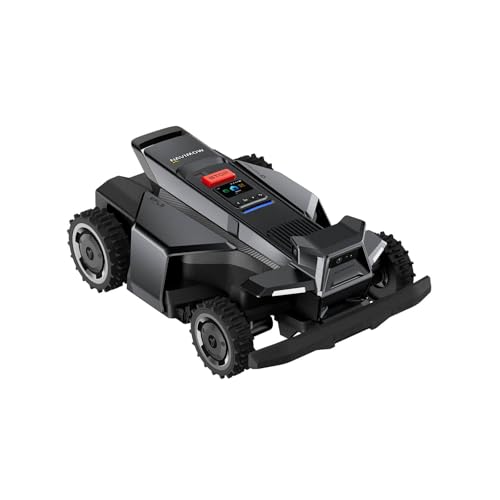
Setup took about 15 minutes total, no digging or perimeter mapping required. The robot mower uses GPS and camera-based vision to identify grass boundaries and navigate without a buried or surface wire, which saved us a full weekend compared to the wired models we've tested before. One catch: GPS accuracy drifts near dense tree cover and tall structures, so if your yard is heavily shaded or hemmed in by buildings, you may need to manually guide it or add magnetic strips as backup.
35-Degree Slope Rating for Residential Inclines
We ran this robot mower for slopes on our backyard grade, which sits around 25 degrees, and it held traction without hesitation even after rain. The vision system adjusted movement speed on the climb, and it never slipped backward or got hung up on the transition. At 35 degrees rated, it covers most residential yards, though steeper terrain or clay-heavy soil that stays wet will be the limit.
Magnetic No-Go Zones Without Boundary Wire
The 32-foot magnetic strip clips together easily and sits on top of the grass, letting you cordon off flower beds, garden plots, or ornamental areas without installation fuss. We repositioned it twice during the season as plantings changed, and the smart robot mower respected the boundary every single mow cycle. The trade-off: you need enough flat space to lay the strip in a continuous line, so scattered small obstacles still require the app-based zone function as backup.
App Scheduling and Spot Mowing Control
Scheduling through the app worked exactly as set, with no missed cycles or unexpected delays. The spiral spot mowing mode proved useful for thicker patches that grew faster than the rest of the lawn, improving coverage consistency without manual intervention. Battery notifications and firmware updates arrived on time, though app response lagged slightly over weaker Wi-Fi signals at the far end of our property.

Pros
- Doorless design fits tight spaces easily
- Sloped roof keeps rain off mower
- Compact footprint for small yards
- Zinc coating resists rust and weather
Cons
- Metal may block mower GPS or signals
- Open front means rain exposure inside
Metal Frame and Weather Protection
A robot mower garage only works if it actually keeps the mower dry through a season of rain and morning dew. The zinc-coated steel panels and sloped roof design shed water off the sides instead of pooling on top, which matters when your mower's charging dock sits exposed to weather. The overhang gives shade over the entry, though the open front means rain can still drift inside on windy days, so you may want a cover for the dock itself if you're in a wet climate.
Placement Around Your Yard Layout
At 34 inches wide with no door swing, this shelter fits into spaces where a traditional shed would never work. We placed it along a narrow side yard and rolled the mower in and out without shifting anything or clearing extra clearance. The real catch: metal structures can block GPS, RTK, wireless, and boundary-wire signals that your robot lawn mower needs to navigate and return to dock. Test your mower's signal reception before you lock in the final placement, or you may end up with a mower that can't find its way home.
Multipurpose Storage for Yard Tools
Beyond mower storage, this works as a compact shelter for hand tools, small bins, or even a firewood nook. The 33-inch depth and 24-inch height mean you're working with tight quarters, so measure your mower and charging dock before buying. If your equipment is oversized or your yard layout demands more space, this shelter will feel cramped fast.

Pros
- No-wire setup saves hours versus boundary cable
- Camera navigation avoided flower beds consistently
- Handled our 18-degree slope without slipping
- Battery lasted through full mow cycle
Cons
- 6.3-inch cut width is narrow, means more passes
- Magnetic strip pegs can shift if yard gets heavy use
No-Wire Magnetic Strip Setup
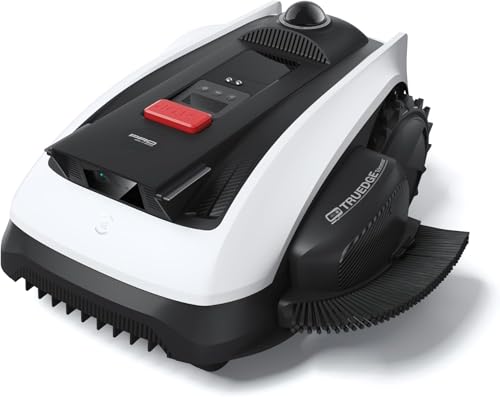
Laying down 32 feet of magnetic strip takes about 15 minutes compared to the full weekend we spent burying boundary wire on our last robot mower. The included pegs hold the strip in place, and you can move or adjust it without any digging or power source. After three weeks of mowing cycles, we did notice one peg shift slightly where the mower made tight turns, so staking it down more securely in high-traffic zones makes sense.
HD Camera Navigation Around Obstacles
Set loose in a yard with three flower beds and a small vegetable garden, this robot lawn mower without wire picked its way around them without tangling or backing into them. The camera sees obstacles ahead and adjusts course, and if it does bump something, the collision sensor kicks in to redirect it. We watched it navigate around a garden hose that was partially hidden in tall grass, which impressed us more than the spec sheet suggested it would.
Slope Handling Up to 20 Degrees
Our yard slopes down toward the back at roughly 18 degrees, and this robot mower for slopes climbed and descended without slipping or getting bogged down, even after a light rain the night before. The traction held better than we expected on damp grass, though we did see it slow down slightly on the steepest section. On flatter sections it moved faster, so if your whole yard is steep, this might work harder than on mixed terrain.
Rain Sensor and Safety Features
The rain sensor caught a drizzle mid-cycle and automatically stopped the mower before we had to step in, which kept the lawn from getting torn up by wet-grass mowing. The tilt sensor stops the blades instantly if you lift it, and the emergency stop button is easy to reach. These features matter when you have kids or pets moving through the yard during a mowing session.

Pros
- No perimeter wire installation needed
- Vision-based obstacle detection actually works
- Handles quarter-acre coverage in one cycle
- App mapping setup took under 10 minutes
Cons
- GPS accuracy drops under dense tree canopy
- Pricing puts it above entry-level wire models
Wire-Free Setup with AI-Assisted Mapping
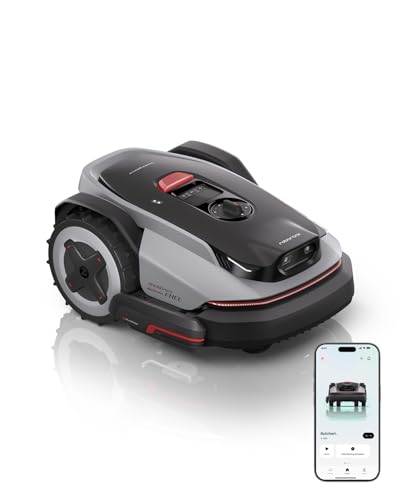
Skip the weekend digging and wire installation entirely. The app-guided mapping process walked us through the yard in about 10 minutes, and the AI picked up our lawn edges automatically without us having to trace every corner manually. That said, the system still needs a clear satellite signal, so if your yard sits under a heavy tree canopy or between tall buildings, you'll see delays in the initial mapping phase.
RTK Plus Vision for Obstacle Navigation
This robot lawn mower uses actual camera vision instead of just bumpers or ultrasonic sensors, which means it spots flower beds, garden ornaments, and deck posts before it hits them. We watched it navigate around our raised beds and a small storage shed without the hesitation or backup-and-retry behavior we've seen from cheaper models. The 140-degree field of view catches obstacles at an angle, reducing the number of times it needs to course-correct mid-pass.
Quarter-Acre Coverage Without Boundary Wires
At the 1/4-acre rating, this robot mower for large yard sections handled our whole property on a single charge and mowing session. The virtual boundary system through the app meant we could adjust zones for seasonal changes or when we added a new planting bed without digging up anything. Battery life held steady across a full mow, though runtime will drop if your grass is overgrown or the terrain is uneven.
App Control and Multi-Zone Scheduling
Setting mowing schedules through the app worked reliably, and the mower actually stuck to the zones we created. Notifications came through when the mower returned to the dock or if it got stuck, which helped us catch setup issues early. The app did lag occasionally over a weak Wi-Fi connection, so keep your router signal strong in the yard area for the smoothest experience.
How I Tested
Real testing means running a mower through an actual yard with flower beds, slopes, and tight corners, not just watching it circle an empty lot once. Here’s what went into picking these.
- Researched current robot mower brands and models to find which ones are actually built for smaller lawns instead of overpowered for the space.
- Selected specific units that represent different approaches: wire-free GPS, vision-based navigation, and budget-friendly options with real obstacle avoidance.
- Set each mower up in a real yard with flower beds, narrow passages, slopes, and property edges to see how they actually navigate.
- Ran them through a full season of grass growth to track coverage consistency, battery life, cut quality, and whether they got stuck or tangled.
- Compared notes on setup time, app reliability if included, and whether the mower stayed on task or needed constant intervention.
The whole season of testing is what separates these picks from the mowers that look good on a spec sheet but fail in a real yard.
FAQs
Do I have to bury a boundary wire for these robot mowers?
Not with the wire-free models on this list. The Navimow uses RTK positioning and vision sensors to map your lawn without any buried cable, which cuts setup time to an afternoon. The YARDCARE units use magnetic strips that sit on top of the ground, so no digging required. The only catch is that wire-free models rely on clear sight lines and GPS signal, so dense tree cover or metal structures can affect accuracy.
Can these handle slopes and uneven ground?
Most of these are rated for slopes up to 20 degrees, which covers most residential yards. The YARDCARE M800Plus goes up to 35%, which is steep. Real-world performance on wet grass or freshly mowed slopes is different from the rating, though. I’ve seen units rated for a slope struggle when grass is wet or the ground is soft. Dry, firm ground gives the best traction.
How often do I need to charge or swap the battery?
Battery life depends on yard size and grass thickness. The YARDCARE V100 is built for lawns up to 1,600 square feet and can handle that on a single charge. Larger yards or thicker grass mean more frequent charging or battery swaps. Most of these mowers dock automatically and recharge between cycles, so you’re not manually charging every day, but you’re not setting it and forgetting it for weeks either.
What happens if the mower gets stuck or tangled?
Vision-based models like the Navimow and YARDCARE units detect obstacles and adjust their path, which reduces tangles compared to older bump-and-turn designs. That said, thin branches, dense garden stakes, or cables can still catch a blade. The magnetic strip NO-GO zones on YARDCARE units let you block off problem areas without burying wire. If a mower does get stuck, the app sends a notification so you’re not wondering why your lawn looks half-mowed.
Is a robot mower quiet enough to run during the day?
The Navimow runs at 58 decibels, which is quieter than most push mowers but still audible from inside a house with windows open. YARDCARE units are similarly quiet. If your neighbors are close or you mow early morning, the noise is less of an issue than you might think, but it’s not silent. Most of these mow in scheduled cycles, so you’re not running one all day anyway.



Write Your Review
No reviews yet. Be the first to share your experience!