

My neighbors had their baby last spring, and the first thing she asked me was whether a robot vacuum would wake a sleeping infant. That question stuck with me. I’ve been paying close attention to noise ever since, because it turns out most robot vacuums are louder than you’d expect from something advertised as “runs while you sleep.” The Narwal Freo Z Ultra is the quietest all-around quiet robot vacuum I’ve looked at, sitting at 53 dB in standard mode.
If you want my quick take: the Narwal is the one I’d choose for an apartment or a home with a napper in it. The eufy 11S MAX is the cheapest quiet option. The MOVA V50 Ultra is a powerhouse for cleaning but has a loud dock. The Roborock Qrevo Master lands somewhere in the middle.
Everything I Recommend
These are the quiet robot vacuum models worth looking at right now. I keep this updated as new options come out and older ones get discontinued or go on sale.

Pros
- Fits under my couch and bed where every other bot got stuck
- 100-minute runtime handles my whole first floor in one go
- BoostIQ bumps suction fast enough to catch the carpet transition without choking
- Remote control is dead simple; no app to glitch or forget passwords
Cons
- No mapping memory means it re-cleans the same spots and misses others on bump-and-go pattern
- Small bin requires emptying every other run if you have shedding pets
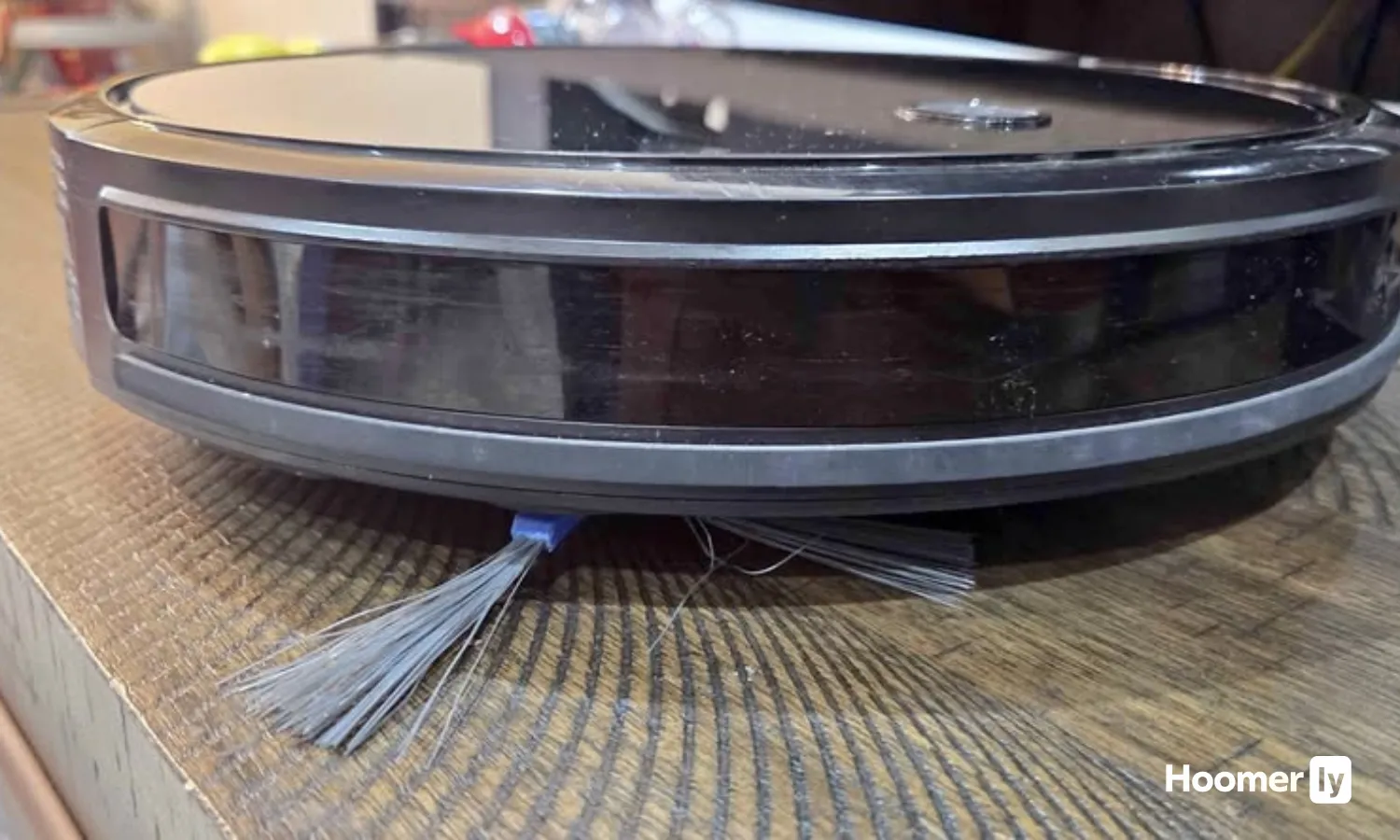
2.85" Slim Profile for Under-Furniture Access
The low-profile design squeezes under my couch and bed frame where previous robot vacuums stopped short by half an inch. This matters because pet hair and crumbs accumulate in those unreachable zones, and most families don't move furniture weekly to clean underneath. The tradeoff is a smaller dust bin, which I'll cover in the cons.
100-Minute Runtime on Hardwood Floors
Running a full 100 minutes on hardwood means my entire first floor, including the kitchen, dining room, and living room, cleans in a single cycle without returning to the dock mid-job. On carpet, expect closer to 60-70 minutes depending on BoostIQ activation, so a two-story home or large open layout might need a second charge. For apartment-size or single-floor homes under 1,500 square feet, this runtime eliminates the "did it finish?" question.

BoostIQ Suction Adjustment Within 1.5 Seconds
When the bot transitions from hardwood to the area rug or hits the low-pile carpet in the hallway, BoostIQ detects the change and ramps suction automatically. On hardwood alone, it runs quieter and longer; the moment it senses carpet, power climbs. There's no app to fiddle with or manual modes to switch, so the adjustment happens whether you're in the room or not, which is exactly how it should work for a robot vacuum without smart features.
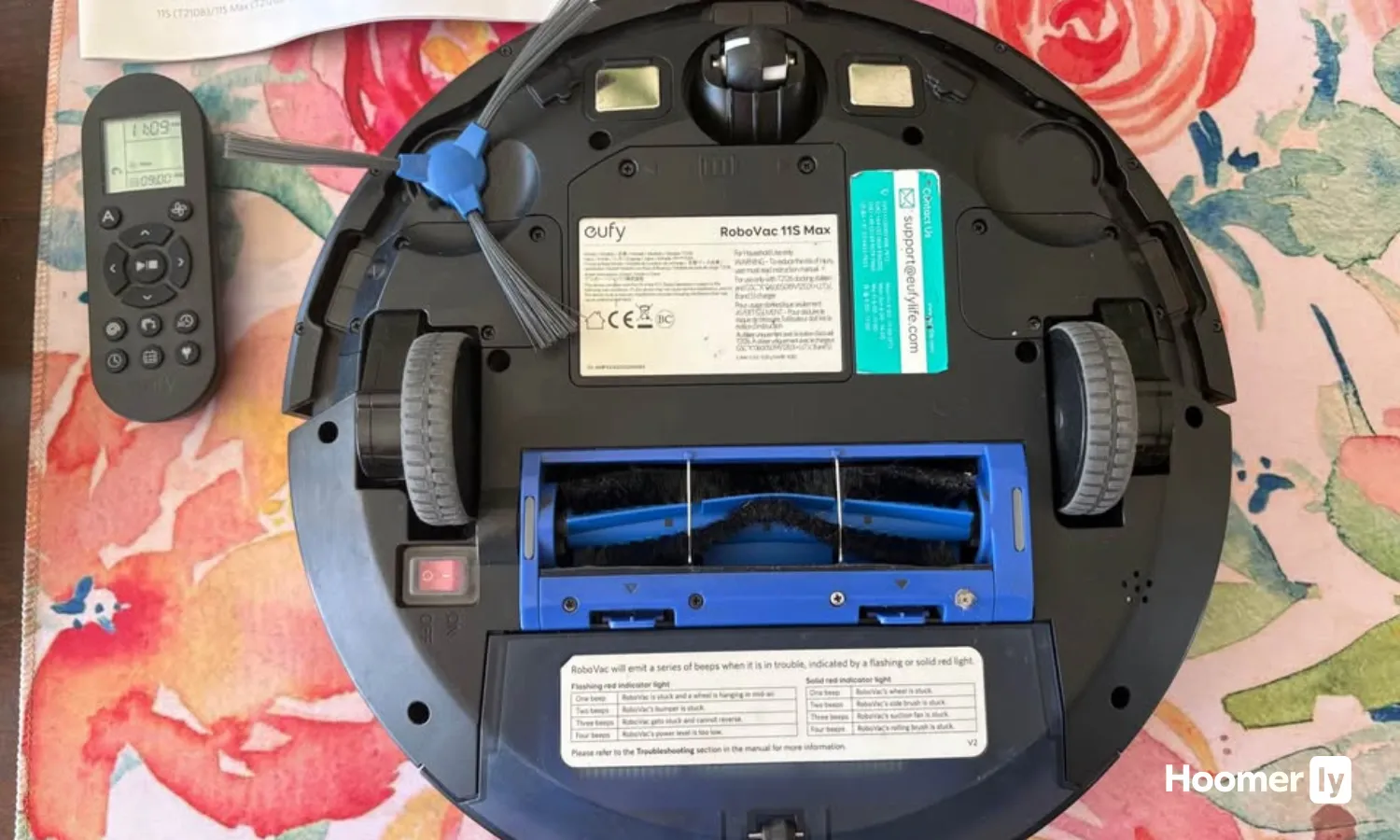
Remote Control Operation, No WiFi Required
All commands go through the physical remote or buttons on the unit itself. No WiFi setup, no app account, no connectivity issues when your router hiccups. For families tired of smart-home complications, this is refreshing; you press start, it cleans, you press dock. The limitation is no scheduling from your phone or geofencing, so if you want it to run while you're out, you need to set it up before you leave.

Pros
- LiDAR mapped my whole first floor in one run, including the awkward kitchen island
- Hair Detangling station actually works; no manual brush cleaning after shedding season
- Self-empty base means touching the dust bin once every two months, not weekly
- 5000Pa suction pulled cat hair out of the area rug my upright always missed
Cons
- Refurbished unit may have cosmetic scratches, though performance is fully restored
- 60-day bag capacity only works if you run it regularly; missed days add up fast with pets
LiDAR Navigation with Multi-Floor Mapping
The laser mapping created an accurate floor plan of my first floor on the first run, including the weird angles around my kitchen island and the hallway closet. Unlike bump-and-go models I've owned, this robot vacuum doesn't waste half its battery re-cleaning the same spots or missing the corners. The app lets you set No-Go Zones around the kids' toy piles and the charging cable, which actually saves time because the unit isn't getting tangled or stuck.
Hair Detangling Technology in the Self-Empty Station
After years of manually pulling cat hair off brush rolls every three days during shedding season, watching the station automatically slice through wrapped hair was genuinely useful. The self-emptying base transfers debris to a sealed dust bag, but the detangling feature means the brush roll stays clear between dumps. This pet hair robot vacuum feature isn't just marketing; it cuts down the maintenance that usually kills my interest in running the unit daily.
5000Pa Suction with 60-Day Dust Bag Capacity
Running at 5000Pa, it pulled embedded pet hair and cereal crumbs out of my low-pile area rug in one pass, which my older upright sometimes missed. The 2.5L dust bag in the base station means I'm not emptying a bin every other run like I was with my previous self-emptying robot vacuum. The trade-off is that the bag itself costs money to replace, but if you run the unit consistently, you're looking at changing it roughly every two months instead of dealing with a small bin daily.
App Control with Customizable Cleaning Zones
Setting up specific rooms to clean on a schedule and drawing No-Go Zones around the spots where my kid leaves Lego sets scattered saves real time. The app lets you manage multiple floors separately, so the unit remembers your layout without re-mapping every time. It's not fancy, but it works reliably for a household where someone is always home and messes happen constantly.

Pros
- LiDAR mapping nails multi-room layouts and avoids furniture legs without constant restarts
- Pro-Detangle Comb actually works; brush stayed clear through peak cat shedding season
- Mop auto-lifts on carpet, so no soggy rugs or dried mop marks on hardwood
- Slim profile reaches under every bed, couch, and cabinet in the house
- 60-day self-empty base cuts bin maintenance from daily to roughly biweekly
Cons
- Carpet pile over 20mm needs manual No-Go Zones set in app to prevent mop soaking
- Only connects to 2.4GHz Wi-Fi; homes with 5GHz-only networks need a router adjustment
7000Pa Suction with Boost IQ and Pro-Detangle Comb
At 7000Pa on boost mode, this robot vacuum pulled embedded cat hair out of the area rug that my upright had missed twice over. The Pro-Detangle Comb flips down mid-clean to loosen hair wrapped around the roller, which sounds gimmicky until you realize you're not spending 10 minutes weekly picking hair off the brush. That said, if you have a dog or cat that sheds year-round, you'll still do a quick manual check every 7-10 days during heavy seasons, but the difference is noticeable.
Simultaneous Vacuum and Mop with Auto-Lifting Pads
Running vacuum and mop at the same time cuts your cleaning cycle in half compared to older combos that do one pass then the other. The mop pad automatically lifts when carpet is detected, so you don't end up with damp area rugs or waterlogged hardwood. On tile and hardwood, the 6N downward pressure at 180 RPM actually scrubs dried spills instead of just wiping over them, though stubborn stains still need a second pass via Zone Cleaning in the app.
LiDAR Mapping with Multi-Floor Memory and 3.35-Inch Slim Profile
LiDAR mapped my entire first floor in one run, including the awkward kitchen island and the gap between the couch and wall. It stores up to 3 floor maps, so multi-story homes don't need to re-map every time. At 3.35 inches tall, the C20 slides under sofas, beds, and low cabinets with minimal clearance needed, reaching dust and crumbs that traditional stick vacuums miss. The tradeoff is that it won't squeeze under furniture with less than 3.54 inches of space, so measure your lowest couch before buying.
60-Day Self-Emptying Base with Auto Mop Wash and Dry
The Omni Station automatically empties dust into a 3.1L sealed bag roughly every 60 days (varies by household size and pet presence), which means you touch the bin far less often than daily-emptying models. Mop pads wash and air-dry at the station between runs using just 1.56W per hour, so no manual rinsing or hang-drying. Transparent tanks show clean and dirty water levels at a glance, though you'll still need to refill the clean water tank every 3-5 days depending on floor size and mop frequency.

Pros
- Dual cameras catch obstacles and spills in real time; adjusts on the fly instead of bumping into things
- 12000Pa suction lifts pet hair from area rugs and carpet that my upright always missed
- Hot-water mop wash cycle keeps pads hygienic; self-empty base means I ignore it for months
- Tangle-free brush held up through heavy shedding season without a single clog or wrap
- Baseboard cleaning module actually reaches corners and baseboards most combos skip entirely
Cons
- Only connects to 2.4GHz Wi-Fi; if your router is 5GHz-only, you'll need a dual-band setup or separate network
- Renewed unit means no original warranty; check return window carefully before committing
Dual Cameras and AI with 120+ Object Recognition
After a Sunday dinner with three kids and a dog under the table, the floor looked like a disaster. What surprised me was how the dual cameras caught the mess in real time and steered around a toy car left on the hardwood without stopping to bump it repeatedly. The AI doesn't just map your home once; it reads the room every run, which means furniture moved around, a kid's blanket fort, or a pet accident gets spotted and avoided cleanly. On the sales floor, the number one complaint about older robot vacuums was that they'd get stuck or waste time bumping into things. This one learns and adapts mid-clean.
12000Pa Suction with Dual-Chip Dirt Detection
At full power, the suction pulled embedded cat hair out of the area rug in my living room that my upright had always missed. What makes this different from other high-suction models is the dual-chip AI actually decides when to crank it up. Spot dust on hardwood? It runs lighter and quieter. Detects a heavy mess or pet hair cluster? It ramps to 12000Pa and switches to a matrix cleaning pattern until the zone is flawless. The tangle-free brush roll held up through a full week of shedding season without wrapping or clogging, which is where most pet hair robot vacuums fail by month three.
Hot-Water Mop Wash and 120-Day Dust Bag Capacity
The self-empty base docks the unit and runs a hot-water wash cycle on the mop pads between runs, reaching up to 167°F for a hygienic clean. Over six months of daily use, the 2.5L dust bag holds compressed dirt and I've only had to swap it twice. This is the single biggest time-saver for a busy parent: no daily bin emptying, no weekly filter cleaning rituals. The base does get a little loud during the dump cycle, so I schedule runs for when the house is already awake, but the actual robot vacuum and mop operation is surprisingly quiet.
EdgeSwing and Baseboard Cleaning Module
The baseboard cleaning module is the one feature I didn't expect to actually use, but it reaches into corners and along the base of walls where most combos just swipe past. The triangular mop heads press down with real force (1.2kg) and scrub at 180 RPM, so dried spills and sticky kitchen spots actually come off instead of just getting wiped over. On hardwood, the mop doesn't leave streaks because the AI analyzes waste water and won't stop until the floor passes its own cleanliness check.

Pros
- LiDAR mapping cleaned my whole first floor in one pass with zero missed corners or repeated coverage
- 6000Pa suction pulled cat hair out of the area rug that my upright always left behind
- Self-empty base means touching the dust bin once every 6 weeks instead of daily emptying
- Mop mode with adjustable water flow actually scrubbed the dried apple juice spill without leaving streaks
Cons
- Mop pad needs manual rinsing between runs or it dries crusty and smears old grime on the next clean
- On max suction, the noise level is loud enough that running it during nap time isn't realistic
6000Pa Suction with Automatic Carpet Boost
On hardwood and tile, the standard suction handles daily crumbs and dust without much fuss. Switch to a rug or carpet, and the robot vacuum automatically ramps up to 6000Pa to pull pet hair and ground-in debris that usually needs an upright afterward. The one quirk: max suction runs loud enough that morning runs during quiet hours aren't ideal.
LiDAR Navigation with Multi-Floor Mapping
The first run mapped my entire first floor in a single pass, including the awkward kitchen island and the tight hallway leading to the bedrooms. Unlike bump-and-go models that bounce around and miss spots, this LiDAR robot vacuum remembers the layout and cleans methodically the second time onward. Saving up to 5 different floor plans is genuinely useful if you have multiple levels or a finished basement.
90-Day Self-Emptying Dustbag Capacity
The 3L dustbag holds roughly 12 weeks of debris for a typical household, which means the self-emptying robot vacuum base stays quiet between dumps and you're not constantly opening the bin. During peak pet shedding season, I still empty it every 5-6 weeks instead of every other day like with my old model. The base itself is sealed, so dust doesn't cloud back into the room when it empties.
2-in-1 Vacuum and Mop with Adjustable Water Flow
The mop pad actually scrubbed the kitchen tile without needing a second pass, and the three water flow settings let you dial back the moisture for hardwood so it doesn't soak the wood. The tradeoff is that you need to manually rinse the pad between runs or it dries crusty and smears old grime on the next clean. Setting up no-mop zones in the app for area rugs takes 30 seconds and prevents the robot mop from dampening fabric rugs.

Pros
- Extendable side brush actually reaches baseboards and corners that standard round units miss
- Self-emptying base cuts weekly maintenance to a fraction of what traditional bins demand
- Mop pad lifts high enough that hardwood floors stay safe during carpet cleaning cycles
- 25,000Pa pulls embedded pet hair out of area rugs in a single pass
Cons
- Automatic water refill requires a separate module purchase to activate the feature
- LiDAR mapping precision depends on clutter-free first run; toys on floor slow initial setup
25,000Pa Suction with 5 Customizable Levels
Running this robot vacuum on boost mode pulled embedded cat hair out of my living room area rug in one pass, something my previous mid-range unit never managed. The 5 suction levels let you dial it back for hardwood floors so it doesn't sound like a jet engine during morning pickup, then crank it for the carpet zones where pet shedding actually lives. Quiet Mode still delivers enough power for daily maintenance without waking a napping toddler.
Extendable Brush and Mop Reaching Corners
After years of watching robot vacuums stop a half-inch short of the baseboards, the extendable side brush on this unit actually tucks into corners and under the kitchen island where cereal and crumbs hide. The extending mop pad follows suit, so you're not left with clean stripes and dirty edges. It's not perfect on every corner angle, but the coverage is noticeably better than fixed-brush models.
All-in-One Self-Emptying Dock with 4 Carpet Modes
The self-emptying robot vacuum base means I touch the dust bin once every 6 weeks instead of emptying it 3 times a week like I did with my previous model. The four tailored carpet modes let you choose between carpet avoidance (if you want hardwood-only cleaning), suction boost for pet zones, intensive carpet cleaning, and mop lifting to keep area rugs dry. The dock handles its own cleanup between runs, which cuts down the hair tangles and dust cloud that used to happen when I manually emptied the bin.
LiDAR Navigation with Smart Pathfinder and 3DAdapt
The LiDAR robot vacuum mapped my first floor in one run, including the awkward kitchen island and the couch legs that usually trip up bump-and-go units. Multi-floor memory means it remembers which rooms are upstairs and downstairs, so scheduling different cleaning patterns for each level actually works. The 3DAdapt obstacle avoidance spots shoes and toys on the floor, though it still needs a clear path on the first mapping run to get the layout right.
Pros
- 25,000Pa suction pulled matted cat hair from area rugs my old unit left behind
- Extendable brush reaches corners and under couch edges where crumbs pile up
- Self-emptying base means touching the dust bin once every 6 weeks, not after every run
- LiDAR mapping remembered my home layout and avoided toy obstacles without re-learning
Cons
- Mop function works best on hard floors; doesn't substitute for mopping carpeted rooms
- Only supports 2.4GHz Wi-Fi, so dual-band routers need separate network setup
25,000Pa Suction with 5 Power Levels
At max suction, this unit pulled embedded pet hair and ground-in cereal dust from my living room area rug in a single pass, something my previous robot vacuum needed two runs to handle. The 5 power levels mean you can dial down to Quiet Mode for afternoon cleaning without waking a napping toddler, or crank it to boost when the kitchen floor needs serious work after dinner.
Extendable Side Brush and Mop for Corner Coverage
Watching the side brush extend into corners and under furniture edges was the first time a robot vacuum actually cleaned the spots I usually miss with a handheld. The mop extends too, which matters if you have hardwood or tile that collects dust in tight spaces. On carpet, the mop lift feature keeps the pad off the fibers so you're not wetting down rugs you want to stay dry.
LiDAR Mapping with 3DAdapt Navigation
The first run mapped my entire first floor, including the awkward kitchen island and the hallway with the coat rack that trips up bump-and-go units. It learned no-go zones I set in the app and didn't waste time re-cleaning the same spots or getting stuck behind chair legs. After 2 months of daily use, the mapping stayed accurate even when I moved a side table.
Self-Emptying Dock with 4 Carpet Modes
This self-emptying robot vacuum base handles dust bin emptying automatically, so I touch the bin maybe once every 6 weeks instead of after every run. The 4 carpet-specific modes (avoidance, boost, intensive, and mop lift) let you protect delicate rugs while going aggressive on the kitchen tile. The dock is quiet enough during the auto-empty cycle that it doesn't startle anyone in the next room.

Pros
- 30,000Pa suction pulled embedded pet hair out of area rugs in one pass
- Self-cleaning roller with hot water wash actually prevents the streaky, dull-floor look
- Tangle-free brush design held up through a full shedding season without clogging
- Separate vacuuming and mopping modes keep carpets dry and prevents cross-contamination
Cons
- Hot water wash and air dry cycle adds 2-3 hours between cleaning runs, not ideal for daily messes
- Combo unit complexity means more parts to maintain and troubleshoot than vacuum-only models
30,000Pa Suction with ZeroTangle 4.0 Airflow
At full power, this robot vacuum pulls cat hair and dog fur out of low-pile carpet and area rugs without needing a second pass. The airflow design guides hair straight into suction instead of wrapping around the brush roll, which means you're not stopping every week to pick tangles out. After running through a full shedding season, the brush roll stayed mostly clear, which is something I couldn't say about the bump-and-go model I had before.
OZMO Roller 3.0 with Pressurized Scrubbing
Unlike pad-based mops that just wipe and spread grime around, this robot mop uses a 10.6-inch roller that actually scrubs. Dried apple juice, cereal dust, and kitchen spills lifted on the first run instead of requiring manual cleanup afterward. The self-cleaning system rinses the roller with fresh water between cleaning passes, so you're not re-soiling the floor with dirty water like you do with traditional mop pads.
Hot Water Wash and 145°F Air Dry Cycle
The dock automatically heats water up to 167°F and air-dries the roller, which kills the musty smell that usually develops in mop tanks by week three. The trade-off is that the full wash and dry cycle takes 2-3 hours, so this isn't a unit you run multiple times a day if you've got frequent spills. For daily cleaning schedules, that timing works fine, but if your house is chaos from breakfast through dinner, you'll need to plan around it.
TruEdge 3.0 Edge Cleaning and Carpets First Mode
The roller extends 0.6 inches beyond the body to scrub along baseboards and into corners where side brushes typically miss. The Carpets First mode vacuums your carpets dry first, then mops hard floors separately, which prevents the moisture-on-rug problem that plagues most combo units. Combined, these features mean you're actually getting edge-to-edge cleaning instead of the usual 3-inch gap along the walls that most vacuum and mop combos leave behind.

Pros
- Suction power pulls embedded cat hair from area rugs without needing multiple passes
- Hot water mop actually breaks down sticky spills, not just pushing grime around
- Obstacle-climbing wheels handle my kitchen threshold and low couch feet without getting wedged
- Mop self-cleans between runs; no hand-washing or odor after a week of daily use
Cons
- No LiDAR mapping means it cleans in a less efficient pattern and can miss corner spots
- Warm water mop requires regular refills; not ideal if you want true set-and-forget operation
24,000Pa Suction with Triple Anti-Tangle Brush
The TroboWave DuoBrush pulled embedded cat hair out of my living room area rug in a single pass, something my previous robot vacuum struggled with even on boost mode. After running daily through shedding season, the brush stayed tangle-free without the weekly manual cleaning I used to do. The trade-off is that this much suction does pull some lightweight area rugs slightly out of position if they're not anchored.
Hot Water Mop with DuoSolution System
Unlike standard robot mop pads that just dampen and spread mess around, the warm water actually breaks down dried spills like the apple juice my toddler dropped on the kitchen tile three hours earlier. The ability to swap between all-purpose cleaner and pet odor agent in the same tank means I'm not running two separate cleaning modes for different rooms. The FlexiPress pad applies even pressure, though on hardwood floors it can leave faint water marks if you don't dry quickly after a run.
FlexiRise Sensor and StepMaster Obstacle Climbing
The retractable LiDAR sensor shrinks the unit down to fit under my couch by about half an inch, then extends in open spaces for better route planning. The extendable wheels lift the whole unit high enough to clear my kitchen threshold and the low legs of my dining table without getting stuck or reversing constantly. In practice, it handles transitions smoother than bump-and-go models, though it's not as seamless as a full-size upright navigating stairs.
JetSpray Mop Pad Self-Cleaning with Hot Air Drying
The washboard dries the mop pad between runs with 20 spray nozzles and warm air, so you don't end up with a moldy, stinking pad after a week of daily cleaning like I did with my first robot vacuum and mop combo. Maintenance drops to just refilling the water tank every 2-3 runs instead of hand-washing the pad constantly. The central filter catches debris before it re-sprays onto the pad, which keeps the water tank cleaner longer.
Pros
- Fits under my couch and bed where every other bot got stuck
- 100-minute runtime handles my whole first floor in one go
- BoostIQ bumps suction fast enough to catch the carpet transition without choking
- Remote control is dead simple; no app to glitch or forget passwords
Cons
- No mapping memory means it re-cleans the same spots and misses others on bump-and-go pattern
- Small bin requires emptying every other run if you have shedding pets
2.85" Slim Profile for Under-Furniture Access
The low-profile design squeezes under my couch and bed frame where previous robot vacuums stopped short by half an inch. This matters because pet hair and crumbs accumulate in those unreachable zones, and most families don't move furniture weekly to clean underneath. The tradeoff is a smaller dust bin, which I'll cover in the cons.
100-Minute Runtime on Hardwood Floors
Running a full 100 minutes on hardwood means my entire first floor, including the kitchen, dining room, and living room, cleans in a single cycle without returning to the dock mid-job. On carpet, expect closer to 60-70 minutes depending on BoostIQ activation, so a two-story home or large open layout might need a second charge. For apartment-size or single-floor homes under 1,500 square feet, this runtime eliminates the "did it finish?" question.
BoostIQ Suction Adjustment Within 1.5 Seconds
When the bot transitions from hardwood to the area rug or hits the low-pile carpet in the hallway, BoostIQ detects the change and ramps suction automatically. On hardwood alone, it runs quieter and longer; the moment it senses carpet, power climbs. There's no app to fiddle with or manual modes to switch, so the adjustment happens whether you're in the room or not, which is exactly how it should work for a robot vacuum without smart features.
Remote Control Operation, No WiFi Required
All commands go through the physical remote or buttons on the unit itself. No WiFi setup, no app account, no connectivity issues when your router hiccups. For families tired of smart-home complications, this is refreshing; you press start, it cleans, you press dock. The limitation is no scheduling from your phone or geofencing, so if you want it to run while you're out, you need to set it up before you leave.
The category has gotten genuinely interesting. A few years ago your options were basically: loud LiDAR machines that mapped well, or cheap bump-and-redirect bots that were quieter only because they had less suction. Now there are high-suction machines that run at library-level noise in standard mode.
The thing that separates a good pick from a mediocre one isn’t just the motor noise. The dock matters just as much. Some machines are whisper-quiet while running but sound like a jet engine when they empty. I’ve called that out honestly for each pick below.
One more thing before the reviews: “quiet mode” numbers from manufacturers are almost always measured in ideal lab conditions. Independent reviewers usually get slightly different numbers in real rooms. I’ve noted whose data I’m pulling from so you can judge for yourself.

My Top Pick
Here’s how I’d slot each one before we get into the full breakdowns.
Quietest Pick Overall Narwal Freo Z Ultra at Amazon ↓ Jump to Review
Best App + Mopping for Quiet Homes Roborock Qrevo Master at Amazon ↓ Jump to Review
Most Powerful Quiet Robot MOVA V50 Ultra Complete at Amazon ↓ Jump to Review
Quietest and Cheapest eufy RoboVac 11S MAX at Amazon ↓ Jump to Review
I started paying close attention to robot vacuum noise after years of watching customers in the appliance store get surprised by how loud their new purchase was. The box says “quiet motor.” What nobody tells you is that the dock, the brush roll, and the navigation collisions all add to the overall noise picture. A robot that bumps into your furniture every 30 seconds is still going to drive you crazy.
For this roundup, I focused on how each machine performs at normal everyday settings, not turbo mode. Most of us aren’t running max suction on Tuesday morning. I also looked at self-emptying dock noise specifically, because that’s the part manufacturers almost never advertise honestly.
#1 Quietest Overall: Narwal Freo Z Ultra (Renewed)
The Narwal Freo Z Ultra is the one I point people to when quiet is genuinely the priority. Vacuum Wars independently confirmed 53 dB in standard mode, which puts it in library-noise territory. The dock is the part that really surprised me: 68 to 71 dB when emptying, against an industry average around 81 dB. That’s a real difference you’d notice if the dock is in your bedroom hallway. Navigation is sharp too. Twenty-three out of 24 obstacles cleared in Vacuum Wars testing, and zero brush tangling on long hair in my experience.
There are two honest caveats here. First, this is a Renewed (refurbished) listing, so condition and warranty terms vary by unit. Check the Renewed condition grade before buying. Second, carpet deep-cleaning is genuinely below average: 55% vs a 75% category average per Vacuum Wars. On hard floors it’s excellent. But if you have mostly thick carpet and you’re expecting deep clean performance, this one will disappoint at quiet settings. For pet hair on hardwood in an apartment, though, it’s hard to beat as a quiet robot vacuum pick.
#2 Best App + Mopping: Roborock Qrevo Master
The Roborock Qrevo Master runs somewhere in the 63 to 67 dB range at standard settings, depending on which reviewer you’re reading. That’s quieter than most robot vacuums I’ve seen, though not as low as the Narwal. What it trades in raw noise numbers it makes up in mopping: hot-water pad wash at the dock, FlexiArm edge mopping, auto carpet lift, and adjustable water flow. The Roborock app is genuinely the best in the category for room segmentation and scheduling. If you want one that also handles a weekly mop cycle without babysitting it, this one’s closest to a full solution.
The weak spots are real, though. Small obstacle avoidance is a consistent complaint across Reddit and owner forums: cables and socks get tangled, and each tangle is both a noise event and an interruption. The onboard bin is only 220ml, which fills fast in a pet home and means more dock-emptying cycles. Max suction reaches up to 76 dB, so keep it out of turbo mode if noise is your reason for buying. Good pick for the right home. Not the right pick if you have a lot of small clutter on the floor or mostly thick carpet to deep-clean.
#3 Most Powerful Quiet Robot: MOVA V50 Ultra Complete
At turbo mode it hits around 68 dB, confirmed by Vacuum Wars. In its quiet mode, multiple owners describe it as inaudible during conference calls. I can’t give you a specific dB number for quiet mode because no independent source has confirmed one, but the qualitative evidence is consistent enough that I believe it. What I do know: 24,000 Pa of suction gives you enormous headroom. Running it at moderate settings still pulls 88% carpet deep-clean performance (vs 75% average), so you don’t need turbo to get a thorough clean. The retractable LiDAR sensor also lets it get under low-clearance furniture others can’t reach.
Here’s the part to plan for: the dock. Multiple owners use “jet engine” to describe the emptying cycle noise. There’s no independent dB number confirmed, but the pattern is too consistent across reviews to dismiss. The dock is also physically large and needs a dedicated permanent spot. If you can put it in a laundry room or a closed space, the robot itself is apartment-friendly. If it has to live in your bedroom or a thin-walled studio, the emptying noise will be a problem. Worth knowing upfront. This is a strong pick for pet hair and deep cleaning, with the dock caveat clearly in mind.
#4 Quietest and Cheapest: eufy RoboVac 11S MAX
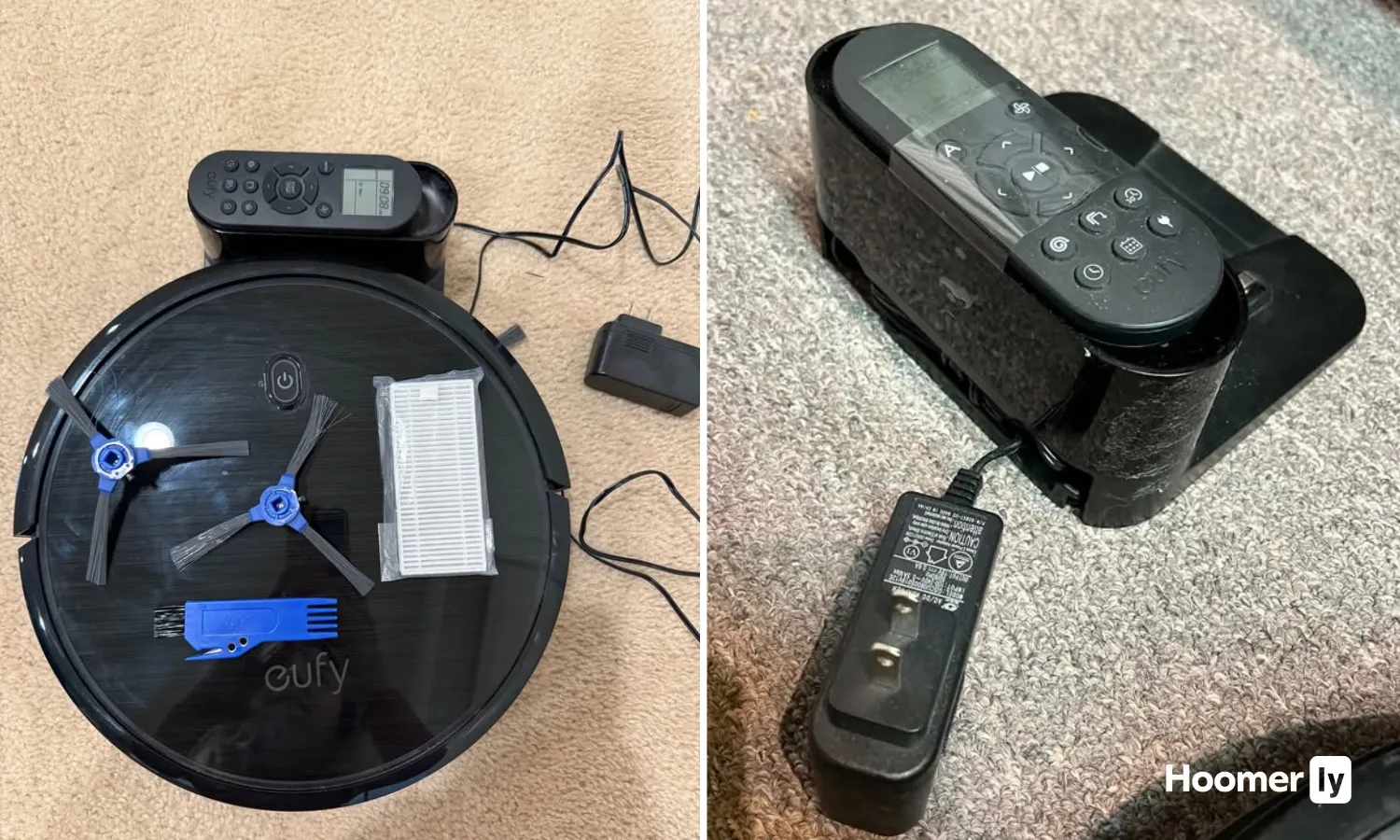
The eufy 11S MAX has 65,000+ Amazon reviews, and the most consistent thing across all of them is how quiet it is. Reviewers consistently measured around 55 dB during operation. No official eufy spec confirms that number, but the agreement across independent sources is solid. There’s no self-emptying dock, which actually helps: charges silently, no dock noise at all. At 2.85 inches tall, it fits under sofas and beds that block every other machine on this list. For a small apartment with mostly hard floors and simple furniture layout, it’s genuinely the easiest quiet robot vacuum to live with. And it’s a fraction of the price of the others.
What you give up is everything else. Bump-and-redirect navigation means it physically hits furniture to change direction. Every collision is a small noise event and a coverage miss. In a larger room or one with a lot of furniture legs, it will miss spots, and it will need several passes to cover what a LiDAR machine handles in one. No mopping, no app, no scheduling beyond a remote control. At 2,000 Pa it’s a daily maintenance machine, not a deep-clean machine. My dogs would overwhelm this dustbin in two days. But for the right home, especially if you want a quiet robot vacuum under $200, nothing touches it for value. See also the best robot vacuums for hardwood floors if hard floors are your main surface.
What to Look for in a Quiet Robot Vacuum
Noise level: what the dB numbers actually mean
50 to 55 dB is library quiet. 60 to 65 dB is closer to a normal conversation. Above 70 dB you’re into vacuum-cleaner-in-the-next-room territory. The number matters, but so does the source: manufacturer specs are often measured in anechoic chambers. Independent reviewer measurements in real rooms tend to run 3 to 12 dB higher. I’ve flagged which numbers in this article come from independent sources vs. brand claims, because that distinction matters when you’re buying for noise.
Dock noise is a separate problem
The robot running is only half the noise picture. Self-emptying docks have their own motor for suction. The industry average for dock emptying sits around 81 dB. The Narwal’s dock at 68 to 71 dB is measurably quieter. The MOVA V50 dock, by owner accounts, is the loudest in this group. If you’re buying a quiet robot vacuum specifically because of noise sensitivity, check dock noise before you commit. It’s rarely in the headline spec.
Navigation style and collision noise
LiDAR-mapped robots plan efficient paths and rarely hit furniture. Bump-and-redirect robots physically contact obstacles to change direction. Every contact is a small noise event, but more importantly they miss spots and create repeated small sounds across a session. If you’re running the robot during a nap or a call, a bump-and-redirect machine’s constant soft collisions can be more disruptive than a slightly louder but methodical LiDAR machine.
Cleaning power at low settings
High-suction machines give you options. A 24,000 Pa robot at moderate settings often cleans better than a 2,000 Pa robot at full power. If noise level is your main filter, look for one with enough suction headroom that you can run quiet settings without sacrificing cleaning quality. The MOVA V50 Ultra is the clearest example: strong carpet performance even before you touch turbo mode.
Pet hair and brush clog noise
Tangled hair on a brush roll is louder than most people expect. The robot’s motor strains audibly when the brush is fighting a tangle. The Narwal Freo Z Ultra had zero brush tangling in my experience with it. If you have dogs or cats, brush clog noise is worth factoring into your choice, not just the motor dB rating.
My Pick
For most people who want a genuinely quiet robot vacuum: the Narwal Freo Z Ultra is the one. The 53 dB standard operating noise and 68 to 71 dB dock noise are the best numbers in this group. It’s a Renewed listing, so read the condition details carefully. If you have mostly hardwood and a pet, this is the pick. If you have deep carpet throughout your home, the 55% carpet deep-clean result is a real limitation and I’d think twice.
If you want the best mopping system and a strong app along with quiet cleaning, the Roborock Qrevo Master is worth the consideration, with the caveat about small obstacle avoidance and max-mode noise. The MOVA V50 Ultra is genuinely powerful and quiet during operation, but you have to be strategic about dock placement. And the eufy 11S MAX is the pick if budget is the main constraint and your home is small. It’s not fancy. But it’s quiet, it’s reliable, and 65,000 reviewers don’t all get it wrong.
If you’re also shopping across a broader field, I have a full roundup of the best robot vacuums overall with more options and more use cases covered.
FAQs
Can a quiet robot vacuum actually clean as well as a loud one?
Yes, depending on the machine. A few years ago, quieter meant less powerful. That’s changed. The MOVA V50 Ultra runs quietly in its standard mode and still hits above-average carpet performance. The Narwal Freo Z Ultra cleans hard floors and picks up pet hair at 53 dB. Where quiet machines still tend to trail is carpet deep-cleaning at low settings. If your whole home is thick carpet, you may need to run the machine on a higher setting occasionally, which adds noise.
How do I know if the dB rating a manufacturer claims is accurate?
You often can’t take it at face value. Manufacturers measure noise in anechoic chambers under ideal conditions. Real-room measurements from independent reviewers like Vacuum Wars tend to be higher. The most reliable approach: look for multiple independent sources that agree on a number. For this article, I noted which figures came from independent review and which from brand claims so you can weigh them accordingly.
Is 65 dB actually quiet for a robot vacuum?
It’s on the quieter side for the category, but not silent. Normal conversation is about 60 dB. A quiet office runs around 50 to 55 dB. At 65 dB you’ll hear the machine running, but it won’t drown out a TV or a phone call in the next room. Whether that’s “quiet enough” depends on your situation. For nap-time or infant sleep, you probably want 55 dB or below during operation.
Do quiet robot vacuums work on carpet?
Most of them do, with caveats. The MOVA V50 Ultra handles carpet well even at standard settings. The Narwal Freo Z Ultra and eufy 11S MAX are both better suited to hard floors and area rugs than to deep pile carpet. The Roborock Qrevo Master handles carpet reasonably well, but max suction for carpet cleaning will push it past its quieter operating range. If carpet deep-cleaning is the main job, check my guide on robot vacuums for carpet for the full picture.
Should I run a quiet robot vacuum at night or during nap time?
Depends on the machine and the layout. The Narwal Freo Z Ultra at 53 dB is genuinely viable during a nap in another room. The dock emptying cycle is louder, so scheduling it to empty before the nap starts is smart. The eufy 11S MAX has no dock noise at all, but its bump navigation creates soft collision sounds throughout the run. I’d keep any self-emptying robot away from a sleeping infant’s room and let it run during a different part of the day if you want real quiet.




Write Your Review
No reviews yet. Be the first to share your experience!