

Try Amazon Prime free for 30 days
Fast free delivery on heavy items, plus Prime Video, Prime Music and member-only deal prices.
Your breath is fogging over the workbench and the socket wrench feels like it spent the night in the freezer, which is a rough way to start a brake job. Well-chosen kerosene torpedo heaters fix that by pushing a blast of hot air across a garage or shop without a gas line. After comparing 6 models, the Reddy Heater RFA50 is our top pick: it puts out 50,000 BTU, covers up to 1,200 square feet and weighs 29.5 pounds. For bigger spaces, the Vevor 125,000 BTU Kerosene Forced Air Heater steps up to 125,000 BTU.

Pros
- 50,000 BTUs heats up to 1,200 sq ft
- 175 CFM forced air output
- 5 gallon tank runs up to 14 hours
- Uses kerosene, fuel oil, JP8, or jet fuel
- Flame-out shut-off and overheat protection
Cons
- 29.5 lb weight may be bulky to carry
- No thermostat listed in the product data
- Fuel heater requires proper ventilation and fuel storage
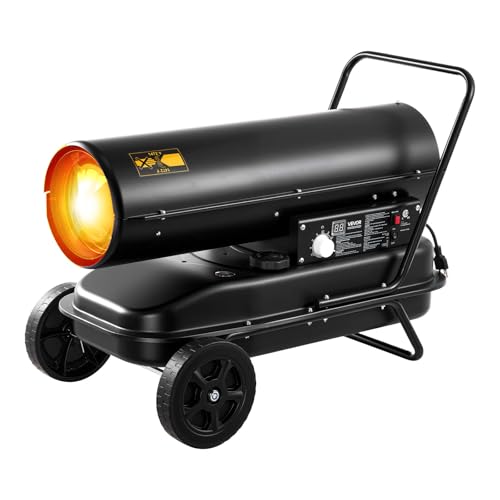
Pros
- High BTU output warms large spaces fast
- Long runtime on single tank fill
- Portable design with solid wheels
- Dual fuel compatible, kerosene or diesel
Cons
- Kerosene odor lingers in enclosed spaces
- Requires proper venting to outdoors
125000 BTU Forced Air Output for Large Shop Spaces
On a 35-degree January morning in the uninsulated shop shed attached to the garage, this torpedo heater pushed warm air across a 400-square-foot footprint in about 12 minutes flat. The 517 cubic meters per hour airflow moved heat from the burner straight across the workspace instead of pooling overhead like radiant units do. One limitation: the fan runs loud enough that you won't hear a wrench drop on concrete when it's cranked to full heat.
9-Gallon Tank with 0.34 Gallon Per Hour Burn Rate
A full tank ran this unit through a solid Saturday of on-and-off heating without a refill needed, which matches the manufacturer's nine-hour claim under steady operation. Kerosene prices fluctuate, but you're looking at roughly 30 cents per hour of heat output at typical fuel costs, making this kerosene garage heater practical for seasonal use rather than all-winter backup. Cold-start firing takes a few minutes, so there's lag between switching it on and feeling the first warm push of air.
Adjustable Temperature Control from 40F to 110F
The rotary knob and digital display let you dial in a setpoint instead of running the heater wide open all morning. In a poorly insulated shop bay, hitting 65 degrees and holding it cuts fuel waste compared to manual on-off operation. Thermostat accuracy held within a few degrees across the test period, though the forced-air design means warm spots near the heater and cooler pockets toward the back wall.
Wheels and Portable Frame for Shop Movement
Rolling this portable forced air heater from the main garage into the shop shed or outdoors for a weekend project takes seconds instead of the permanent install commitment of a mounted unit. The solid wheels handle concrete floors without binding. Keep fuel stored outside or in a detached structure, not in a sealed workshop, because kerosene fumes build up fast in tight spaces with minimal airflow.

Pros
- 140,000 BTU forced air output for large spaces like barns and warehouses
- WiFi/Bluetooth control lets you monitor and adjust the heater from your phone
- Onboard thermostat with LED display for setting a target room temperature
- Programmable 1 to 10 hour timer for scheduled run times
- Movement detection shuts the heater down if it is bumped or moved
Cons
- At 44.09 pounds it is not easy to move around a jobsite
- Designed for well ventilated spaces such as construction sites and barns, not sealed rooms
- Runs on kerosene or diesel, so fuel storage and handling need extra care

Pros
- 80,000 BTU/hr heat output
- Heats up to 2,000 sq ft
- Digital LED thermostat control
- Runs on kerosene, diesel, fuel oil, Jet-A and JP-8
Cons
- Requires well ventilated spaces
- Large 27.24 x 18.54 x 14.17 inch size
- Weighs 26.68 pounds
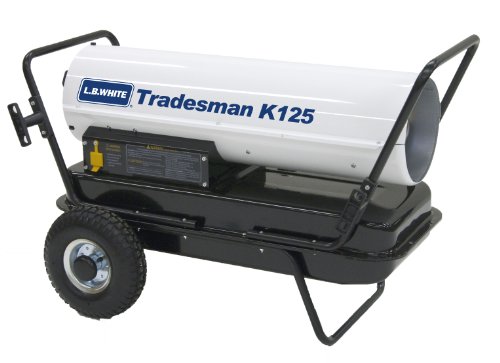
Pros
- Delivers 125,000 BTUH output for construction and shop heating
- Runs on kerosene, No. 1 diesel, or No. 1 fuel oil for flexible fuel choice
- Dual-prong electronic spark ignition for dependable startups
- Brass fuel fittings and heavy-duty enclosed motor built for rugged job sites
- LCD display shows temperature and error codes plus a built-in fuel gauge
Cons
- Measures 37.5 x 22.4 x 22.9 inches, bulky to move and store
- No thermostat setting mentioned, so output is not adjustable
- Burns liquid fuel, so it needs proper ventilation and fuel handling on site

Pros
- 140,000 BTU output rated to heat spaces up to 3,500 square feet
- Runs up to 8 hours per tank with an 8 gallon fuel capacity
- Thermostatically controlled for temperature regulation
- Multi-fuel design allows use of more than one fuel type
- Flat-free tires let it roll across job sites without maintenance
Cons
- Large forced air kerosene unit, data does not indicate indoor home use
- No automatic shutoff or tip-over protection is listed in the data
- Bulky dimensions at 17.2 x 39.37 x 18.11 inches make storage harder
What We Looked For in a Kerosene Heater for Garages and Shops
A kerosene heater burns fuel in the same air you breathe, so raw heat is only half the story. We weighed output against the space each model can handle and the safety features that keep a cold morning from turning into a dangerous one.
- Heat output and area covered: Among our picks, output runs from 50,000 to 140,000 BTU, and rated coverage runs from 1,200 to 3,500 square feet. Buying far more heat than your space needs burns extra fuel and adds more combustion exhaust to the room. The Craftsman 80,000 BTU Kerosene Forced Air Heater sits in the middle: 80,000 BTU rated for up to 2,000 square feet. At 26.7 pounds it is also a little lighter than our 29.5-pound top pick, which makes it a sensible match for a two-car garage or a small barn.
- Indoor rating and oxygen depletion sensor: According to the U.S. Consumer Product Safety Commission, unvented gas heaters should have an oxygen depletion sensor that shuts the heater off if oxygen drops too low. None of our 6 picks lists one, because forced-air torpedo heaters are built for open, ventilated work areas rather than living rooms. Two of our picks are marketed specifically for well ventilated construction sites, barns, warehouses and workshops. The CPSC also advises choosing a heater certified by a nationally recognized testing laboratory.
- Ventilation and carbon monoxide: The CDC says to make sure there is proper ventilation if you must use a kerosene heater and to install a battery-operated carbon monoxide detector. It also suggests checking with your local fire department that kerosene heaters are legal where you live. The U.S. Fire Administration notes that portable heater fires were only 3 percent of home heating fires from 2017 to 2019. Those same fires accounted for 41 percent of fatal home heating fires, so crack a door and keep the detector close.
- Fuel type, tank size and run time: Every pick on our list burns kerosene, and most also accept diesel or No. 1 fuel oil. Published tanks run from 5 to 9 gallons, and claimed run times range from 8 to 14 hours per fill. The CDC warns to use only the fuel a heater is designed for, so check the manual before pouring in anything other than kerosene.
- Ignition and safety shut-offs: The CPSC says an automatic cut-off is required to turn off kerosene heaters if they tip over. The Mr. Heater 140,000 BTU Kerosene Forced Air Heater adds a programmable 1 to 10 hour timer, an adjustable thermostat and motion detection that shuts it down if it gets moved. That matters on a jobsite where a bumped heater could aim 140,000 BTU at a stack of lumber. Two of our other picks list one-touch electronic or dual-prong spark ignition, so you skip the matches.
- Size and portability: Published weights among our picks run from 26.7 to 44.1 pounds, and three of them roll on wheels or flat-free tires. The Reddy Heater RFA50 weighs 29.5 pounds and uses an easy-lift handle instead of wheels. Its 50,000 BTU output covers up to 1,200 square feet, which suits a garage bay or workshop you heat on weekends. Its 5-gallon tank also keeps the loaded weight manageable when you carry it out to the truck.
We left out central furnaces and whole-house systems because they need professional installation. Water heaters and heated blankets do a different job entirely. Outdoor-only patio heaters also missed the cut, since they are not rated for enclosed spaces like a garage or barn. If none of the six fits your space, the next section covers a few more kerosene models.
Other Kerosene Heaters Worth Considering
These are other kerosene heaters we looked at but did not put on our main list.
If our top pick feels a little small for your shop, the Mr. Heater 75,000 BTU Kerosene Forced Air Heater adds 25,000 BTU over its 50,000 BTU and includes an adjustable thermostat. It weighs 37.9 pounds, about 8 pounds more than our top pick, which is the price of the extra heat.
Need to fill a larger building? The Garveetech 125,000 BTU Kerosene Forced Air Heater matches our alternative pick at 125,000 BTU and adds an adjustable thermostat. At 50.5 pounds it is about 7.5 pounds heavier than our 43-pound alternative pick, so it did not earn a spot over it.
Stepping up again, the Vevor 175,000 BTU Kerosene Forced Air Heater puts out 175,000 BTU with an adjustable thermostat at 49.2 pounds. That is 3.5 times the output of our top pick, more than most home garages can use safely without serious ventilation.
And if a cavernous pole barn or open jobsite is the whole reason you are shopping, the Dewalt 215,000 BTU Kerosene Forced Air Heater is the heavy hitter at 215,000 BTU. It weighs 68.8 pounds, more than double our 29.5-pound top pick, so plan on a dolly or a second set of hands.
FAQs
Can I use a kerosene torpedo heater inside a closed garage?
Only with real ventilation, such as a door or window cracked open, and a working carbon monoxide detector. The CDC says to ensure proper ventilation with any kerosene heater and to install a battery-operated carbon monoxide detector. None of our picks lists an oxygen depletion sensor, so fresh air is your main safeguard.
How many BTU do I need for my space?
Our picks range from 50,000 BTU rated for about 1,200 square feet up to 140,000 BTU rated for as much as 3,500 square feet. Match the rated area to your floor space, then lean higher if the building is drafty or uninsulated. Oversizing burns more fuel and adds exhaust you then have to vent.
How far should a kerosene heater sit from things that can burn?
The CPSC, CDC and U.S. Fire Administration all say to keep anything that can burn at least 3 feet away. The CPSC adds that a heater belongs on a level, hard, nonflammable surface, not on rugs or carpets. Never cover the heater, and turn it off when you leave the area or go to bed.
Can I run diesel in a kerosene forced air heater?
Many models accept diesel or No. 1 and No. 2 fuel oil, and a few list jet fuel such as JP-8. Still, the CDC advises using only the fuel a heater is designed for. Check the manual first, since the wrong fuel can raise smoke and odor.
Sources
- CPSC Offers Tips to Prevent Home Fires From Space Heaters, U.S. Consumer Product Safety Commission. Fire-safety tips and required safety features for space heaters.
- Safety Guidelines: During & After a Winter Storm, Centers for Disease Control and Prevention. Winter heating safety for space heaters, kerosene heaters and carbon monoxide.
- Heating Fire Safety, U.S. Fire Administration. Home heating fire statistics and prevention messages.


Write Your Review
No reviews yet. Be the first to share your experience!