

Prime Big Deal Days: October 6 - 7, 2026
Members only: two days of exclusive deals across Amazon. A 30-day free trial unlocks the same prices and fast free delivery.
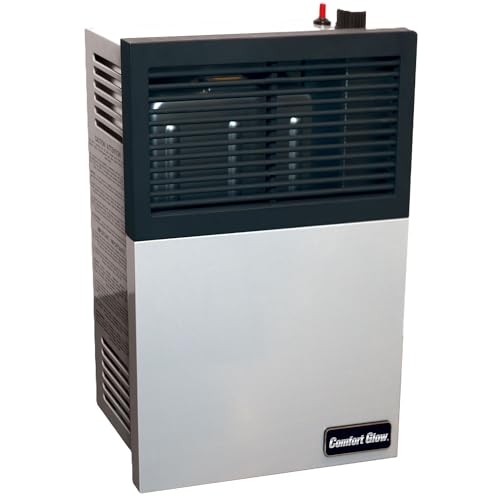
When the garage feels like a walk-in freezer and your coffee cools before the wrench warms up, gas wall heaters can make a cold work space usable. A wall heater adds fixed heat without giving up floor space. After comparing 4 models, the Comfort Glow KWN211 is the top pick for its 12,000 BTU output, coverage up to 500 square feet and oxygen depletion sensor. The Comfort Glow 17,000 BTU Natural Gas Wall Heater is the alternative pick with 17,000 BTU for up to 500 square feet.

Pros
- 12,000 BTU natural gas heater
- Heats up to 500 sq. ft.
- No electricity required
- Manual adjustable heat settings
- Built-in oxygen depletion sensor
Cons
- Natural gas model, not for other fuels
- Floor stand and blower are optional accessories
- Manual control, no thermostat listed

Pros
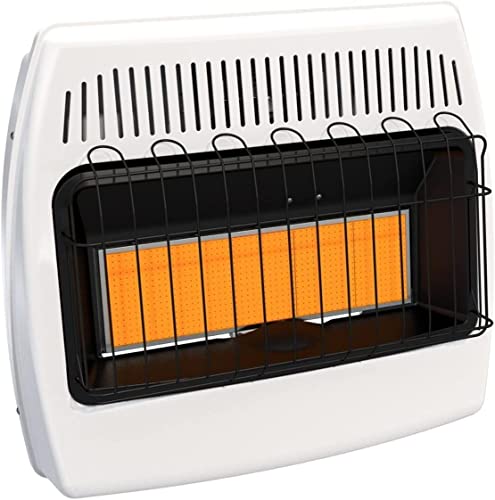
- 17,000 BTU heats up to 500 sq. ft.
- Thermostatic heat control for adjustable warmth
- No electricity needed for power outage use
- Sealed burn system with safety pilot
- Includes vent kit for 4.5 to 10 inch walls
Cons
- Requires natural gas and direct wall venting
- Limited to spaces up to 500 sq. ft.
- 43 lb weight may need sturdy wall mounting
Pros
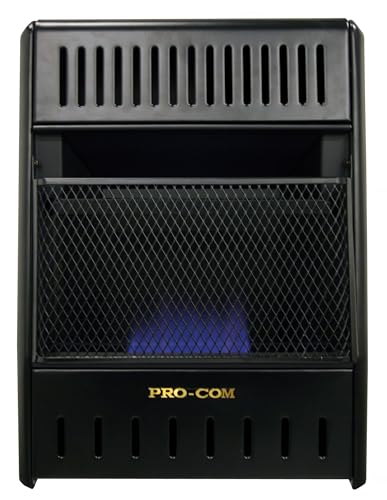
- 11,000 BTU output heats up to 350 sq. ft.
- Thermostatic heat control for adjustable warmth
- Direct vent design needs no chimney
- No electricity required for operation
- Includes professional vent kit
Cons
- Requires minimum 100 lb. propane tank
- Needs two-stage low-pressure regulator
- Limited to rooms up to 350 sq. ft.
Pros
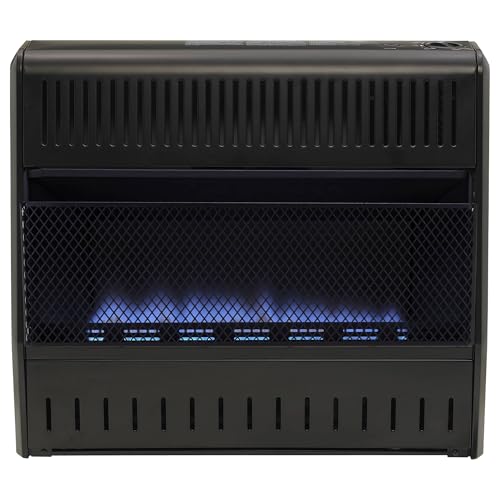
- 30,000 BTU/hr heats up to 1,000 sq ft
- Dual fuel, propane or natural gas
- Electronic spark ignition and thermostat control
- Oxygen depletion sensor with auto shut-off, CSA certified
- 99.9% efficiency, no electricity required
Cons
- Not for sale in CA, AK, or HI
- 30.875 lb weight may make setup harder
- Heating coverage limited to up to 1,000 sq ft
How We Chose Wall Heaters for Backup Heat and Work Spaces
A wall heater for a cabin, workshop or emergency backup has to do more than make a room feel warm. Output, room size, venting and carbon monoxide precautions matter because these heaters burn fuel indoors or through a wall.
- Heat output and coverage: We gave the most weight to BTU output because it tells you how much heat the unit is designed to produce. Among our picks, output runs from 11,000 BTU to 30,000 BTU, and stated coverage runs from 350 square feet to 1,000 square feet. The Comfort Glow KWN211 sits in the practical middle with 12,000 BTU and coverage up to 500 square feet, which fits many garages, cabins and single-room backup setups.
- Indoor rating and oxygen depletion sensing: Indoor fuel-burning heaters need safety features that address oxygen levels, not just heat. The U.S. Consumer Product Safety Commission says unvented gas heaters should have an oxygen depletion sensor that shuts the heater off if oxygen drops too low. The Jewuno 30,000 BTU Propane Wall Heater pairs 30,000 BTU with coverage up to 1,000 square feet, an adjustable thermostat and an oxygen depletion sensor, which is why it stands out for larger spaces that still need indoor safeguards.
- Ventilation and carbon monoxide precautions: We separated direct-vent models from vent-free models because the installation and risk profile are different. Two of our picks vent directly through a wall, and two of our picks are vent-free. The CDC recommends installing a battery-operated carbon monoxide detector and using only the type of fuel the heater is designed to use, which is especially important during power outages.
- Fuel type, tank size and run time: Fuel choice matters because propane and natural gas setups are not interchangeable unless the heater is built for both. One propane direct-vent pick requires at least a 100-pound propane tank and a two-stage low-pressure regulator. The Comfort Glow 11,000 BTU Propane Wall Heater is rated at 11,000 BTU for up to 350 square feet and has an adjustable thermostat, so it is the better scale for a smaller room than a 30,000 BTU unit.
- Ignition and safety shut-offs: Ignition details matter when the power goes out or when the heater sits unused between cold snaps. Among our picks, two direct-vent models include electronic ignition and a safety pilot with a built-in pressure regulator that stops gas flow if the pilot is extinguished. The CPSC also advises choosing a heater certified by a nationally recognized testing laboratory, and one vent-free pick in our list is CSA certified.
- Size and placement: Wall mounting saves floor area, but clearances still matter. The U.S. Fire Administration says anything that can burn should stay at least 3 feet from space heaters. Among our picks, one direct-vent unit is 20 inches high and 17 inches wide, while another is 20 inches high and 27.3 inches wide, so the wall space you have can narrow the choice before BTU output does.
We excluded central furnaces and whole-house systems because they need professional installation and solve a broader heating problem. We also left out water heaters, heated blankets and outdoor-only patio heaters because they do a different job or are not rated for enclosed spaces.
The Competition
These are other wall heaters we looked at but did not put on our main list.
If you want more stated coverage than our top pick, ProCom MN300HPA is rated at 30,000 BTU and up to 1,200 square feet. It also lists an oxygen depletion sensor and a 26-pound weight, but it did not match the main list as closely for this search because the selected picks give a clearer spread of vented, vent-free, propane and natural gas choices.
For smaller spaces, ProCom MN100TPA uses 10,000 BTU and is rated for up to 500 square feet. It includes an adjustable thermostat and an oxygen depletion sensor, but its lower BTU output makes it less flexible than our top pick for a cold garage or workshop where recovery time can matter.
Prefer natural gas and a higher ceiling on output? Mr. Heater 30,000 BTU Natural Gas Heater is rated at 30,000 BTU and up to 1,000 square feet, with an adjustable thermostat and a 24.7-pound weight. It remains outside the main list because our alternative pick gives a direct-vent natural gas route, while the main list also includes a dual-fuel vent-free option for larger spaces.
And if maximum stated coverage is the whole reason you are shopping, ProCom MN300HBA is rated at 30,000 BTU and up to 1,400 square feet. It lists an oxygen depletion sensor and a 26-pound weight, but that broader coverage rating was not enough to move it ahead of the main picks, which better balance output, fuel type and ventilation differences.
FAQs
How many BTU do I need for a garage or cabin?
Our picks range from 11,000 BTU to 30,000 BTU, with stated coverage from 350 square feet to 1,000 square feet. A smaller insulated room can often make sense with the lower end of that range, while a larger workshop may call for the higher end.
Are vent-free wall heaters safe indoors?
Vent-free heaters can be indoor-rated, but safety features and ventilation rules matter. The CPSC says unvented gas heaters should have an oxygen depletion sensor, and the CDC recommends a battery-operated carbon monoxide detector when using fuel-burning heat.
Do gas wall heaters work during a power outage?
Several of our picks require no electricity, which is useful when backup heat is the main goal. Fuel supply still matters, and one propane direct-vent pick requires at least a 100-pound propane tank with a two-stage low-pressure regulator.
How much clearance should I leave around a wall heater?
The U.S. Fire Administration says to keep anything that can burn at least 3 feet from space heaters. The CDC gives the same 3-foot guidance for drapes, furniture and bedding, and also says never to cover a space heater.
Sources
- CPSC Offers Tips to Prevent Home Fires From Space Heaters, U.S. Consumer Product Safety Commission. Fire-safety tips and required safety features for space heaters.
- Safety Guidelines: During & After a Winter Storm, Centers for Disease Control and Prevention. Winter heating safety for space heaters, kerosene heaters and carbon monoxide.
- Heating Fire Safety, U.S. Fire Administration. Home heating fire statistics and prevention messages.




Write Your Review
No reviews yet. Be the first to share your experience!