

Prime Big Deal Days: October 6 - 7, 2026
Members only: two days of exclusive deals across Amazon. A 30-day free trial unlocks the same prices and fast free delivery.
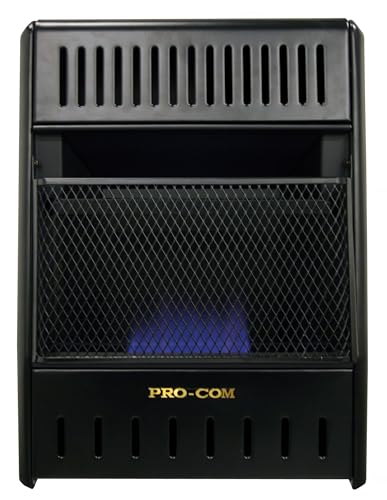
You wake up in the cabin, see your breath, and start negotiating with the dog over who gets out of bed first. Wall-mounted direct vent propane heaters fix that by pulling combustion air from outside and sending exhaust back outdoors. After comparing 6 models, the Ashley 11,000 BTU Propane Wall Heater is our top pick. It puts out 11,000 BTU, covers up to 375 square feet and weighs about 40 pounds. For larger rooms, the Ashley 17,000 BTU Propane Wall Heater steps up to 17,000 BTU for up to 570 square feet.

Pros
- 11,000 BTU liquid propane wall heater
- Heats up to 375 sq ft
- Sealed burn system for bedrooms and living spaces
- Safety pilot stops gas if pilot is extinguished
- Includes heat shield, air intake pipe, and connecting rod
Cons
- For liquid propane only
- 375 sq ft coverage limits it to compact spaces
- 40 lb weight may make installation harder

Pros
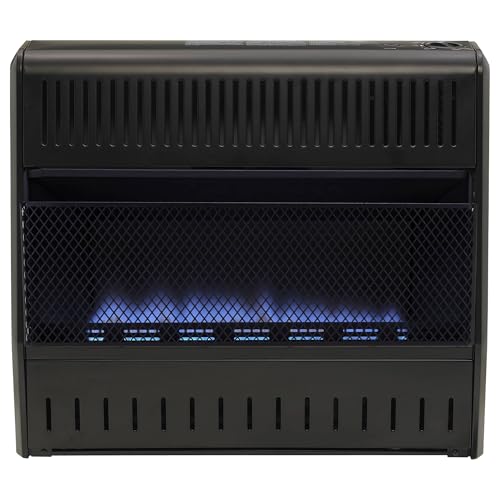
- 17,000 BTU output rated to heat up to 570 sq ft
- Direct vent design with complete vent kit included for setup
- Safety pilot with pressure regulator stops gas flow if pilot goes out
- Matchless Piezo ignition for quick startup
- Stainless steel ported burner for quiet on and off operation
Cons
- Requires liquid propane fuel and a direct vent installation, not a plug in unit
- At 58 pounds it is not easily portable between rooms
- Limited to around 570 sq ft, not suited for larger or open floor plans

Pros
- Produces up to 8,000 BTUs for spaces up to 300 sq ft
- Operates without electricity, suited to power outages or off-grid use
- Matchless piezo ignition for startup without external power
- Direct-vent sealed burn system vents exhaust outdoors
- Includes mounting bracket and full vent kit for installation
Cons
- Requires a minimum 100 lb propane tank, sold separately
- Needs direct-vent installation through a wall, not a plug in option
- Top control knob only sets heat level until pilot is lit manually

Pros
- 36,500 BTU propane heat output
- Programmable thermostat for set temperatures
- Cool-to-the-touch cabinet for added safety
- Self-diagnostic electronics support safe operation
- 10-year heat exchanger warranty
Cons
- Requires propane and direct vent installation
- 108 lb weight makes placement a bigger project
- Fixed wall furnace, not a portable heater

Pros
- 11,000 BTU direct vent propane wall furnace for consistent room heating
- Modulating technology designed to eliminate cold spots
- Cool-to-the-touch cabinet with self-diagnostic electronics
- Programmable thermostat with Wi-Fi enabled system integration
- 10-year heat exchanger warranty, 5-year parts, 2-year labor coverage
Cons
- Requires direct vent propane installation, not a plug-in portable unit
- Weighs 53 pounds, needing secure wall mounting by a qualified installer
- Fixed 11,000 BTU output may not suit much larger spaces

Pros
- 20,700 BTU output with modulating technology to reduce cold spots
- Cool-to-the-touch cabinet designed for households with children
- Programmable thermostat with Wi-Fi enabled system integration
- Self-diagnostic electronics for monitoring operation
- 10-year heat exchanger warranty, 5-year parts, 2-year labor coverage
Cons
- Weighs 67 pounds, requiring secure wall mounting and professional installation
- Direct vent design means it needs proper venting setup, not a portable option
- No stated heating area or square footage, making room-size suitability unclear
What We Looked For in a Propane Heater for Cabins, Garages and Outages
A propane heater burns fuel inside your living space, so the right one balances heat output against how it handles air and exhaust. We weighed each pick on the six points below.
- Heat output and coverage: Among our picks, output runs from 8,000 to 36,500 BTU. The Ashley 11,000 BTU Propane Wall Heater lands in the middle with 11,000 BTU rated for up to 375 square feet. That covers a typical bedroom, a small cabin or a one-car workshop. The Ashley ratings on our list run from 300 to 570 square feet, so measure the room before you choose an output.
- Indoor rating and oxygen safety: According to the U.S. Consumer Product Safety Commission, unvented gas heaters should have an oxygen depletion sensor that shuts the heater off if oxygen drops too low. All 6 of our picks are direct-vent wall units, and the 3 Ashley models use a sealed burn system that keeps combustion separate from room air. Two of our picks are also approved for mobile or modular homes. The CPSC also advises choosing a heater certified by a nationally recognized testing laboratory.
- Ventilation and carbon monoxide: Venting is not optional with fuel-burning heat. The U.S. Fire Administration reports that portable heaters caused only 3 percent of home heating fires but 41 percent of the fatal ones, which is one reason we stuck to fixed, vented units. The Centers for Disease Control and Prevention recommends a battery-operated carbon monoxide detector, so install one even with a sealed system. Keep anything that can burn at least 3 feet from the heater.
- Fuel type and tank size: All 6 picks burn propane, and the Ashley units are built for liquid propane only. The CDC warns to use only the fuel a heater is designed for, so never swap in natural gas without the correct model. The Ashley 8,000 BTU Propane Wall Heater makes 8,000 BTU for up to 300 square feet and is recommended with at least a 100-pound tank. It also runs without electricity, which matters most during an outage or at an off-grid cabin.
- Ignition and safety shut-offs: The 3 Ashley models use matchless piezo ignition and a safety pilot that stops gas flow if the pilot goes out. The Rinnai 36,500 BTU Propane Heater takes a different route with self-diagnostic electronics, a cool-to-the-touch cabinet and an adjustable, programmable thermostat. Its 36,500 BTU output suits a large open floor plan. It also carries a 10-year heat exchanger warranty and 5 years on parts.
- Size and portability: These are wall-mounted units, not heaters you carry from room to room. Weights among our picks run from 17 to 108 pounds, so the larger models need solid wall framing and probably a second person. Our top pick measures 17.36 by 6.61 by 20 inches, and its kit includes a heat shield, air intake pipe and connecting rod.
We left out central furnaces and whole-house systems because they need professional installation and do far more than heat one room. Water heaters and heated blankets do a different job entirely. Outdoor-only patio heaters were excluded because they are not rated for enclosed spaces. If none of our six fits your wall or your room, the models below are worth a look.
Other Propane Heaters Worth Considering
These are other propane heaters we looked at but did not put on our main list.
If weight is your biggest worry, the Comfort Glow 11,000 BTU Propane Wall Heater matches our top pick at 11,000 BTU but weighs 28 pounds instead of 40. It is rated for up to 350 square feet, about 25 fewer than our top pick, and adds an adjustable thermostat. It is a fair trade for a lighter install on an older wall.
Need to heat a smaller bedroom? The Comfort Glow DVP08 delivers 8,000 BTU, compared with 11,000 BTU from our top pick, and is rated for up to 250 square feet. At 23 pounds it is easy to mount, though its coverage trails the 300 square feet of the 8,000 BTU Ashley on our list.
Somewhere between those two sits the Fatboy DV210 at 10,000 BTU, just 1,000 BTU short of our top pick. It weighs 42 pounds, about 2 pounds more than our top pick, so it gives up a little output without saving any weight. That kept it off our main list.
And if raw heat for a big shop or barn is the whole reason you are shopping, the Mr. Heater 125,000 BTU Propane Forced Air Heater is a different class of tool. It produces 125,000 BTU against 11,000 BTU for our top pick and is rated for up to 3,125 square feet. At 19.7 pounds it moves easily, but it is a forced-air unit rather than a sealed direct-vent wall heater, so plan for ventilation.
FAQs
How many BTUs do I need for a garage or cabin?
Start with the square footage of the space you want warm. The Ashley models on our list run from 8,000 BTU for 300 square feet to 17,000 BTU for 570 square feet. Large open spaces may call for something closer to 36,500 BTU.
Do direct-vent heaters need an oxygen depletion sensor?
The CPSC recommends an oxygen depletion sensor for unvented gas heaters, because they burn room air. A sealed direct-vent unit draws combustion air from outdoors and vents exhaust outside instead. You should still add a battery-operated carbon monoxide detector, as the CDC advises.
Will a propane wall heater work during a power outage?
Many will. The 3 Ashley models among our picks light with a matchless piezo igniter, and one is listed as running with no electricity at all. A tank of at least 100 pounds helps it run through a long outage.
How much clearance does a propane heater need?
The CPSC, CDC and U.S. Fire Administration all say to keep a heater at least 3 feet from bedding, drapes and furniture. The USFA also recommends turning space heaters off when you leave the room or go to bed. Never cover a heater, even briefly.
Sources
- CPSC Offers Tips to Prevent Home Fires From Space Heaters, U.S. Consumer Product Safety Commission. Fire-safety tips and required safety features for space heaters.
- Safety Guidelines: During & After a Winter Storm, Centers for Disease Control and Prevention. Winter heating safety for space heaters, kerosene heaters and carbon monoxide.
- Heating Fire Safety, U.S. Fire Administration. Home heating fire statistics and prevention messages.




Write Your Review
No reviews yet. Be the first to share your experience!