

Free Delivery. Exclusive Deals. All Prime.
Prime members save on shipping and get first access to deals, plus Prime Video included. 30 days free.
Bare feet on cold tile can make a quick tooth brushing feel like a polar expedition. Electric baseboard heaters for bathroom spaces add targeted heat without asking the whole house to catch up. After comparing 5 models, the Cadet Baseboard Heater stands out for 1,500 watts, an adjustable thermostat and UL certification. The Stelpro AB0501W is the better small-space alternative because its 500 watts are rated for up to 50 square feet.

Cadet Manufacturing 09956 240-Volt White Baseboard Hardwire Electric Zone Heater, 1500-Watt, 72-Inch
Pros
- 1500/1125-Watt output at 240/208 Volt for zone heating
- 72-Inch length baseboard design for broad room coverage
- 25 Gauge steel construction with powder coated junction box
- UL Listed heater for added assurance
- 20 Gauge all metal junction box with ground
Cons
- Requires a separate thermostat, not included with the unit
- Hardwire installation needed, not a plug in unit
- No stated tip-over or overheat protection in the listing
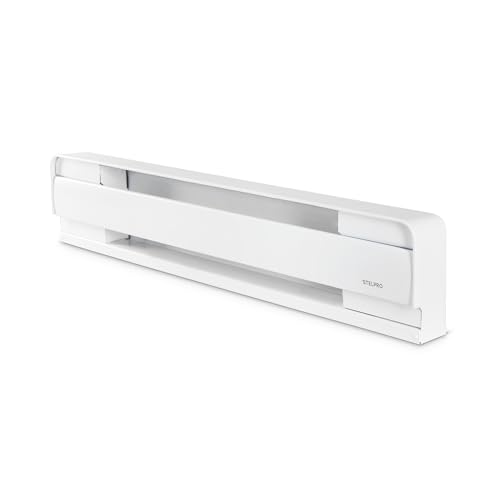
Pros
- 500W output covers up to 50 sq ft of space
- One-piece steel cabinet reduces ticking and popping noise
- Overheat protection cuts power if airflow is blocked
- Rounded corners help protect children and pets
- Backed by a 5-year warranty plus lifetime element coverage
Cons
- Requires a separately sold thermostat since none is included
- Hardwired installation only, not a plug-in unit
- Needs a dedicated 120V circuit and professional wiring setup
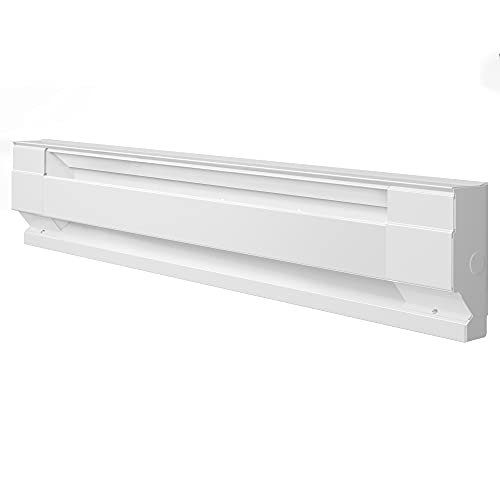
Pros
- Delivers 2560 or 1925 BTU depending on the 240V or 208V setting
- Multi-watt capability of 750 or 563 watts for flexible output
- Convection heat design circulates warm air through the room
- Simple setup with universal wiring and pre-punched knockouts
- Backed by a limited lifetime warranty
Cons
- No thermostat, timer or remote control is listed for this model
- Runs on 240/208 volt wiring, so professional installation may be needed
- Fixed 36 inch baseboard unit cannot be moved between rooms like portable heaters

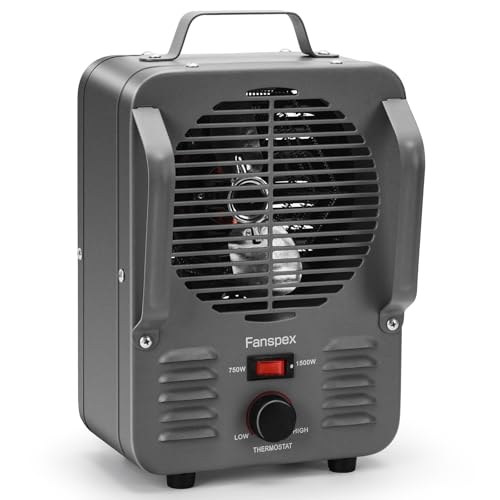
Pros
- 1500-watt convection heating element for medium-sized rooms
- Two heat settings plus digital adjustable thermostat with clear display
- Safety tip-over switch automatically shuts off the unit if knocked over
- Overheat protection sensor monitors temperature during use
- Stay-cool body and dent-proof end panels for durable, safe operation
Cons
- No remote control or timer feature is mentioned for scheduling
- Only two heat settings limit fine-tuned temperature control
- Fixed baseboard design offers less placement flexibility than portable heaters

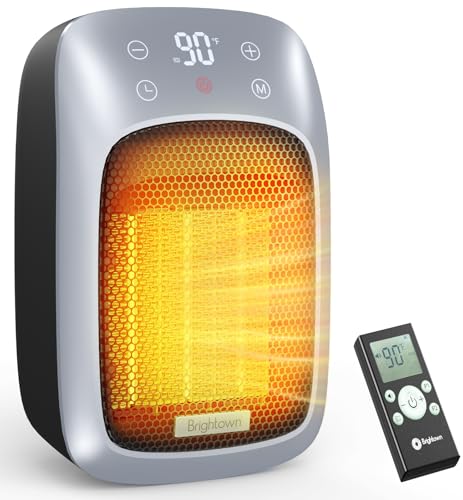
Pros
- 1,000W electric baseboard heater
- Warms rooms up to 175 sq. ft.
- 120V radiant and convection heat
- Wall mount design saves floor space
- Fanless operation for quiet heating
Cons
- 175 sq. ft. coverage limit
- Wall mount design is not portable
- Indoor electric use only
What Matters in Bathroom Baseboard Heaters
A bathroom heater has to do more than warm the air. It needs to fit around tight walls, stay clear of towels and rugs, and make sense near the electrical setup you actually have.
- Safe design for bathroom use: Safety certification matters because bathrooms combine small footprints with towels, mats and cabinets. The Cadet Baseboard Heater is UL certified and uses a 20 gauge junction box with ground. It is also a hardwired unit, so placement should be planned around a proper circuit rather than a loose cord near water.
- Wattage for a small room: More wattage is not always better in a bathroom, because the room may be compact and quick to heat. Among the main picks, output ranges from 500 watts to 1,500 watts. The lower end is better suited to a very small room, while the upper end gives more reserve for a chilly exterior wall or a larger bath area.
- Tip-over and overheat protection: Portable designs need extra attention because they can be bumped by feet, hampers or a door swing. The Comfort Zone CZ650B lists tip-over protection and overheat protection, both useful safeguards in a tight bathroom. It weighs 4 pounds, so the automatic shutoff features matter more than they would on a fixed hardwired heater.
- Thermostat and timer: A thermostat helps keep a bathroom from cycling between chilly and stuffy. Three of the main picks require or include thermostat control, while one portable pick lists a digital adjustable thermostat. None of the main picks list a timer, so anyone who wants scheduled heat should plan around thermostat behavior instead of countdown settings.
- Size and outlet placement: Baseboard heaters work best when their length and wiring path fit the room before installation starts. The Cadet 1,925 BTU Baseboard Heater is a 36 inch unit rated at 563 watts on one setting and 1,925 BTU. It weighs 7 pounds, which makes it easier to place than a larger fixed unit, but it still needs a suitable wall run and clearance.
Central furnaces and whole-house systems were excluded because they need professional installation and solve a broader heating problem. Water heaters and heated blankets do different jobs, and unvented fuel heaters without an indoor rating were left out because carbon monoxide is a serious indoor risk.
Other Baseboard Heaters Worth Considering
These are other baseboard heaters we looked at but did not put on our main list.
If you want a portable baseboard style with familiar safeguards, Comfort Zone CZ600 is an alternative with 1,500 watts, an adjustable thermostat and both tip-over and overheat protection. At 4.8 pounds, it is slightly heavier than the portable pick on the main list, so it gives a different design and feature mix at a similar heat output.
For shoppers drawn to wall-mounted heat, Dreo Wall Heater brings a much larger claimed coverage area, rated for up to 750 square feet. It also lists 28 dB operation and weighs 6.1 pounds, but that large-room orientation does not match a small bathroom need as closely as the main list.
And if a compact bathroom unit is the whole reason you are shopping, Lasko CD08200 is another not-picked option with 1,500 watts and ETL certification. It weighs 3.4 pounds, which is lighter than several portable alternatives, but its form and feature set do not align with baseboard placement as directly as the main picks.
FAQs
Are baseboard heaters safe in a bathroom?
They can be, but placement and certification matter. The U.S. Consumer Product Safety Commission says to choose a heater certified by a nationally recognized testing laboratory and keep it at least 3 feet from bedding, drapes, furniture or other flammable materials.
How much wattage makes sense for a small bathroom?
Our main picks range from 500 watts to 1,500 watts, which covers small rooms and chillier spaces. A 500 watt hardwired unit can make sense for a bathroom up to 50 square feet, while 1,500 watts offers more output for larger or colder rooms.
Should I choose a hardwired or portable bathroom heater?
A hardwired heater can reduce cord and outlet clutter, which is helpful in a room where outlet location matters. A portable heater should have automatic shutoff, and the CDC recommends electric space heaters with automatic shut-off switches and non-glowing elements.
Where should a bathroom baseboard heater go?
It should sit where airflow is not blocked and where towels, rugs and furniture can stay at least 3 feet away. The U.S. Fire Administration also says to turn space heaters off when leaving the room or going to bed.
Sources
- CPSC Offers Tips to Prevent Home Fires From Space Heaters, U.S. Consumer Product Safety Commission. Fire-safety tips and required safety features for space heaters.
- Heating Fire Safety, U.S. Fire Administration. Home heating fire statistics and prevention messages.
- Safety Guidelines: During & After a Winter Storm, Centers for Disease Control and Prevention. Winter heating safety for space heaters, kerosene heaters and carbon monoxide.


Write Your Review
No reviews yet. Be the first to share your experience!