

Free Delivery. Exclusive Deals. All Prime.
Prime members save on shipping and get first access to deals, plus Prime Video included. 30 days free.
When your desk feels like a refrigerator shelf but the rest of the house is fine, turning up the whole thermostat feels silly. Type room heaters solve that by putting electric heat where you actually sit or sleep. After comparing 4 models, the Qowetu 24-Inch Space Heater stands out for 1,500 watts, a 700-watt low setting and 2 key shutoffs. The Qowetu Ceramic Heater is the alternative pick, with 1,500 watts and a 700-watt low setting.

Pros
- 3 heat levels, 700W, 1000W, and 1500W
- Smart thermostat uses built-in temperature sensors
- Tip-over auto shutoff and overheat protection
- Remote control and 0 to 12 hour auto-off timer
- ETL-certified safety
Cons
- Heating area is only described as a small room
- Remote needs 2 AAA batteries, not included
- Indoor use only

Pros
- 700W, 1000W, and 1500W heat settings
- ECO mode adjusts output by ambient temperature
- 70° oscillation helps spread warm air
- 0 to 12 hour timer and remote control
- Tip-over, overheat protection, and ETL certification
Cons
- Heating area is not specified
- Remote needs 2 AAA batteries, not included
- No noise level in dB is listed
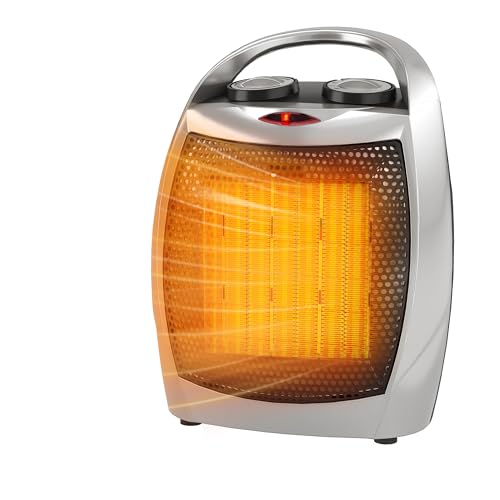
Pros
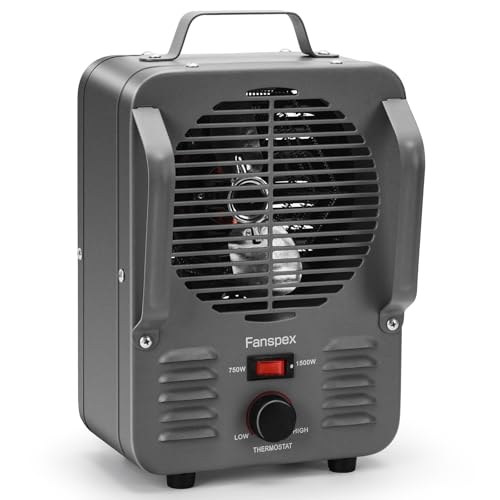
- 1500W and 750W heat settings
- PTC ceramic heat delivers warm air in 2 seconds
- Overheat, tip-over, and fuse protection
- Below 46 dB noise rating
- 3.12 lb body with integrated handle
Cons
- Small 7 x 5.7 x 9.2 inch heater for spot heating
- No heating area is listed
- Thermostat range is not specified

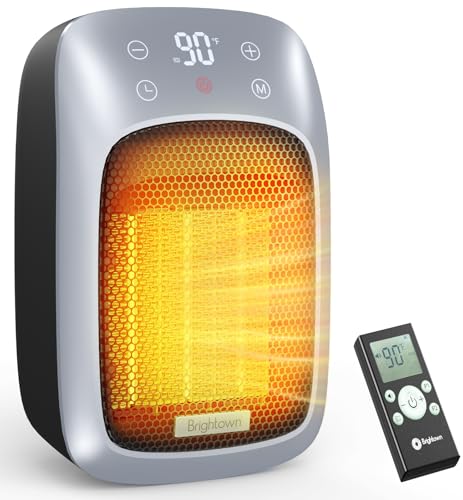
Pros
- 1500W electric ceramic heater
- 70° oscillation helps spread warm air
- 5 modes plus adjustable thermostat
- 12H timer and remote control
- Tip-over, overheat protection, ETL certified
Cons
- Heating coverage is not specified
- Remote needs 2 AAA batteries, not included
What Matters Most in Heaters for Type Room Heaters
A room heater has to do a simple job without creating a new problem. Heat output matters, but so do shutoffs, clearance habits and controls you can understand when the room is cold.
- Heat output for the room: Among our picks, maximum heat output reaches 1,500 watts, which is the main figure to compare for electric room heat. The Qowetu 24-Inch Space Heater pairs that top setting with a 700-watt low setting, so it can move from spot warming to steadier background heat. A lower setting also gives you a way to avoid running full power when only one corner of the room feels cold.
- Safety shutoffs and certification: Tip-over protection and overheat protection were baseline features for the main picks, because portable heaters are often placed near beds, desks and sofas. The Qowetu 17-Inch Space Heater includes both of those protections and is listed with ETL-certified safety. According to the U.S. Consumer Product Safety Commission, an automatic cut-off is required to turn off electric or kerosene heaters if they tip over.
- Thermostat and controls: All 4 main picks include some form of adjustable thermostat, which matters if you want the heater to cycle instead of blasting continuously. Two of our picks include a remote and a 12-hour timer, useful when the heater is across the bedroom or beside a sofa. Clear controls are especially important at night, when a real-time display or simple mode button can prevent guesswork.
- Noise level: Noise figures were limited, so we gave extra credit only where a number was stated. The Takywep Ceramic Heater is listed below 46 decibels, and it combines that with 1,500 watts and a 750-watt low setting. That combination makes sense for a desk or bedroom where fan noise can be more annoying than the chill.
- Oscillation and heat spread: Heat spread is important because a heater pointed in one direction can make your knees warm while the rest of the room stays cold. Two of our picks list 70-degree oscillation, which helps sweep warm air side to side rather than concentrating it in one narrow path. Oscillation is most useful in bedrooms, offices and living rooms where people are not sitting directly in front of the heater.
- Size and portability: Height and weight affect whether a heater belongs on the floor, near a desk or in a corner. Our main picks include 24-inch tower-style models, a 17-inch model and a compact unit that measures 7.08 inches long by 5.16 inches wide. The lightest listed weight is 3.1 pounds, which is easier to move between an office and bedroom than a taller tower design.
We excluded central furnaces and whole-house systems because they require professional installation, and they are not room-by-room appliances. We also left out water heaters and heated blankets because they do different jobs, and unvented fuel heaters without an indoor rating because of the carbon monoxide risk indoors.
Other Heaters Worth Considering
These are other heaters we looked at but did not put on our main list.
If you would rather compare a more traditional compact design, GiveBest Space Heater has 1,500 watts with a 750-watt low setting. It is rated for up to 200 square feet and includes both tip-over and overheat protection, but our top pick offers a 700-watt low setting and a tower format for broader placement options.
For shoppers focused on stated room coverage, Dreo Space Heater is rated for up to 270 square feet. Its thermostat range runs from 41 to 95 degrees Fahrenheit, and it includes tip-over and overheat protection. Compared with our alternative pick, it emphasizes a wider published thermostat range rather than the 700-watt low setting called out on our main list.
Prefer a taller tower with a published sound number? Dreo 25-Inch Space Heater is listed at 25 decibels and is rated for up to 270 square feet. It also includes tip-over and overheat protection, but it is 1 inch taller than the 24-inch tower-style main picks.
And if a simple high-low ceramic heater is the reason you are shopping, Garvee Ceramic Heater gives you 1,500 watts and a 750-watt low setting. Its listing gives a 45-decibel noise figure and includes tip-over and overheat protection. That noise number is slightly lower than the sub-46-decibel figure on one compact main pick, though the main list gives more variety in tower height and oscillation.
FAQs
What wattage should a room heater have for spot heating?
Our picks top out at 1,500 watts, which is the common ceiling shown across this group of electric room heaters. Low settings range from 700 to 750 watts, which can be useful when you need steady warmth near a desk or bed rather than full-power heat.
Which safety features matter most for type room heaters?
Tip-over protection and overheat protection are the first features to look for, and all 4 main picks include both. The U.S. Fire Administration says portable heater fires were only 3 percent of home heating fires in a recent multi-year period, but they accounted for 41 percent of fatal home heating fires.
How much clearance does a room heater need?
The U.S. Consumer Product Safety Commission says to keep a heater at least 3 feet from bedding, drapes, furniture or other flammable materials. The U.S. Fire Administration gives the same 3-foot clearance advice and also says to turn space heaters off when leaving the room or going to bed.
Are oscillation and a remote worth having?
Two of our main picks list 70-degree oscillation, which can help move warm air across a wider part of the room. A remote and a 12-hour timer are useful if the heater sits across the room, but safety habits still matter more than convenience controls.
Sources
- CPSC Offers Tips to Prevent Home Fires From Space Heaters, U.S. Consumer Product Safety Commission. Fire-safety tips and required safety features for space heaters.
- Heating Fire Safety, U.S. Fire Administration. Home heating fire statistics and prevention messages.
- Safety Guidelines: During & After a Winter Storm, Centers for Disease Control and Prevention. Winter heating safety for space heaters, kerosene heaters and carbon monoxide.


Write Your Review
No reviews yet. Be the first to share your experience!