

The difference between a cheap random-navigation robot vacuum and a cheap LiDAR mapping robot is night and day. One bounces around like a pinball, misses corners, runs the same spot three times, and frustrates you within a week. The other builds a real map of your home, runs a systematic cleaning pattern, and actually keeps up with a daily schedule.
I’ve had both kinds in my house, and I will never go back to a random-navigation machine. After running four models through my Midwest home, with two dogs and a mix of hardwood, area rugs, and one carpeted bedroom, here’s what I found. My top picks include the Roborock Q7 M5+ (my best overall pick), the Tapo RV20 Max Plus for buyers who need a self-emptying dock at the lowest possible price, and the iRobot Roomba 105 Combo if brand trust and mopping matter to you.
Everything I Recommend
These are the four best budget robot vacuums with mapping I’d point someone toward right now.
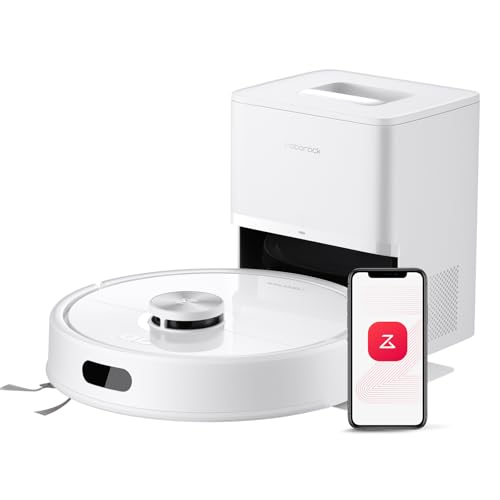
Pros
- LiDAR mapped my entire first floor in one pass, including tight spots around furniture
- Tangle-free brush held up through heavy shedding season without needing mid-run cleanings
- Self-empty base means I empty the bag maybe once every 6 weeks, not daily like my old unit
- Mop function picked up dried spills and sticky spots without needing a separate robot mop
Cons
- App requires 2.4GHz Wi-Fi only, so dual-band routers need manual setup to avoid the 5GHz band
- Mop pad dries out between runs if you're not running it daily, so performance drops on week-old water
10000Pa Suction with Dual Anti-Tangle Brushes
At full power, this pulls embedded pet hair out of area rugs in one pass instead of the two or three passes my old unit needed. The JawScrapers main brush and the side brush with its 0% hair-tangling design mean you're not stopping the bot every other run to hand-clean the roller. That said, even tangle-free brushes still need a quick wipe every couple weeks during heavy shedding season, but you're talking 30 seconds instead of 5 minutes.
PreciSense LiDAR Navigation with Real-Time Mapping
Unlike bump-and-go models that wander in circles and miss spots, this LiDAR robot vacuum created a precise map of my first floor on the first run, including the kitchen island, the awkward hallway jog, and the living room corners where toys pile up. The app shows the map in real time, and you can set no-go zones around pet beds or areas you want skipped. It remembers the layout between runs, so it doesn't re-map your home every time you hit start.
2.7L Self-Emptying Base with 7-9 Week Capacity
The sealed dust bag holds enough debris that you're emptying the base maybe once every 6 to 9 weeks instead of dumping a small bin every few days. For a busy household with pets, this is the feature that actually saves time. The base is louder during the dump cycle (sounds like a small shop vac for about 10 seconds), so don't expect to run it while someone's on a call, but the noise is brief and predictable.
Vacuum and Mop in One Pass with Adjustable Water Flow
Running this robot vacuum and mop combo in one cycle means you're not scheduling separate passes for hardwood and tile. The three water flow settings let you dial it down for delicate surfaces and crank it up for the kitchen spill zone. The mop pad does a decent job on dried spills and sticky spots, though it's not a replacement for a dedicated robot mop if your home is mostly hard floors.

Pros
- Exceptional suction power with 5 adjustable levels handles pet hair and fine dust effectively
- Intelligent LiDAR mapping with turret sensor prevents getting stuck and covers all areas efficiently
- Quiet operation at 52dB in quiet mode allows for daytime cleaning without disruption
- Comprehensive app control with room-specific cleaning, scheduling, and customizable parameters
- Auto-empty dock significantly reduces hands-on maintenance compared to manual dustbin emptying
Cons
- No built-in auto-empty feature in the base model compared to RV30 Max Plus version
- Battery runtime of 150 minutes may require multiple sessions for larger homes over 2,000 sq ft
- 2.4GHz WiFi only limits compatibility with modern dual-band routers
The Tapo RV30 Max is a sophisticated 2-in-1 robot vacuum and mop designed for homeowners who demand both convenience and cleaning performance. This model combines powerful suction with intelligent navigation, making it an excellent choice for pet owners, busy professionals, and anyone seeking to automate their floor cleaning routine. The robot excels at handling pet hair, dust, and debris on hard floors and low-pile carpets while offering mopping capabilities for sealed hard surfaces.
What truly sets the RV30 Max apart is its advanced navigation system. The LiDAR and IMU sensors work together with a 360-degree turret sensor to create precise 2D maps of your home across up to 3 floors. This technology enables the robot to avoid obstacles, detect stairs, and prevent falls with millisecond precision thanks to anti-drop protection. The MeshGrid cleaning pattern ensures comprehensive coverage without missing spots. With 5300Pa suction power and DeepVac technology featuring an optimized air inlet and improved brush design, the robot achieves a 97%+ dust pickup rate. Users can select from 5 suction levels or activate Ultra mode for maximum power when tackling stubborn dirt.
The mopping functionality adds genuine value to this combo unit. Three adjustable water flow options accommodate different floor types, and the robot intelligently avoids carpeted areas when in mopping mode. Through the Tapo app, users can designate specific rooms, set no-go zones, create virtual walls, and establish cleaning schedules. The Smart Recharge and Resume feature automatically sends the robot to its dock when battery runs low, then resumes cleaning from the exact spot it left off. Voice control integration with Amazon Alexa and Google Home provides convenient hands-free operation.
The included auto-empty dock with 1700Pa suction and 3L disposable dust bag reduces maintenance burden significantly. The 300ml water tank and dustbin capacity support multiple cleaning sessions before requiring attention. At 52dB in quiet mode, the robot operates discreetly. However, the 150-minute battery life may necessitate multiple sessions for homes exceeding 2,000 square feet, and the WiFi limitation to 2.4GHz could present connectivity challenges in some modern networks.
The Tapo RV30 Max delivers excellent value for households prioritizing smart automation, pet hair removal, and dual-function cleaning without breaking the bank. Its intelligent navigation, powerful suction, and comprehensive app controls make it a reliable choice for maintaining clean floors with minimal daily effort. While not the most premium option available, it represents a strong balance of performance, features, and affordability for mainstream consumers.
Suction Power: 5300Pa maximum with 5 adjustable levels plus Ultra mode
Cleaning Coverage: Up to 180 m2 vacuuming area, 200 m2 mopping area
Navigation: LiDAR + IMU sensors with 360-degree turret sensor, 2D house mapping across 3+ floors
Battery: 2600 mAh lithium ion, 150 minutes runtime
Filtration: H11 HEPA washable and reusable filter
Dust Collection: 300ml dustbin with auto-empty dock (1700Pa suction, 3L disposable bag)
Water Tank: 300ml capacity with 3 adjustable flow levels
Dimensions: 13 x 13 x 3.9 inches, 5.18 kg weight
Connectivity: IEEE 802.11 b/g/n (2.4GHz), Bluetooth 4.2, compatible with Amazon Alexa and Google Home
Special Features: Anti-drop protection, 20-degree climbing angle, carpet mode, quiet mode (52dB), virtual walls, no-go zones, scheduled cleaning
Warranty: 1 year manufacturer warranty
Is This Right for You? The Tapo RV30 Max suits households with hard floors and low-pile carpets who want a capable 2-in-1 cleaning solution. Pet owners will appreciate the 97%+ dust pickup rate and powerful suction for handling pet hair. Smart home enthusiasts benefit from app control and voice integration. Busy professionals gain time savings through scheduling and auto-docking features.
Comparison Considerations: This model sits between basic robot vacuums and premium options. Compared to the RV30 Max Plus, you sacrifice the automatic dust collection feature but save money. The RV20 Max Plus offers 3-hour runtime but uses forward-facing sensors rather than 360-degree turret mapping. Choose based on your home size, pet hair volume, and budget.
Setup and Maintenance: Installation requires connecting to the 2.4GHz WiFi network and downloading the Tapo app. The washable H11 HEPA filter requires regular cleaning per the quick installation guide. The 300ml dustbin and water tank need emptying after multiple sessions. The auto-empty dock's 3L disposable bag should be replaced when full. Overall maintenance is minimal compared to traditional vacuuming.
Best For: Pet owners, apartment dwellers, homes up to 2,000 sq ft (single session), those seeking smart home integration, busy professionals, and health-conscious households wanting superior dust removal.

Pros
- Exceptional suction power and dust pickup rate make it highly effective for pet hair and allergen removal
- Ultra-slim profile reaches under furniture and low spaces where traditional vacuums cannot
- Auto-empty dock eliminates frequent manual emptying, ideal for busy households
- Dual mopping and vacuuming capabilities reduce the need for separate cleaning appliances
- Advanced LiDAR navigation creates efficient cleaning routes and prevents getting stuck
Cons
- 2.4 GHz WiFi connectivity only may cause connection issues in homes with primarily 5 GHz networks
- Up to 3-hour runtime may require multiple charging cycles for larger homes over 1800 square meters
- Requires regular filter maintenance and washable mop cloth upkeep for optimal performance
The Tapo RV20 Max Plus is a 2-in-1 robot vacuum and mop designed for homeowners seeking automated cleaning without constant intervention. It combines vacuuming and mopping capabilities into one compact device, making it particularly valuable for busy professionals, pet owners, and health-conscious families who want thorough floor maintenance with minimal effort.
What sets the RV20 Max Plus apart is its ultra-slim 3.27-inch profile paired with impressive cleaning power. The 5300Pa ultra suction combined with a 97%+ dust pickup rate effectively removes pet hair, crumbs, and fine dust from hardwood floors and low-pile carpets. The LiDAR navigation system with Mesh Grid Technology creates precise cleaning patterns that prevent missed spots, while the intelligent carpet detection automatically boosts suction on carpeted areas and avoids them during mopping. The robot includes 5 adjustable suction levels and 3 water flow options, allowing customization for different floor types and cleaning needs.
The auto-empty dock is a standout feature that substantially reduces maintenance burden. After each cleaning session, the robot automatically empties its dustbin into a large 3L sealed dust bag that typically lasts up to 60 days. The Smart Recharge and Resume function means the robot returns to its dock when the battery runs low, recharges, and then automatically resumes cleaning from where it left off. Combined with the up to 3-hour runtime, this enables comprehensive coverage of large homes without user intervention.
The device integrates seamlessly with smart home ecosystems through Amazon Alexa and Google Home compatibility, allowing voice-activated cleaning commands. The Tapo app provides real-time tracking, scheduling capabilities, virtual wall setup, and no-go zone configuration. The H11 HEPA filter is washable and reusable, reducing long-term consumable costs. However, potential buyers should note that the robot connects via 2.4 GHz WiFi only, which may present challenges in homes prioritizing 5 GHz networks. Additionally, the up to 3-hour battery life may require multiple charging cycles for homes significantly larger than 1800 square meters.
The RV20 Max Plus represents a solid value proposition for those prioritizing convenience and comprehensive cleaning automation. Its combination of powerful suction, dual cleaning functions, intelligent navigation, and hands-free operation makes it well-suited for pet households and professionals with limited time for manual cleaning. The auto-empty dock and smart scheduling features deliver genuine convenience, though users should be prepared for regular filter maintenance and mop cloth care.
Cleaning Performance: 5300Pa max suction, 97%+ dust pickup rate, 5 adjustable suction levels, up to 1800 square meters vacuuming area, up to 200 square meters mopping area
Navigation and Mapping: LiDAR plus IMU sensors, forward-facing sensor design, Mesh Grid cleaning pattern, 2D house mapping, 3+1 multi-floor mapping, virtual walls and no-go zone support
Battery and Runtime: 2600 mAh lithium-ion battery, up to 3 hours runtime, smart recharge and resume functionality, auto-docking capability
Mopping Features: 300ml water tank, 3 adjustable water flow levels, carpet avoidance during mopping mode, washable mop cloth included
Auto-Empty Dock: 17000Pa suction power, 3L disposable sealed dust bag (lasts up to 60 days), 45W dock power consumption
Design and Build: Ultra-slim 3.27-inch height, 13 x 13 x 3.27 inches dimensions, 20-degree climbing angle, anti-drop protection, 52dB quiet mode operation
Connectivity: IEEE 802.11 b/g/n WiFi (2.4 GHz only), Bluetooth 4.2, Amazon Alexa and Google Home compatible, app-based control
Included Components: Robot vacuum, auto-empty dock, mop cloth mount, washable mop cloth, 3L disposable dust bag, main brush, 2 side brushes, HEPA filter, cleaning brush, quick installation guide

Pros
- LiDAR mapped my whole first floor in one run, including the awkward kitchen island
- AutoEmpty base means I empty the bag once every 10 weeks instead of touching the bin daily
- Mop pad actually scrubbed dried cereal and juice off hardwood without needing pre-cleanup
- Carpet avoidance during mopping worked reliably, no accidental soaking of area rugs
Cons
- Mop pad needs rinsing between runs or it starts to smell like stagnant water by day three
- AutoEmpty bags cost around $10 each, adding up to roughly $50 per year in consumables
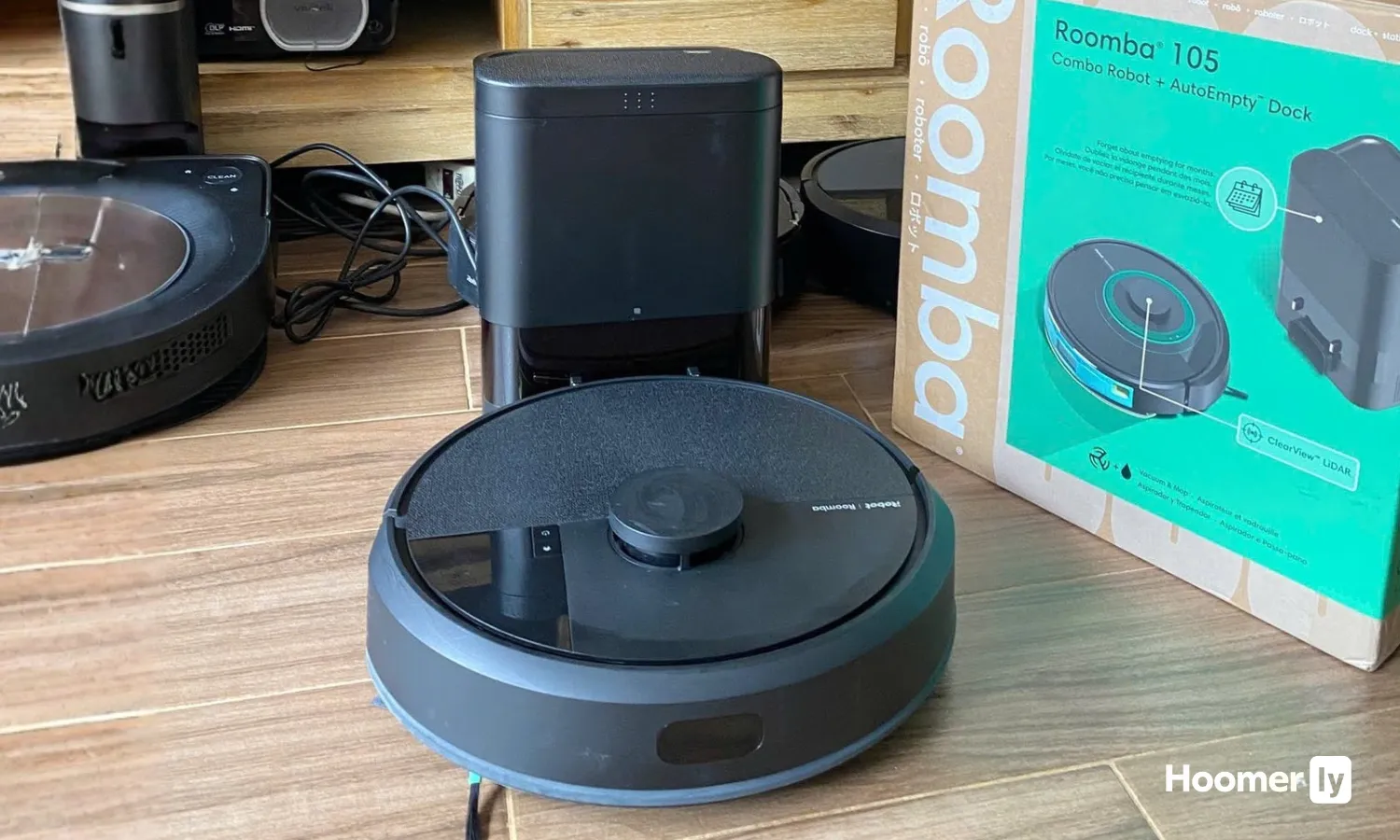
LiDAR Navigation with First-Run Home Mapping
This LiDAR robot vacuum mapped my entire first floor in a single run, including the kitchen island that always trips up bump-and-go units. The precision navigation means it doesn't re-clean the same spots or miss corners the way older models do. One quirk: if you rearrange furniture significantly, you may need to run a fresh map, but the app makes this easy.
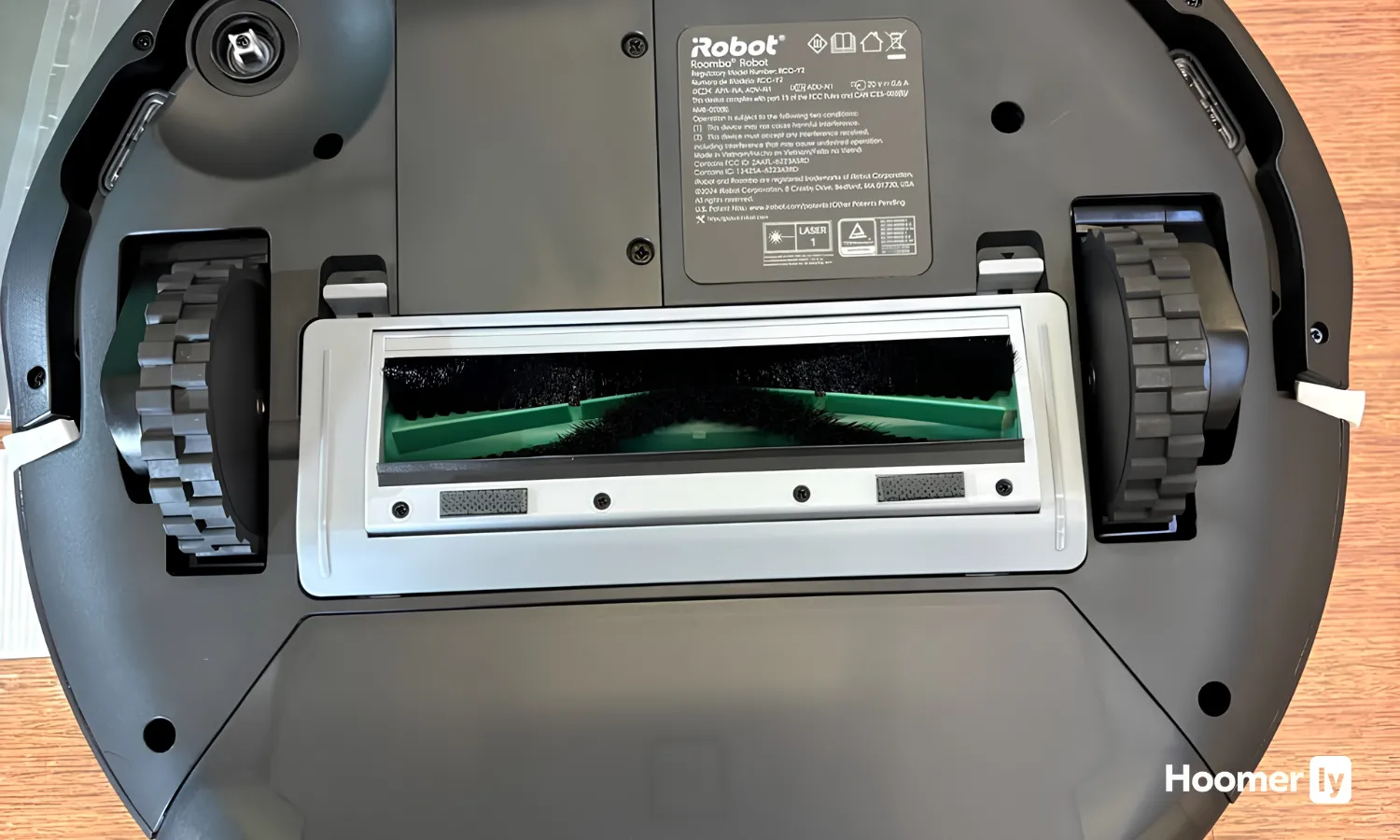
70x Suction Power with Edge-Sweeping Brush
At full power, this pulled embedded cat hair out of the area rug that my old upright always missed, and the edge-sweeping brush actually reached the corners where dust bunnies hide. The multi-surface brush handles the transition from hardwood to low-pile carpet without jamming. Fair warning: max suction on hardwood can send lightweight items scattering if they're not secured.
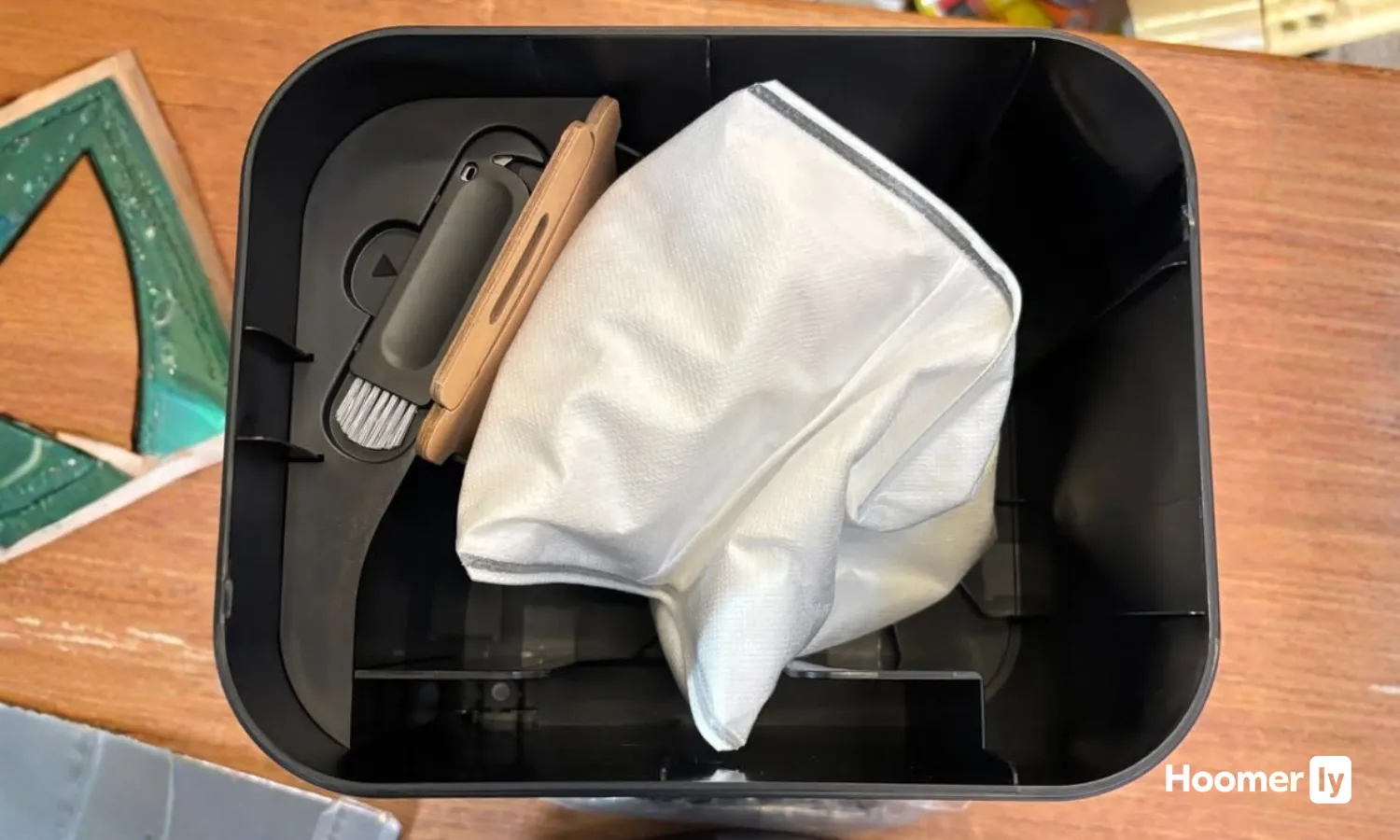
AutoEmpty Dock with 75-Day Bag Capacity
The sealed bag system traps allergens as small as 0.7 microns without the dust cloud you get when emptying a regular bin. After 10 weeks of daily use with a dog in the house, I've only emptied the base bag once. The dock is quiet during the dump cycle, and replacement bags snap in without mess, though they do add a recurring cost to the budget.
Combo Vacuum and Mop with Carpet Avoidance
This robot vacuum and mop combo automatically detects and skips carpets while mopping, so your rugs stay dry without you programming keep-out zones for each carpet. The microfiber pad with 2x scrubbing mode actually cleaned dried apple juice off my kitchen floor without pre-wiping. The mop pad does need rinsing between runs to avoid mildew smell, and the water tank is small enough that larger homes may need a refill mid-clean.

The thing that separates a good budget robot vacuum from an annoying one is LiDAR navigation. All four of these have it. That alone puts them in a different category from the random-bounce robots that still flood the market at similar prices. But LiDAR is just the starting point. What actually determines whether a robot keeps up with your home day-to-day is suction, brush design, and whether the dock empties itself. Those differences matter more than most spec sheets suggest.
In my house, I run a robot vacuum every single day. Two dogs means pet hair doesn’t wait. I need something that maps reliably, adjusts to different rooms, and doesn’t need me to babysit it. The hardwood hallways and common areas are easy enough. The area rugs and that one carpeted bedroom are where robots separate themselves. I’ve found that suction and brush design make or break carpet performance, and not every LiDAR robot gets both right.
Reddit consistently points to Roborock as the brand that delivers the most reliable mapping and the fewest app headaches in this price range. That tracks with my experience. The Roborock app is genuinely ahead of the competition, and the mapping accuracy holds up over weeks of daily use. The Tapo models earn their spots on value and specific use cases. And the Roomba 105 Combo is here for buyers who want a name they recognize, with mopping built in.
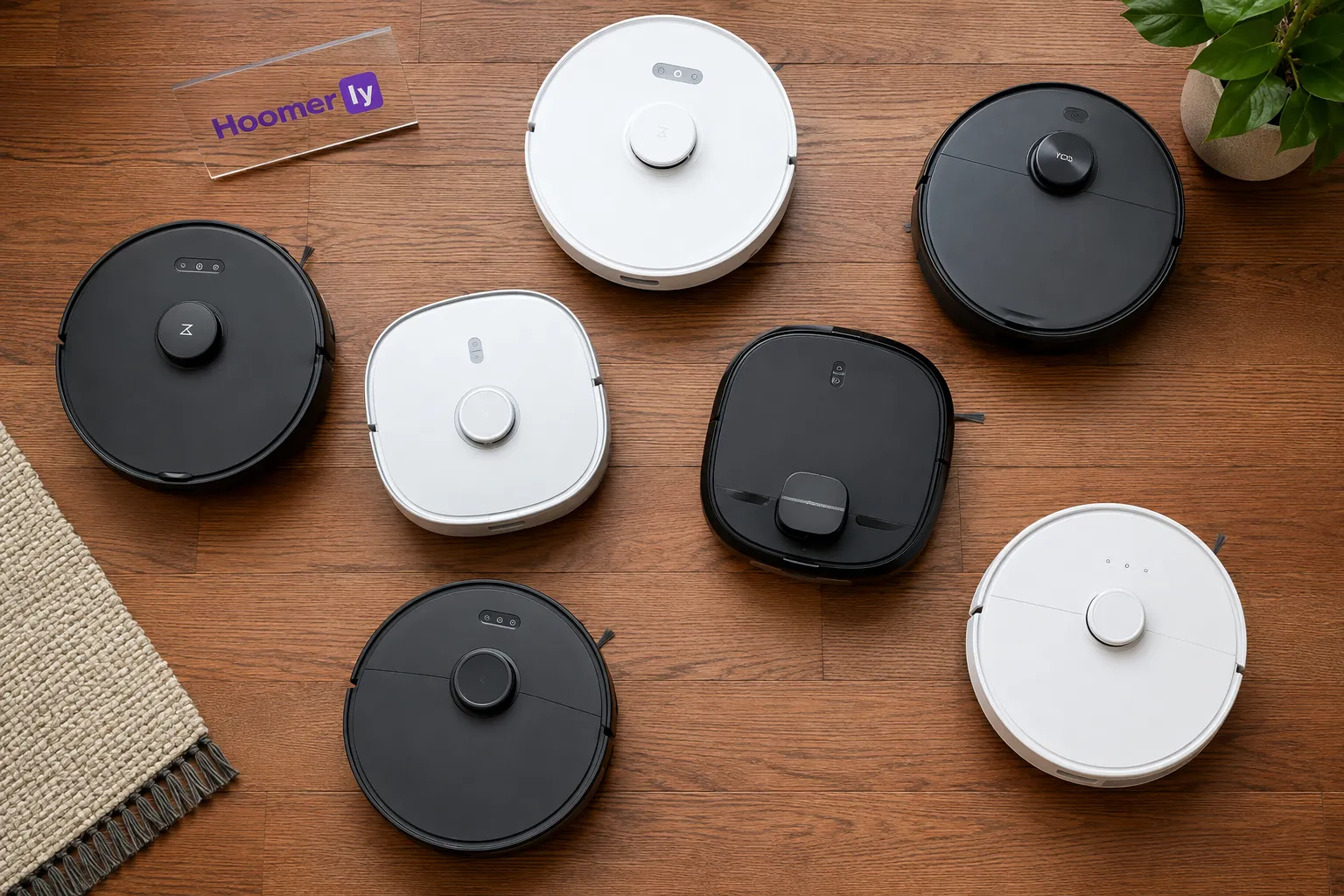
My Top Pick
Here’s where I’d start if I were buying today.
Best Overall Roborock Q7 M5+ ↓ Jump to Review
Best Cheap LiDAR Option Tapo RV30 Max ↓ Jump to Review
Best Budget Self-Empty Model Tapo RV20 Max Plus ↓ Jump to Review
Best Trusted Brand Pick iRobot Roomba 105 Combo ↓ Jump to Review
Each full review is below. I’ve tried to call out the honest downsides on every model, not just the specs the marketing materials lead with.
#1 Best Overall: Roborock Q7 M5+
The Roborock Q7 M5+ sits at the top of this list for a straightforward reason: it’s the most capable robot in this group, and you can find it in the budget-to-mid price range, frequently on sale under $300. For what you get, that’s hard to argue with.
Suction is where it separates itself most clearly. The Q7 M5+ runs 10,000 Pa of PreciSense HyperForce suction. Vacuum Wars measured it at 2.24 kPa in their sealed testing, which puts it 12th highest in their full database. The Tapo models in this comparison run at 5,300 Pa. In real terms, that difference shows up on area rugs and carpet, where the Roborock pulls embedded debris and pet hair that the Tapas can’t match.
Navigation is PreciSense LiDAR, top-mounted spinning sensor, which is standard on better budget robots. What makes the Roborock stand out here is the software behind the hardware. The app stores up to four floor maps. You can set per-room suction levels, per-room water output for mopping, no-go zones, virtual walls, and zone cleaning. I’ve used apps from five or six robot vacuum brands at this point, and the Roborock app is the most polished and stable in this price range. It’s not even close.
The M5+ model comes with an auto-empty dock, which holds a 2.7L sealed bag. Roborock says that’s seven to nine weeks before you need to swap the bag. In my experience with daily runs, that estimate is realistic.
Brush design gets a mixed report here, and I want to be upfront about it. The Q7 M5+ uses a dual anti-tangle system with a rubber brush, a JawScraper anti-tangle comb, and an anti-tangle side brush. Vacuum Wars recorded a 43% hair wrap rate, which is slightly above the segment average. It’s not a problem that stops the robot from doing its job, but if you have long-haired humans or very long-coat dogs in your house, you’ll be clearing the brush more often than you might expect. For my two medium-haired dogs, it’s manageable. Pet hair pickup from hard floors came in at 79% in Vacuum Wars’s evaluation, which is average for this category.
The mop is a single drag pad. It’s not a self-cleaning mop, and it’s not going to scrub grout. What it does is wipe light surface dust and dried spills reasonably well. Vacuum Wars measured dried stain removal at 158 against a segment average of 93, so it’s genuinely performing above average on that metric. The catch is that it uses about twice the average water volume, which means it can streak on certain floors if you run it on max water output. I back the water setting off one level on my hardwood and it’s fine.
One honest limitation: no front-camera obstacle avoidance. The Q7 M5+ bumps into things. Cords on the floor, chair legs pulled away from the table, a pair of shoes someone left in the hallway. It moves objects around rather than routing around them. If your floors tend to be tidy, this isn’t a real problem. If your house looks like mine at the end of a school day, you’ll want to do a quick pickup before you send it out. TechRadar called it “brilliant budget” and Vacuum Wars put it in their top five budget robot vacuums. Homes and Gardens scored it 3.5 out of 5, which reflects the obstacle avoidance gap.
Bottom line: for most households with pets and a mix of hard floor and carpet, this is the one to get. The suction, the app, and the auto-empty dock at this price point aren’t matched by anything else in this group.
#2 Best Cheap LiDAR Option: Tapo RV30 Max
The Tapo RV30 Max is the most affordable true LiDAR robot on this list. If your budget is tight and you’re not ready to stretch for the Roborock, this is the robot I’d point you toward, with some important caveats depending on your home situation.
Navigation is where the RV30 Max shines relative to its price. It pairs LiDAR with an IMU sensor, which is the dual-navigation setup that handles multi-level homes well and maintains map accuracy when the robot shifts between surfaces. The Mesh Grid cleaning pattern runs systematic rows rather than random passes. Tapo’s app supports zone cleaning, no-go zones, room-specific scheduling, and connects to both Alexa and Google Home. The navigation is honestly the best of the Tapo models in this comparison.
Suction is 5,300 Pa, which is half the Roborock’s output. On hard floors, 5,300 Pa is adequate for everyday dust, debris, and light pet hair. On carpet or area rugs, you’ll notice the difference, especially on embedded hair and finer particles. This is a robot better suited to primarily hard-floor homes.
The pet hair situation is a real concern, and I want to be direct about it. TechGearLab scored the RV30 Max at 4.0 out of 10 for pet hair pickup, calling it a “major liability” for pet hair homes. The standard brush tangles significantly with hair, and TechGearLab noted needing scissors to clear it after almost every run. There’s no anti-tangle system. If you have dogs or cats that shed, the Roborock handles this much better. The RV30 Max is a better fit for homes with limited pet hair or primarily hard floors where the hair is easy to suction up before it wraps around the brush.
Something to know before buying: this ASIN is the robot only, no auto-empty dock included. The dock is a separate purchase. TechGearLab gave it an overall score of 56 out of 100, ranking it 16th of 23 in their database. Tom’s Guide and NextPit both recommend it for the price-to-mapping ratio, which is the right framing. You’re buying excellent navigation at a low price, not the most complete robot in the group.
Noise is one place it genuinely wins. At 55.5 dB in standard mode, it’s quieter than the Roborock. If you run your robot while you’re working from home or while kids are sleeping, that’s a real-world advantage worth noting.
#3 Best Budget Self-Empty Model: Tapo RV20 Max Plus
The Tapo RV20 Max Plus earns its spot here on one compelling fact: it includes a self-emptying dock and LiDAR mapping at an MSRP under $250. Self-emptying capability used to mean spending $400 or more. That price wall has dropped significantly in the past two years, and the RV20 Max Plus is the clearest example of it.
The headline feature beyond the dock is the MagSlim design. This robot sits 3.3 inches tall, the slimmest in this group by a meaningful margin. My previous robot couldn’t fit under my low-profile sofa or the bed frame in my daughter’s room. The RV20 Max Plus gets under both. If you have low furniture that’s a regular cleaning problem, this dimension matters more than it might seem on a spec sheet.
The self-emptying dock holds a 3L bag, which Tapo rates at roughly two months of capacity before you need to swap it. In quieter households with less daily debris, that estimate might hold. With daily runs and two dogs, my expectation would be more like six to eight weeks.
Navigation uses MagSlim LiDAR. It’s worth knowing that TP-Link acknowledges this is slightly less positionally precise than the RV30 Max’s dual LiDAR-plus-IMU setup. In open-plan spaces and straightforward floor plans, you probably won’t notice the difference. In more cluttered rooms with lots of furniture legs and irregular obstacles, the RV30 Max navigates more reliably. For most typical suburban homes, the RV20 Max Plus handles navigation well enough that this distinction won’t matter day-to-day.
Mopping comes included with a 300ml tank at three adjustable water levels. Auto carpet detection pauses the mop function when the robot crosses onto carpet, which is a useful feature to have at this price. The 300ml tank is on the small side, and for larger homes you may find it runs dry before the job is done.
One thing to flag for transparency: at the time I’m writing this, there’s no independent lab review from Vacuum Wars, RTINGS, or TechGearLab for this specific model. I’m working from Amazon reviews (4.1 stars from over 750 US reviewers) and manufacturer specifications. The user volume is reassuring, but if you prefer to wait for third-party lab data before buying, that’s a reasonable instinct. Quiet mode runs at 52 dB, the quietest in this group. Zone cleaning, no-go zones, virtual walls, Alexa, and Google Home are all supported.
For a buyer who wants self-emptying, slim clearance for low furniture, and mopping capability at the lowest possible price, this one is worth a close look. Just go in knowing the suction is 5,300 Pa and the navigation is slightly less precise than the RV30 Max.
#4 Best Trusted Brand Pick: iRobot Roomba 105 Combo
iRobot is the brand that put robot vacuums on the map for most American households, and the Roomba 105 Combo is their current entry into the budget LiDAR space. The B0DWFZ8Q7M ASIN is the AutoEmpty Dock bundle, and the iRobot app is genuinely the most full-featured of any brand in this comparison. If you’re the kind of buyer who values app maturity, cleaning history logs, and a brand with a long support track record, the Roomba 105 Combo deserves consideration.
ClearView LiDAR handles navigation and stores three floor maps. Zone cleaning and keep-out zones are both supported. The AutoEmpty dock is rated at 75-day capacity before bag replacement. The battery uses lithium iron phosphate chemistry, which lasts longer than standard lithium-ion over multiple charge cycles. That’s a meaningful long-term value point that doesn’t show up in short-term reviews.
The vacuum-and-mop combination is built in, with a micro-pump for consistent water delivery and a SmartScrub back-and-forth pattern that actually makes contact with the floor rather than just dragging a damp pad. Carpet detection lifts the mop automatically so it’s not dragging a wet pad across your rugs.
Now the honest part, because I think this is where most Roomba 105 Combo reviews let buyers down. Vacuum Wars measured the Roomba 105 platform on pet hair performance, and the numbers are rough. Hair tangle rate came in at 79% of strands wrapped, against a category average of 38%. Pet hair pickup from carpet scored 29%, against a category average of 81%. Those are the worst numbers in this group by a significant margin. For a home with heavy shedders, this is a real problem.
Sealed suction measured at 2.16 kPa (above average), and sand removal from hard floors came in at 82%, which is strong. The Roomba 105 Combo handles fine debris and sandy/gritty messes well. It’s specifically the pet hair performance, especially on carpet, where it underperforms. Coverage per charge is also the lowest in this group at roughly 630 square feet per run measured by Vacuum Wars, versus 1,060 for the Roborock. Its 4.09-inch height also means it can’t get under lower furniture the MagSlim models clear easily.
Reddit users comparing Roborock and Roomba in this price range consistently note that Roborock’s mapping is more reliable. The Roomba 105 Combo’s value is the iRobot name, the best app in this group, the AutoEmpty dock, and the vacuum-plus-mop combination. If pet hair is not your primary concern and you want a trusted brand with a polished app and genuine mopping capability, that package is reasonable at this price. Just don’t pick it up expecting it to keep up with two shedding dogs. For that, check out my guide to the best robot vacuum for pet hair.
What to Look for in a Budget Robot Vacuum with Mapping
LiDAR vs. Random Navigation
At a budget price, the single most important feature to look for isn’t suction power or mopping capability. It’s navigation type. A random-navigation robot bounces off walls, re-covers already-clean areas, and misses corners systematically. A LiDAR-equipped robot builds a real floor map, runs in systematic rows, and tracks which areas it’s covered. The efficiency difference is substantial, and so is the user experience. All four robots in this guide use LiDAR, which is why I only included them.
The good news is that LiDAR has come down to genuinely affordable price points in the past few years. You no longer have to spend $400 to get reliable mapping. But not all LiDAR implementations are equal. The Roborock uses top-mounted spinning LiDAR with mature software behind it. The Tapo RV30 Max pairs LiDAR with an IMU for better multi-level accuracy. The RV20 Max Plus uses MagSlim LiDAR, which trades some positional precision for a slimmer profile. The Roomba 105 Combo uses ClearView LiDAR with iRobot’s long-established app.
Suction Power at Budget Prices
The 5,300 Pa vs. 10,000 Pa gap between the Tapo models and the Roborock in this comparison is significant in specific situations. On bare hardwood and tile, 5,300 Pa handles daily dust and debris without much issue. Where the gap shows up is carpet, area rugs, and pet hair embedded in flooring. Higher suction extracts more from carpet fibers. If your home is primarily hard floors, you probably won’t feel that gap. If you have a carpeted bedroom or living room, or heavy shedding pets, the extra suction the Roborock brings is worth paying for. For a deeper look at carpet performance, my guide to the best robot vacuum for carpet covers this in more detail.
Self-Emptying at a Budget Price
A self-emptying dock used to mean spending significantly more than a basic robot vacuum. That’s changed. The Tapo RV20 Max Plus includes a self-emptying dock at a price that puts it in the same conversation as robots that cost less and don’t empty themselves. The Roborock Q7 M5+ also includes its auto-empty dock in the M5+ bundle. The Roomba 105 Combo’s AutoEmpty bundle is similarly structured. Self-emptying is a genuine quality-of-life improvement if you run the robot daily. Not having to manually empty the dustbin every other day adds up. The tradeoff is bag cost over time, so factor that into the long-term math.
Pet Hair and Brush Design
Suction Pa numbers tell you less about pet hair performance than brush design does. The Roborock’s dual anti-tangle system with rubber brush and JawScraper comb is meaningfully better than a standard bristle brush, even if its 43% hair wrap rate is still above average. The Tapo RV30 Max’s standard brush wraps badly, with TechGearLab noting scissors needed after almost every run. Hair tangling reduces cleaning performance and increases maintenance time. If you have shedding pets, brush design is the spec to pay attention to alongside suction. The Roomba 105 Combo’s 79% tangle rate is the worst in this group, which is a real problem for pet-heavy homes. That’s the trade-off to weigh at this price tier.
App Quality and Long-Term Reliability
A robot vacuum that won’t connect to Wi-Fi, loses its map after a firmware update, or runs on a slow app is frustrating to live with. App quality matters more than most buying guides acknowledge. Roborock’s app is widely regarded as the most stable and full-featured in the budget segment, and that reputation is earned. The Tapo app works well but has cloud-dependency and firmware update issues that some power users have flagged in longer-term reviews. The iRobot app is the most feature-rich here, with detailed cleaning history and the strongest customization options. If you’re the kind of person who wants deep control over your robot’s schedule and behavior, iRobot’s software is genuinely impressive. What you give up is pet hair performance.
My Pick: Best Budget Robot Vacuum with Mapping
For most households, the Roborock Q7 M5+ is the best budget robot vacuum with mapping available right now. The combination of 10,000 Pa suction, PreciSense LiDAR navigation, the most polished app in this group, and an auto-empty dock included in the box is unmatched at this price tier. It handles my hardwood, area rugs, and carpeted bedroom better than anything else I’ve run at a comparable price. The obstacle avoidance gap is real, but it’s manageable if you keep your floors reasonably clear before a run.
If you want self-emptying capability at the absolute lowest price point, and your floors are mostly hard surfaces, the Tapo RV20 Max Plus makes a strong case. The MagSlim profile is a genuine advantage in homes with low furniture, and the self-emptying dock at under $250 MSRP is a real value. Just know that the pet hair and carpet performance is more limited than the Roborock.
The Roomba 105 Combo is the pick for buyers who trust the iRobot name and want vacuum-plus-mop capability with the best app in this group. If pet hair is not your main concern and you value brand support and a mature ecosystem, it’s worth considering. If pet hair is your main concern, it isn’t. For those buyers, my guide to the best self-emptying robot vacuum and my list of the best robot vacuums under $200 cover other options across different price brackets.
FAQs
Is LiDAR navigation worth it in a budget robot vacuum?
Yes, honestly, it’s the single most important feature at this price range. A LiDAR robot maps your home, runs systematic cleaning rows, and covers your floor efficiently. A random-navigation robot bounces around, re-covers clean areas, and misses spots. The frustration gap between the two is real. All four robots in this guide use LiDAR, and that’s why they all made the list.
Can budget robot vacuums with mapping handle pet hair?
It depends on the model. The Roborock Q7 M5+ handles it reasonably well, with its dual anti-tangle brush system and strong suction. The Tapo RV30 Max is the weakest in this group for pet hair, scoring 4.0 out of 10 in TechGearLab’s evaluation. The Roomba 105 Combo tangled hair in 79% of strands per Vacuum Wars, the worst in this comparison. For heavy shedders, the Roborock is clearly the better choice among budget LiDAR robots.
Do I need a self-emptying dock on a budget robot vacuum?
You don’t need it, but it changes the day-to-day experience. Without a self-emptying dock, you’re manually emptying the dustbin every one to three runs depending on how much debris your home generates. With two dogs and daily runs, I was emptying my old robot every other day. An auto-empty dock takes that task off your hands for weeks at a time. It’s worth it if self-emptying is available at your budget, and with the Tapo RV20 Max Plus and Roborock Q7 M5+, it is.
How does the Roborock Q7 M5+ compare to cheaper Tapo models?
The main gaps are suction, brush design, and app maturity. The Roborock runs at 10,000 Pa versus 5,300 Pa for both Tapo models. Its dual anti-tangle brush system handles pet hair significantly better than the Tapo’s standard brush. The Roborock app is more stable, more polished, and more feature-rich in day-to-day use. The Tapo models cost less and the RV20 Max Plus is slimmer, but for a home with carpet and shedding pets, the Roborock is the more capable machine.

Write Your Review
No reviews yet. Be the first to share your experience!