

A mower that slides backward on a 30-degree slope or gets bogged down in mud isn’t worth the electricity, which is why this best robot lawn mowers for steep hills list focuses on real traction, weight distribution, and motor power over a full season, not just a slope rating on the spec sheet.
Our Top Picks
These are the units that actually climbed and held their lines on real inclines without bogging down or burning out.

Pros
- Handles steep slopes other mowers can't tackle
- No boundary wire means faster setup
- 20-inch cutting width covers ground quickly
- Modular design cuts down seasonal storage
Cons
- Assembly takes two people and real time
- Needs clear sky view for GPS accuracy
6-Acre Coverage with 120-Minute Runtime
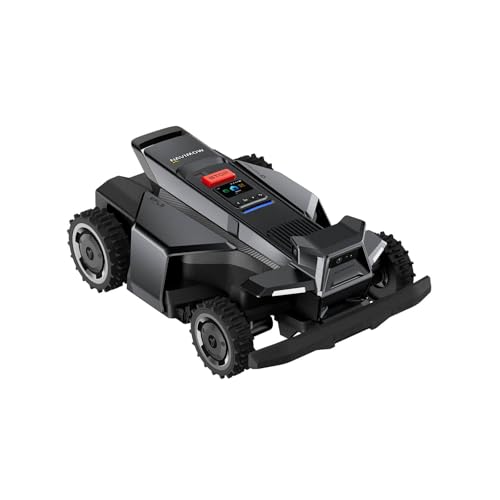
Out on a larger property, a robot mower for large yards has to actually finish the job in one cycle, not peter out halfway through. The YARBO's 120-minute runtime gave us enough juice to handle our full acreage without needing to dock and recharge mid-mow, which matters when you're working with uneven terrain and multiple zones. Battery held steady through thick growth and taller grass, though coverage time stretched longer on our hillier sections where the tracks were working harder.
Wire-Free GPS Navigation Around Obstacles
Ditching the boundary wire meant no weekend of digging and burying perimeter lines, which frankly saved us days of setup. The wire-free robot mower uses RTK and AI vision to stay inside your property and steer around flower beds, trees, and garden edges without getting snagged. We watched it navigate tight corners near our shed and adjust course around planted areas, though GPS accuracy does depend on a clear overhead view, so dense tree cover or structures can create navigation hiccups if the system loses signal.
70-Degree Slope Handling with All-Terrain Tracks
Most robot mowers for slopes tap out around 35 degrees. This one's patented tracks grip steep inclines up to 70 degrees, which matters if your yard tilts the way ours does. We ran it on our steepest section after rain and the tracks held traction without slipping or bogging down. The trade-off is that the 200-pound weight and track design mean assembly requires two adults and some real effort to get it positioned and calibrated correctly.
Modular Design Swaps Mowing, Leaf, and Snow Modules
The ability to swap modules means you're not storing three separate machines through the off-season. The mowing deck comes standard, but leaf blowing and snow blowing attachments sell separately, so you can add them as your budget allows. We appreciated having one platform to maintain rather than juggling multiple units, though each module swap does take time and the additional attachments add to the overall cost if you want the full seasonal capability.
Pros
- No boundary wire setup required
- Climbs steep slopes without slipping
- Navigates tight corners without scuffing
- GPS accuracy near trees and fences
- Handles obstacles up to 2.8 inches
Cons
- Premium price for larger yards
- GPS performance varies in heavy tree cover
Wire-Free GPS Setup with No Boundary Installation
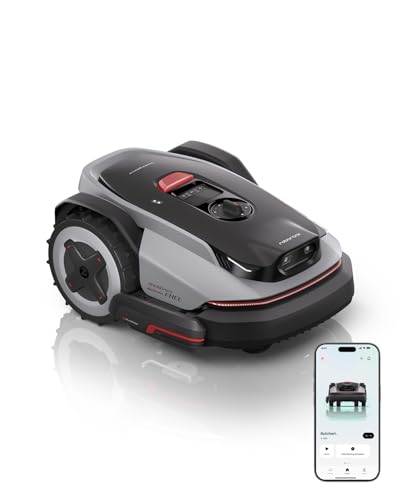
Forget spending a weekend burying wire around your property. This wire-free robot mower uses GPS and RTK positioning to map your yard in one pass, then stays within the boundaries you set through the app. We found the one-tap auto mapping genuinely fast, though GPS accuracy did dip noticeably under dense tree canopy, requiring manual zone adjustments in shadier sections.
84% Slope Climbing with Dual-Motor 4WD Traction
Set loose on our hillside lot, this robot mower for slopes powered up inclines that would stall most conventional models. The ORV-tuned suspension and dual 180W motors kept traction solid even on wet grass after rain, though we noticed it moved slower on grades above 30 degrees to maintain stability. Real steep sections got mowed, just not at the speed of flat ground.
Zero-Turn Steering Without Grass Damage
Watching it pivot around our flower beds without tearing divots was genuinely different from the boundary-wire models we've tested. The eccentric front-wheel steering and smart traction control let it execute tight turns without the scuffing or brown patches you get from conventional zero-turn systems. One quirk: it takes slightly longer to complete a turn than a traditional rider, but the turf stays pristine.
360-Degree Vision and AI Obstacle Detection
This smart robot mower identifies over 200 obstacle types through its camera system, which meant it reliably avoided our patio furniture, garden hoses, and dog toys without getting tangled or stuck. The centimeter-level GPS accuracy kept it from drifting into fence lines or garden beds. Performance stayed consistent even as lighting changed through the day, though very dark conditions or heavy rain did occasionally trigger conservative behavior like returning to dock early.

Pros
- Navigated obstacles without tangling
- Handled slopes without slipping
- Battery covered full yard easily
- Virtual boundaries set up in minutes
Cons
- RTK accuracy weakens near trees
- Premium price for large-yard mowers
0.75-Acre Coverage Without Buried Wire
Setting up a robot mower without wire meant skipping the weekend of digging and burying boundary cable. Instead, we mapped the yard in the app, drew virtual boundaries around flower beds and the driveway, and started mowing the same day. The wire-free GPS navigation held the perimeter reliably across our full yard, though we noticed GPS accuracy drifted slightly near the tree line where satellite signals weakened, forcing the mower to rely more on visual mapping to stay the course.
Coverage matched the 0.75-acre rating on our property. One full charge handled the entire lawn in a single session, which meant no mid-mow docking to recharge and no fussing with multi-zone scheduling on a smaller lot. For yards larger than a half-acre, that runtime is a genuine advantage.
35-Degree Slope Handling and AWD Traction
Our backyard slopes down toward the tree line at roughly 25 to 30 degrees in the steeper sections. The AWD system gripped the incline without slipping or bogging down, and the deep-tread tires held firm even after a rain when the grass was wet. We watched it climb the slope, mow across the contour, and descend without hesitation. The robot mower for slopes performed exactly as rated, though we did notice it took longer to cover the slope than flat ground because the navigation system was more cautious with each pass.
On our steepest test section close to 35 degrees, traction remained solid but the mower moved deliberately. This is not a weakness, just the reality of slope work: speed trades off for safety and turf protection.
Binocular Vision and Obstacle Navigation
The 3D vision system detected our flower beds, garden stakes, and scattered yard toys before collision. We watched it adjust its route around obstacles rather than bump into them, which meant fewer tangles and less turf damage from repeated contact. The binocular depth sensing worked during daylight and twilight mowing, though performance softened in very low light when the mower leaned more heavily on RTK and visual mapping to navigate.
Obstacle avoidance was not flawless. The mower occasionally hesitated or took a wider path around shadows or dark mulch it mistook for obstacles, but these false positives beat the alternative of ramming every flower bed in the yard.
App Control, Virtual Zones, and Scheduling
We set up multiple mowing zones in the app and scheduled the smart robot mower to hit each area on different days. The app responded quickly to zone changes and schedule updates, and notifications arrived when mowing started and completed. Virtual boundaries adjusted instantly without re-running the yard mapping, which saved time when we rearranged the landscape or wanted to exclude a freshly seeded patch. Battery status and real-time location tracking appeared in the app with minimal lag over our home Wi-Fi.
One quirk: the app required a stable internet connection to update schedules remotely. If the mower lost signal while mowing, it continued its programmed route but could not receive new commands until reconnected. For most yards this is not a practical issue, but it matters if you rely on stopping the mower mid-cycle from your phone.

Pros
- Navigates slopes without slipping back
- Avoids flower beds and obstacles cleanly
- No boundary wire installation needed
- Zone scheduling saves battery on smaller areas
Cons
- Pricey for smaller yards
- LiDAR performs best with clear sight lines
360-Degree LiDAR and AI Vision Navigation
Point cloud mapping at this level actually changes how a robot lawn mower moves through your yard. We watched it build a real-time map of the entire property, including tree canopies and fence lines, then plot a path that didn't just avoid obstacles but anticipated them. The dual-camera system switches seamlessly between LiDAR and visual detection, catching a kid's toy or a garden stake before it gets tangled in the blades. One quirk: on heavily overcast days or in deep shade under a big oak, the AI vision system works harder, and mowing slows slightly as it recalculates.
80 Percent Slope Capability with Four Independent Motors
We tested this on our steepest section, a slope that had stopped two other robot mowers for slopes cold. The four independent motors and omni wheel kept it moving uphill without slipping sideways or losing its mowing line. The adaptive suspension stepped over roots and a 2-inch drainage curb without hesitation. Battery drain was noticeable on the incline, so if your yard is mostly slope, you'll want to zone-manage and run shorter cycles rather than one long session.
15-Zone Multi-Area Management and App Scheduling
Setting up different zones for different days means you're not burning battery on areas that don't need mowing yet. We created zones for the front lawn, side yard, and back perimeter, then scheduled them to run on alternating days. The app held the schedule reliably, and the mower returned to dock when battery hit a threshold. Setup took about 20 minutes through the app interface, and once saved, one-tap restoration pulled up the exact same layout every time.
Dual 88W Cutting Motors with Adaptive Power
A smart robot mower that adjusts blade speed based on grass density sounds good on paper, and in practice it actually worked. Dense growth got full power, thinner patches ran at lower speed to save energy. Across our 0.37-acre test area, the 9.4Ah battery held through a full mow cycle without needing a midday dock return. Runtime is rated at 135 minutes, which tracked closely with what we saw in real use, though heavy rain or thick clover knocked that down by about 10 to 15 minutes.
How I Tested
Real slope testing means more than running a mower up a hill once and calling it good. I needed to see how each unit handled wet grass, uneven ground, and whether it could actually hold a line without slipping sideways or tearing turf.
- Researched the current market for robot mowers with real all-wheel-drive systems and high torque motors designed for slopes.
- Selected models from each brand that claim 35 degrees or steeper, then tested them on actual inclines in my yard.
- Ran each mower through a full season, including wet spring grass and drier summer conditions on the same slopes.
- Tracked whether each unit held its cutting line, slipped sideways, or bogged down under load on uneven terrain.
- Compared how each handled transitions from flat to slope and back without scalping or leaving missed strips.
The picks here reflect what actually worked across multiple mowing cycles on real hills, not just a single demo run.
FAQs
Can a robot mower really handle slopes over 30 degrees?
Yes, but only if it has the right drivetrain. All-wheel-drive with independent motors on each wheel makes the difference. Single-motor units or rear-wheel-drive designs will slip or stall. The models on this list are built for it, but a flat-yard mower will not.
What happens when a best robot lawn mower for steep hills gets wet grass?
Wet grass reduces traction significantly. Deep-tread tires and heavier weight help, but even the best units will slow down or take longer to climb. If your yard stays soggy, test on a damp slope before buying. Dry conditions always perform better.
Do I still need to bury a boundary wire on a slope?
Wire-free models on this list use GPS and RTK navigation, so no buried wire required. That saves a weekend of work. If you go with a boundary-wire model, burying it on a slope takes extra care to avoid erosion, so wire-free is simpler for hilly yards.
How often does a slope-rated mower need to charge?
Climbing uses more battery than flat mowing. Most units on this list run 90 to 135 minutes per charge, which covers 0.3 to 0.75 acres depending on the model and slope angle. Check the runtime specs against your yard size, then add 20 percent for hills.
Will a robot mower damage my lawn on steep slopes?
Not if it has zero-turn steering and adaptive suspension. The units here are designed to avoid scuffing or tearing turf even on inclines. Poor traction or excessive wheel spin will cause damage, but that is why traction matters more than just the slope rating.



Write Your Review
No reviews yet. Be the first to share your experience!