

Try Amazon Prime free for 30 days
Fast free delivery on heavy items, plus Prime Video, Prime Music and member-only deal prices.
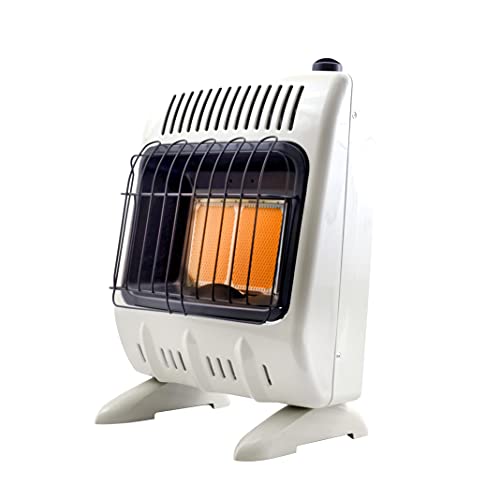
When the garage feels colder than the driveway and your coffee gives up first, wall mounted gas heaters can make a working space usable again. This type of heater puts steady heat on the wall without taking over the floor. After comparing 4 models, the Comfort Glow KWP212 stands out for its 12,000 BTU output, up to 500 square feet of coverage, and oxygen depletion sensor. For larger areas, the Comfort Glow KWN521 is the alternative pick, with 30,000 BTU for up to 1000 square feet.

Pros
- 12,000 BTU heat output
- Heats up to 500 sq ft
- No electricity required
- Adjustable heat settings with manual control
- Built-in oxygen depletion sensor
Cons
- 500 sq ft coverage limit
- Manual control, no thermostat listed
- Optional blower and floor stand are not built in

Pros
- 30000 BTU heat output
- Heating coverage up to 1000 square feet
- No electricity required
- Built-in oxygen depletion sensor
- Adjustable heat settings with manual controls
Cons
- No thermostat listed, manual controls only
- Optional blower and floor stand are separate add-ons
- Natural gas vent-free heater may not suit every room

Pros
- 11,000 BTU liquid propane wall heater
- Heats up to 375 sq ft
- Sealed burn system for bedrooms and living spaces
- Safety pilot stops gas if pilot is extinguished
- Includes heat shield, air intake pipe, and connecting rod
Cons
- For liquid propane only
- 375 sq ft coverage limits it to compact spaces
- 40 lb weight may make installation harder

Pros
- 18,000 BTU heat output
- Heats approximately 700 sq ft
- Variable heat control
- Piezo ignition
- Wall-mounted design, 9 x 21.5 x 26 inches
Cons
- 700 sq ft coverage may not suit larger spaces
- 22.9 lb weight requires secure wall mounting
- No thermostat listed
How We Chose Wall Heaters for Backup and Workshop Heat
A wall heater for a garage, cabin, workshop or outage plan has to do more than make warm air. The right pick needs enough BTU output for the space, and it also needs safety features that make sense indoors.
- Heat output and coverage: BTU output matters because an undersized heater runs against the room instead of warming it. Among our picks, output runs from 11,000 BTU to 30,000 BTU, with listed coverage from 375 square feet to 1000 square feet. The Comfort Glow KWP212 sits in the useful middle for smaller work areas, with 12,000 BTU and a rating for up to 500 square feet.
- Indoor rating and oxygen depletion sensing: For enclosed spaces, safety features carry as much weight as heat output. Two of our picks list an oxygen depletion sensor, which is designed to shut the unit down if oxygen drops too low. The Comfort Glow KWN391 offers 18,000 BTU and is rated for about 700 square feet, so it fits the role of a midrange wall heater when the top pick is too small and the alternative pick is more heater than the room needs.
- Ventilation and carbon monoxide precautions: Vent-free and direct-vent heaters ask for different safety thinking, and the distinction is important indoors. One of our picks is direct vent and rated for 375 square feet, while three of our picks are vent-free designs with stated coverage from 500 square feet to 1000 square feet. According to the Centers for Disease Control and Prevention, a battery-operated carbon monoxide detector should be installed when carbon monoxide risk is part of a winter heating plan.
- Fuel type, tank size and run time: Fuel compatibility is not a place to improvise. The CDC says to use only the type of fuel the heater is designed to use, and one pick is specified for liquid propane only. The group includes models with 11,000 BTU, 12,000 BTU, 18,000 BTU and 30,000 BTU outputs, so fuel planning should start with the heat load rather than with the largest number on the box.
- Ignition and safety shut-offs: Piezo ignition appears on two of our picks, which avoids match lighting and simplifies startup. The U.S. Consumer Product Safety Commission says unvented gas heaters should have an oxygen depletion sensor that shuts the heater off if oxygen drops too low. The Ashley 11,000 BTU Propane Wall Heater takes a different safety path with a sealed burn system, 11,000 BTU output and coverage up to 375 square feet.
- Size and portability: Wall heaters are not portable heaters in the casual sense, but weight still affects installation planning. Among featured picks with listed weights, the range runs from 15.3 pounds to 40 pounds. A 15.3-pound heater is easier to position on a wall than a 40-pound unit, but the heavier direct-vent design may be worth considering when its 375-square-foot coverage matches the room.
We excluded central furnaces and whole-house systems because they usually require professional installation. Water heaters and heated blankets were left out because they solve a different problem, and outdoor-only patio heaters were excluded because they are not rated for enclosed spaces.
The Competition
These are other wall heaters we looked at but did not put on our main list.
If a smaller natural gas setup is the priority, ProCom MN100TBA has a 10,000 BTU rating and is listed for up to 500 square feet. It also includes an adjustable thermostat and oxygen depletion sensor, but its lower output gives it less headroom than our top pick while covering the same stated area.
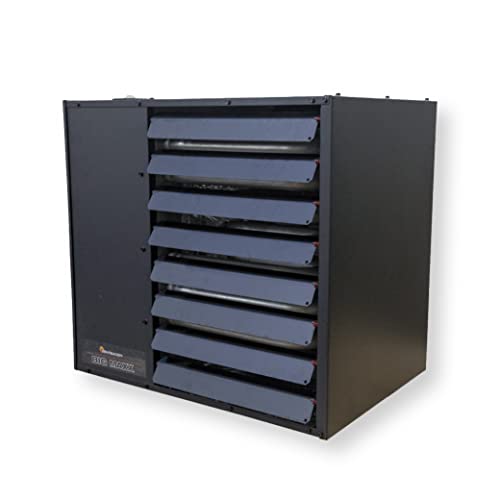
For a larger room, Mr. Heater 30,000 BTU Natural Gas Heater reaches 30,000 BTU and is rated for up to 1000 square feet. At 24.7 pounds, it is lighter than the heaviest featured direct-vent pick, but it did not match the main list as closely for this specific mix of backup heat, wall mounting and safety comparison.
Need more stated coverage than our alternative pick? ProCom MN300HPA is rated for 30,000 BTU and up to 1200 square feet, with an oxygen depletion sensor and a 26-pound weight. That extra 200 square feet of listed coverage may appeal in an open area, but the main picks keep the comparison tighter around common garage, cabin and workshop needs.
And if more heat than our top pick is the whole reason you are shopping, Comfort Glow 17,000 BTU Natural Gas Wall Heater is worth a look. Its 17,000 BTU rating is higher than the 12,000 BTU of our top pick, and it is still listed for up to 500 square feet. The tradeoff is weight, since its 43-pound listing makes installation planning more demanding.
FAQs
How many BTU do I need for a garage or workshop wall heater?
Among our picks, output ranges from 11,000 BTU to 30,000 BTU, with listed coverage from 375 square feet to 1000 square feet. A smaller, enclosed workroom may not need the highest BTU model, while a larger open garage may need more output to feel useful.
Are vent-free gas wall heaters safe indoors?
Vent-free models need careful attention to the room, the fuel type and the safety features. The U.S. Consumer Product Safety Commission says unvented gas heaters should have an oxygen depletion sensor, and the CDC recommends a battery-operated carbon monoxide detector.
How much clearance should I leave around a wall heater?
The CDC says to keep space heaters at least 3 feet from drapes, furniture or bedding. The U.S. Fire Administration gives the same 3-foot message for anything that can burn, which is especially important in garages and workshops with stored materials.
Should I choose propane or natural gas for emergency backup heat?
Choose based on the fuel the heater is designed to use, not on what is nearby during an outage. The CDC says to use only the type of fuel specified for the heater, and one wrong fuel choice can create a serious carbon monoxide or fire risk.
Sources
- CPSC Offers Tips to Prevent Home Fires From Space Heaters, U.S. Consumer Product Safety Commission. Fire-safety tips and required safety features for space heaters.
- Safety Guidelines: During & After a Winter Storm, Centers for Disease Control and Prevention. Winter heating safety for space heaters, kerosene heaters and carbon monoxide.
- Heating Fire Safety, U.S. Fire Administration. Home heating fire statistics and prevention messages.




Write Your Review
No reviews yet. Be the first to share your experience!