

Here’s the thing nobody talks about when they sell you a robot vacuum: the round shape is the problem. Every standard circular robot leaves a 1-2 inch strip of floor untouched along every baseboard, and it physically cannot enter a 90-degree corner. The brush stays inside the robot’s footprint, which means that last bit of debris just sits there.
I started noticing this at my kitchen baseboards, under the cabinet edges, along the wall by my dogs’ food bowls. I’d run the robot daily and still find little ridges of pet hair in every corner when I finally got down to mop. I looked at the Roborock S8 MaxV Ultra, the iRobot Roomba s9+, and the Roborock Qrevo S Pro, among others, specifically to see which ones actually handle this. Here’s what I found.
Everything I Recommend
These are the four robots I spent the most time with for corner and edge coverage on hardwood, area rugs, and one carpeted bedroom.

Pros
- Exceptional cleaning power with 10000Pa suction handles both carpets and hard floors effectively
- Fully autonomous dock system eliminates need to manually wash, dry, or refill water and detergent
- Innovative FlexiArm and extra edge mopping systems achieve margins under 1.68mm for pristine floor edges
- Advanced AI navigation with multiple obstacle recognition prevents collisions and pet waste accidents
- Impressive 180-minute battery life supports whole-home cleaning on a single charge
Cons
- Requires significant installation space and water connection setup for the dock system, which may not suit all home layouts
- Premium price point reflects advanced features but may be cost-prohibitive for budget-conscious buyers
- No customer reviews available yet to validate long-term reliability and real-world performance claims
The Roborock S8 MaxV Ultra represents the pinnacle of robot vacuum and mop integration, designed for homeowners who demand a truly hands-off cleaning experience. This premium model combines powerful vacuuming with intelligent mopping, all supported by an advanced RockDock Ultra docking station that handles water refilling, hot water mop washing, detergent dispensing, and hot air drying. It is best suited for users with mixed flooring (carpet and hard floors), moderate to heavy dirt accumulation, and the space to accommodate its comprehensive dock system.
The standout features that differentiate this model include the industry-leading 10000Pa suction paired with a DuoRoller Riser Brush designed to minimize hair tangles while maximizing dirt extraction. The VibraRise 3.0 mopping system delivers 4000 vibrations per minute for aggressive scrubbing, while automatically lifting 20mm above carpet surfaces to prevent moisture damage. The FlexiArm Design side brush extends when detecting corners and low furniture areas, ensuring comprehensive coverage. Additionally, the extra edge mopping system achieves margins under 1.68mm, addressing a common complaint about robot mops missing floor edges.
Design and build quality are robust, with the unit weighing 41.8 pounds and featuring intelligent voice control via the 'Hello Rocky' assistant that operates offline. The Reactive AI 2.0 obstacle recognition system uses 3D structured light and RGB cameras to identify and navigate around obstacles, including pet waste and floor mirrors. The app control interface provides scheduling, multi-level mapping, smart no-go zones, and video call functionality for remote home monitoring. The 180-minute battery life supports comprehensive whole-home cleaning sessions.
Potential drawbacks include the significant space requirements for dock installation and the need for water connections, which may not be feasible in all homes. The premium pricing reflects advanced features but represents a substantial investment. Additionally, the absence of customer reviews limits validation of long-term reliability and real-world performance consistency.
The Roborock S8 MaxV Ultra is a sophisticated cleaning solution for discerning homeowners seeking maximum automation and cleaning performance. Its comprehensive feature set, advanced navigation, and fully autonomous dock system justify consideration for those with compatible installation environments and budgets aligned with premium robotics.
RockDock Ultra System: This all-in-one docking station revolutionizes robot mop maintenance by automatically filling the robot's water tank, washing mops with hot water, dispensing detergent proportionally, and drying mops with hot air. The 580ml detergent tank provides over three months of autonomous operation without manual refilling.
VibraRise 3.0 Mopping Technology: The dual vibration modules operate at 4000 times per minute, effectively tackling dust, dirt, and dried-on stains. The system automatically lifts the mop 20mm when transitioning to carpet areas, allowing simultaneous vacuuming and mopping without creating wet spots on carpet.
10000Pa HyperForce Suction: This industry-leading suction power, combined with the DuoRoller Riser Brush, provides superior dirt extraction across all floor types while reducing hair tangles through dual-roller design.
FlexiArm Design: This unique side brush extends automatically when the robot detects corners, edges, and areas beneath furniture, ensuring comprehensive cleaning of hard-to-reach spaces that traditional robot vacuums miss.
Reactive AI 2.0 Obstacle Recognition: The integration of 3D structured light and RGB camera technology enables the robot to identify floor types, room configurations, and obstacles including shoes, pet waste, and mirrors, ensuring safe autonomous navigation.
Cleaning Performance: 10000Pa suction power, VibraRise 3.0 mopping with 4000 vibrations per minute, 20mm auto-mop lifting, DuoRoller Riser Brush, Carpet Boost+ system
Power and Battery: Lithium-ion battery with 180-minute runtime, 3 power levels, battery included
Navigation and Control: PreciSense LiDAR, multi-level mapping, Reactive AI 2.0 with 3D structured light and RGB camera, voice control ('Hello Rocky'), app control, button control, compatible with smartphones and tablets
Water and Cleaning: 580ml detergent tank capacity, auto detergent dispensing, hot water mop washing, hot air drying, intelligent dirt detection, extra edge mopping under 1.68mm
Physical Specifications: Dimensions 16.8L x 20.2W x 17.7H inches, weight 41.8 pounds, white color, 2 wheels, portable design
Recommended Uses: Home cleaning, carpet cleaning, hardwood floor cleaning, indoor use only
Additional Features: Video call and remote access, scheduled cleaning, smart no-go zones, washable filter, auto dust emptying during and after cleanups
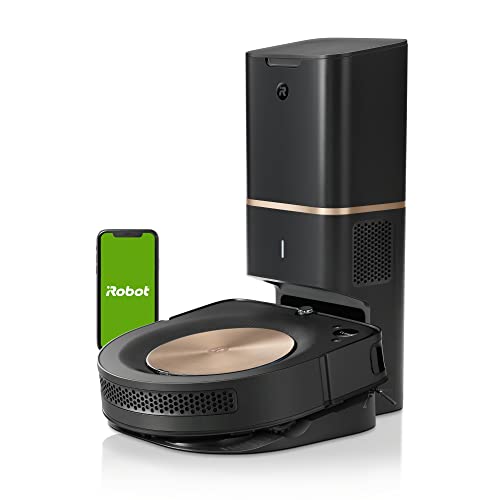
Pros
- Exceptional suction power with 3-Stage Cleaning System effectively removes pet hair and embedded debris
- 60-day self-emptying capacity eliminates frequent manual maintenance and odor concerns
- Intelligent room-level mapping and zoning provides precise control over cleaning areas
- Thoughtful pet-hair design with larger brushes and high-efficiency allergen filter
- Proactive AI learns your schedule and suggests cleanings based on seasonal factors
Cons
- High price point at $936.45 may not justify performance for users with simple cleaning needs
- Mixed reviews report app connectivity issues, mapping inconsistencies, and occasional bumper sensor failures
- Self-emptying base produces loud high-pitched noise comparable to shop vacuums, which can be disruptive
The iRobot Roomba s9+ positions itself as the premium choice in robotic vacuuming, targeting homeowners with larger homes, multiple pets, or those seeking maximum convenience. This self-emptying robot vacuum combines advanced cleaning power with intelligent navigation to handle whole-home cleaning with minimal user intervention.
Performance-wise, the s9+ impresses with its 40X suction advantage over the i-Series, powered by a 3-Stage Cleaning System that lifts, loosens, and eliminates debris. The larger dual rubber brushes resist pet hair tangling, making it genuinely useful for multi-pet households. PerfectEdge Technology with corner brushes and advanced sensors reaches edges that many competitors miss. Careful Drive Mode uses 3D sensors to navigate around obstacles without collision damage. The vSLAM navigation captures over 230,000 data points per second, enabling room-by-room mapping and the ability to send the vacuum to specific messes on demand.
The standout convenience feature is the Clean Base Automatic Dirt Disposal, which empties the vacuum's bin into an enclosed bag holding up to 60 days of debris. This eliminates the need for frequent manual emptying and odor management. Imprint Smart Mapping allows you to designate which rooms clean on which schedule, plus customize Keep Out Zones to protect specific areas. The vacuum learns your cleaning patterns and proactively suggests extra cleanings during pollen season or pet shedding peaks.
However, real-world feedback reveals notable drawbacks. The self-emptying base produces extremely loud noise during the emptying cycle, with users comparing it to shop vacuum volume. App connectivity issues, mapping inconsistencies on first attempts, and occasional sensor errors appear in multiple reviews. Some users report the vacuum gets stuck more frequently than expected and requires manual intervention. The 120-minute battery life may not cover larger homes in a single charge, and performance expectations require proper maintenance and initial setup time.
The Roomba s9+ is best suited for pet owners with multi-level homes who value convenience over budget and are willing to invest time in proper setup and maintenance. For simpler cleaning needs or tight budgets, the lower-priced Roomba models offer better value. Overall, when properly configured and maintained, this vacuum delivers premium cleaning performance and genuine time savings, though the premium price tag demands realistic expectations about reliability and noise levels.
Cleaning Performance: 40X suction power, 3-Stage Cleaning System, 100% more suction than standard models, Carpet Boost technology, PerfectEdge Technology with corner brush
Navigation & Mapping: vSLAM technology capturing 230,400 data points per second, Imprint Smart Mapping with multi-level storage, customizable Keep Out Zones, Careful Drive Mode for obstacle detection and avoidance, room-by-room cleaning control
Self-Emptying: Clean Base Automatic Dirt Disposal with 60-day capacity, enclosed bag system, automatic emptying between cleaning cycles
Brush System: 40% larger Dual Multi-Surface Rubber Brushes, pet-hair resistant design, High-Efficiency Filter traps allergens
Battery & Runtime: Lithium-ion battery, 120-minute runtime, auto-recharge and resume capability
Smart Features: iRobot OS with personalized recommendations, voice control (Alexa, Google Assistant, Siri), app control via smartphone and tablet, automated scheduling, pollen and pet-shedding detection, compatible with Braava Jet m6 mop
Physical Specs: Dimensions 12.25in L x 12.25in W x 3.5in H, Weight 8.15 lbs, Color Black, Model s955020
Coverage: Carpet, hardwood, and hard surfaces
Warranty: 1-year limited manufacturer warranty
Is This Right for You? The Roomba s9+ excels for pet owners, large homes, and busy professionals who prioritize convenience and cleaning thoroughness. If you have multiple pets, live in a multi-level home, or simply want to eliminate vacuuming from your routine, this model's 60-day self-emptying and room-level control justify the investment. However, if you have a small apartment, minimal pet hair, or a tight budget, consider the Roomba j7+ or i3+ for better value.
Setup Expectations: This vacuum requires patient initial setup. Run the mapping feature at least 3 times on clear floors for optimal results. Clear the floor of obstacles before mapping to ensure accurate room detection. The app will guide you through registration and scheduling, but expect 30-60 minutes for complete setup.
Maintenance Reality: Despite the self-emptying convenience, the Roomba s9+ still requires routine maintenance. Regularly clean the brushes to prevent tangling, replace filters as the app indicates, and ensure the dock area remains clear. The self-emptying base occasionally needs attention if pet hair clogs the connection. This is not a completely hands-off device.
Noise Considerations: The vacuum itself operates at typical robotic vacuum volume, but the self-emptying cycle produces loud noise comparable to a shop vacuum. If noise sensitivity is a concern, consider running it when you're away from home or schedule cleanings during times you won't be disturbed.
Comparison Insight: The s9+ costs significantly more than the j7+ ($699.99) and i3+ ($289-$297), primarily for the enhanced suction power and larger brush design. The j7+ adds obstacle recognition but lacks the corner cleaning advantages. Choose the s9+ specifically for superior suction, pet hair handling, and 60-day emptying capacity.

Pros
- Exceptional suction power handles pet hair and stubborn debris effectively on all surfaces
- Hygenic heated dock system eliminates mop odors and extends mop life significantly
- Truly hands-free operation with 7-9 week dust bag intervals reduces maintenance burden
- Intelligent navigation with LiDAR and reactive obstacle detection ensures thorough coverage
- Quiet operation at 55-60dB makes it suitable for homes with children and pets
- Multi-floor mapping and no-go zones provide precise control over cleaning areas
Cons
- Premium price point at $699.99 positions it as a significant investment for budget-conscious buyers
- Requires 2.4GHz WiFi connectivity only, which may limit compatibility with newer WiFi 6 networks
- No customer reviews available yet, making it difficult to assess long-term reliability and real-world performance
The Roborock Qrevo S Pro is a premium robot vacuum and mop system designed specifically for pet owners, busy families, and anyone seeking a completely hands-free cleaning solution. This all-in-one system combines powerful vacuuming with intelligent mopping capabilities, backed by an advanced multifunctional dock that handles dust disposal, mop cleaning, and water refilling automatically.
The standout feature is the 18,500Pa suction power paired with dual spinning mops and heated self-cleaning technology. In real-world use, this combination tackles pet hair, kitchen spills, and tracked-in dirt with impressive efficiency. The 167°F mop self-cleaning cycle after each use ensures hygienic floors without manual intervention, while the 113°F warm air drying keeps mops fresh and ready for the next cleaning session. The anti-tangle system featuring a zero-tangle side brush and all-rubber main brush is specifically engineered to handle long hair common in pet households, significantly reducing maintenance time compared to traditional robot vacuums.
Build quality and design reflect the premium positioning. The robot features smart obstacle avoidance with reactive technology that precisely navigates around shoes, toys, and furniture while maintaining a 3.8-inch low-profile to access hard-to-reach spaces under beds and sofas. The AI-powered SmartPlan 2.0 automatically adapts cleaning settings based on your home layout and floor types, with custom carpet strategies that boost suction and lift mops 10mm to protect carpet fibers. Multi-floor mapping and customizable no-go zones provide granular control over cleaning patterns. Operation remains remarkably quiet at 55-60dB, making it practical for homes with sleeping children or noise-sensitive pets.
The main drawback is the premium price point, which may be prohibitive for budget-conscious consumers. Additionally, WiFi connectivity is limited to 2.4GHz networks only, which could present compatibility issues for users with newer WiFi 6 infrastructure. The lack of existing customer reviews means long-term durability and real-world performance data from actual users is not yet available.
The Roborock Qrevo S Pro represents the best choice for pet owners and busy professionals willing to invest in a premium, truly hands-free cleaning system that handles both vacuuming and mopping with minimal human intervention. Its combination of powerful suction, heated mop technology, intelligent navigation, and thoughtful anti-tangle design makes it exceptionally well-suited for homes with pets and multiple floor types.
Suction and Cleaning Power
Suction: 18,500Pa
Mop System: Dual spinning liftable mops
Mop Lifting: 10mm carpet protection mode
Water Flow: Adjustable
Noise Level: 55-60 decibels
Dock Features
Mop Self-Cleaning: 167°F high-temperature cleaning
Hot Air Drying: 113°F warm air cycle
Dust Capacity: 2.7L sealed bag (7-9 weeks)
Auto Dust Emptying: Yes
Water Tank: Self-refilling capability
Navigation and Intelligence
Navigation: LiDAR with multi-floor mapping
Obstacle Avoidance: Reactive technology with smart detection
Low-Profile Clearance: 3.8 inches
Customization: No-go zones, scheduling, custom carpet strategies
App Control: Roborock app with SmartPlan 2.0
Battery and Power
Battery Type: Lithium Ion
Battery Life: 180 minutes
Power Source: Battery powered
Voltage: 120V
Batteries Included: Yes
Design and Build
Color: Black
Form Factor: Rectangular
Dimensions: 13.38L x 19.17W x 20.51H inches
Weight: 25.57 pounds
Surface Compatibility: Carpet, marble, wood, tile
Filter Type: Washable
Control Options
App Control: Yes (2.4GHz WiFi required)
Push Button: Yes
Voice Control: Yes
Scheduling: Available
Who Should Buy This Product
The Roborock Qrevo S Pro is ideal for pet owners dealing with constant hair shedding, busy professionals with limited time for cleaning, and households with multiple floor types requiring adaptive cleaning strategies. It's particularly valuable for people who want truly hands-free operation with minimal maintenance burden.
Key Considerations Before Purchase
Verify your home has 2.4GHz WiFi capability, as this model does not support WiFi 6. Consider whether the premium price justifies the heated mop self-cleaning and all-in-one dock features for your specific needs. Ensure your home layout can accommodate the 20.51-inch tall dock unit. If you have very thick carpets or extreme pet hair challenges, the 18,500Pa suction and anti-tangle system make this model particularly suitable.
Comparison Points
When evaluating this model against competitors, focus on the heated mop self-cleaning technology, which is less common in the market. Compare the 18,500Pa suction to other premium models, and note that the dual spinning mop system with adjustable water flow offers more flexibility than single-mop competitors. The reactive obstacle avoidance and SmartPlan 2.0 AI provide advanced navigation compared to basic mapping-only systems.
Setup and Maintenance
Initial setup requires WiFi connectivity and the Roborock app installation. Maintenance is minimal due to the all-in-one dock handling mop cleaning and dust disposal automatically. The washable filter and anti-tangle brush design reduce ongoing maintenance compared to traditional robot vacuums. Plan for occasional dust bag replacement every 7-9 weeks depending on household size and pet presence.

Pros
- Mechanical arm significantly reduces pre-cleaning prep by moving obstacles and picking up small items autonomously
- Exceptional suction power combined with hot water mopping delivers superior cleaning on all floor surfaces
- Advanced obstacle avoidance and multi-pass cleaning ensure 100% floor coverage including tight corners and edges
- Multifunctional dock eliminates weeks of manual maintenance with automatic washing, drying, and dust emptying
- Pet owners benefit from dedicated features including video monitoring, pet area recognition, and pet search functionality
Cons
- Premium price point at $1,084.99 makes it inaccessible for budget-conscious buyers
- Requires 2.4 GHz WiFi connectivity only, limiting compatibility with newer dual-band or 5 GHz networks
- Mechanical arm can handle only light objects up to 300g, so heavy items still require manual intervention
The Roborock Saros Z70 represents a significant leap forward in robot vacuum technology by integrating a five-axis mechanical arm with professional-grade cleaning capabilities. This device is designed for homeowners who want maximum automation, minimal manual intervention, and cutting-edge smart home integration. Whether you have pets, multiple floor types, or simply want a hands-free cleaning solution, the Saros Z70 delivers comprehensive coverage with its combination of robotic arm, powerful suction, and intelligent navigation.
The standout feature is undoubtedly the mechanical arm, which moves obstacles out of the way, picks up small items like socks and tissues, and can be customized to recognize up to 50 user-defined objects through AI learning. Combined with 22,000Pa suction and hot water mopping at 176°F, the Z70 tackles both dry debris and stubborn stains effectively. The StarSight 3D navigation system with VertiBeam obstacle avoidance ensures the robot intelligently navigates around 108+ object types, while the AdaptiLift Chassis climbs thresholds and lifts the mop on carpets automatically. The ultra-slim 3.14 inch profile is particularly impressive given the advanced components packed inside, allowing the robot to access tight spaces under furniture where dust typically accumulates.
Build quality is premium throughout, from the dual cameras and LED lighting on the mechanical arm to the FreeFlow main brush designed to minimize hair tangling. The Multifunctional Dock 4.0 is exceptionally well-engineered, offering 10-in-1 maintenance including hot water washing at 176°F, self-cleaning, automatic mop removal, detergent dispensing, smart re-wash cycles, and warm air drying. The dock's 7-week dust capacity and hands-free operation justify the investment for users prioritizing convenience.
The main drawback is the 2.4 GHz WiFi requirement, which may require router adjustments for users with modern dual-band or 5 GHz-only networks. Additionally, while the mechanical arm is revolutionary, it handles only light objects up to 300g, so heavier items still need manual removal. The premium pricing also positions this as a luxury purchase rather than a mass-market solution.
The Roborock Saros Z70 is an exceptional choice for tech-forward homeowners, pet owners, and anyone seeking the most advanced robot vacuum available. Its combination of mechanical innovation, powerful cleaning performance, and comprehensive automation makes it worth the investment for those prioritizing convenience and cutting-edge features.
Mechanical Arm Technology: The five-axis OmniGrip arm is equipped with dual cameras, LED lighting, and precision sensors. It can move obstacles, pick up small household items up to 300g, and organize clutter. The gentle-grip design with built-in weight sensor prevents damage to delicate items.
Superior Cleaning Power: The 22,000Pa suction combined with a FreeFlow main brush and 0% hair tangling side brush ensures effective dirt removal. Hot water mopping at 176°F with 30 adjustable water flow levels tackles tough stains, while the 200RPM spinning speed accelerates stain breakdown.
Intelligent Navigation: StarSight Autonomous System 2.0 with VertiBeam lateral obstacle avoidance recognizes 108+ object types and enables precise navigation in complex layouts. The robot performs intelligent multi-pass cleaning, returning to previously blocked areas after detecting and lifting obstacles.
Pet-Friendly Features: Video Call & Cruise allows remote monitoring, while Pet and Pet Area Recognition pauses the main brush to avoid frightening pets. The Search for Pet function helps locate hiding pets, and Pet Snaps captures adorable moments during cleaning.
Dock 4.0 Maintenance System: This 10-in-1 system provides hot water mop washing and dock self-cleaning at 176°F, automatic mop removal, smart detergent dispensing, intelligent re-wash cycles, and 131°F warm air drying. The auto dust emptying provides up to 7 weeks of hands-free operation.
Who Should Buy This: The Saros Z70 is ideal for tech enthusiasts, pet owners, and homeowners with mixed floor types who value automation and advanced features. It's perfect for those willing to invest in premium technology for maximum convenience and cleaning performance.
Who Might Want to Wait: Budget-conscious buyers should consider more affordable alternatives. Users with 5 GHz WiFi networks or those needing a robot that handles heavy objects should explore other options. First-time robot vacuum buyers may find the feature set overwhelming.
Setup Considerations: Ensure your router supports 2.4 GHz WiFi or can operate in dual-band mode before purchasing. The app-based customization and SmartPlan 2.0 require initial setup time but deliver personalized performance over time. Voice control integration with Alexa and Google Home enhances the smart home experience.
Maintenance Requirements: While the dock handles most maintenance automatically, you'll need to occasionally refill the detergent reservoir and empty the dock's dust bin every 7 weeks. The mechanical arm requires occasional inspection to ensure sensors remain clean for optimal object recognition.
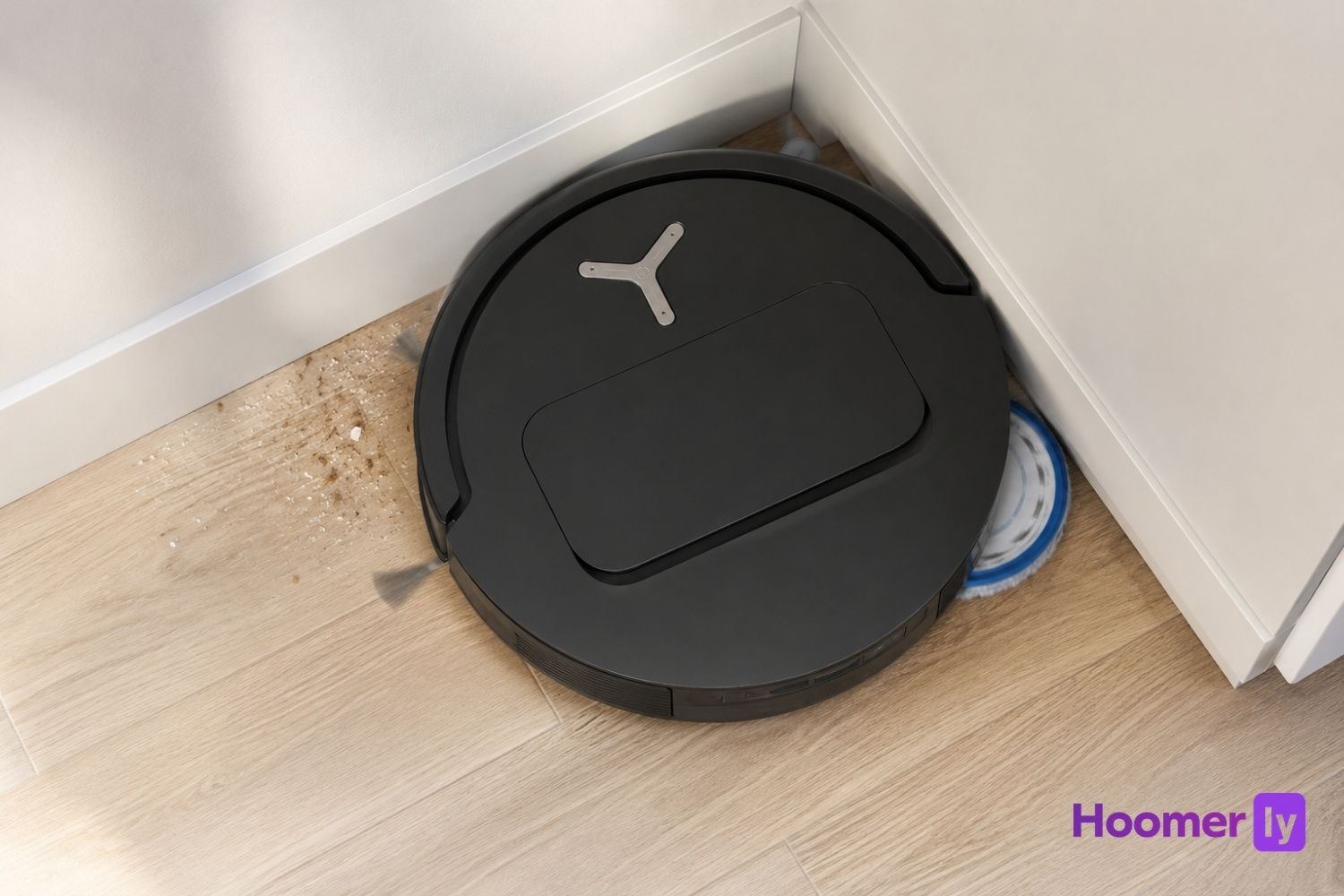
The corner problem really comes down to two things. First, a round robot’s body cannot physically fit into a 90-degree corner, so there’s always a gap. Second, a standard side brush sits within the robot’s circular footprint, which means it sweeps in a small circle rather than reaching past the edge of the robot. Even the best navigation in the world can’t fix a physical limitation. There are two real solutions: change the body shape so a flat front can press against both walls at once (the Roomba s9+ approach), or add a side brush arm that extends beyond the robot’s body when it detects a wall or corner (the Roborock FlexiArm approach). Everything else, like better navigation, a smarter brush angle, or higher suction, is a partial improvement. It helps, but it doesn’t close the gap.
What I paid the most attention to: how close each robot actually tracked along walls during a run, whether the side brush could physically reach past the robot’s footprint, and whether I could still see debris lines after a full cleaning pass. My kitchen has hardwood floors with a baseboard gap that catches pet hair like a trap. My dogs shed year-round. If something couldn’t keep that baseboard clean on a daily run, I noticed fast.
My Top Pick
Here’s how I’d rank these four for corner and edge cleaning specifically.
Best Overall Roborock S8 MaxV Ultra at Amazon ↓ Jump to Review
Best True Corner Design iRobot Roomba s9+ at Amazon ↓ Jump to Review
Best Value for Edge Cleaning Roborock Qrevo S Pro at Amazon ↓ Jump to Review
Best Premium Innovation Roborock Saros Z70 at Amazon ↓ Jump to Review
My everyday recommendation for most households is the S8 MaxV Ultra. The FlexiArm side brush is a real difference-maker. But if you specifically want the D-shape body, the Roomba s9+ still makes that argument better than any round robot can. And if you want something that addresses both corners and baseboards at the same time, the Saros Z70 goes further than anything else in this group, though you’ll pay for it.
#1 Best Overall: Roborock S8 MaxV Ultra
The FlexiArm side brush is what separates the S8 MaxV Ultra from every other round robot I’ve run on my floors. Unlike a standard side brush that sits within the robot’s circular body, the FlexiArm physically extends past the robot’s edge when it detects a wall or corner. That’s the gap that every standard round robot misses. It sweeps debris inward toward the suction path rather than just scattering it along the wall.
Suction is 10,000 Pa, which is strong enough to pull in what the FlexiArm moves toward the intake. The dual rubber rollers are anti-tangle, which matters a lot in a house with two dogs. I’ve run brushes that wrap hair into a matted mess within a few days. These stay much cleaner between cleanings. Pet hair pickup is rated at around 99%, and in my experience that tracks with what I see on my hardwood floors after a run.
The dock handles everything. It empties the dustbin automatically, washes the mop pads with hot water, refills the water tank, and holds up to two months of debris before you touch a bag. For daily pet hair cleanup, that self-maintenance actually matters. I don’t want a robot that needs me to clean it every few days to stay effective.
Coverage is strong at around 3,229 square feet per charge with a 180-minute battery. That covers my whole house in one pass with room to spare. Navigation uses LiDAR with a front RGB camera for AI obstacle avoidance. It handles my dogs’ toys well, which is genuinely useful. The Android Authority Editors’ Choice designation is earned.
The honest downsides: the dock is large, and the Refill and Drainage variant requires a plumbing connection. The bag is still disposable, which adds a small ongoing cost. And this is the most expensive robot in this group. But for daily corner and edge cleaning in a house with pets, the FlexiArm alone justifies the premium over standard round robots.
#2 Best True Corner Design: iRobot Roomba s9+
The Roomba s9+ solves the corner problem the simplest possible way: it changes the shape of the robot. The D-shaped flat front is the entire argument here. When the s9+ reaches a 90-degree corner, the flat front presses against both walls at once. No round robot can do that, regardless of how good its side brush is. If corners are your specific frustration, the physics of this body shape are hard to argue with.
The Corner Boost feature adds to this. The robot detects when it’s at a wall or corner, slows down, and increases suction. That combination of physical shape plus deliberate corner behavior is why this robot earns the “Best True Corner Design” label. Suction is rated at 40 times that of the 600 series, which is iRobot’s own benchmark, and in real-world use on pet hair it performs solidly.
The auto-empty Clean Base dock holds 60 days of debris before you empty it. The dock is included in the box, which matters at this price point. PrecisionVision Navigation maps the home and runs systematic cleaning patterns rather than random bouncing, which means it reliably covers the floor instead of hitting some areas twice and missing others entirely.
Honest context: this is a 2019-era flagship, and its price has come down from the original launch. That makes the value case better now than it was a few years ago. But there are real trade-offs to acknowledge. It is noisier than newer robots. It doesn’t mop. Battery life and coverage fall behind current-generation robots. Very long dog hair can tangle in the brushes over time. If you need mopping or longer run time, this isn’t the right fit. If corners are the priority and you want the flat-front solution, it still earns its spot on this list.
#3 Best Value for Edge Cleaning: Roborock Qrevo S Pro
The Qrevo S Pro sits at the upper-mid price tier and brings 18,500 Pa suction, which is the highest raw suction number in this group. The anti-tangle arc side brush uses an asymmetric curved design that guides pet hair toward the bristle tips and toward the suction path along walls. It’s not an extending arm like the FlexiArm. But it’s a smarter geometry than a standard straight side brush, and it makes a real difference in how clean the edges look after a run.
The dock is genuinely impressive for the price. It auto-empties, washes the mop pads with 167 degrees Fahrenheit hot water, dries them with warm air, and auto-refills the water tank. That’s a 10-in-1 system that holds up to 65 days of debris. For an upper-mid-tier robot, getting this level of dock maintenance is something I didn’t expect. If you’re also shopping for a best self-emptying robot vacuum, the Qrevo S Pro dock competes with docks found on much pricier robots.
The dual liftable spinning mops run at 200 RPM with 30 water-flow levels and lift 10mm when the robot crosses onto carpet. Navigation uses PreciSense LiDAR with structured-light obstacle avoidance, which is mid-tier. It handles most obstacles fine but isn’t at the level of the AI camera systems on the S8 MaxV Ultra or Saros Z70.
One thing I want to flag: the Qrevo S Pro launched in April-May 2026. At the time I put this together, there were no major independent lab reviews yet. The spec data comes from Roborock US and launch coverage from Vacuum Wars. I’m being upfront about that because I’d normally want third-party confirmation before making a full recommendation. Based on what I’ve seen, it’s a strong all-around robot at its price. But if you want the comfort of an established review record, the S8 MaxV Ultra or Roomba s9+ have more of that behind them.
The corner limitation is real: it’s still a round robot. The arc brush reduces debris buildup along walls, but it doesn’t physically close the 90-degree corner gap the way the FlexiArm or the D-shape can. For edge coverage on hardwood and along baseboards, it performs well. For deep-corner pickup, it’s a partial solution.
#4 Best Premium Innovation: Roborock Saros Z70
The Saros Z70 takes the FlexiArm idea further than any other robot I’ve come across. Where the S8 MaxV Ultra’s FlexiArm extends the side brush, the Z70’s FlexiArm Riser extends both the side brush and the mop pad beyond the robot’s body when sensors detect a corner, wall, or furniture edge. That means it physically reaches the baseboard with the mop. No other robot in this group does that. If baseboard mopping specifically is your frustration, this is the only robot here that addresses it.
Vacuum Wars confirmed the extending side brush performed well in corner coverage evaluation. That’s the external validation I wanted to see. Obstacle avoidance scored 5.0 out of 5 in the same evaluation, the best in this group. The StarSight Autonomous System 2.0 uses a 3D time-of-flight sensor plus a camera array. In my experience, near-flawless obstacle avoidance is what makes a robot actually reliable for daily unsupervised runs, especially with dog toys and dog bowls scattered around.
The OmniGrip robotic arm that picks up small items (socks, wrappers, small clutter) is genuinely interesting technology. Real-world success rate is around 50% per Vacuum Wars. That’s not reliable enough to count on, but it’s not useless either. I’d treat it as a bonus rather than a reason to buy.
Here’s where I have to be honest about the trade-offs. Vacuum Wars measured real-world intake suction at 0.3 kPa against a category average of 0.8 kPa. The spec says 22,000 Pa. That gap between rated and measured suction is meaningful. Carpet deep-clean performance came in at 67% versus a 75% category average. Pet hair pickup on carpet was 83% versus a 92% average. The dustbin is also the smallest Vacuum Wars has evaluated at 180 mL. The overall Vacuum Wars score was 3.25 out of 5, ranked 12th, with the reviewer noting that other Roborock models beat it for most users.
If you have mostly hard floors and your primary goal is corner and baseboard coverage, the Z70’s FlexiArm Riser is genuinely the most complete solution in this group. If you have significant carpet and need strong pet hair pickup there, the lower-than-average carpet metrics are a real concern. I’d also check the best robot vacuum for carpet list before committing to this one.
What to Look for in a Robot Vacuum for Corners
Choosing the best robot vacuum for corners means paying attention to a different set of specs than most buying guides cover. Suction numbers matter less than body shape and brush reach.
Robot Shape: Round vs. D-Shaped
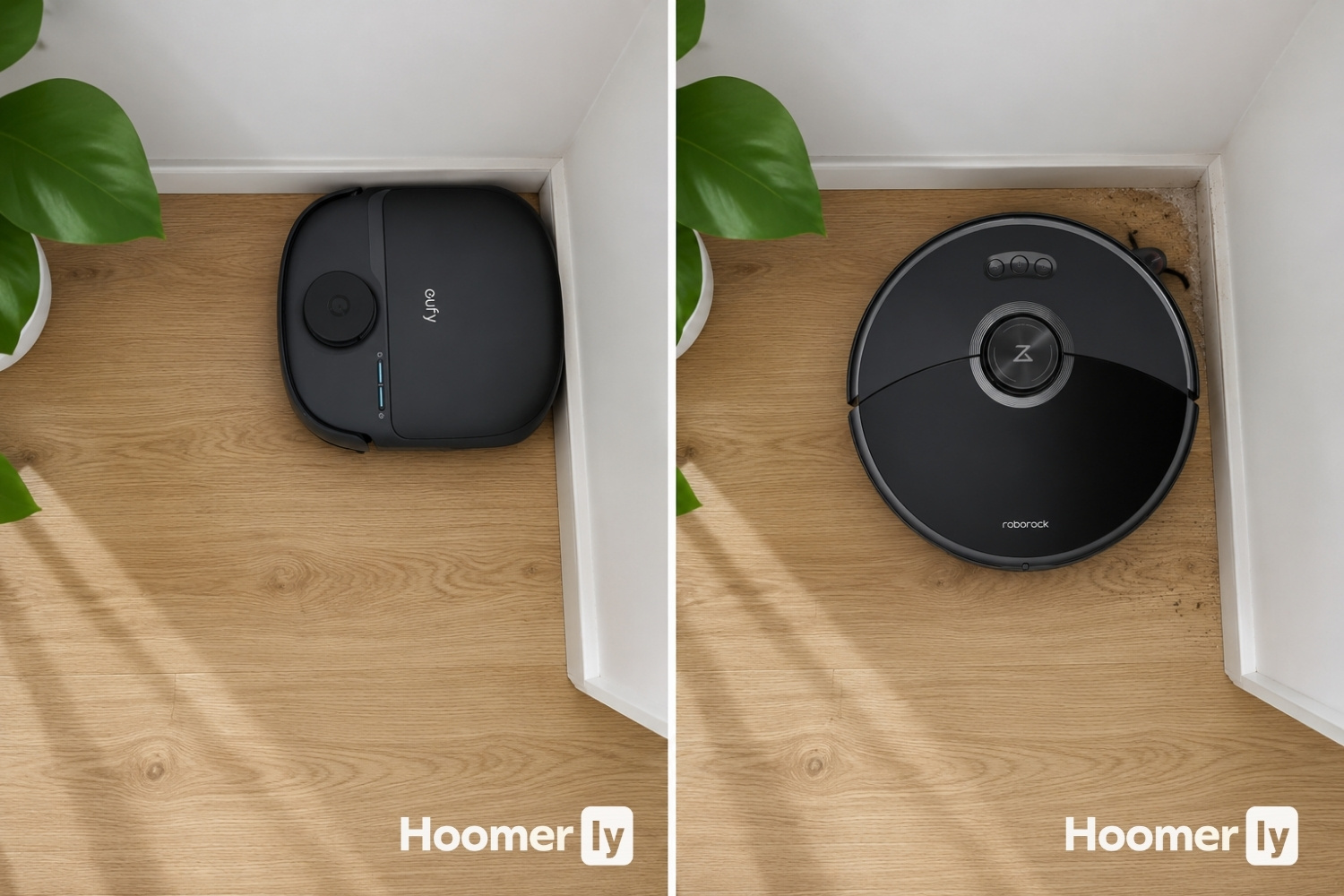
This is the most fundamental difference and most guides skip over it. A round robot cannot physically enter a 90-degree corner. The geometry doesn’t allow it. A D-shaped robot, like the Roomba s9+, has a flat front that can press against two walls simultaneously, reaching the actual corner. If corner pickup is your primary concern, the body shape matters more than suction rating or any software feature.
Extending Side Brush Technology
For round robots, the only way to address the corner gap is to extend the side brush beyond the robot’s circular footprint. Roborock’s FlexiArm does this. When sensors detect a wall or corner, the arm extends outward to sweep debris inward toward the suction path. The S8 MaxV Ultra does this for the brush. The Saros Z70 does this for both the brush and the mop pad. A standard side brush that sits within the robot’s body cannot physically reach the gap, no matter how fast it spins.
Wall-Following Navigation
Even with the right brush design, the robot has to actually track the wall closely to cover edges consistently. LiDAR navigation maps the room and runs systematic wall-following passes rather than random patterns. Better navigation means the robot reliably runs along each baseboard on every cleaning cycle rather than occasionally bumping into it and moving on. This is why LiDAR-based robots generally cover edges more consistently than older sensor-based models.
Suction and Floor Type
The side brush sweeps debris toward the suction intake. If suction is weak, even well-swept debris doesn’t get fully picked up. On hardwood and tile, moderate suction is usually enough for corners. On low-pile carpet adjacent to walls, you want stronger suction to pull in what the brush moves. The Qrevo S Pro’s 18,500 Pa gives it more pulling power along edges. The Saros Z70’s rated 22,000 Pa sounds impressive, but the real-world measured suction of 0.3 kPa tells a different story. I pay more attention to independent lab measurements than spec numbers.
If you’re also dealing with heavy pet hair on carpet, it’s worth checking my notes on the best robot vacuum for pet hair since carpet and corner cleaning overlap a lot in that context.
Mop Extension for Baseboards
Most guides stop at vacuuming. But baseboards collect a film of dust and pet oils that suction alone doesn’t remove. The Saros Z70 is the only robot here that physically extends its mop pad to reach baseboards independently. Every other robot in this group mops the main floor surface but leaves the baseboard itself to manual cleaning. If that last step matters to you, the Z70 is the only option in this group that handles it.
My Pick: Best Robot Vacuum for Corners
For most households, the Roborock S8 MaxV Ultra is the best robot vacuum for corners. The FlexiArm side brush physically solves the gap that standard round robots leave along walls and at baseboards. It has strong suction, a self-maintaining dock, and reliable LiDAR navigation that actually tracks walls consistently. That combination works on my hardwood floors and area rugs without me having to follow up manually along the baseboards most days.
If you specifically want the D-shape body, the iRobot Roomba s9+ is the robot to buy for true 90-degree corner coverage. Nothing else here touches it for that use case, even accounting for the age of the model.
If you want the most complete corner and baseboard solution available and the budget is there, the Saros Z70 extends both its side brush and its mop pad to reach surfaces no other robot here can reach. The carpet suction trade-off is real and I wouldn’t hide it. But on a home with mostly hard floors, it goes further than anything else in this group.
For solid all-around performance at a lower price than the S8 MaxV Ultra, the Qrevo S Pro delivers strong suction, an excellent dock, and better edge cleaning than most robots at its price point. You accept the standard round-robot corner limitation, and the lack of an independent review record at the time of writing. But everything Roborock has shown about the arc brush design is consistent with what I’d expect from an upper-mid robot at this price.
For even more context on models with strong self-maintenance systems, my full write-up on the best self-emptying robot vacuum covers the dock options in more depth. And if most of your floors are carpet rather than hard floors, the best robot vacuum for carpet covers the performance metrics that matter more in that environment.
FAQs
Can round robot vacuums actually clean corners?
Partially. The best robot vacuum for corners handles this better than a standard round model, but even premium robots leave some accumulation. A standard round robot cannot enter a 90-degree corner because the shape doesn’t allow it. What separates better round robots is whether the side brush extends past the robot’s circular footprint. Robots with FlexiArm technology, like the S8 MaxV Ultra and Saros Z70, physically sweep the gap a standard side brush misses. You’ll still get some accumulation right at the corner tip, but much less than with a standard round robot.
What is FlexiArm and does it make a real difference?
FlexiArm is Roborock’s extending side brush system. When the robot’s sensors detect a wall or corner, the arm extends outward beyond the robot’s circular body, sweeping debris inward toward the suction path. On the Saros Z70, it also extends the mop pad to reach baseboards. In my experience, yes, it makes a visible difference. The baseboard debris lines I used to see after a daily run are much less obvious with FlexiArm robots than with standard side brushes.
Is the iRobot Roomba s9+ still worth buying in 2026?
For corner-specific cleaning, yes. The D-shaped flat front is still the most direct physical solution to the 90-degree corner problem, and no round robot fully replicates it regardless of how good the side brush is. That said, it’s a 2019-era robot. It doesn’t mop, it’s noisier than newer models, and battery run time falls behind current robots. If mopping or quiet operation is important, look elsewhere. If corners are your primary problem, the body shape still makes the argument.
Do robot vacuums clean along baseboards?
Most of them try, but the results vary a lot. LiDAR robots with systematic wall-following navigation track closer to walls than older random-path robots. An extending side brush like the FlexiArm reaches debris that sits past the robot’s footprint. For the baseboard surface itself, only the Saros Z70 in this group extends its mop pad to actually contact the baseboard. Everything else cleans the floor area near the baseboard, not the baseboard face.

Write Your Review
No reviews yet. Be the first to share your experience!