

Here’s my take on the best 4000 PSI pressure washers for commercial and heavy-duty work: the Simpson PS4240 PowerShot is the one I’d put in a professional’s truck. Honda GX390, AAA triplex pump, 16,800 cleaning units. Nothing in this PSI class competes on that combination at the price. If raw long-term durability matters more than cleaning speed, the NorthStar Belt Drive is worth the higher price for contractors running it hard every day.
Everything I Recommend
These are the 4,000+ PSI machines worth looking at right now. I keep this list updated as new options come in and older ones get discontinued or discounted.

Pros
- Powerful 4200 PSI and 4.0 GPM combination delivers faster cleaning and job completion for time-sensitive contractors
- Honda GX390 engine is renowned for reliability, easy starting, and excellent performance in demanding conditions
- Industrial AAA triplex pump with sight glass eliminates guesswork about oil levels and water contamination
- Direct-drive design simplifies operation and reduces maintenance compared to belt-drive systems
- Compact, portable design with pneumatic tires makes transport and setup quick and easy on job sites
Cons
- Not available for sale in California due to emissions regulations (49-state compliant only)
- At 141 pounds, this is a heavy machine that requires adequate storage space and may be challenging for solo operators to load
- Premium price point reflects professional-grade construction but may be higher than entry-level residential models
The Simpson PS4240 PowerShot is a professional-grade gas pressure washer engineered for contractors and cleaning professionals who demand reliability and power. This machine delivers 4200 PSI at 4.0 GPM, making it ideal for deck cleaning, wood restoration, paint preparation, graffiti removal, and facility maintenance. The direct-drive design combines simplicity with serious cleaning capability, ensuring faster job completion without the complexity of belt-driven systems.
At the heart of this pressure washer is a premium Honda GX390 commercial engine, widely recognized for dependable performance and easy starting even in harsh conditions. The engine features a low-oil shutdown function that protects against damage from insufficient lubrication. Paired with this is Simpson's reliable AAA industrial triplex plunger pump, which incorporates advanced oil seal technology and a convenient sight glass. This sight glass eliminates the need for a dipstick and allows you to visually monitor oil levels and detect water contamination at a glance, reducing maintenance downtime.
The build quality reflects Simpson's 60 years of industry experience. The machine features a welded steel frame with a powder-coated finish that resists corrosion and withstands job site abuse. The 50-foot steel-braided Monster Hose resists kinks and abrasion, while its polyurethane outer jacket protects finished surfaces during cleaning. The included quick-connect fittings enable rapid setup and nozzle changes. Five quick-connect nozzle tips covering 0 degree, 15 degree, 25 degree, 40 degree, and soap applications provide versatility for different cleaning scenarios. Thirteen-inch pneumatic tires and a balanced frame design make this 141-pound machine surprisingly maneuverable across gravel, grass, and curbs.
The main limitation is that this model is not available in California due to emissions regulations. Additionally, at 141 pounds, solo operators may find it challenging to load and transport without assistance. The premium price reflects professional-grade construction and components, making this a significant investment compared to consumer-level models.
The Simpson PS4240 is the right choice for serious contractors and professionals who value reliability, performance, and durability. The comprehensive warranty (3-year engine, 5-year pump, 10-year frame) provides confidence in your investment. If you run a cleaning business or manage multiple properties and need a machine that will deliver consistent results and withstand heavy use, this pressure washer justifies its premium cost through years of dependable service.
Power and Performance: 4200 PSI maximum pressure, 4.0 GPM maximum flow rate, Honda GX390 gasoline engine with low-oil shutdown
Pump System: AAA industrial triplex plunger pump with integrated unloader and thermal relief, advanced oil seal technology, sight glass for oil level visibility, 1.61-gallon tank capacity
Hose and Connections: 50-foot steel-braided Monster Hose, 3/8-inch diameter, quick-connect fittings, polyurethane outer jacket, 31-inch spray wand with rear-load QC gun
Nozzles: Five quick-connect pressure washer tips (0 degree, 15 degree, 25 degree, 40 degree, soap)
Mobility: 13-inch premium pneumatic tires, welded steel frame with powder-coated finish, compact design (38 inches L x 23.5 inches W x 29 inches H)
Weight and Dimensions: 141 pounds, hose dimensions 8 inches L x 3 inches W x 50 inches H
Warranty: 3-year limited commercial Honda engine warranty, 5-year limited pump warranty, 10-year limited frame warranty, 90-day accessory warranty
Compliance: 49-state compliant (not for sale in California)
Professional Contractors: This machine is purpose-built for deck cleaning, wood restoration, paint preparation, and graffiti removal services. The 4200 PSI and 4.0 GPM combination handles heavy-duty applications that would overwhelm consumer-grade equipment.
Facility and Fleet Maintenance: The durable construction and high-flow output make this ideal for maintaining equipment, vehicles, and commercial properties. The direct-drive design means less downtime and simpler maintenance.
Job Site Cleaning: Construction sites, equipment yards, and rental properties benefit from this washer's power and portability. The pneumatic tires and compact frame make it easy to move between locations.
Prosumers Demanding Professional Results: While priced for professionals, serious DIYers who regularly tackle large projects and demand reliability will appreciate the industrial-grade components and warranty coverage.
Pros
- Verified commercial-grade engine ensures professional-level performance and durability for demanding jobs
- Electronic Fuel Injection provides reliable cold starts and superior fuel economy compared to carbureted engines
- Ceramic plungers and thermal protection in the Comet pump extend equipment lifespan and reduce maintenance costs
- Flat-free tires eliminate downtime from punctures, keeping you productive on job sites
- Multiple nozzle angles (15, 25, 40 degrees plus chemical) offer versatility for different cleaning tasks
Cons
- No engine oil included, requiring separate purchase for initial setup and maintenance
- 270-pound weight may require two people to move despite the flat-free tires
- No customer reviews available yet to validate real-world performance claims
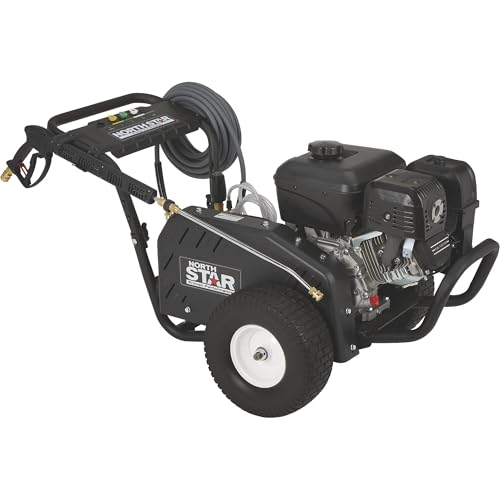
The NorthStar 4000 PSI Gas Pressure Washer is a commercial-grade cleaning machine designed for professionals and serious DIY enthusiasts who demand reliability and power. With its 420cc NorthStar engine and 3.5 GPM flow rate, this unit tackles heavy-duty applications like concrete cleaning, industrial equipment washing, and fleet maintenance. The electronic fuel injection technology sets this model apart from budget alternatives, delivering consistent performance and easier cold starts even in challenging conditions.
What makes this pressure washer stand out is its thoughtful engineering. The Comet RW belt drive triplex plunger pump features ceramic plungers and thermal protection, components typically found on equipment costing significantly more. The adjustable pressure control lets you dial in exactly the right PSI for your task, preventing surface damage while maintaining cleaning power. The included 50-foot Uberflex nonmarking hose protects delicate surfaces, and the quick-access oil drain cutouts on both engine and pump make maintenance straightforward and clean.
Build quality is evident in the construction. The 1 3/8-inch steel tube frame provides a rigid, durable foundation, while the 15-inch flat-free tires eliminate puncture worries on job sites. At 270 pounds, the unit is substantial but manageable with the solid frame design. The Easy Start system prevents pressure buildup for smoother recoil pulling, reducing operator fatigue during extended use.
One consideration is that engine oil is not included, so budget for SAE 30 oil for initial setup and regular maintenance. Additionally, the 1.6-gallon fuel capacity requires refueling during extended jobs, though this encourages regular breaks and engine cooling. The maximum inlet water temperature of 140 degrees Fahrenheit is standard for this class and suitable for most applications.
This pressure washer represents solid value for contractors and homeowners seeking commercial-grade performance without industrial pricing. The verified commercial-grade engine, robust pump design, and thoughtful features make it a dependable choice for years of demanding cleaning work.
Engine and Power: NorthStar e420 420cc engine with Electronic Fuel Injection, 19.5 ft-lbs gross torque, fuel capacity 1.6 gallons, SAE 30 oil type
Pressure and Flow: 4000 PSI maximum pressure, 3.5 GPM flow rate, adjustable pressure control
Pump System: Comet RW belt drive triplex plunger pump with ceramic plungers and thermal protection
Hose and Nozzles: 50-foot Uberflex nonmarking hose included, 15-degree, 25-degree, 40-degree, and chemical injection nozzles
Physical Dimensions: 50.5 inches length, 2.5 inches width, 26.25 inches height, 270 pounds weight, 15-inch flat-free tires
Water Requirements: Maximum inlet water temperature 140 degrees Fahrenheit, 3.5-inch orifice size
Who Should Buy This: Contractors, landscapers, property managers, and homeowners with significant cleaning needs will appreciate this unit's commercial-grade reliability and power. It excels for concrete cleaning, building facade washing, equipment maintenance, and fleet cleaning.
Key Considerations: This is a fuel-powered unit requiring gasoline and regular maintenance, making it better suited for outdoor use and frequent operation. The 4000 PSI output is powerful enough for most applications but requires proper technique to avoid surface damage. Budget for SAE 30 engine oil and regular pump maintenance to maximize lifespan.
Maintenance Tips: The quick-access oil drain cutouts make regular maintenance convenient. Plan for seasonal winterization if storing in cold climates, and keep the ceramic plungers protected by using clean inlet water.
Alternatives to Consider: If you need lower pressure (2500-3000 PSI) for lighter applications, smaller portable units cost less. For electric-powered alternatives, consider units if you have reliable power source access and don't mind lower flow rates.

Pros
- Professional-grade construction with commercial-duty components designed for heavy daily use
- Hot water capability significantly improves cleaning effectiveness on industrial and commercial applications
- Kohler engine is widely serviced and parts are readily available across North America
- Robust all-welded frame with reinforced structure minimizes vibration and wear during operation
- Comprehensive feature set including thermostat control, hose reel mounting, and 10-gallon fuel tank
Cons
- 425-pound weight and large footprint require adequate storage space and transport capability
- Premium price point targets commercial and professional users rather than residential homeowners
- No customer reviews available yet to validate long-term reliability and real-world performance
The Easy Kleen EZO4035G-K-GP-120 is a commercial-grade hot water pressure washer engineered for professional contractors, industrial facilities, and commercial cleaning operations. This machine combines substantial cleaning power with integrated heating capability, making it ideal for applications where cold water alone cannot cut through heavy grease, oil, and industrial soils. The 4000 PSI output paired with 3.5 GPM flow rate provides a balanced approach to both pressure and volume, allowing operators to clean effectively without excessive water consumption.
The standout feature is the integrated 120V oil-fired heating system that raises water temperature to tackle stubborn contaminants. The heating coil uses Schedule 80 pipe construction with elliptical winding and ceramic blanket insulation, which reduces vibration and extends the life of critical components. The commercial-duty triplex plunger pump features stainless steel valves and brass manifold, ensuring reliable operation even under constant use. The 14 HP Kohler gasoline engine is a smart choice for commercial equipment, as these engines are widely serviced across North America and parts availability is excellent.
Build quality reflects its commercial designation. The frame is all-welded 12-gauge bent steel with a powder coat finish, featuring a lifting bar and 13-inch pneumatic wheels for easy repositioning on job sites. The 10-gallon poly fuel tank provides reasonable runtime, and the hose reel mounting plate adds practical functionality. At 425 pounds and measuring 46 inches long by 30 inches wide by 48 inches high, this unit requires dedicated storage and transportation planning.
The primary consideration is the investment required and the target user. This is not a residential pressure washer; it is purpose-built for professional operations where reliability and performance justify the premium cost. The lack of customer reviews means real-world durability data is not yet available, though the commercial-grade components and North American manufacturing suggest solid long-term performance potential.
The Easy Kleen delivers professional cleaning capability with hot water heating integration, making it a strong choice for contractors and commercial operators who need dependable equipment. The Kohler engine and commercial pump components provide confidence in serviceability and longevity. This is a specialized tool for serious cleaning operations.
Pressure and Flow: Maximum pressure of 4000 PSI with 3.5 gallons per minute flow rate. Direct drive system for efficient power transfer.
Engine: 14 HP Kohler gasoline-powered engine with 350,000 BTU output. Electric start for convenient operation.
Heating System: 120V oil-fired burner with adjustable thermostat and on/off switch. Schedule 80 heating coil with ceramic blanket insulation.
Pump: Commercial-duty triplex plunger pump with oil bath crankcase, stainless steel valves, and brass manifold.
Frame and Mobility: All-welded 12-gauge bent steel with powder coat finish. Includes lifting bar, 13-inch pneumatic wheels with lock nuts, and hose reel mounting plate.
Fuel and Hose: 10-gallon poly fuel tank. 15.24-meter (50-foot) hose included. Color: Orange. Dimensions: 46L x 30W x 48H inches. Weight: 425 pounds.
Who Should Buy This: Professional contractors, commercial cleaning services, industrial facilities, municipalities, and equipment rental companies that require reliable hot water pressure washing for heavy-duty applications. This machine is suited for operations that clean construction equipment, industrial machinery, parking lots, and heavily soiled commercial surfaces.
Who Should Not Buy This: Homeowners seeking occasional residential cleaning, small property maintenance tasks, or light-duty applications will find this equipment oversized and unnecessarily expensive. Renters or businesses with limited storage space may struggle with the 425-pound weight and large footprint.
Key Considerations: Verify that your facility has adequate storage space and can accommodate the 46 x 30 x 48-inch dimensions. Confirm access to 120V electrical power for the heating system. Plan for fuel storage (10-gallon tank). Consider transportation requirements and whether a trailer or vehicle with sufficient capacity is available. Research local dealer support for Kohler engine maintenance and parts availability in your region.
Value Assessment: This investment makes sense for businesses that operate pressure washing equipment regularly and depend on consistent uptime. The commercial-grade construction, integrated hot water heating, and Kohler engine reliability justify the premium cost for professional operations. For occasional use, renting may be more practical.

Pros
- Battery-powered electric starter makes starting effortless compared to traditional pull-cord engines
- Thermal relief valve and smart control panel prevent equipment damage and provide real-time operation feedback
- Portable design with pneumatic tires and compact frame fits in garages and transports easily
- Excellent pressure and flow rate for residential cleaning tasks on multiple surfaces
- Comprehensive accessory package includes hose, wand, and five nozzles for immediate use
Cons
- Battery not included; requires separate purchase of DeWalt 20V MAX or FLEXVOLT batteries
- 3400 PSI is moderate for heavy-duty commercial applications or extremely stubborn stains
- Gas-powered engines require regular maintenance and fuel storage compared to electric models
The DeWalt DXPW3400PRNB-S PressuReady 3400 PSI pressure washer is designed for homeowners who want professional cleaning power without the hassle of traditional gas equipment. This unit combines a robust 208cc gas engine with innovative battery-powered ignition technology, making it accessible to users of all experience levels. It excels at cleaning decks, patios, siding, outdoor furniture, and preparing surfaces for painting.
The standout feature is the Quick Start technology, which uses a DeWalt battery-powered electric starter to fire up the engine instantly. Simply squeeze the trigger and the engine starts without adjusting the choke or pulling a recoil rope repeatedly. The auto-shutoff function activates after brief inactivity, conserving fuel and reducing noise. The PressuReady smart control panel displays real-time status with LED indicators showing ready mode, water flow, low fuel, and low battery alerts, giving you complete operational visibility.
Performance-wise, the 3400 PSI at 2.5 GPM output handles most residential cleaning tasks effectively. The OEM Technologies axial cam pump is maintenance-free and built for reliability, while the thermal relief valve protects against overheating during extended use. The welded steel frame with powder-coated finish resists rust, and 10-inch pneumatic tires make transport smooth across uneven terrain. The 25-foot MorFlex hose, ergonomic spray gun, and five quick-connect nozzles provide immediate versatility for different cleaning angles and soap application.
The main consideration is that the battery is sold separately; you'll need to invest in a DeWalt 20V MAX or FLEXVOLT battery to operate the electric starter. Additionally, while 3400 PSI is solid for residential use, it falls short for heavy commercial applications or extremely stubborn stains. Gas engines also require regular maintenance and fuel storage compared to electric models.
Overall, the DeWalt DXPW3400PRNB-S represents a thoughtful approach to pressure washer design, removing traditional pain points while maintaining the power and durability homeowners expect from the brand. It's an excellent choice for anyone seeking a balance between ease of use and genuine cleaning capability.
Engine and Power: 208cc gas engine with battery-powered electric starter, 3400 PSI maximum pressure, 2.5 GPM maximum flow rate
Pump: OEM Technologies axial cam pump (maintenance-free), thermal relief valve for overheating protection
Dimensions and Weight: 29 inches L x 21 inches W x 40 inches H, weighs 76 pounds
Included Accessories: MorFlex 1/4 inch x 25 feet high-pressure hose, 16-inch steel wand, spray gun, five quick-connect nozzles (0 degrees, 15 degrees, 25 degrees, 40 degrees, and soap), PressuReady smart control panel
Mobility: 10-inch pneumatic tires, welded steel frame with powder-coated finish
Battery Compatibility: DeWalt 20V MAX and FLEXVOLT batteries (sold separately)
Compliance: 49-state compliant, CETA specification met, cold-water design
Who Should Buy This: Homeowners who regularly clean decks, patios, siding, or outdoor furniture and want a pressure washer that's easy to start and operate. Ideal if you already own DeWalt 20V MAX tools and batteries, since you can repurpose them here.
Battery Requirement: The electric starter requires a DeWalt 20V MAX or FLEXVOLT battery, which is not included. If you're new to DeWalt tools, budget for a compatible battery purchase. If you already own DeWalt power tools, you may have compatible batteries on hand.
Pressure Considerations: At 3400 PSI, this washer handles most residential cleaning effectively. It's suitable for vinyl siding, wood decks, concrete patios, and outdoor furniture. For extremely tough stains or commercial-scale projects, consider higher-PSI models.
Maintenance: As a gas-powered unit, you'll need to maintain the engine, store fuel properly, and perform seasonal maintenance. This requires more care than electric models but provides greater portability and power.
Accessories: The included hose, wand, and nozzle set provide immediate functionality. You may want to purchase extension hoses or specialty nozzles for specific cleaning tasks as your needs evolve.
4,000 PSI is where pressure washing stops being a homeowner hobby and becomes a work tool. Residential machines cap out around 2,000 to 3,000 PSI. Once you’re above 4,000, you’re looking at concrete restoration, commercial building wash-downs, fleet cleaning, and stripping heavy contamination a residential unit won’t touch.
The specs that matter most at this level are GPM and pump type. Cleaning units (PSI multiplied by GPM) tell you how fast you’ll clear a surface. A triplex pump tells you how long the machine will hold up under sustained daily use. Anything else is secondary.
The four machines below cover different angles: raw performance, long-term durability, hot water capability, and an easier-to-start option for lighter commercial tasks. One of them doesn’t fully belong in the 4,000 PSI category and I’ll say so directly.
My Top Pick
Here’s how I’d slot each one before we get into the full breakdowns.
Best Overall Simpson PS4240 PowerShot at Amazon ↓ Jump to Review
Best for Long-Term Durability NorthStar 4000 PSI Belt Drive at Amazon ↓ Jump to Review
Best for Grease and Oil Removal Easy Kleen Commercial Hot Water Washer at Amazon ↓ Jump to Review
Easiest to Start (Lighter Commercial Use) DeWalt 3400 PSI PressuReady at Amazon ↓ Jump to Review
I’ve been running outdoor power equipment for fifteen years. The machines that actually hold up under real commercial use are not always the ones with the biggest marketing budget. I put together this comparison by going through the specs, the pump configurations, and what professional users have reported after a full season of use. If you want to know more about where I’m coming from, my full background is on the About page.
I’ll be straight with you on each one. Some of these are genuinely excellent. One is only here because it shows up in searches for this category and you deserve an honest read on why it doesn’t quite belong at this PSI class.
#1 Best Overall: Simpson PS4240 PowerShot Gas
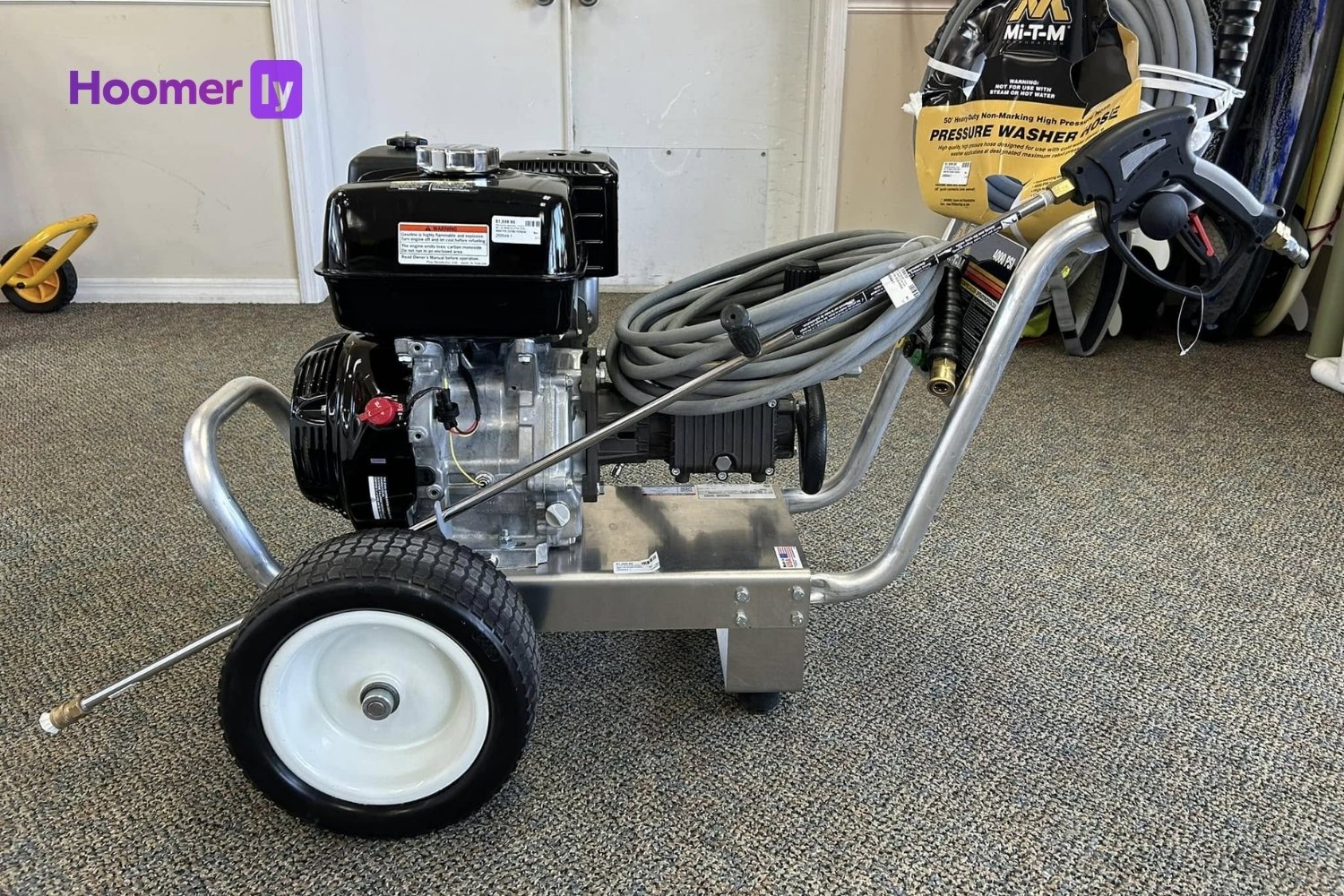
The Simpson PS4240 is the standard for professional cold water pressure washing at this PSI class. 4,200 PSI, 4.0 GPM, 16,800 cleaning units. Honda GX390 engine with low-oil shutdown. AAA industrial triplex pump with a thermal relief valve. These aren’t just specs on a box. The GX390 starts reliably after months in storage, runs for hours without surging, and has a service network at virtually every small engine shop in the country. I’ve run Honda-powered machines for years and the engine never gives you anything to complain about.
The AAA triplex runs cooler than axial cam pumps at the same output, which matters when you’re pushing the machine for six hours straight on a commercial job. At 136 lbs on 13-inch pneumatic tires, it’s manageable for one person on flat terrain but needs a ramp to load into a truck. The spray gun trigger is the one weak point on an otherwise solid build. Cold water only.
#2 Best for Long-Term Durability: NorthStar 4000 PSI Belt Drive
The NorthStar 1571343 is built around a belt-drive Comet RW4040S triplex pump with ceramic plungers. Belt drive lowers the pump RPM compared to direct drive at the same output pressure, which reduces heat and extends pump life significantly. If you’re running this machine every day and planning on owning it for five or more years, that belt-drive configuration is what you’re paying for. The NorthStar e420 EFI engine starts cleanly in cold weather without choke adjustments and adjusts fuel delivery automatically, something carbureted engines can’t match.
Here’s the trade-off. 249 lbs. You need two people or a ramp to load this onto a trailer. It comes in around $2,200, which is $1,000 more than the Simpson for 14,000 cleaning units versus 16,800. The Simpson covers more surface area per hour. The NorthStar will outlast it by a season or two under daily commercial loading. No soap tank is a minor annoyance. The 50-foot Uberflex hose handles cold weather better than steel-braided. For contractors who service their own equipment and want the most durable pump configuration available in a portable washer, the NorthStar earns that price gap.
#3 Best for Grease and Oil: Easy Kleen EZO4035G Commercial Hot Water
Cold water does not remove grease. That’s the short version of why hot water machines exist. The Easy Kleen EZO4035G runs a General Pump commercial triplex plunger pump with an oil bath crankcase, a 14 HP Kohler engine with electric start, and a 120V oil-fired burner with its own 10-gallon diesel tank. The hot water output on grease-contaminated fleet vehicles, food processing equipment, or farm machinery is not something a cold water machine can replicate at any PSI. Technically 4,000 PSI at 3.5 GPM, which is 14,000 cleaning units, solid by any standard.
The weight is the conversation stopper for most buyers: 400 lbs. You need a trailer, a truck bed, and either a ramp or mechanical assistance for placement. It requires gasoline for the Kohler and diesel for the burner separately. If you’re washing driveways and commercial buildings, the Simpson or NorthStar will do more work per dollar spent.
#4 Easiest to Start (Lighter Use): DeWalt DXPW3400PRNB-S PressuReady
I’ll be upfront: this one is 3,400 PSI, not 4,000. That’s not a rounding error. It also runs an axial cam pump rather than a triplex, which puts it in a different durability category for sustained commercial loads. What it actually is: the easiest-to-start gas pressure washer in this comparison. The PressuReady system uses a 20V battery for an electric start with no choke adjustment, no primer, no guesswork. Auto-idle shuts the engine down after a few seconds of trigger inactivity. At 85 lbs, one person loads it easily.
Cleaning units land at 8,500, which is almost half the Simpson’s 16,800. The 25-foot hose limits your working radius on anything larger than a residential job. Some users reported pump failures under consistent commercial loading, which is consistent with axial cam behavior under that kind of demand. The 20V battery for PressuReady start is not included. If you need genuine 4,000 PSI output, this isn’t the machine. If ease of use matters more than raw power for lighter commercial or prosumer tasks, the DeWalt is genuinely well-designed for what it is. Know what you’re actually buying.
What to Look for in a 4000 PSI Pressure Washer
Engine Reliability Under Sustained Load
At this PSI, you’re often running the machine for hours, not 20-minute passes. The Honda GX390 is the benchmark for commercial small engines in this class. It holds RPMs under sustained load, stays cool, and has parts and service at virtually every small engine shop in the country. Other engines perform fine, but if you’re comparing anything to a Honda GX, you need a solid reason to accept less. Low-oil shutdown is a baseline safety feature you should expect at this price range.
Pump Type: Triplex vs. Axial Cam
This is the most important spec most buyers skip past. Triplex pumps run cooler, have a longer service life, and can be rebuilt. Axial cam pumps are cheaper to manufacture and wear faster under sustained commercial cycling. Any machine marketed as commercial duty at 4,000 PSI should have a triplex pump. If it doesn’t, treat it as a prosumer machine regardless of what the PSI rating says on the box.
GPM and Cleaning Units
PSI is how hard the water hits. GPM is how much water moves. Cleaning units (PSI times GPM) tell you how fast you’ll clear a surface. At 4,000 PSI, the machines that clean faster are the ones with higher GPM. Look for 3.5 GPM at minimum. 4.0 GPM is where the real separation happens. A 4,200 PSI machine at 4.0 GPM produces nearly 20 percent more cleaning output than a 4,000 PSI machine at 3.5 GPM.
Hose and Component Quality
At 4,000 PSI, cheap hoses fail. Look for at least 50 feet of steel-braided or high-flex hose. Shorter hoses limit your working radius and force constant machine repositioning on larger jobs. Quick-connect fitting quality, gun trigger durability, and nozzle set material matter over a full work day. Budget machines often cut corners on accessories even when the engine and pump are solid.
Portability for Your Setup
These machines are heavy. The Simpson at 136 lbs is manageable for one person on flat ground. The NorthStar at 249 lbs needs two people or a ramp. The Easy Kleen at 400 lbs needs mechanical assistance. Be realistic about loading and unloading before you buy. Wheel size matters on uneven job sites. 13-inch or larger pneumatic tires handle gravel and rough terrain; 10-inch wheels struggle on anything but flat surfaces.
Total Cost of Ownership
Parts availability, oil change access, and pump serviceability determine whether this machine holds up over three or four seasons. Honda GX engines and AAA or Comet pumps have parts available at most equipment dealers. Proprietary engines and pumps become a maintenance risk if the manufacturer scales back support. Belt-drive configurations reduce pump wear and extend rebuild intervals. Factor in the ongoing maintenance cost, not just the purchase price, before you decide.
My Pick
The Simpson PS4240 is the right call for most professional buyers. Honda GX390, AAA triplex pump, 16,800 cleaning units, 50-foot steel-braided hose, and 13-inch tires around $1,100 to $1,200. Nothing in this price range matches that combination of engine, pump, and output. If you’re running commercial wash-downs, driveways, or fleet vehicles and want a machine that starts every morning and runs all day without surprises, this is it.
The NorthStar Belt Drive is for contractors who push their machine hard every day and want the most durable pump configuration available in a portable washer. You’re paying more for lower cleaning output, but the belt-drive Comet triplex will outlast a direct-drive pump under sustained daily use. The Easy Kleen is a completely different tool for industrial grease jobs that cold water simply can’t solve. The DeWalt is well-built for what it is, but it’s not a 4,000 PSI washer. Know what the job actually needs before you choose.
Pressure Washer FAQ
Q: Why a 4,000 PSI Pressure Washer?
A: Most residential and home siding pressure washers cap out at around 2000 PSI, with higher-end models reaching 3000. You’ll likely get what you’re looking for out of a nice electric pressure washer when cleaning your home. But this isn’t enough for most heavy duty jobs.
Contractors, landscapers, and industry pros need a 4000+ PSI gas pressure washer in order to tackle tough stains on hard surfaces.
A 4000 PSI pressure washer is ideal for heavy equipment, concrete surfaces, brick walls, construction sites, stripping paint and lifting oil stains.
Again, a 4000 PSI pressure washer should not be used on house siding; 4000 PSI is strong enough to cause some serious damage!
Q: What Design Features Should You Look For?
A: The features you’re looking for really depend on that type of job you’re going to do with your pressure washer. We’ve listing the most important features below:
- Maneuverability: If you didn’t notice, these machines are heavy! It’s important to find a machine that you can easily maneuver around your home, job site or farm. Generac’s 12-inch wheels, hip height bar, and wheelbarrow push mechanism make it the best in class for maneuverability.
- Power: The Simpson model stands out from the crowd with its 4200 PSI, 4.0 GPM, Honda motor and CAT pump. This combination will cut through the toughest surface stains.
- Ergonomics: Don’t break your back lugging these machines around. Champion has designed an extremely ergonomic machine that takes the pressure off you and your back.
It’s important to note that these pressure washers range from middle tier to high tier in terms of quality and power.
Whichever machine you choose, pressure washers of this caliber should be powerful, yet comfortable to use.
Q: Which Extra Features Are Worth It?
- Ergonomic features: Manual labor is tough enough. If you’re going to be pressure washing for years to come, it’s important to do so safely and with your comfort and safety in mind. Splurging on a pressure washer that offers ergonomic design features, such as a hip height handle to prevent stooping and a lightweight frame, will pay off down the road.
- Low-oil shutoff: It’s hard to know when the oil is low in your pressure washer. This feature prevents any unwanted damage due to low oil by bringing the whole machine to a stop.
- A longer hose: A longer hose will allow you to travel farther with your pressure washer without having to consider where the next water source is. You can reach those hard-to-reach places with ease.
- A set of interchangeable nozzles: Interchangeable spray nozzles are vital. If you only get one thing on this list, it should be interchangeable nozzles; they allow you to change the angle at which water comes out of your hose. Each nozzle tip is designed for a specific surface or object. More nozzles = more things you can pressure wash!




Write Your Review
No reviews yet. Be the first to share your experience!