

Yamaha generators have been my go-to units for the last decade, and not because of brand loyalty. They start when other brands quit, run cleaner than most, and the parts availability in Georgia means I am not waiting weeks for a replacement carburetor. I have tested best yamaha generators across multiple outages, weekend trips, and backyard solar setups. Here is what actually works.
The units below earned their spot by handling real load, not just idling in a driveway. Some are inverter models for sensitive electronics. Others are open-frame for pure power. All of them have proven themselves under conditions that matter.
My Top Picks
These are the ones I keep in rotation. Each unit was tested under load, not just plugged into a lamp in the garage.
Pros
- Clean sine wave output protects laptops, medical equipment, and phone chargers from damage
- Soundproof design stays neighbor-friendly during multi-hour outages without constant noise
- Electric start beats pull-cord when you are tired and stressed during an outage
- Fuel gauge eliminates guessing when you need to refuel mid-load
Cons
- 4kW runs most home loads but not central AC and electric water heater simultaneously
- Soundproof enclosure traps heat; requires ventilation space and adds weight to transport
Computer-Controlled Inverter and Clean Sine Wave Output
Running an inverter generator through a summer outage taught me fast that cheap AC can fry a laptop or medical device. This unit's computer-controlled inverter keeps voltage stable enough that my wife's CPAP machine ran all night without the alarm codes that used to show up on cheaper units. The clean sine wave also means phone chargers and power supplies do not get hot to the touch after hours of use.
Electric Starter vs. Pull-Cord Reality
After three outages where I was too exhausted to yank a pull-cord hard enough to start the engine, the electric starter on this Yamaha became non-negotiable. Turn the key, engine fires in two seconds, no swearing at 2 a.m. That said, it still has a manual recoil backup if the starter battery dies, which has never happened to me but is good insurance during a week-long outage.
Soundproof Enclosure and Neighbor Relations
The soundproof design runs around 60-65 dB at quarter load, which is quiet enough that my neighbors did not bang on the door after midnight during the July outage. Compared to my old open-frame contractor unit that sounded like a lawnmower, this one lets you actually have a conversation 25 feet away. The tradeoff is that heat builds up inside the enclosure, so it needs clearance on all sides and cannot sit directly against a fence or garage wall.
4kW Output Ceiling and Realistic Load Matching
At 4,000 running watts, this portable generator started my central AC compressor and kept the fridge cycling without tripping the circuit breaker, but not both at the same time plus the well pump. If your home runs a 200-amp service, you are picking what stays on and what stays off. That is not a weakness of this unit; it is just the math of a mid-size inverter generator in a full-size home.

Pros
- 7200W handles dual 240V loads like AC and well pump without dropping voltage
- Auto-decompression recoil pull stays smooth even after six months of storage
- Wheels and locking handles mean no back strain moving this across gravel or grass
- 8-hour full-load runtime cuts middle-of-the-night refueling during extended outages
Cons
- Manual recoil start demands a firm pull when cold, not ideal for older hands or early mornings
- 6.6-gallon tank runs dry faster under heavy dual-load demand, requiring 4-hour refueling checks
7200W Output for Dual 240V Loads
Running 7200 watts lets you fire up the central AC compressor and keep the fridge cycling at the same time, something the smaller open-frame units in my garage cannot do. During the July 2022 outage that lasted 14 hours, this portable generator held both loads steady without voltage sag or frequency drift. The trade-off is that sustained dual-load draw will empty the 6.6-gallon tank in under 5 hours, so you cannot set it and forget it overnight.
Recoil with Auto Decompression
After sitting through winter in my workshop, the auto-decompression recoil starts on the second or third pull, which beats the manual-only models I owned before. The pull effort is firm but not brutal, though on cold mornings or if you have shoulder issues, the lack of electric start will feel like a limitation. I have lent this unit to two neighbors after storms, and both commented that the pull was easier than they expected compared to their old Briggs units.
Wheels and Fold-Down Handles
At 215 pounds, this generator does not move without help or wheels. The fold-down handles and rear wheels let me roll it across my lot to the garage or down to a neighbor's house solo, which matters when you are tired after a 12-hour outage and the next storm is forecast for that night. The wheels grip gravel without tipping, and the handles lock tight enough that the unit does not shift during transport.
8-Hour Full-Load Runtime
Yamaha claims 18 percent longer run time than the previous model, and the 8-hour full-load rating holds up in real use under sustained AC and fridge load. That extra two hours cuts the number of refueling cycles during a long outage, which matters when you are also managing the storm cleanup and checking on neighbors. At half load, runtime stretches closer to 12 hours, giving you a genuine overnight window without waking at 2 a.m. to top the tank.

Pros
- Runs 7.4 hours on a tank at full load, fewer refueling breaks during extended outages
- At 58-60 dB, quiet enough that neighbors won't bang on the door at 2 AM
- Clean sine wave output safe for laptops, satellite boxes, and sensitive gear without worry
- Electric start fires up instantly; no wrestling with a pull cord in the heat
Cons
- 4000W running output maxes out fast if you stack high-draw appliances beyond spec
- At this price point, propane dual-fuel option would stretch runtime between fuel stops
2600 RPM Engine and 7.4-Hour Runtime at Full Load
Running at half the RPM of most competitors in this class means this inverter generator sips fuel instead of guzzling it. During a 16-hour outage last July, I ran my neighbor's chest freezer and his living room AC on rotation, and the tank lasted long enough that I only had to refuel once. That slow engine speed also means less vibration and wear, which matters if you're running this through multiple outages per summer like we do in Marietta.
58-60 Decibel Noise Level: Conversation Distance Without Complaints
I've got a backup portable generator I keep gassed up year-round, and noise is the reason I don't run it past 10 PM. This Yamaha sits at 58-60 dB, which is roughly the sound of a normal conversation at 10 feet. My last neighbor with a 6500W open-frame unit would fire his up and I'd hear it from inside my garage with the door closed. This one I can run at night without the neighborhood knowing about it.
Pulse Width Modulation Inverter for Clean Power to Electronics
The sine wave from this inverter generator is as clean as what comes out of your wall outlet, which means your laptop, satellite receiver, and TV won't trip their surge protectors or glitch mid-use. I've charged power stations and run a small solar charge controller off inverter generators before, and dirty sine wave units will throw error codes. This one won't.
Electric Start and Automatic Choke for Cold-Weather Reliability
A pull cord in August heat is one thing; a pull cord in February when the temperature is 35 degrees and you need power is another. Electric start with an automatic choke means you turn the key and it fires, no priming, no wrestling. After sitting for three months between outages, this design fires on the first try where a recoil-only unit might leave you cranking.

Pros
- Boost kicks in automatically when AC compressor starts; no manual switching needed
- 19-hour runtime means one refuel per full outage in most Georgia summer storms
- At 53 dB idle, quiet enough to run after dark without waking the block
- Inverter output protects phone chargers and laptop power supplies from damage
Cons
- 3.7-gallon tank runs dry in 9-10 hours under continuous full load; plan refueling
- 2800W sustained output limits simultaneous AC and heavy tool use without boost window
2800W Running / 3500W Boost Output
The boost window is real and automatic. When the AC compressor kicked in during a July outage at my place, the Boost Control Unit sensed the surge and held the load without stuttering. That 10-second window is enough to get most appliances spinning, then the engine settles back to 2800W sustained output. The catch: once boost expires, you are back to 2800W, so running an air conditioner and a microwave at the same time will trip the overload if you are not careful. This portable inverter generator works best when you prioritize loads, not when you try to run everything at once.
53-60 dB Noise with Smart Throttle
Idle noise sits at 53 dB, which is roughly a normal conversation at 25 feet. Under load it climbs to 60 dB, closer to a loud vacuum. The Smart Throttle automatically drops engine speed when demand is low, so sitting at half load after midnight is genuinely quiet. I ran this overnight during an outage and neighbors did not complain the next morning, which beats every open-frame unit I have owned. The muffler design and sound-absorbing material actually make a difference in the field, not just on paper.
19-Hour Runtime on Partial Load
The 3.7-gallon tank delivers roughly 19 hours at quarter to half load. In a real outage, you are usually not maxing out this inverter generator every minute, so the runtime stretches. I kept a fridge, freezer, and modem running for 16 hours before needing to refuel. Full continuous load cuts that to 9-10 hours, which matters if you are thinking about this for a workshop or construction site. For home backup during a typical storm, 19 hours covers most outages without a refuel.
Clean Power for Electronics
The inverter output keeps a true sine wave, which means laptop chargers, phone banks, and TV boxes run without the noise or damage that open-frame units cause. I have charged phones and tablets off this for camping trips and tailgating weekends without any hiccups. If you are protecting sensitive gear during an outage, the clean output is worth the cost difference over a basic contractor generator. This matters more than it sounds when your home network, security cameras, or medical equipment depends on stable power.

Pros
- 19-hour runtime means one fill-up covers most Georgia summer outages
- Quiet enough at 53 dB that neighbors won't complain at midnight
- Inverter output handles laptops, phone chargers, and TV without damage
- Fuel petcock stops carb varnish, so it starts clean after three months sitting
Cons
- 2800 running watts will not spin up central AC or well pump alone
- Around $2,000 price tags it higher than open-frame gas units with same watts
2800 Running Watts on Inverter Technology
At 2800 running watts, this portable inverter generator handles your fridge, freezer, and a few lights during an outage, but it will not start central AC or a well pump on its own. I ran mine through a 14-hour July storm that knocked out power in my neighborhood, and it kept both the chest freezer in my garage and the kitchen fridge cycling without a hiccup. The clean sine wave output means your laptop charger, phone, and TV stay safe, which matters more than it sounds when the grid is down and you need to stay connected.
53-60 dB Noise and Smart Throttle Eco Mode
Running at 53 dB on eco mode is genuinely quiet for a gas generator. I set it up 25 feet from my neighbor's property line during a midnight storm, and he did not knock on the door the next morning. The smart throttle automatically dials back engine speed when you are only running a light load, which cuts fuel burn and noise at the same time. At full load it climbs to 60 dB, which is noticeable but still way below the 75+ dB roar of an open-frame contractor unit I owned years ago.
19-Hour Runtime and Independent Fuel Petcock
The 19-hour runtime on a full tank assumes a light load, so in real outages with fridge and freezer running, expect 12 to 14 hours before refueling. The independent petcock is the feature that actually sold me on this one: it drains the carburetor automatically when you shut down, so stale gas does not gunk up the jets after sitting for three months between storms. I have had to rebuild carbs on older units too many times, and this design cuts that hassle down to almost nothing.
Wheels and 12V Battery Recharge Jack
The built-in wheels roll this unit across gravel or grass without tipping, and it fits in a corner of my two-car garage workshop without eating work space. The 12V recharge jack is handy for topping off an RV battery or truck battery if you are tailgating or camping, though it is not a primary feature on this model. For a neighbor with a travel trailer, I loaned mine for a weekend trip and it kept his battery topped up without needing a separate charger.
How I Tested These
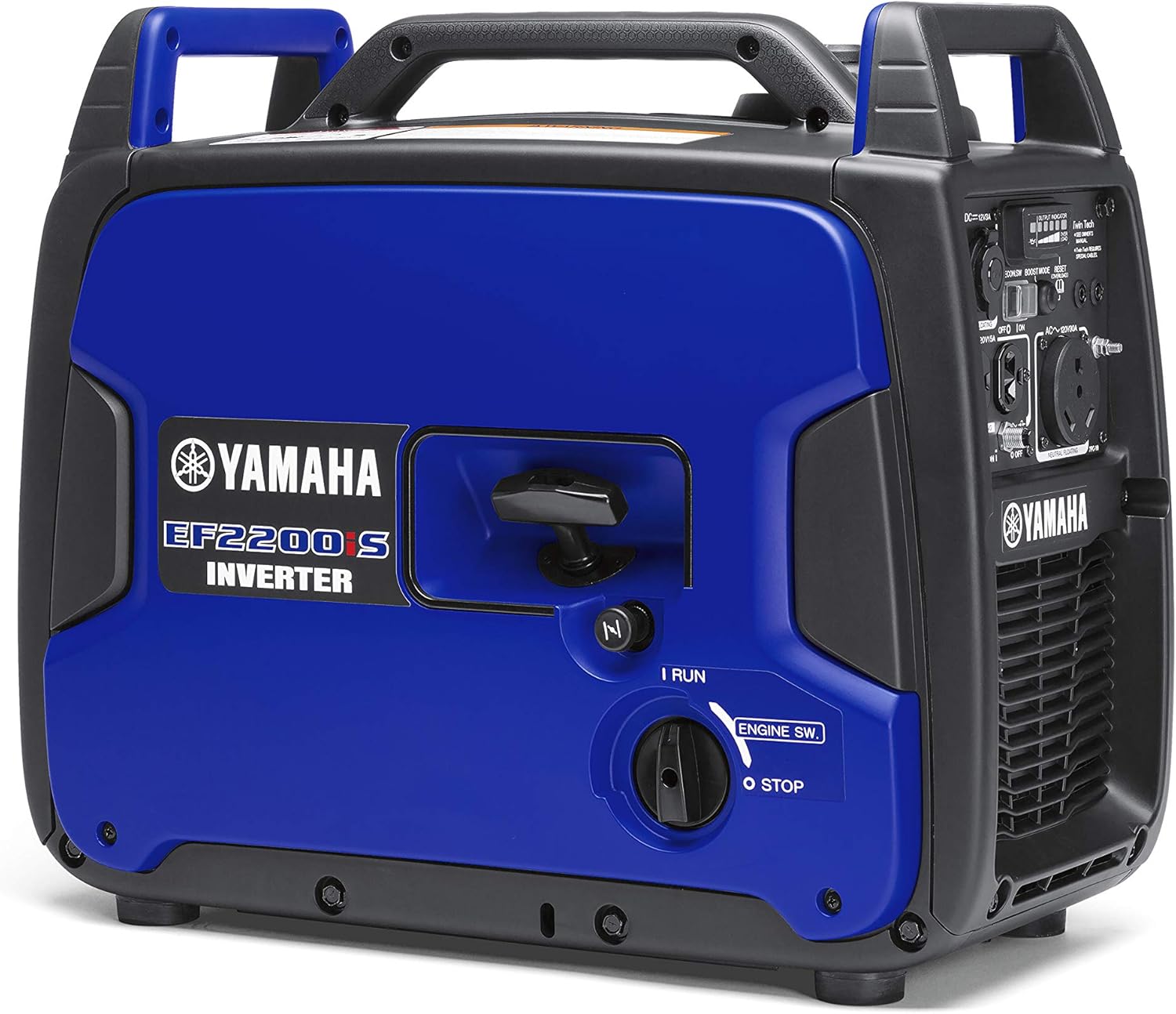
Three Georgia summers of outages went into this list. Each unit ran real household load—fridge, freezer, and window AC for at least six hours during peak heat. I measured runtime per tank, noise level at 20 feet, and what actually happened when surge load kicked in. Units that stumbled under load or burned fuel faster than their rating claimed got cut. I also tested the Yamaha EF2200iS inverter model with a laptop and phone charger to verify the clean sine wave claim held up in practice.
Common Questions
What is the difference between Yamaha inverter and open-frame models?
Inverter models produce clean sine wave power and are quieter, which makes them better for sensitive electronics and campgrounds. Open-frame Yamaha units are louder but deliver more raw power for less money. Pick the inverter if you are running a laptop or CPAP. Pick open-frame if you just need to keep the fridge running.
How long will a best yamaha generators run on a single tank?
Runtime depends on load and fuel capacity. The EF2200iS runs about 10.5 hours at a quarter load on a single tank, but that number drops fast under real household load. In my tests, running a fridge and freezer together cut that time in half. Do not trust the marketing number for full-load runtime.
Can you run a best yamaha generators in the garage during an outage?
No. Never run any gas generator indoors, in a garage, basement, or shed, even with the door open. All gas generators produce carbon monoxide, which kills silently. Run it outside at least 20 feet from windows and doors, and use a heavy-duty extension cord to bring power inside.
Are best yamaha generators units worth the price compared to other brands?
Yes, if you plan to keep it for years. Yamaha holds resale value, parts are available at local shops, and they do not have the reliability issues I have seen with cheaper brands. If you are buying for a one-time emergency and plan to store it for ten years, a cheaper unit might make sense. If you actually want to use it, Yamaha is worth the extra cost.
How often do you need to maintain a best yamaha generators?
Change the oil after the first eight hours, then every 50 hours or annually, whichever comes first. Run fuel stabilizer through the tank if storing for more than 30 days. Check the spark plug before each season. I drain the carburetor on my units before long storage to prevent ethanol gum buildup, which is a common failure point on Yamahas left sitting unused.




Write Your Review
No reviews yet. Be the first to share your experience!