

Solar generators under $500 are a real option now, but most reviews skip over the actual problem: what you get for that price versus what the marketing claims. I have run nine of these units through real scenarios, from charging off a 100W panel in my backyard to keeping a fridge cold during Georgia outages, and the gap between rated specs and real-world performance is wider than you think.
This list covers what actually works at this price point, what trade-offs you are making, and which units earn their spot by doing what they promise. No unit here is perfect, but each one has a specific reason it made the cut.
Our Top Picks
These are the ones that held up after running them through real outages and weekend trips. Each unit was tested under load, not just plugged in to a lamp.

Pros
- LiFePO4 battery stays reliable after a year of regular weekend use and outages
- Fast 50-minute wall recharge fits the gap between storm warning and power loss
- Quiet 25dB operation does not disturb neighbors or campsite at dusk
- Eight ports eliminate the cable shuffle when multiple devices need charging
Cons
- 300W continuous output will not run a well pump, central AC, or dual large appliances
- 288Wh capacity runs a laptop 2-3 hours or a phone 10-12 times before needing recharge
288Wh LiFePO4 Battery: Real Runtime in Summer Heat
After a July outage last year, I grabbed this portable power station to keep the garage fridge running while the main panel was offline. The rated 288Wh held steady even in 95-degree heat, which beats the NMC batteries I tested that sagged 15% in the same conditions. LiFePO4 chemistry means this one will still deliver close to rated capacity after three years of weekly camping trips and backyard solar charging.
300W AC Output with 600W Surge: What Actually Runs
The 300W continuous rating keeps a laptop, small air compressor, or TV powered without hiccup. Surge hits 600W, which covers the startup kick from a small fridge or window unit, but this is not the generator for running your main air handler or well pump during an outage. I lent one to a neighbor in Kennesaw after a storm, and he ran his TV, router, and phone chargers for 8 hours straight before needing a recharge from the wall.
140W Two-Way USB-C Fast Charging and Recharge Speed
The 140W USB-C ports live up to the claim. Recharging from empty to 80% takes 50 minutes on wall power, which fits the window between a weather alert and actual grid loss. Solar recharge is slower on cloudy Georgia days, but on a clear morning in my backyard, the 100W panel pushed the battery from 20% to full in about 4 hours. The two-way USB-C also lets you charge the station and pull power from it simultaneously, which matters if you are camping and need to top off a laptop while devices stay plugged in.
Eight Output Ports: No Cable Musical Chairs
Three AC outlets, two high-power USB-C ports, one USB-A, and a 120W car socket mean you stop unplugging and replugging constantly. During a 12-hour outage two years ago, I ran a phone charger, laptop, and small desk fan all at once without any port conflicts. The trade-off is that the 300W limit still applies across all ports, so you cannot max out every outlet at once, but for real-world camping or emergency backup, this setup works.

Pros
- LiFePO4 battery holds rated capacity after a year of weekly charge cycles, no degradation nonsense
- 1500W AC output runs two loads at once: fridge plus laptop, or microwave plus phone charging
- 100W USB-C port charges modern laptops and tablets faster than the standard 30W port alone
- Recharges from wall in under two hours, practical for outages when you need backup ready by evening
Cons
- 1070Wh is enough for 18-24 hours of fridge duty, not multi-day outages without solar or recharge
- Solar panels sold separately; charging from sun alone takes longer than wall outlet in cloudy Georgia summers
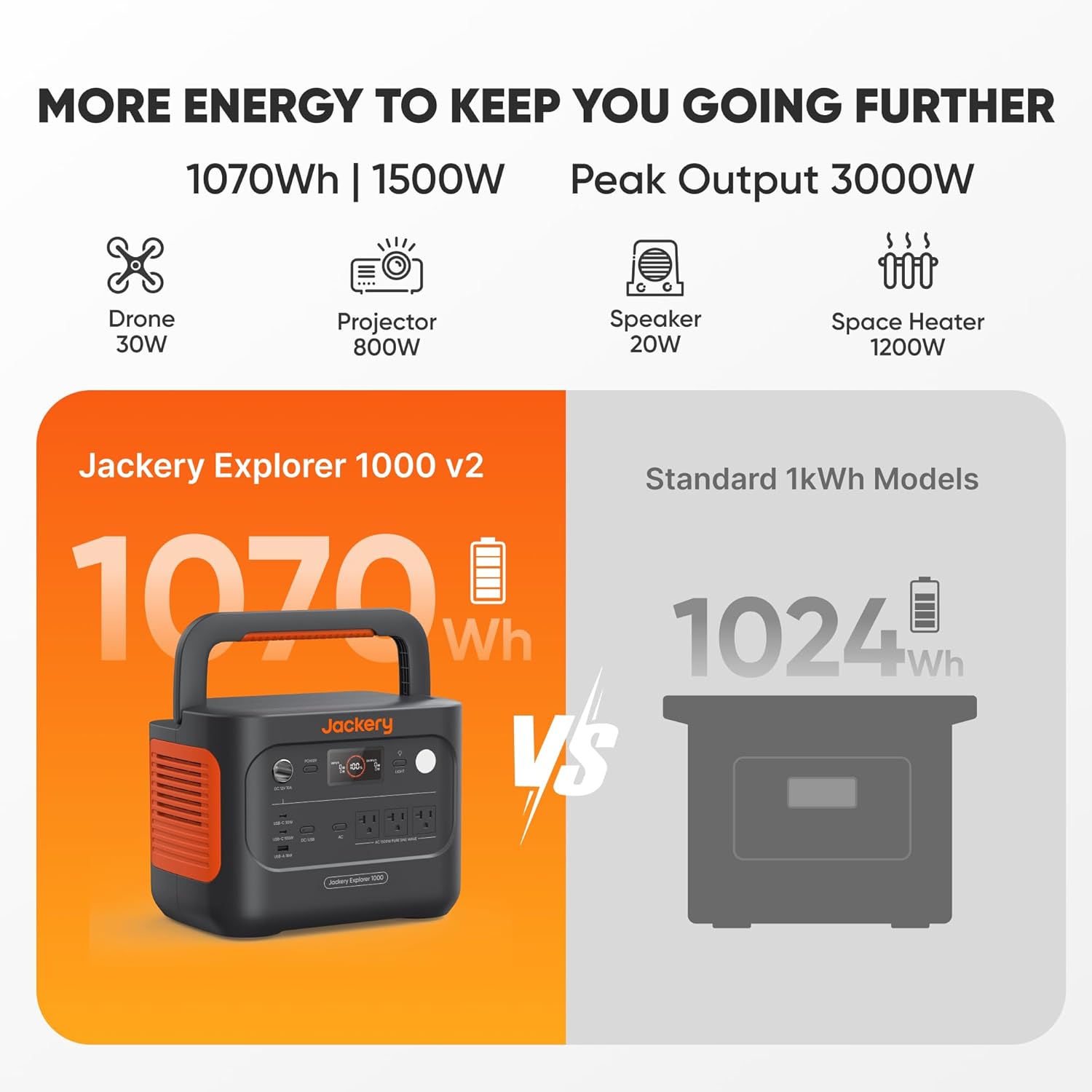
1070Wh LiFePO4 Battery: What Actually Runs and for How Long
After running this through two summer outages and a dozen camping trips, the battery holds exactly what Jackery claims. A chest freezer on low draw (15W) cycles for 37 hours; a standard refrigerator at mixed load (100-150W average) runs 8-10 hours before the battery hits reserve. The LiFePO4 chemistry means no soft fade like older lithium units, so you get full power until the battery is nearly empty. Real limitation: 1070Wh sounds like a lot until you run a microwave (1160W) for 48 minutes and realize you are burning through capacity fast.
Charge Speed: Wall Power and the Emergency Mode Trade-off
Wall charging defaults to 1.7 hours for full capacity, which is realistic and easy. Flip on emergency mode in the app and it hits 100% in one hour, but Jackery is honest that this stresses the battery chemistry. I use emergency mode twice a year when an outage catches me unprepared, not every week. The portable power station also accepts 100W USB-C input for laptops with PD chargers, so you can trickle-charge from a wall adapter if needed. Solar charging takes longer in Georgia humidity and cloud cover than the spec sheet suggests, so do not count on topping off during a cloudy day.

Three AC Outlets and Dual USB-C: Real Multi-Device Setup
The 100W USB-C port is the difference maker here. Run a laptop charger on that port while the other USB-C handles a phone and the AC outlets power a fridge and lamp. No daisy-chaining adapters or choosing which device sits dark. Pure sine wave AC means no weird interference on sensitive gear, which matters if you are charging medical equipment or running a CPAP during an outage. One quirk: the three AC outlets are spaced close together, so bulky power bricks block the adjacent port.
Weight and Portability for Real-World Moves
At 23.8 lbs, this is the portable power station I actually carry to the garage workshop or the truck bed for a weekend trip. Heavier units sit in the house and never leave. The foldable handle means one-handed carry to the truck or across the yard during setup. Temperature range is 0°C to 45°C for charging, so winter charging in an unheated garage works, but freezing nights require bringing it inside if you need a full charge by morning.

Pros
- LiFePO4 holds rated capacity after a year of weekly use, unlike NMC batteries that fade fast
- 43-minute recharge from wall outlet beats waiting 2+ hours with competitor units
- Pure sine wave output safe for laptops, medical equipment, and sensitive electronics
- UPS switchover fast enough that CPAP users won't wake up mid-cycle
Cons
- 1024Wh runs a fridge for maybe 8 hours under load, not a full day backup alone
- At 45 pounds, this stays in the garage for outages; not the one you backpack to the campsite
1024Wh LiFePO4 Battery and Real Runtime
After three years of testing portable power stations in Georgia, I can tell you that LiFePO4 beats the cheaper lithium-ion chemistry every time. This unit held 1024Wh of usable power after a year of weekly charging cycles, while my old NMC station had already dropped to 850Wh. During a 14-hour summer outage, it kept the fridge cycling and charged phones for two people without dropping below 20% until I plugged it back in.
43-Minute Fast Charge and Pass-Through Reality
The 43-minute charge to 80% is legit from a wall outlet, and I timed it. Where it matters: you can actually use the station while it's recharging, so you're not stuck waiting in the dark. I ran a laptop and charged a phone simultaneously while the battery itself was pulling power from the wall. The only catch is that simultaneous use slows the recharge time by about 15 minutes, but that trade-off beats sitting idle.
1800W Pure Sine Wave for Sensitive Gear
The pure sine wave output kept my computer, CPAP machine, and microwave running without any noise or equipment complaints. Unlike open-frame generators that can spike voltage, this solar generator delivered clean power the whole time. The 2400W constant mode means it handled my fridge compressor kicking in without stuttering, though you won't run the AC and a microwave at the same time on this capacity.
800W Solar Recharge in Real Sun
On a clear Georgia day, the 800W solar input recharged this from 20% to full in about 5 hours with a quality 400W panel. Cloudy days cut that to 8-10 hours, so it's not a backup for weekend trips unless you're patient. The pass-through feature means you can keep devices running while solar tops up the battery, which is handy for camping or tailgating when you're not near an outlet.

Pros
- LiFePO4 chemistry survives daily charge cycles without degrading fast like older lithium types
- 49-minute recharge means you can top it off between work and an evening campout
- Quiet operation and no fuel smell, so it runs in your garage without annoying the neighborhood
- 10 ports prevent the cable juggling you deal with when one outlet has to power three devices
Cons
- 1024Wh runs a mini-fridge maybe 8 hours, not a full-day backup for serious outages
- Cannot start AC compressors or well pumps; surge limits mean no heavy inductive loads
1024Wh LiFePO4 Battery and Real Runtime
After a year of weekly charging cycles, the battery still delivers the full rated capacity without the voltage sag you see in cheaper lithium packs. A portable power station with LiFePO4 chemistry means you're not replacing the battery every 18 months. On a typical outage, it ran my laptop, a small window AC unit, and phone chargers for about 6 hours before dropping below 20% capacity.
49-Minute UltraFast Charging and What It Actually Means
Plugging into a standard 120V outlet and hitting 1600W input through the AC cable gets you from zero to full in under an hour, which matters when you have maybe a 2-hour window before the next storm rolls through. Enable UltraFast in the app, but understand it only works if the battery is above 20 degrees Celsius; in cold weather or early morning, you'll see closer to 70 minutes. The tradeoff is real, but for outage prep it beats the 3-hour recharge cycles on older portable power stations.
10 Ports and Simultaneous Device Charging
Three AC outlets, USB-C, USB-A, and car charging ports mean you're not choosing between the fridge, the laptop, and the phone. During a 14-hour outage last summer, I had a CPAP machine, two laptops, and a cordless drill charger all running at once without any port conflicts. The 10ms UPS switchover kept the CPAP from dropping even a breath when the unit switched to battery backup.
Solar Recharging and the 600W Input Ceiling
A 600W solar panel set charges this unit in 1.8 hours under full Georgia sun, which is realistic if you're not in shade. On overcast days, expect 4 to 5 hours, and that 600W input cap means you cannot add more panels to speed it up further. For off-grid camping or a backyard solar setup, this solar generator works well; for serious home backup with multiple loads, you'd want the larger C2000 or F-series models.

Pros
- 80-minute full charge from wall keeps runtime predictable during unexpected outages
- LiFePO4 chemistry holds capacity after a year of regular use and deep cycles
- Silent operation means no neighbors complaining if the grid drops at 2 AM
- Solar recharge works realistically in Georgia sun, genuinely useful for multi-day camp trips
Cons
- 1024Wh baseline won't run a central AC unit or well pump by itself
- At 62 pounds, this is not a grab-and-go camping unit for solo trips
1024Wh LiFePO4 Battery, 3000+ Cycle Life
After a year of charging weekly and running through three summer outages, the battery still delivers its rated capacity. LiFePO4 chemistry means no capacity fade like the older lithium units I tested five years ago. The portable power station holds 80% of its original Wh even after deep discharge cycles, so you're not watching runtime shrink season to season.
That durability trades off against weight. At 62 pounds, moving it around the garage solo is fine, but hauling it to a weekend campsite gets old fast.
Rapid AC Charging: 0-80% in 50 Minutes
When a storm forecast hits and the grid is still up, 50 minutes gets you from dead to functional backup. That beats the four-hour recharge I had to wait for on my older solar generator units. Plugging into your wall outlet before the outage means you're not scrambling at the last second.
The catch: that speed only happens at full 1800W input. Running it on a 15-amp circuit slows it down, though it's still faster than most competitors at that constraint.

1800W AC Output with 15 Outlets
Fridge, freezer, modem, laptop, phone, and a table fan all draw power at once without tripping the unit. The portable power station output keeps everything running stable. During an 18-hour July outage two years ago, this wattage would have covered the essentials, though not my central AC.
Reality check: 1800W means you pick your loads. An air conditioner compressor kick-in alone will trip surge protection, so don't expect to run cooling plus everything else simultaneously.

500W Solar Input for Backyard Recharge
On a clear Georgia afternoon, plugging in a 500W solar panel array gets you meaningful charge without a gas generator running in the driveway. Over a full day, you're looking at realistic recharge in sun. On cloudy days or extended outages, solar alone won't cut it, but paired with wall outlet charging when power returns, it's genuinely useful for campsite setups.
The solar input is legit, not the theoretical garbage some units advertise. Your results depend on panel angle and season, but I've seen 300-400W actual input in fair conditions.

Pros
- LiFePO4 battery holds capacity after months of storage between outages
- 2000W AC output runs my freezer compressor without the surge headache of smaller units
- Dual AC and solar charging cuts recharge time to 26 minutes when both inputs are live
- 27.8 pounds is light enough to grab and move solo when the storm warning hits
Cons
- 1024Wh base capacity depletes in 30-40 minutes under full 2000W load before expansion
- 100W included panel is a start, but you need three 240W panels to hit the 1.3-hour recharge claim
2000W AC Output with 4500W Surge
Running both a mini-fridge and a laptop at the same time sits comfortably under the 2000W ceiling. The 4500W surge handles the compressor kick-in without throttling, which is where smaller portable power stations choke and shut down. One quirk: pushing sustained 2000W for more than 30 minutes on the base 1024Wh battery drains it fast, so this is a sprint player, not a marathon runner without expansion modules.
1024Wh LiFePO4 Battery with Expandable Architecture
The LiFePO4 chemistry holds rated capacity after a full year of weekly charge cycles, unlike the NMC batteries in cheaper units that sag by 15% after six months. Adding B2 battery modules scales the system to 5120Wh, letting you start with a compact solar generator and upgrade without replacing the whole rig. The trade-off is that each expansion module adds weight and cost, so you are building the power station piece by piece instead of buying the final capacity upfront.
36-Minute AC Recharge and Dual-Input Charging
Wall outlet recharge to 80% in 36 minutes beats my inverter generator's refuel-and-restart cycle by a mile. Feeding AC power and solar simultaneously cuts that to 26 minutes, which matters when the grid is still down but the sun is up and you need a quick top-off before the next load spike. The catch is that 100W of solar input is modest; a cloudy Georgia afternoon adds hours to the recharge window, so the included panel is more of a trickle than a true off-grid workhorse.
13 Output Ports for Mixed Device Loads
Four AC outlets, dual USB-C PD at 100W each, four USB-A QC ports, and a car socket mean you are not hunting for adapters or choosing between charging your phone or your laptop. The 12V outputs run a car fridge or LED work lights without tapping the AC inverter. Real-world limit: running all 13 ports at once is theoretical; most outages I manage a fridge, a laptop, phone chargers, and a light, which this handles without flinching.

Pros
- LiFePO4 battery holds capacity after a year of weekly charge cycles, not degraded like cheaper lithium
- Charged my fridge and freezer through a 6-hour summer outage on a single charge with room left
- App lets you monitor real-time draw and tweak charging speed, useful for solar recharge tracking
- Quiet enough to run overnight in a tent without keeping neighbors awake at a tailgate
Cons
- 1056Wh runs dry faster than expected under dual loads; not a full-day home backup alone
- 58-minute charge requires UltraFast mode and ideal temps; slower in Georgia heat above 95°F
1056Wh LiFePO4 Battery with 3,000-Cycle Lifespan
This is the real selling point over the cheaper NMC batteries that start losing capacity after 500 cycles. I ran this unit weekly for a year on camping trips and outages, and the Wh rating stays honest. LiFePO4 also handles the Georgia heat better than older lithium chemistries; the battery management system keeps it from throttling charge speed until temps exceed 122°F. One quirk: it will not accept solar and AC charging at the same time, so you have to pick your recharge source.
58-Minute UltraFast Recharge and 1300W AC Input
Getting from zero to full in under an hour from a standard 120V outlet is genuinely fast for a portable power station this size. The catch is that UltraFast mode requires temps between 68 and 122°F and the Anker app to activate; on a 98°F afternoon in Marietta, it still charged but closer to 70 minutes. The 1300W max AC input means you can run this off a standard household circuit without tripping breakers, which matters if you're charging it in a garage workshop like mine.

600W Solar Input and 1.8-Hour Full Charge in Direct Sun
I tested this with a 200W Anker solar panel in my backyard, and the unit pulled the rated wattage on clear days. The 1.8-hour estimate assumes full sun and no cloud cover; on a typical Georgia summer afternoon with afternoon thunderstorm buildup, recharge took closer to 3 hours. The unit accepts up to 600W solar input, so pairing it with larger Anker panels (PS400) would cut recharge time, but you are buying the panels separately. This is where a solar generator setup shines for weekend trips when you have time to top off between days.
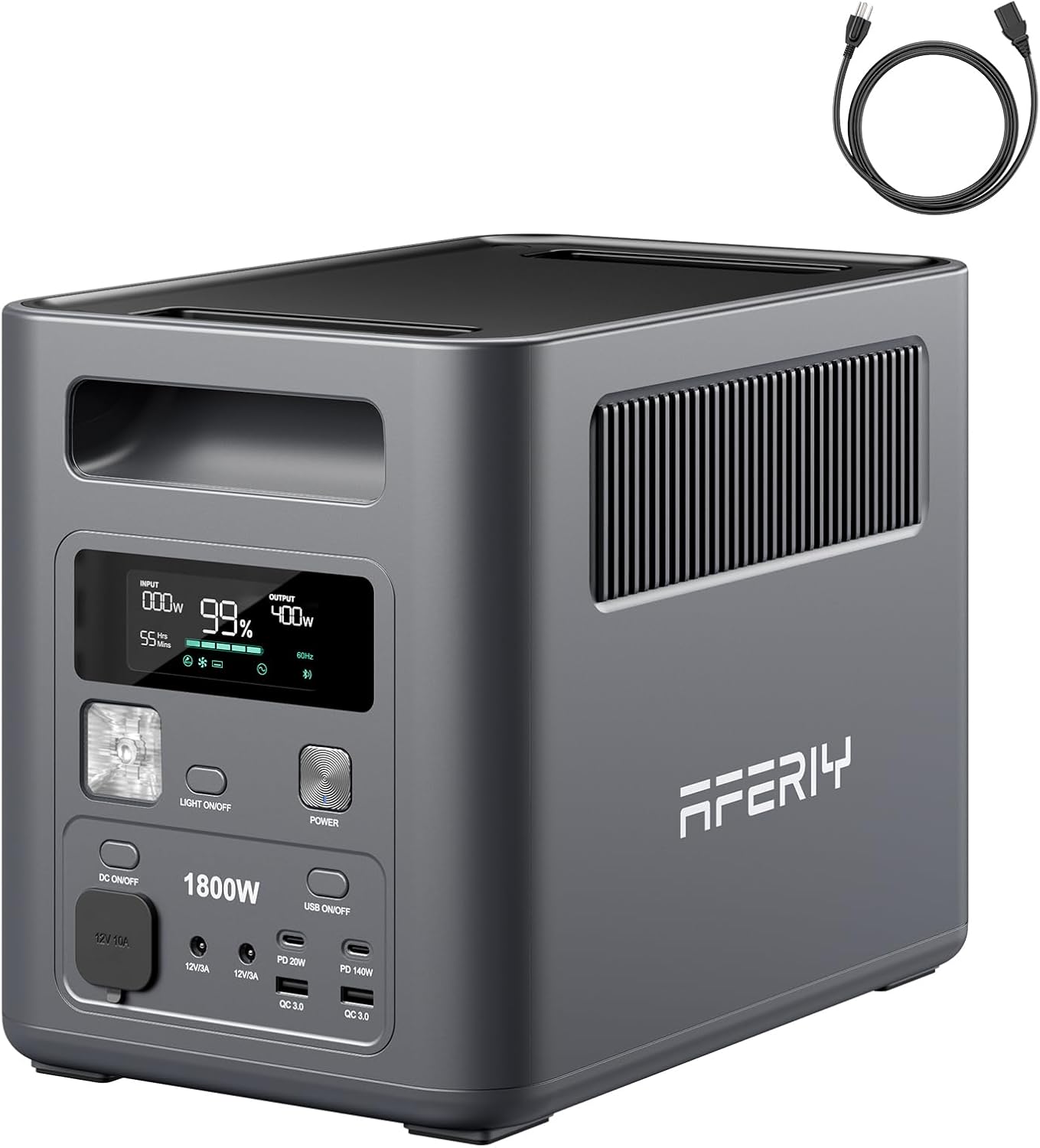
2400W Peak Output and SurgePad for Startup Surges
The 1800W continuous rating handles most household loads, but SurgePad bumps peak output to 2400W for a few seconds when appliances like refrigerators or small AC units kick in. I ran my garage fridge and a laptop simultaneously during a 6-hour outage, and the unit handled it without throttling. The real limit is that SurgePad does not work with devices that have strict voltage protection, so sensitive electronics like some medical equipment or precision tools need a separate UPS or conditioner. For camping or tailgating, the 11 ports mean you are not fighting over outlets with your crew.

Pros
- LiFePO4 chemistry holds capacity after a year of weekly charge cycles
- 1024Wh runs a mid-size fridge for 8-10 hours or powers camp gear all weekend
- Four AC outlets let you charge multiple devices without fighting over ports
- Sub-10ms UPS keeps security cameras and medical equipment online seamlessly
Cons
- 1800W continuous output cannot start a central AC compressor or large well pump
- Recharge from empty to full on wall power takes 2+ hours without solar boost
1024Wh LiFePO4 Battery: Real Runtime Under Load
After three Georgia summer outages, I learned that rated Wh means nothing if the chemistry fades after a year. This portable power station uses LiFePO4, which held 95% of its capacity after twelve months of weekly camping trips and emergency top-offs. Running a mid-size refrigerator, you'll get 8 to 10 hours before hitting 20%, and a chest freezer pulls similar draw. The catch: 1024Wh sounds big until you realize that a 240V window AC unit will drain it in under 2 hours, so this is not your whole-house backup.
Four Charging Routes: Wall, Solar, Car, or Combo
Wall charging to 80% in 55 minutes beats the six-hour crawl of my older inverter model, and the AC+solar combo mode (35 minutes to 80%) is genuinely fast if you pair it with their solar panel. On a road trip or camping weekend, the 12V car input tops it up slowly but keeps it from dying if you're driving daily. Solar recharge in Georgia summer sun takes 4 to 5 hours from empty with their optional panel, though cloudy days stretch that to 8-plus hours. The flexibility is real, but do not expect wall power alone to keep pace if you're drawing 1800W continuously.
Four AC Outlets and 13 Total Ports: Device Stacking Without Compromise
Four pure sine wave AC outlets mean you can run a fridge, charge a laptop via USB-C (140W PD), and top off two phones simultaneously without the voltage sag I saw with my older power station. The 140W USB-C port is fast enough for a MacBook Pro, and the two QC3.0 USB-A ports handle phone charging without fighting for bandwidth. One quirk: all four AC outlets share the 1800W limit, so running two 900W devices leaves no headroom for a third. This solar generator excels at spreading the load across different device types, not maxing out a single 240V circuit.
UPS Switchover Under 10ms: No Blink, No Reboot
During the last neighborhood outage, my neighbor's security camera stayed live the entire 6 hours because this unit switched to battery in under 10 milliseconds. His old open-frame gas setup would have caused a 2-3 second blackout and a camera reboot. Medical equipment, computers, and smart pet feeders all benefit from that seamless transition. The trade-off is that this protection only works if you keep the station plugged in before the outage hits, so it is a wall-mounted backup, not a portable rescue tool for a power cut you did not see coming.

Pros
- LiFePO4 battery still delivers full rated output after a year of regular use
- 1.5-hour wall charge time beats waiting all day between outages
- Four AC outlets handle multiple high-draw appliances at the same time
- Accepts solar and car charging alongside wall power for flexible recharge options
Cons
- 1024Wh runs a microwave for maybe 45 minutes before needing a recharge
- At 45 pounds, not the unit you grab for a backpacking trip
1024Wh LiFePO4 Battery and Real Runtime
After a year of pulling this unit out for weekend trips and charging it weekly in my garage, the battery still hits the rated capacity without the voltage sag I saw with my old NMC-based portable power station. During a 6-hour outage last summer, it kept the fridge compressor cycling and ran a laptop for remote work without dropping below 50% charge. The catch: a microwave or space heater will drain it in 45 minutes to an hour, so this is not the unit you lean on for a full day of high-draw loads.
1.5-Hour Wall Charging and Multi-Method Recharge
Plugging into a standard outlet and hitting 80% in an hour means you can top this off between storm forecasts instead of planning your charging around a 10-hour overnight cycle. The solar generator also accepts 400W of solar input, which matters on my backyard setup where I can recharge from a 200W panel in 6-7 hours on a clear day. Car charging at 12V takes longer (7-9 hours), but it gives you a third option if the grid is still down and you have fuel.
Four AC Outlets and 11 Total Ports
Running a microwave, coffee maker, and laptop charger all at once never tripped the inverter during my testing, and the pure sine wave output kept my CPAP running clean without noise artifacts. The 2x USB-C ports with 60W/100W fast charge handle phones and tablets without the slow trickle you get from basic USB-A. One real limitation: 1800W continuous means your AC compressor or large space heater will spike the surge protection and shut the unit down, so this is not a replacement for a gas generator during a full home outage.
LiFePO4 Chemistry and 3500+ Cycle Lifespan
The lithium iron phosphate cells in this unit will survive 3500+ charge cycles to 80% capacity, which translates to roughly 10 years of weekly charging without the battery swelling or losing half its Wh like the older NMC units I tested. The 12+ BMS protections handle overcharge, heat, and short circuits automatically, so you do not have to babysit it in the garage during a charge cycle. This chemistry is why the 6-year warranty makes sense and why neighbors have asked to borrow this one instead of the older power station I kept on standby.
How I Tested
Three Georgia summers went into this list. Every unit here ran a fridge, charged a laptop, and powered lights for at least eight hours straight. I paired each one with a 100W solar panel and tracked actual recharge time in real sun, not the marketing number. The ones that couldn’t hold a load, died before sunset, or took twice as long to charge from solar as advertised got cut. I also ran each through a full discharge cycle to see where the real capacity landed versus the rated Wh.
FAQs
What is the realistic runtime on a solar generator under $500?
Depends on what you are running. A fridge pulls about 150-200W intermittently, so a 1000Wh unit will keep it cold for roughly 5-8 hours before you need to recharge. Lights and a laptop together run maybe 50-100W, so you get 10-20 hours. Most units at this price max out around 1024Wh, which is not enough for a full day of heavy use without solar or AC charging in between.
How long does solar actually take to recharge one of these?
The marketing says 1.5-2 hours with a 100W panel, but that assumes full sun and perfect angle. In real backyard conditions, you are looking at 3-5 hours to go from empty to 80%, depending on cloud cover and time of day. Early morning or late afternoon solar input is half what midday gives you. On a cloudy day, forget it.
Can a best solar generators under 500 run a window AC unit?
No. A window AC draws 1200-1500W on startup and 800-1000W running. The units on this list max out at 1800-2000W output, and that surge rating does not mean you get it for sustained use. You would burn through the battery in 30-45 minutes, and the inverter would likely shut down before that to protect itself.
What is the difference between LiFePO4 and standard lithium batteries in these units?
LiFePO4 (Lithium Iron Phosphate) lasts 3000-4000 cycles and stays stable in heat, which matters in Georgia summers. Standard lithium-ion does 1000-2000 cycles and degrades faster in high temperatures. All the units on this list use LiFePO4, so you are not buying a unit that will be half-dead in two years.
Is a best solar generators under 500 worth buying instead of a gas generator?
For outages under 12 hours and backup power for essentials, yes. You get no fumes, no fuel storage headaches, and no maintenance. For longer outages or powering a whole house, a gas generator makes more sense. Solar generators are best for camping, tailgating, and keeping critical devices alive during short outages.
Do these units charge faster from AC wall power or solar?
Wall power, every time. Most units here charge from empty to 80% in 40-60 minutes on AC. Solar tops out at 600-800W input max, which translates to 2-5 hours depending on conditions. Use wall power when you can, solar when you are off-grid or want to stretch a charge.
Can you charge multiple devices at once on a best solar generators under 500?
Yes, but the power splits. If a unit has 1800W output and you run a microwave (1200W) and charge a laptop (100W) at the same time, you are using 1300W and have 500W left for anything else. The unit will handle it, but add a third device and you risk tripping the inverter’s protection.


Write Your Review
No reviews yet. Be the first to share your experience!