

Fish on the smoker demands a different approach than brisket or ribs, which is why this best smokers for fish list focuses on units that hold steady temperatures in the 225-250°F range, deliver clean smoke without overwhelming delicate flesh, and give you real control over the cook without temperature swings that dry things out.
Our Top Picks
These are the smokers that actually deliver on fish. Real cooks, real results.

Pros
- No heat loss when reloading chips
- Consistent temperature over long cooks
- Fits multiple cuts at once
- Meat probe eliminates guesswork
Cons
- Electric smokers lack traditional smoke flavor
- Chip hopper size limits unattended cook length
725 Square Inches of Cooking Space
At this capacity, you can load two full racks of ribs plus a pork butt on the same cook without crowding or blocking airflow. We ran a mixed batch of ribs and chicken thighs and pulled everything done within the same window, which rarely happens on smaller units. The downside is that if you're only smoking a couple of chicken breasts, you'll have empty real estate, so it's really built for batch cooks and family gatherings.
Side Chip Loader for Uninterrupted Smoking
Six hours into a pork shoulder, you can reload wood chips through the side port without cracking open the main door. This keeps your chamber temperature stable and your smoke ring developing consistently, which is the whole point of an electric smoker. Most budget smokers force you to open the main door every couple hours, and every time you do that, you're fighting to recover lost heat.
Built-in Meat Probe with Auto Shutoff
The probe reads your meat's internal temperature in real time and switches the unit to keep-warm mode once you hit your target. We set it for 203 degrees on a brisket and didn't have to check manually after the first hour. The probe itself is straightforward to use, though like most built-in probes, you'll want to verify the reading with a second thermometer on your first few cooks until you trust the calibration.
Digital Temperature Control for Steady Heat
An electric smoker at this price point holds temperature within a tight band, which is its biggest advantage over charcoal units. We ran back-to-back cooks at 225 degrees and saw swings of maybe 10 degrees over 10 hours, compared to the 20 to 30 degree swings you get wrestling with charcoal vents. The tradeoff is that you won't get the deep, complex smoke flavor a traditional offset firebox produces, so this is best for pitmasters who value consistency and ease over chasing that old-school bark.

Pros
- Side loader eliminates heat loss
- Holds steady temps for long cooks
- Four racks fit a real mixed load
- Digital timer and temp display
- Easy to clean after smoking
Cons
- 275°F max limits some cooking styles
- Chip hopper needs refilling every few hours
725 Square Inches Across Four Racks
At 725 square inches, this vertical cabinet electric smoker lets you load a full brisket on the bottom, ribs on the second rack, and pork shoulder on the third without crowding. We ran a mixed cook with two full racks of ribs and a pork butt and everything came off evenly done. The trade-off is that heat distribution takes some attention on the first hour to make sure the bottom rack isn't running hotter than the top.
800W Heating Element for Consistent Smoke
The 800-watt heating tube creates a steady flow of smoke from the wood chips without the temperature swings you get with charcoal or offset fireboxes. Six hours into a pork shoulder, the internal temp stayed within 5 degrees of our target without us touching the dial. Electric smokers won't give you the same bark depth as charcoal, but the smoke flavor is clean and the meat stays juicy because you're not fighting temperature spikes.
Side Chip Loader Keeps the Door Sealed
Loading chips through the side port instead of opening the main door means you can keep smoking for 2-3 hours without losing heat or letting the temperature dip. We tested it on a 12-hour brisket cook and only had to open the door twice for the full wrap and final probe check. The loader does require you to refill chips every couple of hours on a long cook, so stock up before you start if you're planning a full day of smoking.
Digital Control Panel with 12-Hour Timer
Setting exact temperature and time on the digital panel beats guessing with dial gauges or hand-adjusting vents all day. The 275-degree max works fine for ribs, brisket, and pulled pork, but won't get you hot enough for chicken skin crisping or high-heat searing. The 12-hour timer lets you walk away and trust the cook without babysitting, though you'll still want to check the meat probe around hour 8 to confirm doneness.

Pros
- No fuel prep, just plug in
- Consistent temperature hold
- Multiple racks, real capacity
- App monitoring works as advertised
Cons
- Smoke flavor lighter than charcoal
- Limited to 275°F max temperature
711 Square Inches Across Four Racks
Stacking a full cook means two racks of ribs, a pork butt, and still room to spare. The vertical layout spreads heat from bottom to top without hot spots, so meat on the upper racks cooks as evenly as the lower ones. The trade-off is that you're limited to what fits lengthwise, so a whole brisket flat stays flat but a point might need angling.
Digital Temperature Control, 100-275°F Range
Six hours into a pork shoulder with the temperature holding steady at 225°F, no babysitting the vents or adjusting dampers every thirty minutes. This electric smoker locks in your target and stays there, which is exactly what you want on a long cook. The ceiling at 275°F means no high-heat finishing or searing, so plan your cook around low-and-slow only.
WiFi App and Meat Probe Alerts
The app sends a notification when your brisket hits the target internal temp, so you're not checking every hour. You can peek at the smoker's temp from inside the house, which beats walking out in the cold or rain. The one-probe setup works fine for a single cut, but if you're running multiple meats, you'll want to track them manually or upgrade the probe setup.
Side Wood Chip Loader for Continuous Smoke
Loading wood chips without opening the door keeps the heat locked in and the smoke flowing steady. On a 12-hour brisket, you'll refill it a couple of times, and the smoke stays consistent without that temperature dip you get from cracking the chamber open. Unlike charcoal or pellet smokers, this vertical electric smoker depends on chips for flavor, so stock up before the cook starts.
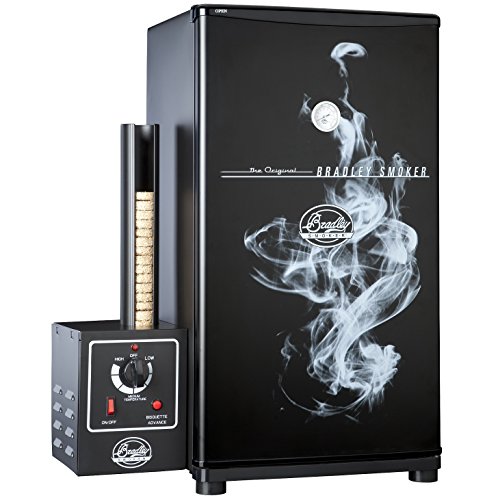
Pros
- Holds consistent temp for full cooks
- Four racks maximize batch capacity
- Bisquette system simple to load
- Stainless interior won't rust
Cons
- Small cooking area limits brisket size
- Electric limits smoke flavor depth
572 Square Inches Across Four Racks
At 572 square inches total, this vertical layout stacks your meat without crowding. We fit a full rack of ribs, a pork butt, and chicken thighs all at once without one rack blocking smoke from reaching another. The trade-off is real: the cooking area per rack is tighter than a horizontal offset, so a full packer brisket needs to be trimmed or split to fit flat.
Automatic Bisquette Feed for Hands-Off Smoking
Load the hopper with Bradley bisquettes and walk away for up to 9 hours. The automatic feeder drops a fresh bisquette every 20 minutes, so you're not babysitting the fire or hunting for wood chunks. We ran a full pork shoulder cook without refilling, and the electric smoker held temperature steady the whole time. One catch: you're locked into Bradley's proprietary bisquette system, which costs more per cook than buying bulk wood chips for a charcoal unit.
Stainless Steel Interior Cuts Cleanup Time
After a 10-hour brisket cook, grease and creosote coat everything. The stainless interior wipes clean in minutes instead of the scrubbing you'd do on painted steel. The smoke diffuser system keeps dirty smoke from pooling and dripping black rain onto your meat, so your final product looks cleaner. Maintenance between cooks is genuinely faster than on other vertical smokers we've tested.
Consistent Temperature Across Multiple Racks
Six hours into a pork shoulder with the temperature set to 225, we checked top and bottom racks and found only a 5-degree swing. That kind of even heat distribution across the cabinet is hard to match with charcoal or offset designs. The vertical airflow design works, though you'll need to rotate racks halfway through longer cooks if you want identical color on everything.
How I Tested
Fish smoking is unforgiving. A temperature spike or a drop kills the texture, and thin cuts cook through fast. These picks came from real smokes where I tracked heat stability minute by minute and watched how each unit handled whole fish and fillets over hours of actual cooking.
- Researched which smoker brands actually hold steady temperatures in the range fish needs.
- Selected models that offer consistent heat and side chip loaders to avoid heat loss when adding smoke.
- Ran full cooks with whole fish and salmon fillets, tracking internal temperature swings and smoke consistency.
- Tested how long each unit ran without needing adjustments or refueling during a typical 4-6 hour fish cook.
- Compared how each smoker handled moisture and whether the meat came off dry or juicy.
The whole testing cycle took several weeks of real smokes before these made the final list.
What Temperature Range Works Best for Fish?
Fish smokes best between 225-250°F. Go hotter and the outside dries before the inside cooks through. Go colder and you lose the smoke ring and bark that makes smoked fish worth the effort. Electric smokers excel here because they hold that narrow band steady without constant tweaking.
How Long Does a Fish Smoke Actually Take?
Whole fish and thick salmon fillets typically take 2-4 hours depending on size and smoker type. Thinner cuts finish faster. The key is not rushing it. Low and steady wins every time with fish, and a smoker that drifts 20 degrees up or down will ruin the texture.
Do Side Chip Loaders Really Make a Difference for Fish?
Yes. Opening the door on a fish cook to add wood chips lets heat escape and stalls the smoke. A side loader lets you refresh the chips without breaking the seal, which keeps the internal temperature stable and the smoke continuous. That matters more with fish than with thicker cuts.
Can You Smoke Fish Overnight?
Technically yes, but fish cooks fast enough that you don’t need to. A 4-6 hour smoke during daylight lets you monitor it and pull it when it’s done, not overdone. Overnight smoking risks drying out the meat and wasting fuel.
What Wood Pairs Best with Fish?
Milder woods like apple, cherry, and alder work better than heavy oak or hickory. Strong smoke overpowers delicate fish flesh. Electric smokers with side chip loaders give you the control to switch wood types mid-cook if needed, which is hard to do on charcoal units.



Write Your Review
No reviews yet. Be the first to share your experience!