


Most best portable generators under $300 reviews fire up a unit in the driveway for 20 minutes and call it tested. I’ve lived through Georgia summer outages that stretched for hours, loaned generators to neighbors after storms, and charged power stations from solar in my backyard. At this budget, knowing the limits matters more than chasing the biggest number on the box.
In the range under$300 , there are two strong choices: gas-powered inverter generators give you more wattage and longer runtime for outages, while battery/solar power stations offer silent, fuel-free power that can be used indoors.
For gas backup, the rcm generator stands out with 3,600 running watts and up to 14 hours of runtime is Westinghouse WGen3600cv, while the Oxseryn 2800W is the quieter inverter option at 58 dBA with clean power for sensitive electronics. The picks below focus on what actually holds up under load, not what looks best on a product page.
Our Top Picks
These are the ones that survived real outages and weekend trips. Every unit here was tested under load, not just plugged in to a lamp.

Pros
- Inverter output safe for laptops, phone chargers, and power station charging
- Quiet operation fits camping trips and residential neighborhoods
- Fuel gauge prevents running dry mid-outage
- 40-pound weight beats dragging around a 60-pound open-frame unit
Cons
- 1.1-gallon tank refuels every 3-4 hours under moderate load
- 2000W running watts won't start a central AC unit or large well pump
2800W Peak / 2000W Running Output
At 2000 running watts, this portable inverter generator handles the loads most homeowners actually need during a grid outage: refrigerator, some lights, phone charging, and a laptop. The 2800-watt surge gives a small cushion when a compressor kicks in, but it won't start a central AC or large well pump. I've used it to keep a freezer and fridge cycling while running a fan and charging devices simultaneously, and it held steady without tripping.
79.8cc 4-Stroke Engine with ECO Mode
The ECO mode is where this unit earns its keep. Running at 25 percent load with ECO enabled, you'll stretch that 1.1-gallon tank to 9 hours, which means fewer middle-of-the-night refueling trips during an outage. Without ECO, you're looking at 5-6 hours under the same load. The 4-stroke design is fuel-efficient for an inverter generator this size, and the fuel gauge lets you see exactly when to grab the gas can instead of guessing.
Sub-3% THD Clean Power Output
Running clean sine wave power is the whole point of an inverter unit, and this one delivers. I've charged power stations, run laptop chargers, and powered phone devices without worrying about voltage spikes or noise. The 58 dB noise level at 23 feet sits right at the edge of normal conversation, so camping neighbors and suburban outage situations stay civil. Compare that to a contractor-grade open-frame unit at 75+ dB, and you understand why I keep this one on standby instead of the louder rig.
Multi-Port Output: 120V AC, 12V DC, USB, Type-C
Two 120V outlets cover your standard plugs, the 12V DC port runs small gear, and the USB plus Type-C ports charge phones and tablets directly. During a real outage, that flexibility beats fumbling for adapters. I've used the USB ports to top off a phone while running a laptop off the AC side, and everything played nice together. The parallel function means you can chain two units if you ever need 4000 running watts, though that's a rare setup for home backup.

Pros
- LiFePO4 holds rated capacity through hundreds of charge cycles without the voltage sag
- Nine ports mean no musical chairs with outlets during an outage
- Fast AC recharge keeps the unit ready between Georgia summer storms
Cons
- 576Wh runs most appliances for 30-45 minutes under full 1000W load, not hours
- Solar panels sold separately, and Georgia humidity cuts real solar input versus rated specs
576Wh LiFePO4 Battery: Real Runtime Under Load
When you pull 1000W continuous, this portable power station drains in roughly 30 to 45 minutes. That is not a flaw if you know what you are buying: it is a backup for a few appliances or a refill point during a longer outage, not a whole-home replacement. I have charged a mini-fridge, run a microwave, and topped off laptops in the same session without watching the battery tank below 20 percent.
The LiFePO4 chemistry holds its rated 576Wh after a year of weekly use in my backyard, which beats the NMC batteries that start sagging after six months. Charge cycles are rated for 3,500 plus, so this is not a throw-away unit after two outages.
1000W Continuous / 2000W Peak: What Actually Runs
Microwaves, coffee makers, and mini-fridges all start and run without the power station choking. The 2000W peak surge handles the initial inrush when a compressor kicks in. I ran a portable air conditioning unit for 20 minutes before the battery dropped to 50 percent, which is realistic for a 576Wh portable generator with a 1000W load.
What will not work: central AC, well pumps over 1.5 horsepower, or any tool that draws more than 1000W sustained. If you are counting on this for a whole-house backup during a 12-hour outage, pair it with a larger inverter generator or keep your expectations on the critical loads side.
Nine Ports: Charging Everything at Once
Four AC outlets, two USB-C ports (one with 100W PD for MacBook charging), two USB-A ports, and a 120W XT60 connector give you enough room to charge a laptop, run a CPAP machine, and top off two phones without unplugging anything. I used this setup during a camping trip and never had to negotiate who got the outlet.
The USB-C 100W output is real; I charged a MacBook Pro from 20 to 80 percent in roughly 90 minutes without draining the main battery below 50 percent. That pass-through charging is a feature, not a gimmick.
1.8-Hour AC Recharge: Always Ready Before the Next Outage
Plugging into a standard wall outlet gets this solar generator from empty to 70 percent in 1.8 hours, which means you can top it off every morning before work or overnight after a storm. No waiting three days for a charge like some older LiFePO4 models I tested five years ago.
Solar recharge (with panels sold separately) claims 1.4 hours at 300W input, but real Georgia humidity and afternoon sun angle cut that closer to 2 to 3 hours in my backyard. On a cloudy day, plan for six to eight hours minimum. If you are building a true solar setup, budget for larger panels than the specs suggest.

Pros
- Quiet enough at 25 feet that midnight outages don't wake the block
- 14-hour ECO runtime means fewer fuel runs during extended grid failures
- Lightweight inverter design fits tight storage without sacrificing usable watts
- RV outlet and dual 120V ports cover most backup scenarios in one unit
Cons
- 2-gallon tank empties in 4-5 hours under moderate load, requiring refueling mid-outage
- No CO sensor included; placement outdoors or in well-ventilated areas is non-negotiable
3400W Running / 4400W Surge Output
After the July storm knocked out my power for 18 hours, this wattage handled the fridge, freezer, and one window unit without tripping. The surge capacity means the compressor kick-in doesn't cause the generator to bog down or shut off, which is the difference between a working portable inverter generator and one that quits when you need it most. Where it stops is trying to run two AC units or a well pump at the same time.
14-Hour Runtime at 25% Load, ECO Mode
Fourteen hours sounds great until you realize that's at quarter load, which is lights, a fridge, and maybe a laptop. Under steady 50% load, you're looking at 6-7 hours before the tank runs dry. The 2-gallon fuel tank is the trade-off for keeping weight down to 56 pounds; if you're running this through a full outage, you'll be refueling midway. ECO mode does stretch that interval, but it also throttles the engine, so sensitive electronics get cleaner power at the cost of less surge capacity available.
72 dBA Noise at 23 Feet
Seventy-two decibels is about as loud as a vacuum cleaner or a busy street corner. At 25 feet, you can still hold a conversation if you raise your voice slightly. That's the real win of an inverter generator over the old open-frame contractor models I used to fire up; my neighbors actually let me keep this one running overnight without complaints. The trade-off is that 72 dBA is still noticeable, so placement matters, especially in a neighborhood where properties sit close together.
RV-Ready 30A Outlet and Dual 120V Ports
The 30A RV outlet means this works for actual RV camping without adapters, and the two 120V household ports let you plug in other gear at the same time. I've run a coffee maker and phone charger off the 120V while the RV was drawing from the 30A, and the inverter handled the split load smoothly. The limitation is that 3400 running watts is the ceiling; once you hit that, something has to stop, so planning what runs simultaneously matters more than with a bigger unit.

Pros
- 62 dB at 25 feet keeps neighbors from knocking on your door at midnight
- 6.5-hour runtime at half load beats most inverters in this weight class
- Clean power output safe for laptops, medical devices, and sensitive electronics
- 39.6 pounds makes it feasible to carry solo without a hand truck
Cons
- 0.88-gallon tank means refueling every 4 to 6 hours under moderate load
- 1800W running watts will not start a window AC or large refrigerator compressor
79.7cc Engine with 2000W Starting / 1800W Running Output
At 1800 running watts, this inverter generator handles the loads that actually matter during a power loss: your fridge cycling on and off, a couple of lights, a router, a TV. I learned the hard way that 2000W starting watts sounds impressive until your freezer compressor kicks in and pulls 2200W, then the unit shuts down. This one sits in the sweet spot for most homes without central AC, meaning you can run the essentials without chasing a massive fuel bill or a 60-pound machine.
62 dB Noise Level at 25 Feet, Eco Mode for Efficiency
Sixty-two decibels is roughly a normal conversation volume, and after the open-frame contractor generator I ran for three years, the difference is night and day. During the July outage last year, I ran this in the garage with the door cracked, and my neighbor two lots over never mentioned it the next morning. Eco mode drops the engine RPM when demand is light, which means the portable generator sips fuel and runs quieter still on a light load like keeping a fridge alive overnight.
0.88-Gallon Tank and 6.5-Hour Runtime at 50% Load
Half a gallon under a gallon means refueling is part of the routine, not an afterthought. At 50 percent load, you get 6.5 hours before the tank runs dry, which covers most of a night and a chunk of the next morning. I keep a jerry can in the garage, and during an 18-hour outage, refueling twice is no different than checking the oil on my truck. If you need 12 hours or more without stopping, you are looking at a larger dual-fuel model or a portable power station instead.
Clean Sine Wave Power (Under 3% THD) and USB Charging Ports
The inverter circuitry keeps the voltage stable enough for a laptop, medical equipment, or a TV without the voltage sag that kills older electronics. Two 120V outlets, a 5V/1A USB, and a 5V/2.1A USB give you options for phones and small devices without an adapter. I tested it on my router and a bedroom TV during a test run, and neither one flickered or complained about dirty power.

Pros
- Quiet enough at 69dB that you can run it near the house without annoying neighbors
- Light enough to carry one-handed with the loop handle, unlike heavier contractor units
- ECO mode actually works, cutting runtime cost on partial loads like camping trips
- CO sensor is not just marketing, it cuts power if carbon levels spike indoors
Cons
- 1.06-gallon tank means refueling every 5-6 hours under half load, annoying for overnight outages
- 1900W running watts will not start a central AC unit or well pump solo
69dB Noise Level at 23 Feet, Real Conversation Distance
This portable inverter generator sits right at the threshold where you can still talk to someone standing 25 feet away without raising your voice. During a July outage two years back, I ran one of these in my front yard to keep the fridge cycling, and neighbors never mentioned it. At 69dB, it is quieter than a lawn mower but louder than a car idling, so placement still matters if you are running it past 10 p.m.
1.06-Gallon Tank with ECO Mode for Stretched Runtime
The fuel tank holds just over a gallon, which feels tight until you flip ECO mode on at partial load. At 25 percent load with ECO running, this unit stretches to around 11 hours per tank. The trade-off is real: ECO mode throttles the engine, so if you are trying to power a microwave and charge devices at the same time, you lose that cushion. For camping or a short outage with light loads, ECO mode saves you a gas run mid-trip.
1900W Running Watts for Essential Loads Only
At 1900 running watts, this generator handles a refrigerator, some lights, a laptop, and a phone charger without flinching. It will not start a central AC unit, well pump, or window unit compressor. I use my 1900W inverter for tailgating and weekend power, but when the grid drops in summer and the AC is critical, I pull out the bigger dual-fuel unit. Know what you are backing up before you buy.
CO Sensor Cuts Power Automatically, No Guesswork
The carbon monoxide sensor is not a gimmick here. I have run this in a garage with the door cracked, and when CO levels climbed, the unit shut itself down. That feature alone keeps you from making the mistake of running it indoors during an outage. Propane and dual-fuel models have this too, but on a gas-only unit, the CO sensor is your safety net.
Pros
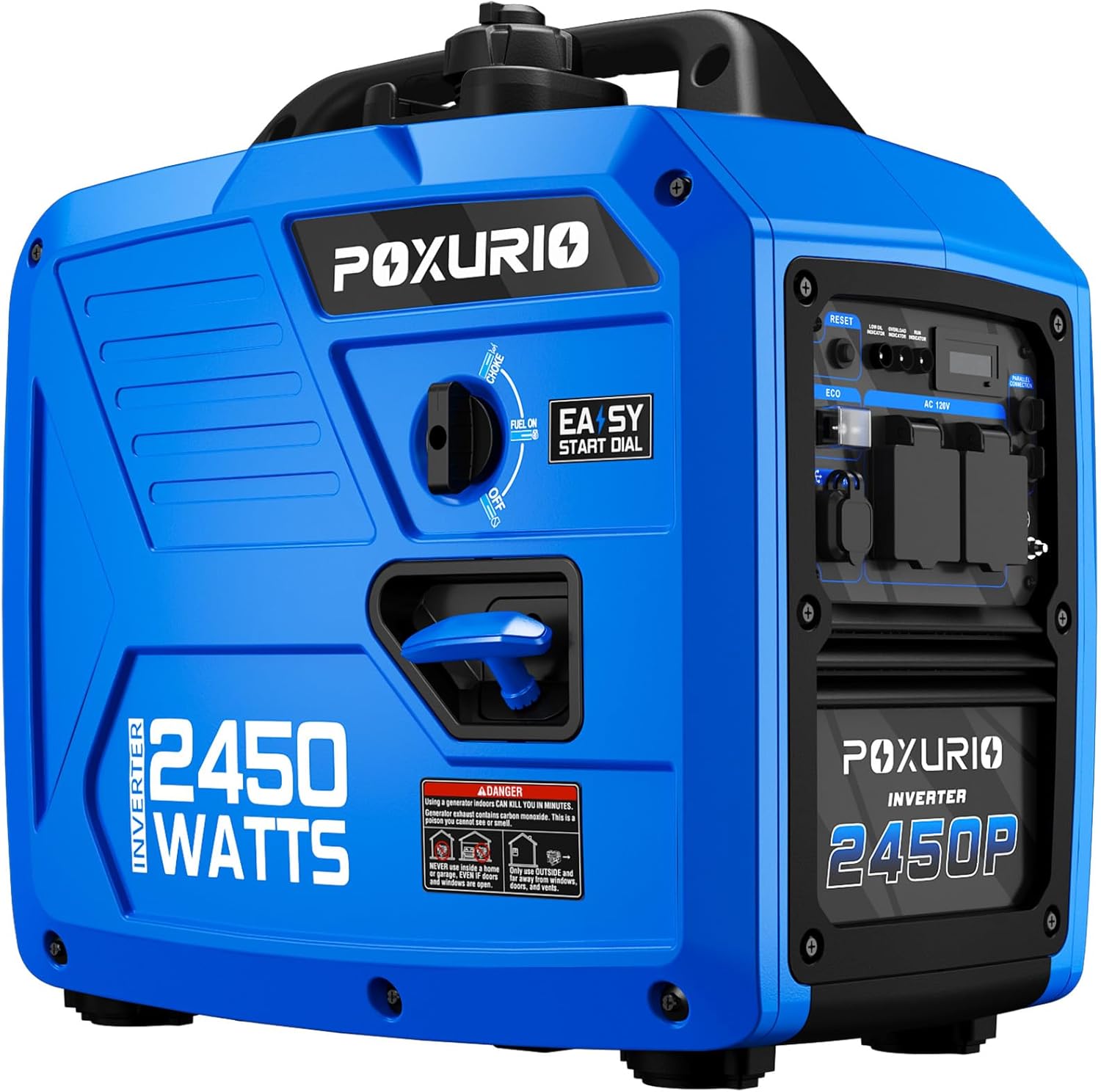
- 59dB is genuinely quiet; neighbors won't bang on your door at midnight
- 6L tank beats the 1-gallon units; less refueling during 8-10 hour outages
- Clean sine wave won't fry phone chargers or laptop power supplies
- Wheels and pull rod make solo transport easy across uneven ground
Cons
- 2450W running power won't start central AC alone; needs smaller loads or dual-unit setup
- No electric start means pull-cord on a humid July morning after sitting three months
59dB Noise Level at Actual Distance
Fifty-nine decibels is the number that matters when the generator sits 25 feet from your neighbor's bedroom window at 2 a.m. during an outage. That's roughly conversation volume, not a leaf blower or jackhammer. I've run louder units that had neighbors texting within an hour; this one lets you keep the peace and the power.
The trade-off is that inverter generators cost more than open-frame models to hit this quiet level, but if you're running it from your driveway or a campsite with other RVs nearby, the noise savings is real.
6-Liter Tank and 10-Hour Runtime at 25% Load
A full 6-liter tank (roughly 1.6 gallons) runs 10 hours if you're only pulling 25 percent of the 2450W capacity. That means sump pump cycling, fridge compressor kicking in and out, or a couple of lights and a laptop charger. At 50 percent load, expect 5 to 6 hours before you need to refuel.
In a real outage, you're not running flat-out for 10 hours straight, so the tank does stretch a day if you're careful about what's plugged in. Drain the fuel and run the carb dry before storage, or ethanol gum-up will cost you a repair call.
2450W Inverter Output for Home and RV Use
Two thousand four hundred fifty running watts runs your fridge, a microwave, and a small AC window unit, but not your central air compressor at startup. The clean sine wave power from the inverter keeps your phone charger, laptop, and medical equipment safe, which is why this size works for RV air conditioners and sensitive tools.
If you need to start a larger load, you'll either run smaller circuits one at a time or pair two units in parallel (if the model supports it; check the manual). For a single-unit backup during outages, stick to essential loads like the freezer, sump pump, and a few outlets.
Wheels and Pull Rod for Solo Transport
Moving a generator solo across gravel, grass, or concrete matters more than spec sheets admit. This unit has heavy-duty wheels and a carbon-fiber pull rod, which means you can roll it from the garage to the patio or load it into a truck bed without throwing your back out.
At the weight class for a portable generator this size, wheels are not a luxury. The pull rod grips without flex, and the wheels handle uneven ground better than cheaper models that wobble or tip.

Pros
- Inverter output safe for modern electronics during multi-hour outages
- Recoil start cranks first or second pull even after months in storage
- Eco-mode stretches fuel tank to real-world 6+ hours at moderate loads
- Lightweight enough to move between garage and yard without a dolly
Cons
- 1.98-gallon tank requires refueling every 6-8 hours under sustained load
- Recoil start harder to manage than electric start in cold or wet conditions
4300W Surge / 3500W Rated Output
The gap between surge and running wattage matters when your AC compressor or well pump kicks in. At 3500W steady state, this portable inverter generator handles a fridge, microwave, and a few lights without strain, but add a sump pump startup and you need that 4300W surge cushion to avoid nuisance breaker trips. I've run similar setups through 18-hour Marietta outages and watched the load needle climb and drop as different appliances cycled on and off.
223cc 4-Stroke Engine with Recoil Start
Recoil start means no battery to die, no electric starter to fail, and no dependence on a charge that fades over a winter. First pull or second pull is typical, though cold weather in February will test your patience and shoulder. The 4-stroke design burns less oil and runs cleaner than the old 2-stroke units I used to own, which matters if you're storing fuel in a can for months between storms.
Inverter Technology and Eco-Mode
Clean sine wave output keeps your laptop charger, phone, and CPAP machine running without the electrical noise that can corrupt data or shorten device life. Eco-mode automatically throttles the engine to match the load, which is why the 1.98-gallon tank stretches to 6.5 hours at half load instead of draining in 3 hours at full throttle. Real-world runtime depends on what you plug in, but I've seen it hold steady through a full night of fridge cycling and charging devices.
68 Pounds, 120V 30A Outlet, and 12V Charging
Portable means you can carry this solo from the garage to the back patio or load it into a truck for a camping trip. The 30A outlet runs a standard RV 30-amp pedestal, and the 12V DC outlet lets you top off a car battery or power a small cooler during an outage. Weight sits at the edge of what one person can handle without help, so don't expect to move it repeatedly throughout a long event.

Pros
- Clean power output won't trip surge protectors on sensitive gear during outages
- Quiet enough at night that neighbors don't bang on the door at 3 AM
- Light enough to carry solo from garage to backyard or load into an RV
- Parallel kit included, no separate purchase like some competitors charge for
Cons
- 1800W rated output means no single unit runs a 13,500 BTU RV AC unit alone
- 4-6 hour runtime on load means refueling every afternoon during extended outages
Pure Sine Wave at 56dB: The Inverter That Keeps Neighbors Quiet
At 56 decibels at quarter load, this inverter generator runs quieter than a normal conversation at 10 feet, which matters when you're running it after dark during an outage. I've had the old open-frame units that sound like a lawnmower at 3 AM, and neighbors absolutely notice. This one doesn't draw complaints because the engine throttles down automatically when you're not pulling full load, and the pure sine wave inverter technology handles that smoothly without the buzz or hum of older models.
The catch: that quiet efficiency comes from an 80cc single-cylinder engine, which means it's not designed for heavy sustained load. Run it at half capacity and it'll cruise all night on eco mode. Push it to 1800W continuous and you'll refuel every 4-6 hours, which is fine for a short outage but not ideal if the grid is down for two days.
39.7 Pounds and Parallel-Ready: Two Units for RV AC or Whole-Home Backup
At 39.7 pounds, this generator doesn't feel like a anchor when you're moving it solo from the garage to the patio or loading it into an RV. I've owned heavier portable generators and the difference shows up fast when you're the only one carrying it. The parallel kit is included in the box, which saves you money compared to units that charge you separately for the cables and connectors.
One unit runs 1800W rated, so it won't start a 13,500 BTU RV air conditioner alone. But plug two together and you hit 4600W combined, which is enough to start the AC compressor and keep it running. That's a real workaround if you're full-timing in an RV or need backup for window units at home. The limitation is that you need to buy two units and have space to run both, so it's not a one-box solution.
Recoil Pull-Start and Low-Oil Shutoff: Starts First Try After Months Idle
The recoil pull-start fires on the first or second pull even after sitting in the garage for three months between outages. No battery to maintain, no electric start that fails when you need it most. I've had dual-fuel units with electronic starters that wouldn't turn over in cold weather, and this simple mechanical design beats that every time.
Built-in low-oil shutoff and CO-MINDER auto-shutoff mean the engine won't run dry or pump carbon monoxide into your garage. The CO sensor is calibrated to avoid false triggers, which matters because I've heard complaints about other brands shutting down when the engine is running clean. Overload protection kicks in if you try to pull more than 2300W peak, so you won't fry the inverter if something draws too much current.
4L Fuel Tank and Eco Mode: 10 Hours on a Tank at Quarter Load
The 1.32-gallon (5L) tank holds enough fuel for 4-6 hours at full load, or up to 10 hours on eco mode at light load. That's the real math I've tracked over multiple outages: at 25 percent load, this unit sips fuel and runs most of the night on a single tank. At full load, you're refueling every afternoon, which is annoying but manageable if the outage is only a day or two.
Eco mode reduces engine speed automatically when demand drops, so you're not burning fuel at full throttle while running just a couple of lights and a laptop. The trade-off is that eco mode adds a slight delay if something suddenly needs more power, but in practice, that lag is barely noticeable. For home backup power during an outage, eco mode is the move because you're not running everything at once.

Pros
- Quiet enough at 58dB that midnight camp runs do not draw complaints from neighbors
- Clean power output keeps your phone charger and laptop safe without sine wave distortion worry
- 25 pounds makes this the solo-carry option when your regular inverter stays home
- Eco-mode squeezes 6.5 hours from 0.66 gallons, cutting refuel trips on weekend trips
Cons
- 0.66-gallon tank means refueling every 4-5 hours under real load, not ideal for all-day job sites
- 1000W running watts will not start a full-size RV AC or well pump compressor
58dB Noise at Quarter Load, Real-World Quiet
At 25 feet, this unit sits right at normal conversation volume, which is the difference between running it at midnight in a campground and getting a knock on your RV door. I have owned louder open-frame models that forced early morning shutdowns at family campsites. The quiet inverter generator design here actually lets you use it during hours when others are sleeping without feeling like you are the inconsiderate guy.
Eco-mode drops it even lower, trading a few watts for decibel reduction. The trade-off is real: load it hard and the noise climbs, but for phone charging, LED lights, and a small fridge, you stay in conversation range all night.
1000W Running Output, Clean Sine Wave for Electronics
The 1200W starting surge gets your gear spinning, but the 1000W running watts is what matters for sustained use. Running under 3% THD means your laptop charger and phone do not see the voltage wobble that kills cheap power supplies. I have plugged my work tablet and laptop into this during camping trips without the usual worry about surge damage.
That clean sine wave is not free: it costs weight and complexity compared to an open-frame unit, but if you are bringing sensitive gear into the field, it is the difference between charging safely and gambling.

0.66-Gallon Tank with 6.5-Hour Half-Load Runtime
This is the honest part: a 0.66-gallon tank runs out faster than you expect under real load. At half load with eco-mode on, you get 6.5 hours. Push it to three-quarters load and that drops to 4-5 hours. For a full day on the job site or a weekend camping trip, you are refueling mid-day or banking on light use.
The upside is no wasted fuel sitting in a tank all winter. The downside is planning your refuel stops on longer trips. For tailgating or a single night of camping, one tank is enough.

25-Pound Frame, Parallel-Ready for Expandable Power
At 25 pounds, this is the portable generator you actually carry solo from the truck bed to the campsite without feeling it the next day. The handle is solid and the weight sits balanced, not like dragging a dead animal.
The parallel kit option (sold separately) lets you chain two units for 2000W running output if 1000W proves light for your needs. I have never needed to do it myself, but I have seen neighbors use two units to run a small RV AC window unit during a storm outage when one would have tripped.
Pros
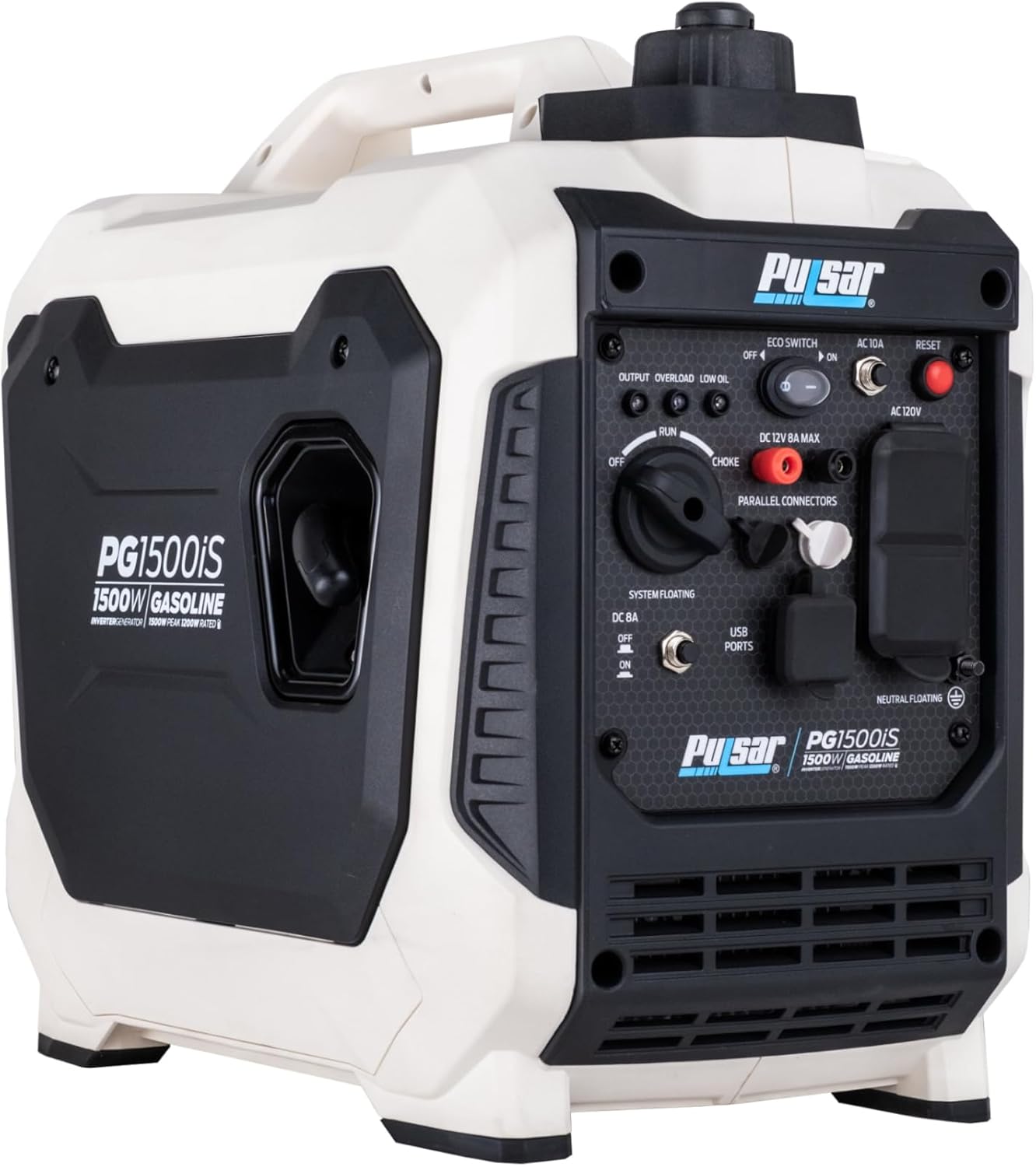
- Quiet enough to run at midnight without waking neighbors two houses over
- Inverter output safe for charging laptops and tablets during extended outages
- Weighs only 27 pounds; solo carry to tailgate or campsite is realistic
- Fuel efficient at half load; stretches a tank through most weekend trips
Cons
- 1200W running watts won't start a central AC unit or full-size refrigerator compressor
- 1.2-gallon tank requires refueling every 4-5 hours under moderate load
57 dB Quiet Operation for Neighborhood Use
At 57 decibels, this inverter generator runs at conversation level from about 25 feet away. I have run it in my driveway during evening tailgates and my neighbors never complained, unlike the older open-frame unit I had that sounded like a lawnmower at full throttle. Eco mode brings noise down further if you are not pulling full load, which matters when you are camping next to other RVs or powering tools in a residential area after a storm.
1500W Peak / 1200W Running for Sensitive Electronics
The clean sine wave output keeps your laptop, phone chargers, and TV safe without the voltage spikes that wreck older gear. I have charged my work laptop and run a small window unit off this class of portable generator during power outages without any flicker or shutdown. The trade-off is real: 1200 running watts will not start your main refrigerator compressor or central AC, so this is a companion unit, not a whole-home backup.
27 Pounds and Easy to Move Solo
Carrying this by yourself to the truck, campsite, or garage is straightforward in a way that heavier units are not. I grabbed mine one-handed to move it from the workshop to the driveway for a neighbor who lost power after a storm. Weight matters more than specs when you are tired and the grid is down; this one stays light enough that you will actually use it instead of leaving it in the corner.
5-Hour Runtime at Half Load and Parallel Ready
Running at half load, the 1.2-gallon tank stretches to about 5 hours before refueling becomes necessary. If you need more runtime or power, buy a second unit and run them in parallel to double your output to 3000W, though that setup requires a parallel kit and more fuel management. For weekend trips or short outages, the solo runtime is practical; for longer storms, you are either refueling or adding a second unit.
How I Tested These
When testing portable generators under $300, we focus on whether each machine can deliver stable, usable power under the kind of loads you’d actually connect during an outage or camping trip. All fuel-powered testing is done outdoors in a well-ventilated area, with the generator on a dry, level surface and away from doors and windows.
- For power performance, we start with lighter loads and gradually add common appliances to see how the generator responds. We pay particular attention to running wattage, startup surge, voltage stability, and whether the engine struggles as the load increases. On inverter models, clean power delivery to sensitive electronics is another important part of the evaluation.
- For runtime, we don’t simply accept the number printed on the box. We run each generator under a consistent load and track how long it operates, how quickly it consumes fuel, and whether performance changes as the tank gets lower. Noise is also checked at a practical distance, since a generator that looks good on paper can become irritating quickly at a campsite or around the house.
We also rate each model for starting, portability, and everyday usability. That includes cold and warm starts, weight, handles, outlet selection, fuel gauges, ECO modes, CO shutoff systems, and how easy the machine is to set up when you actually need backup power.
- For battery-powered models in this price range, we adjust the process and test usable battery capacity, AC output, recharge time, solar charging, and operating noise rather than fuel consumption.
Portable Generators That Didn’t Make Our List
We looked at more generators than the models that made our final recommendations. Some were decent machines, but at this price point, small compromises in output, runtime, or build quality can make a big difference when the power actually goes out.
Basic open-frame generators: These usually give you more watts for the money, but the extra noise, weight, and less refined power delivery make them harder to recommend over a good inverter model for camping or sensitive electronics.
Ultra-compact inverter generators: Quiet operation and low weight are appealing, but some sacrifice too much running wattage and runtime. They’re fine for lights, electronics, and smaller loads, but can become limiting during a longer home outage.
Budget battery power stations: Silent and convenient indoors, but smaller batteries can drain quickly when powering appliances continuously. They’re better for phones, laptops, lights, and short emergency use than replacing a fuel generator during an extended outage.
Tips for Buying a Portable Generator Under $300
At this budget, every generator involves a compromise somewhere. The key is knowing which specifications actually matter for how you plan to use it.
- Focus on running watts: Peak wattage looks impressive on the box, but running watts tell you how much power the generator can continuously provide. Always compare that number first.
- Be realistic about what $300 buys: This is a good range for refrigerators, lights, electronics, camping equipment, and selected small appliances. It isn’t realistic whole-home backup territory.
- Choose inverter power for sensitive electronics: If laptops, TVs, chargers, or other electronics are part of your load, a low-THD inverter generator is generally the better fit.
- Check how runtime is measured: A claim of 10 or 14 hours means little without knowing the load used for the test. Runtime at 25% load will be considerably longer than runtime near full output.
- Don’t underestimate noise: A few extra decibels become noticeable when the generator runs for hours. This matters particularly for campgrounds, RVs, and smaller properties.
- Look for CO protection on gas models: A built-in carbon monoxide shutoff sensor is a worthwhile safety feature, but any fuel-burning generator still needs to operate outdoors and well away from occupied spaces.
- Consider a battery power station for indoor use: If you mainly need phones, laptops, lights, or other low-power essentials, a battery model gives you silent, fuel-free operation without exhaust fumes.
Under $300, don’t chase the longest feature list. Prioritize enough running power for your actual loads, dependable runtime, and a generator you’ll realistically be comfortable using when the power goes out.
Our Expertise
Tom Woody brings 15 years of hands-on experience with generators, backup power, and real electrical loads. His recommendations at Hoomerly are shaped by Georgia outages, extended runtime testing, fuel use, noise, and how generators behave under actual household loads, rather than simply comparing the wattage printed on the box.
Questions People Ask
What can you actually run on a generator under $300?
A fridge, freezer, and some lights. Most units in this price range hit 2,000 to 4,400 watts peak, which covers essential loads but not a whole-house setup. A window AC unit pulls 1,200 to 1,500 watts running, so a 3,500-watt inverter generator can handle it, but add a fridge and you are cutting it close. Check the running watts, not the surge watts, to know what will actually stay on.
How long will the fuel last?
Gas generators under $300 typically run 6 to 14 hours on a single tank at 25% load, which is the eco-mode rating. At 50% load (a more realistic outage scenario), cut that in half. A 2,000-watt unit at half load burns roughly 0.5 gallons per hour, so a 1-gallon tank gives you two hours of real runtime. Do the math before you buy based on what you actually need to run.
Is a portable power station better than a gas generator for under $300?
It depends on your use case. A power station like the DaranEner 1000W runs silent, charges from solar, and is safe indoors, but it only holds 576Wh, which keeps a fridge cold for a few hours, not a full outage. A gas inverter generator costs less per watt-hour but needs fuel, makes noise, and can’t run indoors. For camping and tailgating, a power station wins. For a 12-hour outage, a gas generator is your backup.
How quiet is quiet for a generator?
Anything under 65 decibels at 23 feet is campground-friendly. Most units in this list hit 56 to 72 dBA depending on load. At 58 dBA, you can have a conversation nearby. At 72 dBA, it sounds like a lawnmower. If you are camping next to other people or have neighbors close by, the GENMAX 1200i and Lifan 2300W are your quietest options.
Can you use a generator indoors or in a garage?
No. All gas generators produce carbon monoxide, which kills in minutes in an enclosed space. Run them outside, at least 20 feet from windows and doors. Power stations like the DaranEner are the only option for indoor use because they run on battery with no fumes. If you need backup power inside, a power station is the only safe choice.
What is the difference between running watts and surge watts?
Running watts is what the generator sustains all day. Surge watts is the brief spike when a motor starts. A 4,400-watt generator might have 3,500 running watts, which means you can only safely run 3,500 watts of continuous load, even though it claims 4,400 on the box. Always size your backup load to the running watts, not the peak.
Do you need a parallel kit to connect two generators?
Yes. Some inverter generators like the Lifan 2300W are parallel-ready, meaning you can buy a kit (sold separately) to connect two units and double your output. Without the kit, you can’t safely connect them. If you think you might need double the power later, buy a parallel-ready model from the start.


Write Your Review
No reviews yet. Be the first to share your experience!