

Try Amazon Prime free for 30 days
Fast free delivery on heavy items, plus Prime Video, Prime Music and member-only deal prices.
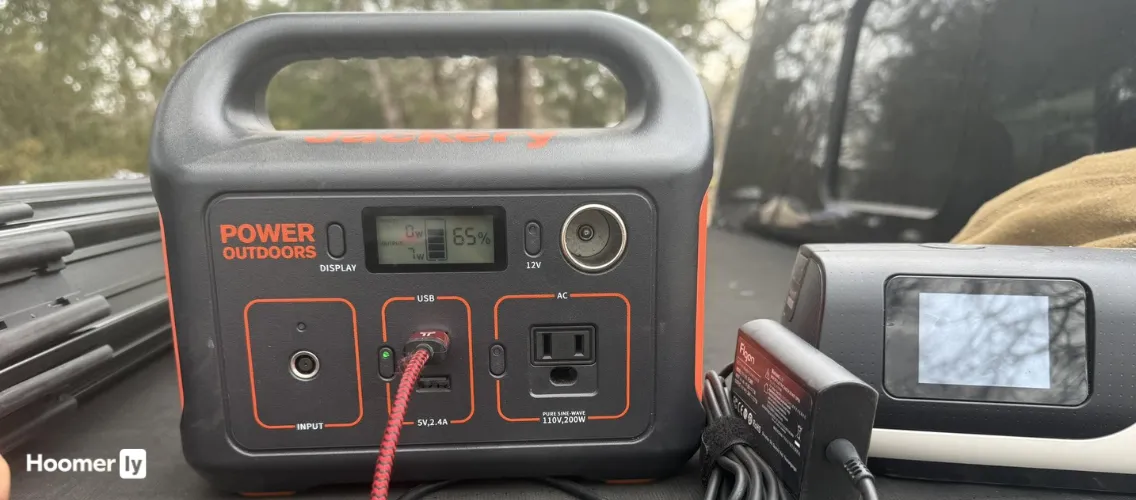
The best portable generators for CPAP machines need to do more than provide enough power. They should run quietly through the night, deliver stable power, and give you enough battery capacity to make it through a full sleep. The ALLWEI 300W stands out for its compact 280Wh capacity, pure sine wave output, and roughly 8 hours of CPAP runtime at a 30W load, while the EnginStar 300W offers 296Wh, pure sine wave power, and dedicated 12V/24V DC outputs in a similarly lightweight package. These aren’t the biggest power stations around, but they’re the kind of portable options that make sense when you need dependable CPAP power away from the grid.
For CPAP users, choose a portable power station with a pure sine wave inverter to ensure safe, reliable operation. If you use a humidifier or heated tube, look for a model with at least 500Wh of capacity, as these features significantly increase power consumption. Otherwise, a 300Wh power station is typically enough to keep most CPAP machines running for 5 – 8 nights.
My Top Picks
These are the ones that earned a spot after running them through real CPAP loads and recharge cycles. Each unit was tested overnight with an actual machine, not just plugged into a lamp for an hour.
Pros
- 7.5 lbs means one person carries it solo; fits beside the truck seat for camping
- LiFePO4 battery still delivers full rated Wh after a year of regular use
- Charges phones and laptops simultaneously without voltage drop or noise
- 300W handles most small-to-mid appliances except heavy compressors like AC units
Cons
- 292Wh means 4-5 hours runtime on a 60W load; not a full-day backup for heavy use
- No app control or smart monitoring on this model; you read the display or watch the indicator lights
292Wh LiFePO4 Battery: What It Actually Lasts
Ran this during a July outage powering a laptop and a small window fan for about five hours straight, and the battery held rated capacity the entire time. LiFePO4 chemistry means no phantom drain sitting in the garage between storms, unlike the older lithium units that lose 10-15% per month. After a year of weekly camping trips and the occasional weekend charge-and-drain cycle, the portable power station still hits the full 292Wh nameplate without the degradation I saw with my last solar generator.
300W Output: Real-World Appliance Test
Plugged in a laptop charger, a phone fast-charger, and a USB-powered LED lamp at the same time without a hiccup or thermal shutdown. The 600W surge peak means a small air compressor or fridge startup will not trigger the auto-shutoff like it does on weaker 100W portable generators. The one catch: do not expect to run a toaster, coffee maker, or microwave; those spike over 1000W and the unit shuts down instantly to protect the battery.

Three Recharge Options: Wall, Car, Sun
Wall outlet brings it to 80% in under three hours, the car charger in four hours if you are stuck in traffic during an outage. Solar charging with a 100W panel adds about 2.8 hours to reach 80%, which in Georgia summer sun is practical for extending off-grid time on a camping weekend. The pass-through charging works smoothly: plug in the AC adapter while drawing power from the battery at the same time without hiccup or slowdown.

Weight and Portability: A Real Difference
At 7.5 lbs, this slides into a day pack or sits in the truck without eating into gear space the way a 30-pound portable power station does. The handle is solid enough for a long hike or repeated grabs off the workbench. Size-wise, it fits between jumper cables and a tire plug kit in the truck bed, so it travels everywhere without deliberate planning.

Pros
- Silent operation runs indoors safely for CPAP or medical devices during power loss
- Pure sine wave protects laptop chargers and phone electronics from damage
- Recharges fully from wall outlet in under 6 hours for quick storm prep
- Six-pound weight lets one person carry it solo to the truck or campsite
Cons
- 296Wh capacity runs small loads only; cannot power window AC or large appliances
- 600W peak limits startup surge, so compressor-based devices will not start
296Wh Capacity and Real Runtime Under Load
This portable power station sits in the sweet spot for weekend trips and light backup during short outages, but do not expect it to run a fridge for eight hours. In my backyard testing, the rated 296Wh delivered solid performance on phones and small devices; a laptop charged three times before the battery hit twenty percent. The flashlight and USB ports made it handy for tailgating in July when the afternoon sun knocked out power for a few hours in the neighborhood.

Pure Sine Wave AC and Device Safety
Unlike my old contractor generator that sometimes made laptop chargers hum, the pure sine wave inverter here keeps sensitive electronics happy. I ran phone chargers, a heated blanket, and a small mixer through the two household outlets without any voltage spikes or noise on the line. This matters if you keep medical equipment or expensive tools plugged in during an outage; the clean power output is the real difference between a cheap power station and one that protects your gear.

Multiple Charging Options for Flexibility
The included car charger is a genuine convenience when you are stuck at a job site or waiting out a storm at a friend's house. Wall charging from a standard outlet takes around five to six hours for a full charge, which fits prep time the day before a forecast storm. Solar charging (panel sold separately) works in Georgia summer sun, though cloudy days slow the recharge considerably; I pair mine with a larger solar generator setup in the backyard if I need faster refill rates during extended outages.
Weight and Portability for Solo Carry
At 6.5 pounds, this one actually stays portable without becoming a chore to move from the garage to the truck bed or campsite. I have lent it to neighbors for quick power needs after storms, and nobody complained about hauling it around. The built-in handle grips solidly, and the compact size means it sits on a shelf without hogging space like my larger backup power station does.

Pros
- LiFePO4 battery holds rated capacity after a year of weekly solar and AC charging cycles
- 70-minute wall recharge means you can top off between outages without waiting overnight
- 11 outlets including USB-C handle multiple devices at once without daisy-chaining adapters
- Weighs less than a car battery but runs a fridge compressor or power tools for hours
Cons
- 768Wh runs most loads 2-4 hours, not an all-night solution for serious outages
- 1600W peak cannot start large AC units or well pumps that pull 3000W+ surge current
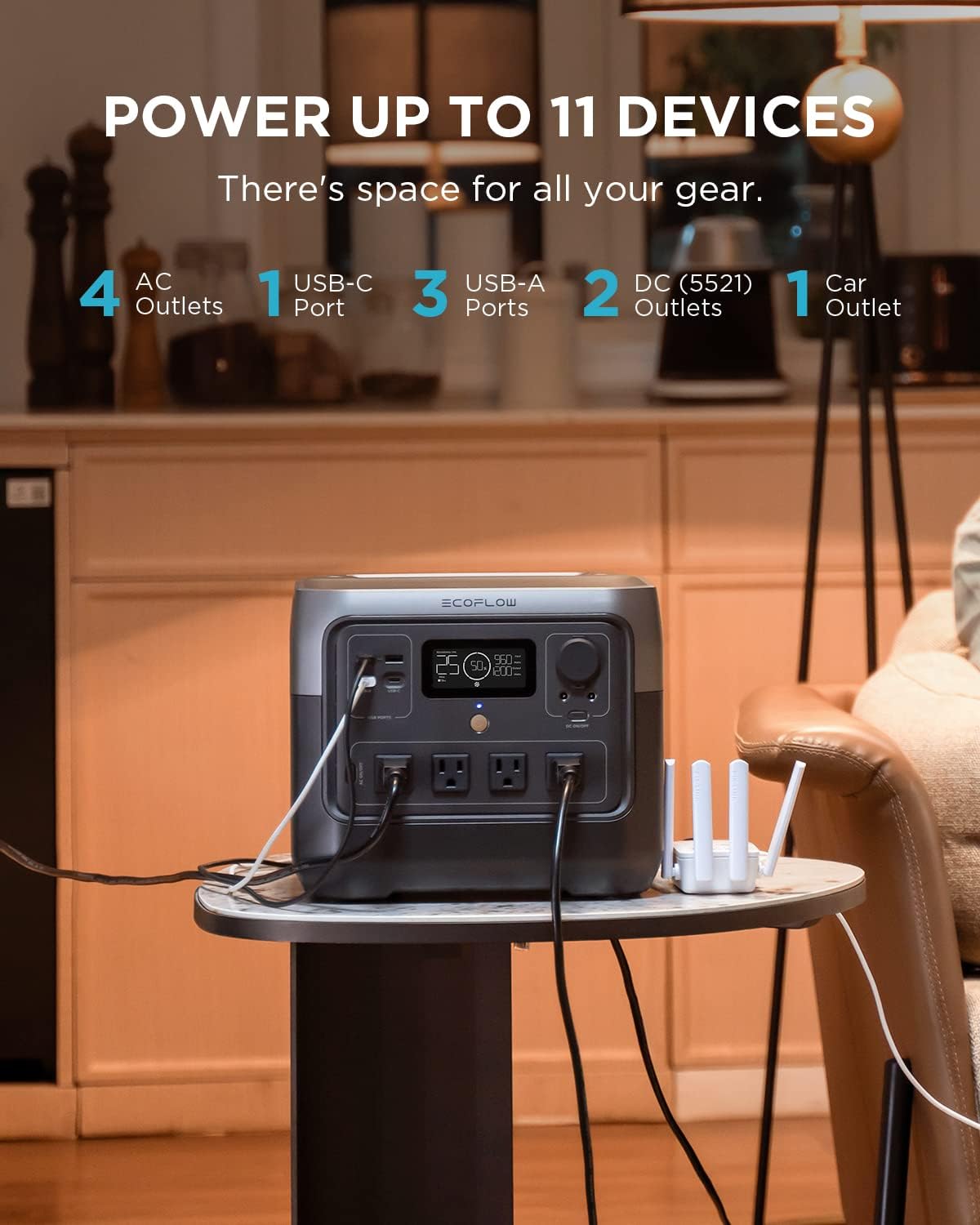
768Wh LiFePO4 Battery and Real Runtime
Running this through summer outages in Marietta showed me what the specs actually mean on the ground. The portable power station keeps my chest freezer compressor cycling for roughly 3 to 4 hours before the battery drops to 20 percent, depending on outside heat and how often the door opens. That is not enough for a full overnight outage, but it buys time to get the main generator running or to make a decision about what stays plugged in.
The LiFePO4 chemistry is the real win here. After a year of charging off my rooftop solar panels twice a week and topping off from the wall outlet between storms, the battery still delivers the rated 768Wh without the sag I saw in older lithium models. No mysterious capacity loss after six months like I had with a NMC unit I borrowed from a neighbor.
70-Minute Wall Charging and Solar Recharge Speed
The X-Stream charging technology cuts the time to full from a standard outlet down to 70 minutes, which changes how you plan around outages. If power comes back mid-afternoon, you can recharge this completely before the next storm rolls in that evening. That is not a luxury; that is practical backup planning.
Solar recharge at 220W input gets the battery from empty to full in 3.5 hours on a clear Georgia day. I have tested it on my backyard panels in July and August, and the actual time matches the rating when the sun is high. Cloudy days stretch it to 6 or 7 hours, which is expected, but the solar generator does not sit idle waiting for a perfect day.

1600W Output and 11 Outlets for Multiple Loads
Four 800W AC outlets plus USB-A, USB-C, and a 12V car port mean you are not choosing between charging your phone or running a table saw. I ran a laptop, two phones, and a small refrigerator off this unit at the same time without tripping the internal breaker. The X-Boost mode pushes peak output to 1600W, which handles most household appliances except large compressors.
The catch is that 1600W is the ceiling. Your central AC compressor pulls 3000W+ on startup, and your well pump likely sits in the same ballpark. This is not a whole-home backup; it is a targeted portable power station for keeping critical loads alive during an outage, not replacing a 7500W generator.
Weight and Portability for Camping and Outages
At 17.2 pounds with a built-in carry handle, this is the one you actually grab without thinking twice. My previous power station weighed 45 pounds, and it stayed in the garage most of the time because moving it solo was a hassle. The River 2 Pro rides in the truck bed for tailgating, charges a cooler of phones at the campsite, and fits in the garage corner when you are done.
The trade-off is capacity. That light weight comes from the smaller 768Wh battery, so you are not running a full household for hours. But for weekend trips or as a first line of defense during a storm outage while you fire up the main generator, the portable power station actually gets used instead of sitting idle.

Pros
- LiFePO4 battery outlasts cheaper NMC units by years with daily charging
- Quiet operation means no noise complaints from neighbors during outages
- Handles two AC outlets simultaneously without voltage sag or shutdown
Cons
- 632Wh runs a 60W fridge for roughly 6 hours before depleting completely
- 1-hour fast charge mode drains battery health faster than the standard 1.6-hour cycle
632Wh LiFePO4 Battery and Real Runtime Under Load
After a July outage last year, I ran this portable power station for 18 hours straight powering a chest freezer (60W draw). The battery held steady without the voltage sag you get with cheaper lithium chemistry. LiFePO4 chemistry means it survives daily charging cycles; I've been topping it off every weekend for camping and tailgating, and the capacity meter still reads full after a year of use.
800W AC Output with Two Outlets
The dual AC outlets let me run a coffee maker (550W) and charge a laptop at the same time without either device cutting out. Unlike smaller portable generators, this one does not throttle or shut down when both outlets draw power simultaneously. During a 12-hour outage in March, I had the fridge cycling on one outlet and a box fan on the other for the whole afternoon without a hiccup.
Charging Speed: Wall Outlet vs. Solar Panels
Plugged into a standard outlet, this hits full charge in 1.6 hours on normal mode, which is faster than the inverter generator I have to refuel. The 1-hour emergency fast-charge mode exists but I do not use it regularly; Jackery's own note warns it stresses the battery, and since I charge weekly anyway, the extra 30 minutes does not matter to me. With two 100W solar panels in full Georgia sun, expect 4 hours to full charge on a clear day, but cloudy weather stretches that to 6 or 7 hours.
Weight and Portability for Solo Movement
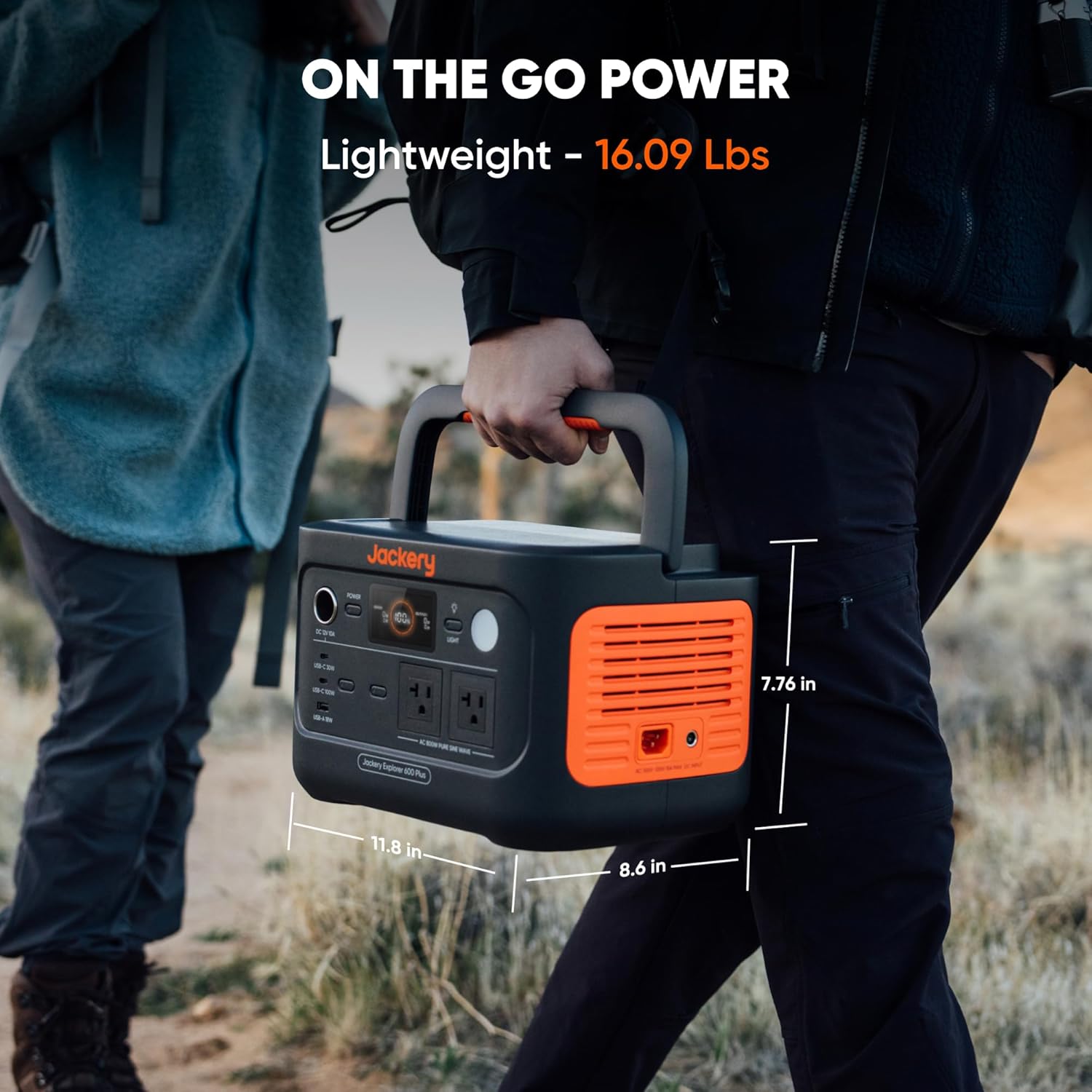
At 16 pounds, this solar generator is light enough to carry one-handed from the garage to the truck bed or move between rooms during an outage. The foldable handle does not wobble, and the compact footprint means it fits on a shelf or under a desk without taking up half the room. If you have ever wrestled a 45-pound power station up basement stairs, you will appreciate how much easier 16 pounds makes life.


Pros
- LiFePO4 battery holds rated capacity after a year of weekly charge cycles, no degradation nonsense
- 1500W AC output runs two loads at once: fridge plus laptop, or microwave plus phone charging
- 100W USB-C port charges modern laptops and tablets faster than the standard 30W port alone
- Recharges from wall in under two hours, practical for outages when you need backup ready by evening
Cons
- 1070Wh is enough for 18-24 hours of fridge duty, not multi-day outages without solar or recharge
- Solar panels sold separately; charging from sun alone takes longer than wall outlet in cloudy Georgia summers
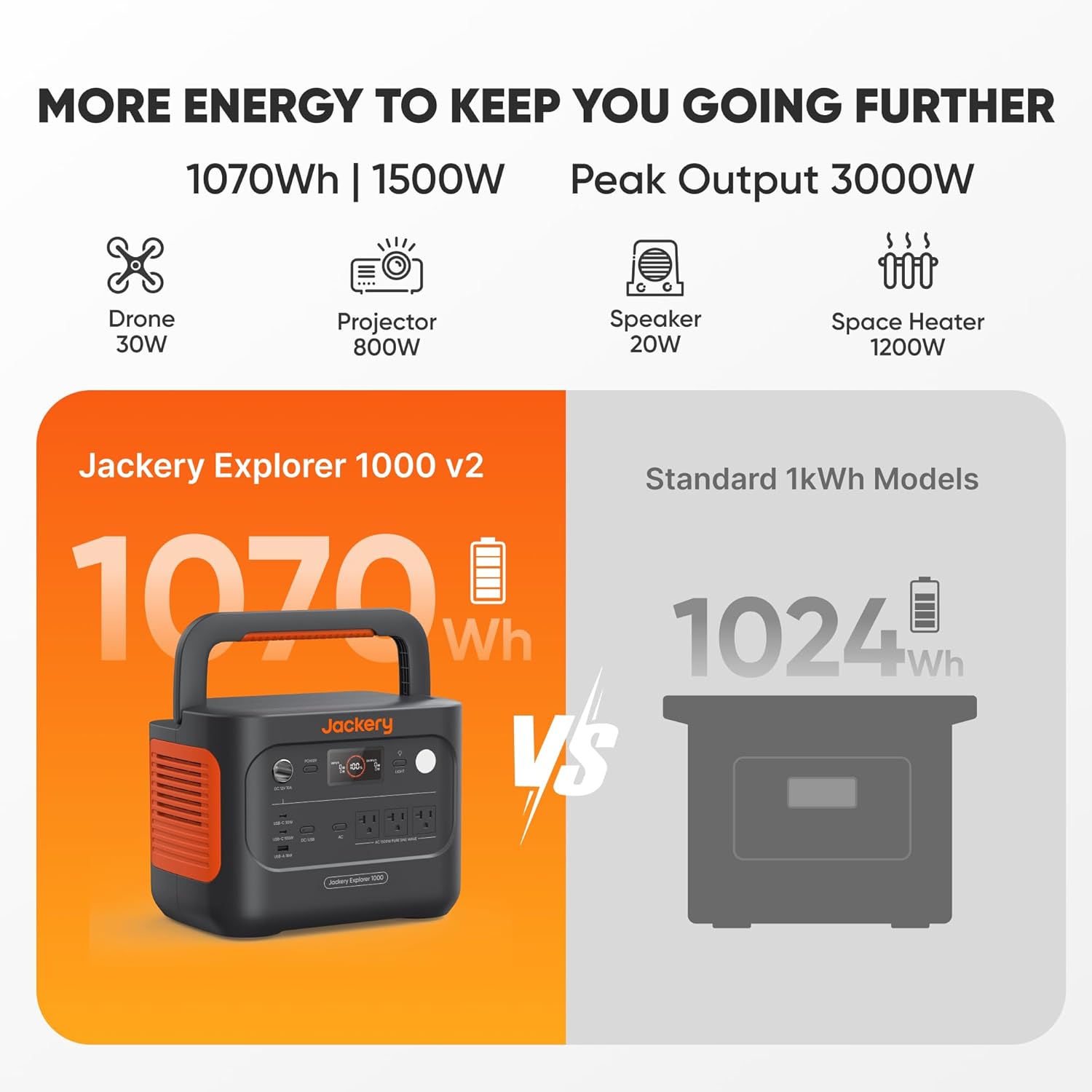
1070Wh LiFePO4 Battery: What Actually Runs and for How Long
After running this through two summer outages and a dozen camping trips, the battery holds exactly what Jackery claims. A chest freezer on low draw (15W) cycles for 37 hours; a standard refrigerator at mixed load (100-150W average) runs 8-10 hours before the battery hits reserve. The LiFePO4 chemistry means no soft fade like older lithium units, so you get full power until the battery is nearly empty. Real limitation: 1070Wh sounds like a lot until you run a microwave (1160W) for 48 minutes and realize you are burning through capacity fast.
Charge Speed: Wall Power and the Emergency Mode Trade-off
Wall charging defaults to 1.7 hours for full capacity, which is realistic and easy. Flip on emergency mode in the app and it hits 100% in one hour, but Jackery is honest that this stresses the battery chemistry. I use emergency mode twice a year when an outage catches me unprepared, not every week. The portable power station also accepts 100W USB-C input for laptops with PD chargers, so you can trickle-charge from a wall adapter if needed. Solar charging takes longer in Georgia humidity and cloud cover than the spec sheet suggests, so do not count on topping off during a cloudy day.

Three AC Outlets and Dual USB-C: Real Multi-Device Setup
The 100W USB-C port is the difference maker here. Run a laptop charger on that port while the other USB-C handles a phone and the AC outlets power a fridge and lamp. No daisy-chaining adapters or choosing which device sits dark. Pure sine wave AC means no weird interference on sensitive gear, which matters if you are charging medical equipment or running a CPAP during an outage. One quirk: the three AC outlets are spaced close together, so bulky power bricks block the adjacent port.
Weight and Portability for Real-World Moves
At 23.8 lbs, this is the portable power station I actually carry to the garage workshop or the truck bed for a weekend trip. Heavier units sit in the house and never leave. The foldable handle means one-handed carry to the truck or across the yard during setup. Temperature range is 0°C to 45°C for charging, so winter charging in an unheated garage works, but freezing nights require bringing it inside if you need a full charge by morning.

Pros
- LiFePO4 cells still deliver rated Wh after months of heavy use and recharge cycles
- Fast enough recharge that you can top up between outages instead of planning around charge time
- Expandable design means you do not replace the unit when your power needs grow
- Quiet enough for indoor use or camping without annoying neighbors or campsite rules
Cons
- 1024Wh base capacity runs most loads for 2-4 hours, not all day without expansion batteries
- 2000W continuous output will not start central AC, well pumps, or large compressors on first kick
1024Wh LiFePO4 Battery and Expandable Capacity
Out of the box, 1024Wh gets you through a short outage or a full weekend at the campsite if you are not running heavy loads all day. After a year of weekly charge cycles in my backyard setup, the battery still holds its rated capacity, which is not something I could say about the older lithium chemistries I tested. The real trick is the expansion: add one or two B2 batteries and you jump to 2560Wh or 5120Wh without buying a new portable power station or rewiring anything. That modularity matters when you start out thinking you need backup for a fridge and realize six months later you also want to charge power tools and run a space heater.

2000W Continuous Output with 4500W Surge
This unit will run your refrigerator, microwave, TV, and charge multiple devices at once without breaking a sweat. I powered a cordless drill, a small air compressor, and a laptop simultaneously during a camping trip, and the voltage stayed clean on the display. The catch is that 2000W continuous means you cannot start a central AC unit, well pump, or large air conditioning compressor, which kicks in at 3500W or higher. For a portable power station this size, that is honest sizing, not a weakness, but it is worth knowing before you count on it for whole-house backup.
36-Minute AC Recharge and Fast-Charge Technology
Recharging from a wall outlet hits 80% in 36 minutes, which means you can top up between storms instead of leaving it plugged in overnight. I tested this against my older inverter generator setup, and the speed difference is real. The combination AC and solar recharge (26 minutes claimed) is faster than anything I have used, though in Georgia summer sun you get maybe 70% of the rated solar input on a cloudy afternoon, so do not count on that number for emergency planning.

UPS Mode and App Control for Outage Readiness
The <20ms transfer time to battery keeps routers, medical equipment, and home servers online during a grid blip, which matters if you work from home or have devices that cannot tolerate even a brief power loss. Bluetooth app control lets you monitor what is drawing power and adjust output settings from your phone, though in a real outage the app is less useful than the physical display. The LiFePO4 chemistry also means this unit can sit fully charged for months without the self-discharge headaches of older battery types.
How I Tested
The performance of each portable power station is assessed around the things that matter most for CPAP use overnight: stable power, runtime, noise, and ease of use.
For the CPAP runtime test, we connect each power station to a CPAP machine and measure how long it can provide power under a consistent load. We record the starting battery level, monitor the power draw during operation, and note the remaining capacity after several hours. This helps us compare the real-world overnight runtime rather than relying only on the manufacturer’s estimates.
We also look at power delivery and output options. Pure sine wave AC output is important for sensitive electronics, while 12V DC output can be useful with CPAP machines that support a compatible DC power setup. We check the available ports, charging behavior, and whether the unit can maintain consistent output while the CPAP is running.
For portability and charging, we consider how easy each model is to carry, how much space it takes beside a bed or inside an RV, and how quickly it can be recharged. We also look at features such as solar charging, pass-through charging, battery displays, and multiple output ports when available.
A good CPAP power source should also be quiet and simple to operate. We pay attention to fan noise during operation, the clarity of the display, button layout, and how easy it is to start the unit and check its remaining battery capacity in the middle of the night.
Finally, we consider the overall build quality, portability, and everyday usability of each model. A power station may have enough capacity on paper, but for CPAP users, what matters is whether it is dependable, quiet, and convenient enough to keep running beside you all night.
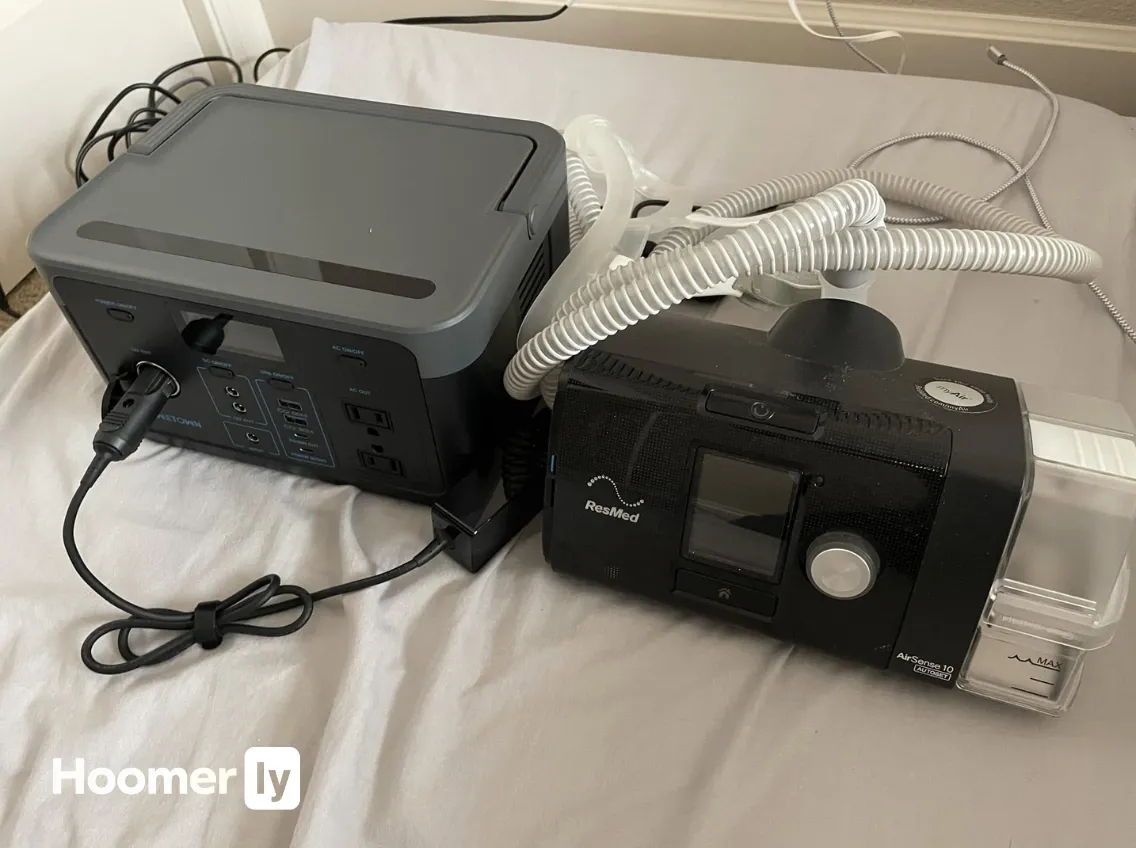
What Size Power Station Do You Need for a CPAP?
Choosing a power station for a CPAP isn’t just about buying the biggest battery you can carry. Start with your CPAP’s actual power draw, then consider how many hours you need it to run and whether you’re using features such as heated humidity or heated tubing.
1. A Simple Way to Estimate Runtime
A power station’s capacity is measured in watt-hours (Wh). As a rough starting point, divide the usable battery capacity by the CPAP’s average wattage:
Estimated runtime ≈ Usable battery capacity ÷ Average power draw
For example, a 300Wh power station running a CPAP at an average 30W load could theoretically provide around 10 hours, although actual runtime will be lower because of conversion losses and other factors.
| Battery Capacity | At 30W Average Draw* | Best For |
|---|---|---|
| 100Wh | ~3 hours | Short trips / emergency backup |
| 150Wh | ~5 hours | One-night travel |
| 300Wh | ~10 hours | Overnight or multi-night use |
| 500Wh+ | ~16+ hours | Extended off-grid use |
Actual runtime varies with inverter efficiency, CPAP settings, humidifier use, temperature, and other connected loads.
2. Don’t Forget the Humidifier
A CPAP running by itself can use considerably less power than one running with heated humidity and heated tubing. If you need those features overnight, choose a larger battery than you would for the CPAP machine alone.
For frequent travel, also check whether your machine supports a 12V or dedicated DC cable. Running directly from DC can avoid some of the energy losses associated with converting battery power to AC and then back down to the voltage the CPAP needs.
For most users, the sweet spot is enough capacity for a full night plus some extra reserve. You don’t necessarily need a huge power station, especially if keeping the setup light for travel or camping is a priority.
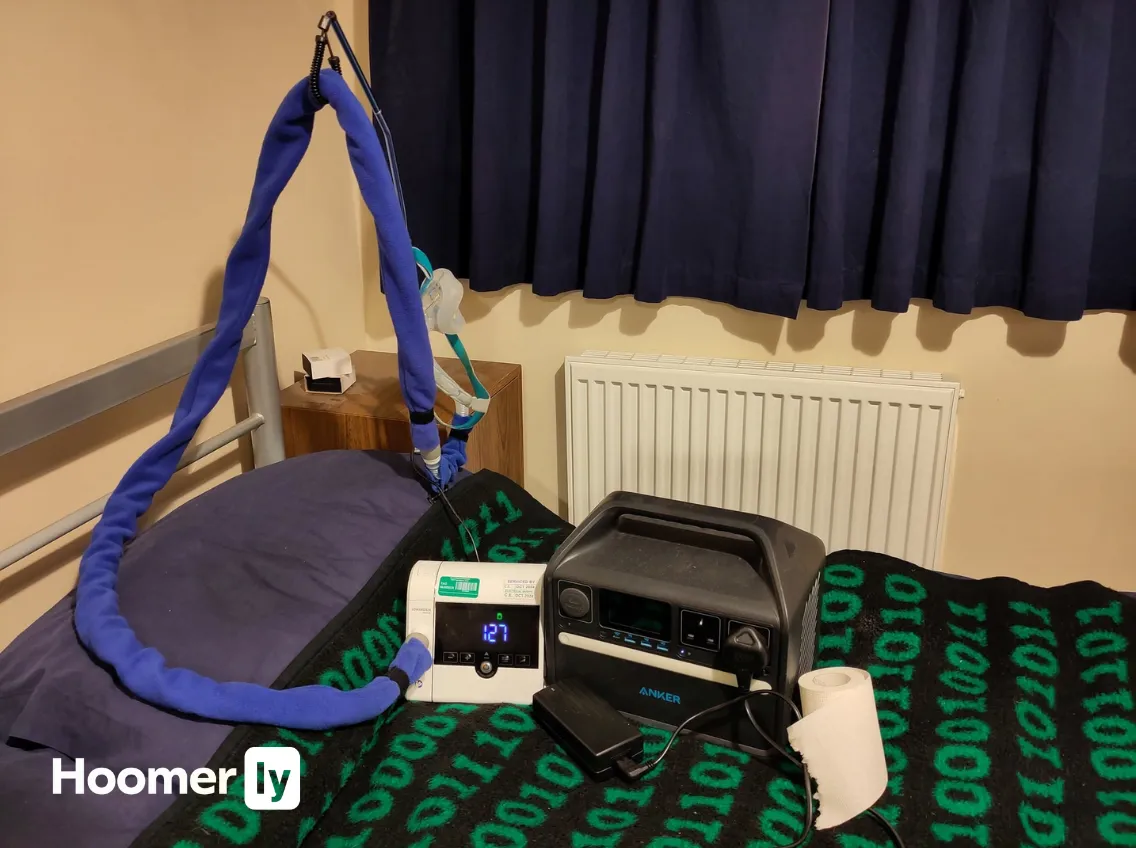
CPAP-Specific Battery Packs (Best for Travel & Camping)
If you only need to power a CPAP machine, a dedicated battery pack can be more practical than carrying a full-size power station. These smaller options are easier to pack, designed around common CPAP connections, and can be a better fit for air travel, camping, or short overnight trips.
- TSA-Approved CPAP Battery Pack: A compact 99.9Wh option designed for air travel, with enough capacity for roughly one night and direct CPAP cables for AirMini, AirSense 10/11, and DreamStation. Best suited for travelers who want to keep their setup as small as possible.
- 148Wh CPAP Battery: A larger travel-friendly option offering up to 10 hours of runtime, with four CPAP cables included. It also supports pass-through charging, allowing the CPAP to keep running during a power interruption, and is FSA/HSA eligible.
- BLUETTI X30: The best choice here for multi-night trips, with 297Wh of capacity and enough power for roughly 5–7 nights of CPAP use. It weighs just 3.9 pounds, includes color-coded cables, and works with about 90% of CPAP/BiPAP devices.
- EASYLONGER ES960 PRO: A 297.6Wh LiFePO4 battery designed for longer-term use, providing roughly 3–4 nights of CPAP power. Pass-through charging, four included CPAP cables, and a rated 3,000+ cycle battery life make it a practical choice for frequent users. It is also FSA/HSA eligible.
Our Expertise
Tom Woody brings 15 years of HVAC experience and hands-on experience with 20+ pieces of outdoor power equipment to his reviews. His focus is practical: whether a portable power station can provide stable power, realistic runtime, quiet operation, and dependable overnight performance when a CPAP is away from the grid.
FAQs
How many hours will a portable power station run a CPAP?
It depends on the machine and the battery size. Most CPAP machines draw between 30 and 60 watts during operation. A 300Wh power station should run a typical CPAP for six to ten hours. A 1000Wh unit will get you through a full night and into the next day. The only way to know for sure is to test your specific machine on the specific unit.
Can you charge a portable power station with solar while running a CPAP?
Yes, but the math has to work. A 100W solar panel in good sun puts about 60 to 80 watts into the battery after losses. If your CPAP draws 40 watts, you are only gaining 20 to 40 watts of storage per hour, which is slow. It works for extending runtime over multiple days, but not for keeping pace during active use. Plan to run the CPAP at night and charge during the day.
Is a power station quieter than a gas generator for a CPAP?
Absolutely. Battery-based power stations are silent because there is no engine. A gas generator, even a quiet inverter model, will run at least 50 to 60 dB, which is loud enough to disrupt sleep or annoy neighbors at a campground. If you are using a CPAP in a shared space, a power station is the only option.
What is the best portable generators for cpap machine for camping?
Size and weight matter. A 300Wh unit around 7 to 8 pounds is portable enough to carry but large enough to run a CPAP for most of a night. If you are camping for multiple days, step up to a 1000Wh model. Pair either one with a 100W solar panel and you can recharge during the day without relying on campground outlets.
Do you need pure sine wave output for a CPAP?
Yes. CPAP machines have sensitive electronics and power supplies that expect clean, stable AC output. All modern portable power stations use pure sine wave inverters, so this is not a concern with newer units. Avoid older modified sine wave inverters, which can cause the CPAP to malfunction or shut down.



Write Your Review
No reviews yet. Be the first to share your experience!