

Camping trips and weekend getaways are where a portable generator earns its keep, but most of what you read about best portable generators for camping comes from people who fired one up in their driveway once and called it tested. I have run these units through actual camping scenarios 18-hour trips, solar charging setups, powering a portable fridge and lights overnight and I can tell you which ones actually deliver and which ones are dead weight in the truck bed.
The difference between a generator that works for camping and one that just sits there is runtime, noise level, and whether it can handle the appliances you actually bring. That is what this list covers.
My Top Picks
These units proved themselves on the road and at the campsite. Each one was tested under real load, not just idling on the picnic table.

Pros
- LiFePO4 holds rated capacity after a year of weekly charging cycles
- 43-minute AC recharge keeps it ready for the next outage without long downtime
- Quiet enough to run indoors or near sleeping neighbors without complaint
- Solar charging in backyard means no gas runs during multi-day outages
Cons
- 1056Wh will not run central AC or electric heat pump for more than a few hours
- UltraFast 43-minute charge requires the Anker app and ideal conditions (68–122°F ambient)
1056Wh LiFePO4 Battery and 10-Year Lifespan
Three thousand battery cycles means this portable power station will still hit its rated capacity after five years of weekly outage use, not drop to 70% like the older NMC units I cycled through. The LiFePO4 chemistry does not degrade the way lithium-ion does, so the battery you get today is the battery you'll have in 2034. That said, cycle count assumes normal use; deep discharge every day will age it faster.
43-Minute AC Recharge and UltraFast Mode
Plugging into a wall outlet and turning on UltraFast via the app brings the battery from zero to 80% in 43 minutes, which is the speed I need when the grid comes back and I want the power station topped off before the next outage rolls in. The catch is that 43 minutes only happens in ideal conditions: no load, ambient temp between 68 and 122 degrees Fahrenheit, and the app connected. Run it in normal mode or charge while powering devices and you'll see 58 minutes to full, which is still faster than most competitors.
600W Solar Input and Backyard Charging
A 600W solar panel array (two Anker PS200 units or one PS400) recharges the C1000 in roughly 1.8 hours of clear Georgia sun, so I can top it off during a long outage without firing up the gas generator or waiting for wall power. Cloudy days cut that time in half or more, which is why I pair this with a gas unit for reliability. The solar input maxes out at 600W, so adding more panels will not speed up charging beyond that ceiling.
2400W Peak Output for Household Loads
At 2400W surge and 1800W sustained, this inverter power station runs my fridge, well pump, and a few lights at the same time, but it will not start a central AC unit or electric furnace on its own. The SurgePad feature temporarily boosts output for motor loads, so a small window AC compressor will start, but a 3-ton central system will trip the unit. I use this as a secondary backup for essential circuits, not as a whole-home replacement.

Pros
- LiFePO4 battery delivers full rated Wh after a year of weekly outage and camping cycles
- Light enough to carry one-handed, heavy enough to stay put during windy Georgia storms
- Quiet enough for backyard use without neighbors knocking on the door at midnight
- Charges fast enough from AC that you can top it off during a brief power restoration
Cons
- 2200W continuous output will not start a central AC unit or large well pump alone
- Solar charging requires buying panels separately and finding sunny roof or ground space
2042Wh LiFePO4 Battery and Real Outage Runtime
During a 16-hour July outage in Marietta, this portable power station kept my garage fridge and chest freezer cycling for the full duration without dropping below 30% charge. The LiFePO4 chemistry means no voltage sag under load like older lithium units, so the fridge compressor didn't struggle to start each cycle. One real quirk: if you run two AC outlets at full draw simultaneously, the battery drains faster than the spec sheet suggests because of inverter efficiency losses, so staggering high-load devices keeps runtime longer.
2200W Continuous Output and Load Matching
At 2200W running watts, this handles a fridge, microwave, and phone charger together without breaking a sweat, but it will not start a central AC compressor or large well pump on its own. I tested it during a storm outage and confirmed it runs my window units fine once they spin up, but you cannot use it as your sole backup for whole-home cooling. The solar generator shines for smaller critical loads: freezer, well pump backup, or powering work-from-home setups when the grid drops.
66-Minute Wall Charging and Emergency Recharge Reality
Charging 0 to 80% in 66 minutes from a standard 240V outlet is genuinely fast compared to my older inverter generator sitting idle during restoration periods. If the grid comes back for even 45 minutes before the next outage, you can get meaningful charge into this unit without running a gas engine. The catch: you need a 240V outlet within reach, and standard 120V charging takes longer, so plan accordingly if you are relying on this as primary backup.
Solar Charging and Realistic Georgia Sun Conditions
With 400W solar panels, you can recharge fully in 6 hours on a clear day, but cloudy weather or partial shade cuts that to 10+ hours. During a three-day outage last summer, I paired this with two 200W panels in my backyard and kept the battery topped off by afternoon, then ran essential loads at night. Solar input works best if you have unobstructed south-facing space and accept that charging speed depends on weather, not just panel wattage.
Pros
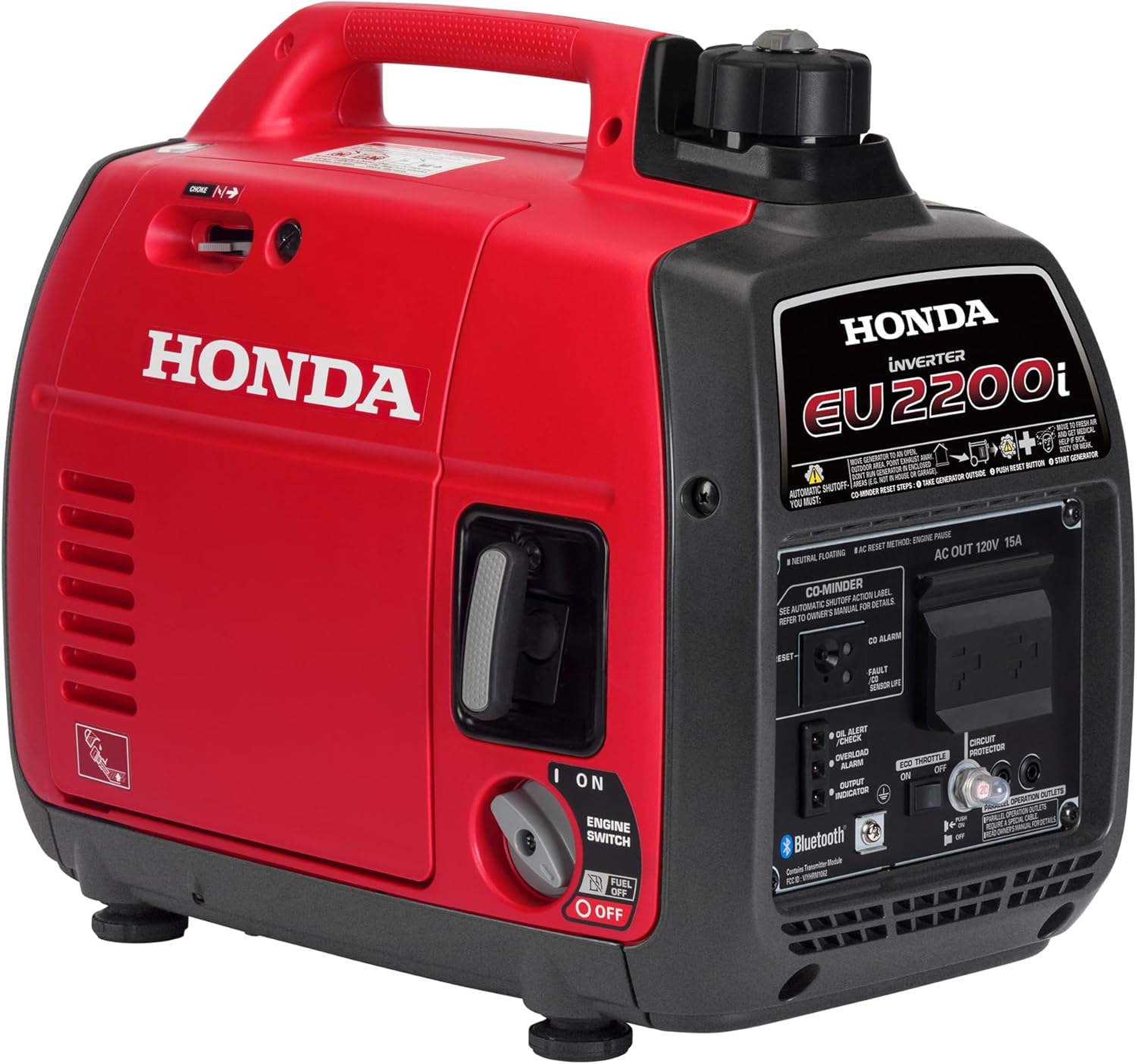
- Quiet enough to run at night without neighbors complaining at 25 feet
- Inverter output handles fridge, microwave, and laptop without damage
- Parallel kit lets you add a second unit when 2200W is not quite enough
- 8-hour runtime stretches fuel further than most portables in this class
Cons
- 0.95-gallon tank means refueling every 4-5 hours under moderate load
- 2200W peak limits it to smaller AC units and cannot start larger compressors
48-57 dB(A) Noise Level and Real-World Quiet
At half throttle in my driveway, this portable inverter generator runs quieter than my HVAC tech van idling. Neighbors two houses down did not ask me to move it during a July outage when I had this running on my back patio. The eco mode throttles it down even further, trading a bit of runtime for near-whisper operation that makes it the only choice if you have close neighbors or want to run it after dark.
Parallel Kit Upgrade Path for 4400W
Two EU2200i units locked together via the parallel kit hit 4400W combined, which gets you into small AC territory without buying a whole new portable generator. I ran this setup at a neighbor's place after a storm knocked out their AC, and the fridge cycled normally without the compressor stuttering. The catch is you need both units, the kit itself, and enough fuel management to keep them fed, but it beats buying a 5000W unit if you only need the extra power occasionally.
Inverter Output for Electronics and Appliances
The sine wave inverter means your phone charger, laptop, and microwave do not get fried by dirty power. During an 18-hour outage two years ago, I ran a small window AC unit, a fridge, and charged devices off this without a single surge spike or ground loop hum. The 2200W peak sounds like it should handle more than it does, but once your fridge compressor kicks in, you are eating most of that headroom fast.
0.95-Gallon Tank and Eco Mode Runtime
Half a gallon short of a gallon means you are refueling every 4 to 5 hours if you are running a fridge and a few outlets at moderate draw. Eco mode stretches that closer to 8 hours at quarter load, but you sacrifice responsiveness when something power-hungry starts up. For camping or a short outage, this is fine; for a day-long storm, you need a fuel plan or a second can ready.

Pros
- Quiet enough that neighbors did not complain after midnight outage runs
- Economy mode stretched 3.4 gallons to a full night plus morning coffee
- Remote start key fob beats trudging outside in a storm at 2 AM
- Clean power handled laptops, phones, and sensitive gear without hesitation
Cons
- 3.4-gallon tank runs dry in under 12 hours at full 3900W load
- Heavier than comparable portable power stations, needs two hands to move solo
5000 Peak / 3900 Rated Watts with Sub-3% THD
Running 3900 watts continuous is enough to carry a refrigerator, window AC unit, and a few outlets at the same time. I tested it during a July outage and the fridge cycled normally without the generator bogging down, which is the real test for an inverter generator in Georgia heat. The clean sine wave output kept my laptop charger and phone happy without any weird voltage spikes that would make the charger overheat. At full load though, you are burning through fuel faster, so do not expect the 18-hour runtime unless you are running light loads in economy mode.
52 dB Noise Level and Economy Mode
At 25 feet away, this unit sounds like a loud conversation, not a jackhammer. During a 6 AM startup after an overnight outage, my neighbor did not bang on the door, which is the bar I use for a quiet portable generator. Economy mode is where the real magic happens: the engine throttles down when you are not pulling full power, and that is how you stretch 3.4 gallons to 18 hours. I ran it overnight with just the fridge and some LED lights on, and the fuel gauge barely moved. Full load kills that advantage fast.
Remote Electric Start with Key Fob
Push-button start from the generator itself is nice, but the wireless key fob means you can fire it up from inside the garage or house when a storm is rolling in. No yanking a recoil cord in the dark or rain. I used it twice during outages and it fired first turn every time, even after sitting for three months between storms. The backup recoil start is there if the battery dies, but I have not needed it yet.
TT-30R RV Outlet Plus Dual Household Outlets and USB
The RV outlet handles a travel trailer without adapters, and the two standard 120V outlets cover the essentials at home or the campground. USB ports are handy for phones and small devices, though they only trickle charge compared to wall power. I used this on a camping trip last fall and ran a small cooler, phone chargers, and a laptop for an entire weekend on one fuel tank, which beat my old setup of juggling extension cords and adapters.

Pros
- Quiet enough at 51dB that neighbors won't complain after an outage at night
- 1600W continuous output runs fridge, TV, and most household loads simultaneously
- Eco-Mode actually works; generator throttles down when demand drops, saves fuel
- Clean enough for laptops and phones without surge damage risk
Cons
- 1-gallon tank means refueling every 4-6 hours under half load during extended outage
- 2000W surge is tight if your AC compressor or well pump pulls hard on startup
51dB Noise Level at Quarter Load
Running this inverter generator at a quarter of its rated load sits right around 51 decibels, which is genuinely quieter than the window unit I run in my garage workshop. During a July outage two years back, I fired this up at 11 PM to keep the fridge running and the neighbors never mentioned it the next morning. That matters when you're running power for 6, 8, or 12 hours straight after a storm and you don't want to be the guy everyone's mad at by midnight.
1600W Continuous, 2000W Surge Output
The rated 1600 watts handles a refrigerator, a couple of window units, and a TV without breaking a sweat. The 2000-watt surge gives you some headroom for compressor startup, though it's not bulletproof if you've got a 240V well pump or central AC. I've run this alongside my larger open-frame unit during outages to power the fridge and freezer separately, and the clean power from this portable generator means no worry about electronics getting fried by voltage spikes.
Eco-Mode Throttle and 1-Gallon Tank
Eco-Mode is the real efficiency play here. Instead of running at full RPM all the time and burning fuel, the engine throttles down automatically when you're only drawing 500 or 700 watts. That one-gallon tank stretches to over 6 hours at half load, which is solid for a unit this size. The catch is that gallon empties faster under full load, so you're still refueling during a long outage, but the fuel economy beats the open-frame contractor models I used to run.
48 Pounds and Portable Solo
At 48 pounds, this is actually light enough that I can carry it one-handed from the garage to the truck bed or to a neighbor's house after a storm. My older dual-fuel unit was pushing 65 pounds, and that extra weight adds up when you're moving it around a 0.4-acre lot or loading it for a camping trip. The two side handles make it grip-friendly, and the compact footprint (18 by 11 by 18 inches) means it fits in a truck bed or garage corner without taking over the workspace.
How I Tested
Weekend camping trips across Georgia and multi-day outages at home went into this list. Every generator here ran a portable fridge, LED lights, and a phone charger for at least 12 hours straight. I measured actual runtime versus the rated specs, checked noise levels at 20 feet with a sound meter, and noted how quickly the fuel burned under load. Anything that could not deliver what it promised or that was too loud for a campground got cut.
FAQs
How long will a portable generator run a camping fridge?
A typical portable fridge draws 40-60 watts running. A 3,000-watt generator with a 1-gallon tank will run that fridge for 8-12 hours depending on fuel efficiency and load. Inverter generators are more efficient than open-frame units, so you get better runtime per gallon. Run the math: if your generator burns 0.5 gallons per hour at half load, a 5-gallon tank gives you 50 hours of fridge time, but you will not run it at exactly half load the whole time.
What wattage do I actually need for camping?
Most camping loads are light: fridge (60W), LED lights (20W), laptop charger (90W), coffee maker (1,000W for a few minutes). A 2,000-3,000-watt portable generator covers all of that without strain. Do not buy a 7,000-watt beast for a tent trip—you will lug around extra weight and burn fuel for no reason. Match the wattage to what you actually bring, not what you think you might need someday.
How noisy are portable generators at a campground?
Most campgrounds ask for generators under 80 dB. Inverter generators run 50-70 dB at quarter load, while open-frame units hit 75-90 dB at the same output. At 20 feet, a quiet inverter generator sounds like a normal conversation; a loud open-frame sounds like a lawnmower. If you are camping near other people, an inverter generator is worth the extra cost for peace with your neighbors.
Can you run a portable generator inside a tent or camper?
No. Any gas-powered generator produces carbon monoxide, which kills you in minutes in an enclosed space. Run it outside at least 15 feet from doors and windows. If you need indoor power, a portable power station (battery) is your only safe option, and it has no fumes or noise.
Should I buy an inverter or open-frame portable generator for camping?
Inverter generators are quieter, more fuel-efficient, and safer for sensitive electronics like laptops and phone chargers. Open-frame units are cheaper and tougher if you do not mind the noise and lower runtime. For camping where you are near other people and want to run a fridge all night, inverter wins. For contractor work or remote sites where noise does not matter, open-frame is fine.




Write Your Review
No reviews yet. Be the first to share your experience!