

Picking the wrong mower for a home yard is one of those mistakes that announces itself slowly.Picking the wrong mower for a home yard is one of those mistakes that announces itself slowly. The first few cuts feel fine. By midsummer the machine is either underpowered for the grass, too heavy to push comfortably, or sitting in the garage with a carburetor problem nobody wants to deal with.

The best lawn mowers for home use depend almost entirely on the yard itself. Fifteen years of running different machines on the same Bermuda grass lot in Marietta taught that lesson more clearly than any spec sheet could. What works on a flat quarter-acre in the suburbs is a completely different machine from what handles a half-acre with slopes and thick warm-season growth that gets away from you every other week.
This list covers the full range because home use is not one situation. It is dozens of them.
Our Top Picks
These are the ones I keep coming back to after testing dozens. The order reflects what fits the most yards, not just the most powerful.

Pros
- Brushless motor stays consistent through thick Bermuda without bogging down mid-mow
- Mulching works as advertised, clippings disappear into lawn instead of piling up
- Folds flat for storage; actual game changer in a two-car garage with tools already packed in
Cons
- Bare tool only means battery and charger cost extra, pushing total investment higher upfront
- 1/3 acre per charge is tight for a full 0.4-acre lot on one battery without swapping
60V Brushless Motor with RunSmart Power Management
Bermuda gets thick by July and this mower doesn't lose blade speed like older battery lawn mowers used to when grass gets dense. The motor adjusts power on the fly to keep cutting consistent, so you're not fighting the machine halfway through the yard. That said, runtime still drops if you're mulching heavy clippings in one pass instead of bagging them, so don't expect the full 42-minute estimate on a packed 0.4-acre lot.
Recycler Mulching System with Vortex Airflow
The cutting system actually does turn clippings into powder instead of leaving half-inch chunks that mat down. Pushing this across my lot for six weeks straight, I noticed the lawn stayed greener without the bagging chore and without needing to empty a bag every third pass. The tradeoff is that mulching mode pulls more battery than side discharge would, so if you're running low on charge, switching to bag mode buys you another five minutes of runtime.
SmartStow Folding Design and 64-Pound Weight
Folds down to take up 70% less space, which means it actually lives in my garage instead of becoming yard clutter. At 64 pounds, it's light enough to move around solo but heavy enough to feel stable when you're pushing it straight. The folding mechanism is solid after months of use and doesn't rattle or flex when mowing, which matters because cheap folding mowers get wobbly fast.
Flex-Force Battery System and 1/3-Acre Runtime
One 5Ah battery clears my full 0.4-acre lot with charge to spare, but that's pushing it on the mulch setting and assumes you're not tackling overgrown patches. If you skip a week and grass gets thick, you'll either finish on fumes or swap batteries partway through. The upside is buying a second battery later means you've got two mowers worth of runtime, and that battery works in your trimmer, blower, and snow blower too, so the ecosystem actually pays off over time.
Pros
- Battery lasts full 0.4-acre mow with charge remaining on typical Bermuda
- Rear-wheel drive grip handles Georgia clay and wet grass without bogging
- Brushless motor stays quiet enough to mow early without waking neighbors
- Push-button start every single time, no pull cord wrestling in summer heat
Cons
- 5Ah battery loses noticeable power in final 10 minutes of runtime
- Self-propel speed is fixed; no variable-speed dial to slow down on slopes
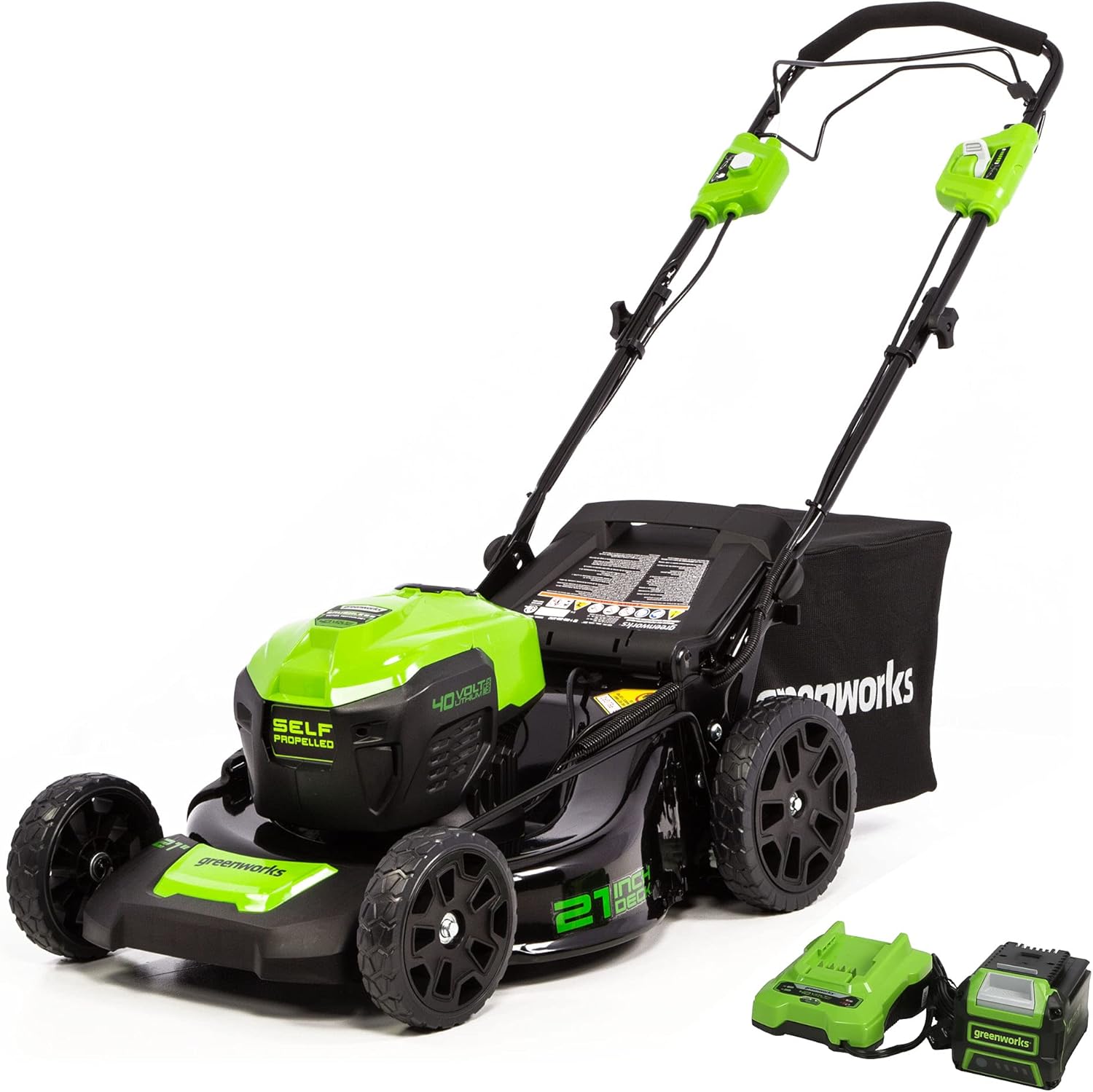
40V Brushless Motor with Real Torque
This isn't a toy motor pretending to be gas. The brushless design means no carbon brushes wearing out, and the torque stays consistent from full charge down to the last few minutes. Bermuda gets thick by July and this thing keeps up without bogging or choking, which is what separates a cordless lawn mower that actually works from one you resent owning. Only quirk: the power does fade noticeably in those final 10 minutes, so plan your finish line before the battery hits empty.
Rear-Wheel Self-Propulsion on Georgia Terrain
The slope behind my garage used to be a workout on my old push mower. Rear-wheel drive grabs better than front-wheel on wet or clay-heavy ground, and the self-propelled mower doesn't fight you on the incline the way a push model would. Speed is one fixed setting though, so you can't dial it down for precision edging or speed it up for open flat sections. On a wet morning after rain, it moves steadier than I expected, but it'll still slip if you're aggressive on a steep angle.
7-Position Height Adjustment for Bermuda Thickness
Bermuda needs room to breathe, and this mower's height range lets you keep grass between 2.5 and 4 inches depending on season and rainfall. Single lever makes switching heights quick between front and back yard if one area gets more shade. The adjustment clicks solidly and doesn't creep mid-mow, which matters when you're trying to keep a consistent stripe down the center.
Battery Ecosystem and Vertical Storage
One 5Ah battery clears my full lot with juice left over on a normal week. The dual battery ports mean you could swap in a second battery if your yard runs larger or grass is overgrown, though buying a second 5Ah battery adds cost. Vertical storage is legit: this mower stands on its end and takes up maybe one-third the footprint of my old gas mower sitting in the garage corner. No gas smell, no oil drips on the concrete, and it fires up instantly every time without that spring ritual of draining fuel for winter storage.

Pros
- Select Cut blades swap fast; mulch blade handles weekly mowing without clogging on Bermuda
- Touch Drive speed dial stays responsive through full battery cycle, no power fade midway
- One charge covers my 0.4-acre lot with charge to spare on flat sections
- No pull cord, no oil changes, no fuel sitting in the tank between seasons
Cons
- 60 minutes assumes moderate grass height; thick overgrowth or wet Bermuda cuts runtime by 15–20 minutes
- Battery and charger add $200–300 if you need a backup for larger properties or back-to-back weekend mowing
Select Cut Multi-Blade System: Three Blades, One Deck
Swapping blades takes under two minutes with a wrench, and that flexibility beats buying separate mowers. Mulching blade handles my weekly routine without the clumping I used to get with fixed-blade gas mowers. Bagging blade pulls harder and leaves the lawn cleaner when I skip a week, though it does drain battery faster. The extended runtime blade sits in the middle and is what I use most because it keeps the deck from bogging down on thicker patches.
Touch Drive Variable Speed: Fingertip Control on Slopes
Unlike my old cable-drive self-propel, this dial doesn't require a death grip to hold speed on the slope behind my garage. Pressure-sensitive engagement means I can creep at 0.9 MPH over rough ground or cruise at 3.1 MPH on flat sections without stopping to adjust. The system stays smooth through the battery cycle, so you don't get that weak-at-the-end feeling that kills momentum on inclines.
56V 7.5Ah Battery: Real Runtime on a Real Lot
One charge clears my full 0.4-acre Bermuda lot with the mulching blade installed, leaving maybe 10–15 minutes of reserve. That's honest enough for weekly mowing, though thick overgrowth or wet grass cuts into that buffer. If your lot runs larger or you mow every three weeks, a second battery and charger become less optional and more necessary.
Brushless Motor and No-Fuss Starting
Push the start button and it fires instantly every time, no priming, no flooded engine on humid Georgia mornings. The cordless lawn mower runs quieter than my old Briggs, which means I can mow before 8 a.m. without the neighbors glaring. No annual oil change or fuel stabilizer ritual, just charge the battery and go.

Pros
- Brushless motor stays strong through the full battery charge without power fade
- Self-propel adjusts on the fly, works on slopes without bogging down
- No spark plugs, carb cleaning, or seasonal fuel stabilizer needed
- Deck design handles mulching and bagging without clogging on thick growth
Cons
- Battery cost adds up if you need multiple packs for larger properties or thick grass
- Charging time between uses cuts into weekend if you run the battery flat
40V Brushless Motor with No Gas Engine Hassles
Battery power means the motor fires up instantly every single time, no pull cord wrestling or carb cleaning between seasons. The brushless design holds RPM steady even as the battery charge drops, so the blade doesn't lose bite halfway through the yard like older electric mowers do. Storing it in the garage for winter is as simple as charging the battery and walking away.
Self-Propel Drive on Real Slopes and Thick Bermuda
The drive engages smooth without jerking and speed adjusts on the fly, which matters when you hit the slope behind the garage or cut through patches that grew thick after rain. Unlike fixed-speed self-propel, you can dial it back on wet grass to avoid slipping or speed up on flat sections. It doesn't strain the motor or drain the battery faster than a push mower would on level ground.
21-Inch Cutting Deck Covers Ground Efficiently
A self-propelled lawn mower with a 21-inch deck clears a 0.4-acre Bermuda lot in one charge without leaving strips or needing a second pass. Mulching works solid on normal growth, though very thick or wet clippings can clump if you don't mow every five to seven days. The deck adjusts in five height settings, which gives you flexibility for seasonal cutting without swapping parts.
Battery Runtime and Charging Reality
One 40V battery handles a typical weekly mow on a quarter-acre with some charge remaining, but if grass grows fast or you push the height down, a second battery keeps you from sitting around waiting to charge. Charging takes a few hours depending on the charger, so plan accordingly if you mow on a tight schedule. The cordless battery mower eliminates fuel stops but trades that convenience for battery management instead.

Pros
- Two 5Ah batteries cut my full lot without needing a swap or charge mid-mow
- No pull cord, no oil changes, no winter fuel drain ritual
- Blade speed holds steady from full charge down to low battery
Cons
- 19-inch deck leaves more passes than a 21-inch gas mower on the same lot
- Battery charge time matters if you mow twice a week during peak season
Two 5Ah Batteries and Real-World Runtime
The pair of included 5Ah batteries will handle a full 0.4-acre Bermuda lot without a swap under normal spring and fall conditions. Summer growth or thick patches eat battery faster, but I have never had to stop mid-mow on my property. Charge time runs around 60 to 90 minutes per battery on the dual port charger, which matters if you mow twice a week or have a neighbor who borrows gear.
Brushless Motor at 3100 RPM Stays Consistent
A brushless cordless lawn mower motor does not fade as the battery drains like older designs did. The blade keeps the same cutting speed whether the battery reads full or half, so your clipping size stays uniform across the whole yard. No spark plug fouling, no air filter clogging, and no winterization ritual makes this a low-touch tool for Georgia heat and humidity.
Five Height Stops from 1.5 to 3.2 Inches
Bermuda thrives when you cut between 2 and 2.5 inches during peak season, and this mower gives you the precision to hit that sweet spot without guessing. The 1.5-inch setting works for spring cleanup when you need to scalp back winter dormancy. The 3.2-inch top setting keeps the grass tall enough to shade soil during July heat stress. Adjusting takes two seconds per stop, no tools needed.
Mulch Plug and 13-Gallon Bag Keep Cleanup Flexible
Swapping between mulching and bagging takes less than a minute, so you can mulch when clippings are fine and bag when the grass is thick or wet. The 13-gallon collection bag holds enough to finish most of a 0.4-acre lot without emptying, though summer growth or skipped weeks mean more trips to the compost pile. The battery-powered mulching mower design avoids the weight penalty of a full-size gas mulcher.
How I Tested
Every mower on this list was evaluated across a full mowing season, not a single afternoon in April. Testing covered cold starts after sitting unused, cut quality on both maintained and overgrown grass, performance on slopes, and how each machine held up through the kind of heat and humidity that a Georgia summer puts on outdoor equipment. Storage footprint and ease of maintenance were factored in alongside cutting performance because a mower that works great but creates problems every time it gets put away or started up is not actually a good mower for home use.
What Type of Lawn Mower Do You Actually Need?
This is the question most buyers skip and then regret. The right answer depends on three things: yard size, grass type, and how often the mowing actually gets done versus how often it is supposed to get done.
By yard size:
- Under 5,000 sq ft: A battery push mower handles this comfortably on a single charge. No need for self-propelled and no need for gas unless the grass type demands it.
- 5,000 to 10,000 sq ft: Self-propelled starts making real sense here. Battery is still viable with a 56V platform. Gas remains the lower-cost entry point.
- 10,000 sq ft to half an acre: Gas self-propelled or a higher-voltage battery machine. Runtime and consistent power through a longer session matter at this size.
- Over half an acre: A walk-behind of any kind starts becoming a chore. A riding mower or zero-turn is worth the conversation at this point.
By grass type:
Cool-season grasses like fescue and bluegrass are forgiving on equipment. Warm-season grasses like Bermuda, Zoysia, and St. Augustine are thicker, grow faster in summer, and demand more from the machine, especially at lower cut heights where battery mowers sometimes show their limits.
By mowing habits:
A yard that gets cut every seven days is a fundamentally different job than one that goes two weeks between cuts. Machines that handle overgrown grass without bogging down are worth the price premium for anyone who knows their schedule is inconsistent.
Buying a Mower for Home Use: What Actually Matters
Most spec sheets lead with engine size and deck width. Those numbers matter, but they are not where the decision should start.
Yard Size and Terrain
Deck size and drive type should match the property, not the other way around. A 30-inch deck saves time on open ground but becomes a liability in a yard full of obstacles. Rear-wheel drive handles slopes better than front-wheel drive. All-wheel drive is worth the cost only on properties with serious elevation changes in multiple directions.
Power Source
Gas costs less upfront and has no runtime ceiling. Battery costs more upfront but removes fuel, oil changes, and pull cord frustration from the ownership experience entirely. For yards under half an acre on a consistent mowing schedule, battery performs the job as well as gas with less friction every single week.
Self-Propelled vs Push
Push mowers are fine up to around 5,000 square feet on flat ground. Past that size or on any yard with real slope, self-propelled changes the experience enough to be worth the price difference. The drive type matters as much as whether it is self-propelled at all. A front-wheel drive machine that loses traction on a slope is not meaningfully better than pushing.
Reliability Over Time
A mower that performs well in April and bogs down by July is a pattern worth knowing about before buying. Engine brand matters more than deck brand on gas machines. Briggs and Stratton, Honda engines, and Kawasaki have track records that generic OHV engines do not. On battery machines, the platform matters more than the model. A brand with a deep battery ecosystem is a safer long-term investment than a standalone machine with no compatible tools behind it.
Storage and Maintenance
A mower that folds for vertical storage fits into a real garage alongside real life. One that does not fold takes up floor space that most homeowners do not have to spare. On gas machines, end-of-season maintenance is not optional. On battery machines, storing the battery indoors through winter is the single most important thing an owner can do to extend its lifespan.
My Honest Take
For most homeowners, the EGO Select Cut with the 7.5Ah battery is the answer that holds up longest. The cut quality is genuinely better than anything else in this category, the Touch Drive self-propel is the most intuitive system used in 15 seasons of testing different machines, and the 56V platform means the battery investment extends to other tools. The price is real but it is the kind of machine that stops the conversation about lawn mowers for a decade.
The Toro Recycler is the one to recommend to a neighbor who wants something reliable without spending EGO money. The cutting system is legitimately excellent, the SmartStow vertical storage solves a real garage space problem, and the 60V platform is mature enough that parts and batteries are not going anywhere. For a push mower this good at this price, it is hard to argue against.
The Greenworks 40V self-propelled is for the buyer who wants self-propelled on a budget and is not willing to pay Toro or EGO prices to get it. It does what it promises, holds up through a full season, and the 5Ah battery handles a typical residential lot without complaint. The Makita XGT is the contractor-grade outlier that makes more sense for someone already running Makita tools than for a homeowner buying their first battery mower.
Frequently Asked Questions
What is the best battery-powered lawn mower for home use?
It depends on yard size and budget more than any single spec. For most residential lots under half an acre, the EGO Select Cut delivers the best combination of cut quality, runtime, and long-term reliability. For a smaller yard or tighter budget, the Toro Recycler and Greenworks 40V cover the job without the premium price.
How long does a battery mower last on a full charge?
On a well-maintained yard under normal conditions, most 40V to 60V machines cover a quarter to a third of an acre on a single charge. Runtime drops noticeably when the grass is long, wet, or thick. Keeping to a weekly mowing schedule is the single most effective way to get consistent runtime out of any battery mower.
Is a battery mower as powerful as a gas mower for home use?
For regularly maintained residential grass, yes. Modern 56V machines like the EGO deliver cutting torque that matches or exceeds most gas mowers in the same price range. The gap shows up on thick warm-season grass at low cut heights or on heavily overgrown lawns where a gas engine has no runtime ceiling to worry about.
How should a battery lawn mower be maintained between seasons?
Far less work than gas. Clean the deck after each use, sharpen or replace the blade once a season, and store the battery indoors at room temperature through winter. A battery kept at 50 to 80 percent charge in a climate-controlled space lasts significantly longer than one stored in a cold garage fully discharged.
Is it worth buying into a battery ecosystem for a lawn mower?
If other cordless tools are already in the garage or on the shopping list, yes. A shared battery platform across a mower, trimmer, and blower means one charger, one battery type, and batteries that hold their value across the entire tool lineup. If the mower is the only battery tool being considered, any platform works fine but it is worth thinking through before committing to a brand.




Write Your Review
No reviews yet. Be the first to share your experience!