

Free Delivery. Exclusive Deals. All Prime.
Prime members save on shipping and get first access to deals, plus Prime Video included. 30 days free.
The first icy corner of a morning run can turn confidence into a very undignified shuffle. Ice cleats for running add bite underfoot so winter miles are less dependent on luck. After comparing 5 models, the Yaktrax Ice Cleats stand out for 3mm carbide-steel spikes, 1.4mm stainless-steel coils and low-temperature safety to minus 41 degrees F. The Korkers Ice Cleats are the alternative pick, with 16 replaceable carbide studs.

Pros
- Designed to fit over running shoes for winter training
- 3mm carbide-steel spikes add bite on cold surfaces
- 1.4mm stainless-steel coils support 360-degree traction
- Reflective heel and side straps add visibility detail
- Breakage-tested to -41 degrees F
Cons
- Large size in this listing may not fit every shoe
- Made for running shoes, not described for winter boots
- Only gray/red color is listed
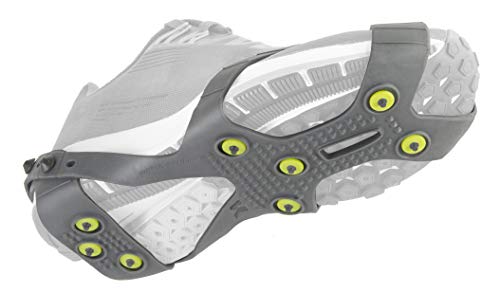
Korkers Ultra Runner Ice Cleat - One-Size-fits-Most - 16 Replaceable Carbide Spikes - for Winter Running
Pros
- 16 replaceable carbide studs for road or trail grip
- Adjustable strap for a secure custom fit
- Fits Women's 6 to Men's 14 footwear
- Light 4.5 oz per pair spec
- BOA components are guaranteed for life
Cons
- May not fit sizes outside Women's 6 to Men's 14
- Only listed in black
- Product weight data also lists 3 pounds
Pros
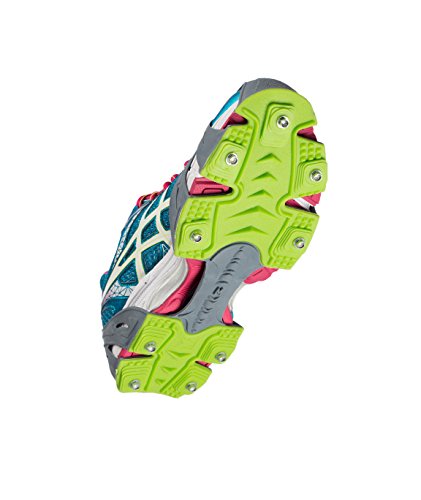
- Full-sole cleat coverage on heel and forefoot
- TPE tread at toe and sides for surface contact
- Tension-fit bindings secure over running shoes
- Small fits W7.5-9 and M6-7.5
- Replaceable heat-treated cleats
Cons
- Replacement cleats sold separately
- Only Small size is specified
- Made for running shoes, not general boots
Pros
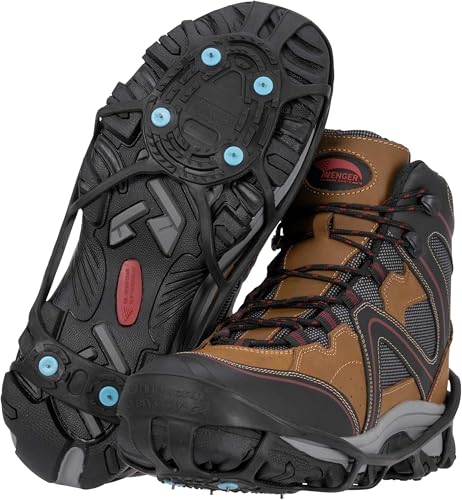
- 6 tungsten carbide Ice Diamond spikes
- Replaceable spikes for longer use
- Enclosed toe area helps secure the fit
- Textured lining helps limit sole movement
- Solid traction pad helps reduce snow and ice buildup
Cons
- Listed only in Small-Medium size
- Only black color is specified
- No warranty details are provided

Pros
- 10 tungsten carbide spikes in strategic locations
- 3mm thicker cold resistant silicone
- Retains elasticity in cold temperatures about -50°F
- Toe cap design helps keep cleats in place
- Includes adjustable straps and portable storage bag
Cons
- Only XL size details are provided
- Only black color is listed
- Warranty term length is not specified
How We Chose Pairs of Ice Cleats for Running in Winter Conditions
Running on ice is different from walking to the mailbox. A pair of ice cleats has to grip at toe-off and landing, stay attached to a flexible shoe, and still be simple enough to pull on when the weather is already unpleasant.
- Winter readiness and practical staying power: Ice cleats do not use battery, crank, solar or USB power, so the most useful comparison is mechanical staying power. Among our picks, traction comes from 6, 10 or 16 spikes, or from a mixed system of spikes and coils. That matters during outages because the product still works when lights, chargers and heated gear do not. According to the National Weather Service, NOAA Weather Radio All Hazards broadcasts warnings, watches and forecasts 24 hours a day, 7 days a week, which is a useful companion for deciding whether a run should happen at all.
- Traction design: For running, traction has to work when your foot lands, rolls and pushes off. The Yaktrax Ice Cleats combine 3mm carbide-steel spikes with 1.4mm stainless-steel coils, giving grip in more than one contact pattern. The design also claims 360 degrees of traction, which is relevant when a foot slips sideways on a crowned road or packed trail.
- Build and cold resistance: Materials matter because rubber and elastomers stiffen when the temperature drops. The STABILicers Ice Cleats use thermo plastic elastomer in the toe and sides, with full-sole coverage and cleats at the heel and forefoot. The listed size small fits women’s 7.5 to 9 and men’s 6 to 7.5, so sizing is more specific than one-size designs.
- Size and weight: A runner feels extra bulk quickly, especially at a steady cadence. One pick is listed at 4.5 oz per pair, while another uses a one-size-fits-most range from women’s 6 to men’s 14. The more adjustable designs can cover more shoes, but a size-specific model can reduce extra material around the sole.
- Ease of use on boots or with cold hands: The Due North Ice Cleats use 6 tungsten carbide Ice Diamond spikes and an enclosed toe area for a secure fit while running. A textured lining is intended to limit movement against the sole, and the solid traction pad is meant to reduce snow or ice buildup between footwear and the traction aid. Those details matter when hands are cold and you do not want to stop every few blocks to reseat a cleat.
We excluded disposable hand warmers and boot inserts because single-use warmth does not solve underfoot traction. Ham radio licensing is outside the scope of a running traction guide, and sleds pulled behind vehicles carrying people were excluded as unsafe. The main list stays focused on reusable traction devices that fit over shoes or boots.
The Competition
These are other pairs of ice cleats we looked at but did not put on our main list.
If tungsten is your main filter, Icetrax Ice Cleats are a capable pair of ice cleats with a tungsten build. They did not make the main list because the available information does not match this running-specific need as closely as our top pick, which has 2 traction materials underfoot.
For shoppers comparing metal types, Cimkiz Ice Cleats use a stainless steel build. That can be useful for general winter footing, but the main list gives clearer running-oriented details, including one pick with 16 replaceable carbide studs and another with full-sole coverage.
Prefer a more aggressive winter setup? Kahtoola Product is a tungsten-build pair of ice cleats, but it was not selected because the main list gives more specific fit and running information. One main-list option covers women’s 6 through men’s 14, while another lists separate sizes from small through XL.
Brand familiarity is not enough by itself, which is why Yaktrax Product stayed outside the main list despite its tungsten build. The selected options provide more concrete running-relevant numbers, including 6, 10 or 16 spike layouts and one mixed spike-and-coil design.
FAQs
How much spike coverage should running ice cleats have?
For running, more contact points can help because your foot loads the heel, midfoot and forefoot at different moments. Our picks range from 6 to 16 spikes, with one design adding coils as a second traction surface.
Are one-size ice cleats good for winter running?
One-size designs can work when the stated range fits your shoes. One pick covers women’s 6 through men’s 14, but a size-specific option may be better if you want less excess material around a running shoe.
What should I check before running after a winter storm?
Check whether warnings, watches or forecasts point to dangerous conditions before heading out. The National Weather Service says NOAA Weather Radio All Hazards broadcasts weather and hazard information 24 hours a day, 7 days a week through more than 1000 transmitters.
Do ice cleats help during power outages?
They can help with outdoor movement because they rely on mechanical traction rather than battery, solar, crank or USB power. For indoor safety during outages, the Centers for Disease Control and Prevention recommends a battery-operated carbon monoxide detector and keeping space heaters at least 3 feet from drapes, furniture or bedding.
Sources
- NOAA Weather Radio All Hazards, National Weather Service. NWS page on the NOAA Weather Radio network.
- Safety Guidelines: During & After a Winter Storm, Centers for Disease Control and Prevention. Winter heating safety for space heaters, kerosene heaters and carbon monoxide.




Write Your Review
No reviews yet. Be the first to share your experience!