

Free Delivery. Exclusive Deals. All Prime.
Prime members save on shipping and get first access to deals, plus Prime Video included. 30 days free.
The fastest way to meet winter is stepping onto the driveway, waving one arm like a windmill, and pretending it was intentional. Ice cleats for boots add metal bite underfoot so snow shoveling, dog walking and storm cleanup feel less like a balance test. After comparing 6 models, the Cimkiz Ice Cleats stand out for 19 stainless steel spikes, a chain system and TPE rated to minus 45 degrees C. The Zuxnzux Ice Cleats are the alternative pick with silicone rated to minus 49 degrees F.

Pros
- 19 stainless steel spikes per foot
- TPE body is 5 mm thicker than ordinary rubber
- Rated for performance down to -45°C
- Adjustable strap and included carry bag
- For ice roads, icy driveways, mud and wet grass
Cons
- Only Large size is listed
- No separate left or right cleat
- Shoe size fit range is not specified
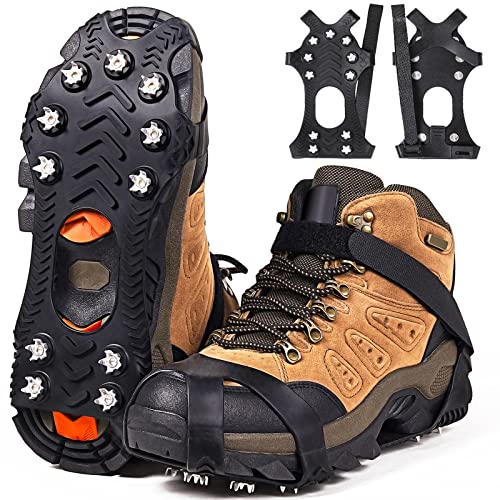
Pros
- 11 stainless steel spikes per foot for traction
- 7 forefoot spikes and 4 heel spikes
- Silicone stays flexible down to -49°F
- Velcro strap helps secure cleats to footwear
- Carry bag included for storage
Cons
- Only Large size is listed
- Only black color is listed
- After-sales support is mentioned, but no term is specified
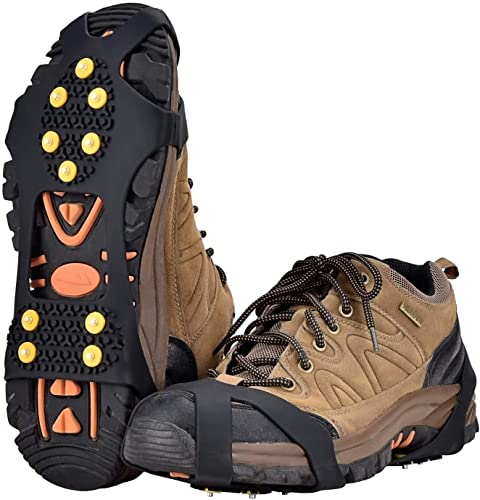
Pros
- Large fits US men's 8 to 11 and women's 10 to 13
- Steel studs provide traction on ice and snow
- Silicone rubber thermoplastic elastomer construction
- Lightweight 0.31 lb design folds for pocket storage
- Easy on and off for boots, sneakers, and dress shoes
Cons
- Large size may not fit smaller shoes
- Only black color is listed
- Designed for snow and ice conditions only

Pros
- 24 heat-treated stainless steel spikes for traction
- 2.2 mm cold-resistant rubber stays supple to -45°C
- Extra fastening strap helps secure fit on footwear
- Slip-on design fits most shoes and boots
- Includes carry bag for storage
Cons
- Listed size is Large only
- About 300 g per grip may add noticeable weight
- Designed for snow, ice, wet grass, and steep terrain only
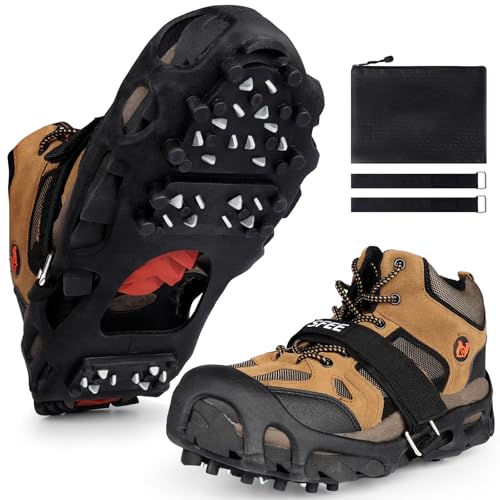
Pros
- 28 multi-directional spikes for 360 degree grip
- 2.2 mm cold resistant silicone with 304 stainless steel studs
- Rated to stay elastic in temperatures as low as -60°F
- Adjustable straps help secure the fit on shoes or boots
- Folds into the included portable storage bag
Cons
- Listed product size is Large only
- Spikes may not suit surfaces beyond snow, ice, or wet terrain
- Requires strap adjustment for a secure fit

Pros
- 28 stainless steel spikes for traction on snow and ice
- Stretchable silicone rubber fits many shoes and boots
- Designed for use down to -45 degrees C
- Lightweight design can fit in pockets
- Backed by a 1-year warranty
Cons
- Large size only in the provided data
- Blue color only in the provided data
- No top review details provided
What Matters in Pairs of Ice Cleats for Winter Storms
Winter storm gear needs to work when sidewalks are glazed, driveways are half shoveled and the power may already be out. For this category, traction and cold-weather fit matter more than gadget-style features.
- Power sources and run time: Pairs of ice cleats do not use batteries, crank handles, solar panels or USB charging, so run time is not a meaningful comparison. That is a benefit during outages because there is no cell, cord or charger to manage. Among our picks, the relevant endurance numbers are material ratings such as minus 45 degrees C and minus 60 degrees F, which speak to cold-weather flexibility rather than electrical life.
- Alerts or traction design: NOAA Weather Radio All Hazards broadcasts official warnings, watches and forecasts 24 hours a day, 7 days a week, but footwear traction comes from the hardware under your boots. Among our picks, spike counts range from 11 to 28 per foot, with some designs using multi-directional studs and one using a chain system. More contact points can help spread grip across the forefoot and heel when ice is uneven.
- Build and water resistance: The Cimkiz Ice Cleats use 19 stainless steel spikes per foot and a firm chain system, which is the most direct reason they lead the list. Their TPE body is described as 5 mm thicker than ordinary rubber and rated to minus 45 degrees C. That combination is useful for winter storm prep because metal traction handles slick surfaces while the flexible frame has to stretch over boots in freezing weather.
- Size and weight: The Aliglow Ice Cleats show why sizing should be checked before any storm is in the forecast. The listed large size is 5.8 by 9 inches and is intended for women’s sizes 10 to 13 or men’s sizes 8 to 11. Across the main list, single-cleat weights include about 180 g and about 300 g, so packability varies noticeably.
- Ease of use with cold hands or on boots: The G2 Go2Gether Ice Cleats use 28 stainless steel spikes and a pull-on front-and-heel strap design. The listing also gives a 1-year warranty, which is a practical reassurance for gear that may sit in a mudroom until the first hard freeze. For cold hands, the key is a design that stretches over boots quickly without needing small buckles.
Disposable hand warmers and boot inserts were excluded because single-use comfort gear does not replace traction. Ham radio licensing was outside the scope of footwear, and sleds pulled behind vehicles while carrying people were left out because they are unsafe. The remaining comparisons focus on reusable traction for walking on ice and packed snow.
Other Pairs of Ice Cleats Worth Considering
These are other pairs of ice cleats we looked at but did not put on our main list.
If tungsten is your priority, Global Glove Ice Cleats take a different approach from the stainless steel builds in the main list. The tradeoff is that the main picks give clearer storm-ready comparison points, including spike counts up to 28 per foot and cold-flex ratings down to minus 60 degrees F.
For shoppers comparing a different size and feature mix, Sportneer Ice Cleats stay in familiar territory with a stainless steel build. They are worth a look if their fit chart better matches your boots, but our top pick has 19 spikes per foot and a chain system, while our alternative pick highlights silicone rated to minus 49 degrees F.
Prefer a rubber build for everyday walks rather than a more aggressive storm setup? Yaktrax Ice Cleats are a capable unit, but they do not match this keyword’s need as closely as the main list because icy storm cleanup often rewards more explicit spike counts and low-temperature ratings. The main list includes options with 11 to 28 traction points per foot.
Another Yaktrax Product uses a steel build, so it sits closer to the main field on materials. Even so, it was not picked because the main list provides stronger side-by-side numbers for boot use, including weights around 180 g or 300 g per cleat and cold ratings such as minus 45 degrees C.
FAQs
How many spikes should ice cleats have for winter storm cleanup?
Among our picks, traction counts run from 11 to 28 points per foot. For slick driveways and packed snow, a design with more contact points can give broader coverage under the forefoot and heel.
Do ice cleats need power during an outage?
No. This product type does not rely on batteries, solar charging, cranking or USB power. That makes it useful alongside outage gear because it remains ready as long as the material stays flexible in cold conditions.
What cold ratings matter for ice cleats?
Our picks include materials rated to minus 45 degrees C and minus 60 degrees F. Those numbers matter because the frame has to stretch over boots without cracking when temperatures drop.
Are ice cleats enough for winter storm safety?
They help with footing, but winter safety is broader than traction. The CDC recommends keeping space heaters at least 3 feet from drapes, furniture or bedding, and using a battery-operated carbon monoxide detector.
Sources
- NOAA Weather Radio All Hazards, National Weather Service. NWS page on the NOAA Weather Radio network.
- Safety Guidelines: During & After a Winter Storm, Centers for Disease Control and Prevention. Winter heating safety for space heaters, kerosene heaters and carbon monoxide.




Write Your Review
No reviews yet. Be the first to share your experience!