

Prime Big Deal Days: October 6 - 7, 2026
Members only: two days of exclusive deals across Amazon. A 30-day free trial unlocks the same prices and fast free delivery.
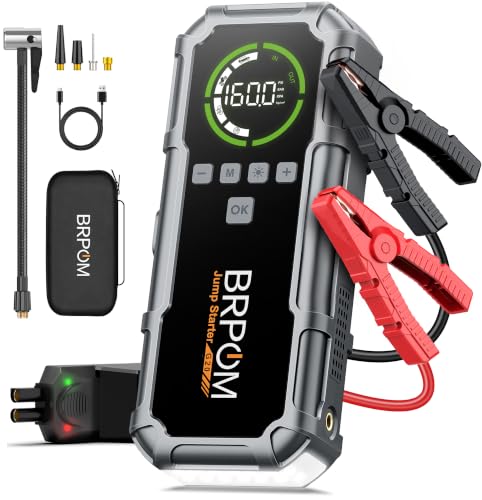
A dead battery in a grocery store parking lot feels especially rude when the ice cream is already soft. High amp jump starters solve that problem by carrying enough starting current in the vehicle, without waiting for another car. After comparing 6 models, the Clore JNC325 is our top pick because it has a 2,000-amp peak, covers engines up to 8L gas and 6L diesel, and weighs 2.8 pounds. The BRPOM 8000A Jump Starter with Air Compressor is the alternative pick for its 8,000-amp peak and 160 PSI inflator.

Pros
- 2000A rating for 12V batteries
- Rated for up to 8.0L gas and 6.0L diesel engines
- 24 inch #6AWG cables with full size clamps
- Dual USB outlets, LED flashlight, and 12V power outlet
- Override function can start batteries down to 0.0V
Cons
- No air compressor listed
- Override function requires proper connection before use
- USB-C cable, charger, and carrying case add items to carry
Pros
- 8000A peak current rating
- Rated for all gas and up to 12L diesel engines
- 160 PSI air compressor with 5 preset modes
- 600 lumen LED light with steady, strobe and SOS modes
- 10 automatic protection mechanisms
Cons
- Force start temporarily disables the 10 protections
- No starts per charge or battery capacity listed
- 3.3 lb unit may take more glove box space

Pros
- 8000A peak current for all gas and up to 14.0L diesel engines
- 160 PSI inflator with 5 preset modes and auto shut-off
- 165 L/min blower for inflating and deflating large inflatables
- 59.2Wh battery pack with dual USB ports and fast charging
- 10+ clamp protections and -4°F to 140°F operating range
Cons
- Needs charging every 4 to 5 months if stored unused
- Wall charger is not listed in the included accessories
- All-in-one jump starters can be bulkier than basic jump packs

Pros
- 8000A peak current with FORCE START function
- Starts all gas and up to 12.0L diesel engines
- 26800mAh battery with 18W USB fast charging
- 800 lumen light with steady, strobe and SOS modes
- 10 safety protections and V-0 flame-retardant materials
Cons
- Must connect cable to unit before attaching clamps
- No air compressor feature listed
- Needs periodic charging like any battery jump starter


Pros
- 8000A current for 12V vehicles
- Rated for all gas and diesel engines
- At least 80 starts per full charge
- Works from -4 to 140°F
- Two USB-A ports, Type-C input, and 12V DC output
Cons
- No built-in air compressor listed
- Type-C port is input only
- Needs periodic charging like any battery jump starter
What Matters in High Amp Jump Starters
A jump starter has to do one job under pressure: deliver enough current quickly and safely when a vehicle will not crank. For this category, the most useful comparisons are engine coverage, storage burden, charge endurance, cold weather range, clamp protection and USB output.
- Engine coverage: The first cutoff is whether the pack is rated for the engine you actually drive. The Clore JNC325 is rated for a 2,000-amp peak and engines up to 8L gas and 6L diesel, which covers many cars, SUVs, marine batteries, agricultural equipment and fleet vehicles. It also uses a lead-acid battery, so it is a different design from the lithium packs in several other picks.
- Size and weight for storage: A booster that stays in the garage will not help when the battery dies at work. The ANFLAG 8000A Jump Starter with Air Compressor combines an 8,000-amp peak with all gas coverage and diesel coverage up to 14L. It also lists a 160 PSI inflator and a 2.84-pound weight, so it is still reasonable to keep in a cargo bin or under a seat.
- Starts per charge and holding a charge: Among our picks, battery figures range from a 59.2Wh pack to a 26,800 mAh pack, and one model lists at least 80 starts per full charge. The TREKURE 8000A Jump Starter (26,800 mAh) pairs an 8,000-amp peak with a 26,800 mAh battery and covers diesel engines up to 12L. Its stated standby period is up to 24 months, which matters if the pack will live in a vehicle between emergencies.
- Cold-weather operating range: Cold starts are where extra current matters most. According to AAA Oregon/Idaho, a car battery loses about 35 percent of its strength at 32°F and about 60 percent at 0°F. Among our picks, several are rated from -4°F to 140°F, a useful range for drivers who park outside in winter or summer.
- Safety protections in the clamps: High current requires clamp protections that reduce user error. Among our picks, several list 10 safety protections, including safeguards against reverse polarity, overcurrent and short circuit conditions. The U.S. Consumer Product Safety Commission has reported a recall in which about 10,400 lithium jump starter units were recalled after 45 overheating and melting reports, including 18 reports of fire, so protection circuitry is not a footnote.
- USB power bank output: A jump starter should not replace a dedicated home power station, but USB output is useful during a roadside wait. Among our picks, USB setups include dual USB outputs, three USB-A ports and an 18W USB port. One model also includes a 12V outlet, while another lists a 12-16.8V DC output for compatible accessories.
We excluded jumper cables because they need a second running vehicle, trickle chargers and maintainers because they take hours rather than seconds, and 24V semi truck boosters because they are built for commercial trucks and are much heavier than most drivers need.
Other Jump Starters Worth Considering
These are other jump starters we looked at but did not put on our main list.
If you want more peak current than our top pick on paper, the OXILAM 6000A Jump Starter is rated at 6,000 amps and covers all gas engines plus diesel engines up to 12L. It also claims up to 60 starts per charge, which is useful for a household with more than one vehicle.
For drivers who prefer a traditional lead-acid booster, the Clore Jump-N-Carry JNC660 has a 1,700-amp peak and uses a lead-acid battery. The tradeoff is weight: at 18 pounds, it is much heavier than our 2.8-pound top pick, so it makes more sense in a garage or service vehicle than in a small trunk.
Weight is the strongest argument for the Povasee 5000A Jump Starter, which lists a 5,000-amp peak and a 1.1-pound body. It is rated for engines up to 10L gas and 8L diesel, and its 74Wh battery stays below the FAA’s 100Wh lithium ion limit for a single battery.
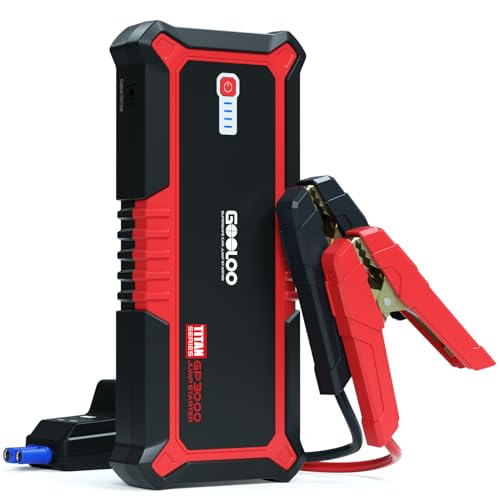
Between compact lithium packs and heavier shop-style boosters, the GOOLOO GP4000 lands at 4,000 amps and 3.94 pounds. It covers all gas engines and diesel engines up to 10L, while its claimed 60 starts per charge matches one of the stronger endurance figures among these other options.
FAQs
How many amps should a high amp jump starter have?
Our picks range from 1,200 peak amps to 8,000 peak amps. Engine coverage matters more than the biggest number, so compare the stated gas and diesel liter ratings before buying.
Do high amp jump starters help in cold weather?
Yes, but the pack still needs to be charged and rated for the temperature. AAA Oregon/Idaho says an engine may need up to twice the normal current to start in the cold, while a battery can lose about 60 percent of its power at 0°F.
Are lithium jump starters safe to keep in a vehicle?
Many are designed for vehicle storage, but clamp protections and temperature ratings matter. The CPSC recall example involving about 10,400 units shows why overheating protection, reverse-polarity protection and short-circuit protection are worth checking.
Can a high amp jump starter be used as a power bank?
Several picks include USB output, with setups ranging from dual USB ports to three USB-A ports. If you plan to fly with one, the FAA says lithium ion batteries are limited to 100 watt hours per battery unless a larger spare battery is approved within the 101 to 160Wh range.
Sources
- Winter Battery Preparation, AAA Oregon/Idaho. How cold weather drains car batteries and when to replace them.
- Whistler Recalls Jump&Go Portable Jumpstart and Power Supply Units, U.S. Consumer Product Safety Commission. Recall of a lithium jump starter that could overheat.
- PackSafe: Lithium Batteries, Federal Aviation Administration. Airline rules for carrying lithium batteries and power banks.




Write Your Review
No reviews yet. Be the first to share your experience!