

Free Delivery. Exclusive Deals. All Prime.
Prime members save on shipping and get first access to deals, plus Prime Video included. 30 days free.
When the driveway is crunchy and the starter sounds like it is negotiating, engine block heaters can make cold starts less punishing. They add targeted warmth before ignition, helping oil or coolant move sooner. After comparing 6 models, the Orceed Engine Block Heater stands out for 400 watts, a built-in thermostat and magnetic closure. The Geluoxi Engine Block Heater is the alternative pick if 200 watts and magnetic closure fit the job.
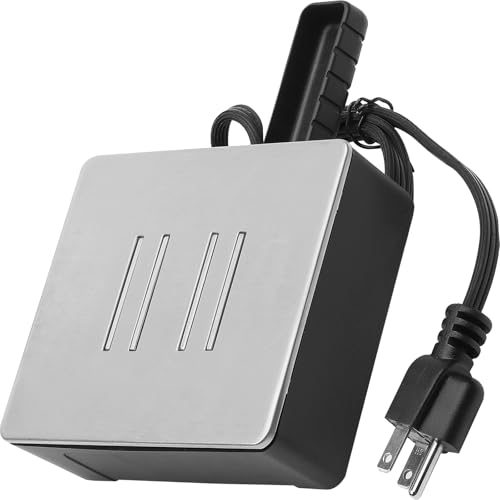
Pros
- 400W magnetic engine block heater
- Built-in thermostat shuts off at 266°F
- Restarts heating when temperature drops to 140°F
- Magnetic base attaches without mechanical installation
- For tractors, snowmobiles, generators, and more
Cons
- Requires a metal surface for magnetic attachment
- Listed dimensions are about 8.27 x 5.51 x 2.76 inches
- No user review details provided in the product data

Pros
- 200 watt, 120 volt, 60 Hz engine heater
- Magnetic design allows attachment without mechanical install
- Made for engine block, oil pan, battery holder, and more
- Fits cars, trucks, tractors, snow blowers, and snowmobiles
Cons
- No temperature range listed
- Requires a suitable magnetic attachment point
- No warranty details provided
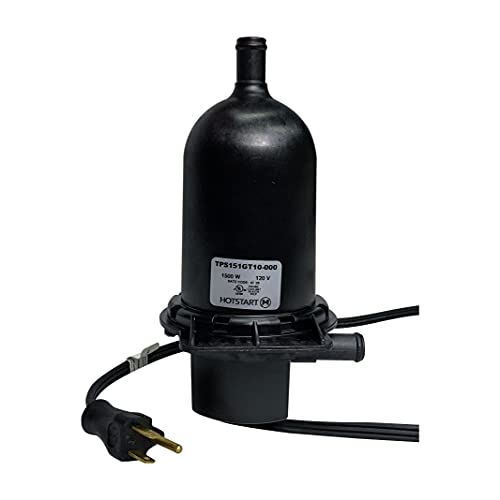
Pros
- Pre-heats diesel and gas engines
- No pump needed; uses thermosiphon principle
- For 350 to 500 CID engines
- 120V, 1.5 kW, 12.5 amps
- On at 100°F and off at 120°F
Cons
- Specified for 350 to 500 CID engines only
- Designed for coolant or water heating fluid
- Automotive use, not home winterizing

Pros
- 1500W output at 120V for coolant preheating
- Adjustable 100 to 120°F temperature range
- Compatible with diesel and gas engines
- Fits generators, tractors, trucks, buses, boats and marine use
- Replaces TPS151GT8-000, TPS151GT12-000 and more
Cons
- Standard 4 ft cord, not the 6 ft cord some Generac parts may have
- Requires careful comparison with pictures before ordering
- Compatibility depends on matching the listed part numbers

Pros
- 200 Watt magnetic heater
- No mechanical installation required
- Thermostatically controlled
- Can warm oil pan, engine block, battery holder, or intake
Cons
- Vehicle-specific fit requires compatibility checking
- Cable length and temperature range are not listed

Pros
- Includes 2 heater pads, each 4 x 5 inches
- 120V, 150W pad for metal oil pans and similar surfaces
- Thermostat shuts off at 194°F and restarts below 122°F
- 68-inch UL-certified power cord
- Self-adhesive backing for simple metal-surface install
Cons
- For metal surfaces only, not plastic parts
- High-temperature edge sealant is recommended but not included
- Surface must be clean and oil-free before installation
How We Chose Engine Block Heaters for Winter Protection
Cold-weather starting is not just about whether an engine turns over. The better fit depends on where the heat goes, how much power is available and whether the heater can control temperature without extra fuss.
- Heat output and warm-up time: The main group spans 150 watts to 1500 watts, which matters because a small oil-pan pad and a coolant preheater do different jobs. The Orceed Engine Block Heater sits at 400 watts, giving it twice the wattage of the 200-watt magnetic models in the list. For larger coolant systems, two picks step up to 1500 watts, while the lowest-output pad option is rated at 150 watts.
- Controls, thermostat and timer: A thermostat is useful because it limits heat cycling rather than leaving the user to guess. The group includes thermostat ranges as low as 100 to 120 degrees Fahrenheit on coolant-style units and shutoff behavior as high as 266 degrees Fahrenheit on one magnetic model. None of the listed products includes a timer, so anyone who wants scheduled operation should plan around a properly rated external solution.
- Plug-in or hardwired installation: Installation styles split between magnetic attachment, self-adhesive pad mounting and coolant-plumbed preheaters. The Kenuos Engine Block Heater is a 150-watt silicone pad with self-adhesive backing, so it is aimed at clean metal surfaces rather than coolant lines. Its 68-inch power cord also matters for routing to a household outlet without modifying the vehicle.
- Size and fit: Fit is more than vehicle make and model because these heaters warm different parts. Among the picks, one pad measures 4 by 5 inches, while the coolant units call out engines around 5.7 to 8.2 liters. Magnetic units depend on having a clean ferrous-metal contact point, and coolant units depend on matching the replacement part number and hose routing.
- Safety certification: Electrical heat around vehicles deserves caution, especially when cords, oil residue and wet winter ground are in the same area. One pad pick specifies a UL-certified 68-inch power cord, while the other listings do not all state the same certification level. The U.S. Consumer Product Safety Commission has warned that faulty electric heat tapes were associated with about 1,500 fires a year, so grounded outlets and cord inspection are not optional details.
- Warranty: Warranty information is uneven across the group, which makes stated coverage worth noting when it appears. One coolant-style option states a 1-year warranty, while another magnetic option promises a response within 24 hours for installation or use issues. The Kat’S Engine Block Heater brings a built-in thermostat and magnetic closure, but the available product information does not state a warranty term.
We excluded spray foam and caulk because those solve fixed gaps, not engine preheating. Bidet seats and space heaters are also outside this job, since one belongs in bathroom guides and the other heats rooms rather than oil pans, coolant or engine blocks.
Other Engine Block Heaters Worth Considering
These are other engine block heaters we looked at but did not put on our main list.
If a low-profile pad is more appealing than a magnetic heater, Pamase Engine Block Heater combines 150 watts with self-adhesive silicone construction. The trade-off is output: 150 watts is well below the 400 watts of our top pick, so it is better suited to localized warming than higher-output magnetic heating.
For shoppers who want a certified 400-watt option, Zerostart Engine Block Heater is notable because it is CSA listed. It uses a different size and design than our top pick, so the main question is whether that physical format suits the contact area or mounting point available on the vehicle.
Gearcess Engine Block Heater lines up more closely with our alternative pick because it uses 200 watts, a built-in thermostat and magnetic closure. Compared with our top pick, the 200-watt output is half as much, which may matter in deeper cold or on larger metal masses.
And if simple magnetic attachment is the main reason for shopping, Vbestlife Engine Block Heater keeps the formula straightforward with 200 watts and magnetic closure. It does not match the 400-watt rating of our top pick, so it is a closer match for lighter-duty warming needs.
FAQs
How much wattage do engine block heaters need for winter starts?
Our picks range from 150 watts to 1500 watts, and that spread reflects different heater types. A 150-watt pad targets a small metal surface, while a 1500-watt coolant preheater is built for much larger fluid volume.
Is a thermostat important on an engine block heater?
A thermostat helps manage heat cycling instead of relying only on plug-in time. Among our picks, stated thermostat behavior ranges from 100 to 120 degrees Fahrenheit on coolant preheaters to automatic shutoff at 266 degrees Fahrenheit on one magnetic heater.
Should I choose magnetic, adhesive or coolant-style installation?
Magnetic heaters are the simplest when there is a suitable metal surface, while adhesive pads need a clean metal area and careful placement. Coolant-style units require a match to the engine and plumbing, with one option specified for 5.7 to 8.2-liter engines.
What safety habits matter with plug-in engine heat?
Use a grounded outlet and inspect cords for damage before relying on overnight heat. The CPSC has linked faulty electric heat tapes with about 1,500 fires a year, which is a useful reminder to avoid damaged cords, poor insulation practices and uncertified electrical heating products.
Sources
- Consumer Guide to Air Sealing the Home, U.S. Department of Energy. DOE guide to finding and sealing air leaks at home.
- CPSC Re-Issues Heat Tape Guidelines In Wake Of Zoo Fire, U.S. Consumer Product Safety Commission. CPSC safety guidelines for electric pipe heat tapes.




Write Your Review
No reviews yet. Be the first to share your experience!