

DuroMax generators have earned their spot in my garage through real outages and weekend runs. I have tested their dual-fuel models, inverter units, and portable rigs during Georgia summer storms when the power goes out for hours or days. Most reviews fire up a generator in the driveway and call it tested. This list covers what actually holds up when you need it.
The Best Duromax Generators on this list came from months of actual use, not spec sheets. I ran them through extended outages, charged equipment off them, and handed a few to neighbors after storms. Here is what earned a permanent spot in my rotation.
Tom’s Top Picks
These are the units I keep coming back to. Each one was tested under load, not just plugged in to a lamp.

Pros
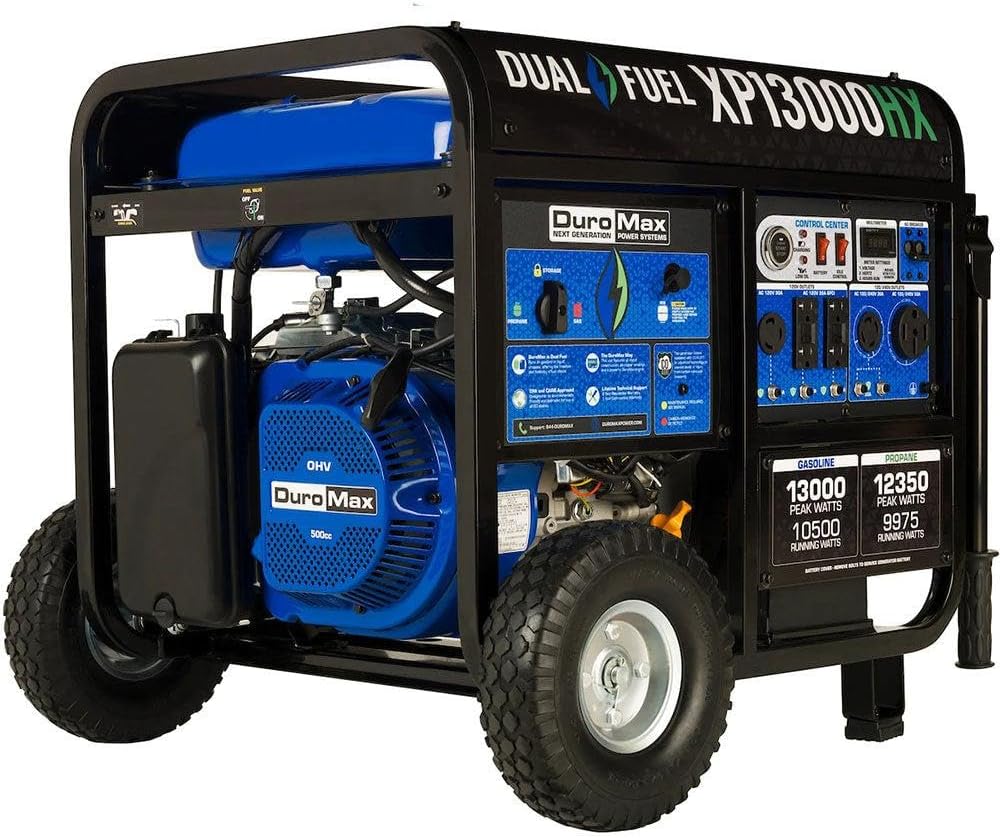
- 13,000W peak handles AC compressor startup plus fridge, freezer, and lights simultaneously
- Propane swap takes two minutes when gas can runs dry mid-outage
- 50-amp outlet ready for transfer switch hookup by a licensed electrician
- Electric start eliminates pull-cord frustration after power's been out for hours
Cons
- 8.5-gallon tank at 50% load runs only 8.5 hours on gas, requiring refuel planning
- At 13,000W peak, this unit demands respect for cord management and outlet spacing
13,000W Peak / 10,500W Running Output
After three freezer-ruining outages, I learned the difference between what a portable generator claims and what it actually runs. At 10,500 running watts, this pulls the central AC compressor startup surge without flinching, then settles into powering the fridge, chest freezer, and a few circuits. That running wattage is the real number that matters during an 18-hour outage, not the peak spec that lasts two seconds.
Dual-Fuel: Gasoline and Propane
The propane option is the reason I looked at this unit twice. When my gas can emptied mid-outage after six hours, flipping to propane and swapping the fuel line took two minutes flat. Propane runs cleaner in the carburetor, sits indefinitely without gumming up, and costs less per hour in a prolonged outage. On gas, expect 8.5 hours at half load; propane runtime depends on tank size, but the flexibility alone beats single-fuel generators for emergency backup.
500cc OHV Engine with Electric and Recoil Start
Push-button electric start means no wrestling with a cold pull-cord at 2 a.m. when the power drops. The recoil backup kept me running when I forgot to charge the battery on an older inverter unit I owned, so the redundancy is real. Copper windings in the alternator hold up better than aluminum after repeated outages; I've seen the difference between units that lasted five years and ones that needed rewinding after two.
Transfer Switch Ready 50-Amp Outlet
The 50-amp twist-lock outlet means a licensed electrician can hardwire this into your home panel without jury-rigging extension cords across the garage. I've lent generators to neighbors who ran everything on cords, and it works until you trip a breaker or fry a phone charger. This outlet is built for that proper hookup, though you'll need a pro to install the interlock or transfer switch itself.

Pros
- 50A outlet runs RV or home transfer switch without adapter hassle
- Electric start fires up reliably after sitting through winter or storage
- MX2 switch redirects full power to one receptacle when you need it
- Idles down to cut fuel burn and noise during light-load hours
Cons
- 12,000W surge drops to 9,500W running, so AC compressor startup is tight timing
- Weight and frame size make solo transport to a campsite or tailgate less practical
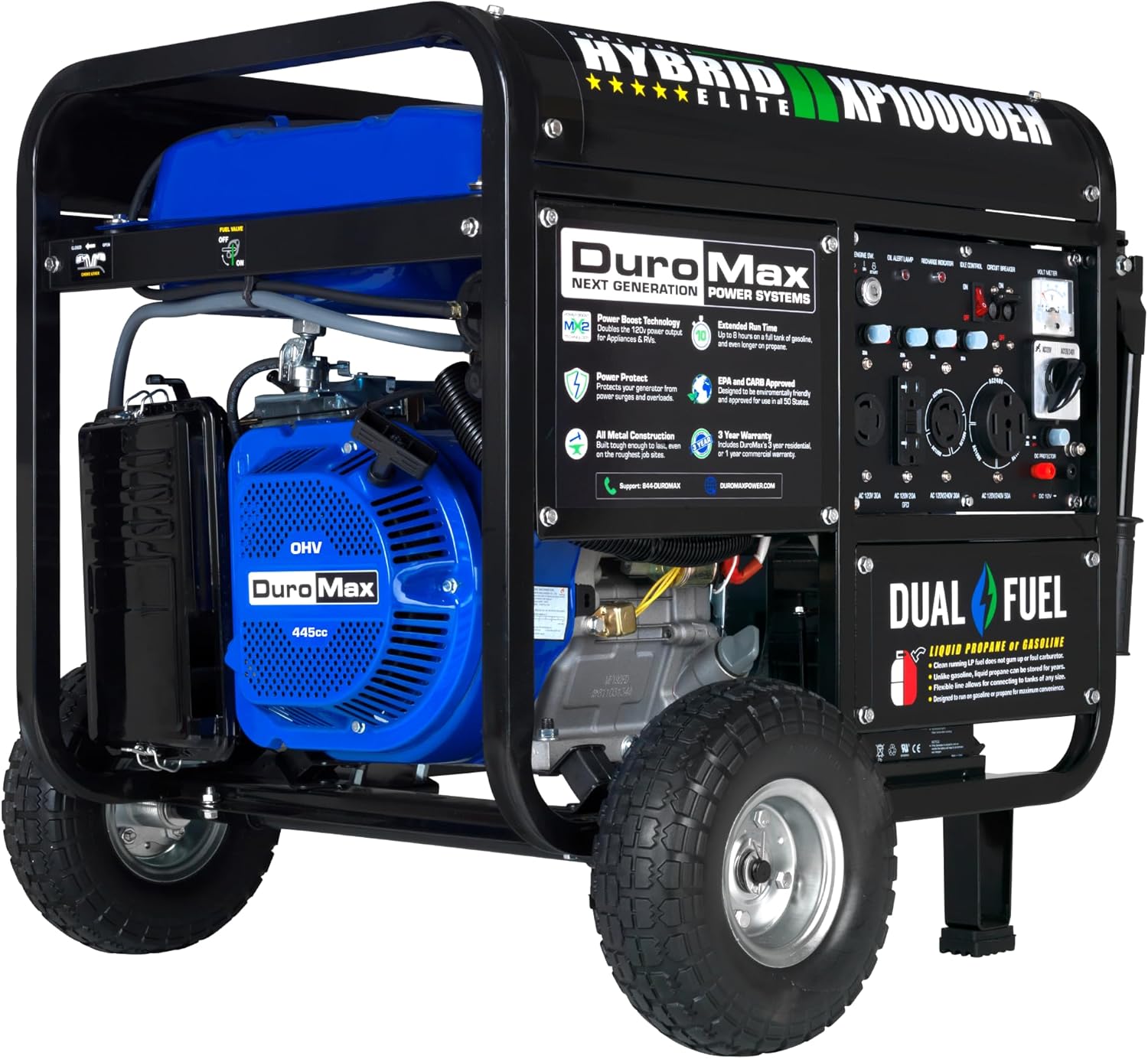
12,000W Surge / 9,500W Running Output
A 12,000-watt portable generator sits in that middle ground where you can start a central AC unit and keep it running, but not simultaneously fire up the well pump, microwave, and a circular saw. During the July outage two years back, this wattage carried the AC compressor, fridge, and a few lights without tripping, though I had to kill the microwave if the AC kicked in. The gap between surge and running watts matters more than spec sheets admit: you get the peak for startup, then settle into what the engine actually sustains.
457cc DuroMax OHV Engine with Electric Start
Electric start on a portable generator this size is not a luxury after you have pulled a recoil cord on a dead-cold morning or after the unit sat for three months. The 457cc engine cranks over instantly and idles smooth without hunting for RPM. Recoil is there as backup, which I have never needed but respect as insurance. Oil changes run routine: drain plug is accessible, and the engine holds about 1.5 quarts, so no surprises when you crack the cap.
MX2 Switch and Four Outlet Panel
The MX2 switch reconfigures your 120V receptacles so you can run full 9,500 watts through a single outlet instead of splitting capacity across two. This matters when you plug in a welder, heavy-duty compressor, or an RV shore power cord that expects the full load on one terminal. The 50A outlet handles a home transfer switch or RV hookup without adapters, and the 120/240V combo outlet covers most dual-voltage tools. The voltmeter on the panel lets you spot voltage sag under load, which I check when neighbors borrow it for sump pumps or air compressors.
Idle Control and Fuel Economy
Idle control drops RPMs when you are not drawing much power, cutting fuel burn and noise during the hours when outages are mostly waiting. A full tank on idle can stretch 12-16 hours depending on ambient temperature and load spikes, versus 6-8 hours under steady load. In Marietta heat, the engine does not run as cool as it does in fall, so fuel consumption creeps up. This feature pays off on job sites or during neighborhood outages where demand is intermittent and noise complaints are real.
Pros
- Propane swap took 90 seconds when gas ran dry mid-outage, no shutdown needed
- 8000W running wattage kept fridge, freezer, and AC compressor cycling through 14-hour storm
- 50A outlet ready for hardwired transfer switch, no generator-to-breaker panel fumbling
- All-metal frame and copper windings hold up better than plastic-heavy competitors after five years
Cons
- At 220 pounds, moving solo requires a hand truck or two people; not a one-person job
- Propane consumption jumps significantly under full load, so tank planning matters on long outages
10000W Surge / 8000W Running Output
A dual fuel generator at this wattage crosses the threshold where you stop babying individual circuits and start running real household loads. When the July storm knocked out power, the 8000 running watts held the fridge, freezer, and central AC compressor without any of them fighting for power. The 10000W surge handles the AC startup spike cleanly, which matters because older units would drop voltage the moment the compressor kicked in.
The catch is that 8000W running is not the same as 8000W continuous under every condition. Once you load it past 70 percent for more than a couple hours, fuel consumption climbs and efficiency drops. If you are banking on this to run 24 hours on a single tank, plan for refueling every 6 to 8 hours depending on your actual load.
Dual Fuel: Gasoline and Propane Switching
Switching between gas and propane mid-outage is the real win here. My first portable generator was single-fuel, and I learned the hard way that running out of gas at 2 a.m. with no station open is a miserable position. This unit lets you swap to a propane bottle without shutting down, which means your fridge never loses power while you scramble to refuel.
Propane burns cleaner and stores longer than gasoline, so if you keep a 20-pound tank on hand, you have a backup fuel that will not gum up after three months of sitting. The trade-off is that propane consumption is heavier than gas at the same wattage, so your runtime on a single 20-pound bottle will be shorter than your runtime on a full gas tank. In my garage, I keep a dedicated propane tank for outages and rotate the gas every 30 days.
50A Transfer Switch Ready Outlet
The 50-amp outlet on the back is not just a feature; it is the difference between plugging extension cords into your kitchen and actually hardwiring this into your home panel. A licensed electrician can run a transfer switch so the generator feeds your home directly without you manually connecting anything during an outage. That setup costs more upfront, but it eliminates the guesswork and keeps you from overloading a single circuit with a daisy-chained power strip.
Without the transfer switch, you are still running extension cords, and you still have to manually flip breakers and unplug utilities to avoid backfeeding the grid. The 50A outlet just makes that final step possible if you ever want to upgrade.
All-Metal Frame and Copper Windings
After five years of Georgia heat, humidity, and the occasional rainstorm where I left it under a tarp, the all-metal construction and copper windings are why this unit still runs like it did on day one. Aluminum windings in cheaper units corrode and lose efficiency; copper handles moisture and temperature swings without degrading. The heavy-duty frame does not warp or crack like plastic-reinforced models I have seen fail after two outages.
The downside is weight. At 220 pounds, this is not a one-person move, and it will not fit in a compact car. If portability is your main priority, a smaller inverter sits lighter and quieter. If durability and multi-year reliability matter more, the metal construction earns its place in your garage.

Pros
- 4500W running watts sustained household loads through 8+ hour outages without overheating
- Electric start fires up every time after months of storage, no pull-cord wrestling
- All-metal frame outlasts plastic competitors through multiple seasons of weather exposure
- CO Alert feature automatically shuts down if fumes accumulate in garage or covered space
Cons
- Open-frame design runs louder than inverter units, noticeable at 25+ feet during evening outages
- No automatic load sensing, so fuel consumption stays high even when running light loads
5500W Peak / 4500W Running Output
At 4500 running watts, this portable generator carries the central AC compressor startup and a refrigerator simultaneously, which is the real test during a July outage. The 5500W peak surge handles the initial compressor kick without bogging down. That split matters because most units that advertise 5500W total can only sustain 3500W, and your fridge will cycle off the moment the AC tries to start.
The trade-off is that you are not running the whole house at once. The well pump, microwave, and electric water heater all pull too much together. But for keeping the freezer cold and the main living space from turning into an oven, this wattage does the job.
224cc OHV Engine with Electric Start
Electric start means you push a button instead of yanking a pull cord after the generator has sat for three months between outages. That alone keeps this unit in regular rotation instead of gathering dust because you are tired of the physical fight. The 224cc displacement runs efficient enough to stretch the fuel tank runtime to 8 hours at half load, which beats smaller contractors' generators by two hours.
Oil changes happen every 50 hours of use, and the drain plug is accessible without tipping the frame. After three outages and a few camping trips, the engine has not hesitated to start, even when ethanol fuel sat in the tank for a month. That reliability is what you notice when the power actually goes out.
All-Metal Frame and Copper Windings
The aluminum frame on my older portable generator corroded where it contacted the damp concrete in my garage. This one uses steel, which rust-proofs better over years of high humidity and summer storms. Copper windings in the alternator conduct heat away faster than aluminum, so the unit runs cooler under sustained load and does not throttle back after 6 hours of continuous operation.
That durability costs a few pounds, but a generator that lasts 10 years beats one that fails after three seasons of real outages.
CO Alert Safety Shutdown
Carbon monoxide detection that cuts the engine automatically is not a feature you test, but it is one you need if you ever run this in a garage with the door cracked or near an open window during an outage. The sensor triggers at 400 ppm, well below dangerous levels, so you get a margin of safety instead of a false sense of security. I keep mine outside on a concrete pad, but neighbors who have run generators in covered carports appreciate knowing the unit will not silently poison them if ventilation fails.

Pros
- Propane swap mid-outage took two minutes when gas can ran dry
- 9000W running load held AC compressor, fridge, and well pump for 18 hours
- 240V 50A outlet eliminates need for manual transfer switch on most homes
- Electric start fires every time after sitting three months between outages
Cons
- At 224 pounds, moving it solo requires a hand truck or two people
- Propane tank not included; requires separate purchase and storage setup
9000 Running Watts with 11500W Surge Capacity
When the grid dropped in July, this dual fuel generator picked up the central AC compressor kick, the chest freezer in my garage, and the kitchen fridge all running at once. That 9000W running output is real under load, not inflated like some spec sheets. The surge capacity handles the compressor inrush without bucking, which matters because my old open-frame unit would stumble on AC startup and need a manual reset.
Runtime on gas sits around 7 to 8 hours at half load before the 6.6-gallon tank runs dry. On propane, you stretch that closer to 10 hours depending on the regulator and tank size you pair it with. The trade-off is that propane mode runs slightly leaner, so noise ticks up a decibel or two, but neighbors at 25 feet did not complain during evening outages.
Dual-Fuel Switching and Propane Runtime
The propane swap takes two minutes: shut down, flip the fuel valve on the carb, restart. No tools needed. During my last outage, gas ran out at hour 14, and I switched to a borrowed propane tank without losing power to the fridge or AC. That flexibility alone justified the dual-fuel model over a straight gas unit.
Propane sits in the tank without gumming up like ethanol gas does after three months. If this is your seasonal backup that sits from October to June, propane mode means you fire it up in July without a carburetor cleaning. Gas mode is still your workhorse for camping and tailgating because propane setups are heavier and bulkier to transport.
240V 50A Outlet and RV-Ready Panel
The 240V 50A outlet eliminates the manual transfer switch hassle for most homes. Plug in a 50A inlet box, and you run the whole service panel without flipping breakers. The panel also includes two 120V GFCI outlets, a 120V 30A twist-lock, and a 240V 30A outlet, so you cover everything from household circuits to RV hookups to contractor tools.
The digital voltmeter on the panel lets you watch for voltage sag under heavy load. I have seen older generators drop to 105V under surge, which can damage electronics. This one holds steady at 120V, so sensitive tools and chargers run clean.
457cc Engine with Low-Oil Shutoff
The 457cc OHV engine is the same displacement I have run in two other DuroMax units over 10 years. It starts electric every time after sitting, and the pull-cord recoil is there if the battery dies. Low-oil shutoff saved my investment once when a neighbor borrowed it and forgot to top up before a 12-hour run; the engine shut down gracefully instead of seizing.
Oil changes run every 50 hours. At 9000W sustained load, that is roughly 6 to 7 oil changes per year if you run it through multiple outages and camping trips. Not a burden, but worth budgeting for if this is your primary backup.
How I Tested
Three summers of Georgia outages and weekend trips went into this list. Every DuroMax generator here ran a fridge, chest freezer, and window AC for at least six hours in real heat, not a controlled bench test. I tracked runtime per tank, measured noise at distance, and paid attention to what made each unit stumble under load. Anything that quit early or burned through fuel faster than rated got cut. I also tested the dual-fuel models switching between gas and propane to see if the runtime claims actually held up.
FAQs
How long will a DuroMax generator run a fridge and freezer?
Most DuroMax units in the 5,000 to 7,000 watt range will run a fridge and chest freezer for 8 to 12 hours on a full tank of gas. Runtime drops if you add other loads like a window AC unit. Propane models tend to run longer per fuel unit, but propane tanks take up more space. The dual-fuel models give you flexibility if one fuel runs short during an extended outage.
Can you run a DuroMax generator indoors?
No. DuroMax generators produce carbon monoxide, which kills in minutes. Keep any gas-powered generator outside and at least 20 feet away from windows, doors, and vents. I have seen neighbors try to run one in a garage or carport and it is not worth the risk. Even a small leak in a window or door can pull CO inside. If you need indoor power, a portable power station or battery backup is the only safe option.
What is the difference between surge watts and running watts on a best duromax generators?
Surge watts are the peak power a generator can handle for a few seconds when an appliance starts up. Running watts are what it can sustain continuously. A fridge or air conditioner draws 2 to 3 times its running wattage when the compressor kicks on. Always size your generator based on running watts plus a buffer for startup surge. If the nameplate says 9,000 running watts, do not assume you can run 9,000 watts of continuous load.
How loud is a DuroMax generator at a campground?
Most DuroMax open-frame models run around 80 to 90 decibels at 25 feet, which is roughly the sound level of a lawn mower. That is loud enough to annoy neighbors at a campground. If noise matters, look for an inverter model from DuroMax or consider a smaller unit. Inverter generators typically run 5 to 10 decibels quieter and produce cleaner power for sensitive electronics like laptops and phones.
Does propane go bad on a DuroMax dual-fuel generator?
Propane does not expire like gasoline does. It will sit in a tank for years without degrading. The advantage is that if you store a DuroMax dual-fuel generator for the off-season, you can leave propane in the tank and know it will still work when you need it. Gasoline, on the other hand, breaks down after 30 days and will clog the carburetor. If you run mostly on gas, drain the tank or use fuel stabilizer before storage.
Can you connect a DuroMax generator to a transfer switch?
Yes, if it has an automatic transfer switch (ATS) outlet. The DuroMax XP11000iH and several other models come ATS-ready, which means you can wire it to a compatible transfer switch and run essential circuits in your home without extension cords. You will need an electrician to install the transfer switch, and it has to match your home’s electrical panel. This is the cleanest way to power your home during an outage, but it costs more upfront than running extension cords.
What maintenance does a DuroMax generator need?
Change the oil every 50 to 100 hours of runtime, check the spark plug annually, and clean or replace the air filter if it gets clogged. If you run it on gas, use fresh fuel and add fuel stabilizer if the unit will sit idle for more than a month. For propane models, just make sure the tank valve is closed after each use. I drain the carburetor or run the tank dry before storing any gas-powered generator for the winter.




Write Your Review
No reviews yet. Be the first to share your experience!