

Free Delivery. Exclusive Deals. All Prime.
Prime members save on shipping and get first access to deals, plus Prime Video included. 30 days free.
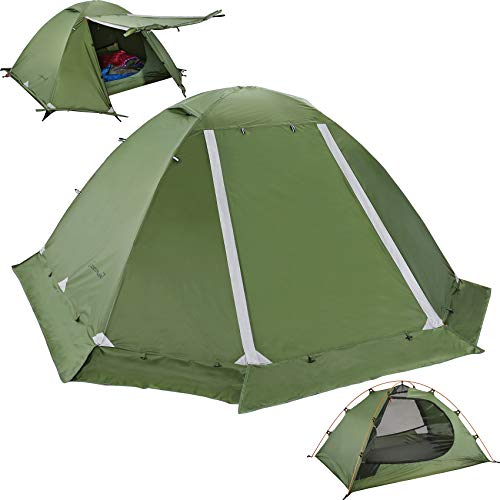
When sleet starts ticking on the fly at dinner and your boots are parked in the only dry corner, shelter stops being a small detail. 4 season hunting tents solve that by pairing stronger frames with colder-weather coverage. After comparing 3 models, the camppal 4-Season Tent is our top pick for its 1-person layout, single aluminum ridge pole, and 3500mm water resistance. The Browning 4-Season Tent is the alternative pick, with a 210D oxford floor and 2000mm coating.

Pros
- 1 person tent with 8.2 ft inner length
- 3500 to 4000 mm listed water resistance
- Single ridge pole setup listed at 3 minutes
- Fire retardant standard CPAI-84
- Rip-stop fabric and aluminum pole for wind resistance
Cons
- Fits 1 person only
- Inner height is 2.95 ft, so sitting space is limited
- Weight is listed inconsistently as 3.75 lb and 2.71 lb

Pros
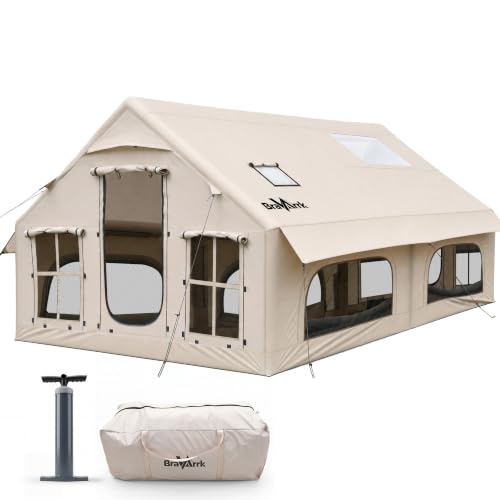
- 108 x 96 in floor with 72 in center height
- 210D oxford floor with 2000mm waterproof coating
- Two doors and two large vestibules for gear storage
- Aluminum poles, 7075 stakes, guy ropes included
- Factory-sealed fly and floor seams help block rain
Cons
- No packed weight listed in the product data
- Only 4 person size listed
- No stove jack or hot tent use mentioned

Pros
- 4-season design for camping, hunting, and basecamp use
- 3-person size with 96 x 80 inch floor dimensions
- 7000 series aluminum poles in a 3-pole freestanding design
- Two doors and two vestibules for access and covered storage
- 75D polyester rainfly with factory-sealed seams
Cons
- 9.25 lb weight may be bulky for long carries
- 50 inch peak height does not allow standing room
- 1500 mm floor coating is the only waterproof rating listed
What Matters in a 4-Season Tent for Cold Hunting Camps
Cold-weather hunting camps ask more from a tent than a mild-weather weekend site. The shelter has to manage wind, wet ground, damp clothing, and the extra gear that comes with long sits in cold air.
- Season rating and capacity: A real cold-camp shelter starts with a clear 4-season rating, not a vague all-purpose label. The camppal 4-Season Tent is built around a 1-person layout, with an inner tent that measures 8.2 feet long. That length matters for taller campers and for keeping a pack or boots inside without crowding the sleeping area. Among our picks, capacity runs from 1 person to 4 people, so the right fit depends on whether you hunt alone or share camp space.
- Stove jack for a wood-burning stove if applicable: None of the main picks lists a stove jack, so they should not be treated as hot-tent shelters. That is important because a 4-season rating does not automatically mean wood-stove compatibility. According to the U.S. Consumer Product Safety Commission, carbon monoxide is a colorless, odorless gas produced by burning fuel, including wood and charcoal. If a tent does not list a stove jack and proper ventilation, use it as a cold shelter rather than as a heated enclosure.
- Pole structure and wind resistance: Wind resistance depends heavily on pole material, frame layout, and guy-out support. The ALPS Mountaineering 4-Season Tent uses 7000 series aluminum poles in a 3-pole freestanding design, which gives it a more structured frame than a simple fair-weather shelter. Across the main list, aluminum appears in all 3 picks, while one pick also lists extra guy-outs on the fly for rough weather. For exposed ridges or late-season basecamps, that frame information is more useful than a general durability claim.
- Weight and pack size: Weight decides whether a tent belongs in a backpack, a sled, or a truck-based camp. One main pick weighs 3.75 pounds, making it the only pick here with a listed weight suitable for a solo carry calculation. The larger group tents trade that backpacking clarity for livability, with capacities of 3 people and 4 people instead of 1 person. If you are moving every day, the known 3.75-pound weight is easier to plan around than an unlisted packed weight.
- Ventilation to avoid condensation and carbon monoxide buildup: Winter tents need to hold weather out without trapping too much moisture inside. Among our picks, 2 models list 2 doors, which can help with entry, exit, and controlled airflow when conditions allow. One larger pick lists mesh roof vents, while another includes 2 vestibules for keeping wet gear outside the sleeping space. The National Park Service notes that staying dry is a key part of preventing heat loss, so managing condensation is not just about comfort.
We excluded summer or 3-season-only gear that is not rated for freezing conditions, because late-season hunting can punish light fabrics and minimal frames. We also excluded home space heaters used inside tents without ventilation because of carbon monoxide risk, along with children’s toy tents and sleeping bags that are not shelters for cold hunting camps.
The Competition
These are other 4-season tents we looked at but did not put on our main list.
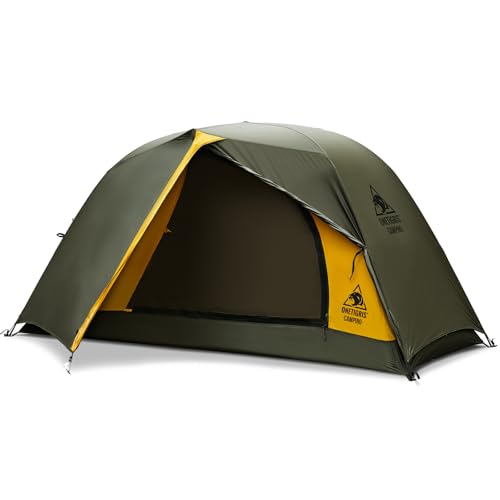
If you want a nylon shelter, the Onetigris 4-Season Tent is a capable 4-season unit with a water-resistant build. It did not make the main list because the core picks give a clearer match for this search, including a stated 1-person backpacking weight or larger 3-person and 4-person camp layouts.
For campers who prefer a steel frame, the WaldZimmer 4-Season Tent offers a 4-season, water-resistant design. Steel can be appealing for fixed camps, but the main list is easier to sort by hunting use because all 3 picks use aluminum pole systems or aluminum construction details.
The Kelty 4-Season Tent stays closer to the main list with an aluminum build and a 4-season label. It was not selected because the primary picks provide more relevant cold-camp details, such as a 3500mm water-resistance figure on our top pick or a 2000mm coated floor on our alternative pick.
And if warranty coverage is part of your decision, the Naturehike 4-Season Tent includes a 2-year warranty along with a polyester, water-resistant build. It still sits outside the main list because the selected tents align more directly with the comparison points hunters usually need first: capacity, frame design, floor protection, and ventilation.
FAQs
What capacity works best for a cold-weather hunting tent?
For mobile solo hunting, a 1-person tent can make sense because it keeps the shelter smaller and easier to carry. For a basecamp, our picks go up to 4 people, which gives more room for sleeping space and cold-weather gear.
Do 4-season tents always work with wood stoves?
No. A 4-season rating does not mean the tent has a stove jack or is safe for a wood-burning stove. The U.S. Consumer Product Safety Commission warns that fuel-burning devices can produce carbon monoxide, and they should not be used inside an enclosed tent without proper ventilation.
How much water resistance should matter for snow and rain?
Water-resistance numbers help separate basic weather claims from more specific protection. Among the main picks, listed coatings include 1500mm, 2000mm, and 3500mm figures, with higher numbers generally indicating stronger resistance to water pressure on the coated fabric.
Why is ventilation important in a winter hunting shelter?
Ventilation helps reduce condensation from breathing and damp gear, which can make insulation less effective. The National Park Service notes that hypothermia can happen above freezing if a person gets wet, so staying dry inside the shelter matters in cold camp conditions.
Sources
- Carbon Monoxide Questions and Answers, U.S. Consumer Product Safety Commission. CPSC guidance on carbon monoxide hazards from fuel-burning devices.
- Hypothermia, National Park Service. NPS guidance on preventing hypothermia outdoors.




Write Your Review
No reviews yet. Be the first to share your experience!