

Free Delivery. Exclusive Deals. All Prime.
Prime members save on shipping and get first access to deals, plus Prime Video included. 30 days free.
The night gets a lot longer when sleet starts tapping the fly and your socks are already negotiating surrender. 4 season camping tents solve that problem with stronger structures, fuller coverage and colder weather features. After comparing 6 models, the Forceatt 4-Season Tent is our top pick because it has 7001 series aluminum poles, a 3000mm waterproof index and room for 2 people. The Naturehike 4-Season Tent is the alternative pick, with 20D silicone coated nylon and a PU3000mm waterproof rating.

Pros
- 3000 mm waterproof index with full-coverage rainfly
- Two D-shaped doors and two vestibules for 2 people
- 5.5 lb weight with 7001 series aluminum poles
- Sets up in about 3 minutes
- Mesh window and 2 ceiling vents help airflow
Cons
- 43.3 in interior height does not allow standing
- No snow load or temperature rating listed
- 2-person size may be tight for extra gear inside

Naturehike 4 Season Tent,Waterproof 2 Person Backpacking Tent, Four Season Tents for Cold Weather Winter Camping
Pros
- Four-season design suitable for winter, spring, summer, and fall camping
- Lightweight at 4.43 lbs total weight for backpacking and hiking
- PU3000mm waterproof rating handles snow and rain effectively
- Double-door structure with 3 ventilation windows reduce moisture buildup
- Easy setup with flexible intersecting poles, takes minutes alone
Cons
- 2-person capacity may feel cramped for taller users or gear storage
- Aluminum poles and rip-stop fabric require proper care to prevent damage
- Mesh inner fabric allows some air circulation, may require additional insulation in extreme cold
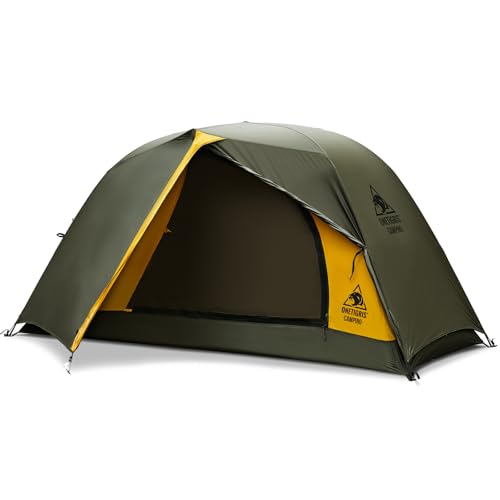
Pros
- 3000mm waterproof rating for wet conditions
- 4.2 lb weight with 20D nylon outer fabric
- Mesh inner tent supports airflow
- Compact 20.4 x 5.9 in packed size
- Includes 10 stakes and 4 guy-lines
Cons
- Listed for 1 person only
- 3.7 ft peak height is not standing height
- Floor size is 6.9 x 4.1 ft

Pros
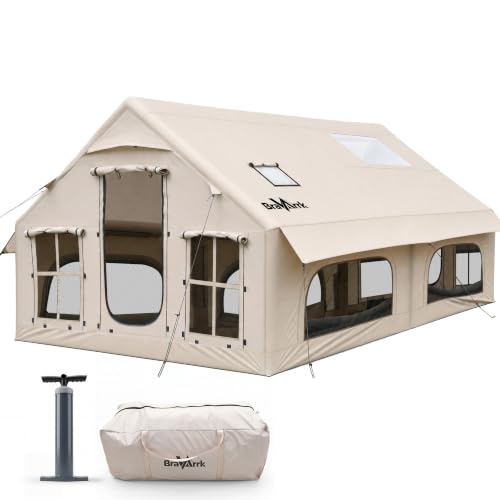
- Built-in stove jack for cold-weather camping
- Mesh windows and insect-proof doors aid ventilation
- 13.1 x 13.1 x 8.2 ft size with standing room
- Lightweight Oxford fabric helps with portability
- Fits 4 to 6 people per listed size
Cons
- Rainfly recommended for rainy conditions
- 35.28 lb weight may be heavy for carrying
- Oxford fabric is described for light rain protection

Pros
- PU 5000mm rainfly with sealed seams
- 210D Oxford fabric groundsheet
- Two top vents plus door ventilation openings
- Pre-attached poles for quicker setup
- 84.5 x 61 x 58.2 inch interior fits up to 2 people
Cons
- 12.65 lb weight may be bulky for backpacking
- Only one size listed
- No packed size provided
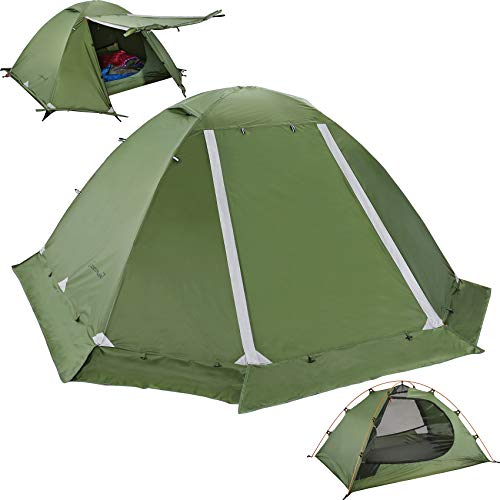
Pros
- Lightweight at 6.28 lbs total, or 5.33 lbs minimum trail weight
- Spacious interior of 7'3" x 4'11" x 3'10" for a 2-person tent
- Freestanding design with two aluminum poles sets up quickly by one person
- Sealed seams and PU 5000 coating provide weatherproof protection
- Includes 14 aluminum stakes, 2 doors, 2 vestibules, and repair kit
Cons
- One-year warranty covers only material and workmanship defects
- Packed size of 16.5" x 5.9" x 5.9" still requires significant backpack space
- No temperature rating provided for cold weather conditions
What We Looked For in 4-Season Tents for Winter Camping
Winter camping asks more from a shelter than a summer weekend at a developed site. Snow, wind, wet ground and condensation all matter, so capacity alone is not enough.
- Season rating and capacity: A 4-season rating matters because cold rain and wind can turn a mild trip into a heat loss problem. According to the National Park Service, hypothermia can happen well above freezing when a person gets wet from rain, sweat or submersion. Among our picks, capacity runs from 1 person to as many as 8 people, with several 2-person models aimed at backpacking pairs. The OutdoorMaster 4-Season Tent fits 2 people and uses a 210D Oxford fabric groundsheet with a PU 5000mm rainfly coating, which puts it on the more protective side for wet camps.
- Stove jack use: A stove jack is useful only when the tent is designed for it and the camper understands the ventilation requirement. One pick includes a built-in stove jack and is sized as a 16.4ft bell tent for 4 to 7 campers with gear. That kind of setup is aimed more at base camp comfort than backpacking, especially when heating and cooking space matter. The CPSC warns that carbon monoxide is a colorless, odorless gas produced by burning fuel, charcoal or wood, so any heated shelter needs proper ventilation.
- Pole structure and wind resistance: Pole material and layout affect how a tent behaves when wind starts pushing on the fly. The Forceatt 4-Season Tent uses 7001 series aluminum poles and reflective guylines, and its listing pairs that structure with a 3000mm waterproof index. It also has 2 D-shaped doors and 2 vestibules, which helps separate entry, exit and gear storage when conditions are messy. Among the group, several picks use aluminum poles, while the bell style relies on its larger shelter form and stakes for camp use.
- Weight and pack size: A winter tent that is easy to carry is less useful if it is too cramped, but a roomy shelter can become tiring fast on a long approach. Our backpacking oriented picks range from 4.2lb to 6.28lbs, while the larger bell style is built around a 16.4ft footprint instead of a trail weight number. Packed sizes also vary, with one 1-person model packing to 20.4 by 5.9 inches and another 2-person model packing to 16.5 by 5.9 by 5.9 inches. The right tradeoff depends on whether you are hiking miles or setting up near a vehicle.
- Ventilation and condensation control: Cold weather tents still need airflow because breathing, wet clothes and cooking nearby can add moisture. The Onetigris 4-Season Tent uses a 20D nylon body, a 40D nylon tent bottom and a 3000mm waterproof rating, with a mesh inner tent for airflow. Across our picks, ventilation features include 2 ceiling vents, 3 ventilation windows and double-layer doors depending on the model. The CPSC also notes that headache, dizziness, weakness, nausea and confusion can be symptoms of carbon monoxide poisoning, so venting is a safety issue, not just a comfort feature.
We excluded summer or three-season-only gear not rated for freezing temperatures, because a lighter fly and breezier body are not the same as cold weather protection. We also excluded home space heaters used inside tents without ventilation because of carbon monoxide risk, along with children’s toy tents and sleeping bags because they are not shelters for winter camping.
Other 4-Season Tents Worth Considering
These are other 4-season tents we looked at but did not put on our main list.
If you prefer a polyester build, the Bisinna 4-Season Tent is an alternative that is also described as water resistant. The tradeoff is that its highlighted construction is polyester rather than the 7001 series aluminum pole structure called out on our top pick, so it is less directly comparable for shoppers focused on wind hardware.
For campers comparing different layouts, the Geertop 4-Season Tent is another alternative with an aluminum build and water resistant construction. Its appeal is a different size and feature mix, while our main list gives clearer side by side anchors such as 2-person capacity, 3000mm waterproof ratings and trail weights down to 4.2lb.
Another aluminum based alternative is the Underwood Aggregator 4-Season Tent, which is also described as water resistant. It may make sense if its size mix fits your camp routine, but the main picks give more specific cold weather comparisons, including 1-person and 2-person backpacking shelters plus a 16.4ft bell tent with stove jack compatibility.
FAQs
What makes a tent suitable for 4-season camping?
A 4-season tent should be built for colder weather, stronger wind and wet ground rather than only fair weather airflow. In our picks, waterproof ratings run from 3000mm to 5000mm, and capacities range from 1 person to as many as 8 people.
Is a stove jack necessary for winter camping?
A stove jack is not necessary for every winter camper, especially backpackers who prioritize low weight. Only one of our main picks includes a built-in stove jack, and the CPSC warns never to use a fuel-burning stove, heater or wood stove inside an enclosed space without proper ventilation.
How heavy are 4-season tents for backpacking?
Among the backpacking oriented picks, listed weights run from 4.2lb to 6.28lbs. That range is manageable for many hikers, but the lightest shelters give up some group space compared with a 16.4ft bell tent.
Why does ventilation matter in a winter tent?
Ventilation helps reduce condensation from breathing and damp gear, which matters because staying dry is one way to reduce heat loss. The National Park Service notes that hypothermia can occur above freezing if a person gets wet, and warning signs include shivering, confusion and fumbling hands.
Sources
- Carbon Monoxide Questions and Answers, U.S. Consumer Product Safety Commission. CPSC guidance on carbon monoxide hazards from fuel-burning devices.
- Hypothermia, National Park Service. NPS guidance on preventing hypothermia outdoors.



Write Your Review
No reviews yet. Be the first to share your experience!